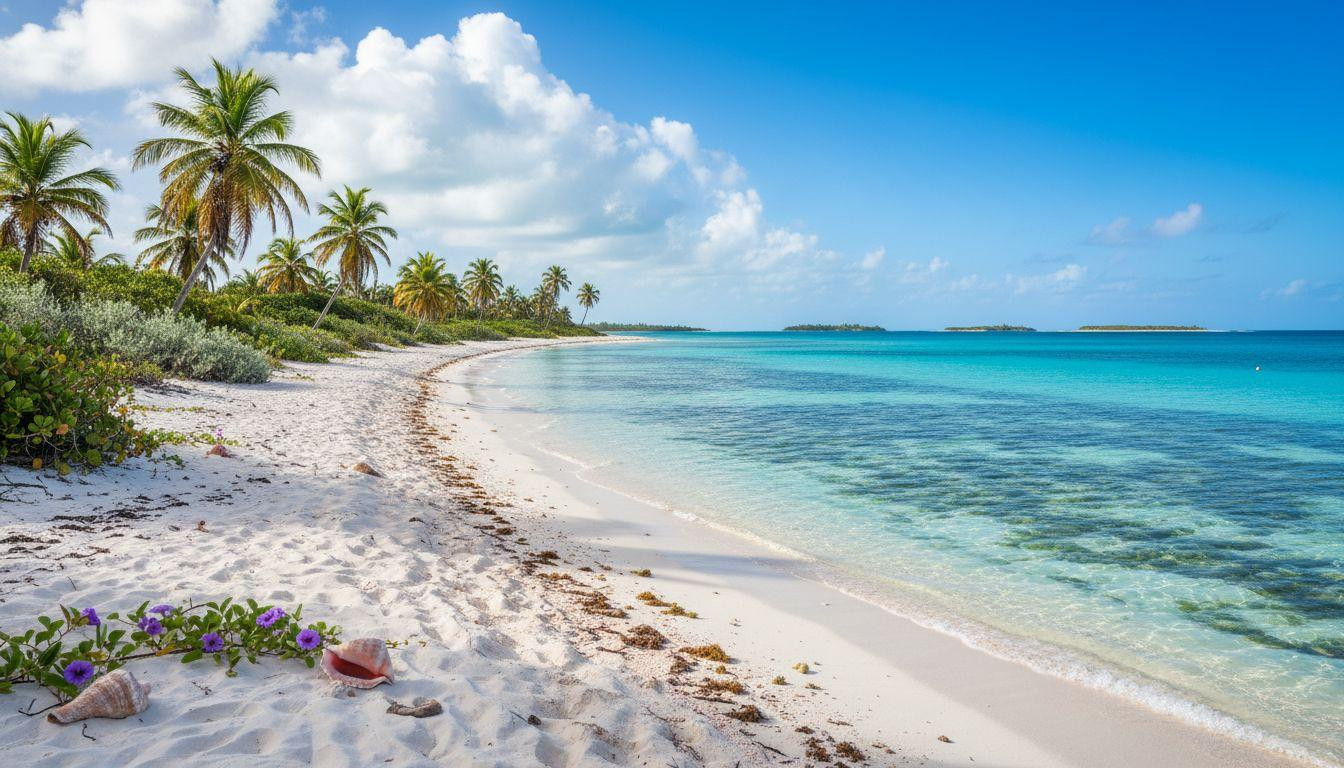
Cape Santa Maria’s powdered sands meet turquoise water so clear you count fish from 50 feet back. The beach runs 3 miles without a single resort tower. At 8am on a December morning, you might share it with two other people. Long Island sits 150 miles southeast of Nassau, part of the Out Islands where the Bahamas stayed quiet while Exuma filled with day-trippers and swimming pig tours.
The island stretches 60 miles north to south, barely 4 miles wide. Queen’s Highway connects everything. Deadman’s Cay Airport (LGI) sits mid-island near Clarence Town. Flights from Nassau take 30 minutes. From Miami or Fort Lauderdale, connections run 2-3 hours total, around $500-700 round-trip in winter 2026.
Where the Bahamas stayed still
Long Island’s western shore faces the Caribbean. Protected bays, gentle slopes, water that glows electric blue in afternoon light. The eastern side crashes against Atlantic cliffs, dramatic and empty. Columbus landed at the northern tip in 1492. A monument marks the spot with views across turquoise shallows.
The island holds 3,000 residents spread across small settlements. Clarence Town anchors the south with twin churches built by Father Jerome Hawes in the 1930s. St. Mary’s Roman Catholic Church stands as the oldest in the Bahamas. No traffic lights exist. Car rentals run $60 per day and you need one.
December through March brings 70-80°F days, breezy and dry. Trade winds keep humidity low. Water temperature holds at 75°F. This is when bonefishing flats turn crystal clear and the few visitors who come stay longer than planned.
The water you can’t believe
Turquoise shallows at Cape Santa Maria
Cape Santa Maria Beach sits on the northwest coast. The sand feels like powdered sugar underfoot, white with hints of pink from crushed coral. Water stays waist-deep for 100 yards out. You can wade to small cays visible offshore. Bonniecord coves hide along this stretch, accessible by boat or long beach walks. These inlets offer complete privacy, ringed by low vegetation and soft sand.
Snorkeling here means floating over turtle grass beds where nurse sharks rest and sea turtles graze. Visibility reaches 100 feet on calm days. No jet skis. No beach vendors. Cape Santa Maria Resort sits at one end, low-rise and quiet, with rooms from $250-400 per night in winter.
Dean’s Blue Hole contrast
Twenty miles south, Dean’s Blue Hole drops 663 feet straight down. It ranks as the third-deepest blue hole globally, 116 feet wide at the surface. The water shifts from turquoise shallows to midnight blue at the center. Free divers train here. Netflix filmed The Deepest Breath documentary at this spot in 2022.
You can swim the edges safely or watch from limestone cliffs above. The contrast defines Long Island: gentle western beaches, dramatic eastern geology. Coral reefs line both coasts. Dive operators run trips from Stella Maris Resort for $100-150 per person.
What winter mornings feel like
Beach activities
Bonefishing guides work the western flats from dawn. Half-day charters cost around $400 and target bonefish, permit, tarpon. The flats stay productive December through April when water clarity peaks. Eco-tours leave from Clarence Town to hidden starfish coves and uninhabited cays. These trips run $100-150 and include snorkel gear.
Kayaking the protected bays costs nothing if you rent from your accommodation. Morning paddles often reveal eagle rays gliding below. The eastern cliffs offer hiking trails with Atlantic views. Hamilton’s Cave, inhabited by Lucayan Indians around 500 A.D., shows ancient drawings and artifacts discovered in 1935.
Local elements
Max’s Conch Bar serves cracked conch and conch fritters for $15-20. Tiny’s Hurricane Hole offers fresh grouper and lobster at similar prices. Chez Pierre in Clarence Town runs French-Caribbean fusion, rated second-best restaurant in all the Bahamas by recent visitor surveys. Meals there cost $25-35.
The annual Long Island Regatta happens each June, drawing 500+ visitors for traditional Bahamian sloop races. Boats built using 19th-century methods compete over three days. Locals protect this event fiercely. Guava duff, a rolled dessert with sweet sauce, appears on most menus. Island time runs slow here by design.
The quiet you can’t find elsewhere
Sunrise at Cape Santa Maria happens around 6:30am in winter. The light turns the water gold for maybe 10 minutes before settling into that impossible blue. You hear waves and wind, nothing else. At night, the Milky Way stretches clear across the sky. Zero light pollution means stars you forgot existed.
Long Island receives roughly 15,000 visitors annually, compared to millions in Nassau and hundreds of thousands in Exuma. This difference shows in every interaction. Locals wave from passing cars. Store owners remember your face after one visit. The pace feels like the Bahamas did 40 years ago, before cruise ships and all-inclusive resorts changed the rhythm.
Your questions about Long Island answered
How do I get there and move around?
Fly to Nassau first, then catch a Bahamasair or Southern Air Charter flight to Deadman’s Cay (LGI). Total travel time from Miami runs 2-3 hours, from New York 4-5 hours with connections. Rent a car at the airport. Everything spreads out over 60 miles of Queen’s Highway. No taxis cruise randomly. Plan on driving yourself or booking tours through your accommodation.
Where should I stay and what does it cost?
Cape Santa Maria Beach Resort and Stella Maris Resort Club offer full-service options at $250-400 per night in winter. Both include beach access, restaurants, and dive operations. Smaller guesthouses and Airbnbs run $100-200 per night. Meals cost $15-25 at local spots, $25-35 at nicer restaurants. Budget $150-300 per day total depending on activities. That runs 20-30% below average Bahamas costs.
How does it compare to Exuma?
Exuma’s Pig Beach draws 200+ boats daily in peak season. Long Island sees maybe 20 boats total on its busiest day. The water quality matches, that same electric turquoise. Prices run lower here. Crowds stay minimal year-round. You trade convenience and variety for authenticity and space. Similar quiet Caribbean experiences exist on smaller islands, but Long Island offers easier access from the U.S. mainland. Other secluded Caribbean lagoons require more complex travel. For comparison, Exuma’s main attractions now cost significantly more with far larger crowds.
The ferry back to reality leaves when you decide. Most visitors extend their stay. The turquoise water looks the same every morning, but something about the light keeps changing. That’s what brings people back.