
The first time I walked into a room with earthy tones bedroom styling done right, I didn’t want to leave. It wasn’t decorated. It was grounded.
Clay walls, olive paint, warm oak. The colors feel like somewhere you’ve been before. Here are 14 rooms worth saving.
Clay Shiplap That Makes The Whole Room Exhale
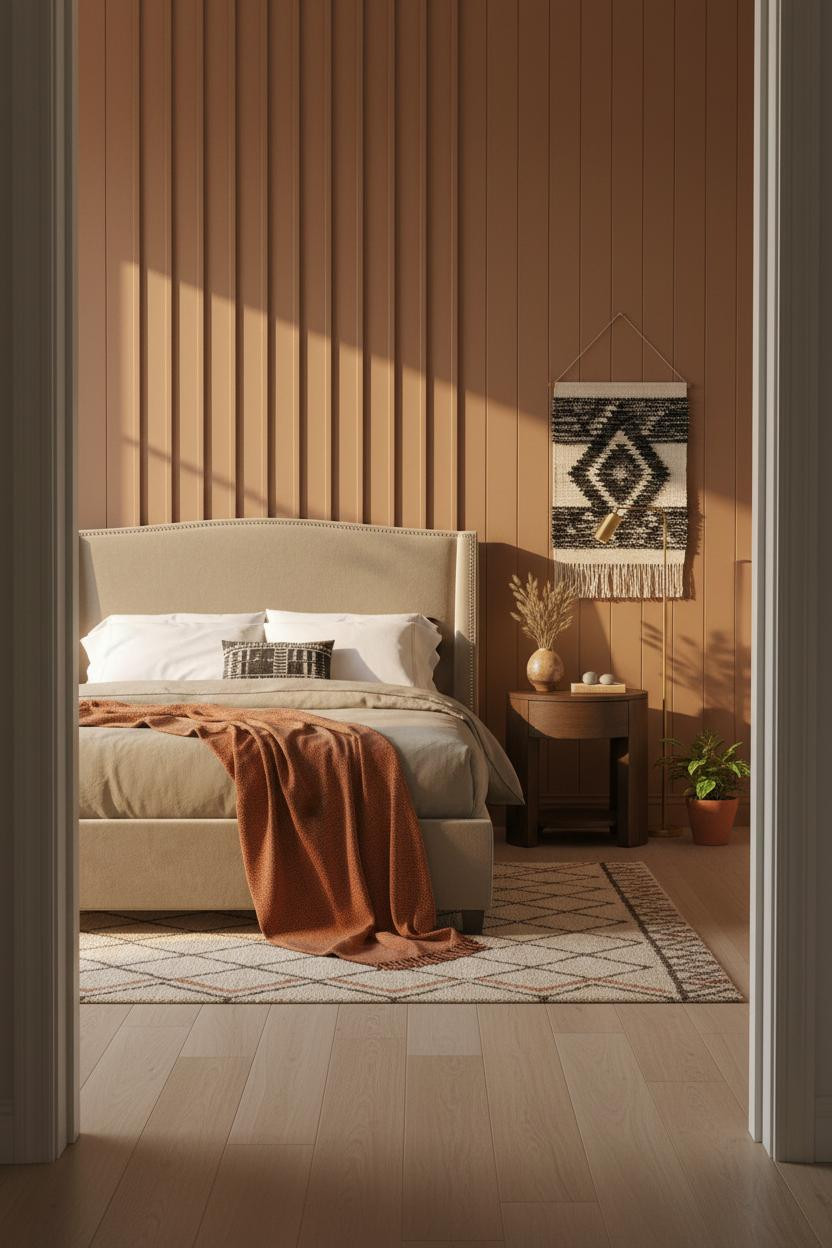
I keep coming back to this one. There’s something about a full-height shiplap wall in deep clay that just settles a room.
Why it works: The vertical board grooves catch raking light and create shadow lines, which gives the wall texture without needing anything hung on it.
Steal this move: Pair the clay shiplap with bleached oak floors. The contrast keeps it warm without tipping into dark.
Burnt Sienna Plaster And The Case For Going Bold
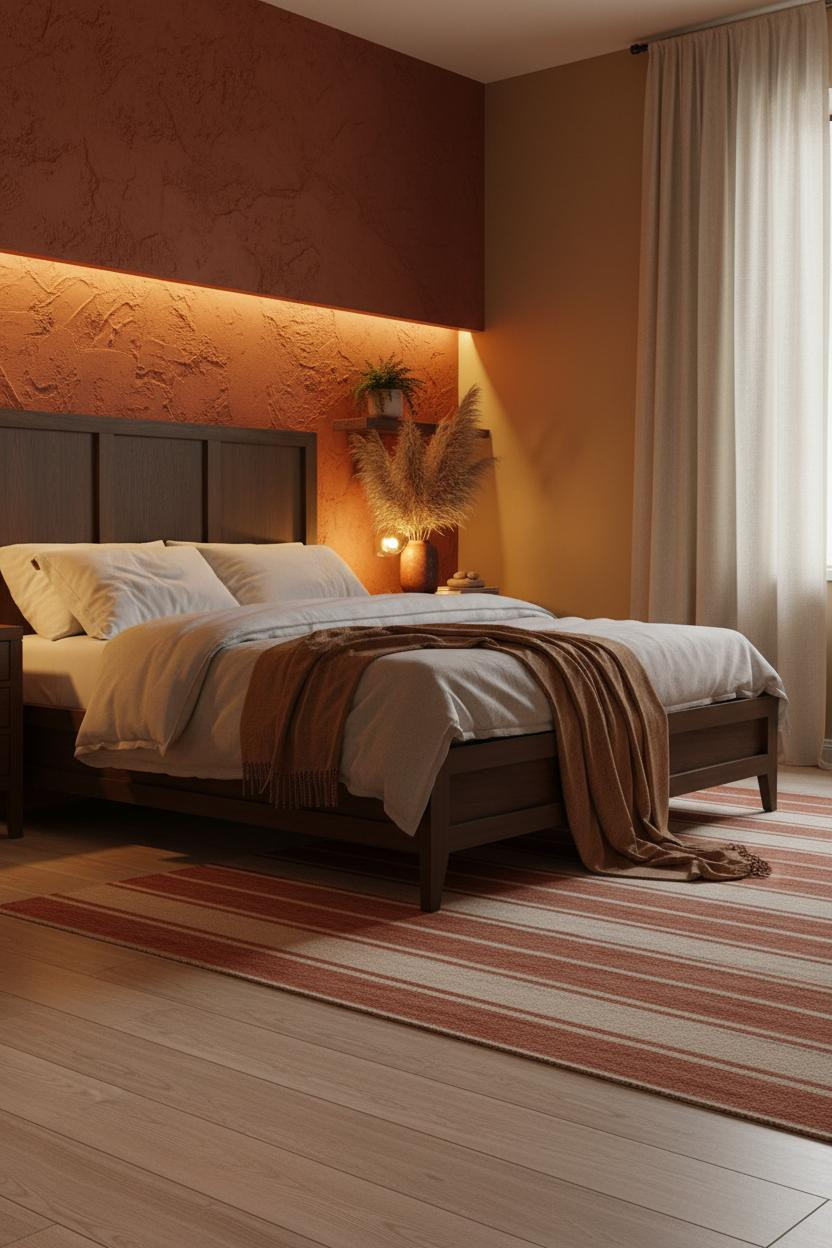
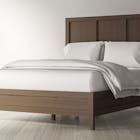
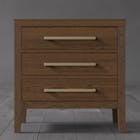
Bold choice. Not for everyone. But the people who commit to a hand-troweled plaster wall in burnt sienna never look back.
The reason it feels rich instead of heavy is the hand-troweled surface. Every ridge catches light slightly differently, so the wall stays alive even in low evening light.
What to borrow: Keep the remaining three walls in camel. One strong color, three quiet ones. That’s the formula.
Avoid this mistake: Don’t use cool-toned linen here. The warm palette needs oatmeal or camel fabric to hold together.
Olive Walls With A Gallery That Earns Its Presence
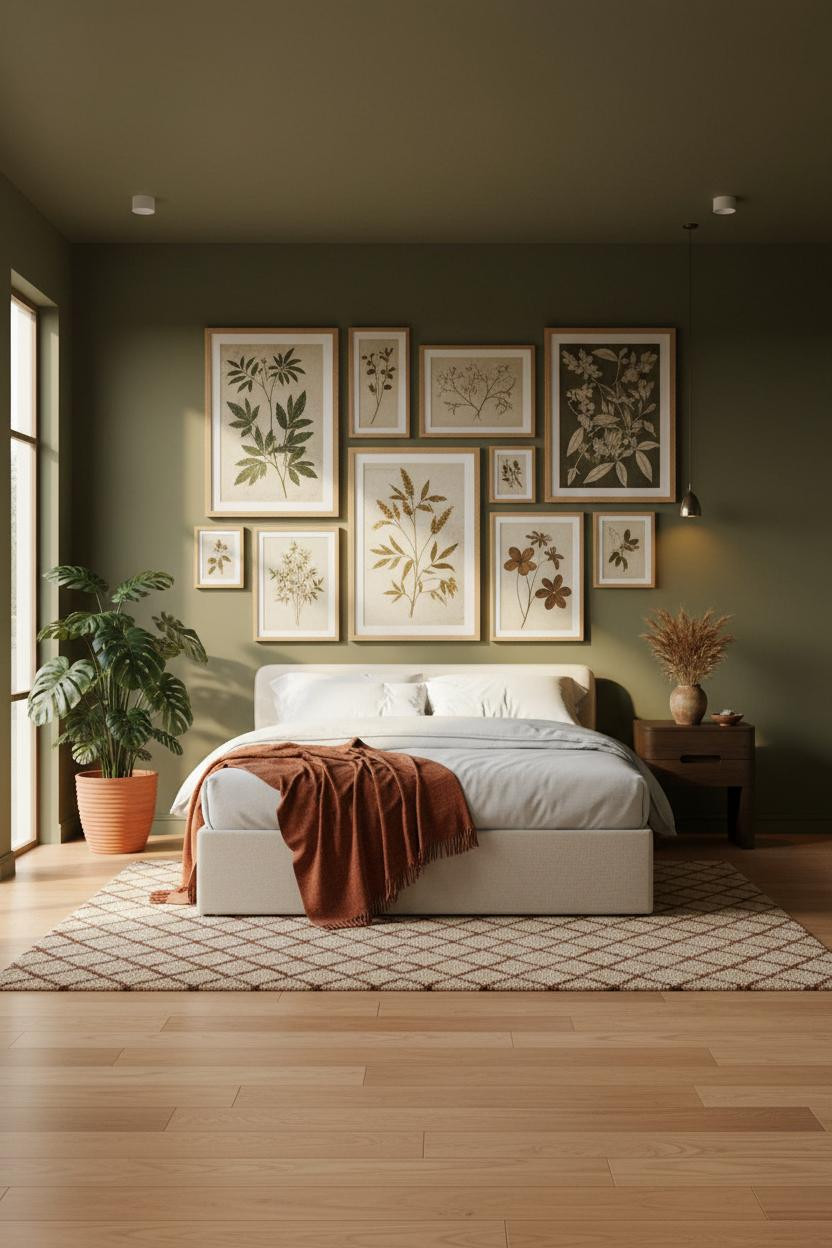

This is the earth tone bedroom green pairing I’d actually do in my own house. Warm olive walls with oversized botanical prints.
What gives it depth: Staggering the raw oak frames in scale creates gaps and shadow between them, so the gallery reads as living texture instead of a flat collage. And the olive wall makes the frames pop without needing a white backdrop.
Skip mass-produced prints. Pressed botanicals in mismatched sizes feel collected rather than decorated.
Herringbone Wood Against Warm Ochre: The Pattern That Earns It
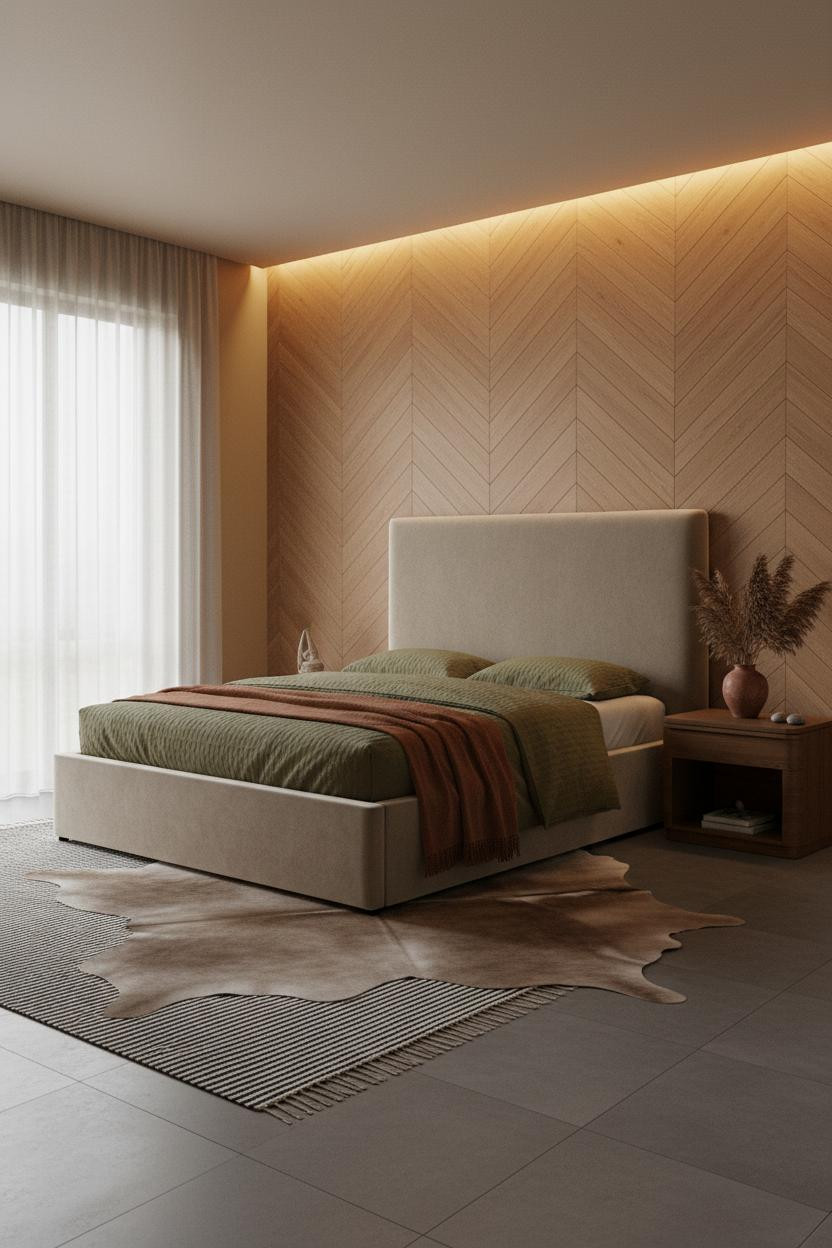
This one is divisive. Geometric patterned wood behind a bed either works completely or falls apart. Here it works.
Why it holds together: The amber-honey herringbone planks share the same warm family as the ochre walls, so the chevron pattern reads as texture, not contrast. It’s a small distinction, but it changes everything.
The smarter choice: Use olive waffle-weave bedding here instead of white. Cool tones pull the palette apart.
Coffered Ceilings Are The Detail Nobody Budgets For
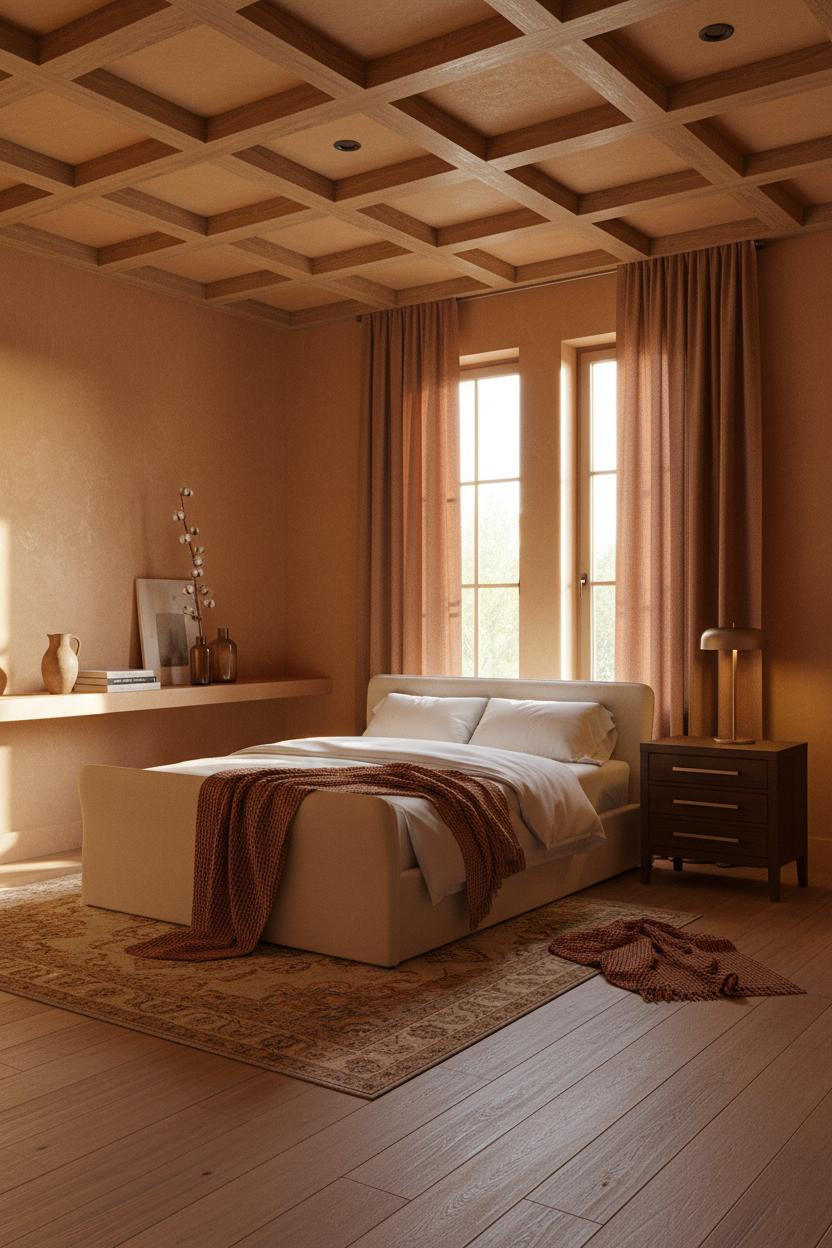
Admittedly, a coffered ceiling is not a weekend project. But it’s the architectural move that explains why some warm earthy bedrooms feel like a boutique hotel and others just feel beige.
Why it looks custom: Each recessed panel in ochre-toned plaster catches daylight differently, creating a grid of shadow depth that flat ceilings simply can’t replicate. The raw timber trim edging each panel adds a second material without adding noise.
Pro move: Pull the terracotta-ochre wall color up into the coffered grid. Stops the ceiling from floating.
Forest Green Built-Ins That Ground A Room Instantly
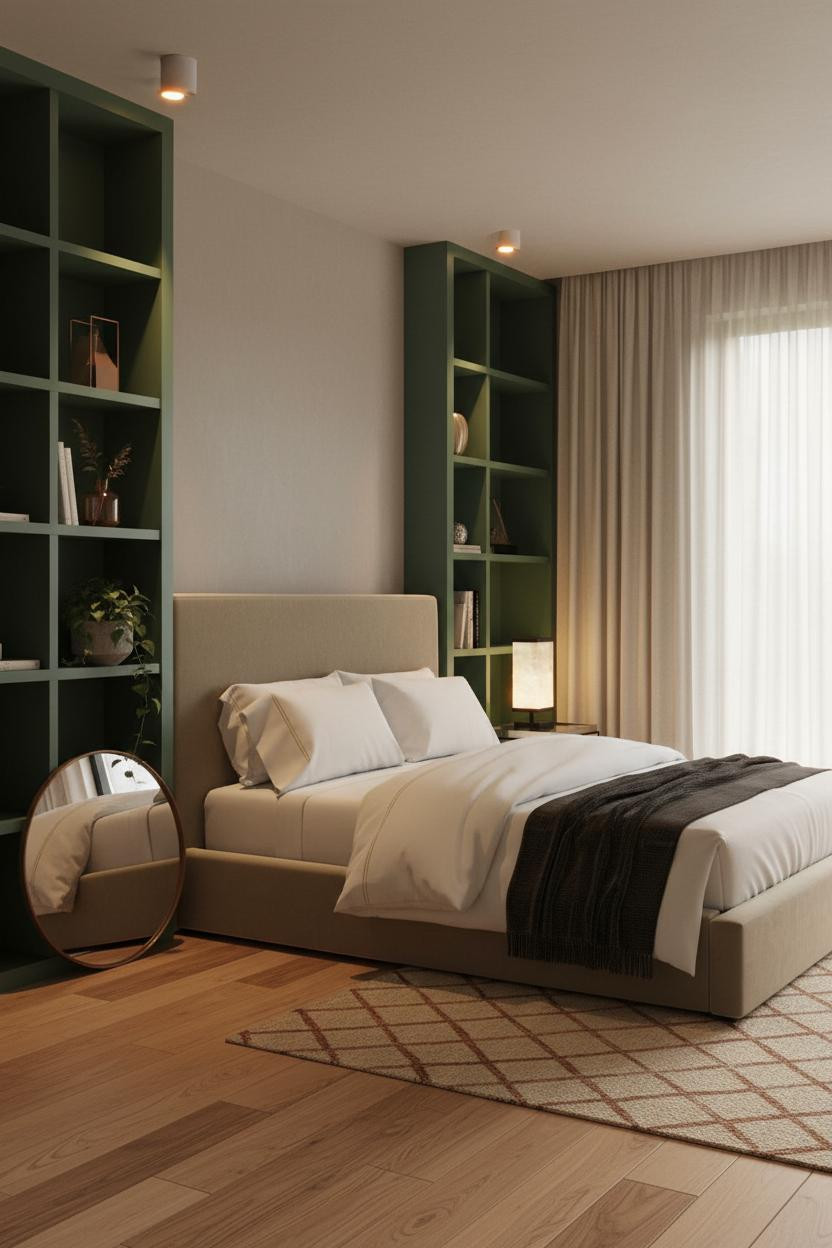
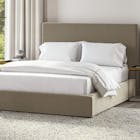
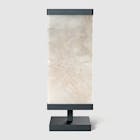
Having a full wall of deep forest green built-ins changes how you actually use the room. Storage stops being the problem. The wall becomes the statement.
What makes this work is the contrast between the forest green painted wood and the warm greige plaster on the other three walls. One saturated color, three quiet ones. The room feels calm and cohesive without everything matching.
The easy win: Style the open niches with bronze objects and a single trailing plant. Nothing too precious or symmetrical.
Caramel Walls With A Steel Grid Window That Earns The Drama
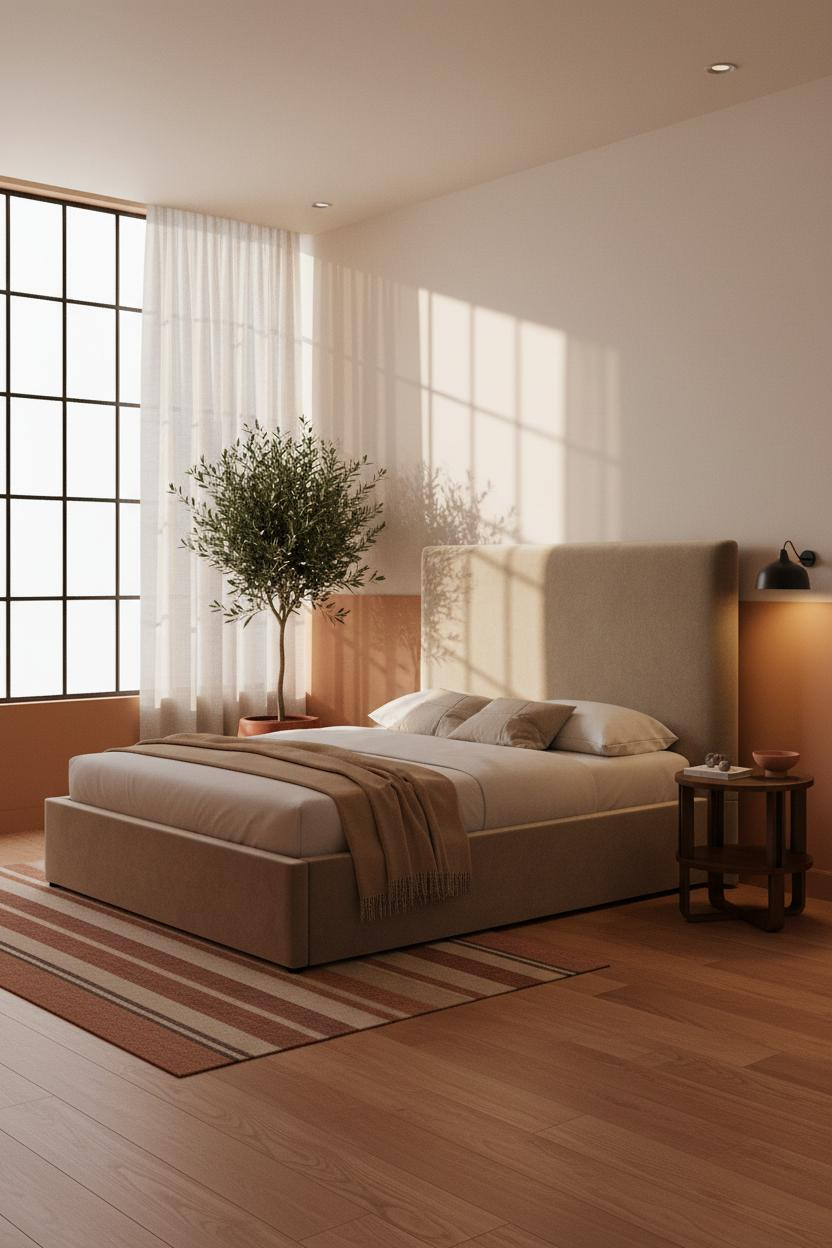

I almost scrolled past this. Glad I didn’t.
The real strength: A matte black Crittall-style steel grid casting crisp geometric shadows across caramel walls is how you get visual structure without adding furniture. The dark iron frame and warm amber walls create just enough tension to keep it interesting, while still feeling grounded.
Anchor the corner with a large potted olive tree in a rust ceramic planter. The living green breaks the geometry in the best way.
The Arched Alcove That Turns A Headboard Wall Into Architecture
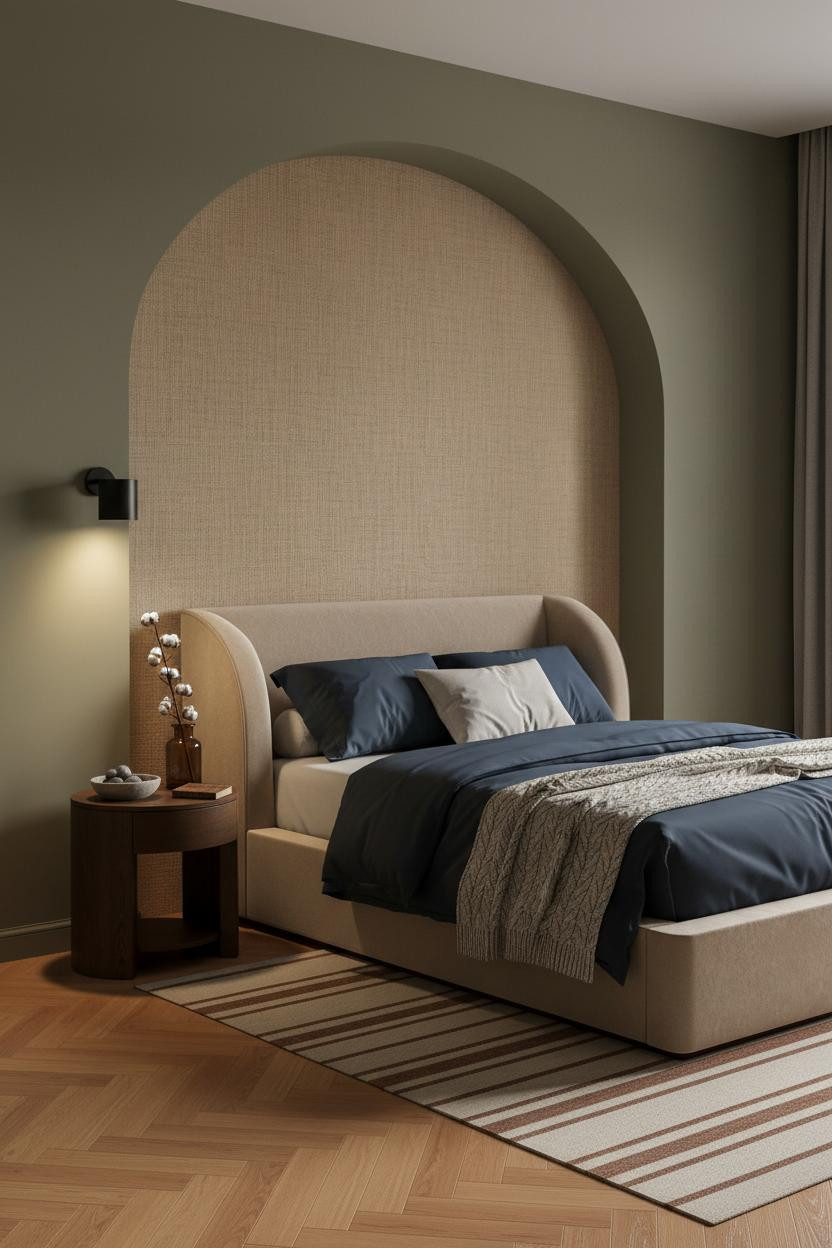

This is the kind of room that makes you want to close the door and stay in. The arched alcove behind the bed frames everything without needing a headboard to do the work.
What creates the mood: Raw linen-wrapped panels inside the arch curve in warm camel give the niche softness, and the shadow line at the arch edge frames the bed like a natural canopy. The moss olive walls deepen toward the corners, which keeps the room from feeling flat.
Where people go wrong: Don’t fill the nightstand with too many objects. Two things. Maybe three. The room feels lived-in and intimate when there’s room to breathe.
Birch Slat Walls And The Quiet Case For Pale Wood
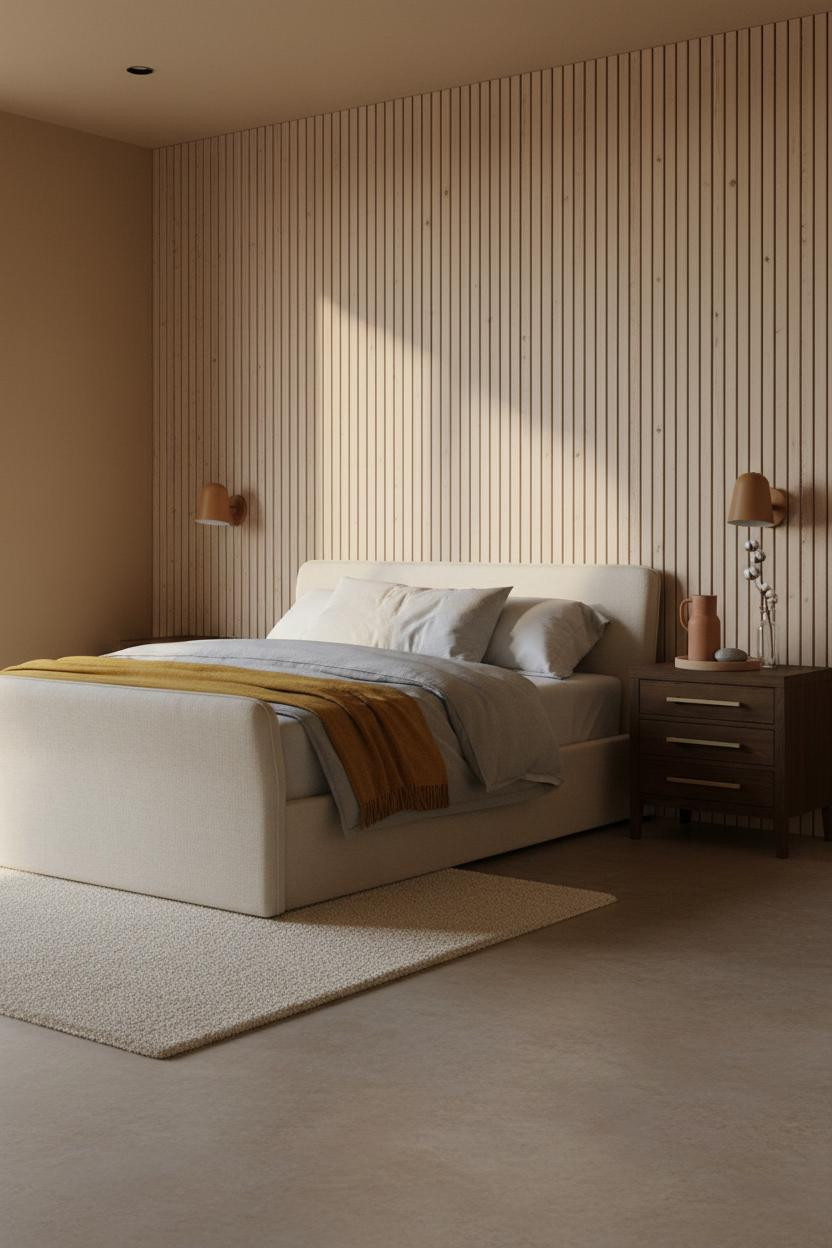
Nothing fancy. That’s the point.
Pale birch slat paneling running floor to ceiling behind the bed is honestly one of the smarter earthy minimalist bedroom moves. Each groove catches amber raking light and throws thin parallel shadows, so the wall has rhythm in a way that painted surfaces never quite manage. And the sand-ochre walls on the remaining three sides keep the birch from reading too cool or Scandinavian.
Exposed Brick In Rust Terracotta: More Livable Than You’d Think
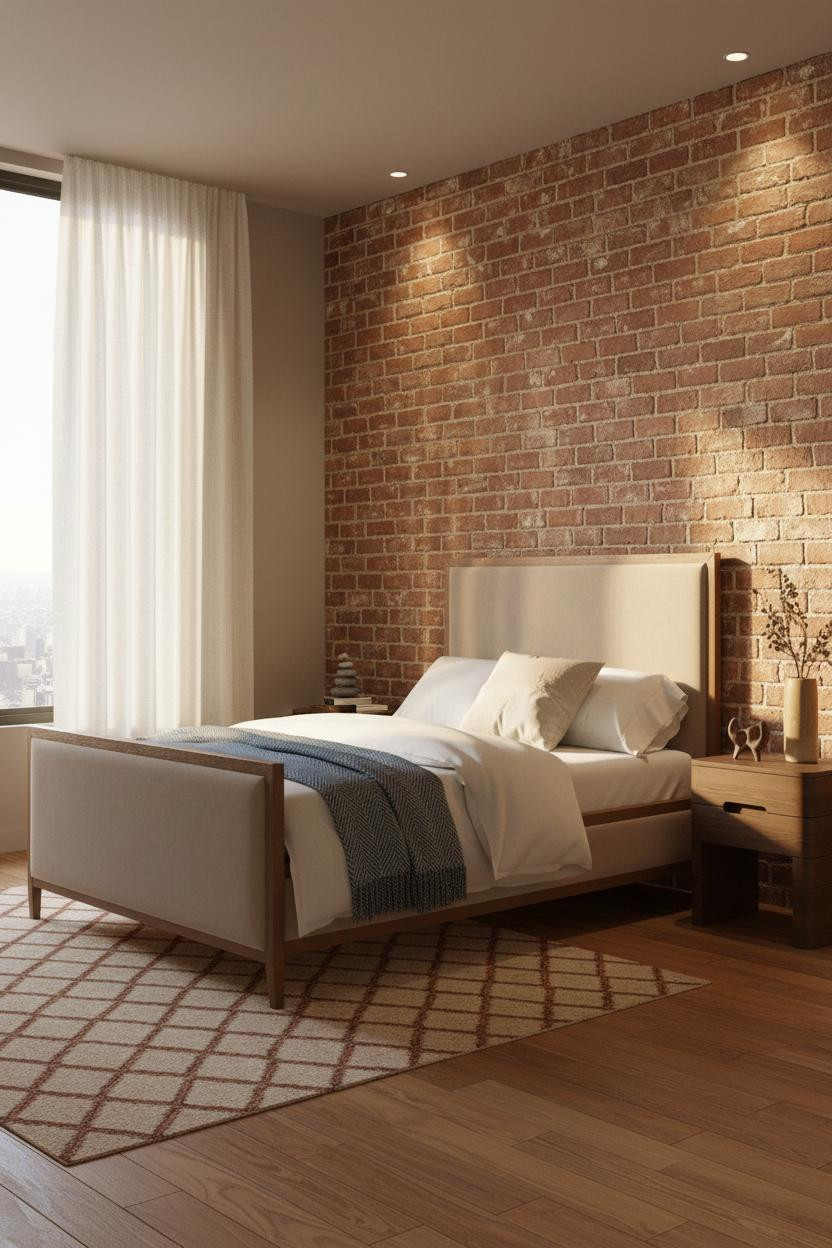

Fair warning: exposed brick behind a bed sounds heavy. It isn’t, if you get the surrounding colors right.
Design logic: Each aged rust-terracotta brick face absorbs and scatters light at a slightly different angle, so the wall has organic depth that painted plaster can’t replicate. Soft taupe on the remaining walls pulls the brick into the warm neutral family instead of letting it dominate.
Pair with cream percale bedding. The contrast between rough brick and clean white cotton is what makes the room feel collected, not rustic.
Mushroom Shiplap In The Softest Version Of Earthy
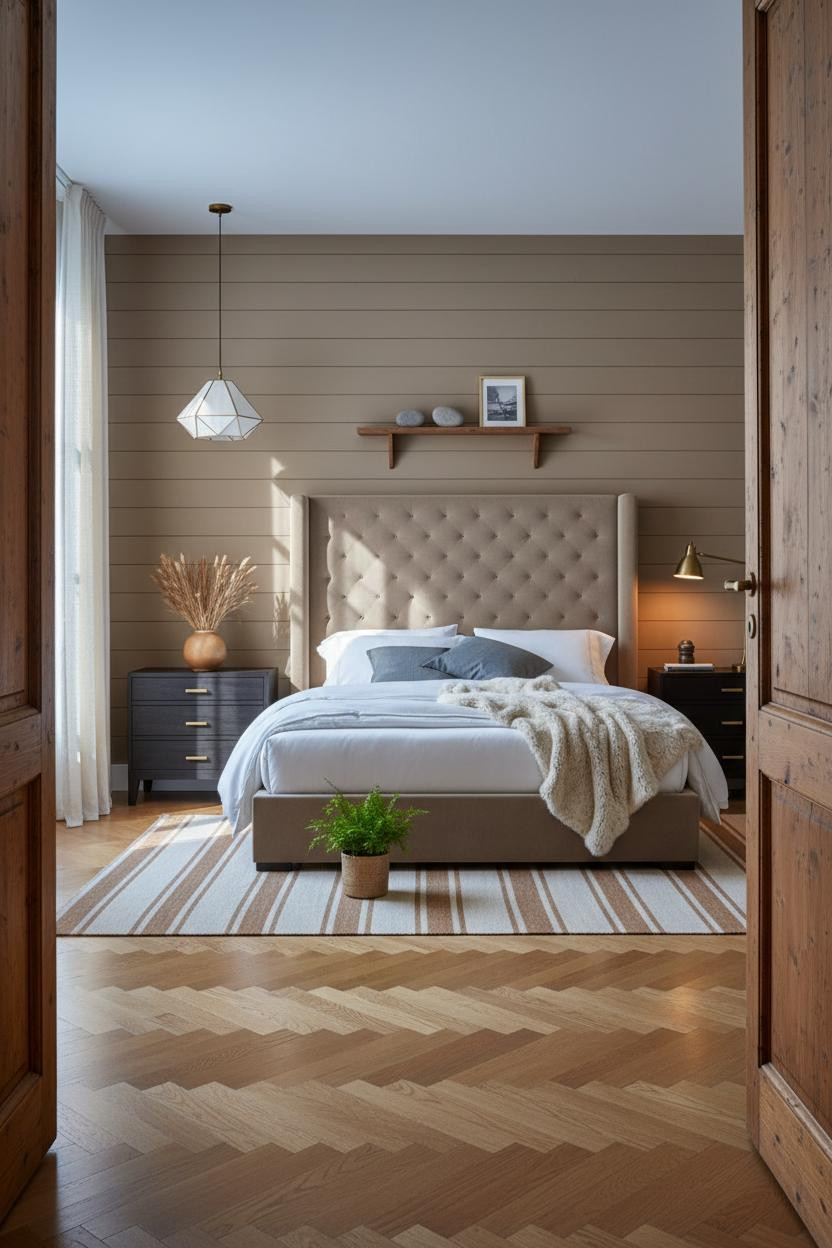

This is the neutral earthy bedroom for people who want warmth without any real color commitment. And honestly, I think it’s the most livable version of the whole earthy palette.
Why it feels balanced: Horizontal mushroom-taupe shiplap has enough texture to make the room feel intentional, while the stone-grey walls on the other sides keep things from going too brown. The honey oak herringbone floor does all the warmth-lifting.
The finishing layer: A sculptural pendant off-center above the nightstand. Breaks the symmetry in a way that feels right.
Terracotta Wainscoting Paired With Warm Clay: The Two-Tone That Works
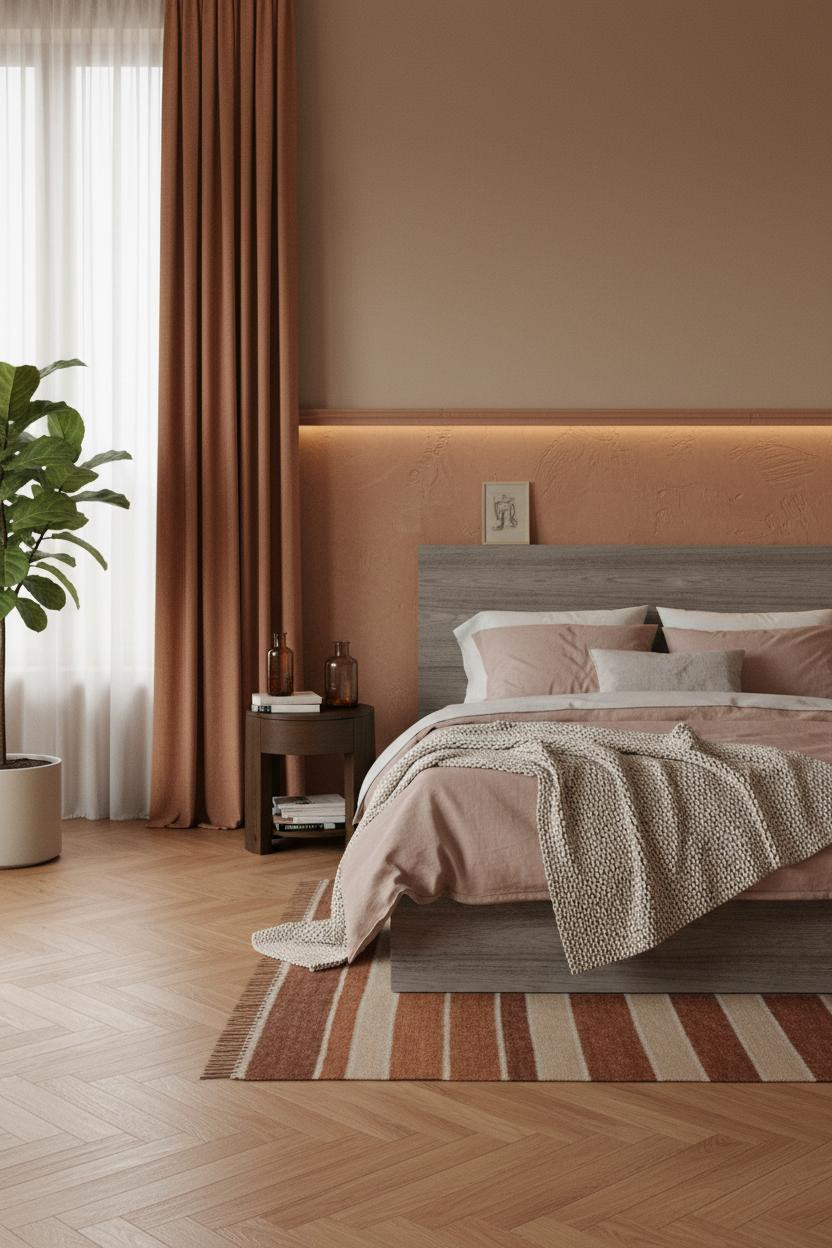
It might seem risky to split the wall at mid-height with two completely different colors. But this is exactly how you do it.
Why the palette works: The lower hand-troweled terracotta-ochre wainscoting grounds the wall, and the warm clay upper section keeps the ceiling from feeling cut off. They’re from the same earthy family, just different depths. The amber oak herringbone floor ties them both together.
The part to get right: The wainscoting height matters. Align it with the top of the headboard. Not lower.
Board-And-Batten In Warm Clay: Geometry That Earns Its Keep
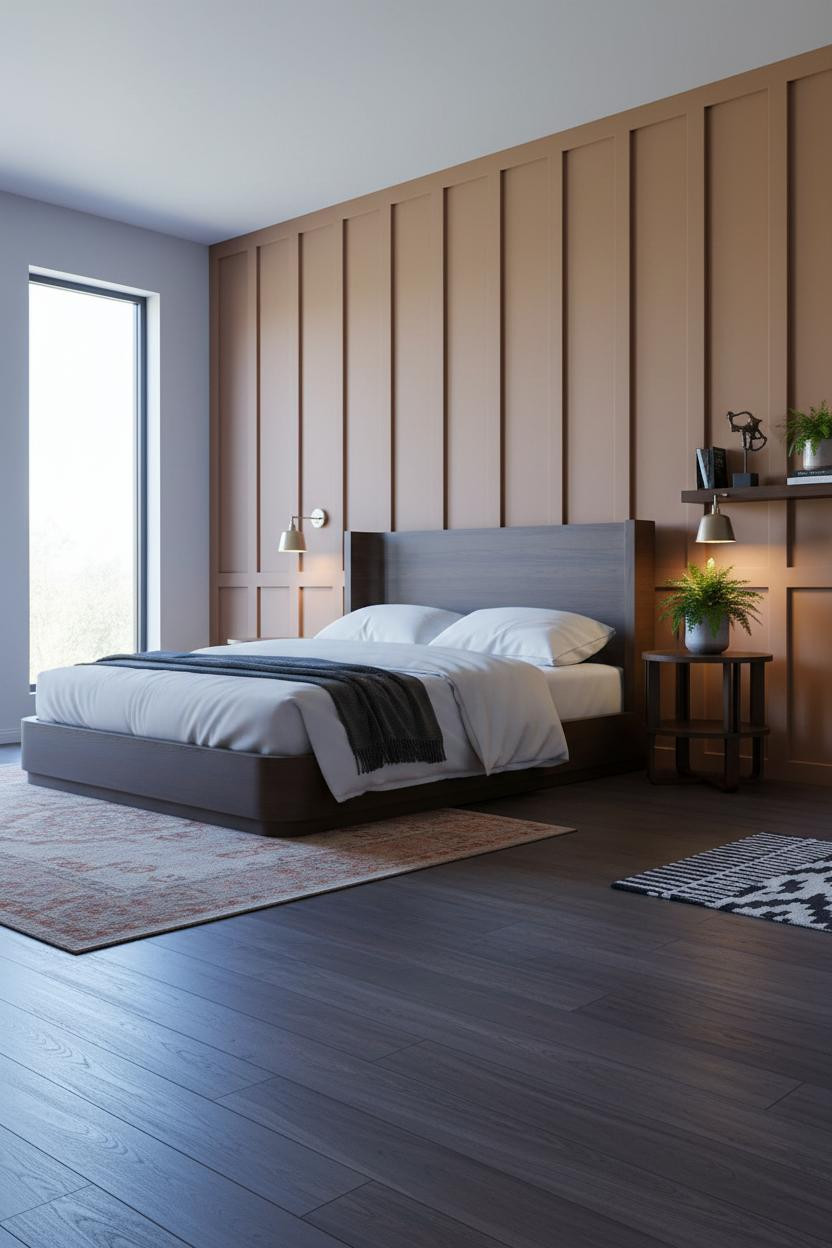
Board-and-batten in warm clay is one of those moves that looks like a renovation but is actually just paint and trim.
Why it feels intentional: Each vertical batten in warm clay paint throws a thin shadow ridge that gives the wall rhythm without adding any visual weight. The dusty rose-cream on the remaining walls keeps the clay from reading too russet in morning light.
Avoid this mistake: Don’t use paired sconces that match the wall color. Contrast is the point. Dark walnut or aged brass read much better here.
Sage Green Plaster With Burnt Orange: The Earthy Pairing I’d Save
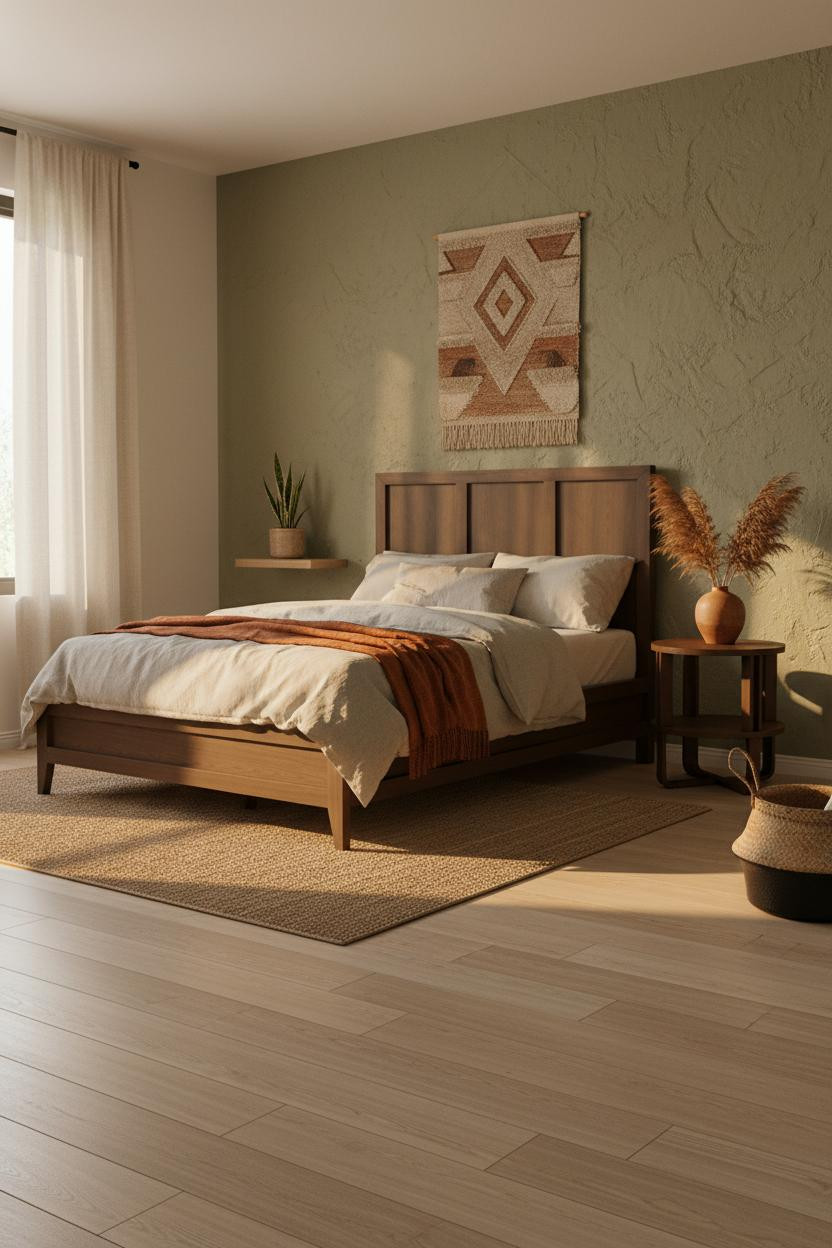
This is the earth tone bedroom green combination I’d actually commit to. Rough-troweled sage plaster with a burnt orange mohair throw draped across oatmeal linen.
What softens the room: The rough-troweled plaster finish deepens where shadows pool and brightens where afternoon light grazes it, so the sage wall looks different at 8am than it does at 6pm. That shift is what makes the room feel alive rather than painted. And the bleached oak floor keeps the green from going too forest-dark.

Our #1 Pick
Saatva Classic Mattress
America’s best-selling online luxury innerspring. 365-night trial, lifetime warranty, free white glove delivery.
Shop Saatva Classic
Why Luxury Bedrooms Always Feel Better
All of these rooms get the walls and floors right. But the part that actually matters at 11pm is what you sleep on. Walls get repainted. Linen gets swapped out. The mattress stays.
The Saatva Classic has the kind of dual-coil support that holds up over years without going soft in the middle. The Euro pillow top is cushioned without losing structure, and the organic cotton cover breathes in a way that cheaper mattresses don’t.
Get the room right. Then get the bed right.

The rooms worth saving are the ones where nothing looks accidental. Pick your wall, pick your palette, and let everything else follow from there. Good design ages well because it’s made well.