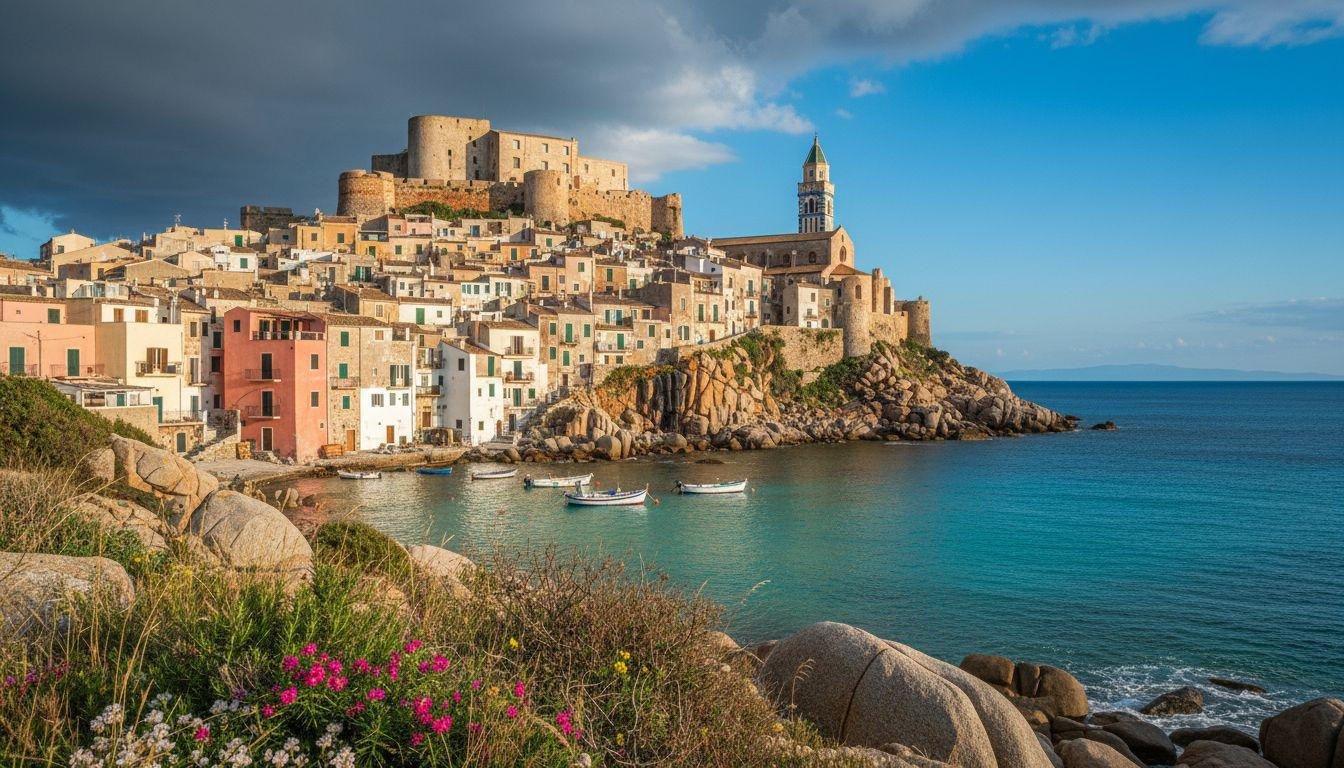
Castelsardo rises from the Gulf of Asinara like a medieval dream made real. Pastel houses in ochre and white cascade down granite cliffs to turquoise water. A 12th-century fortress crowns the promontory. Population 5,800. This is Sardinia’s quieter answer to Cinque Terre, at half the cost and a tenth of the crowds.
March 2026 brings the perfect window. Temperatures hover between 59-68°F. Wildflowers bloom across the maquis. The town empties of summer tourists. What remains is authentic Mediterranean life, unhurried and intact.
The castle that watches everything
Castello dei Doria sits 280 feet above the gulf. The Genoese built it in the early 1100s as a defensive stronghold. Ramparts wrap the promontory for 1,640 feet. Inside, the Mediterranean Weaving Museum displays over 1,000 artifacts of intreccio basketry, ancient rush and palm techniques that link generations.
Climb the fortified walls at 5pm for golden hour. The entire Gulf of Asinara spreads below. On clear days, Corsica appears 7 miles north. The majolica-tiled bell tower of the cathedral glows in afternoon light. Entry costs $5-10. The museum closes at 7pm March through May.
Morning visits at 9am offer solitude. Sea spray drifts up the granite. Stone walls warm under spring sun. Medieval coastal fortresses rarely feel this alive.
14 spots where medieval meets Mediterranean
The old town’s cobbled heart
Steep alleys wind through the historic center. Houses cling to hillsides in terraced rows. Basket-weavers work in open workshops along Via Vittorio Emanuele, their hands moving through patterns 5,000 years old. Family trattorias serve malloreddus pasta for $12-15. The scent of baking bread fills morning air at 7am.
Walk the 1-kilometer loop in 45 minutes. Every turn reveals gulf views. Doorways frame the sea. Locals greet you with “bvongiornu” in Sardinian. The general store sells fishing bait and coffee from the same counter.
Beaches that stay quiet
Marina di Castelsardo curves 980 feet below the old town. Clear turquoise water laps sandy shallows. Twenty fishing boats depart before dawn, return by mid-afternoon. No boutique hotels yet. The beach bar serves espresso for $2. Water temperature reaches 63°F by May.
Lu Bagnu Beach stretches 1 kilometer west via SP90. Golden sand backed by Mediterranean scrub. Rocky ends hide snorkeling spots where fish dart through clear water. Four kilometers from town, seven-minute drive. No facilities, bring water. Twenty visitors on a March day versus 1,000 in August.
Ancient stones and natural wonders
Roccia dell’Elefante sits roadside 3 miles south. Wind carved granite into an elephant shape over 10,000 years. Five Neolithic tombs hide in the rock, burial chambers 5,000 years old. Park on the SP81 shoulder. Fifteen-minute stop. Morning light turns the stone copper-orange.
Nuraghe Paddaiu preserves Bronze Age mystery 4 miles inland. The main tower stands intact after 3,500 years. Circular stone chambers echo with history. Fair dirt road access. Pair with Elephant Rock for a prehistoric circuit. Ancient Mediterranean sites like this remain surprisingly accessible.
Sacred spaces and sunset towers
Cathedral of Sant’Antonio Abate dates to 1586. The majolica bell tower displays hand-painted tiles restored in the 20th century. Underground crypts hold anonymous 15th-century frescoes, golden Virgin scenes discovered in the 1960s. The Black Christ statue rests here between Holy Week processions. Free entry, modest dress required.
Frigiano Tower guards the coast 20 minutes west by footpath from Marina. Spanish builders raised it in the 16th century against Saracen pirates. Waves crashed it to rubble within years. Rebuilt behind a dam in the 20th century, now a sunset icon. Interior closed but exterior views stun. Wind whips ancient stones at 7pm golden hour.
Living traditions
Holy Week transforms the town. Lunissanti procession on Maundy Thursday, March 26, 2026. Barefoot locals carry the Black Christ through narrow alleys. Two hundred participants, two-hour route. Raw emotional fervor that defines Sardinian faith. Santa Maria delle Grazie church serves as spiritual anchor, white walls against blue gulf.
The port marina holds 500 berths. Thirty fishing boats work the gulf for sardines and octopus. Dawn market runs 6-11am Monday through Friday. Fresh catch auctions at 6am draw locals. Trattoria da Ugo serves seafood malloreddus for $12-15. Boat tours to Gulf of Asinara depart daily, $80 and up for four-hour sails.
Beyond the promontory
Costa Rossa cliffs glow red 12 miles east. Iron-oxide granite catches sunrise at 6:45am, turns copper-pink. The SP90 coastal drive loops 12 miles in 45 minutes. Viewpoints at Cala Ostina and Littigheddu offer paragliding launches, tandem flights $100 and up. Hidden coves require walk-in access, swimmable by May when water warms to 63°F.
Sedini wineries sit 6 miles inland. Vermentino di Gallura vines grow in stony terroir, producing citrus-mineral whites. Tastings pair wine with pecorino cheese and porceddu suckling pig, $30-50 per person. Book through local hotels or GetYourGuide. April through September offers best weather. Coastal wine regions across the Mediterranean share this quiet authenticity.
Horseback rides explore Anglona countryside. Two-hour tours cost $50 and up, suitable for beginners. Limestone canyons frame medieval Sedini village carved into cliffs. Domus de Maria rock church sits en route. March through May temperatures stay comfortable at 59-68°F, perfect for outdoor exploration.
When morning light changes everything
I spent three mornings at the harbor before understanding. Fishermen arrive at 5am. Nets dry on wooden racks. Gulls cry over fresh catch. The castle watches from above, same as it has for 900 years. Tourists sleep. Locals live.
The rhythm here predates tourism. Basket-weavers start work at 9am. Church bells mark noon. Siesta quiets the town 1-4pm. Sunset draws everyone to the ramparts at 7pm. This is what overtourism erased from Italy’s famous coasts.
Island towns across the Mediterranean once felt this way. Castelsardo keeps what the mainland lost.
Your questions about Castelsardo answered
When should I visit and how do I get there?
March through May offers 59-68°F temperatures and low crowds. September and October bring 75°F warmth post-summer. Avoid June through August when temperatures hit 90°F and beaches pack. Fly into Alghero Airport, 43 miles and one hour drive. Olbia Airport sits 75 miles away, two hours. Car rental runs $40-70 daily. Bus from Sassari costs $5-10, takes one hour but runs infrequently.
What makes Castelsardo different from other Sardinian towns?
The medieval fortress remains intact and lived-in. Basket-weaving traditions continue in family workshops. Holy Week processions preserve centuries-old rituals. Hotels cost $50-80 per night versus $200 in Porto Cervo. Annual visitors number 200,000 compared to Alghero’s 3 million. The town runs 15 percent below Sardinia average costs while maintaining authentic character.
How does it compare to Cinque Terre or Amalfi?
Castelsardo delivers similar medieval coastal beauty at half the price and a tenth of the crowds. Cinque Terre hotels start at $200, Castelsardo at $50-80. Daily visitors in March number 100-200 versus thousands on the Amalfi Coast. The turquoise gulf matches Positano’s water. Granite cliffs rival Manarola’s drama. But fishing boats still work here. Locals still outnumber tourists. The balance hasn’t tipped yet.
Sunset from the castle ramparts. Wind on ancient stones. The gulf turns gold. Corsica fades into evening haze. Fourteen spots where Sardinia’s quietest promontory keeps what tourism destroys elsewhere. March 2026 brings the window before the world catches on.