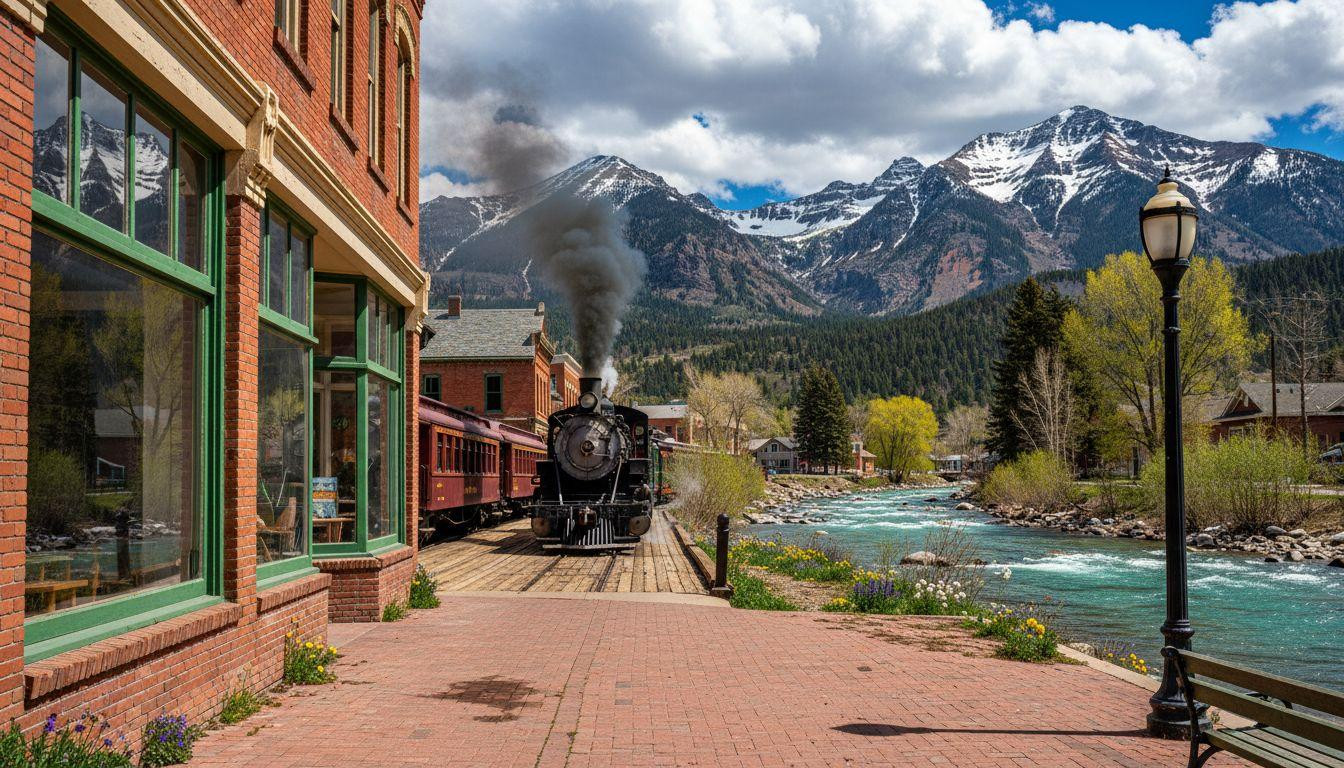
Durango sits at 6,512 feet where the Animas River cuts through the San Juan Mountains. Population 19,000. Three hours north of Albuquerque. The town delivers what Aspen charges double for: Victorian brick downtown, heritage steam trains, Class IV rafting, and ski slopes that cost $100 instead of $200. March through May, hotel occupancy drops 40% while late powder overlaps with early rafting season.
Main Avenue runs 12 blocks of red-brick buildings from the 1880s. No chains. Local breweries outnumber Starbucks seven to one. The Durango-Silverton Narrow Gauge Railroad still departs daily from the original 1882 depot, same tracks miners rode to Silverton’s silver veins.
Historic downtown where locals still own the breweries
Steamworks Brewing occupies an 1881 building at 801 East 2nd Avenue. Copper kettles visible through street windows. Carver Brewing opened in 1988 at 1022 Main Avenue, oldest taproom in the county. Both serve grass-fed beef from James Ranch 10 miles north.
The district holds over 200 independent shops. Ska Brewing, Animas Brewing, Switchback Brewery, and Durango Beer Company all operate within walking distance. A local fisherman who’s worked the Animas for 30 years says the brewery density happened because mining families never left after the silver bust. They just switched from ore to hops.
Free street parking after 6pm on weekdays. Most restaurants charge $20-35 per meal, half what Telluride demands. The butcher at James Ranch sells bison burgers for $12. For more affordable mountain towns with authentic local culture, Snake Creek keeps alpine views for $80.
The 1881 steam train that never stopped running
The Durango-Silverton Narrow Gauge Railroad covers 45 miles through Animas Canyon. National Historic Landmark since 1961. Coal-fired locomotives pull vintage cars on 3-foot gauge tracks. The full round trip takes 9 hours, climbs 3,000 feet, passes through two tunnels.
What makes the railroad different
This isn’t a museum piece. The railroad operates 365 days yearly, hauling passengers the same route that moved silver ore in 1882. Winter Polar Express runs November through January, $75 per adult. Summer full trips cost $100-150 depending on car class. Book south-facing seats for San Juan peak views.
The free railroad museum nobody mentions
The Railroad Museum at 479 Main Avenue opens 10am-4pm daily. Admission free. Twelve thousand square feet of artifacts, interactive models, restored train cars. A museum guide who’s worked there since 2019 says most tourists skip it because they assume it costs money. It doesn’t.
Seven miles of paved river trail from downtown to wilderness
The Animas River Trail runs along the water from Rotary Park to Schneider Park. Completely paved. No elevation gain. Locals use it for morning runs before work. Visitors rent eBikes for $40 daily and cover the full distance in 90 minutes.
Where the trail connects to whitewater
Half-day rafting trips launch from the trail at mile marker 3. Durango Rivertrippers charges $89 per adult for Class II-IV rapids. May through June brings peak snowmelt flow. Water temperature hits 55°F. The Animas runs turquoise from mineral content, not pollution. A raft guide who’s run this river for 15 years says the color comes from copper deposits upstream.
The hot springs 15 minutes from downtown
Durango Hot Springs Resort reopened in 2025 after renovation. Natural thermal pools range 98-104°F. Weekday mornings stay quiet until 10am. The contrast works: soak in 104°F water while March air sits at 35°F. Admission $25. For more geothermal experiences in Colorado, Ouray hot springs steam in 20°F snow.
Purgatory Resort where lift tickets cost half of Aspen’s
Purgatory sits 25 miles north of Durango. Elevation 8,793 feet at base, 10,822 at summit. Twelve lifts service 2,029 acres. Daily lift ticket: $100. Aspen charges $209 for equivalent terrain. Night skiing added for 2025-26 season runs Wednesday through Saturday until 8pm.
March delivers late powder with longer daylight. Average snowfall 260 inches annually. Beginner terrain covers 23% of the mountain. Stay in Durango hotels for $150-200 per night instead of slope-side lodging at $400. The 25-minute drive saves $250 nightly. For other affordable ski alternatives, this Utah resort costs $70 where Park City charges $209.
Mesa Verde cliff dwellings 40 miles west
Mesa Verde National Park preserves 600 Ancestral Puebloan cliff dwellings. UNESCO World Heritage Site. The drive from Durango takes 45 minutes via Highway 160. Guided tours of Cliff Palace cost $5 per person, run hourly from 9am-3pm. The dwellings date to 1190-1300 AD, built into sandstone alcoves 100 feet above canyon floors.
Combine Mesa Verde with Chimney Rock National Monument 60 miles northeast for a full archaeology loop. Both sites close November through March due to snow. April reopening brings empty parking lots and clear skies. A park ranger who’s worked Mesa Verde for 12 years says May offers the best balance of access and solitude.
Your questions about Durango answered
When should I visit to avoid crowds and save money?
March through May delivers 40% lower hotel rates than summer peak. Late skiing at Purgatory overlaps with early rafting season. Average March temperatures range 35-55°F. Snowpack lingers through April at higher elevations. Wildflowers start blooming in San Juan meadows by late May. Summer crowds peak June through August when occupancy hits 70%.
How does Durango compare to Telluride for outdoor access?
Durango receives 500,000 annual visitors versus Telluride’s 1 million. Hotel costs run 20-30% lower. Both offer similar terrain: 14,000-foot peaks, heritage railroads, Class IV rafting. Durango maintains working-town authenticity while Telluride skews resort-exclusive. The Animas River runs through downtown Durango, eliminating shuttle drives to put-in points.
What’s the Silverton loop drive like in spring?
The Million Dollar Highway (US-550) connects Durango to Silverton via three mountain passes. Total distance 50 miles one-way. Drive time 90 minutes without stops. The road climbs to 11,018 feet at Molas Pass. Snow lingers on north-facing slopes through May. Leave by 7am to avoid afternoon squalls. Silverton preserves an 1880s main street with 400 permanent residents. For more mountain heritage experiences, this 1944 wooden bridge spans fog where river meets Pacific.
The steam train whistle carries across town at 8:45am when the first departure leaves for Silverton. You hear it from Main Avenue if the wind blows east. That sound hasn’t changed since 1882. Neither has the rhythm of this place.