
The best black and neutral bedroom doesn’t announce itself. It just feels right the moment you walk in.
These eleven rooms prove the palette works at every scale, every budget, and every architectural starting point. Something here is worth stealing.
The Fluted Wall That Changes The Whole Room


Bold choice. Not for every room.
But the people who commit to floor-to-ceiling fluted plaster columns in matte black never go back to a flat wall.
Why it looks custom: Each vertical ridge catches ambient light differently, so the wall has movement without any pattern or print.
Avoid this mistake: Don’t stop the columns at headboard height. Full wall or nothing. Half-measures just look unfinished.
When The Ceiling Does All The Work
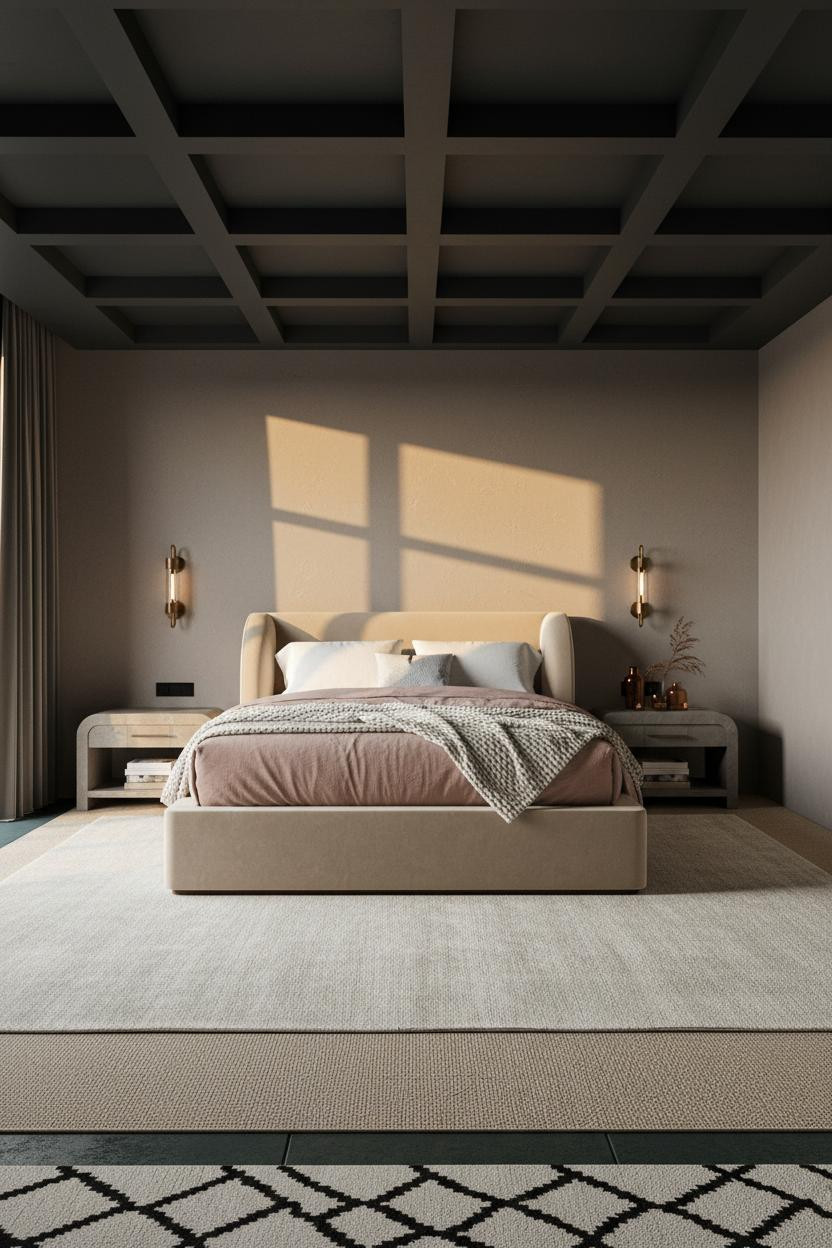

I keep coming back to this one because most people never look up.
What carries the look: The matte black coffered grid casts precise geometric shadows downward, so the architecture does the decorating while the walls stay calm.
The smarter choice: Keep the walls in warm dove grey plaster so the ceiling reads bold, not heavy. One surface gets the drama.
Board-And-Batten Below The Plaster Line
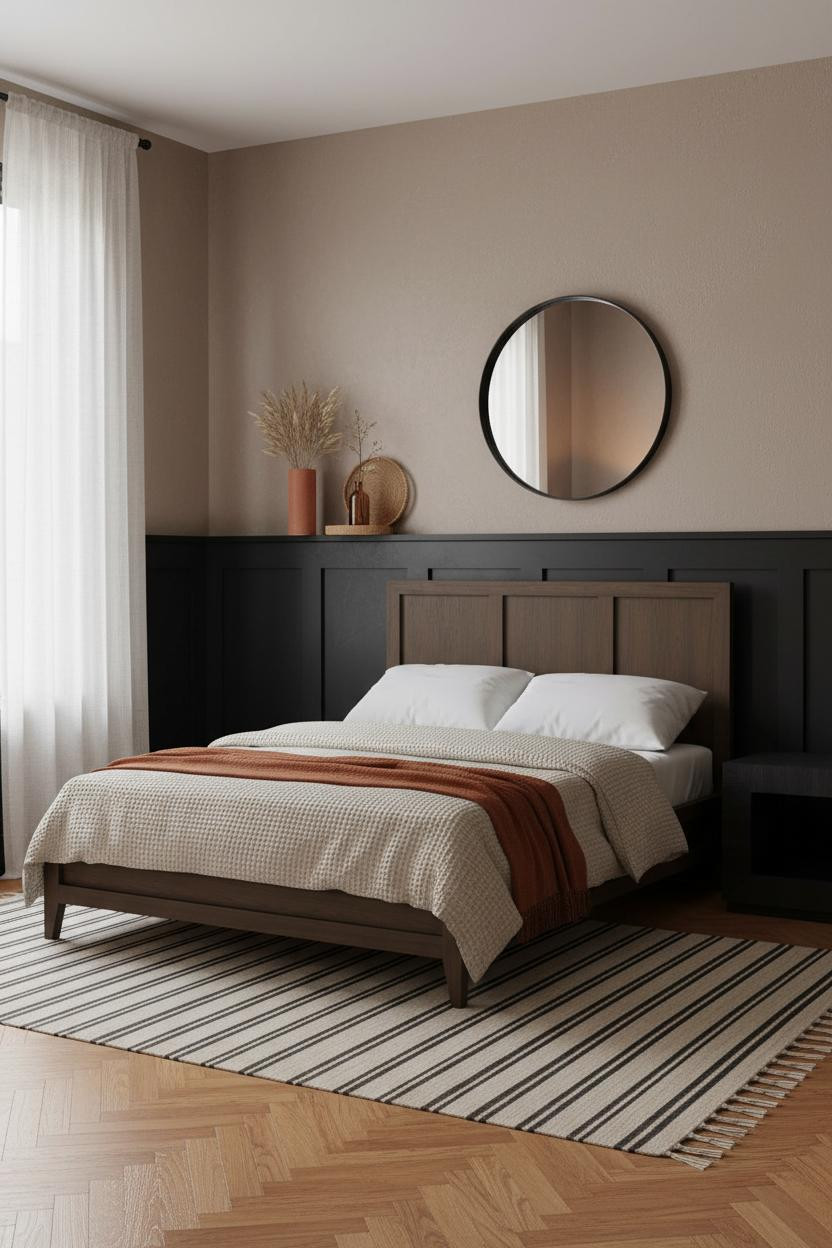

This is the version of board-and-batten I actually want in my own home. Unhurried, grounded, a little rustic.
Why it feels intentional: Matte black powder-coat wainscoting against taupe plaster creates a clean horizontal divide that reads as architecture, not decoration, especially when paired with honey herringbone floors.
Worth copying: Layer a rust linen throw over an oatmeal duvet at the foot. The warm tones keep the black from feeling stark.
Charcoal Wainscoting With Ivory Above
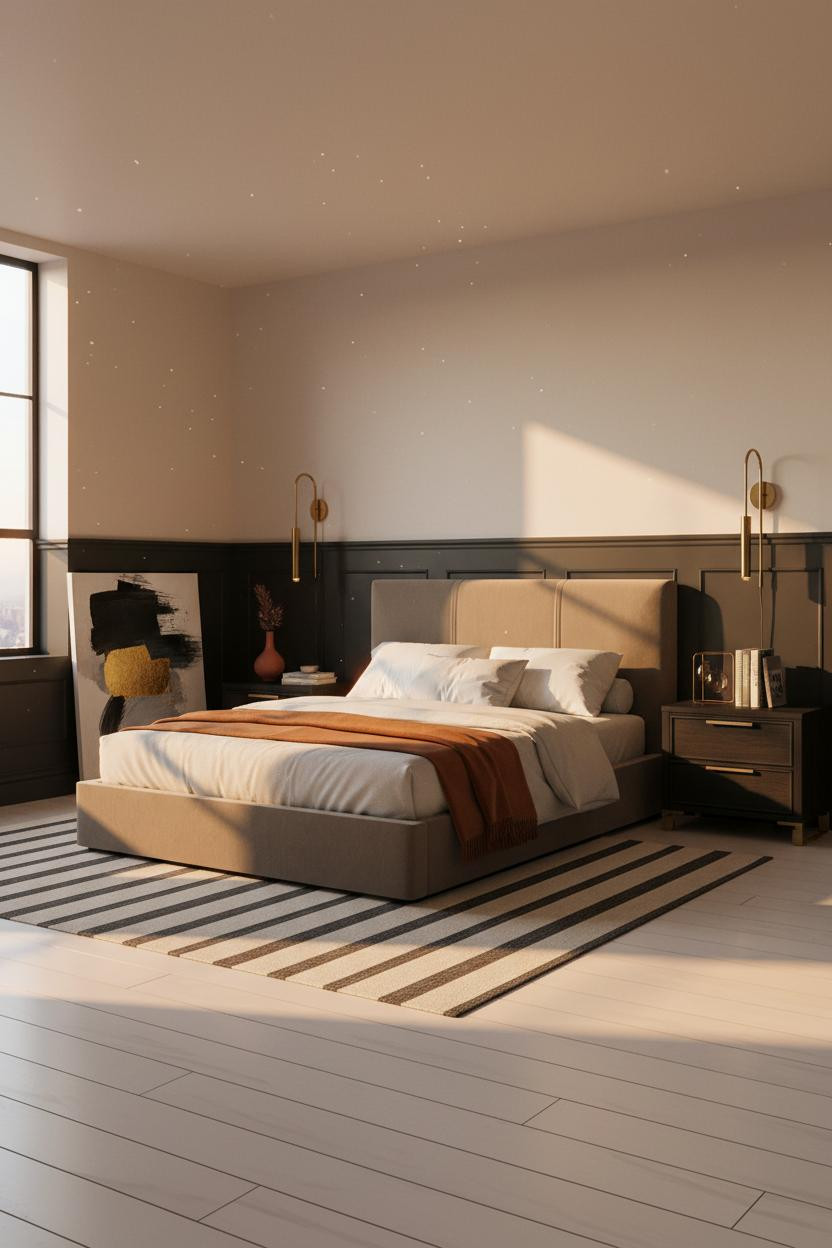

Same idea as wainscoting, different energy. This one is darker, more feminine, more dramatic at the edges.
The charcoal flat panels absorb the raking afternoon light while the ivory upper walls hold the glow, which is why the room feels warm and grounded at the same time. Design logic: contrast does the heavy lifting so the furniture doesn’t have to.
The finishing layer: A burnt orange mohair throw is the single easiest way to stop a black-and-ivory room from feeling too cool.
A Gallery Wall That Actually Earns Its Place
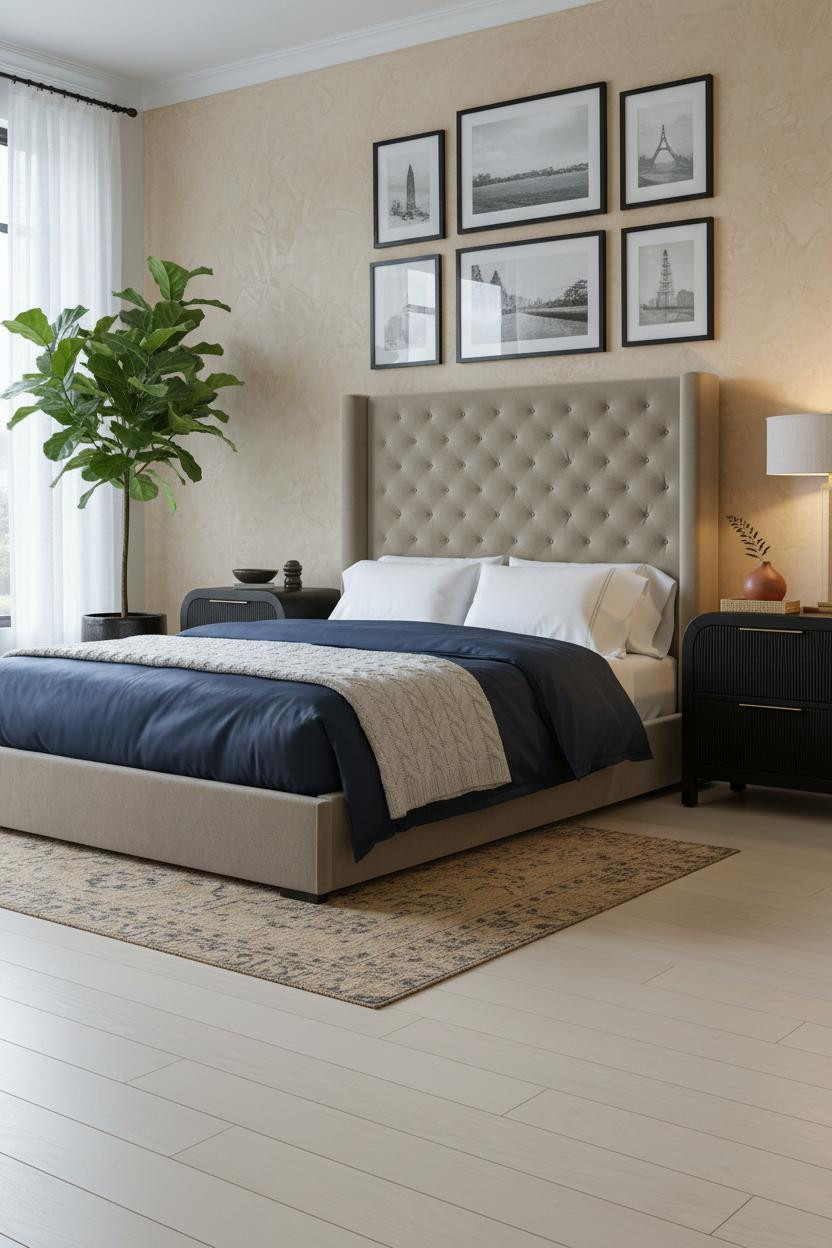

Most gallery walls feel collected by accident. This one doesn’t.
What makes this one different: The hand-applied sand plaster behind the prints gives the wall its own texture, so the frames float against something with depth rather than just paint.
Hang one print slightly crooked on purpose (honestly, it helps). Nothing too precious keeps a neutral bedroom from feeling like a showroom.
Floor-To-Ceiling Shelving As The Statement
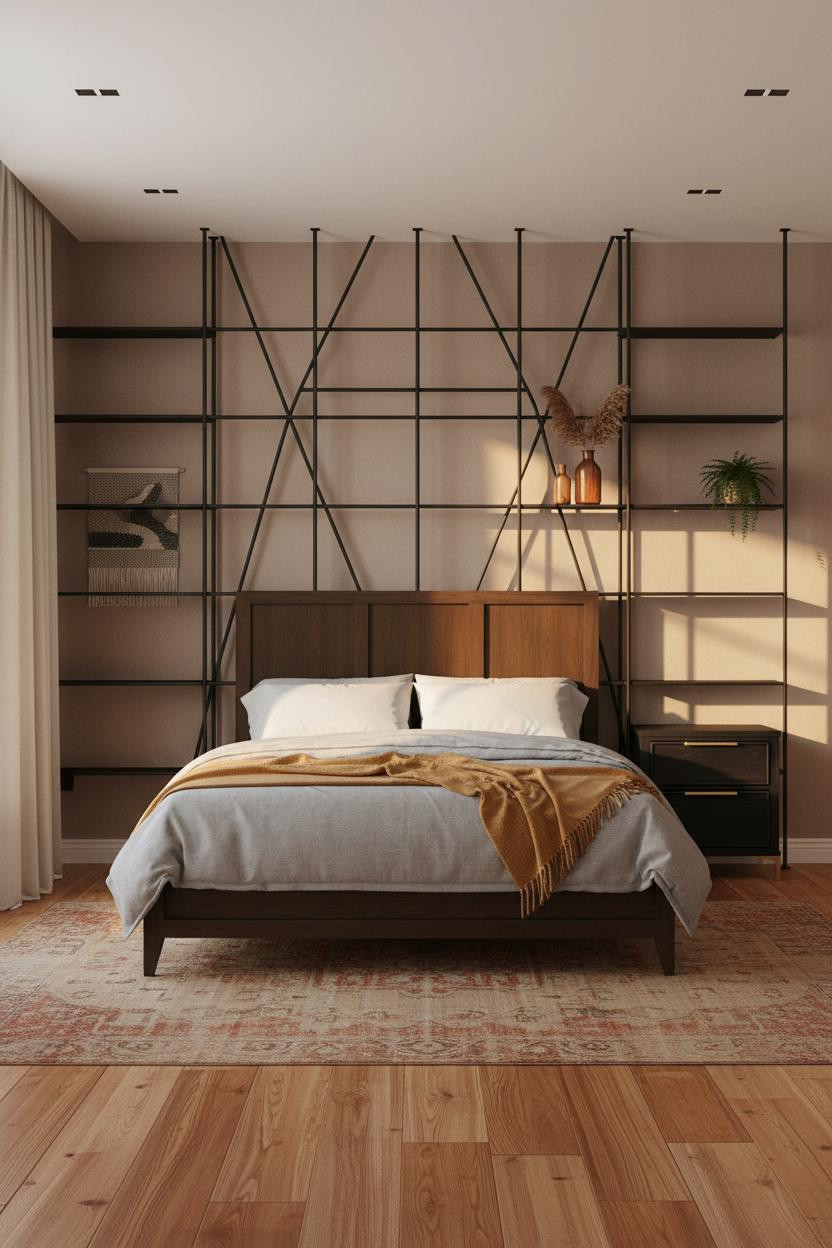
This is the move when you want the wall to be the art. No prints needed.
Why it holds together: A matte powder-coated metal grid twelve feet tall prints its own shadow lattice across the adjacent warm wall as the light shifts, so the room changes through the day while the furniture stays quiet.
Where to start: Style only two or three shelves. Leave the rest open. The negative space is what makes it feel Japandi rather than storage.
Exposed Brick Doesn’t Have To Feel Industrial
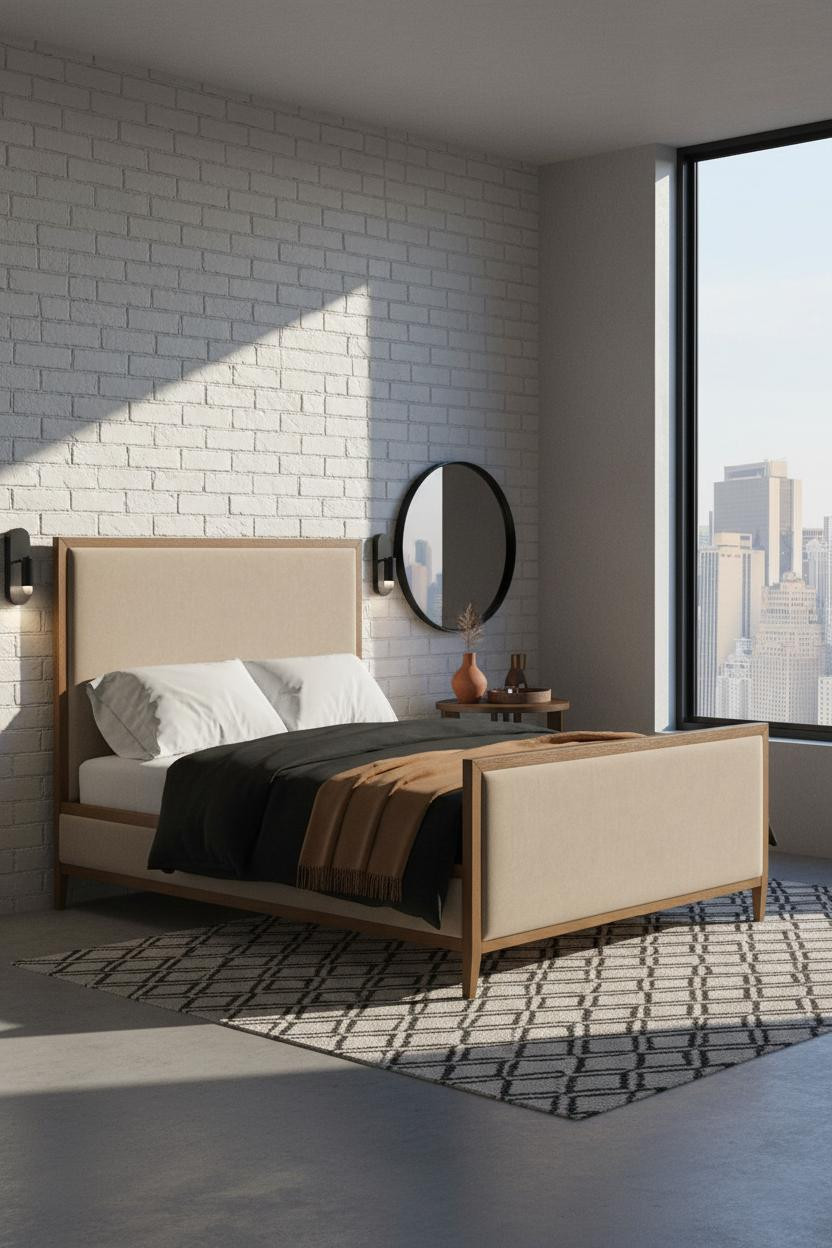


I almost dismissed this one. Exposed brick in a bedroom can go very wrong, very fast.
What changes the room: Painting the brick in matte ivory white keeps the raw texture while pulling the surface into the neutral palette, so you get tactile depth without the loft-apartment feel.
One smart swap: Swap the typical art print for an oversized round black mirror above the nightstand. The reflection bounces morning light off the brick face beautifully.
The Arched Niche That Frames The Bed Zone
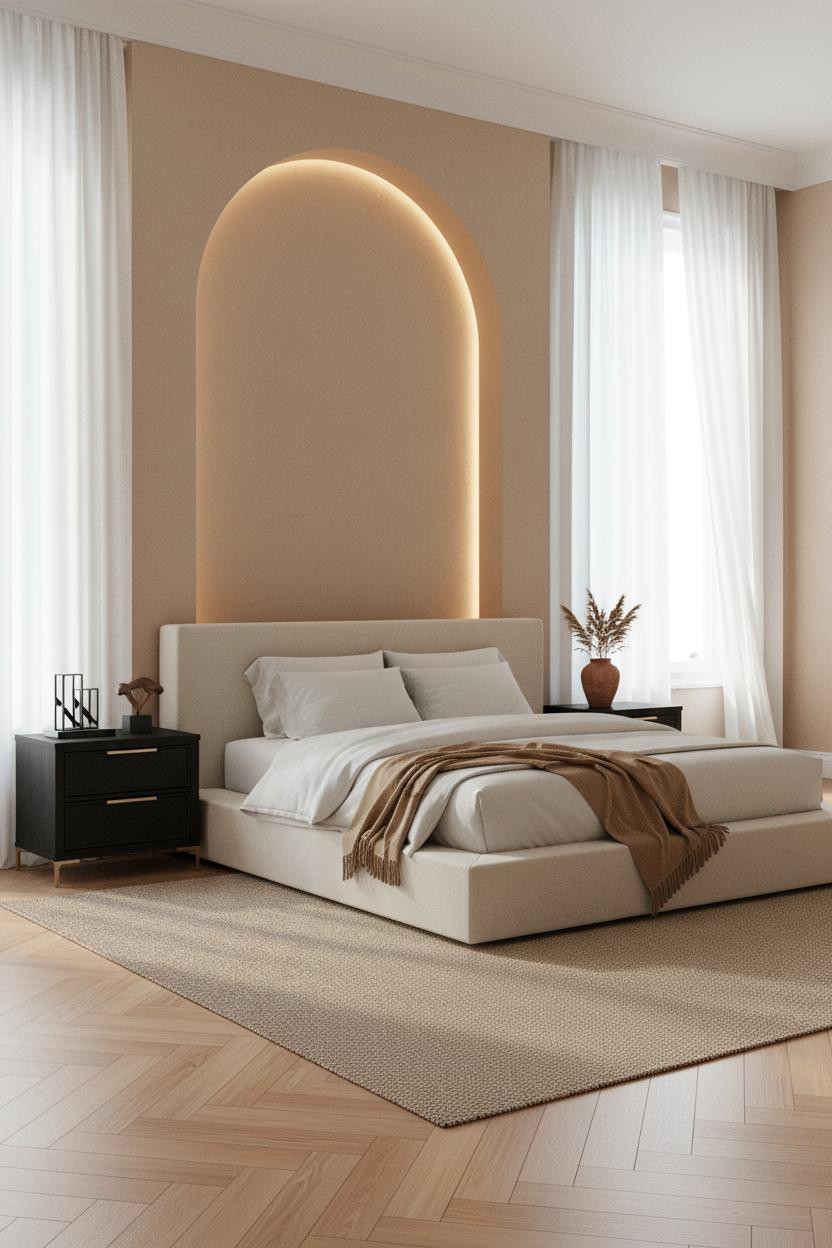

I almost scrolled past this. Glad I didn’t.
A floor-to-ceiling arched niche built into the plaster wall is the closest thing to a headboard that isn’t a headboard. The soft sand plaster reveal catches warm ambient bounce light in a way that flat wall never could, and the curved edges make the whole zone feel hushed and deliberate. Pair it with ivory linen curtains floor to ceiling and the room feels like calm architecture rather than a decorated box.
Full-Wall Charcoal Batten Done Right
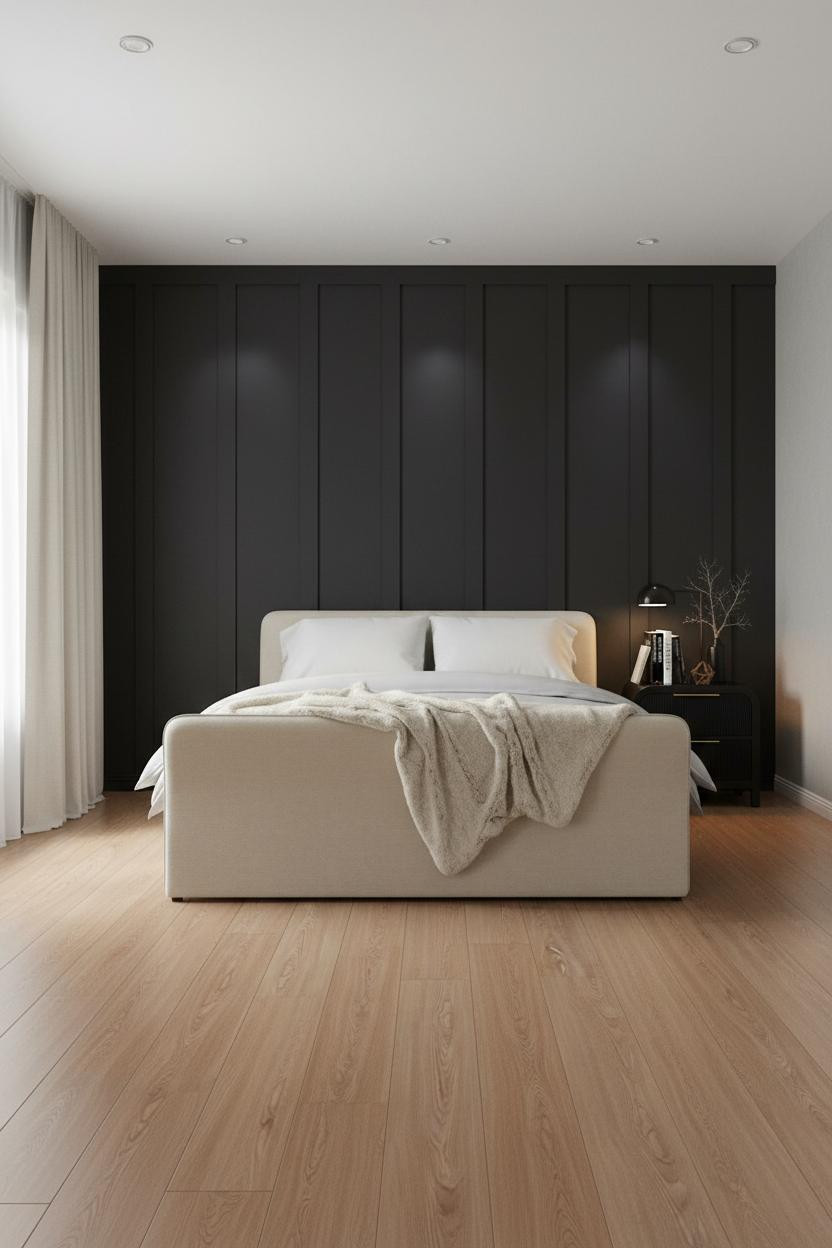
Nothing fancy about board-and-batten. That’s the point.
Why it feels expensive: A deep charcoal full-wall batten reads as architectural finish rather than paint color, especially under flat overcast light where each vertical strip casts its own hairline shadow.
Skip the rug here. The warm honey maple floor does more work without one, and the room feels less busy. The easy win is adding a cream faux fur throw at the foot to keep things from going too severe.
Vertical Wood Slats For A Modern Japandi Feel
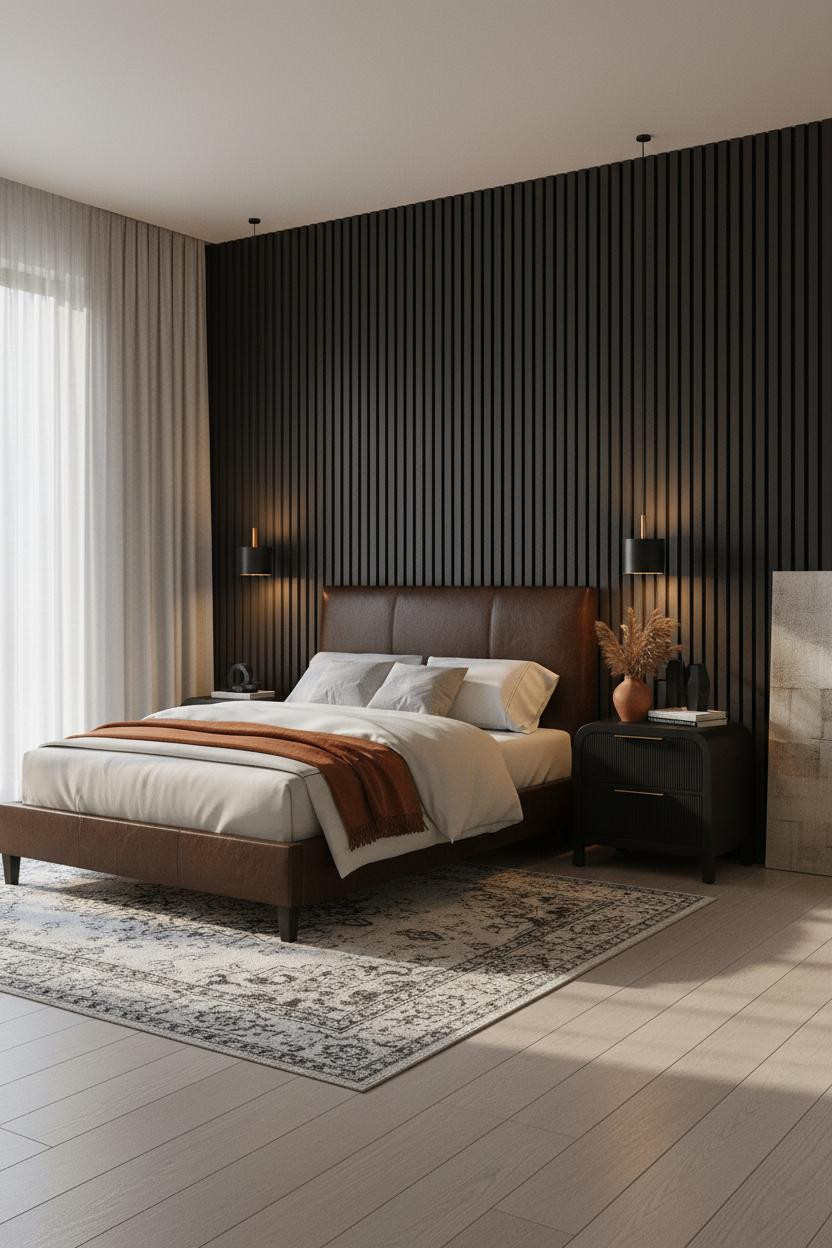

This is the version of a black accent wall I’d actually live with. Spare, geometric, alive in the light.
What gives it presence: Vertical black wood slat paneling floor to ceiling creates fine parallel shadow lines that shift as the light moves, giving the wall rhythm in a way flat paint simply can’t replicate.
What to copy first: Lean an oversized raw linen canvas against the side wall rather than hanging it. The informality breaks the geometry just enough, while still feeling considered.
Japandi Windows That Print Geometry On The Walls
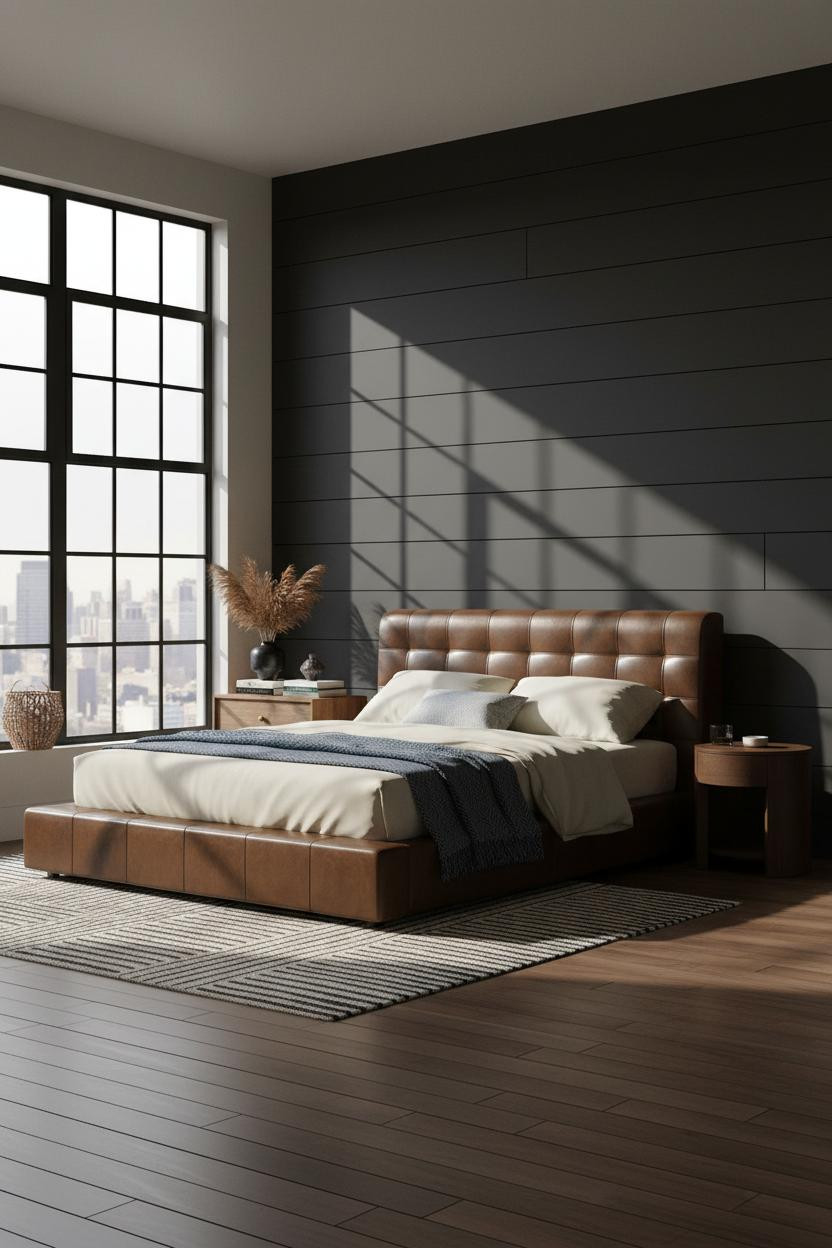


The room is the window. That’s the whole idea here.
Why the palette works: Black steel-frame muntins against warm greige plaster let the window be the graphic element, so the walls can stay quiet and the room feels calm and cohesive rather than busy.
Pair a matte black shiplap accent wall opposite the window so the geometry echoes across the room. And keep the dark neutral palette warm with an ivory linen duvet, not white cotton. The difference is subtle, but you feel it.

Our #1 Pick
Saatva Classic Mattress
America’s best-selling online luxury innerspring. 365-night trial, lifetime warranty, free white glove delivery.
Shop Saatva Classic
The Foundation Of Every Beautiful Bedroom
Walls get repainted. Linen gets swapped out. The mattress stays. So it makes sense to start there.
The Saatva Classic uses a dual-coil support system that holds up over years, not just months, and the Euro pillow top has that specific softness that feels right without losing structure. The breathable organic cotton cover keeps things from trapping heat, which matters more than people admit when the room is already running warm with dark walls.
Good design ages well because it’s made well.

The rooms people save are the ones where nothing feels accidental. Start with what you sleep on and edit everything else from there.