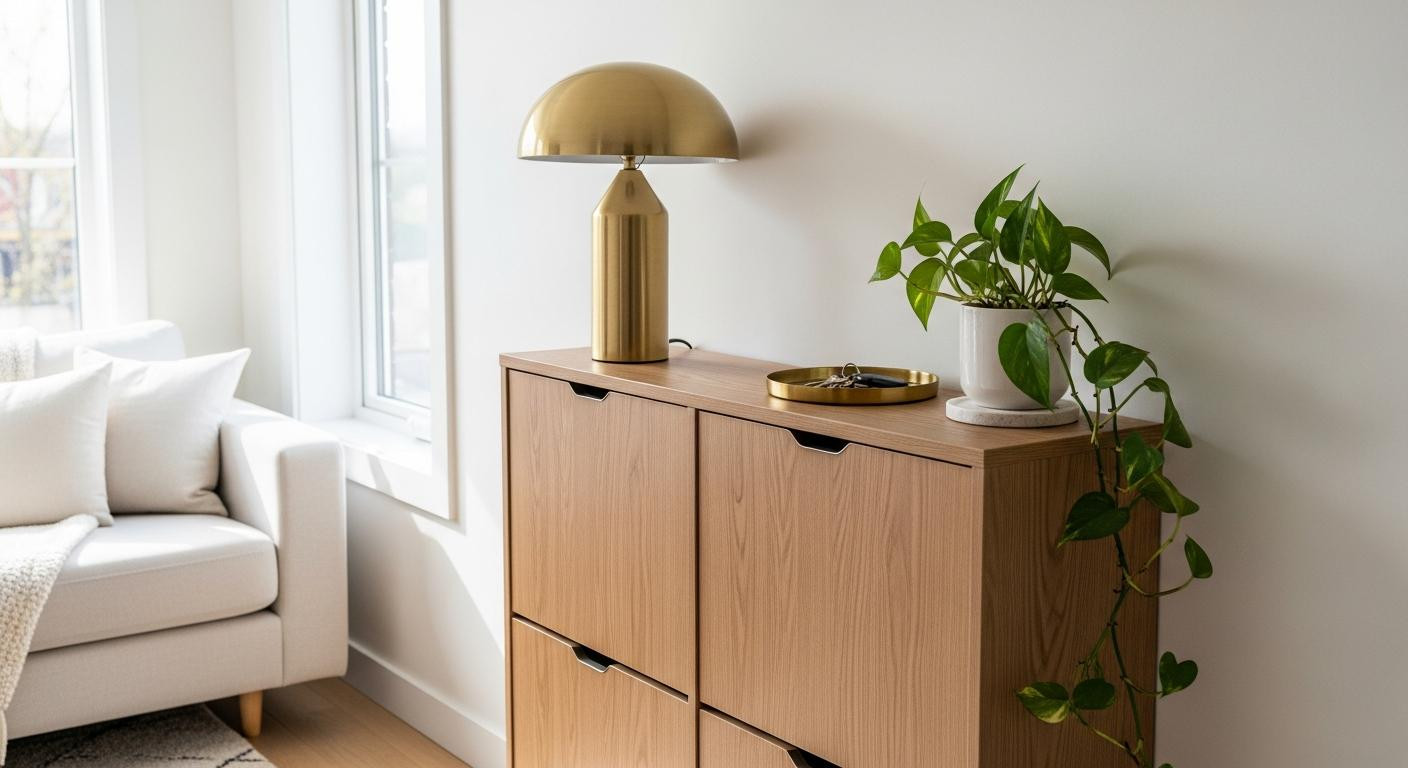
The IKEA STÄLL shoe cabinet sits 38 inches from my couch, oak veneer warm against the white living room wall. Topped with a brass lamp and trailing pothos, it reads as intentional decor, not emergency storage. Three months ago, shoes piled near the door in chaotic heaps.
My lease bans coat closets, the hallway measures 28 inches wide, and I refused to let my 220-square-foot living room feel like a dumping ground. This slim cabinet solved the spatial equation by breaking the rule that shoe storage belongs hidden in entryways. And honestly, it’s one of those details that quietly elevates the whole space.
Why shoe cabinets work as living room furniture when hallways fail
Traditional hallway shoe racks create bottlenecks in apartments where every inch matters. The STÄLL measures just 6¾ inches deep, which sounds minimal until you realize that’s shallow enough to hug living room walls without eating floor space. In a 28-inch-wide hallway, that same cabinet blocks traffic flow and makes you turn sideways to pass.
Interior designers featured in IKEA publications confirm cabinets create “calm, clean” spaces when positioned where you actually live, not crammed into transitional zones. But here’s the shift: you have to stop viewing shoe storage as a utilitarian necessity and start recognizing it as furniture that serves the room you spend time in. The emotional difference between a dumping ground and a curated surface is just 12 inches of cabinet depth.
Closed cabinets photograph like credenzas when styled right. Open racks scream “clutter zone” no matter how you arrange them. The result is a space that feels intentional, especially when paired with warm wood that balances all the white.
The styling details that make a shoe cabinet look expensive
Morning light catches the brass lamp at 8:15am, throwing soft shadows across the cabinet’s oak surface. That top layer matters more than the storage function underneath. I stacked a 22-inch tall lamp, a pothos trailing 12 inches down the side, and a small brass tray holding keys.
Height variation creates visual interest that flat surfaces lack. The lamp anchors the vertical line, the plant softens the geometry, and the horizontal tray grounds the composition. And it’s not precious or fussy, just three objects doing different jobs at different heights.
The STÄLL’s oak veneer at $179.99 reads warmer than the black ÄLGANÄS metal rack at $19.99. Admittedly, black works for industrial lofts, but wood tones suit cozy modern aesthetics better. I swapped the generic knobs for $8 brass pulls from Home Depot, which added a custom touch without the $500+ price tag of West Elm modular cabinets.
Placement strategies for tight urban spaces
I positioned the cabinet perpendicular to the door swing, 10 inches from the wall corner. This creates a landing zone without blocking couch sightlines, which keeps the room from feeling too crowded. For spaces narrower than 12 feet, wall-mount shoe racks work better than floor cabinets, according to storage experts featured in Apartment Therapy.
The KÄLLSÖ bench at $99.99 doubles as sofa backing in open layouts, providing 36-inch seating plus shoe storage. But that only works if your sofa sits 18+ inches from the wall, which mine doesn’t. Layout fixes for narrow living rooms often require floating furniture, not against-wall arrangements.
The tilt-down doors need 8 inches of clearance to open fully. I learned this the hard way when I placed the cabinet too close to my couch arm the first week, and the door hit the upholstery every time. That spatial math matters more than you’d think.
What this doesn’t solve (and why I’m fine with that)
The STÄLL holds 8 pairs max in four compartments, despite product specs claiming more. My sneaker collection hit 18 pairs, so overflow lives in the bedroom closet. Not ideal, but the trade-off between perfect storage and calm aesthetics tilted toward aesthetics.
Assembly took 90 minutes solo with confusing cam lock instructions that required backtracking twice. And the cabinet requires wall anchors for stability, which means drilling into your rental wall or risking tip-over with kids around. Other shallow storage solutions offer easier installs, but none look this sleek.
For childfree renters prioritizing visual calm over family chaos, the limits feel minor. But if you have toddlers who refuse to use cabinets, this setup frustrates more than it solves.
Your questions about putting shoe racks in living rooms answered
Does a shoe cabinet in the living room make the space smell?
Closed cabinets contain odors better than open racks because air doesn’t circulate freely. I use cedar shoe trees at $12 for 2 pairs inside compartments, which absorb moisture and prevent that gym-bag funk. Baking soda sachets work too, though they need replacing every 3 months.
The STÄLL has small ventilation gaps in the door design that prevent moisture buildup without releasing obvious smells. It’s not airtight, which helps in a way that feels intentional.
Which IKEA shoe storage looks least like shoe storage?
The KÄLLSÖ bench in gray reads as seating first, storage second. The STÄLL in oak veneer passes as a credenza when you top it with decor. Budget pieces that feel expensive share this quality of disguising function through material choice.
Avoid the GREJIG wire rack at $4.99 or TJUSIG at $29.99, which scream utility no matter how you style them. Metal and open slats don’t translate to living room elegance.
Can renters install floor-to-ceiling shoe racks without drilling?
No. The ELVARLI system requires wall anchors for stability per IKEA safety instructions, and tension rods don’t support shelf weight safely. Stick to freestanding STÄLL or KÄLLSÖ for lease compliance. Cozy modern upgrades work best when they don’t jeopardize your security deposit.
Steam from my coffee curls past the pothos leaves at the cabinet’s edge. The living room feels intentional now, not accidental. Shoes sit hidden behind oak veneer while the space reads warm, minimal, curated.