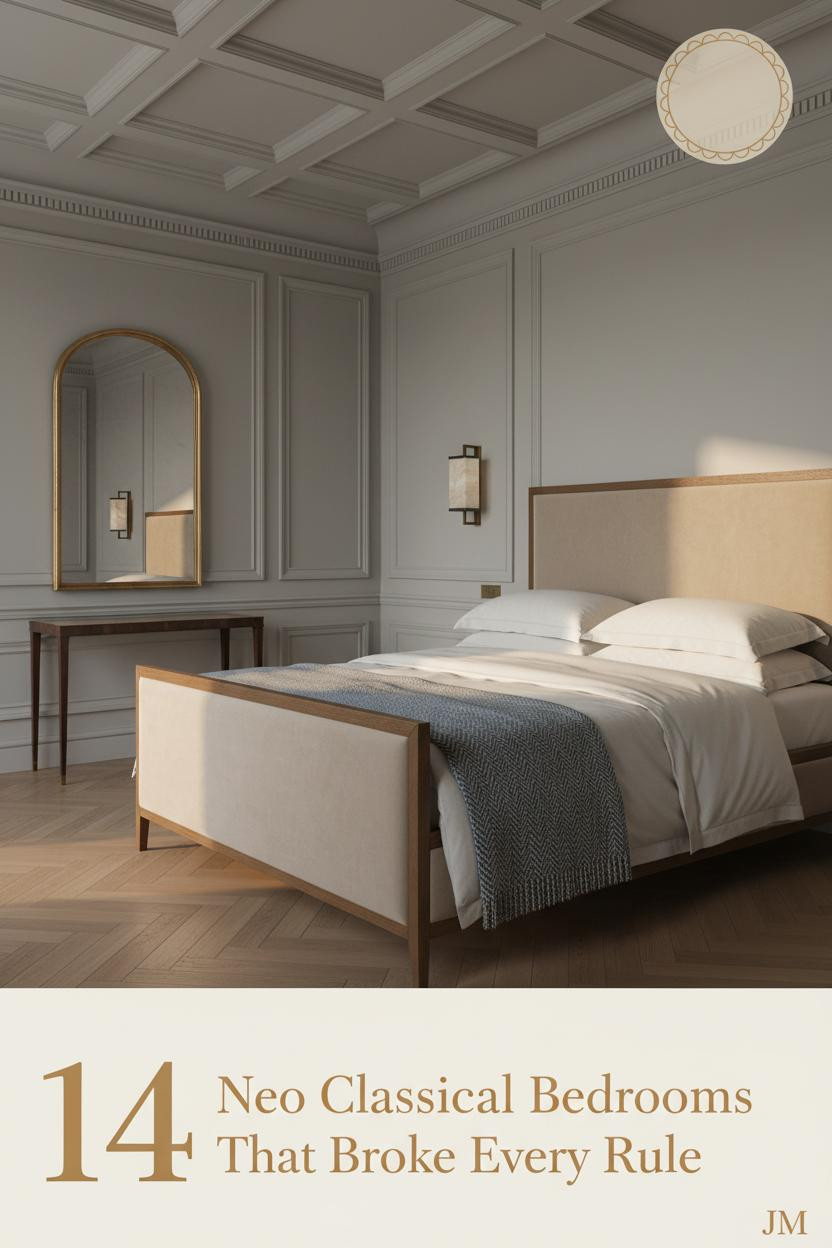
The first thing you notice in the best Neo Classical Bedroom isn’t the furniture. It’s the architecture behind it.
Pilasters, friezes, coffered ceilings. These rooms feel collected rather than decorated because the bones were built to last.
Forest Green Pilasters That Change The Whole Room
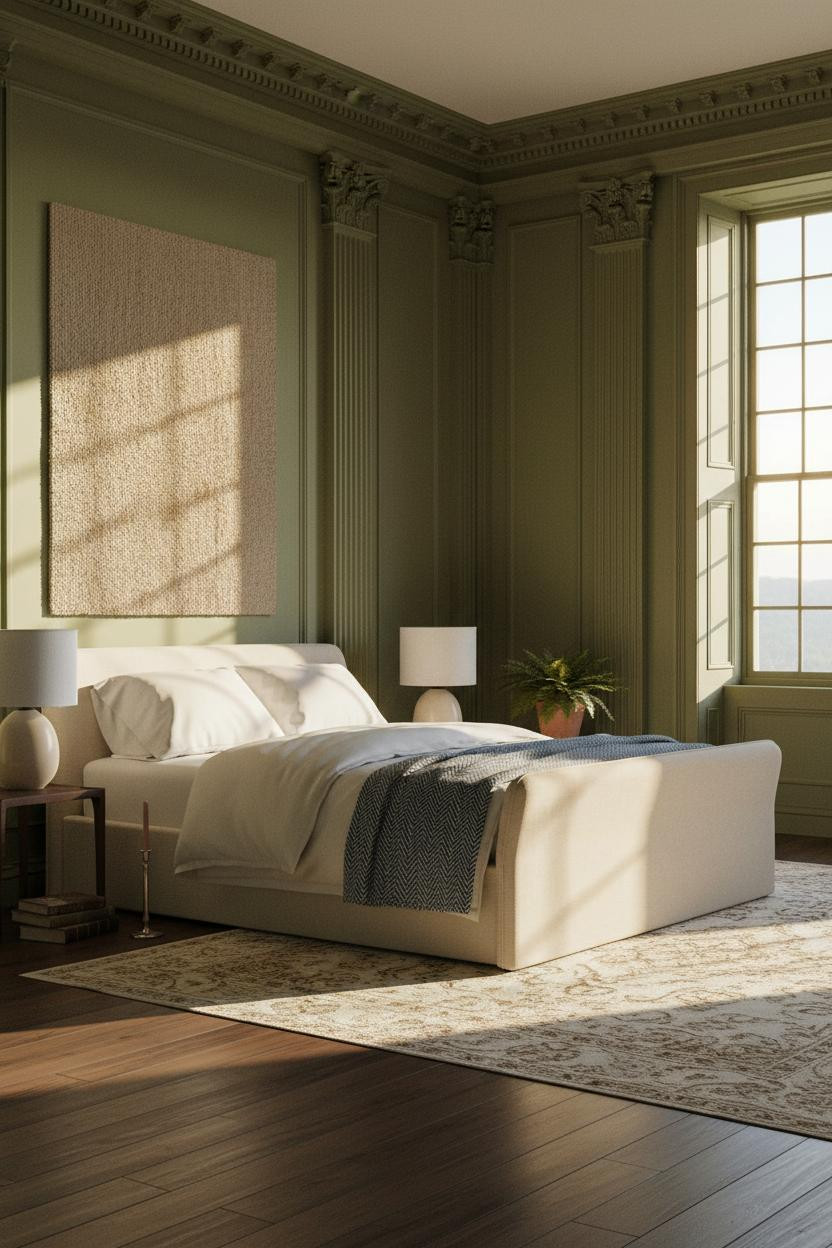


I keep coming back to this one. The forest green pilasters do something unexpected: they make the whole room feel anchored, not heavy.
Why it holds together: Deep-relief acanthus capitals catch the afternoon light at the right angle, which keeps the color from reading flat against the dark walnut floor below.
Steal this move: Pair full-height pilasters with cream percale bedding. The contrast does all the work.
Mushroom Plaster Walls That Feel Permanent
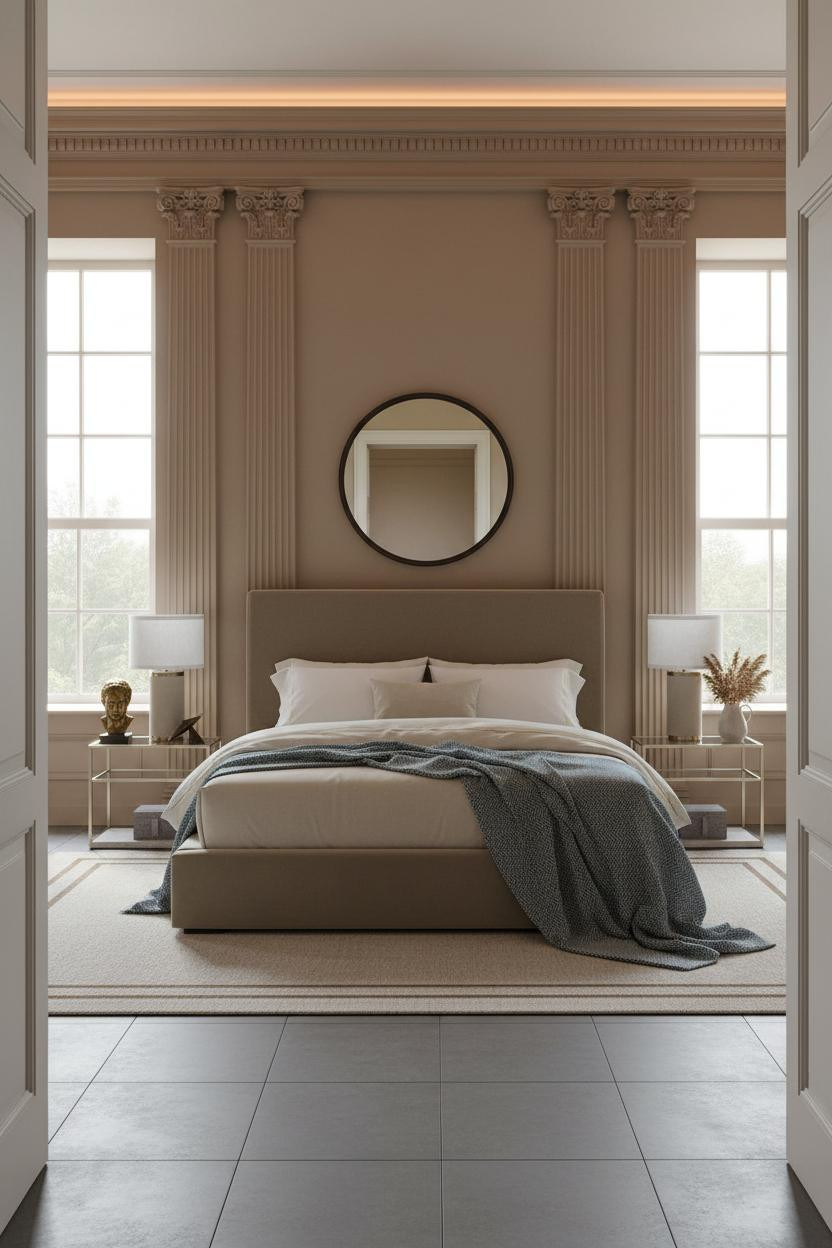

Calm authority. That’s the only way to describe what twelve-channel Ionic fluting does to a headwall this wide.
But the real trick here isn’t the pilasters. It’s the warm mushroom plaster tone that keeps the Ionic relief from feeling like a museum.
What to borrow: A round mirror with a slim oxidized iron frame reads lighter than rectangular above a low console, which helps balance all that vertical architecture.
Charcoal Walls With Honey Wood That Shouldn’t Work
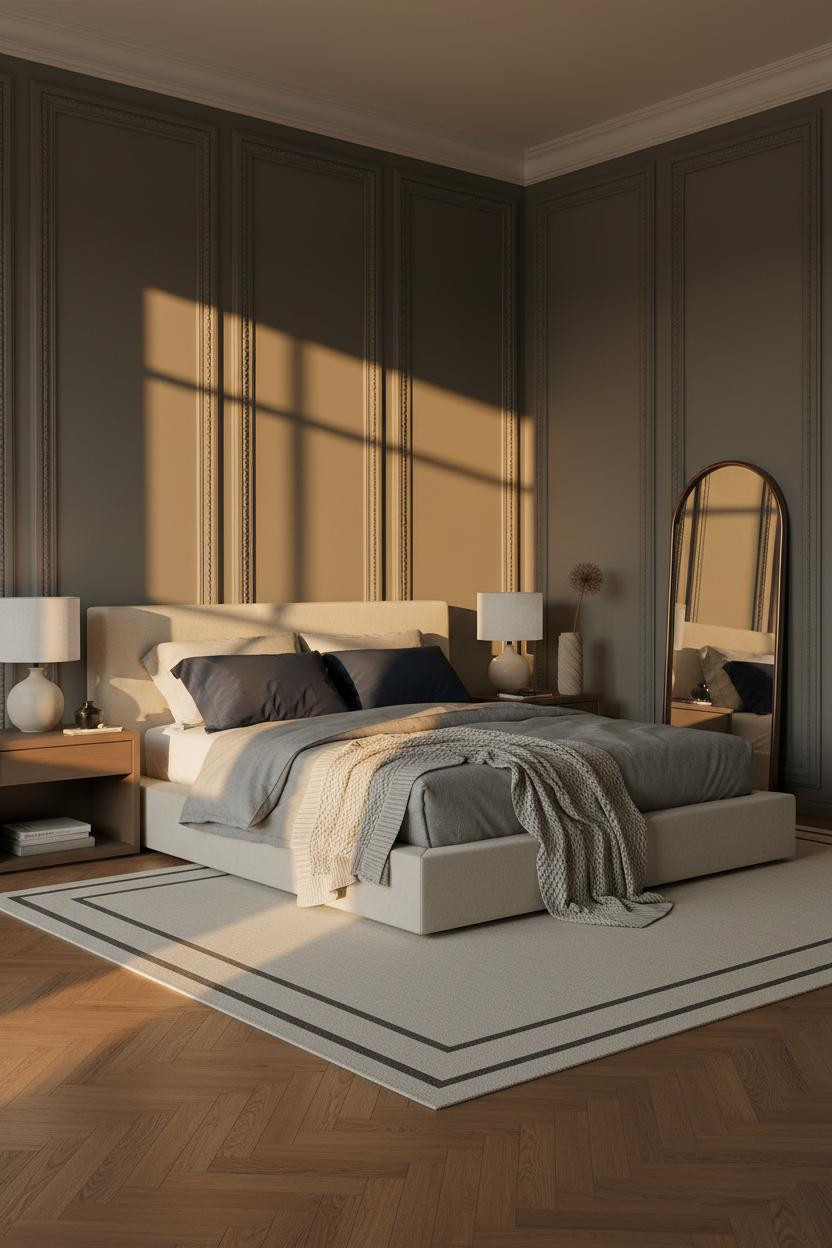


This one surprised me. The proportions shouldn’t work, but they do.
The charcoal-slate rope-twist banding catches oblique afternoon light in a way that warm tones never could, while the honey walnut herringbone parquet below stops the whole thing from going cold.
The smarter choice: If you’re committing to a dark wall treatment, lean into warm wood underfoot. The contrast earns itself.
Acanthus Capitals And The Warm Clay Wall Behind Them
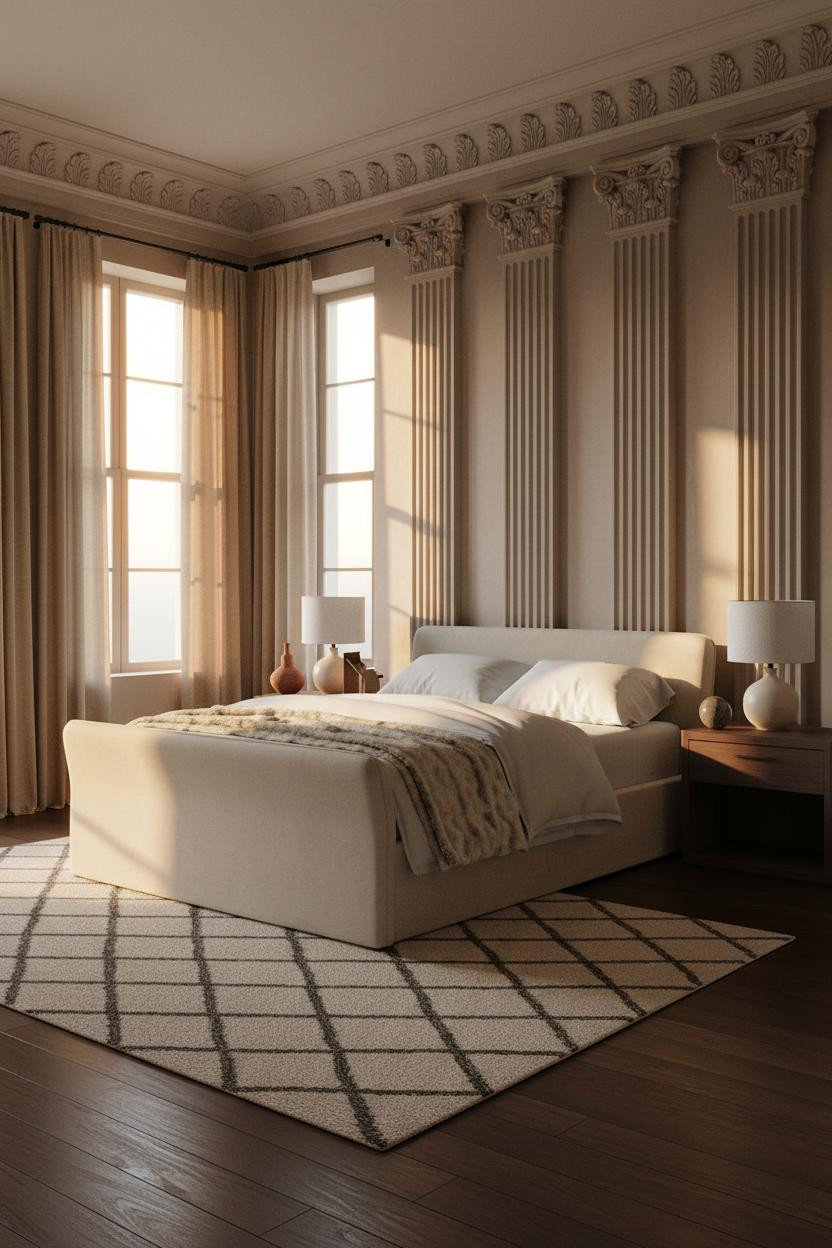
Full-width fluted pilasters with carved acanthus capitals running to a ten-foot egg-and-dart cornice. That’s a commitment. And honestly, it pays off.
Why it feels intentional: The warm clay wall beneath the cornice softens what could read as too formal, so the classical relief lands as confident rather than stiff.
Pro move: Floor-to-ceiling sand linen curtains flanking the windows keep the architecture from overwhelming the room.
A French Empire Frieze That Earns Its Wall Space
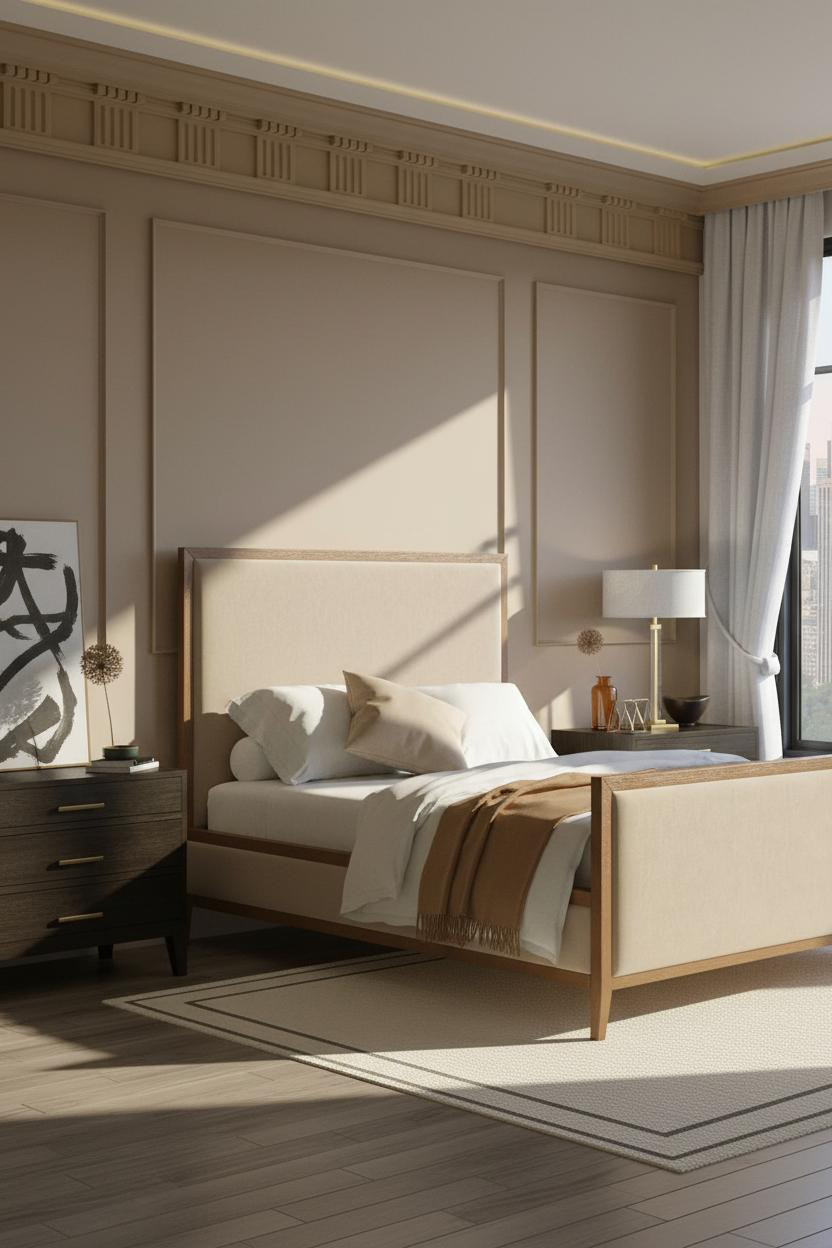

Most people don’t consider a Doric frieze for a bedroom. Most people are wrong.
Design logic: Alternating triglyphs and metope panels in burnished ochre plaster create a horizontal anchor that grounds eighteen feet of headwall without requiring furniture to do the heavy lifting.
Where to start: Balance a bold architectural frieze with pale bleached oak flooring and ivory cotton bedding. Nothing too matchy.
Sage Green Wainscoting With Brass That Gets The Balance Right
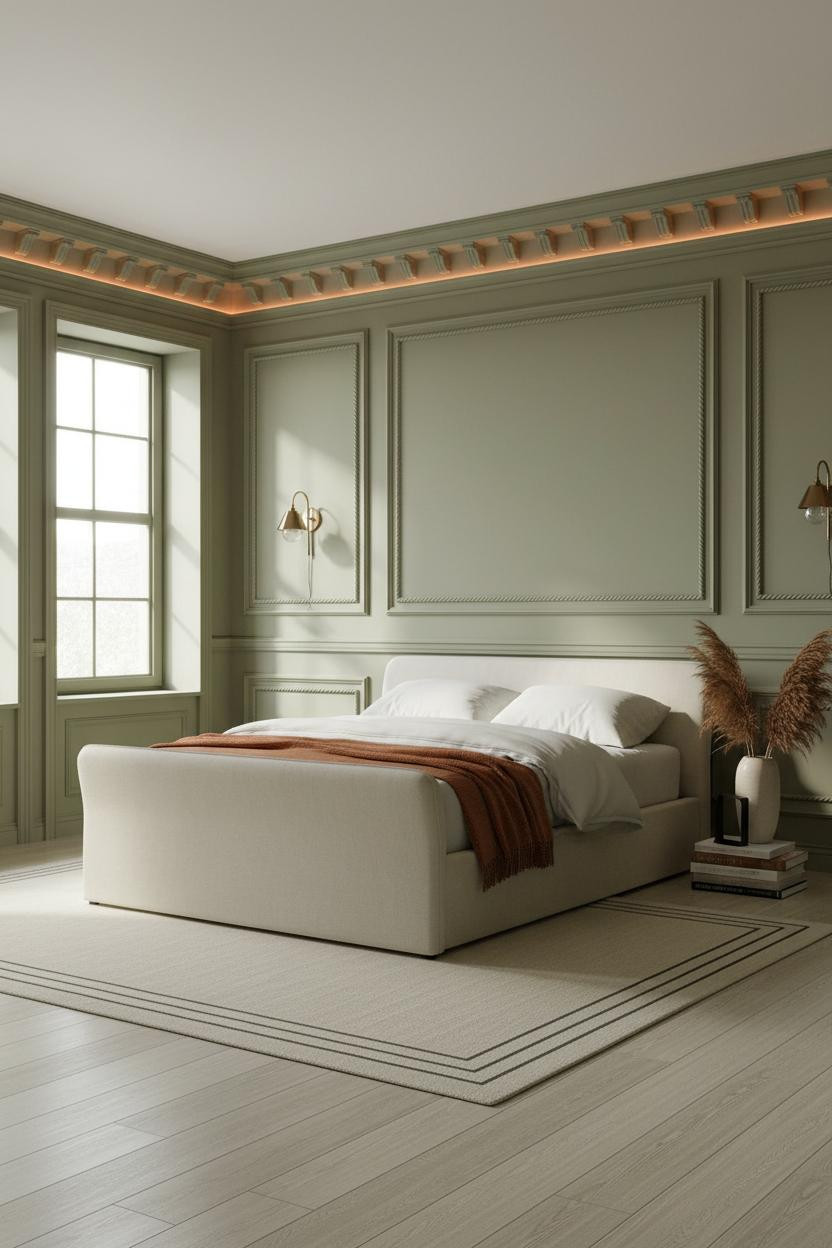
I was skeptical about half-height wainscoting in a room this classical. But the sage green paneling below an egg-and-dart cornice turns out to be exactly the right move.
What gives it presence: Rope-twist relief on each panel catches raking north light, so the wall reads as layered shadow depth rather than flat color. The room feels collected rather than decorated.
Swap ceiling-mounted fixtures for antique brass sconces flanking the bed. The light pools lower, which makes the architecture feel taller.
The Barrel-Vaulted Ceiling That Rewrites The Room
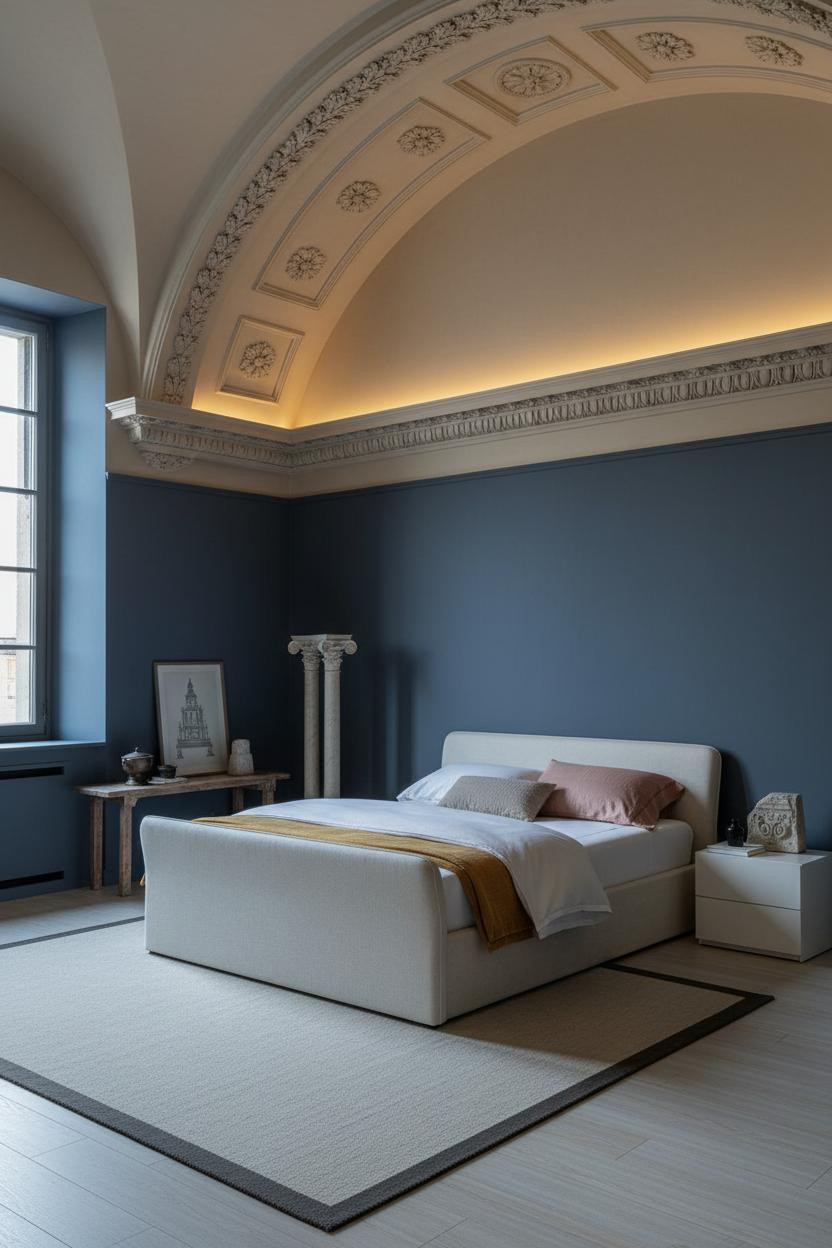
Nothing competes with a barrel vault. Not the furniture, not the rug, not the bedding.
And that’s the point. A continuous curved soffit in pale stone plaster with Roman dentil rows at the spring line creates monumental calm that makes everything underneath it feel considered by comparison.
What not to do: Don’t fight it with a heavy headboard. Keep the furniture low and the ceiling will do all the talking.
Best for: Rooms where the architecture already exists. This isn’t a look you build on a budget.
Terracotta Plaster And The Roman Entablature Frieze
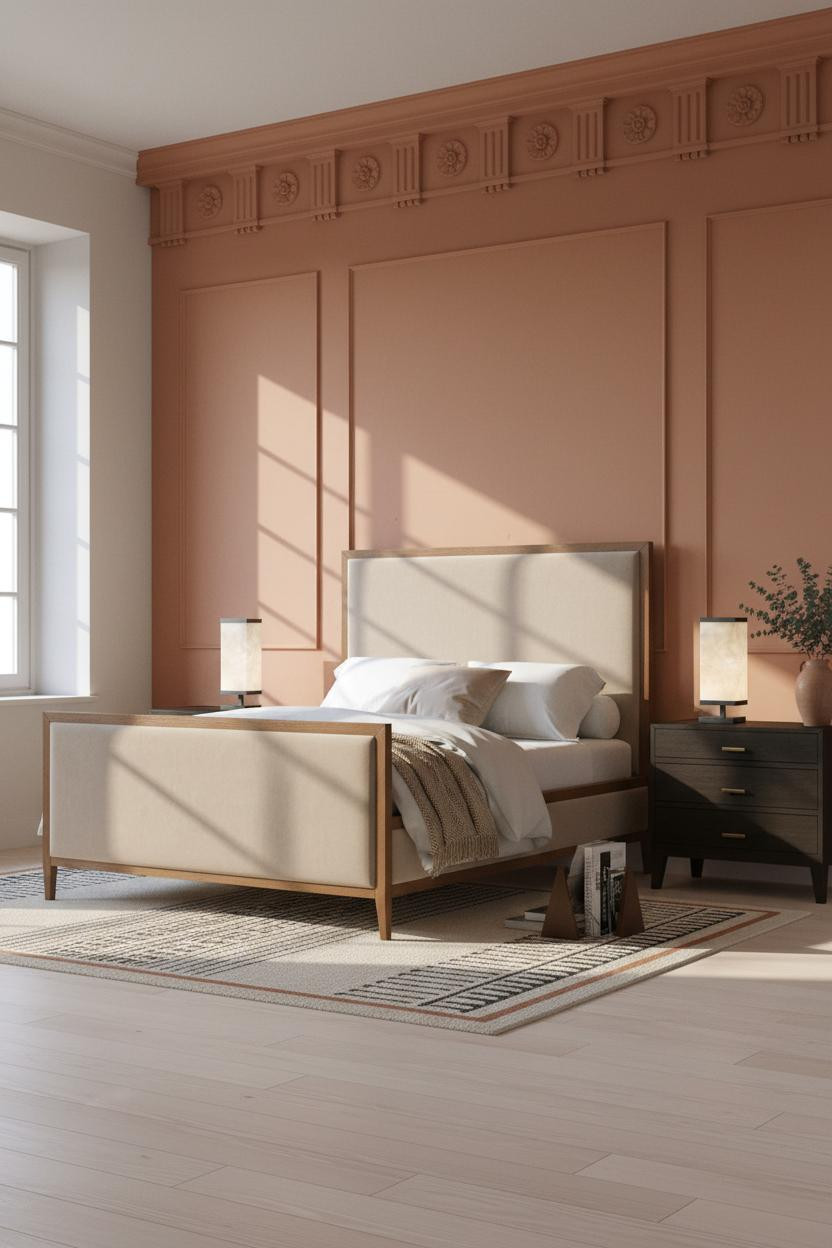
A terracotta plaster entablature frieze fourteen feet across isn’t subtle. That’s not a criticism.
Why it works: Alternating triglyphs and carved rosette metopes cast such precise shadow relief under morning mullioned window light that the frieze reads as genuine Roman authority, while the pale ochre lower register keeps the room warm rather than academic.
The easy win: Layer a graphic wool rug at the foot to break the formality just enough.
Moss Green Paneling With A Cornice That Commands Attention
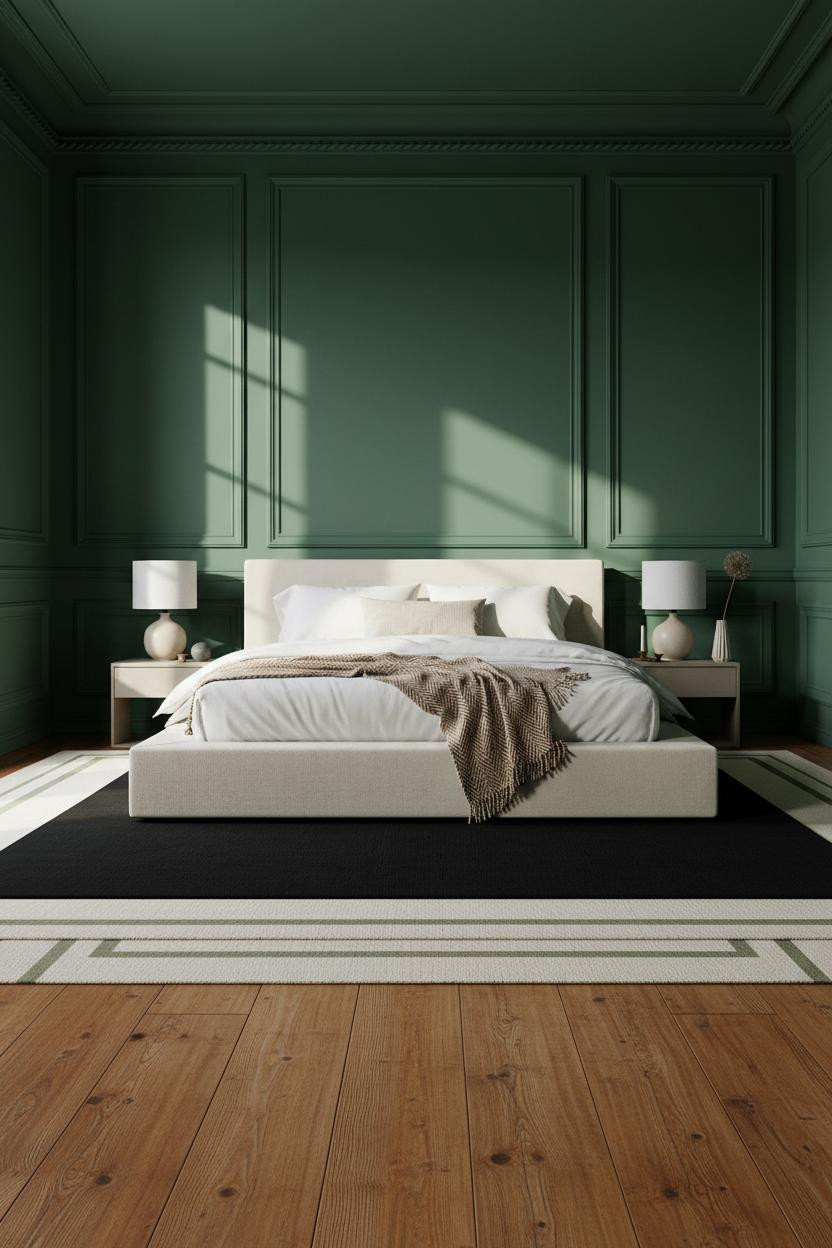
Deep moss green paneling floor to ceiling isn’t timid. But the room feels calm, not loud. That’s the whole point of getting the cornice right.
What carries the look: Rope-and-bead detailing on the cornice molding creates enough relief to frame the panels as architecture, in a way that feels considered rather than just painted.
Avoid this mistake: Don’t layer too much color into the bedding. Camel wool and ivory cotton against this much green is plenty.
Limewash Brick And The American Classical Bedroom
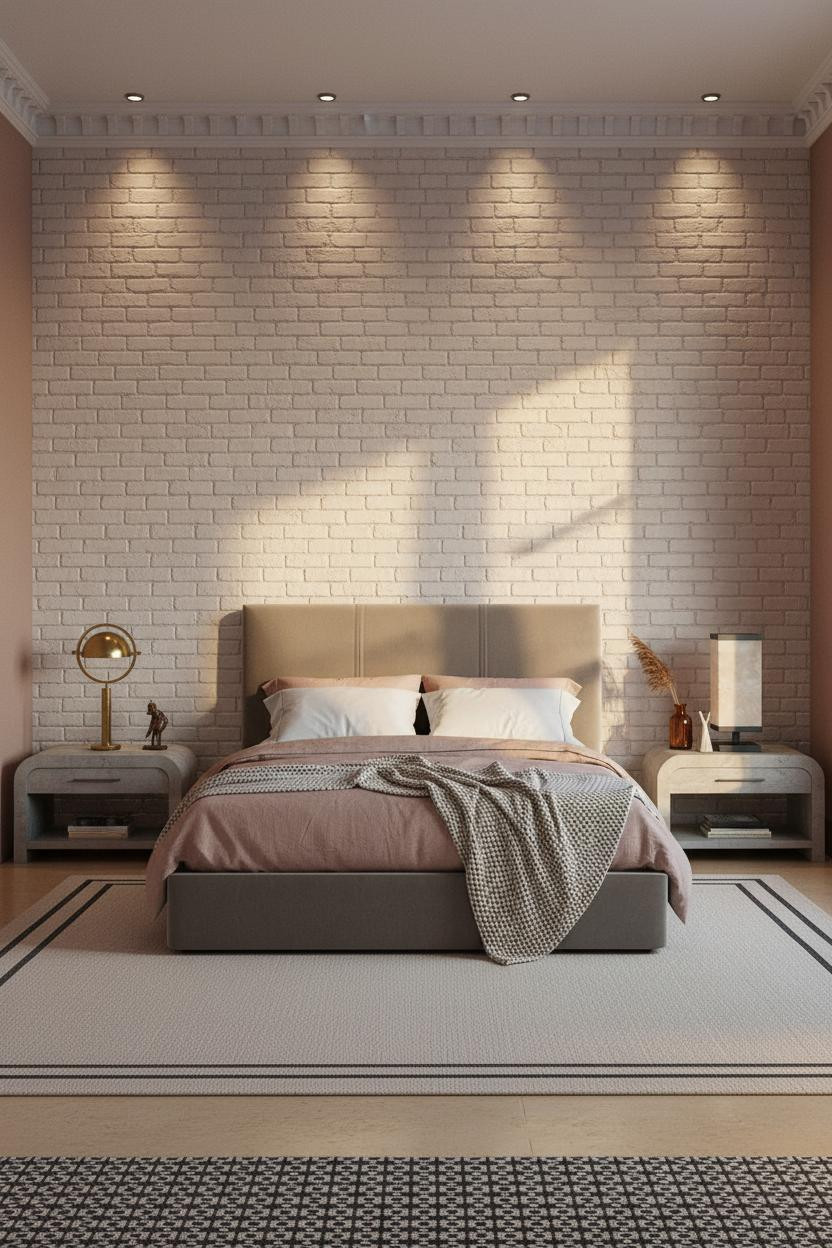

Admittedly, champagne limewash brick with an egg-and-dart cornice is an American interpretation of classical. But it works precisely because it doesn’t try to be European.
Where the warmth comes from: The plaster wash softens each brick so the wall catches antique brass lamp light and warm ceiling coves simultaneously, which gives the whole room a lived-in glow.
Dusty pink linen bedding against limewash brick is the unexpected combination that somehow reads as completely correct.
The Arched Alcove That Turns A Headwall Into Architecture
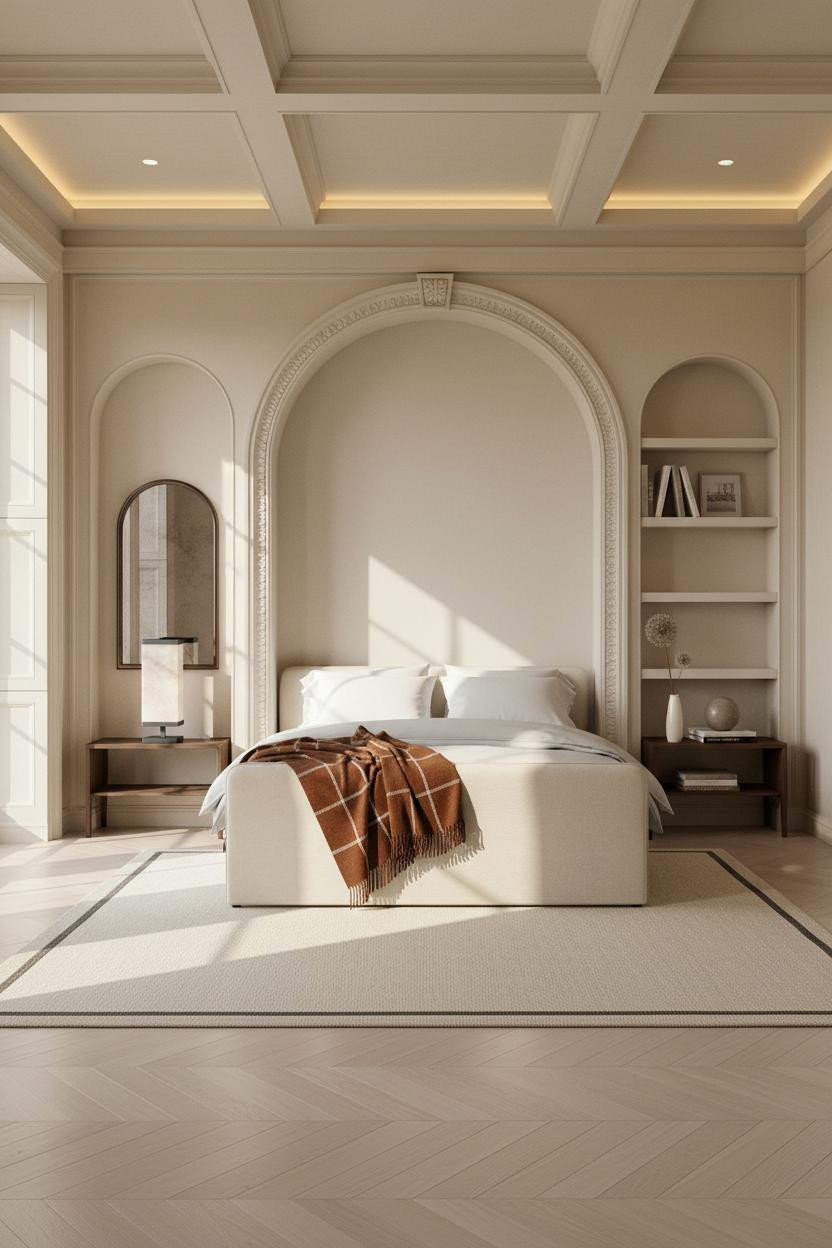
A full-height stone-white arched alcove with egg-and-dart detailing at the spring line, flanked by fluted pilaster niches. Fourteen feet of symmetry. I’d frame this room as art.
Why it looks custom: The carved plaster arch creates a natural frame for the bed, so the furniture arrangement feels inevitable rather than placed. Shadow pools in the fluted grooves under morning window light do the rest.
The finishing layer: A burnt sienna wool plaid throw at the foot corner is just enough warmth to keep the stone-white from reading cold.
Coffered Ceilings And The Case For Going Upward
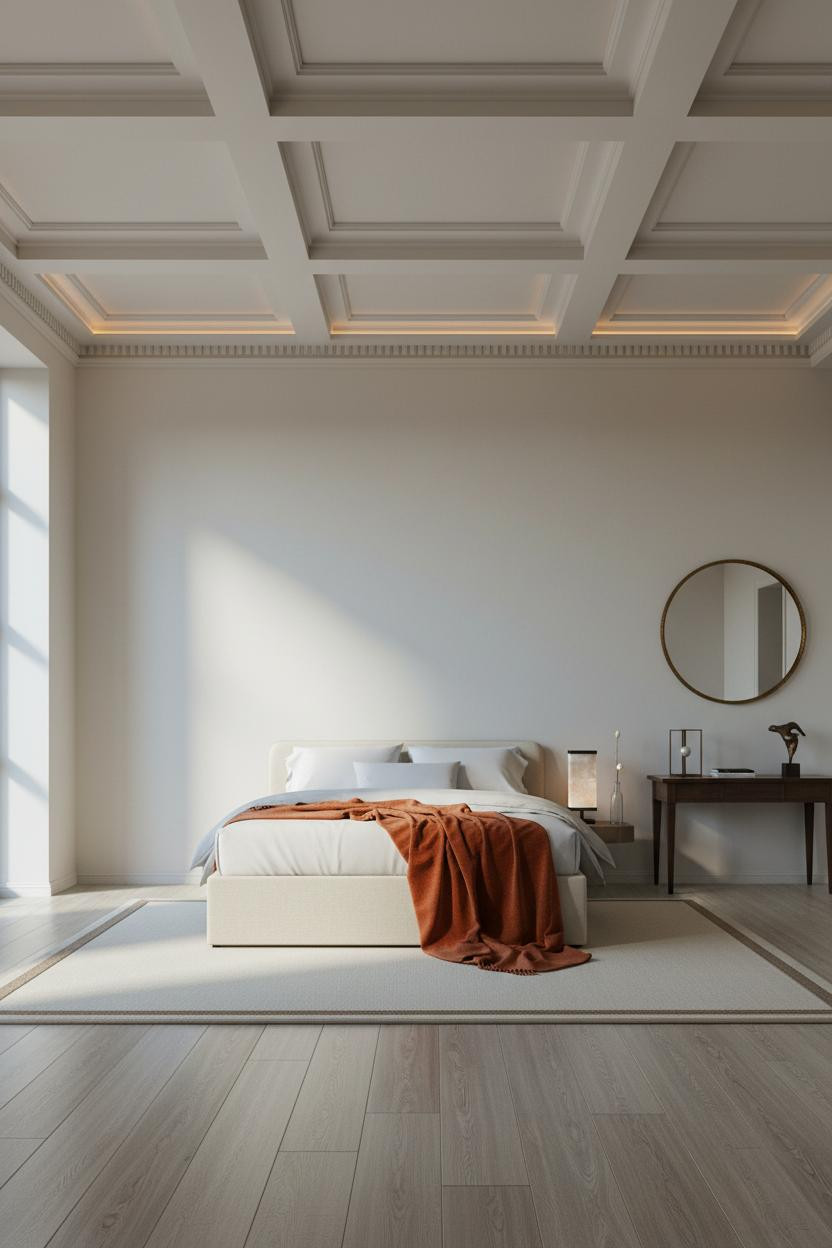
Most people invest in the walls. This room invests in the ceiling. That shift in priority is what makes it feel genuinely different.
What changes the room: Pale stone coffers with bead molding at each edge create disciplined geometric repetition overhead, so the warm ivory walls below read as calm rather than plain.
One smart swap: A round brass-framed mirror opposite the bed reflects the coffered ceiling back into the room. Small move, big difference.
Dove Grey Paneling With A Gilt Mirror That Earns Its Spot
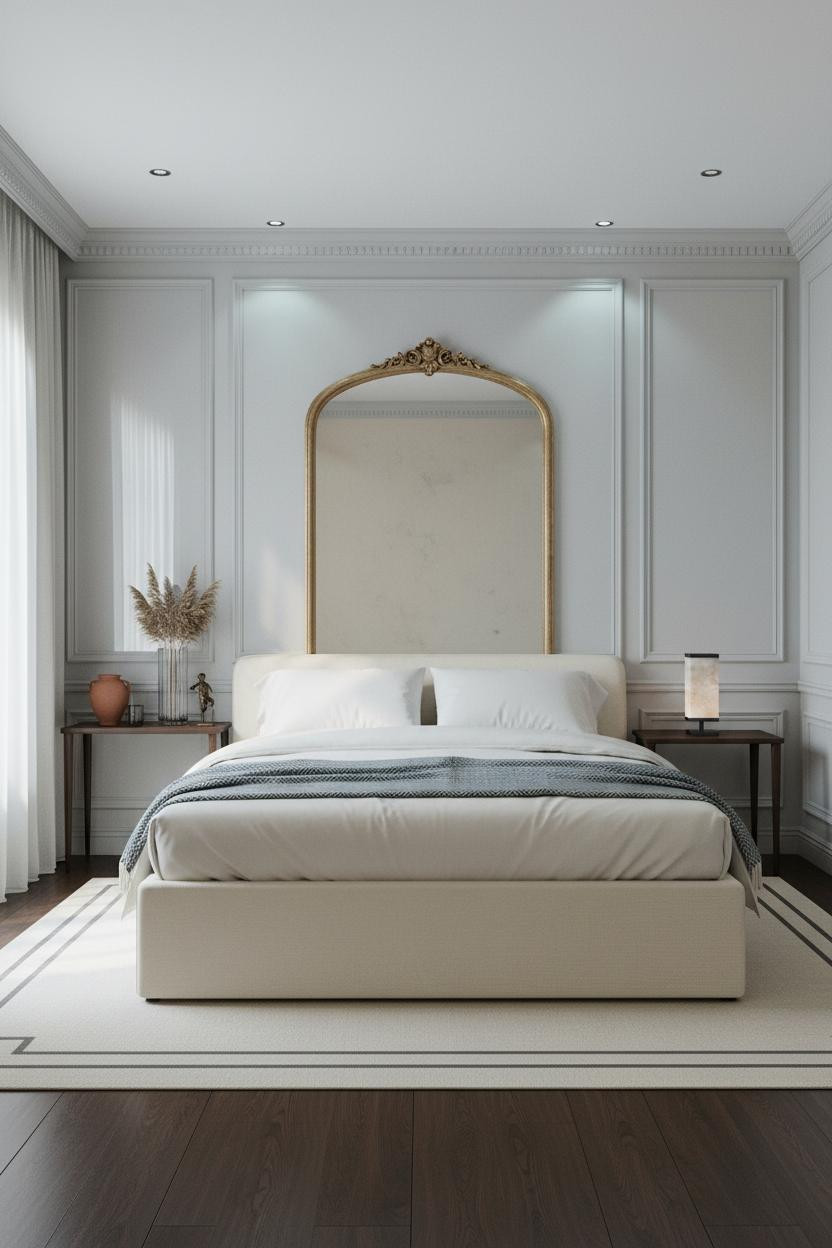
This is a Parisian bedroom interpretation. And it’s the most quietly confident room in this entire collection.
Why the palette works: Symmetrical recessed panel wainscoting in soft dove grey with a dentil cornice line creates enough architectural discipline to justify the oversized arched gilt mirror above the console, while the warm cream upper register stops the whole thing from going cold.
What cheapens the look: Matching the grey in the bedding. Use ivory percale and a steel-blue herringbone throw instead. Keep the grey to the walls.
Gold Leaf Pilasters And The Milanese Approach To Neo Classical Design
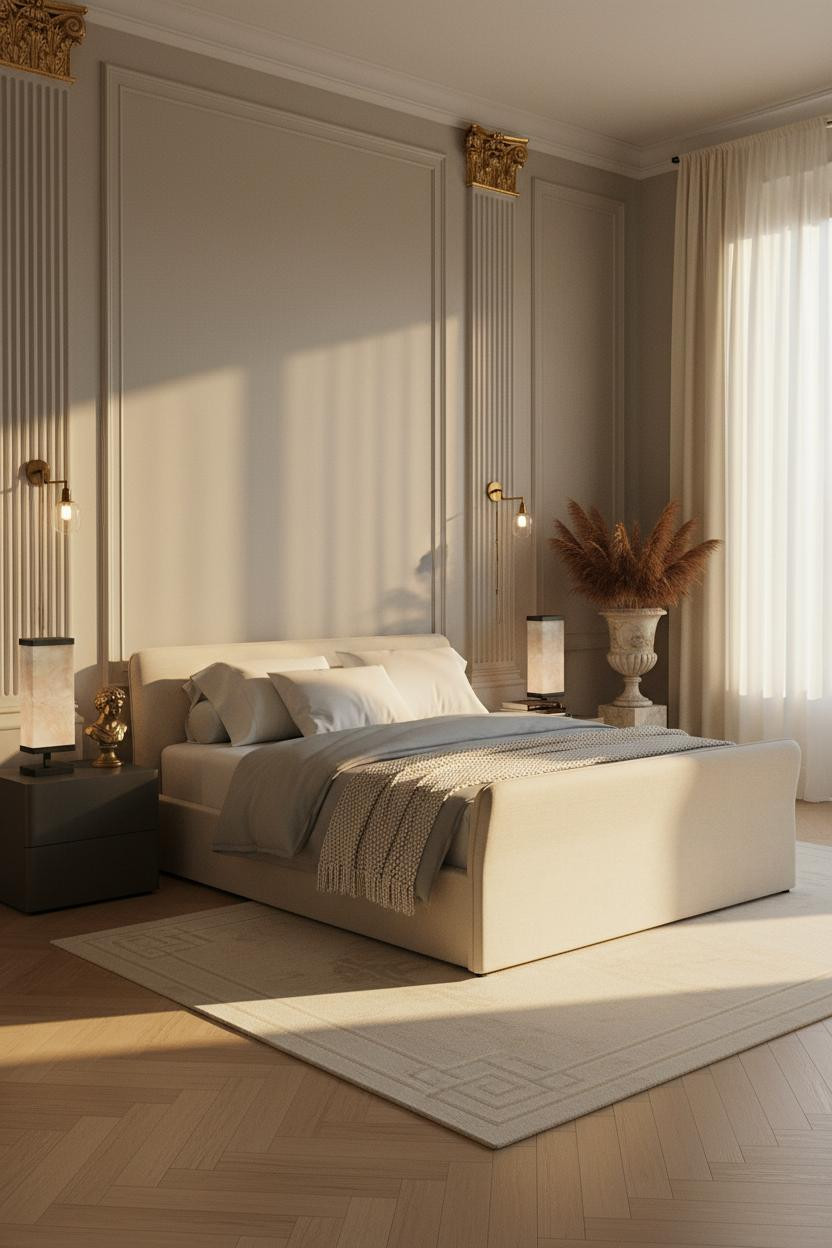
Floor-to-ceiling cream pilasters with burnished gold leaf detailing in the fluted grooves. This is the kind of room where restraint and opulence are somehow the same thing.
In a room with this much vertical classical detail, the smarter choice is to keep the bedding tonal. Slate jersey with a cream chunky-knit throw lets the architecture breathe while still feeling genuinely luxurious. And the pale honey herringbone parquet below grounds the gold without competing with it.

Our #1 Pick
Saatva Classic Mattress
America’s best-selling online luxury innerspring. 365-night trial, lifetime warranty, free white glove delivery.
Shop Saatva Classic
Why Luxury Bedrooms Always Feel Better
Every room in this collection earns its atmosphere through the architecture. But the wall treatment is only half the equation. The other half is what you sleep on.
Walls get repainted. Throws get swapped. The mattress stays. The Saatva Classic is built for that kind of longevity: dual-coil support that holds its structure over time, a breathable organic cotton cover that doesn’t trap heat, and a Euro pillow top that feels right on the first night and the five hundredth.
That’s the foundation every classical bedroom deserves.

Good design ages well because it’s made well. And a neo classical bedroom with genuine architectural bones deserves a bed that matches that standard. Start with the mattress. The rest figures itself out.