
The first thing people get wrong about a sloped ceiling bedroom with slanted walls is thinking the angles are the problem. They’re not. They’re the whole point.
These 13 rooms prove it. Low eaves, converging planes, compressed geometry. All of it working harder than a flat ceiling ever could.
Raw Brick Angles That Actually Feel Warm
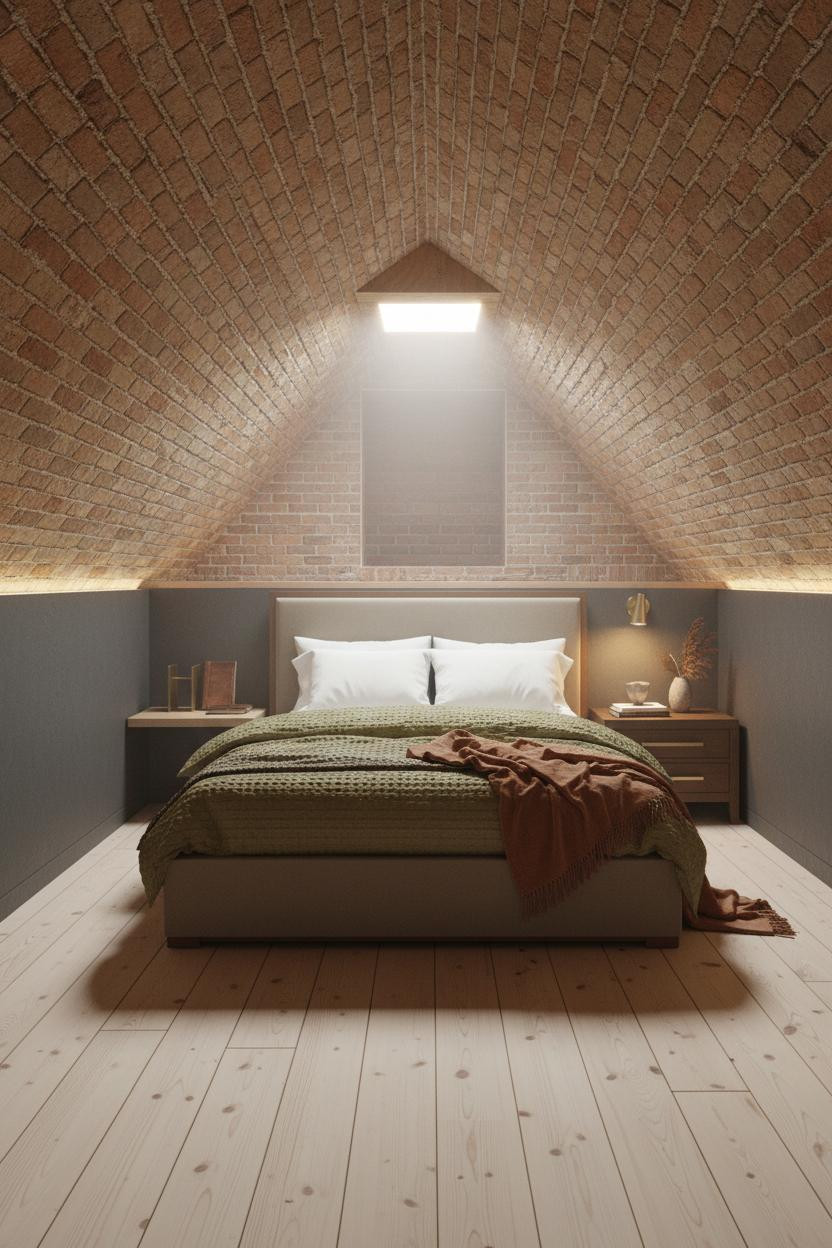


Exposed brick in an attic bedroom is a commitment. But when it works, it really works.
Why it holds together: The warm amber brick running up both converging planes keeps the room from feeling industrial. The roughness absorbs light instead of bouncing it, which makes the compression feel intentional.
Steal this move: Pair the brick with pale birch floors and an olive duvet. The warmth stays grounded without tipping into dark.
The Cobalt Attic Room I Keep Coming Back To
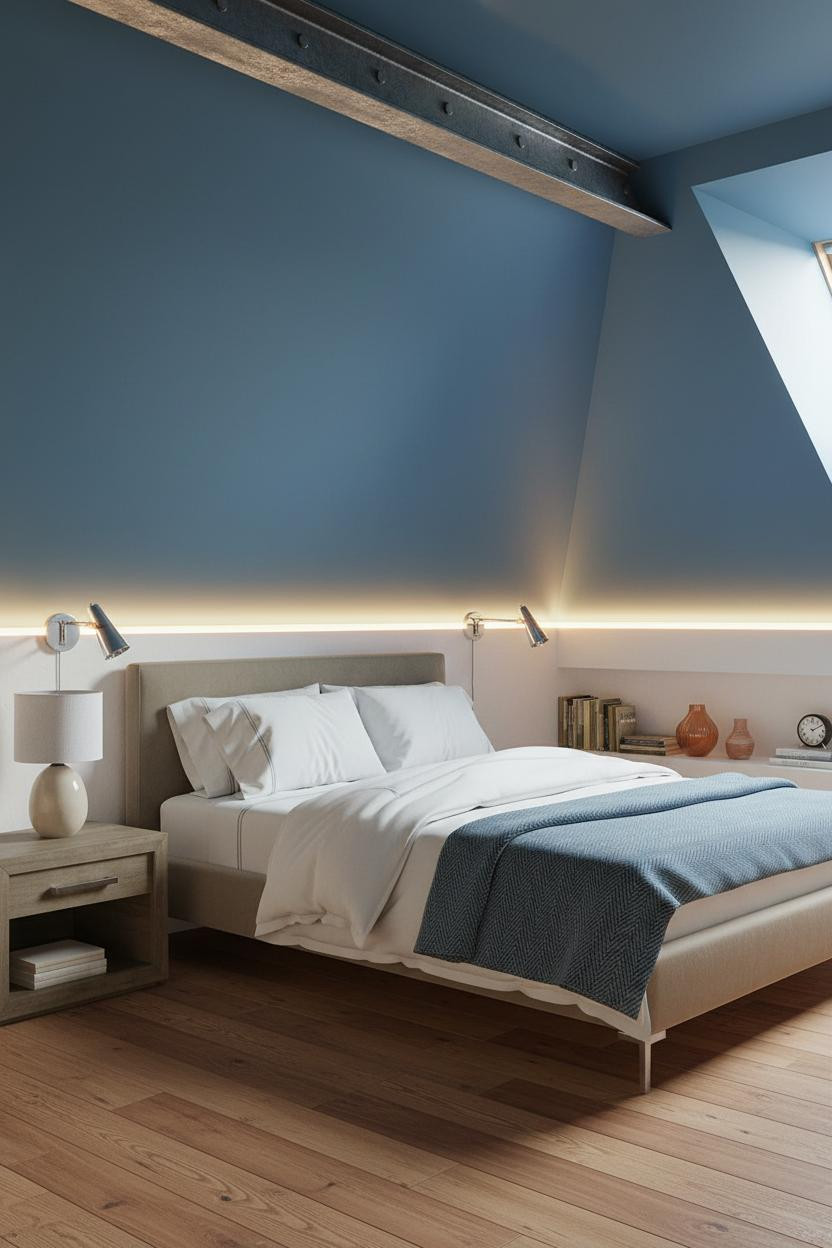


Bold choice. Most people wouldn’t go cobalt in a low-ceiling attic.
But the cool-tinted plaster on these converging planes is exactly why the room feels larger than it is. It recedes rather than crowds.
The easy win: Keep the lower walls cream and the floor in warm reclaimed chestnut. The contrast does the work. The lamp handles the rest at night.
Stone Plaster and a Steel Ridge That Earns Its Place
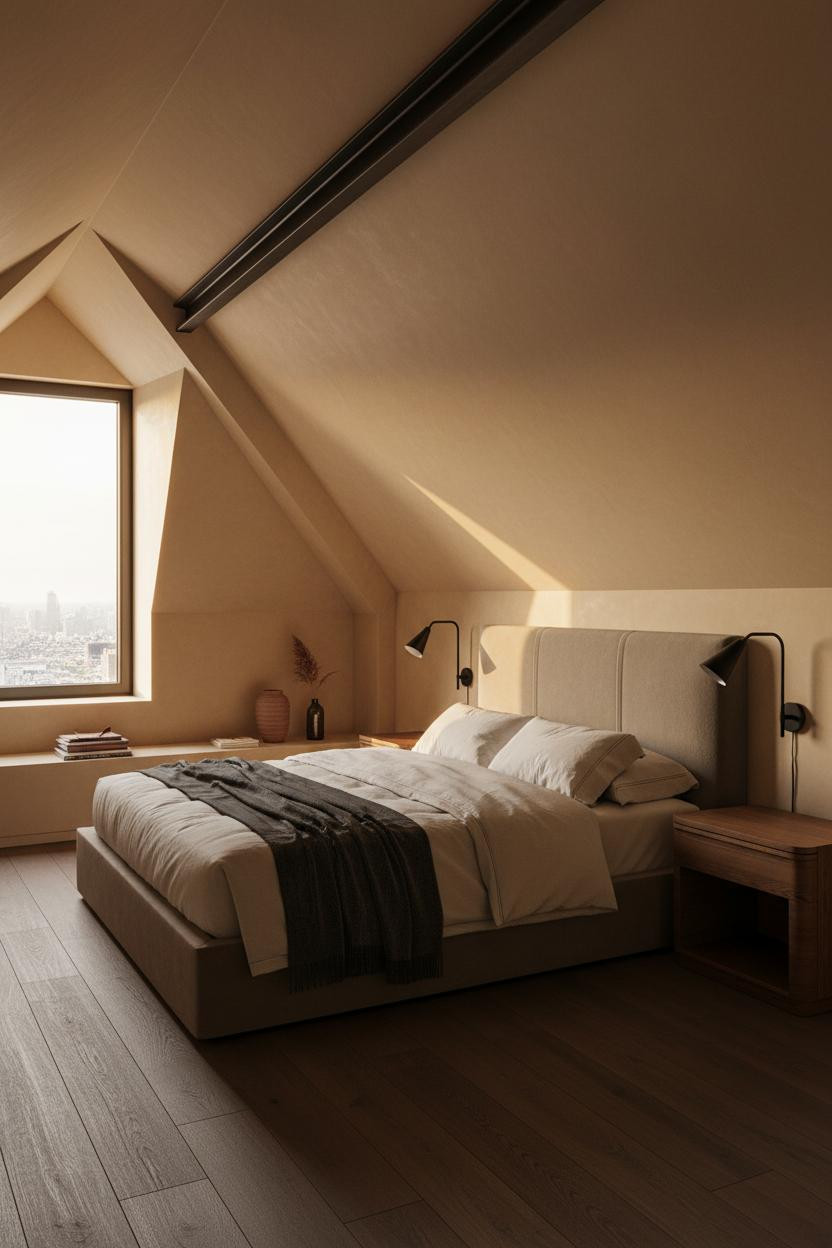


I think this is the most underrated finish for a slanted attic ceiling. Warm stone plaster with a dark steel ridge purlin running the apex. It shouldn’t feel rustic-refined. But it does.
What makes it work: The dark-stained steel ridge cuts a hard line through soft plaster, which gives the angles an architectural weight they wouldn’t have alone. The room feels carved, not converted.
Slim wall-mounted sconces flanking the bed, no overhead fixture. That’s the part to get right.
Mustard Plaster and a Dark Oak Beam
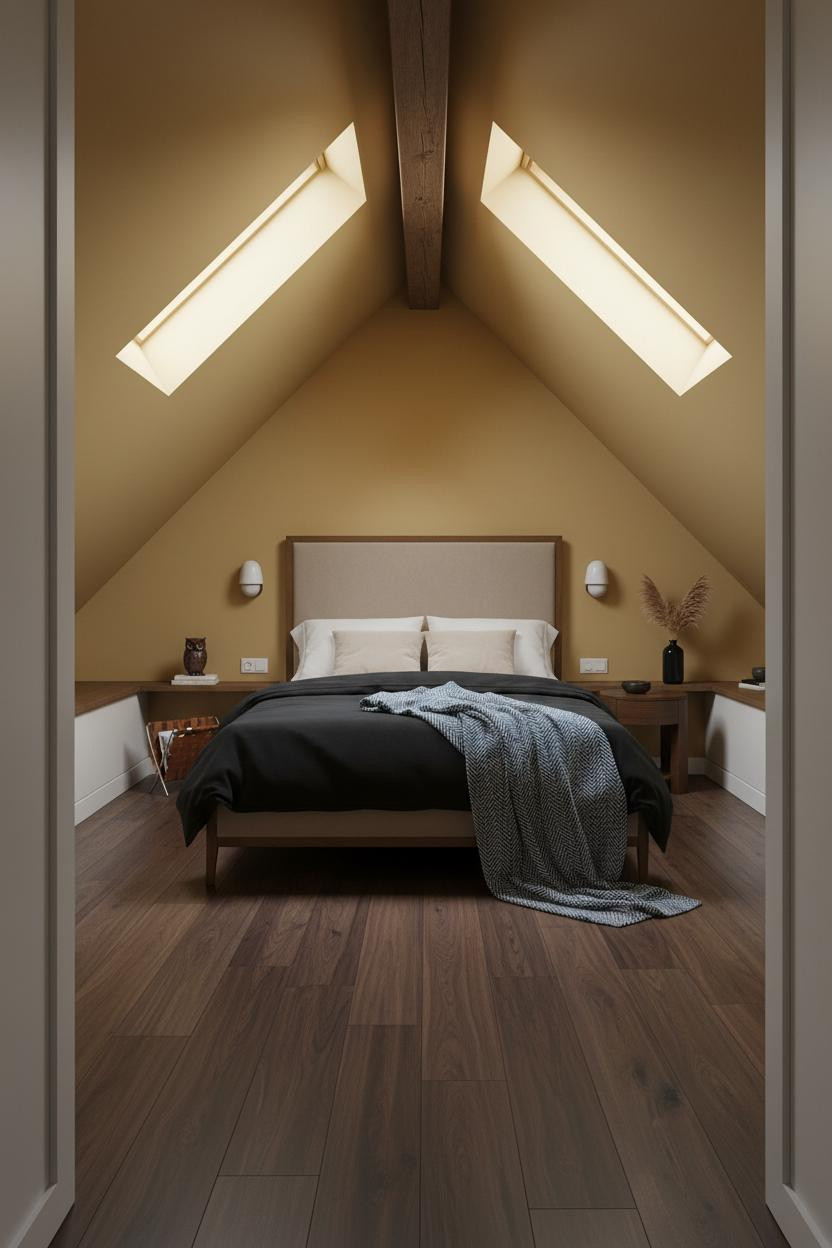

Warm mustard plaster on converging ceiling planes is a MCM-retro move that somehow feels fresh in an attic room. The key is restraint below it.
The unpainted dark oak ridge beam at the apex does exactly what a painted beam can’t: its raw grain catches light differently at different hours, which keeps the geometry interesting. Cream lower walls let it breathe.
Worth copying: A gable skylight flooding these planes with even light makes the mustard read warm rather than heavy. Don’t fight the color. Let it own the angles.
Forest Green Board-and-Batten That Reframes the Whole Slope
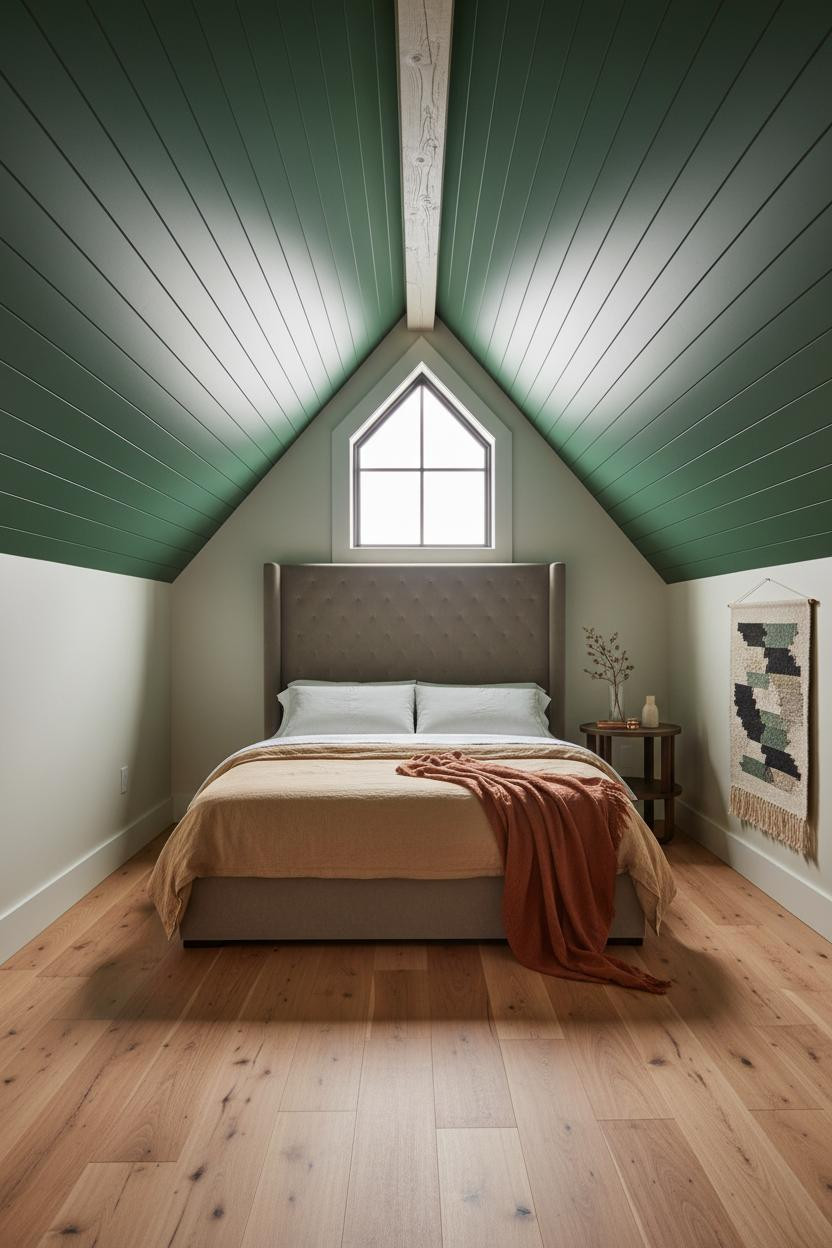


This is the attic room idea I’d actually do in my own house. Deep forest green board-and-batten on both sloped ceiling planes with a whitewashed pine ridge beam breaking the apex. Nothing too precious about it.
Why it looks custom: The thin vertical panel lines cast shadow stripes down the pitch, making the slope look intentional rather than awkward. The white beam stops the green from feeling heavy at the top.
A stone-washed linen duvet in warm oatmeal keeps the whole thing from going too dark. And the woven wall hanging low on the eave wall draws the eye away from the ceiling height entirely.
Navy Shiplap After Dark
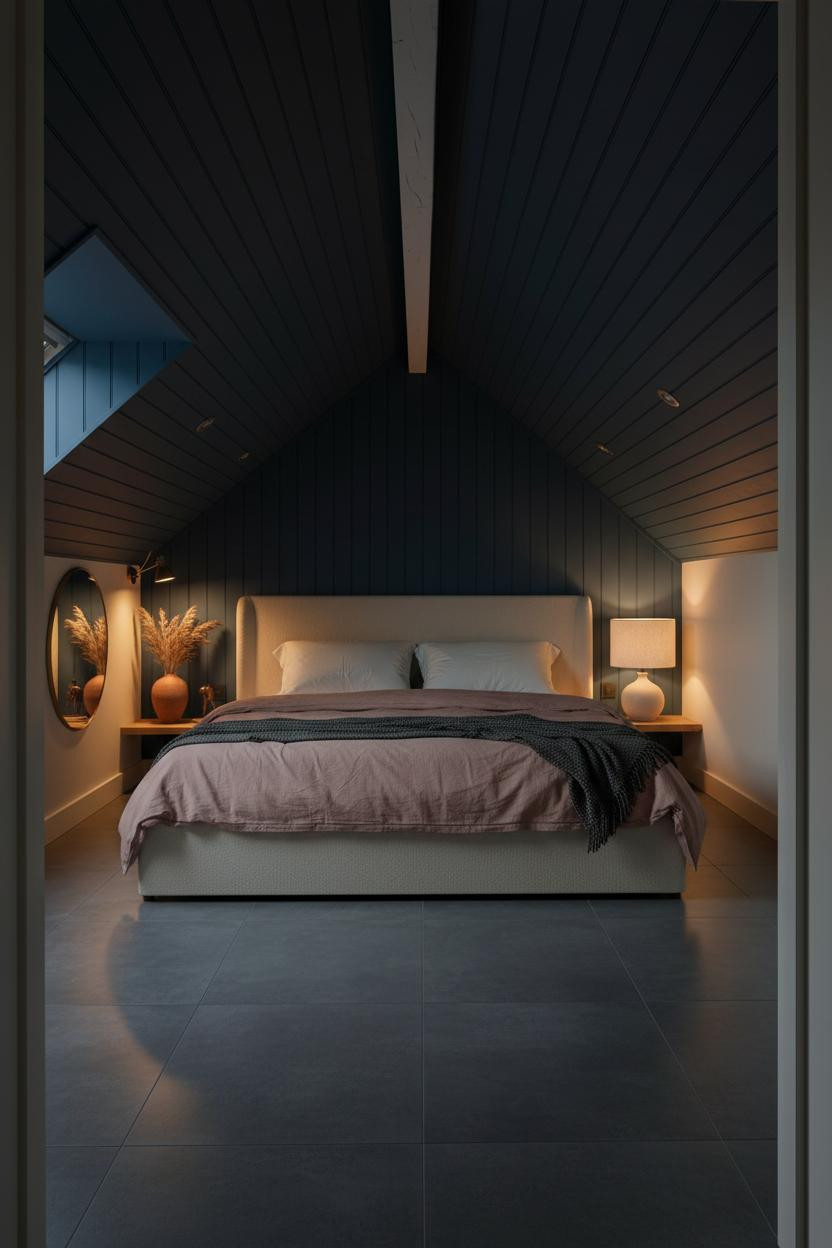


Fair warning. This one is not for everyone. But the people who commit to deep navy shiplap on a sloped ceiling never go back to white.
What creates the mood: The horizontal shiplap joints cast fine parallel shadow lines under lamplight, which makes the angles feel like architecture instead of accident. The room feels genuinely sheltered, not just small.
Avoid this mistake: Don’t pair this with cool-toned bedding. A dusty pink linen duvet with a charcoal cashmere throw keeps it warm, while still feeling moody. Cold sheets kill the whole effect.
Ivory Plaster and a Charcoal Beam You Actually Notice
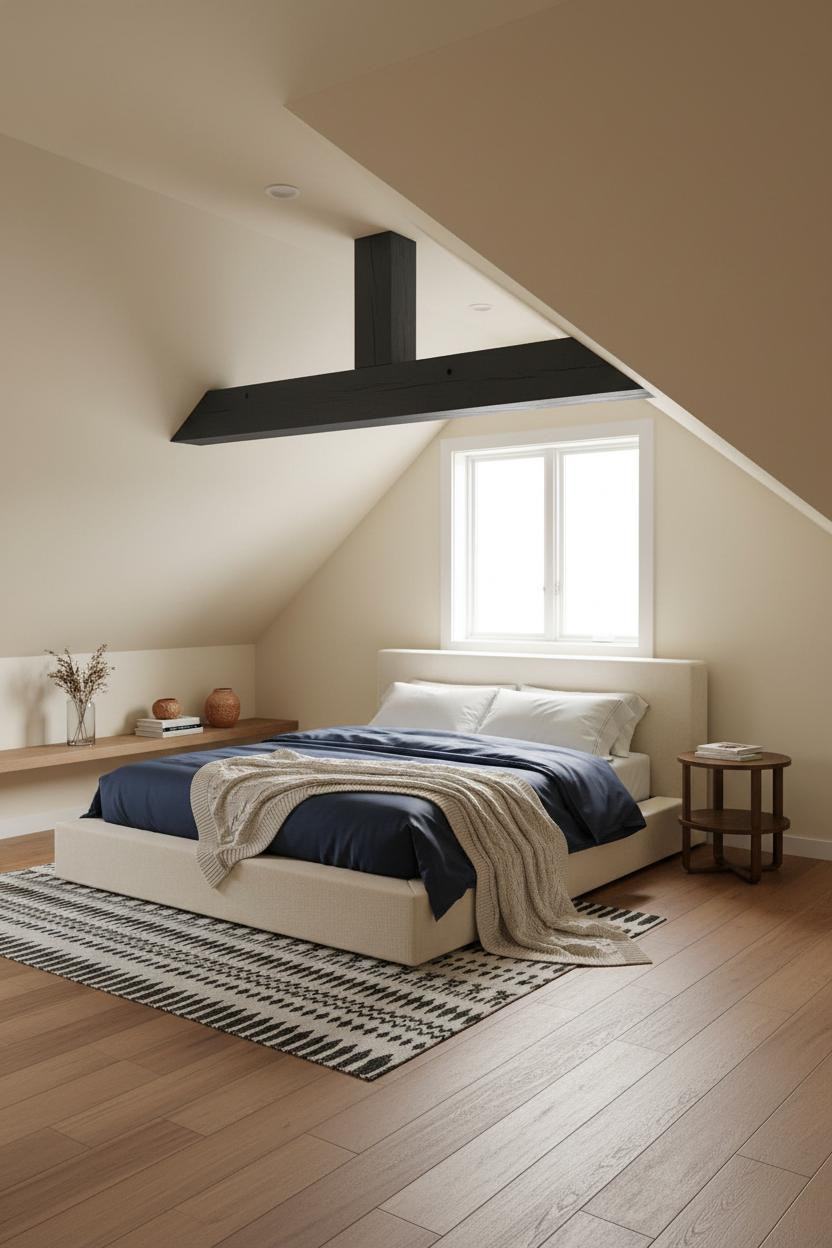

Nothing fancy here. That’s the point.
Warm ivory plaster on both converging planes, and a single charcoal-painted ridge beam cutting across the apex. The beam does more work than any sconce could. It gives your eye something to land on, which makes the slope feel like a feature.
The smarter choice: Ground it with a graphic kilim rug rather than a plain one. The pattern pulls focus down to the floor and makes the whole small attic bedroom feel bigger in proportion.
Terracotta Plaster That Earns Every Inch of the Dormer
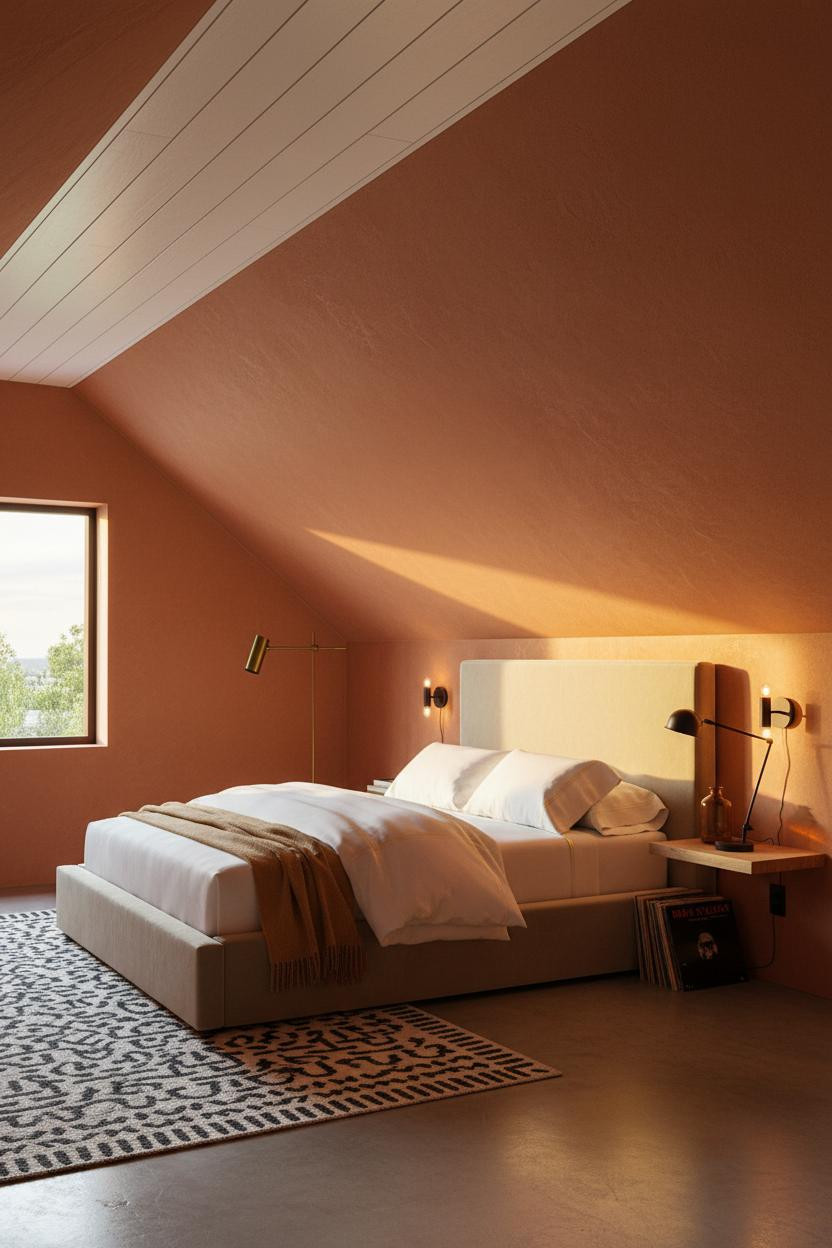

I almost skipped terracotta for an attic ceiling. Too much. Too warm. I was wrong.
When sunset light grazes smooth terracotta plaster, it reveals a handmade depth that painted drywall simply can’t replicate. The white shiplap ridge board at the apex anchors it so the color doesn’t overwhelm.
Pro move: Use a polished concrete floor with no rug. The cool, reflective surface balances the warm plaster above. And a camel throw at the foot of the bed ties them together without adding clutter.
Dusty Rose Plaster With a Pine Beam at the Apex
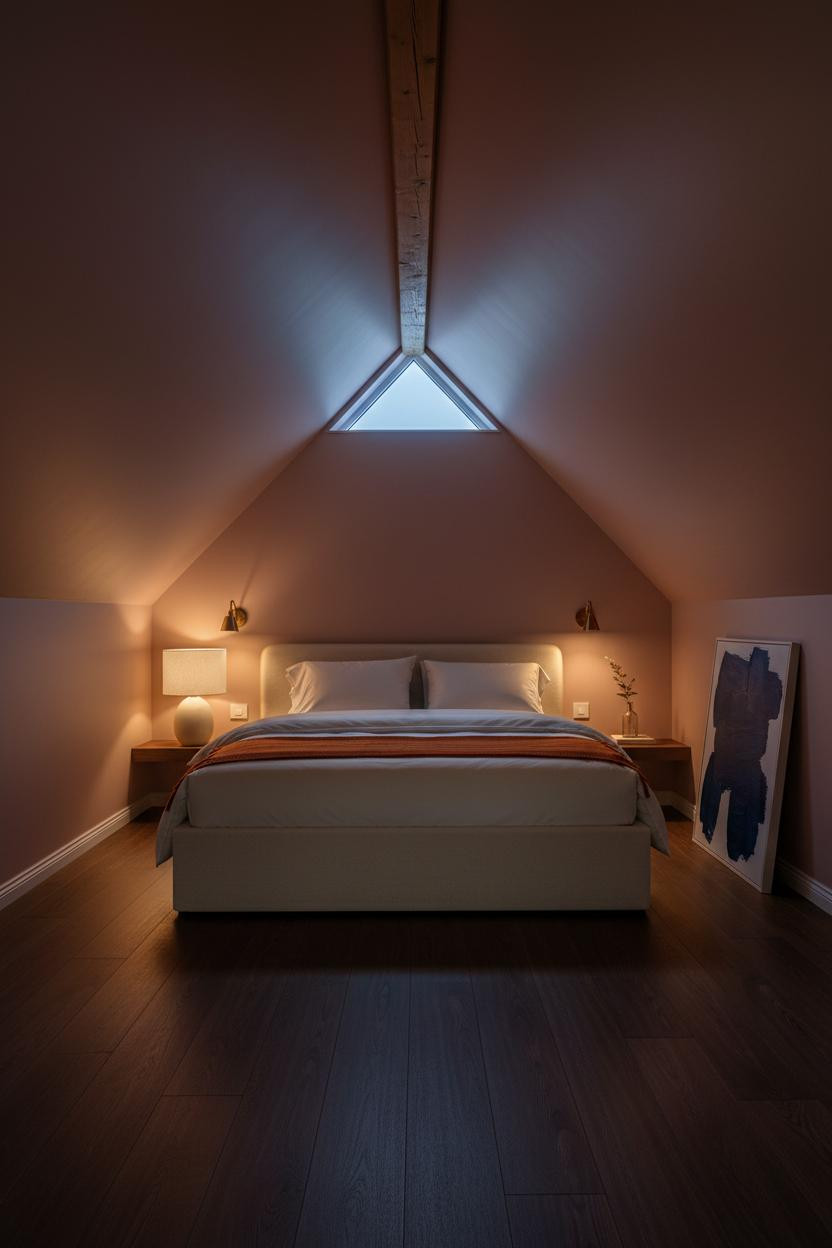

This is divisive. But the people who get it, really get it.
What carries the look: Dusty rose plaster on sloped planes sounds risky, but the raw natural pine ridge beam splitting the apex keeps it grounded. The unfinished wood reads as honest material, not decoration.
Where to start: An oversized abstract canvas leaning against the low eave wall (not hung, leaning) shifts attention away from the ceiling height. Sconces flanking the bed handle everything at night. Dark walnut floors do the rest.
Clay Plaster, Sage Shiplap, and a Round Mirror That Changes Everything
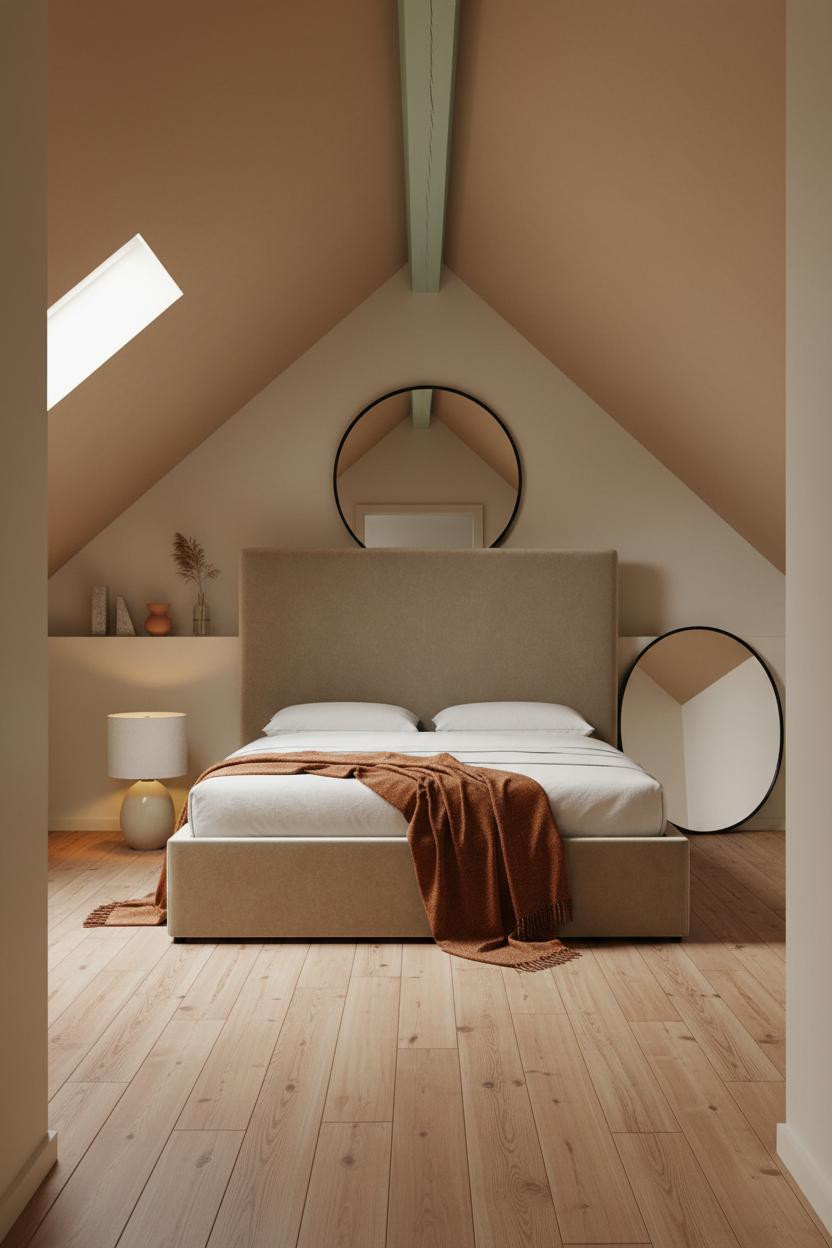

Honestly, the round mirror leaning against the low eave wall is what makes this low-ceiling bedroom feel twice its size. Not a small mirror. Oversized. Propped, not mounted.
The reason it feels open instead of compressed is the combination of warm clay plaster on the sloped planes with a pale sage shiplap ridge board at the apex. Two warm tones, one cool line. That tension is what keeps the room calm and cohesive.
The finishing layer: A burnt orange mohair throw trailing onto reclaimed pine boards ties the clay ceiling to the bedding in a way that feels collected rather than decorated. Just enough warmth to keep things interesting.
Sage Board-and-Batten With a Concrete Ridge Beam
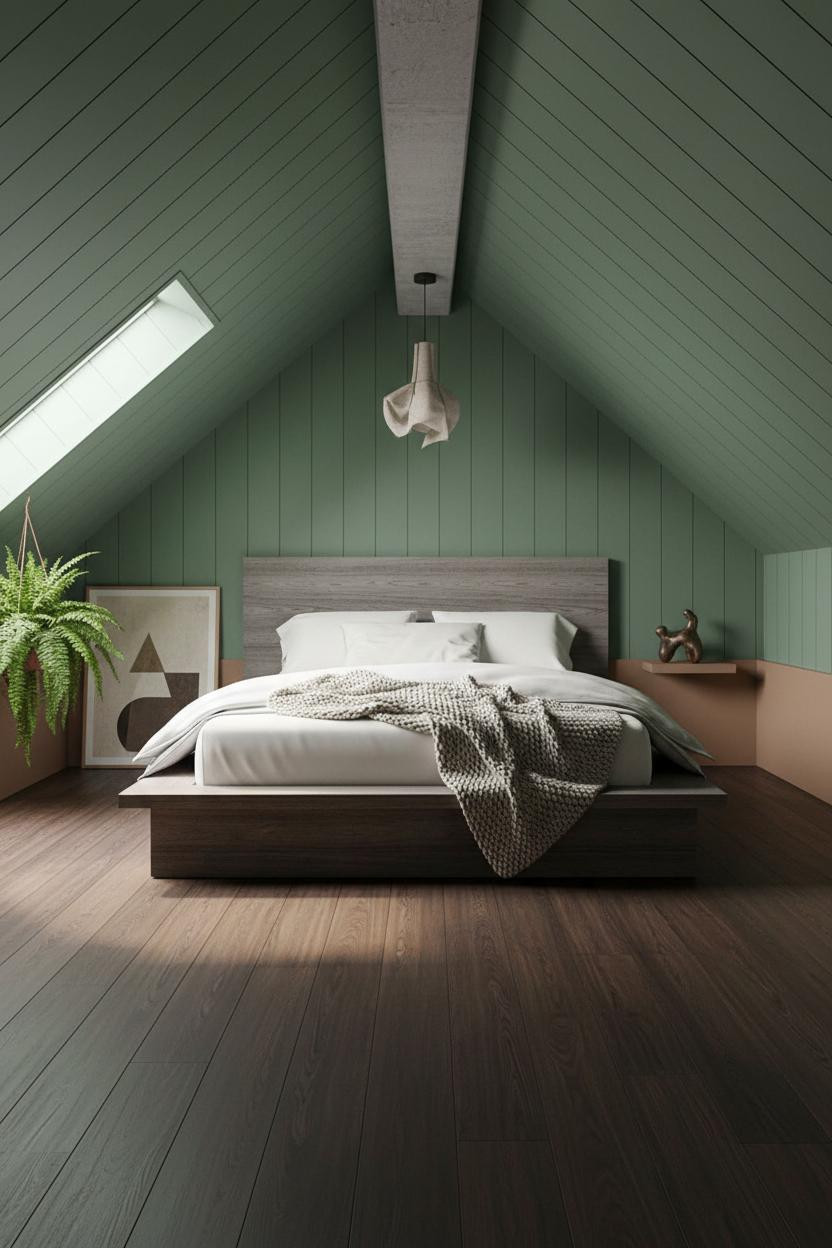

This one surprised me. Matte sage green board-and-batten on converging ceiling planes with a raw concrete ridge beam overhead. The materials shouldn’t feel soft together. But the room feels lived-in and intimate.
In a space this compact, the smarter choice is pulling the eye upward along the diagonal panels rather than fighting the slope with horizontal furniture. The asymmetrical board-and-batten lines do that automatically, drawing attention toward the pale concrete beam at the top.
What to borrow: Warm clay on the lower walls below dado height. It bridges the sage ceiling and the dark walnut floors in a way that feels grounded rather than stark.
Dove Grey Plaster and a Skylight That Opens the Whole Room
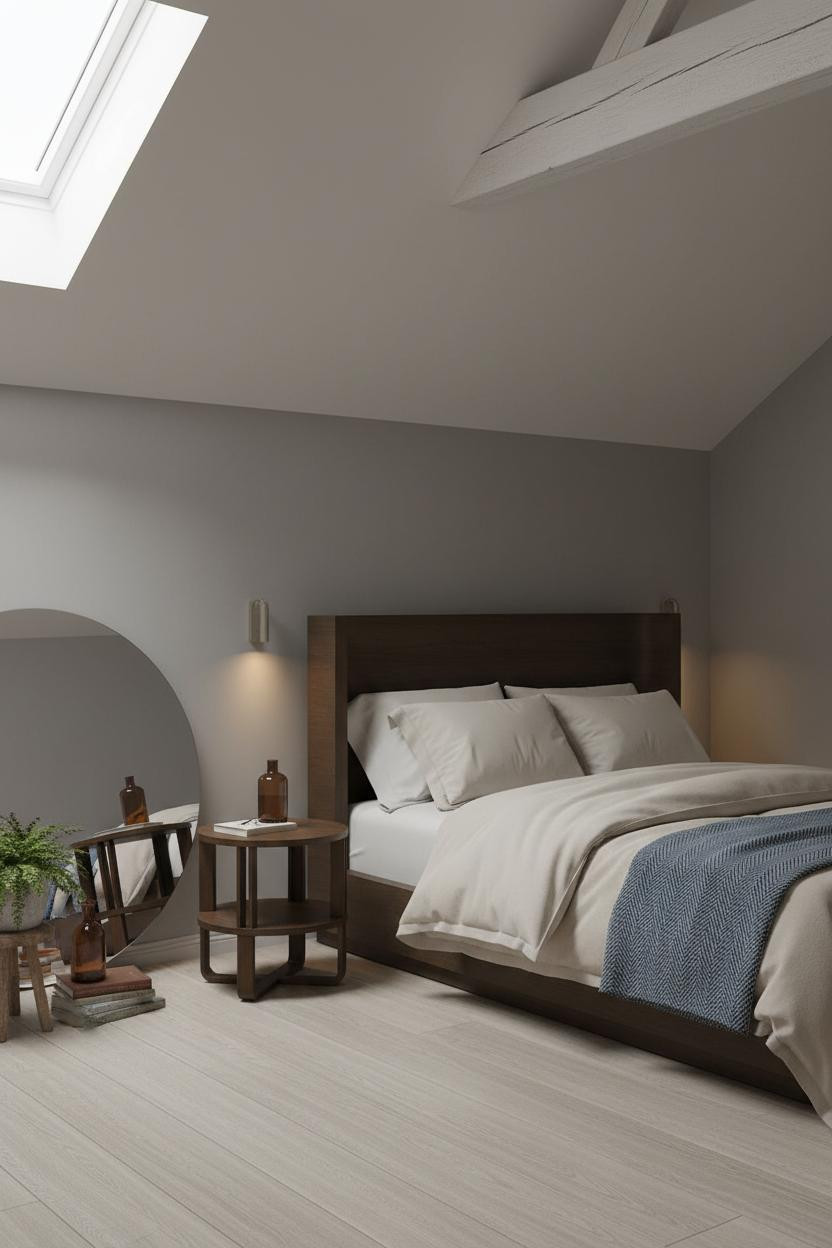

This is the approach I’d recommend to anyone nervous about decorating a slanted ceiling bedroom. No bold color. No raw material drama. Just dove-grey matte plaster on both converging planes and a flush skylight centered above.
Why the palette works: Grey plaster on a sloped ceiling recedes in a way that white doesn’t. It makes the angles feel intentional, in a way that feels architectural rather than accidental.
One smart swap: Bleached oak flooring instead of dark. The pale grain reflects skylight back up into the room and keeps the whole thing feeling coastal and clean.
The Japandi Attic Bedroom With One Perfect Beam
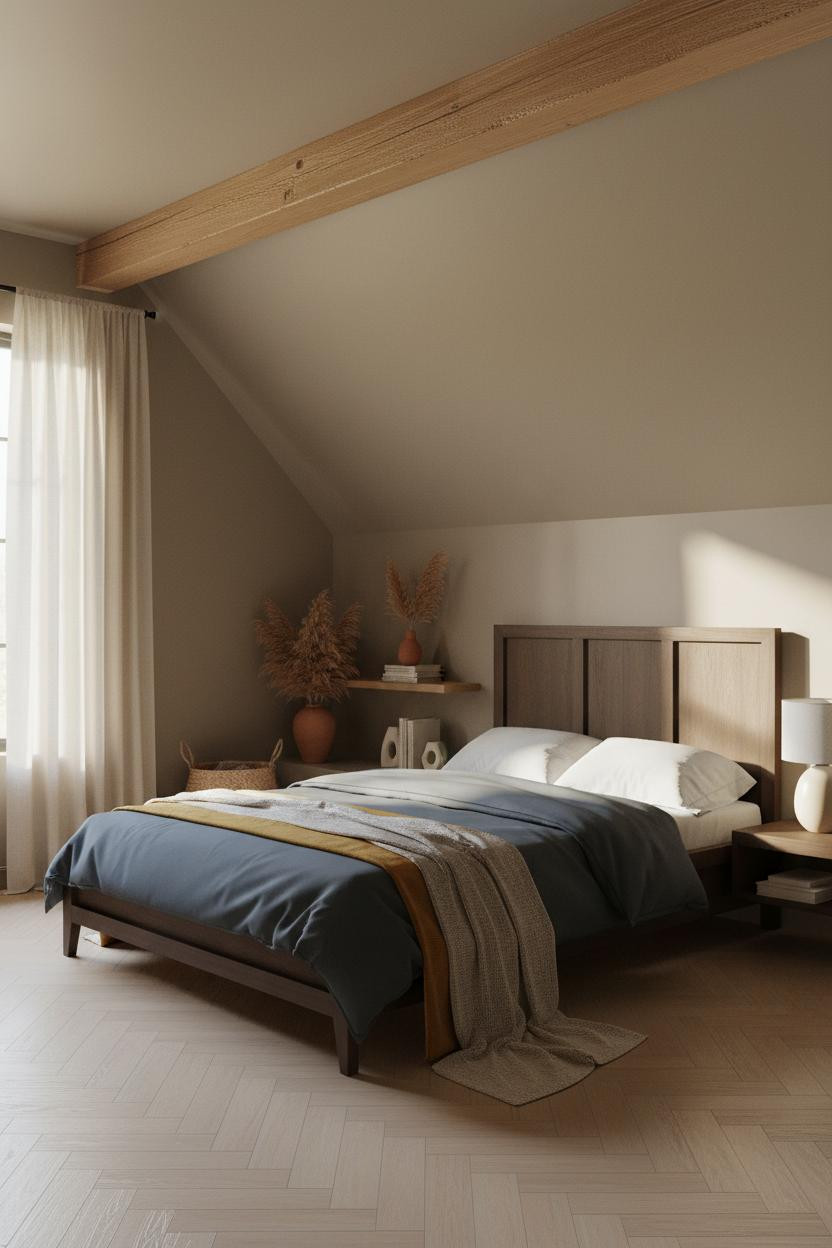

One rough-sawn honey beam running diagonally across the full sloped ceiling. That’s the whole room.
Everything else, warm greige plaster, herringbone parquet in pale ash, a slate jersey duvet, supports it without competing. The beam catches early morning light at an angle that flat ceilings never get. And the Japandi restraint means nothing distracts from the geometry.
The detail to keep: Floor-to-ceiling linen curtains pooling at the dormer. Not cropped. Pooling. The extra fabric length makes the ceiling feel taller than it is, which is the one trick every low attic bedroom needs.

Our #1 Pick
Saatva Classic Mattress
America’s best-selling online luxury innerspring. 365-night trial, lifetime warranty, free white glove delivery.
Shop Saatva Classic
The Foundation Of Every Beautiful Bedroom
All thirteen of these rooms got the angles right. But a beautiful attic bedroom only goes so far if the bed itself lets you down.
The Saatva Classic is the mattress I’d put in any of them. Dual-coil support means the structure holds without going stiff, the organic cotton cover doesn’t trap heat on warm nights under a sloped roof, and the Euro pillow top is soft without losing its shape over time. Walls get repainted. Linen gets swapped out. The mattress stays.

The rooms people actually save are the ones where nothing looks accidental. Start with the angles. Then get the bed right.