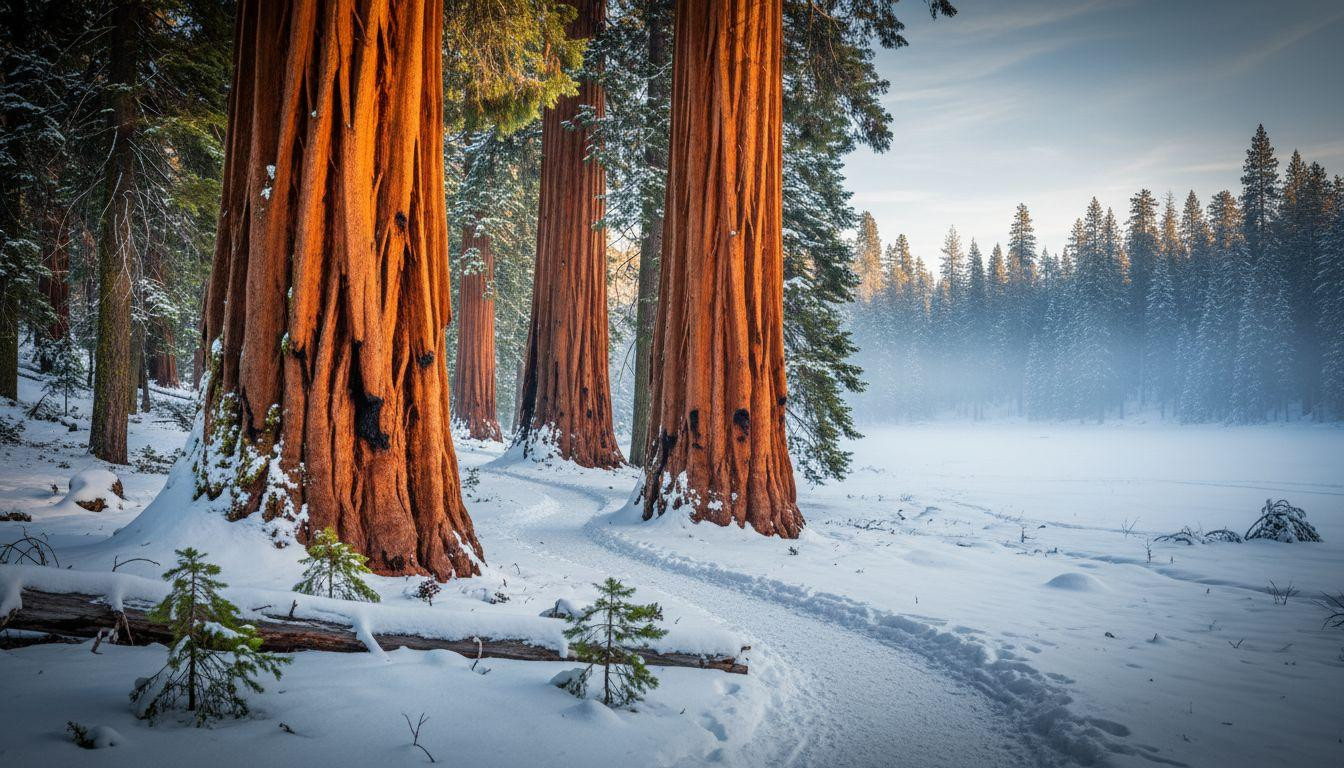
Snow crunches under your feet at 6,800 feet. Orange sequoia bark glows against white powder. The Giant Forest in winter holds maybe 20 people where summer brings 2,000. Trail of the Sequoias loops 1.5 miles through groves most visitors never see.
The trail sits in Sequoia National Park’s Giant Forest, 30 minutes from Three Rivers via Generals Highway. Chains required November through March. Park entry costs $35 per vehicle for seven days. Snowshoes rent for $20-30 daily at Lodgepole.
Where the forest turns quiet
Giant Forest receives 200-300 inches of snow annually. The Trail of the Sequoias stays unplowed all winter. Rangers mark the route with orange poles when snow depth exceeds 8 inches. That happens most days December through March.
Elevation ranges 6,800-7,000 feet along the loop. Temperatures hold between 30-45°F during daylight hours. Mornings drop to 10-25°F. The cold keeps crowds minimal. Winter visitation runs under 10% of summer levels.
Access from Los Angeles takes 4-5 hours covering 215 miles. San Francisco sits 270 miles away, roughly 5 hours. Fresno Yosemite International Airport offers the closest flights at 1.5 hours driving distance. Round-trip airfare averages $150-300 for 2025-2026 winter.
The trail that glows in winter
Sequoia trunks against white
Giant sequoias reach 275 feet tall here. Their fibrous bark shows vibrant orange when snow blankets the ground. The contrast intensifies at dawn and dusk. Frost rims the bark texture in intricate patterns.
Evergreen canopy branches bend heavy with powder. Fresh snowfall creates a monochrome backdrop that makes the orange trunks appear illuminated. Photographers call it the best natural lighting in California’s Sierra Nevada. The effect lasts maybe 10 minutes after sunrise before diffused light takes over.
The sound of winter silence
Snow muffles all acoustics in the grove. Your footsteps and breath become the loudest sounds. Occasional raven calls echo through the canopy. Branch cracks under snow weight punctuate the stillness.
Summer brings constant trail chatter and camera clicks. Winter offers meditative quiet. This Olympic valley runs similar winter solitude but requires more technical skill. The sequoia loop stays accessible for beginners.
Walking among winter monuments
The snowshoe experience
Rentals at Lodgepole or Grant Grove include poles and basic instruction. If you can hike, you can snowshoe. The learning curve takes about 5 minutes. Free ranger-led walks start mid-January when snow depth permits.
The 1.5-mile loop takes 60-90 minutes at a comfortable pace. Trail markers guide navigation even in fresh powder. Physical effort feels easier than summer hiking despite the snow. The cold air and flat terrain balance out the snowshoe weight.
What you see along the route
Crescent Meadow sits adjacent to the trail. John Muir called it the “Gem of the Sierra” in 1875. Winter transforms the meadow into an unmarked white expanse. Wildlife tracks cross the snow in patterns: deer, coyote, occasional bobcat.
Secluded grove pockets branch off the main loop. Most snowshoers stick to the marked trail. Venture 50 yards into the trees and you’ll have ancient giants to yourself. This Big Island beach offers similar solitude through effort-based filtering.
Why winter changes everything
Summer crowds at General Sherman Tree reach 1,600 visitors daily. The Trail of the Sequoias sees maybe 30 people on a busy winter Saturday. Connection to ancient trees happens without jostling for viewpoints or waiting for photo opportunities.
Yosemite Valley draws winter crowds for ice climbing and snow play. Tahoe resorts commercialize the season with lift tickets and lodge packages. Giant Forest stays overlooked. The transformation feels complete: same trees, 90% fewer people, entirely different experience.
Photographic opportunities impossible in summer appear daily. Fresh snow on orange bark. Fog threading through groves at dawn. Blue shadows stretching across white meadows. Ouray’s hot springs create similar winter contrasts with steam against snow.
Your questions about Trail of the Sequoias winter answered
When can you snowshoe this trail?
December through March offers peak snow conditions. Check National Park Service reports for current depth and trail status. Generals Highway requires chains during storms. Best conditions follow fresh snowfall by 24-48 hours when the trail compacts slightly but remains pristine.
Is it beginner-friendly?
Yes if you can hike moderate terrain. The 1.5-mile distance stays manageable for most fitness levels. Elevation at 6,800 feet requires acclimatization. Spend a night in Three Rivers (elevation 800 feet) before attempting the trail. Ranger walks offer guidance for first-timers every Saturday and Sunday mid-January through February.
How does this compare to other winter trails?
Yosemite Valley attracts far more winter visitors despite similar conditions. Tahoe resorts charge $70-200 for lift access to backcountry. This Norwegian cliff provides comparable drama but requires international travel. Trail of the Sequoias delivers authentic Sierra experience without resort commercialization or extreme crowds.
Morning fog lifts around 8am in winter. For maybe 10 minutes the whole grove turns gold. Orange bark catches horizontal light through mist. Then the day settles into its quiet rhythm. Snow. Trees. Silence.