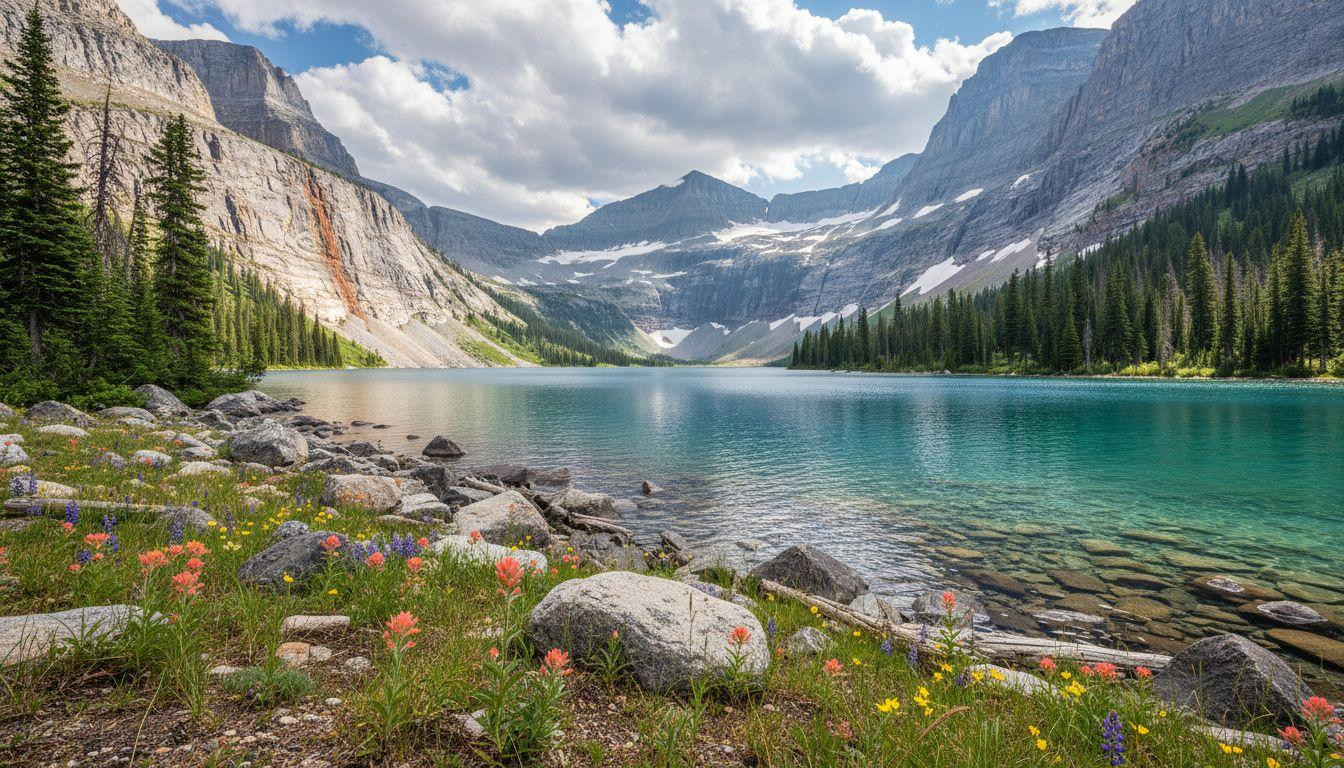
Grinnell Glacier’s parking lot fills by 6:45am on July mornings. Rangers turn away 200 cars before 8am. The 10.6-mile trail delivers 1,600 hikers daily to turquoise melt pools and granite overlooks. Everyone sees the same glacier. Everyone fights for the same photo angle. Elizabeth Lake sits 18.6 miles into Glacier National Park’s Belly River country, where 30 backpackers per week earn what Grinnell sells by the busload.
Why Grinnell Glacier delivers crowds you didn’t drive 2,000 miles for
The Grinnell Glacier Trail gains 1,600 feet over 5.3 miles of paved switchbacks. Park shuttle buses deposit hikers at the trailhead every 15 minutes from 7am to 7pm, July through September. Entry requires the $35 park pass plus advance shuttle reservations that sell out six weeks ahead.
Many Glacier Hotel rooms cost $280 per night in summer 2026. Swiftcurrent Motor Inn cabins run $150. Both book solid by February for July dates. The trail sees erosion from boot traffic. Wildlife moves deeper into backcountry to avoid human noise. Park officials proposed timed entry permits for 2026 to manage the 510,000 annual visitors to this single drainage.
You drive across Montana for wilderness. Grinnell gives you a crowd.
Meet Elizabeth Lake in Glacier’s forgotten corner
Landscape built by ice
Elizabeth Lake fills a glacier-carved valley at 5,200 feet, fed by snowmelt from Mount Cleveland’s north face. The water holds that glacial turquoise color, minerals suspended in solution, visible from the shore as aquamarine fading to cobalt in the depths. Granite cliffs rise 2,000 feet on three sides. Subalpine fir and Engelmann spruce frame the basin.
Ptarmigan Tunnel, a 250-foot bore hand-dug through solid rock in 1930 by Civilian Conservation Corps crews, connects the Belly River drainage to the Many Glacier valley. The tunnel’s dark interior amplifies boot echoes. Light from the far portal grows as you walk, opening to Helen Lake’s reflective basin and the valley beyond. For more remote alpine experiences, coastal wilderness trails offer similar solitude in different terrain.
What backpacking filters out
The 18.6-mile round trip from Chief Mountain trailhead requires two days minimum. Backcountry permits cost $7 per person per night, reserved through the park’s advance system that opens January 15 for summer dates. Bear-resistant food storage is mandatory. Grizzlies use this corridor heavily, May through October.
The commitment eliminates casual visitors. You carry everything. You navigate without cell service. You camp at designated sites only. Rangers don’t patrol daily. The wilderness operates on Leave No Trace principles, enforced by isolation rather than supervision.
The experience Grinnell can’t deliver
Activities that require silence
Dawn at Helen Lake, 3.7 miles beyond Elizabeth Lake’s foot campground, arrives without human voices. The water mirrors Mount Merritt’s pyramid peak in stillness that breaks only when ptarmigan call from talus slopes. Morning light turns the lake gold for maybe 20 minutes before wind picks up.
Ptarmigan Tunnel passage works best at first light or last, when angled sun illuminates the bore’s interior and the valley beyond glows. Midday, the tunnel stays dark and cold. Wildlife observation happens by patience. A marmot on a boulder 40 feet away. An elk herd crossing the meadow below Helen Lake at dusk. Mountain goats on cliffs above the trail, visible as white dots until you stop moving.
Similar to hidden beaches that reward effort, Elizabeth Lake asks for commitment before revealing its best moments.
Cultural elements
The Blackfeet Nation considers this eastern slope of the Rockies sacred ground. Historical accounts document seasonal camps in the Belly River valley before the park’s 1910 establishment. The CCC’s Ptarmigan Tunnel represents Depression-era public works, built to connect horse-packing routes when tourism meant multi-week expeditions, not day hikes.
Leave No Trace ethos governs backcountry behavior here more than rules. You pack out waste because no one checks. You camp 200 feet from water because the ecosystem depends on it. You store food properly because a fed bear dies. The system works through self-selection. People who reach Elizabeth Lake generally understand why these practices matter.
Practical reality check
Chief Mountain trailhead sits 9.3 miles from Elizabeth Lake’s foot campground, gaining 475 feet and losing 741 feet through forest and meadow. The Swiftcurrent Motor Inn route via Ptarmigan Tunnel covers more distance with 2,480 feet of elevation gain, rated strenuous. Both routes open July through early September only, depending on snowmelt.
Backcountry campsites at Elizabeth Lake accommodate 12 people total across three sites. Reservations open six months ahead and fill within days for July-August dates. September sees more availability and fewer mosquitoes. Water sources require treatment. Bear spray costs $15 daily rental at park stores or $50 to purchase.
Costs compare favorably to Grinnell’s infrastructure. Camping runs $7 per night versus $150-280 for lodges. No shuttles to reserve. No crowds to navigate. The trade is effort. You carry a 35-pound pack. You filter water from streams. You hang food bags at night. For travelers seeking similar value in different landscapes, budget-conscious mountain destinations offer comparable savings.
Weather shifts fast at 5,200 feet. July afternoons bring thunderstorms. August mornings drop to 35°F. September sees first snow. Conditions in March 2026 mean planning for summer trips while trails remain buried under six feet of snowpack.
Your questions about Elizabeth Lake answered
When should I visit Elizabeth Lake?
Late July through mid-September offers the most reliable access. Trails typically open by July 15 once snowmelt clears high passes. August delivers peak wildflower displays in alpine meadows. September brings cooler temperatures, fewer mosquitoes, and increased bear activity as animals prepare for winter. Book permits in January for summer dates.
How does Elizabeth Lake compare to other Glacier backcountry destinations?
Elizabeth Lake sees fewer visitors than Iceberg Lake or Cracker Lake, both accessible as long day hikes. The Ptarmigan Tunnel connection adds unique appeal. Dawson-Pitamakan Loop offers more dramatic scenery but harder terrain. Elizabeth Lake balances moderate difficulty with genuine remoteness, filtering out crowds without requiring technical skills. Like lesser-known fjords in Norway, it rewards those who venture beyond famous names.
What makes this worth the extra effort over Grinnell?
Solitude measures differently when you’re one of 30 weekly visitors instead of 1,600 daily. The turquoise water looks the same. The granite peaks rise just as high. But at Elizabeth Lake, you hear wind through larches instead of conversation. You photograph reflections without strangers in frame. You experience wilderness as ecosystem, not attraction. The effort becomes part of the value.
The ferry back to civilization leaves when you decide. Most backpackers spend three days in the Belly River country, looping through Helen Lake and Ptarmigan Tunnel. I almost extended to four twice, both times because dawn at the lake made leaving feel wrong. The quiet earns its keep.