“`html
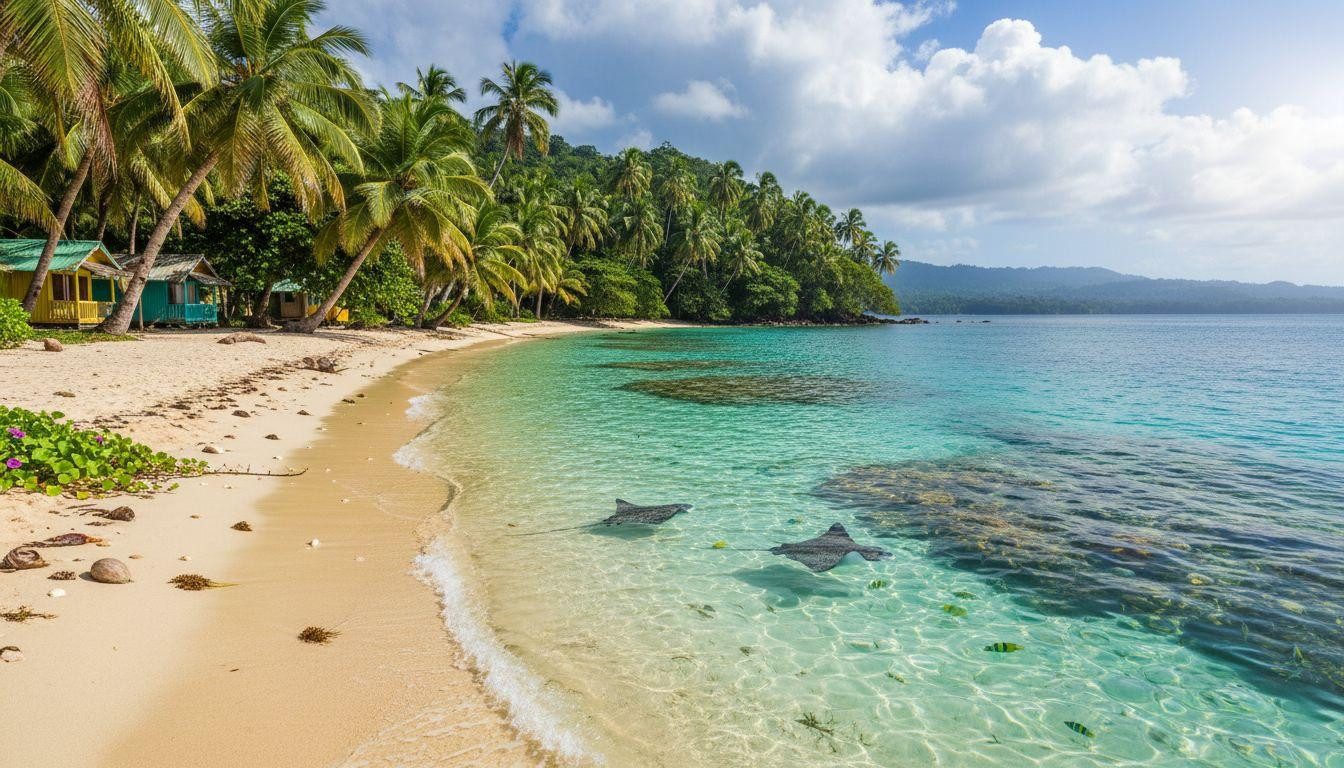
The water off Punta Uva stays calm enough to see coral from the beach. Most mornings between December and March, wave heights hold at 0.6 meters. You can walk into the Caribbean here and watch rays glide past in water so clear it feels like glass. This protected bay on Costa Rica’s southern Caribbean coast delivers the kind of snorkeling most people fly to Belize or Cozumel to find. Fewer than 50,000 visitors come here each year. The reef sits 500 residents and one unpaved main road away from anywhere crowded.
Where the reef creates the calm
Punta Uva lies 9 miles south of Puerto Viejo in Limón Province. The Gandoca-Manzanillo Wildlife Refuge protects 3 square miles of reef directly offshore. That natural barrier blocks Pacific swells before they reach the beach. Water temperature holds at 81°F year-round. The horseshoe-shaped reef runs parallel to shore at depths between 10 and 30 feet.
Drive 60 miles south from Limón International Airport and you reach a 1-mile stretch of white sand backed by palm forest. The road ends at a handful of wooden cabinas painted turquoise and yellow. No hotels. No tour buses. Just shallow turquoise water that stays transparent 40 feet down during the December-March dry season.
What makes the snorkeling pristine
Visibility and reef health
The reef here supports blue parrotfish, angelfish, sea stars, and small octopuses. Green sea turtles nest on the beach from March through May. Locals report consistent ray sightings in the shallows. Visibility reaches 60 feet on calm days. The protected status within Gandoca-Manzanillo means no fishing pressure and minimal boat traffic. You can rent snorkel gear at beach shacks for $10 per day.
The December-March advantage
Costa Rica’s Caribbean coast gets 18 rainy days per month during the wet season from May through November. December through March drops that to 8 days. Wave heights stay below 2 feet. The Pacific coast sees 6-foot surf during the same window. That seasonal split makes Punta Uva one of the few spots in Costa Rica where snorkeling works better than surfing. Water stays glass-calm most mornings before trade winds pick up around noon.
Beyond the reef
The Afro-Caribbean village life
The community here descends from Jamaican workers who arrived in the 1800s for banana plantations. Bribri indigenous families still live in the surrounding hills. You can order rondón stew at roadside sodas for $10. The dish combines coconut milk, fish, plantains, and yucca. Fresh lobster costs $12 at beachfront tables. A few miles north, Playa Arrecife offers similar calm water with even fewer visitors.
Barefoot beach days
The beach runs 1.5 miles with no development beyond scattered cabinas. Palm groves provide shade. Jungle meets sand at the high-tide line. Howler monkeys call from the canopy at dawn. The refuge trails lead to hidden coves where bioluminescent plankton lights up night swims between December and March. Most visitors walk the beach barefoot. Shoes feel unnecessary here.
The quiet you won’t find elsewhere
Tulum draws 3 million visitors annually. Cozumel sees cruise ships daily. Punta Uva gets overlooked because it requires a rental car and tolerance for unpaved roads. That keeps crowds away. The protected refuge status prevents resort development. You can spend entire mornings on empty sand. The village has no ATM and spotty cell service. That isolation preserves the calm.
Locals protect this place by keeping it low-key. No Instagram geotags. No tour company promotions. Just word-of-mouth among travelers who prefer quiet fishing villages over party beaches. The slow pace feels intentional. Time moves differently when you’re watching rays in turquoise water at 7am with nobody else around.
Your questions about Punta Uva answered
How do I get there?
Fly into Limón International Airport (60 miles north) or San José (4.5-hour drive). Rent a car for $50 per day. The final 15 miles from Puerto Viejo follow coastal Route 256. Shared shuttles from San José cost $60 per person. No public transit reaches Punta Uva directly. GPS coordinates: 9.663°N, 82.693°W.
What’s the budget?
Basic cabinas run $20-50 per night. Meals at local sodas cost $8-12. Snorkel rental is $10 per day. Guided reef tours (if you find an operator) charge $30-50. Total daily budget: $60-90. That’s 25% below Costa Rica’s national average. Compare that to Yucatán cenote tours at $80 per person.
When should I go?
December through March delivers calm seas and 8 rainy days per month. April and May see more rain but still-clear water. Avoid June through November when rainfall hits 16 inches monthly and visibility drops. Sea turtle nesting happens March-May. Bioluminescent plankton appears December-March. February through April offers the best combination of calm water and dry weather. Similar calm-water conditions exist at Florida springs year-round.
Morning light turns the bay gold around 6am. Fishermen return with catches by 7am. The water stays calm until noon when breezes ripple the surface. By then you’ve already seen the rays.
“`