
Hidden Doors In Walls are having a moment. And honestly? Most of them actually deliver.
The Vertical Slat Trick That Actually Works
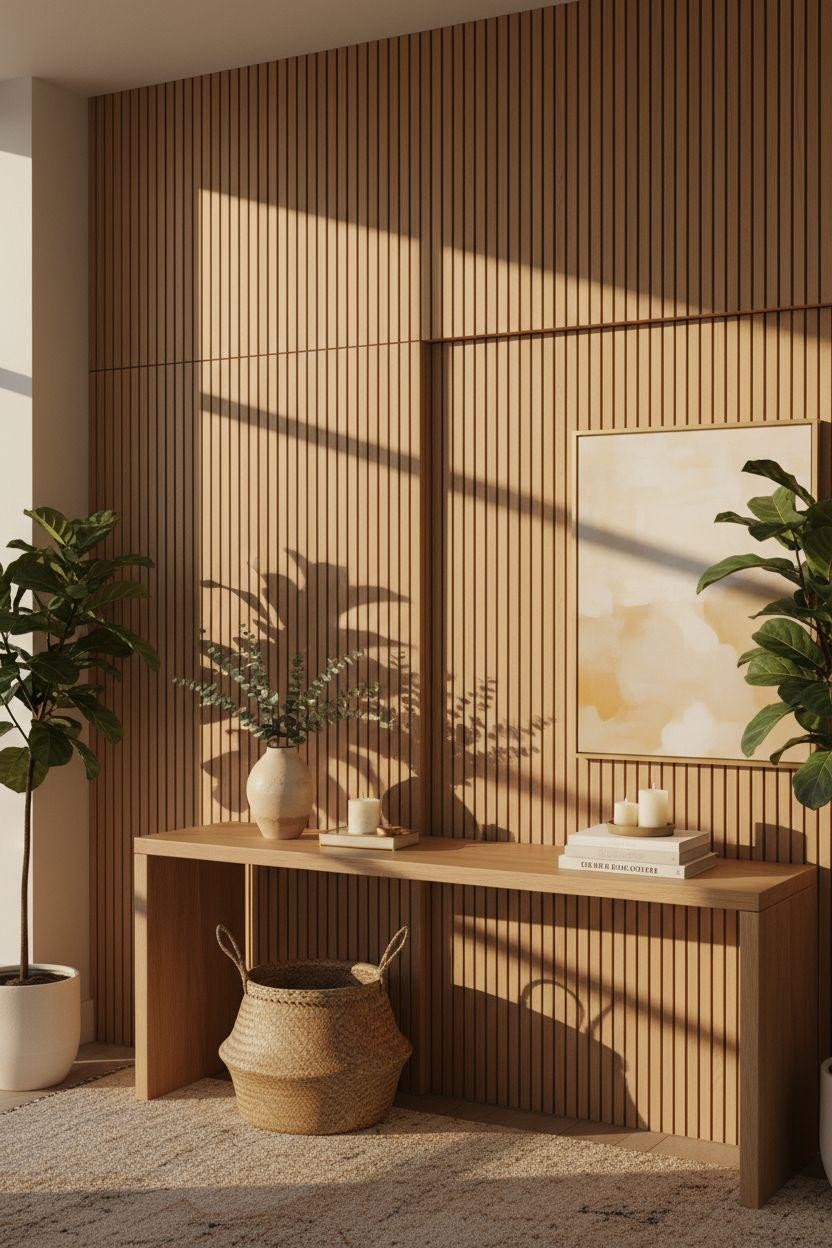
Floor-to-ceiling wood slats hide doors better than anything else I’ve seen. The grain lines up perfectly, so even when you know it’s there, your eye skips right over it. This works best in living rooms where you want zero visual clutter. The brass hardware disappears into the shadow lines between slats. Pair it with a console table (like this one from West Elm) so the wall doesn’t feel empty. Two fiddle leaf figs flanking the door help balance the height.
White Paneling Without the Boring
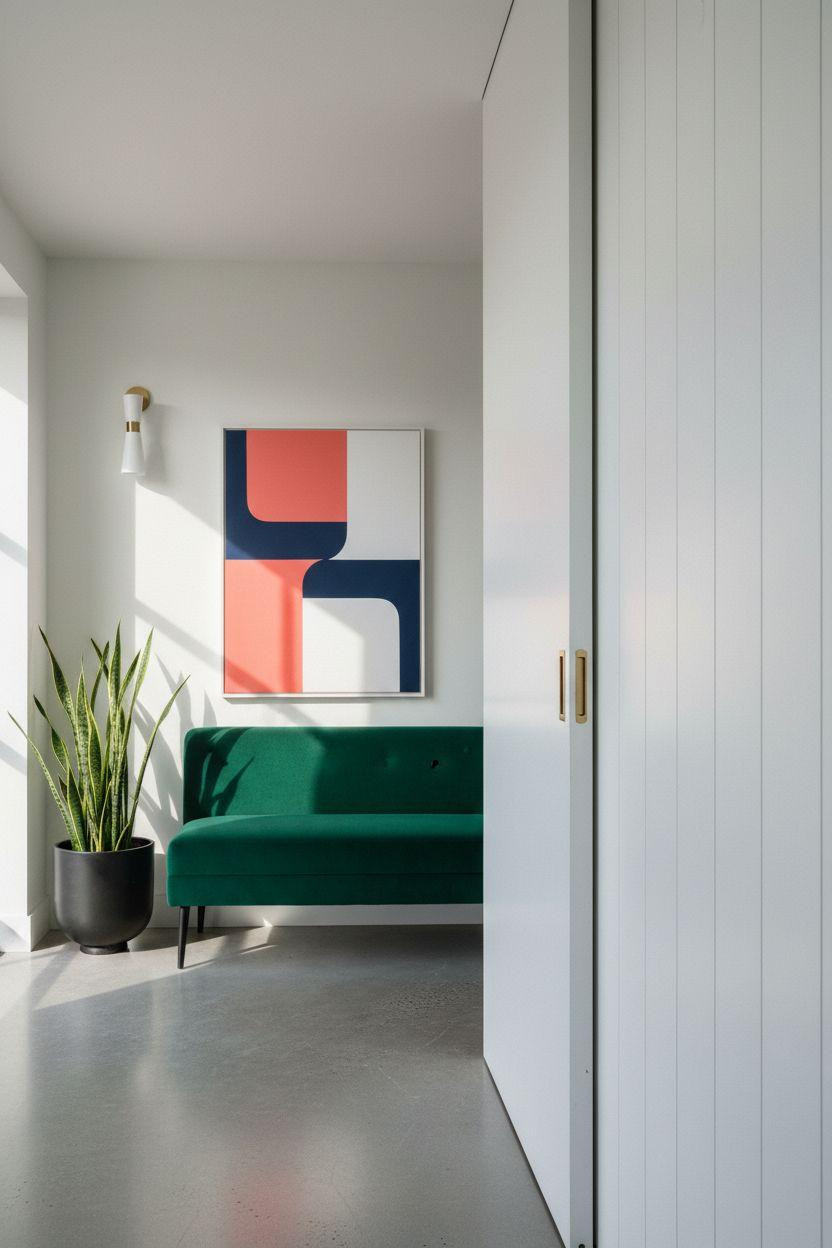
White panels work when you add one bold accent. This emerald bench stops the hallway from feeling clinical. The recessed brass pull is subtle enough that guests won’t spot it immediately. But the real trick? That polished concrete floor reflects just enough light to create soft shadows along the panel seams. If your hallway gets decent natural light, this setup makes the space feel twice as wide.
Charcoal Panels That Don’t Feel Heavy
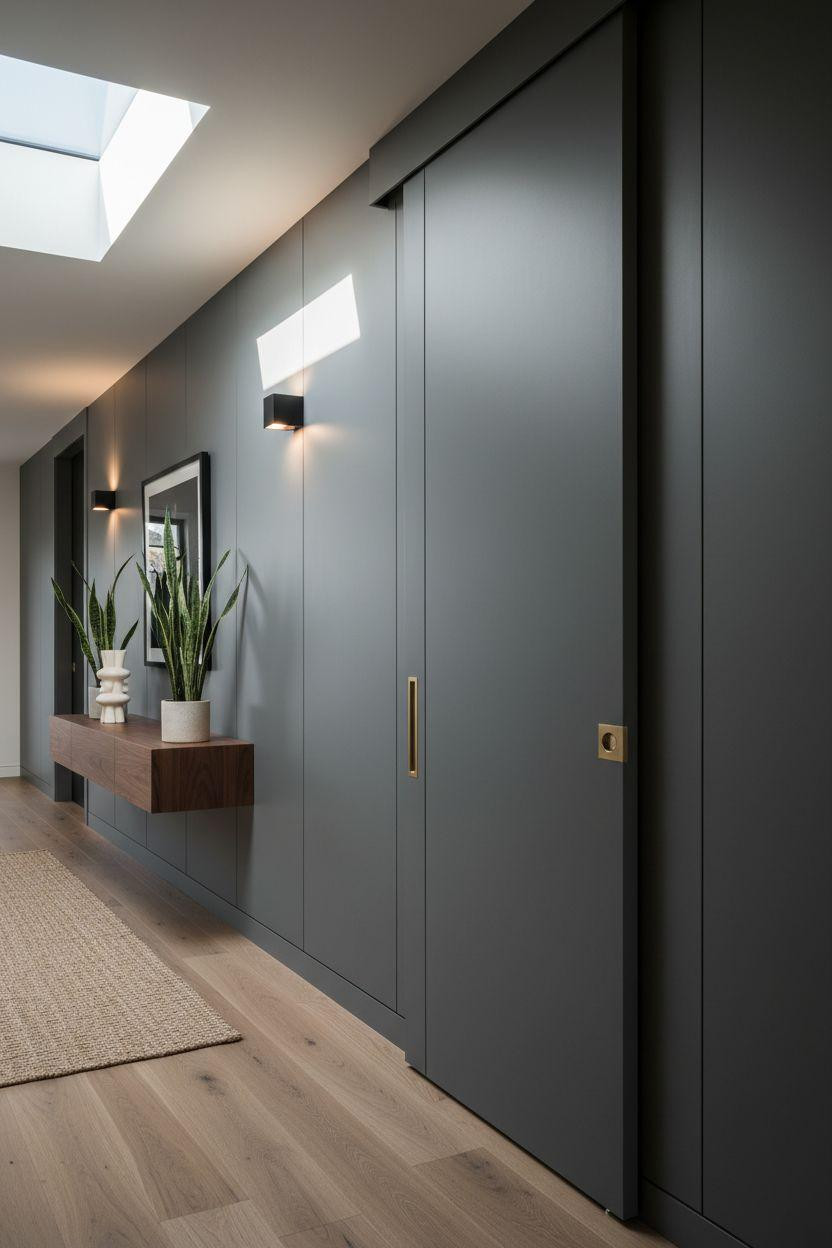
Dark walls can absolutely work for hidden doors. The key is contrast—white oak flooring, brass sconces, something to break up all that charcoal. This linear handle design is genius because it reads as architectural detail, not door hardware. The floating console keeps sightlines clean. And that woven jute runner? It softens the whole moody vibe without trying too hard.
When the Door Becomes Statement Lighting

Integrated LED strips turn the door into functional art. The brass hardware isn’t hiding here—it’s doing double duty as both handle and light fixture. This works if you’re okay with the door being slightly visible (because that glow is the whole point). The vertical oak slats still create continuity across the wall. I’d pick this for a hallway that needs more ambient lighting anyway.
Geometric Grooves for the Minimalist
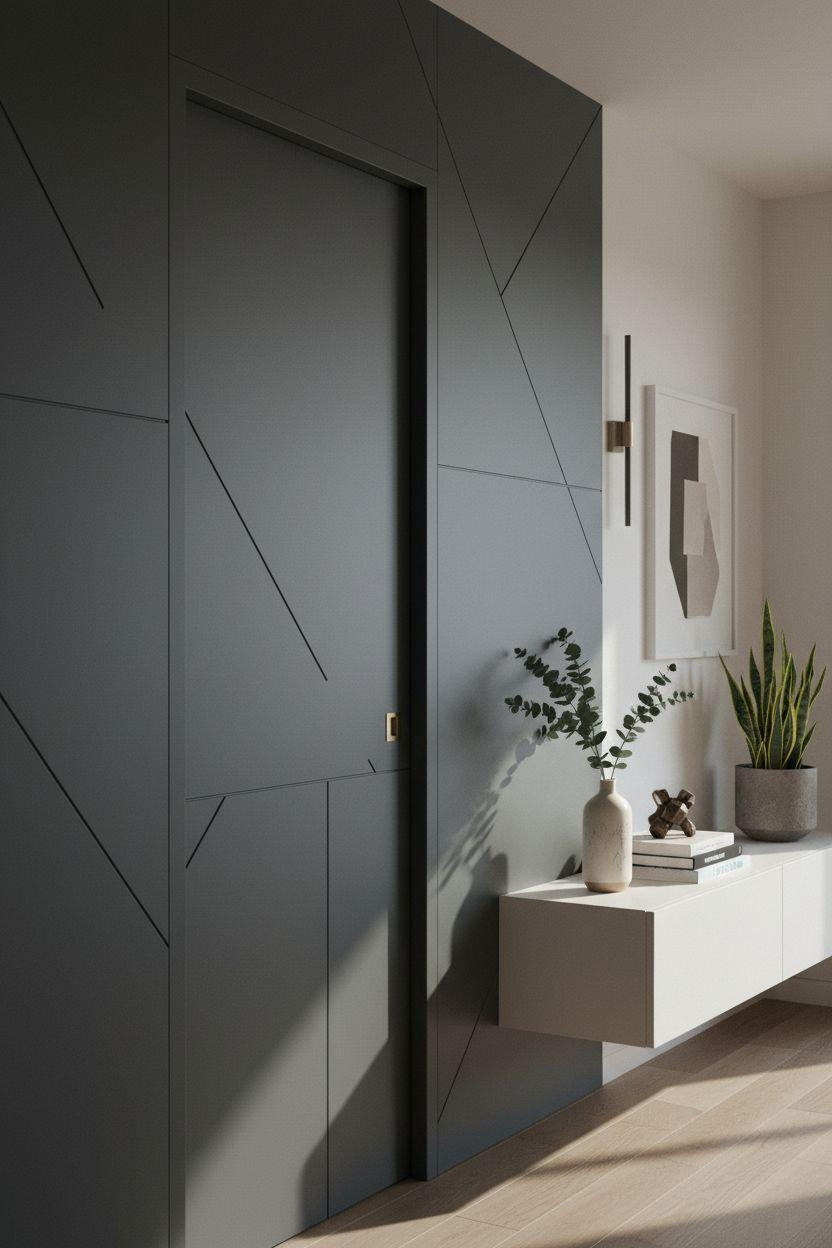
Linear grooves add texture without screaming “look at me.” The matte charcoal finish makes fingerprints less obvious (trust me on this). That brushed brass pull sits in one of the grooves, so it registers as part of the pattern. Great when you need a hidden door but still want some visual interest on the wall. The floating console beneath anchors the whole thing.
The Bathroom Door You’ll Never Notice
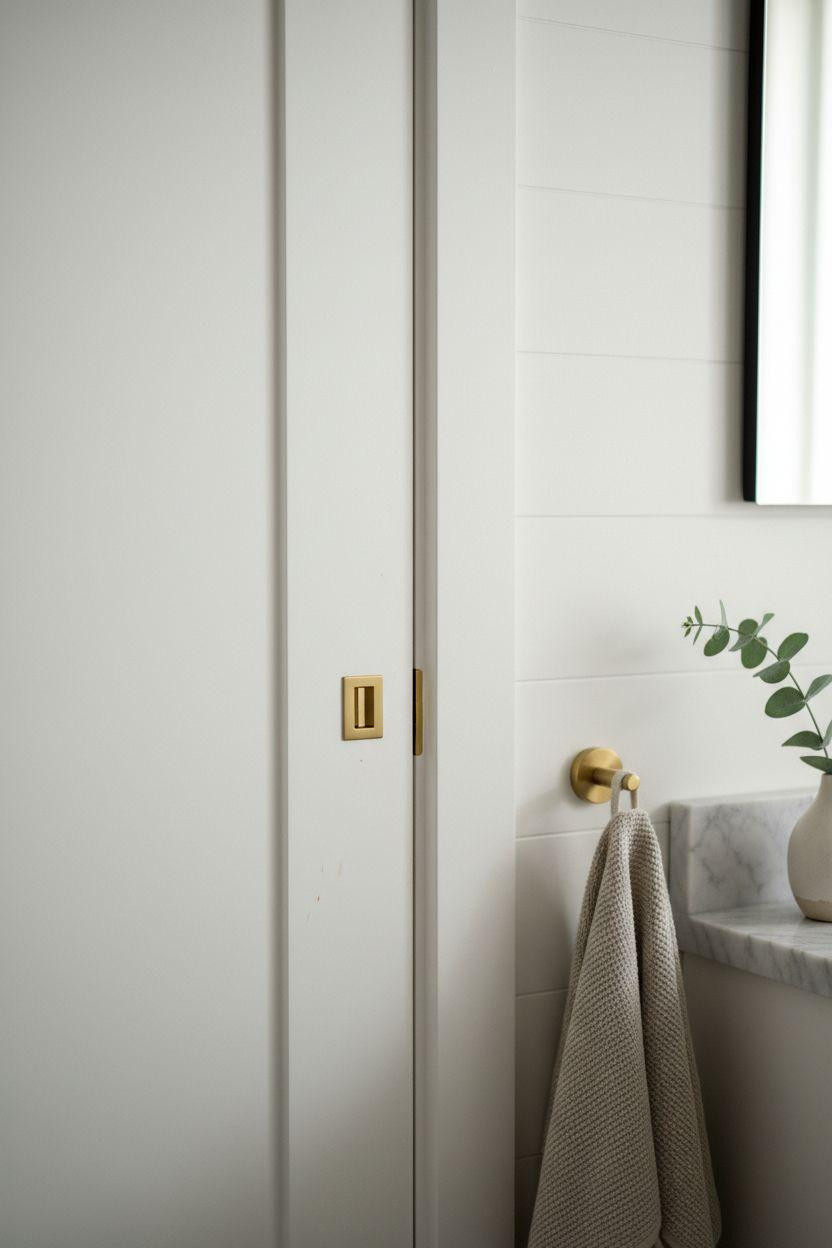
Concealed bathroom doors are tricky because you need quick access but zero visual weight. This recessed brass finger pull is the move—barely there, but functional. The magnetic push-latch means no visible hinges. White painted panels match the surrounding wall exactly, so the only giveaway is that thin shadow line. Hang a linen towel on a brass hook nearby to make it all feel intentional.
Shelving That Secretly Opens
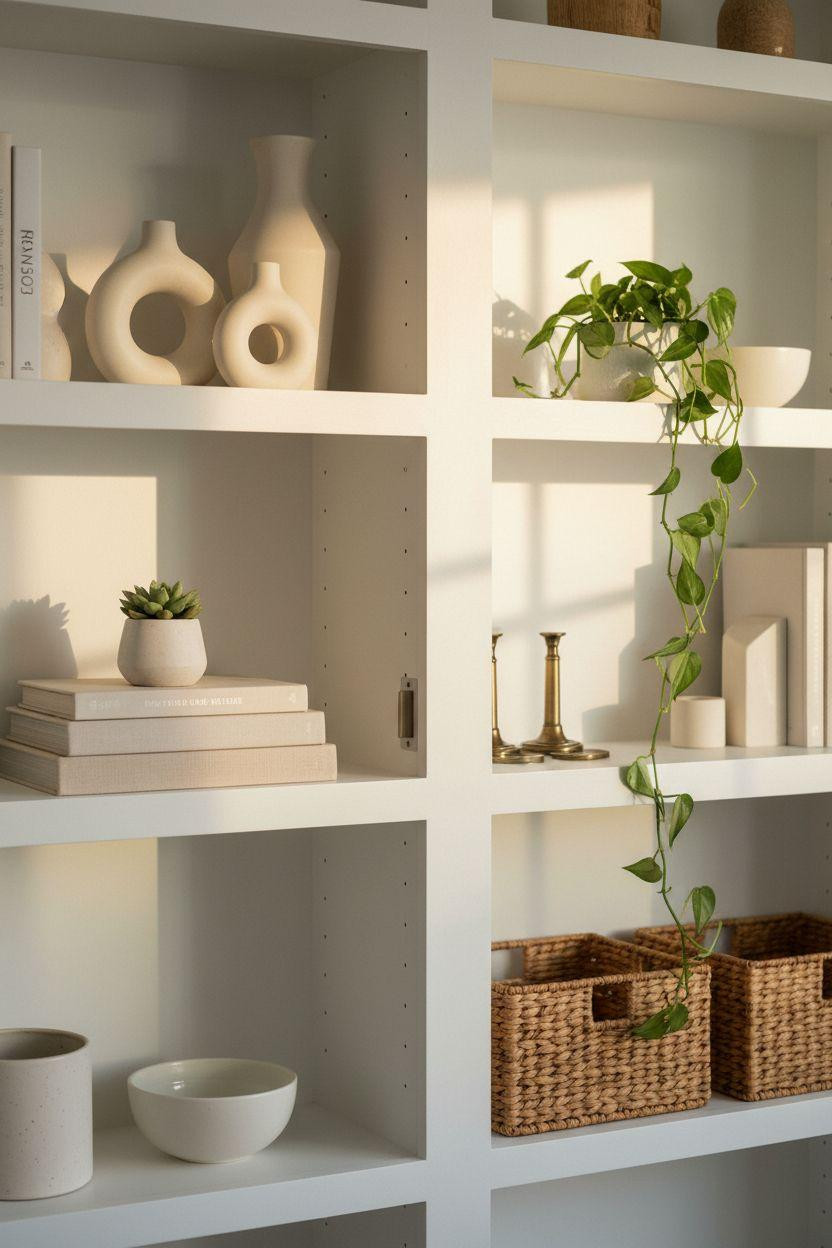
This is my favorite trick. The door sits flush with the shelves, so it looks like open storage. You style it with books, plants, ceramics—whatever makes sense for the room. The handle recesses into the shelf edge. When it’s closed, you’d never know. This works great for pantries or storage closets you want to completely hide. Just don’t overload the shelves or the mechanism gets wonky.
Brass Hexagons for Drama
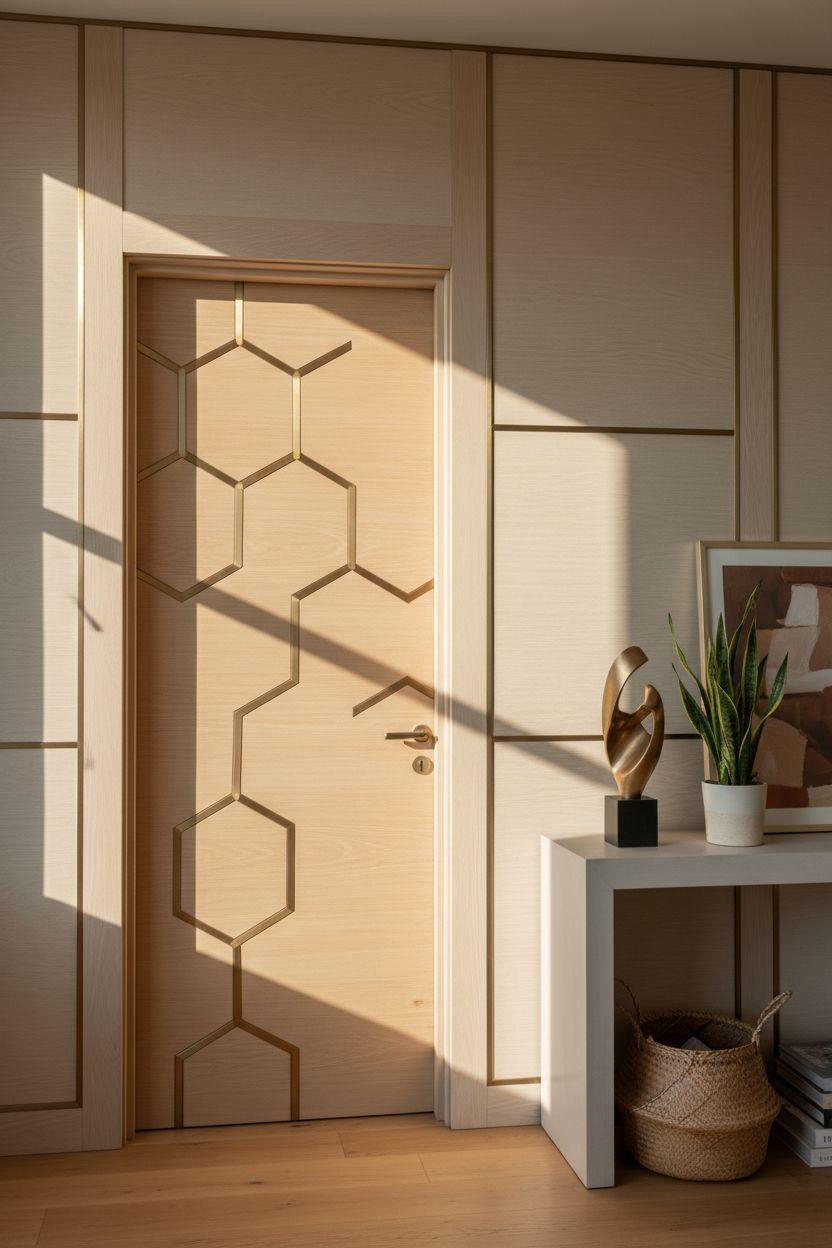
Know what makes this actually work? The geometric pattern creates visual noise, so your brain doesn’t register the door outline. The brass hexagons catch light at different angles throughout the day. It’s subtle luxury without being flashy. Best for spaces where you want a little mystery—home offices, primary bedrooms. The magnetic push-latch means no visible hardware to break the pattern.
Matte Black That Doesn’t Look Cold
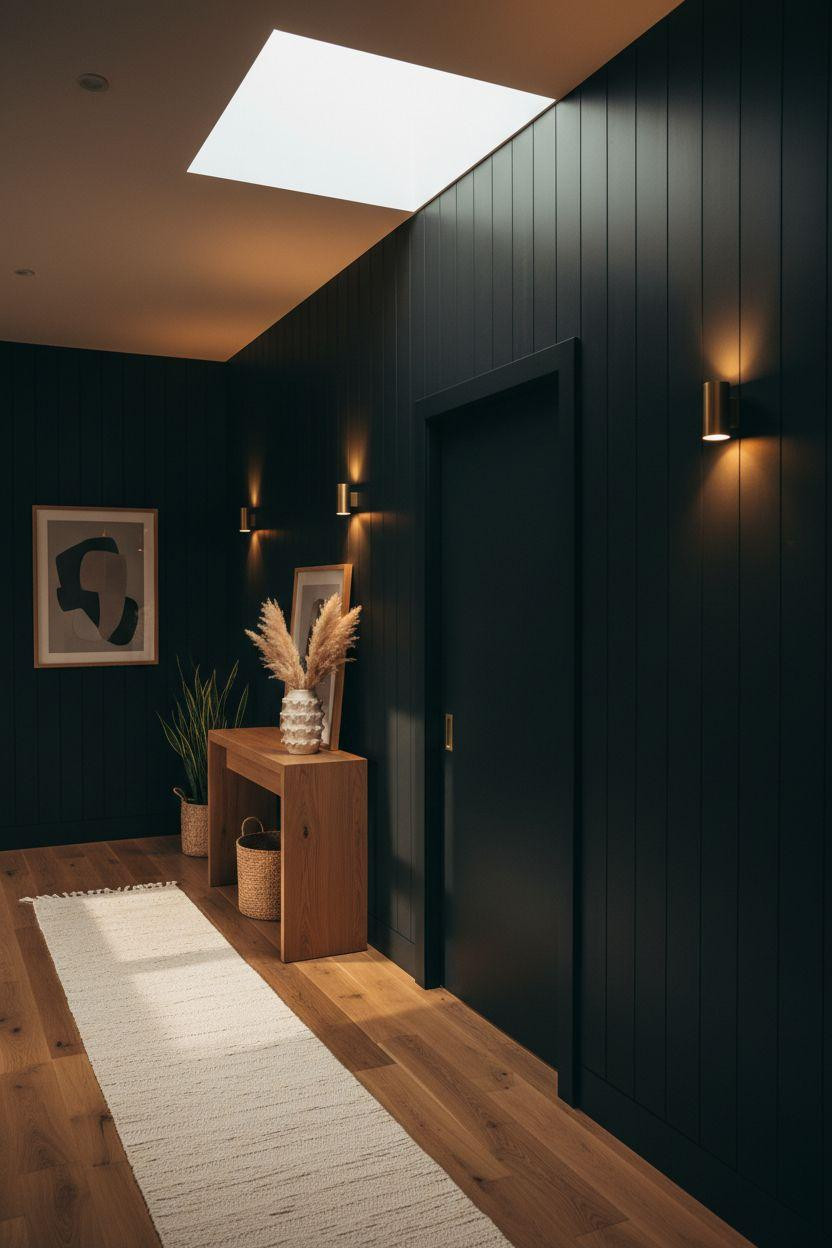
Matte black panels can feel warm if you layer in oak floors and brass lighting. The vertical lines create height, which is clutch in hallways with lower ceilings. That recessed handle disappears into the shadow. The floating console breaks up the expanse of black without cluttering the space. Honestly, I’d skip this in rooms with no natural light—it needs that golden hour glow to work.
The Closet Door That Vanishes
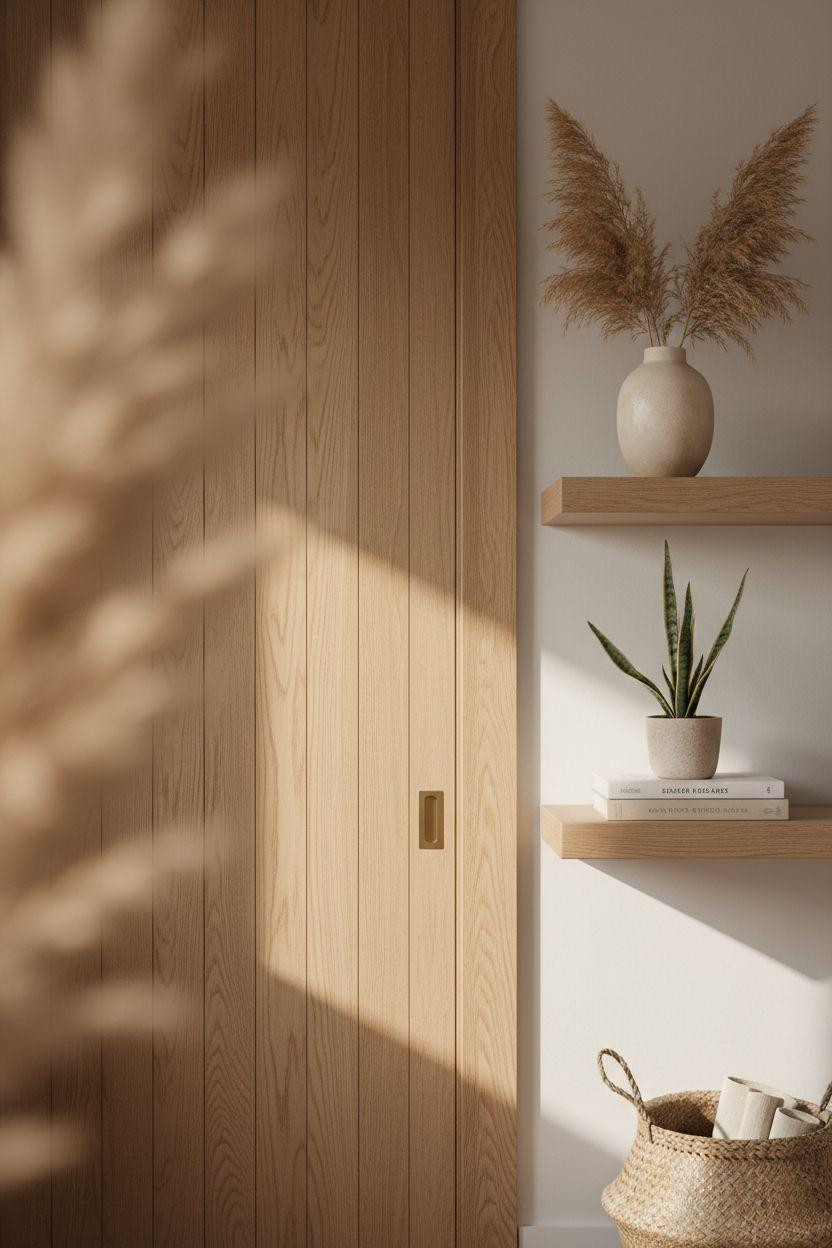
Warm oak with magnetic push-to-open is the ultimate combo for closet doors. No handles, no hinges, just seamless wall. The vertical grooves add enough texture that the door blends perfectly. This works when you have a capsule wardrobe situation and don’t need constant closet access. The floating shelf beside the door keeps the wall from feeling flat. Add one trailing plant for softness.
Horizontal Grain That Reads Expensive
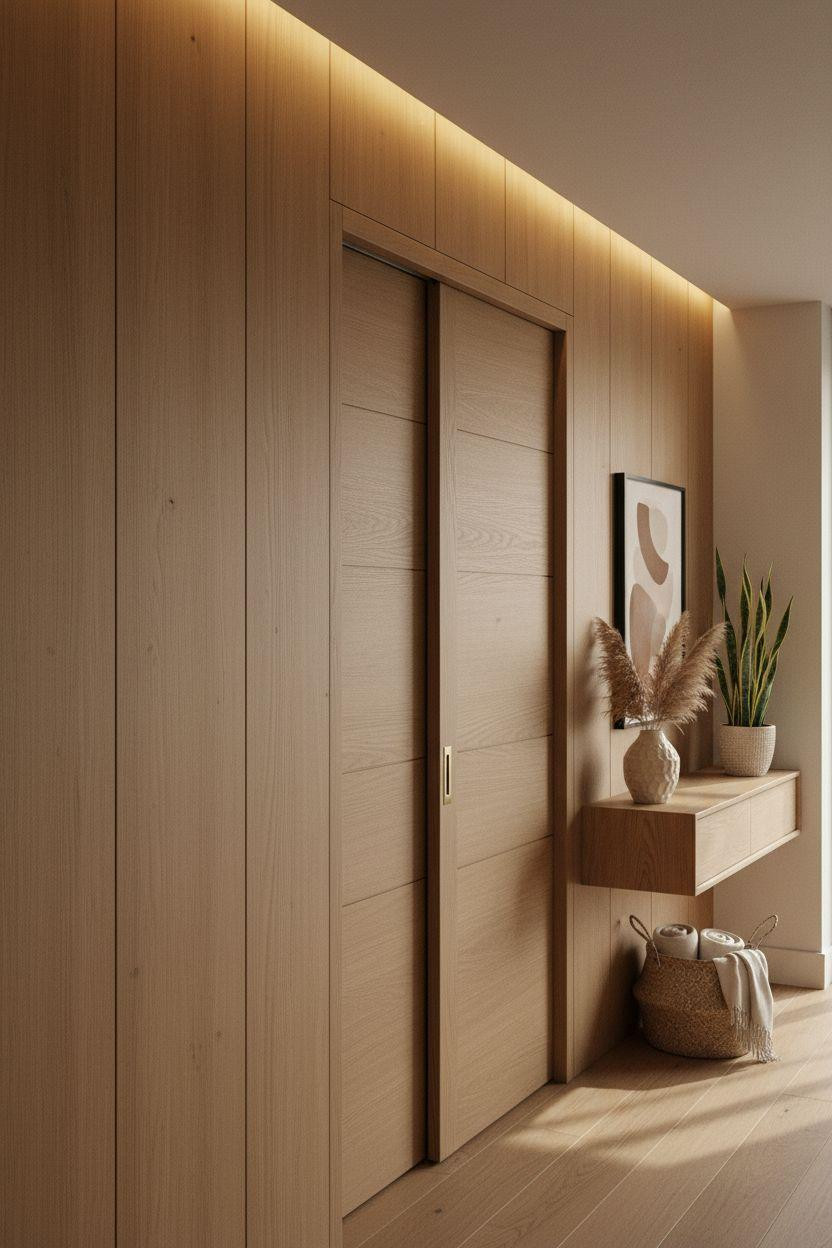
Horizontal wood grain creates a completely different vibe than vertical slats. It makes rooms feel wider. The brass pull here is barely visible because it sits within the grain pattern. LED strip lighting in the ceiling cove highlights the door’s texture without making it obvious. This is great for modern spaces where you want warmth but not cottage vibes.
The Doorway That Reveals Everything
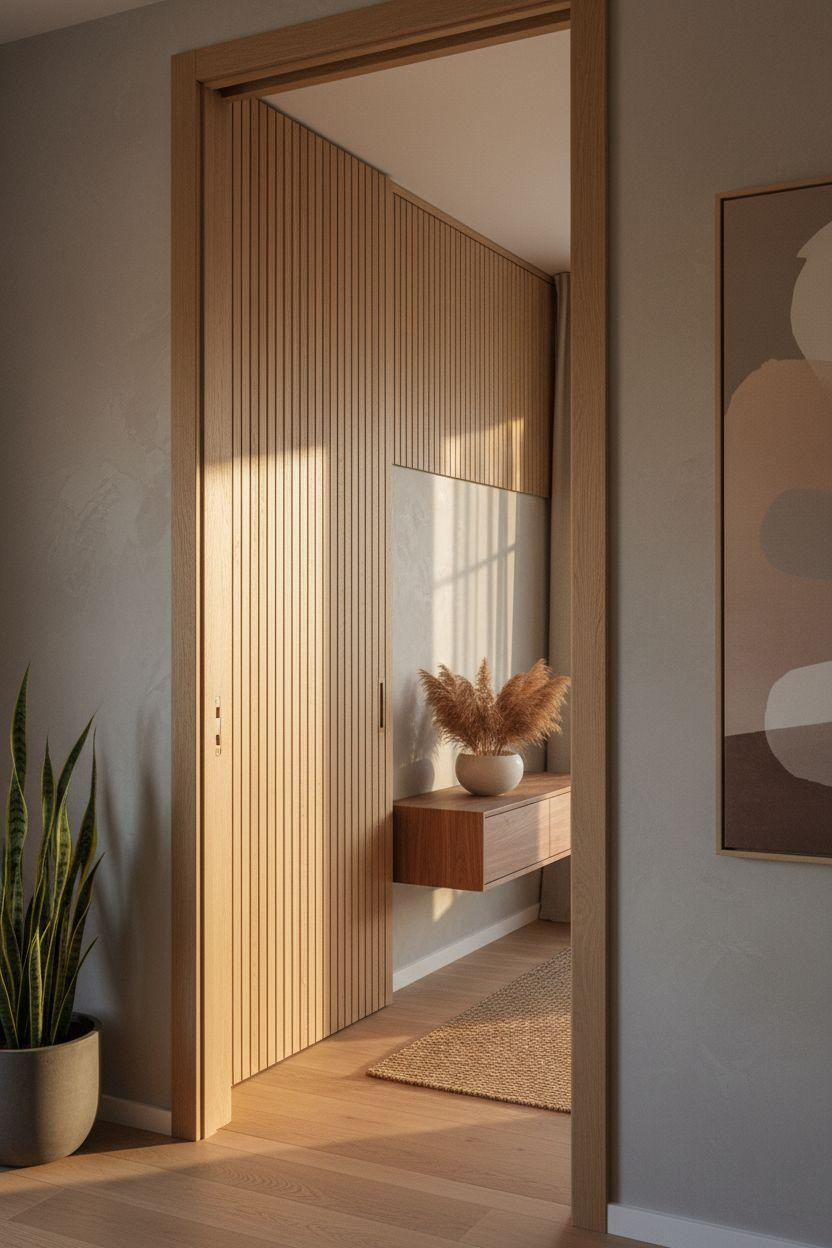
Framing the hidden door through an existing doorway creates a reveal moment. You see the texture, the recessed track, the way the oak slats continue seamlessly. The gray plaster walls provide just enough contrast. That woven jute runner adds warmth underfoot. I’d do this when you want the hidden door to feel discovered, not invisible. It’s architectural flex without being obnoxious.
Shelving with a Secret
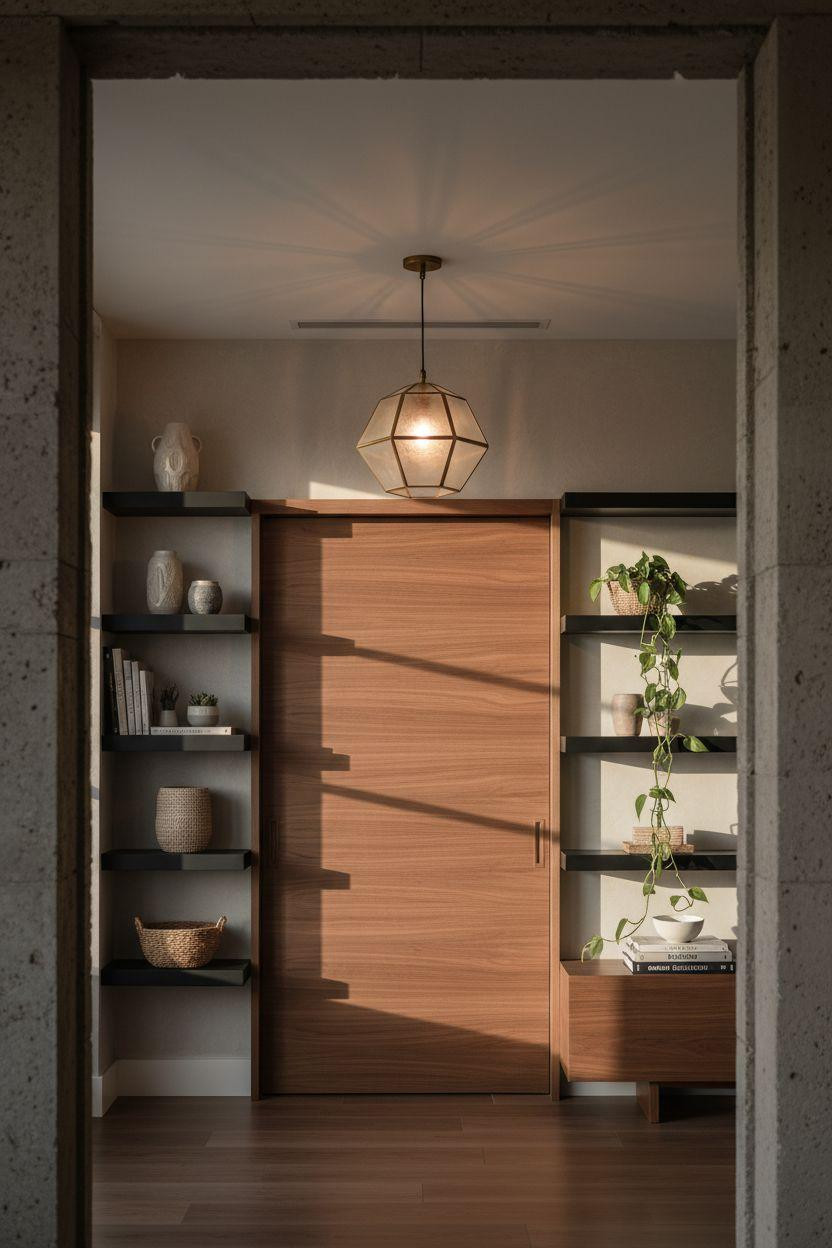
Asymmetrical shelving makes the hidden door even harder to spot. The walnut grain matches perfectly, so the door panel reads as just another section of wall. That geometric brass pendant is doing serious work—it draws your eye up, away from the door line. Style the shelves with actual stuff you use (not just props). Trailing pothos plants soften the whole thing. This setup works best in living rooms or home offices.
Walnut Paneling That Feels Luxe
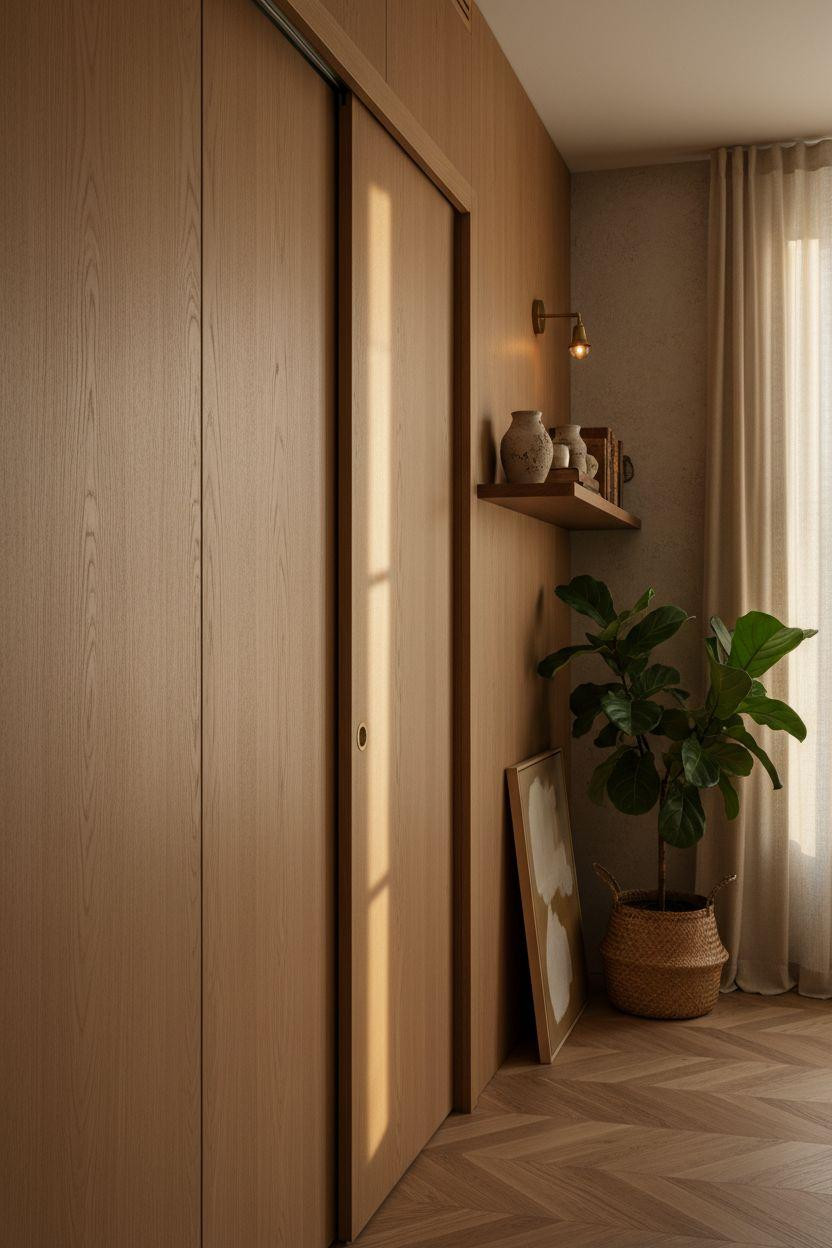
Floor-to-ceiling walnut paneling makes any space feel expensive. The concealed track sits flush with the top of the wall. That brass sconce placement is perfect—casts warm light across the grain without highlighting the door seam. Linen curtains pooling on the floor add texture without competing with the wood. Great for primary bedrooms where you want the closet to completely disappear.
The View That Makes You Look Twice
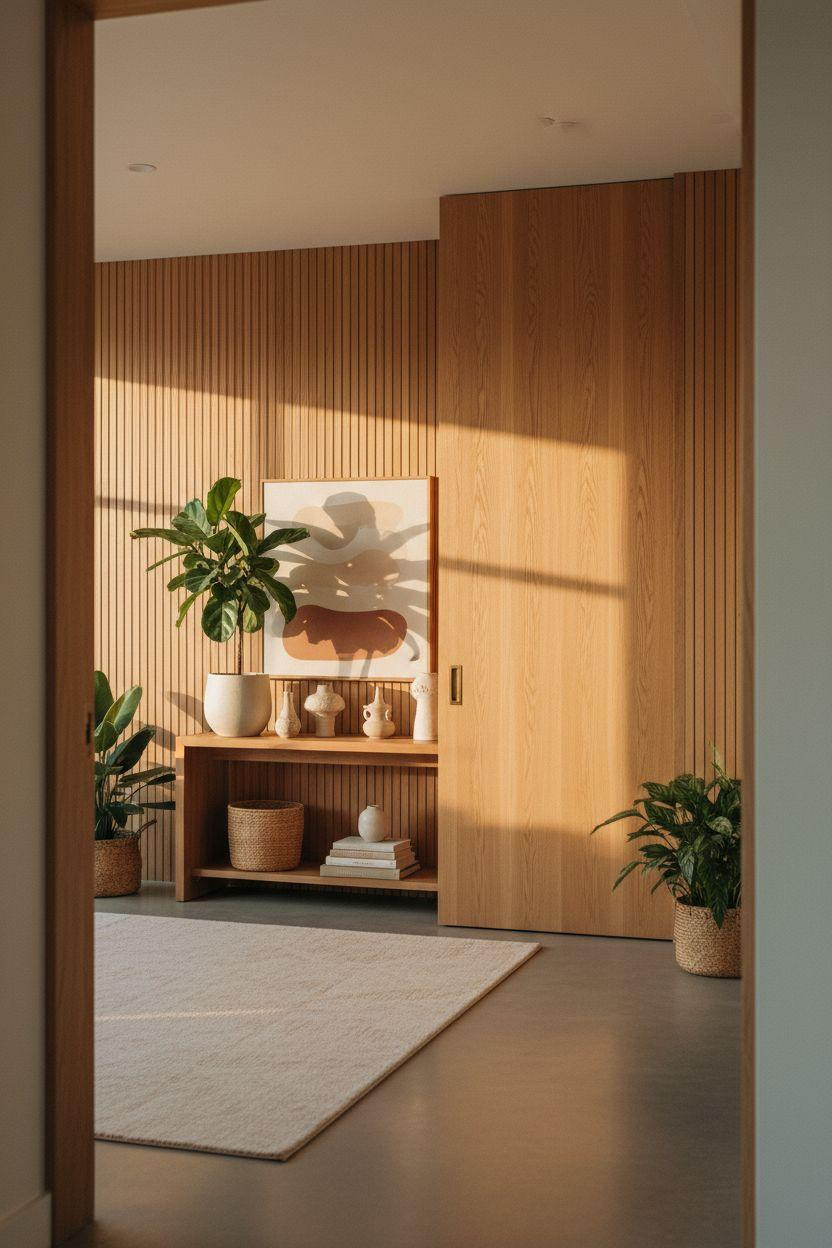
Partially open doors create the best before-and-after effect. You see how the vertical oak slats continue into the next room. The brass pull is subtle enough to miss on first glance. That fiddle leaf fig in a woven basket grounds the space. This works when you want to show off the hidden door feature without making it the only thing people notice. Layer in a wool rug and casual styling so it feels lived-in.
Geometric Panels for the Bold

That emerald green stripe is doing all the work here. It pulls your eye vertically, so you don’t notice the door seam. The brass linear inlays create a diamond pattern that feels custom. Terrazzo floors with colorful aggregate tie the whole thing together. This setup is perfect when you want the bathroom entrance to make a statement without being obvious. The geometric precision makes it feel intentional, not accidental.
Reclaimed Wood with Vintage Hardware
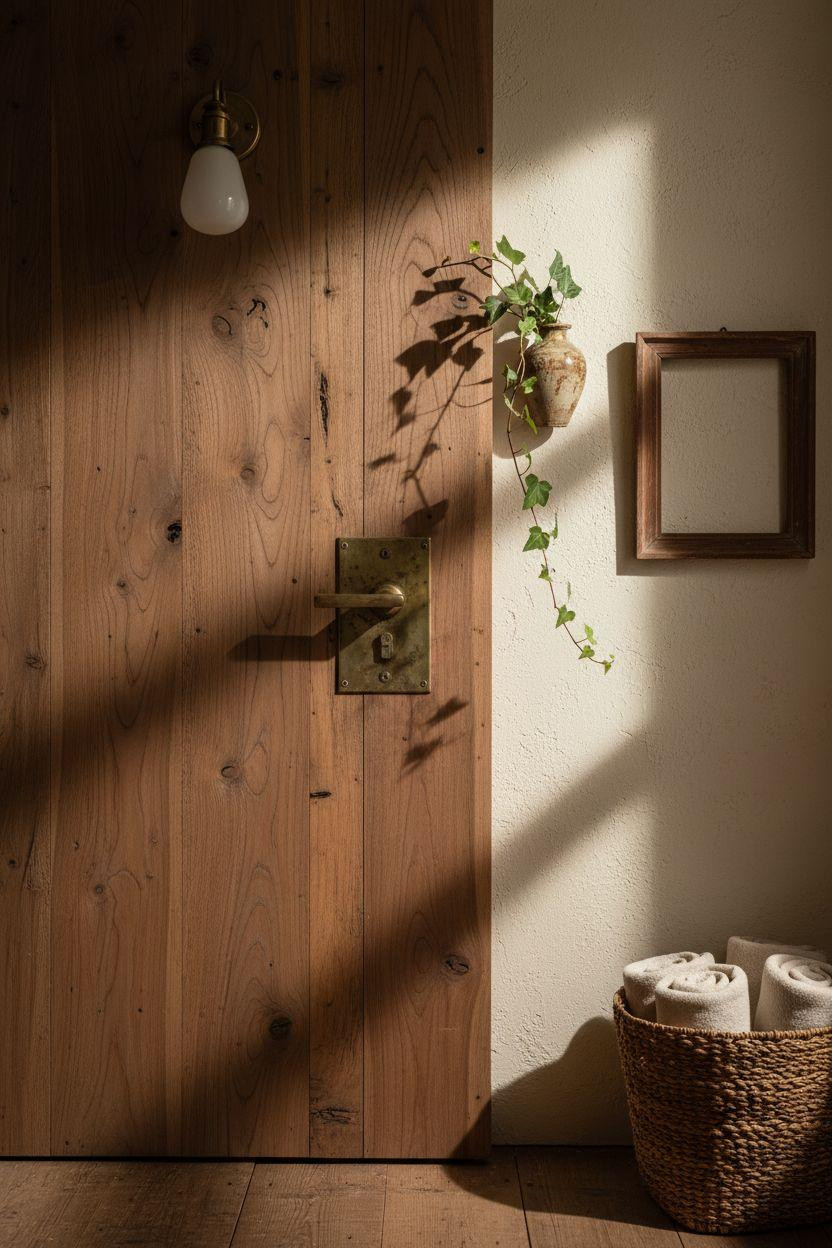
Reclaimed wood with natural grain variation makes the door completely invisible. The aged brass hardware reads as decorative, not functional. That vintage wall sconce creates dramatic shadows that emphasize the wood texture. Trailing ivy softens the whole thing. This works in cottages or older homes where you want modern function but vintage character. The wood doesn’t need to be perfect—those knots and variations help with the camouflage.
The Reading Nook Reveal

Using a hidden door to conceal a reading nook is next-level. The oak paneling continues into the cozy space, so it feels like a natural extension. Layered linen cushions and a chunky wool throw make you actually want to use it. That brass recessed handle barely registers. This is great when you have an awkward alcove or corner you want to turn into something special without it screaming “look at me.”
White Paneling Done Right

White paneling works when you add walnut floating shelves for contrast. The door is partially open here, so you can see how the panels continue inside. That gray linen sofa and marble side table keep it from feeling too stark. The brass lamp adds warmth. This setup is perfect for minimalists who want hidden storage but still need visual interest on the walls. Just style those shelves with actual books and ceramics, not just decorative objects.
Linear Handle as Architecture
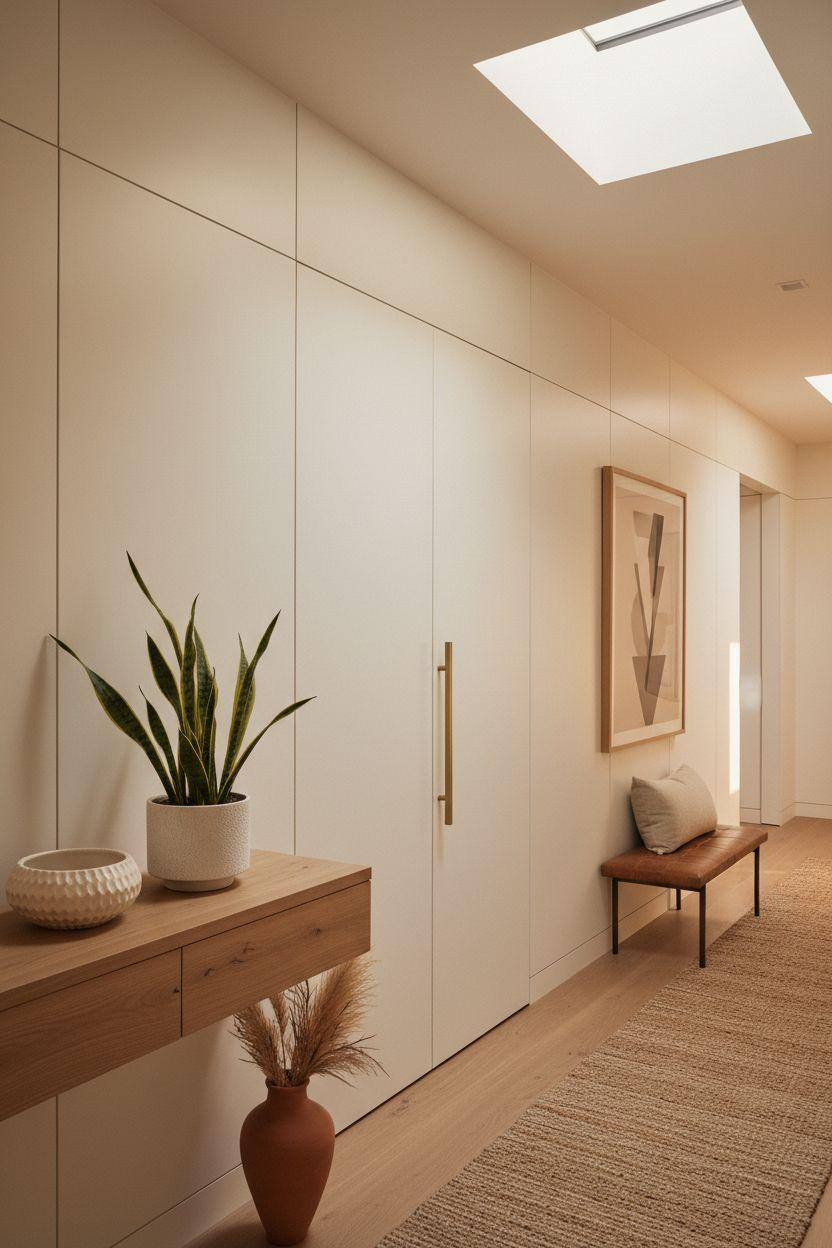
That linear brass handle reads as architectural detail, not door hardware. The warm white panels reflect light beautifully without feeling cold. The jute runner adds texture underfoot. This works in hallways where you need the closet to completely disappear. LED recessed lighting in the ceiling creates soft shadows that define the paneling without highlighting the door line. Keep styling minimal—one console, one plant, done.
Charcoal Geometric Relief
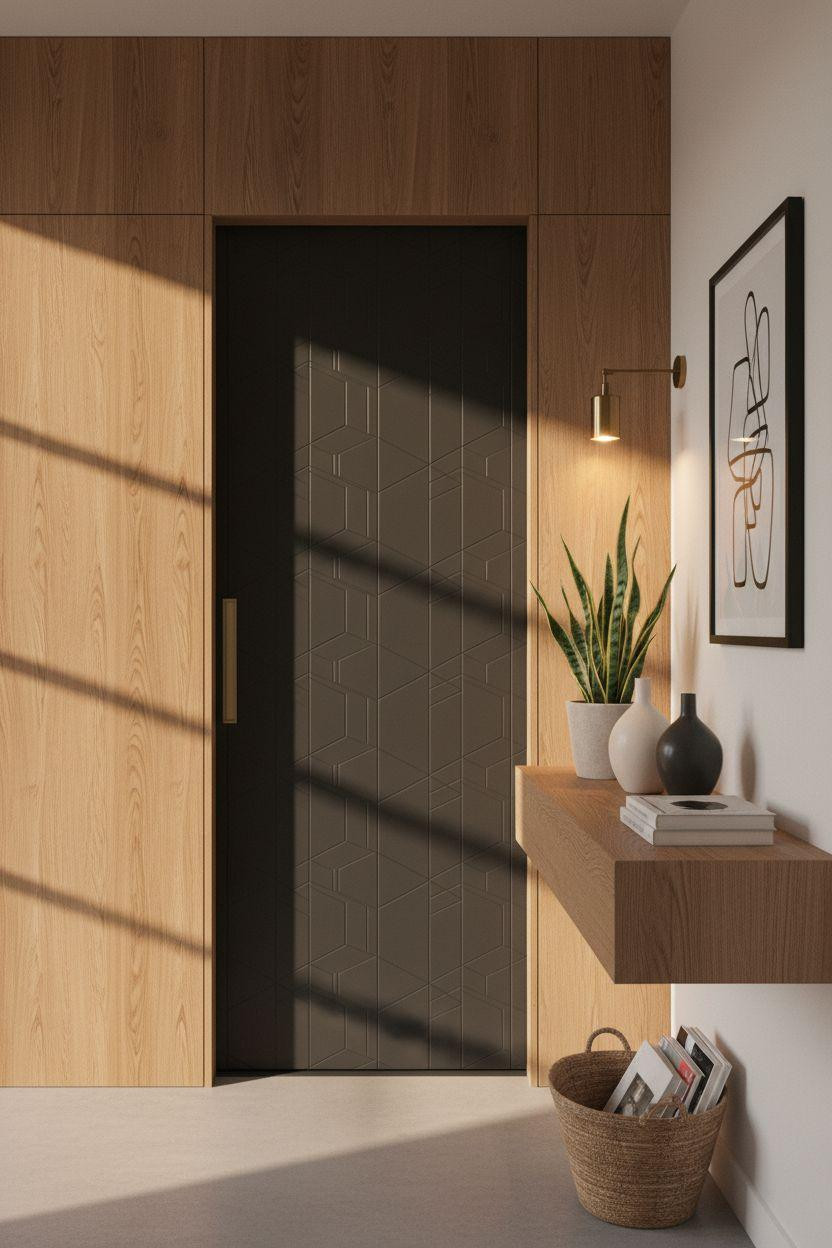
Geometric relief patterns create enough visual texture that your eye doesn’t register the door outline. The matte charcoal finish feels modern without being cold. That brass recessed track detail is subtle but intentional. The white oak paneling beside it provides warmth and contrast. This setup works best in contemporary homes where you want architectural interest but still need functional hidden storage. Layer in plants and books so it doesn’t feel like a showroom.
Three-Dimensional Patterns That Hide Everything
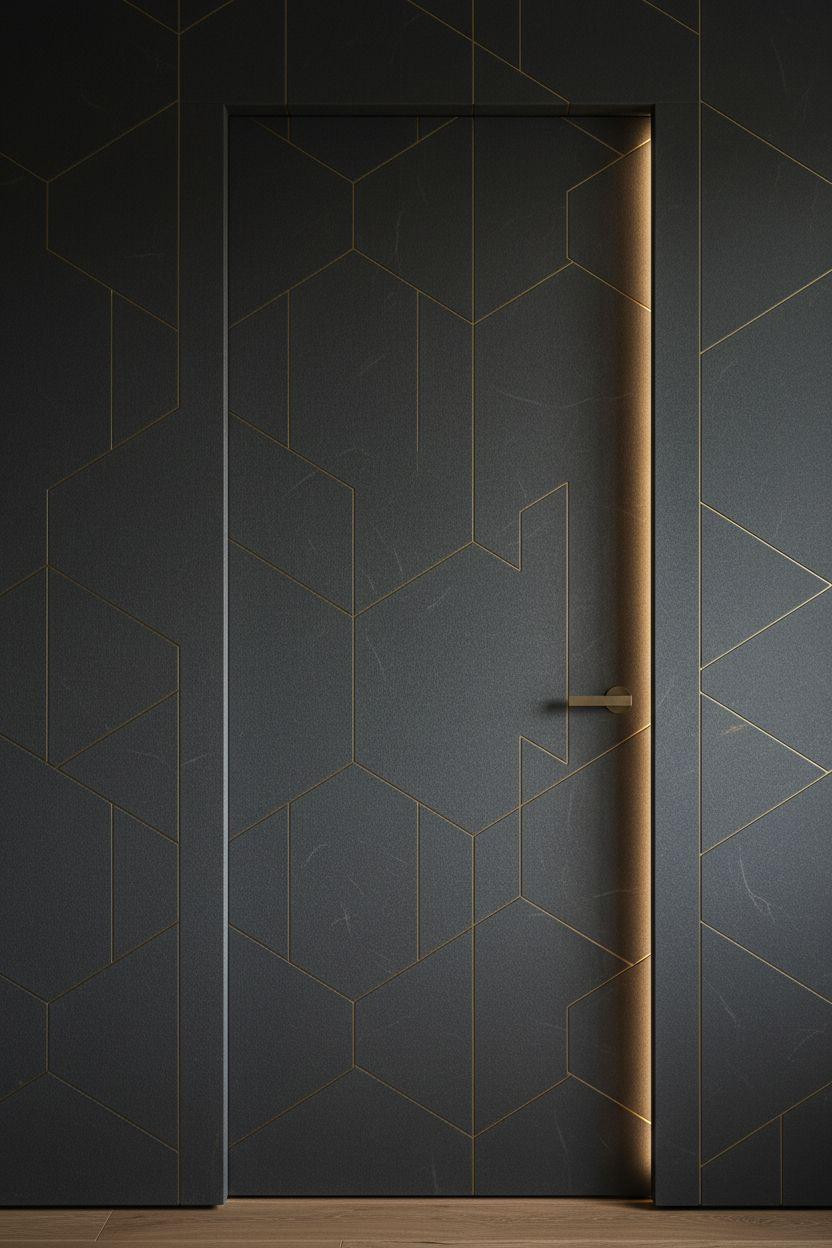
Acoustic panels with brass inlay create serious depth. The LED edge lighting is genius—it highlights the geometric pattern without making the door obvious. This works when you need soundproofing and concealment. The three-dimensional relief casts shadows that change throughout the day. I’d use this in home offices or media rooms where you want the door to completely disappear into the architecture.
Track Rail as Design Element
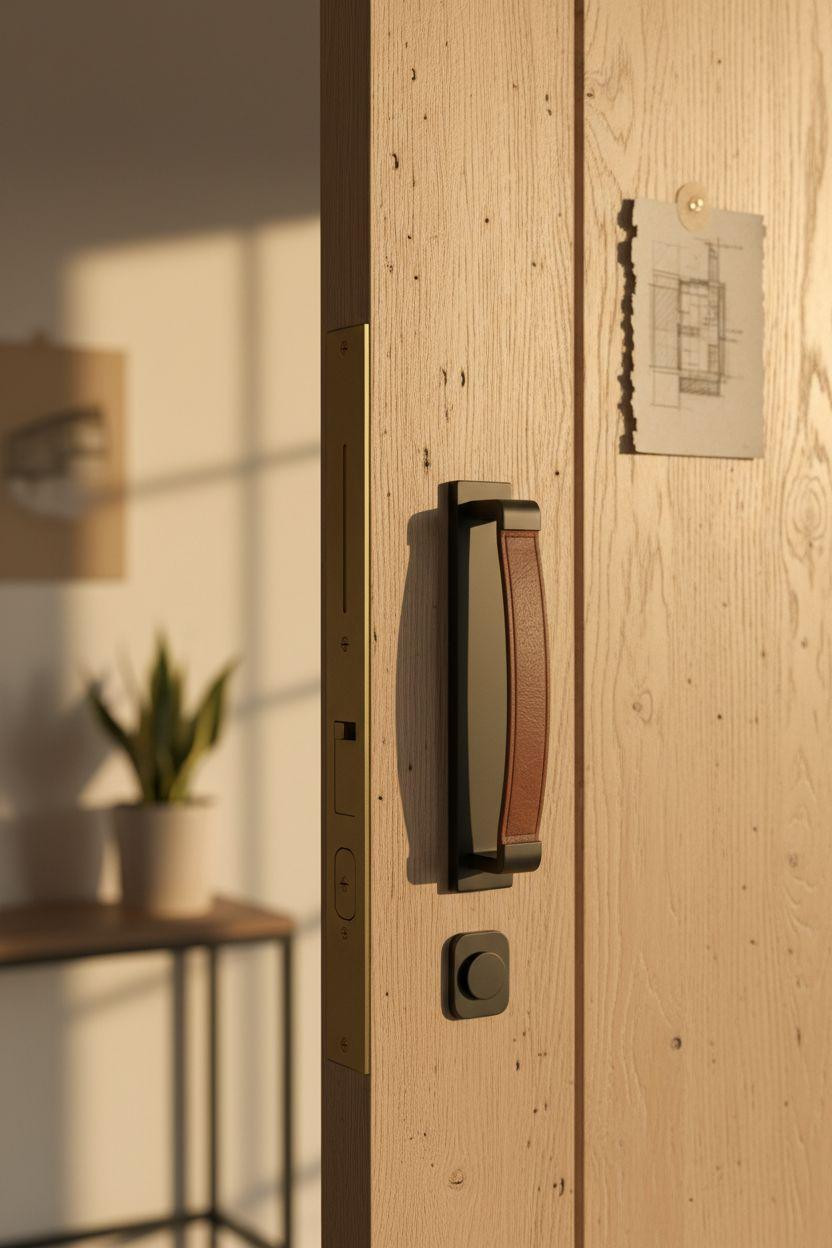
Sometimes the hardware should be visible. That brushed brass track rail and leather grip handle feel intentional, not hidden. The white oak shows natural grain variation (which helps with blending). This works when you want industrial-meets-warm vibes. The magnetic catch mechanism sits in shallow relief, so you get the function without bulk. Great for lofts or converted spaces where exposed materials are part of the aesthetic.
The Morning Light Reveal
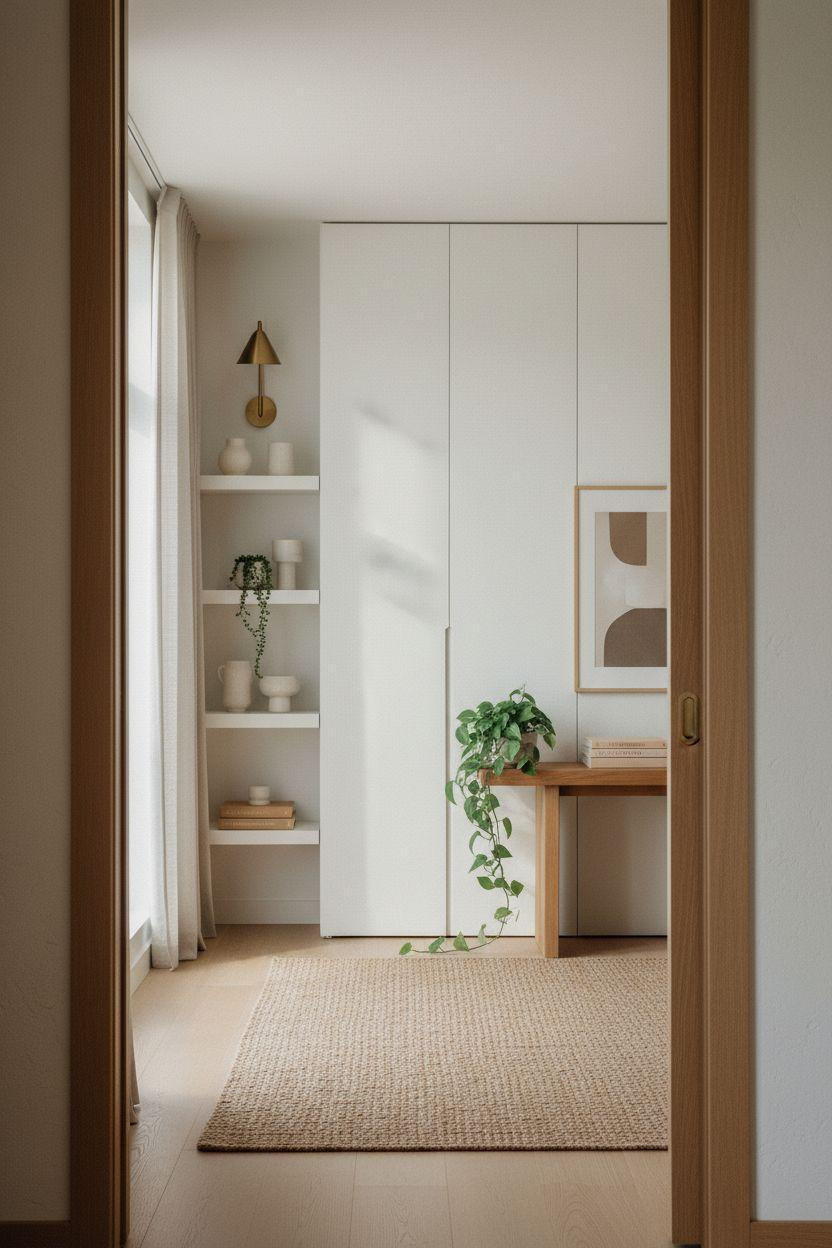
Soft morning light makes the hidden door seam almost impossible to spot. The recessed handle sits flush with the panel. White oak floating shelves styled with ceramics and trailing pothos break up the white expanse. That linen curtain adds movement and softness. This setup works when you have good natural light and want the door to feel discovered, not obvious. The jute rug and textured plaster walls keep it from feeling too polished.
Minimalist White Done Warm
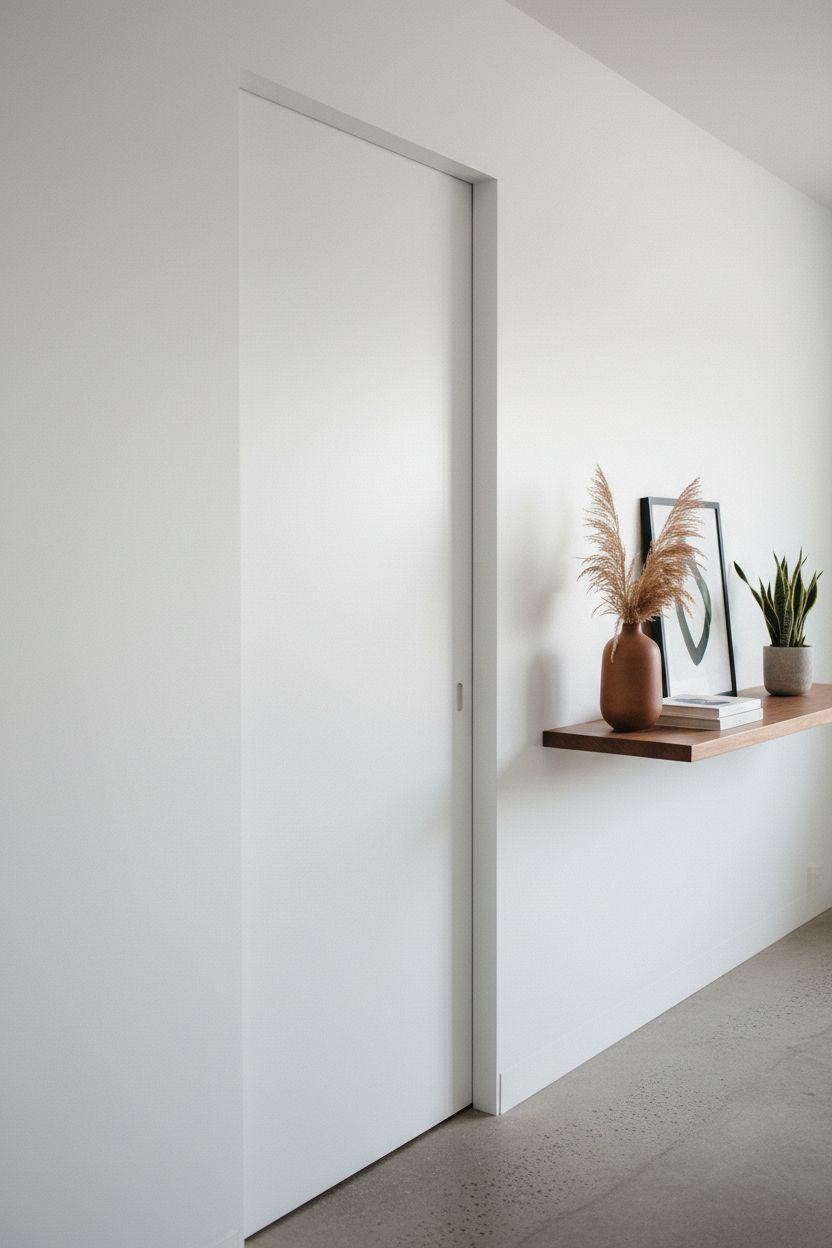
Pure white panels work when you layer in walnut and concrete. The recessed pull is barely there. That floating walnut shelf with eucalyptus branches and stacked books keeps the wall from feeling blank. Polished concrete floors reflect just enough light to create subtle definition. This is perfect for minimalists who want hidden storage without sacrificing warmth. Keep styling asymmetric—one plant, one small object, done.