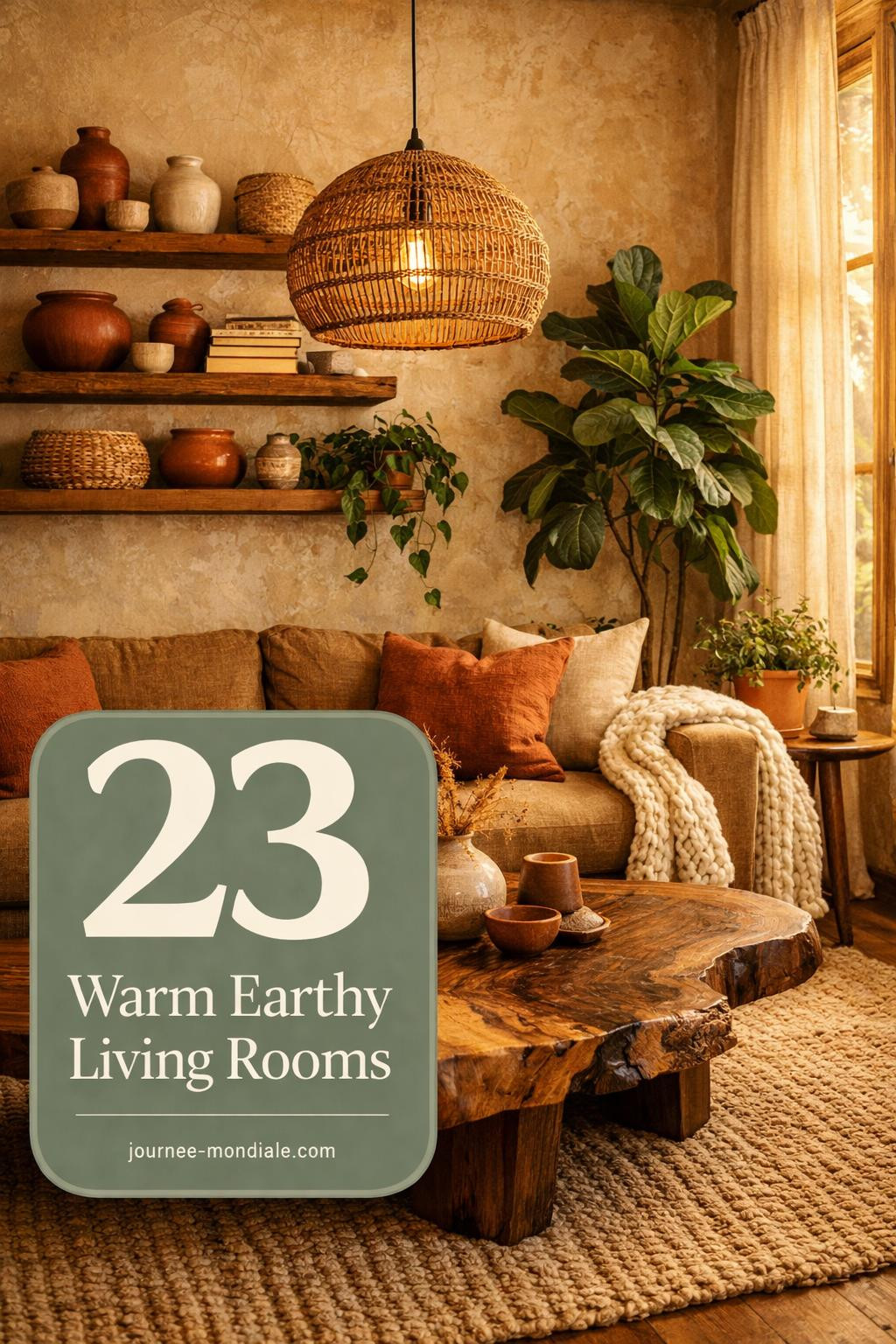
Earthy living rooms are having their moment. And it’s not the crunchy, beige overload you’re picturing—these spaces actually feel current.
The One Wood Tone That Changed Everything

Deep caramel linen paired with live-edge walnut. That’s it. The wood grain shows every crack and variation, which somehow makes the whole room feel less staged. Burnt orange pillows keep it from looking like a West Elm catalog threw up. If you’re stuck with builder-grade everything, start with one piece of furniture that has actual wood character.
When Terracotta Actually Works

Oversized camel sofa, terracotta pillows, reclaimed wood coffee table. The trick? Keep the terracotta to 20% of the room max. Too much and you’re living in a pottery barn (not the store). Layer a jute rug over hardwood instead of wall-to-wall carpet—it adds texture without committing to a full reno.
The Greenery Move Nobody Talks About

Three plants minimum. Not two, not four—three creates visual balance without looking like a greenhouse. Fiddle leaf fig, trailing pothos, snake plant. Done. The terracotta sofa here pulls the whole palette together, but honestly? You could swap it for sage and get the same effect. Just don’t do fake plants. People can tell.
Doorway Framing That Actually Makes Sense

Low-profile furniture is key for Japandi spaces. This sand-toned linen sofa sits way closer to the floor than your average couch, which makes 8-foot ceilings feel taller. Morning light through sheer panels is doing most of the heavy lifting here. If your room feels dark, swap heavy curtains before you repaint.
Open Shelving Without the Pinterest Pressure

Reclaimed wood shelves styled with ceramic bowls and woven baskets. Not styled within an inch of their life—just casually arranged. Books slightly askew, one basket tilted. The sand-toned sofa keeps it from feeling too rustic. I’d skip this if you have cats (everything ends up on the floor).
The Corner Detail That Elevates Everything

Closeup of a white oak shelf with hand-thrown ceramics and a single eucalyptus stem. This level of restraint is what separates organic modern from regular beige. One vase. One plant stem. That’s the whole vignette. Great when you’re working with a tiny budget—five beautiful objects beat twenty mediocre ones.
Why This Layout Doesn’t Feel Cramped

Side profile shot showing how floating shelves create vertical storage without eating floor space. The beige linen sofa sits low, the jute rug defines the zone, and suddenly a 12×14 room feels livable. This works in rentals because you’re not putting holes in drywall—just mounting to studs with proper anchors.
The Beam Trick That Changes Everything

Exposed natural wood ceiling beams make this room. If you don’t have them, don’t fake them with foam—just skip it. The sand sofa and reclaimed wood shelving carry the earthy vibe on their own. Round coffee table instead of square keeps traffic flow smooth in tight spaces (learned that one the hard way).
Doorway Reveal That Actually Works

Cream sectional, terracotta pillows, vintage Moroccan rug. The boho move here is mixing textures—chunky knit throw, woven baskets, smooth ceramics. But it’s the doorway framing that makes you want to walk in. When staging a space, always shoot from the threshold. It creates context.
The Plaster Wall Move Everyone’s Copying

Hand-troweled plaster walls with visible trowel marks. This isn’t a DIY weekend project (trust me). But if you’re renovating anyway, it’s worth the upcharge. The terracotta sofa and exposed wood beams would look generic against flat drywall—the textured plaster makes it feel collected over time instead of bought in one trip.
Closeup Styling That Doesn’t Look Staged

Walnut side table, ceramic lamp, three stacked books, brass tray with a half-burned candle. The candle wax drips are key—they prove someone actually lives here. Dried pampas grass is still everywhere (and honestly, it works). If this feels too styled for you, just do the lamp and one plant. That’s enough.
Open Shelving Done Right

Natural oak shelves with terracotta vases, woven baskets, and potted plants. Books stacked horizontally, not vertically (weirdly makes a difference). The sand-toned sofa below keeps the focus on the shelves. Best for renters who need storage but can’t add cabinets. Just mount to studs or you’ll be on your landlord’s bad side.
When Brass Actually Elevates Things

Beige linen sofa, walnut coffee table, brushed brass tray. The brass could’ve gone tacky but the matte finish keeps it grounded. If you’re adding metal accents, stick to one finish per room—brass OR black OR chrome, never all three. This room chose brass and committed.
The Statement Light Everyone’s Getting

Sculptural black metal pendant light with organic curves. It’s the one splurge piece in an otherwise minimal Japandi room. The charcoal linen sofa, live-edge coffee table, and bamboo plant all fade into the background—the light becomes the focal point. I’d pick this for spaces with high ceilings where you need to fill vertical space.
Rattan That Doesn’t Scream 2019

Woven rattan pendant shade, sand linen sofa, terracotta pillows. The rattan trend peaked a few years ago but it’s still working in small doses—one light fixture, not an entire furniture set. The walnut coffee table and jute rug keep it from feeling too coastal. Great when you want texture without pattern.
Overhead Perspective That Shows the Layout

Overhead shot showing how the beige sofa, organic wood coffee table, and cream wool rug create zones without walls. Snake plant and rubber tree in woven baskets add height variation. This angle is useful if you’re trying to figure out furniture placement—sometimes you can’t see traffic flow until you look down.
The Lighting Fixture That Changes Everything

Sculptural woven rattan pendant casting shadow patterns across the walls. Deep terracotta sofa, rust pillows, cream wool rug. The light fixture is doing most of the work here—swap it out and this becomes a different room. Best for apartments where you can’t change much else. Just make sure your ceiling can handle the weight (renters, check your lease).
Closeup That Feels Like Real Life

Walnut coffee table surface with visible grain patterns, ceramic mug with steam rising, linen-bound books, terracotta pot with trailing pothos. This is what “lived-in” actually looks like—not styled to death, just arranged like a human would. The chunky knit throw partially visible in the corner adds softness without taking over.
Boho Corner Without the Clutter

Chunky knit cream throw draped over natural linen sofa arm, terracotta vase with dried pampas, vintage art books. The boho vibe here comes from layered textures, not stuff everywhere. Macrame plant hanger barely visible at the edge adds vertical interest. This works if you want cozy without feeling like you’re drowning in pillows.
Evening Light That Makes Everything Look Expensive

Cream sectional, reclaimed wood coffee table, woven pendant with warm Edison bulb. The evening lighting is what sells this—golden glow from the floor lamp and pendant creates layered warmth. If your space feels cold at night, add a second light source. One overhead fixture isn’t enough.
Geometric Patterns That Don’t Overwhelm

Terracotta linen sofa with geometric diamond-pattern pillows in rust and cream. The chevron-weave throw adds another layer of pattern without clashing. Cream wool rug with subtle triangle motif underneath. This is how you do pattern in earthy spaces—keep the shapes organic and the colors within the same family. Otherwise it gets busy fast.
Vintage Minimalism That Actually Feels Warm

Oatmeal linen sofa, camel leather throw, reclaimed wood coffee table with vintage ceramic vase. The vintage brass floor lamp is the only piece with any shine. Single abstract line art print on the wall. This is minimalism for people who hate sterile spaces—just enough stuff to feel cozy, not so much that it’s cluttered.
Caramel Leather That Doesn’t Look Suburban

Caramel leather sofa, cream boucle accent chair, walnut coffee table, fiddle leaf fig in terracotta pot. The leather could’ve gone dad-couch but the earthy palette keeps it current. Jute rug anchors the space without adding another color. I’d pick this for homes with kids or pets—leather cleans easier than linen.