
Small barn ideas are having a moment. Whether you’re building from scratch or repurposing old structures, these compact builds prove you don’t need massive square footage to get that classic barn aesthetic. Most of them pack way more function than you’d expect.
The Equipment Shelter That Actually Looks Weathered
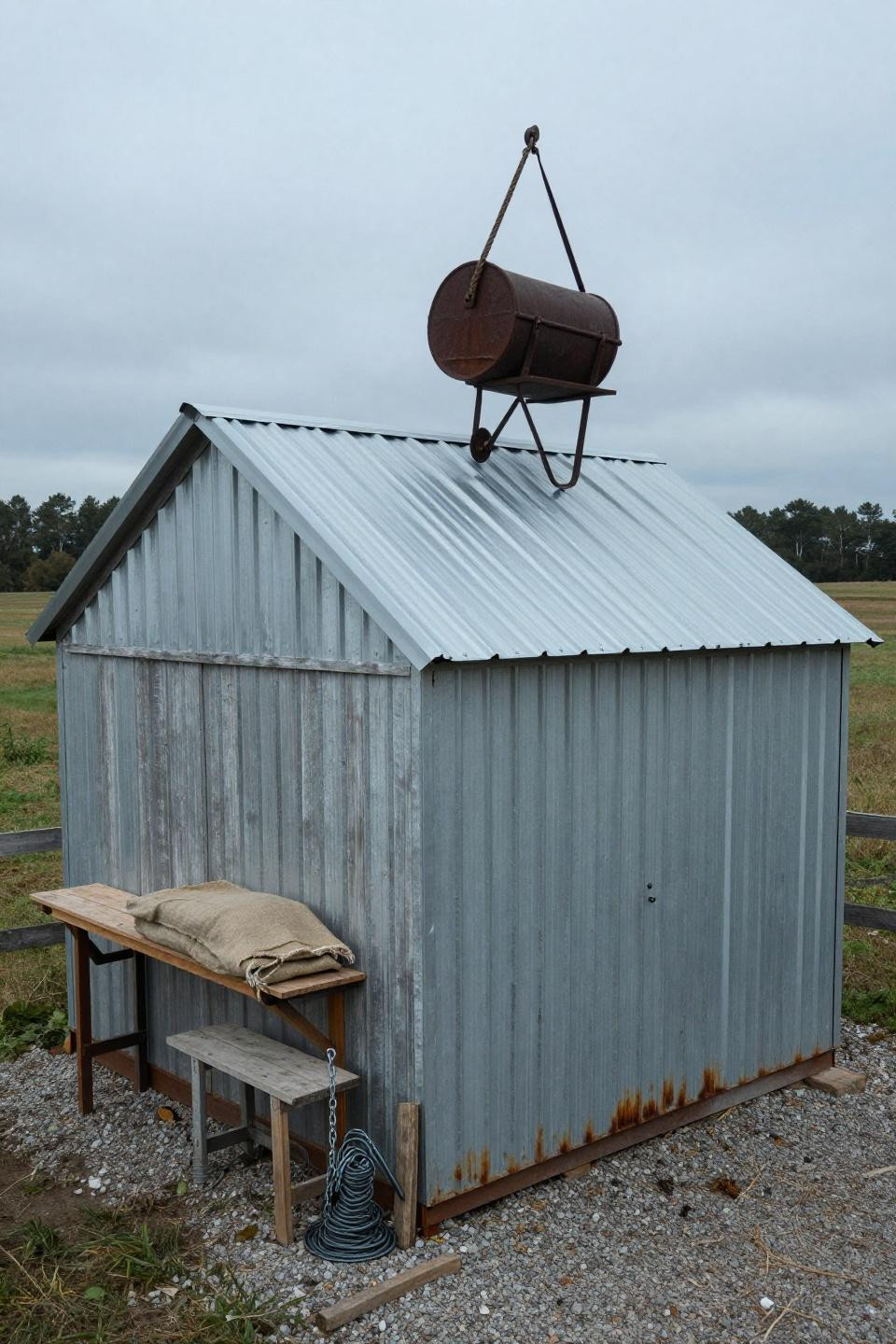
Open-sided lean-tos get overlooked, but this one’s smart. Silvery hemlock board siding weathers naturally without looking neglected. The asymmetrical roof sheds water away from your equipment without needing gutters. That packed gravel floor drains fast after rain. Works great if you need covered storage but don’t want to deal with permits for enclosed structures. Suspend a vintage pulley system from the apex and you’ve got overhead storage sorted. Keep it simple, let the materials age.
DIY Corrugated Steel on a Budget
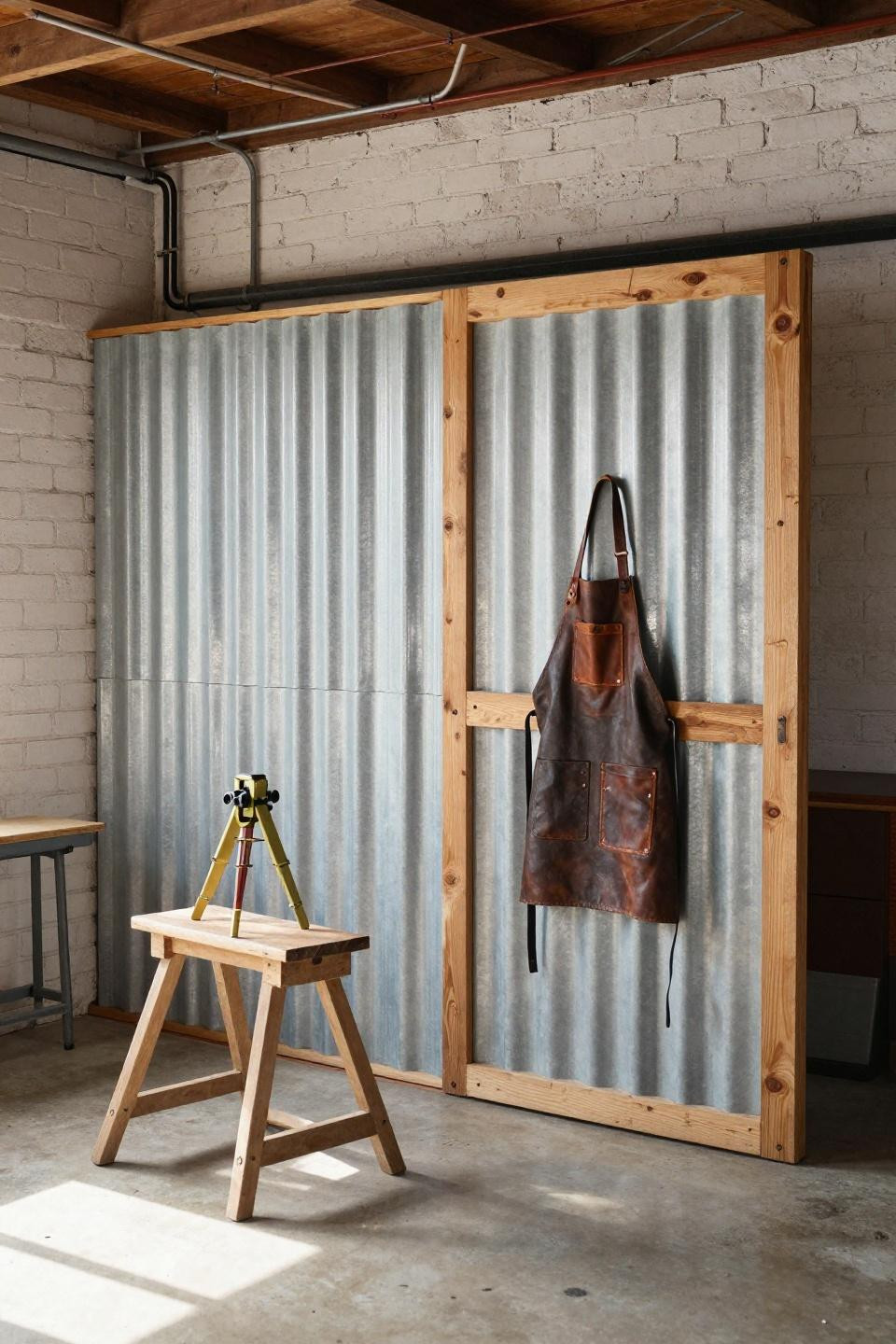
Corrugated steel panels cost a fraction of wood siding right now. This barn mixes them with reclaimed timber angle-bracing and whitewashed brick infill. Honestly, it’s the exposed plumbing and electrical conduit that make it work—they create this unplanned geometric pattern overhead. If you’re converting an old foundation, embrace whatever’s already there. That concrete floor with tool marks? Leave it. Drape a leather apron over a stud and call it a day.
When a Barn Becomes a Greenhouse
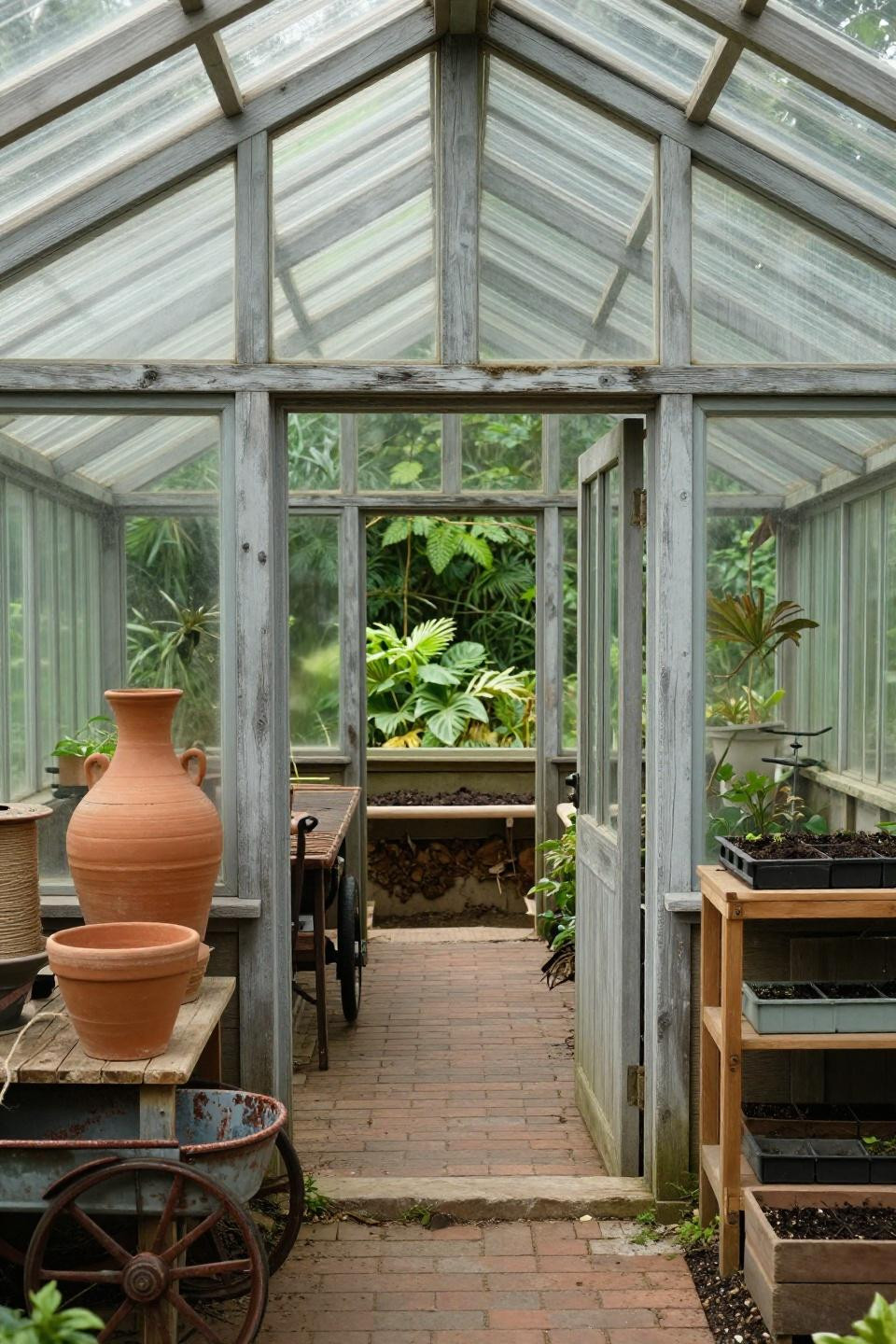
Timber-frame barns convert beautifully into greenhouses. Swap the roof for translucent polycarbonate panels and you get this ethereal green glow without overheating. The grey vertical slats regulate light better than full glass. Running bond brick flooring absorbs heat during the day, releases it at night. Stack terra cotta pots in graduated sizes on a weathered potting bench. Best for year-round growing in zones 6-8 where you need frost protection but decent light.
The Single-Bay Run-In That Horses Actually Use
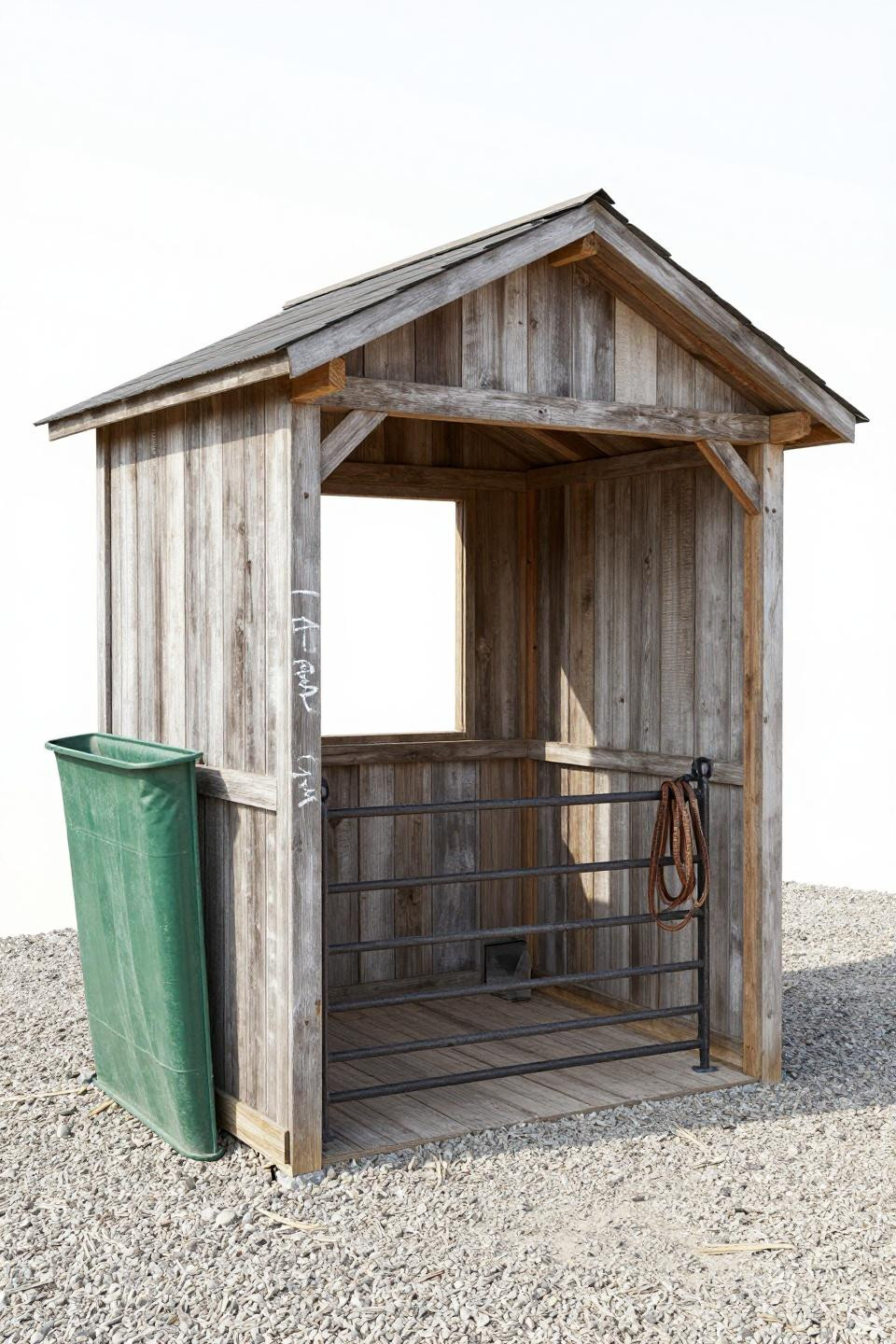
Run-in shelters only work if horses feel safe entering. This one nails it—large south-facing opening floods the space with midday light. Hemlock weathers to a soft grey that blends into pasture landscapes. The asymmetrical gambrel roof sheds snow without creating drift piles at the entrance. Gravel floor with directional rake marks drains faster than packed clay. Coil your lead rope on the cross-beam, position the trough diagonally so one horse can’t corner another.
Tack Room with Actual Personality
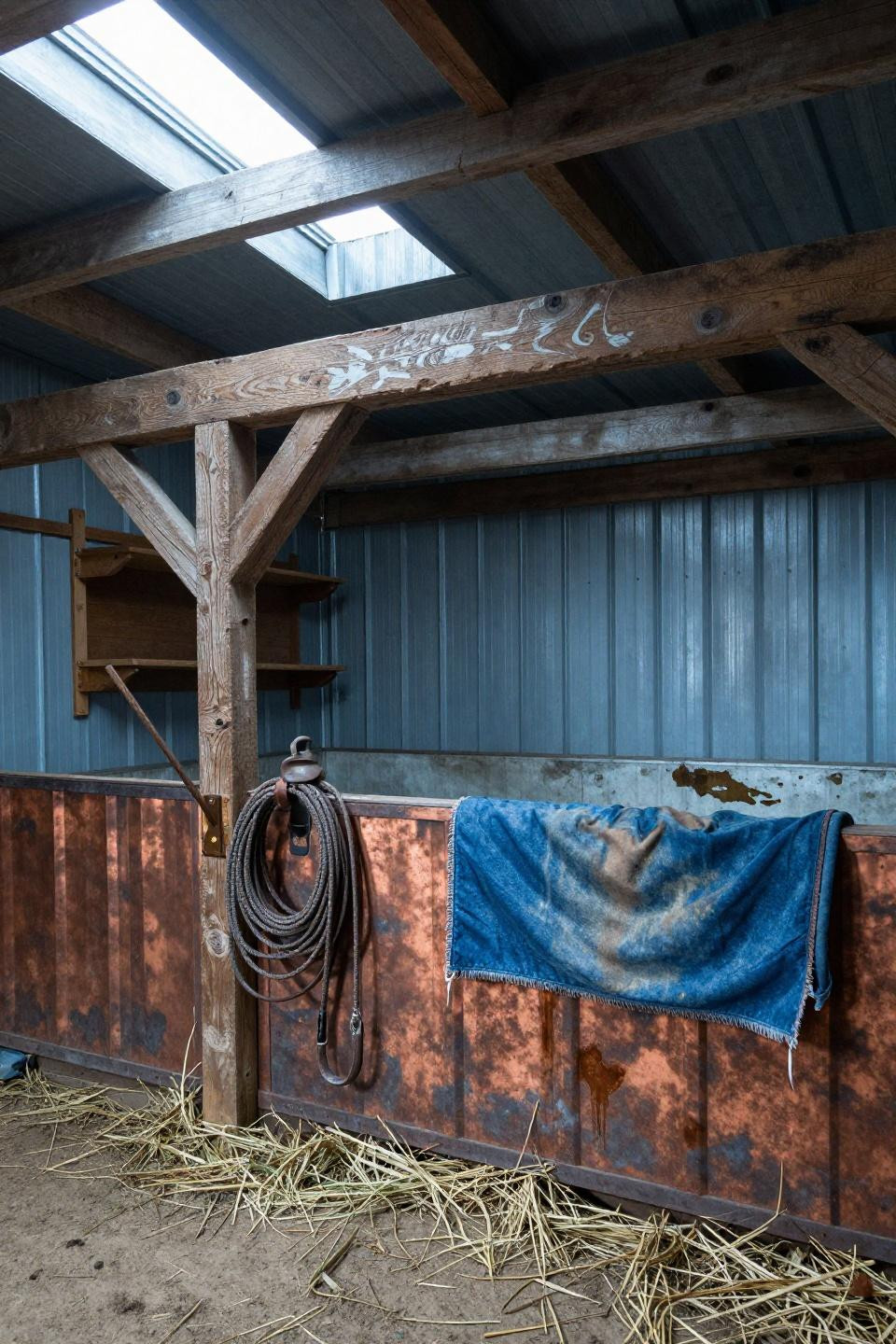
Oxidized copper siding costs more upfront but lasts forty years with zero maintenance. This tack room uses hand-hewn rafters—you can still see the axe marks. Tamped clay floors stay cooler in summer than concrete. Position a high clerestory window to get winter light without direct heat on leather gear. Vintage saddle trees make better display pieces than functional racks. I’d skip the canvas horse blanket on the workbench (dust magnet) but everything else here works.
The Milk House You Could Actually Live In
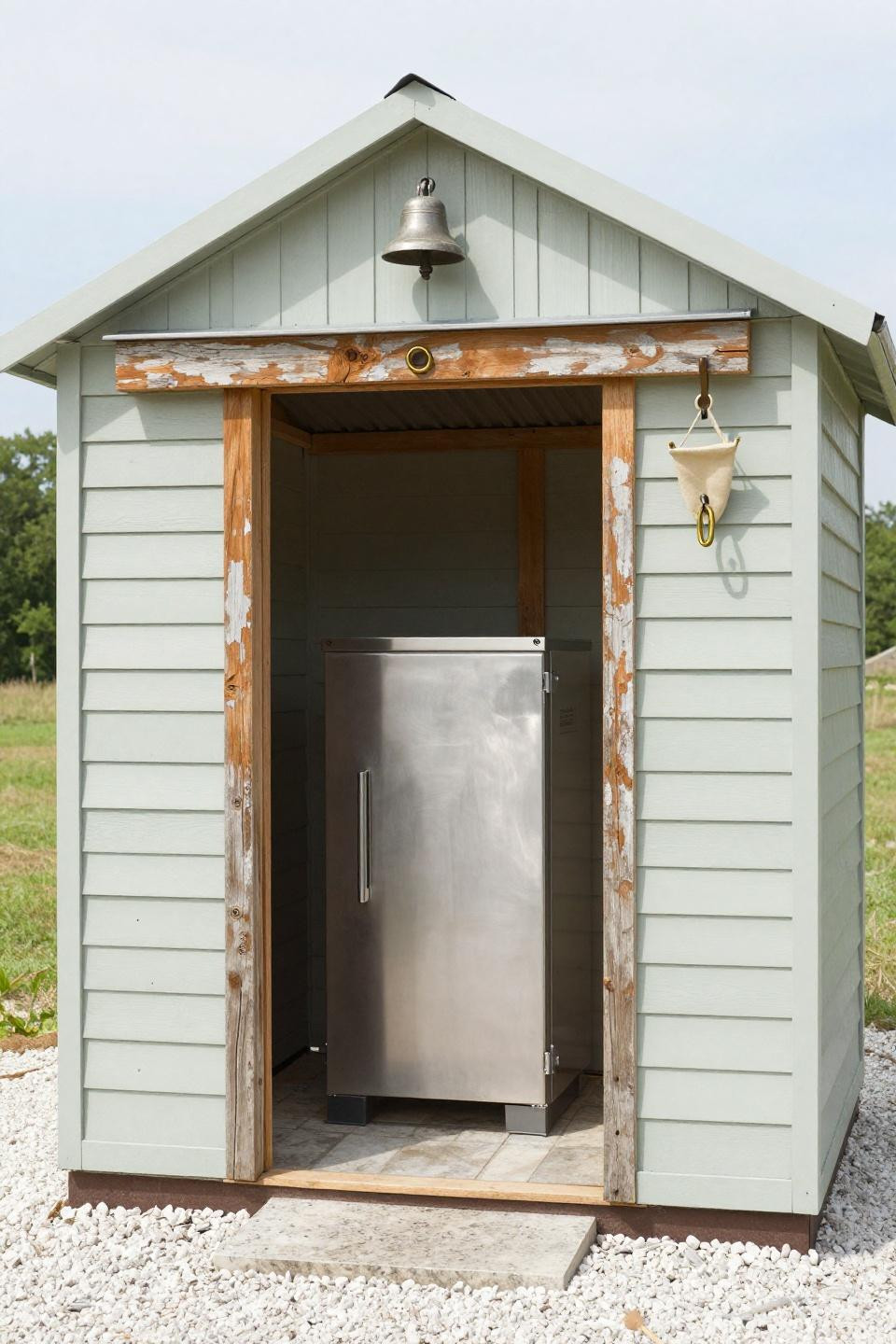
Pale grey-green shiplap feels way more current than red barn siding. This milk house keeps the stainless steel chiller as a design element instead of hiding it. White gravel apron reflects light into the interior without glare. Standing seam metal roofs cost double asphalt shingles but you’ll never replace them. That water-worn indentation in the travertine threshold stone? Proof this building’s been used hard for decades. Keep the porcelain bell at the lintel—it’s the detail that makes it.
Matte Black Everything (Yes, on a Barn)
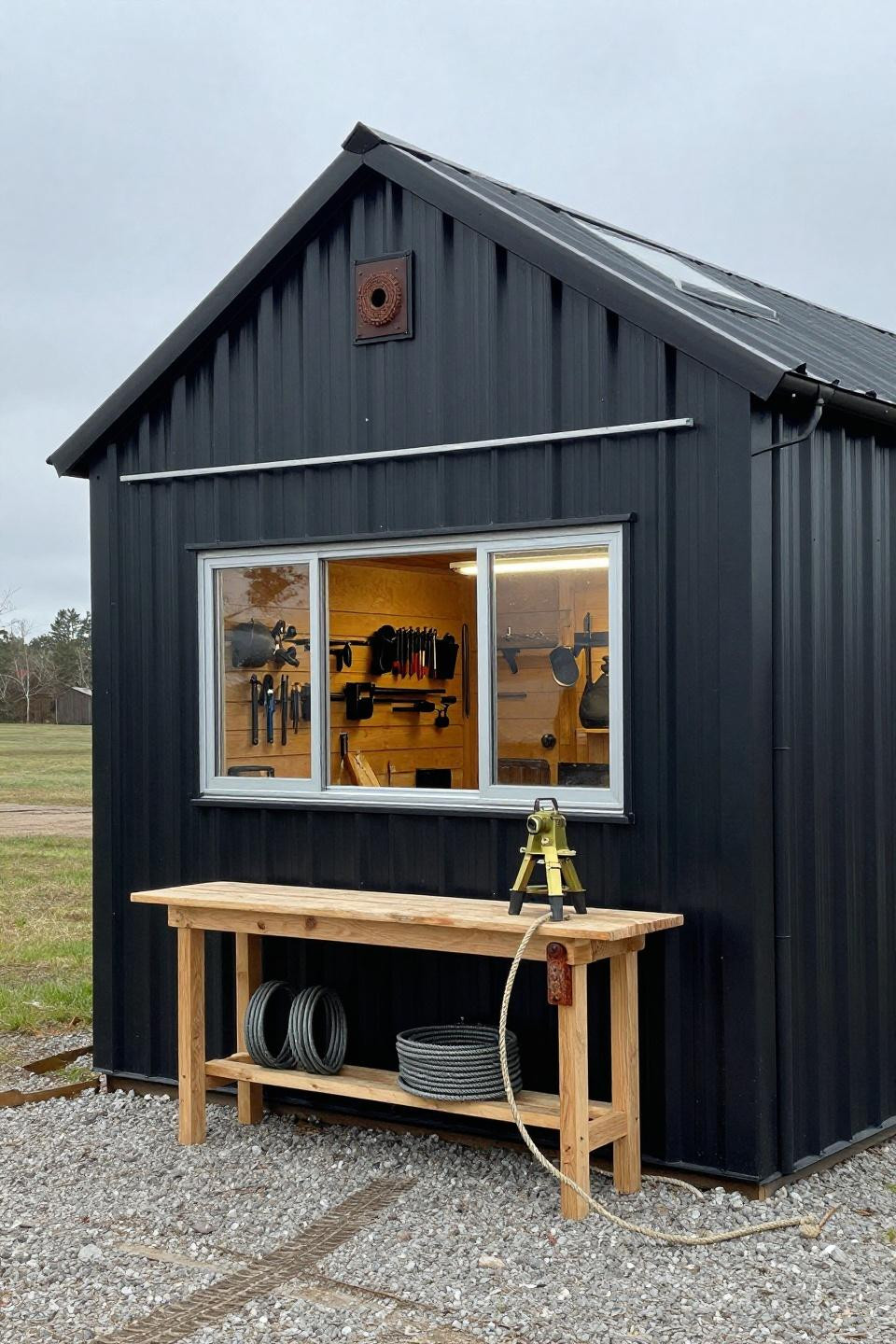
Matte black corrugated steel on a barn shouldn’t work, but it does. The clerestory monitor roof is the key—it prevents the whole thing from feeling like a black box. Large pivoting steel-frame windows let you see your organized tool system from outside. Gravel pads with visible tire tracks look more honest than pristine concrete. Mount a brass surveying transit on your workbench instead of another utilitarian shelf. Works if you need equipment storage that doesn’t scream “shed.”
The Workshop Where You’d Actually Want to Spend Time
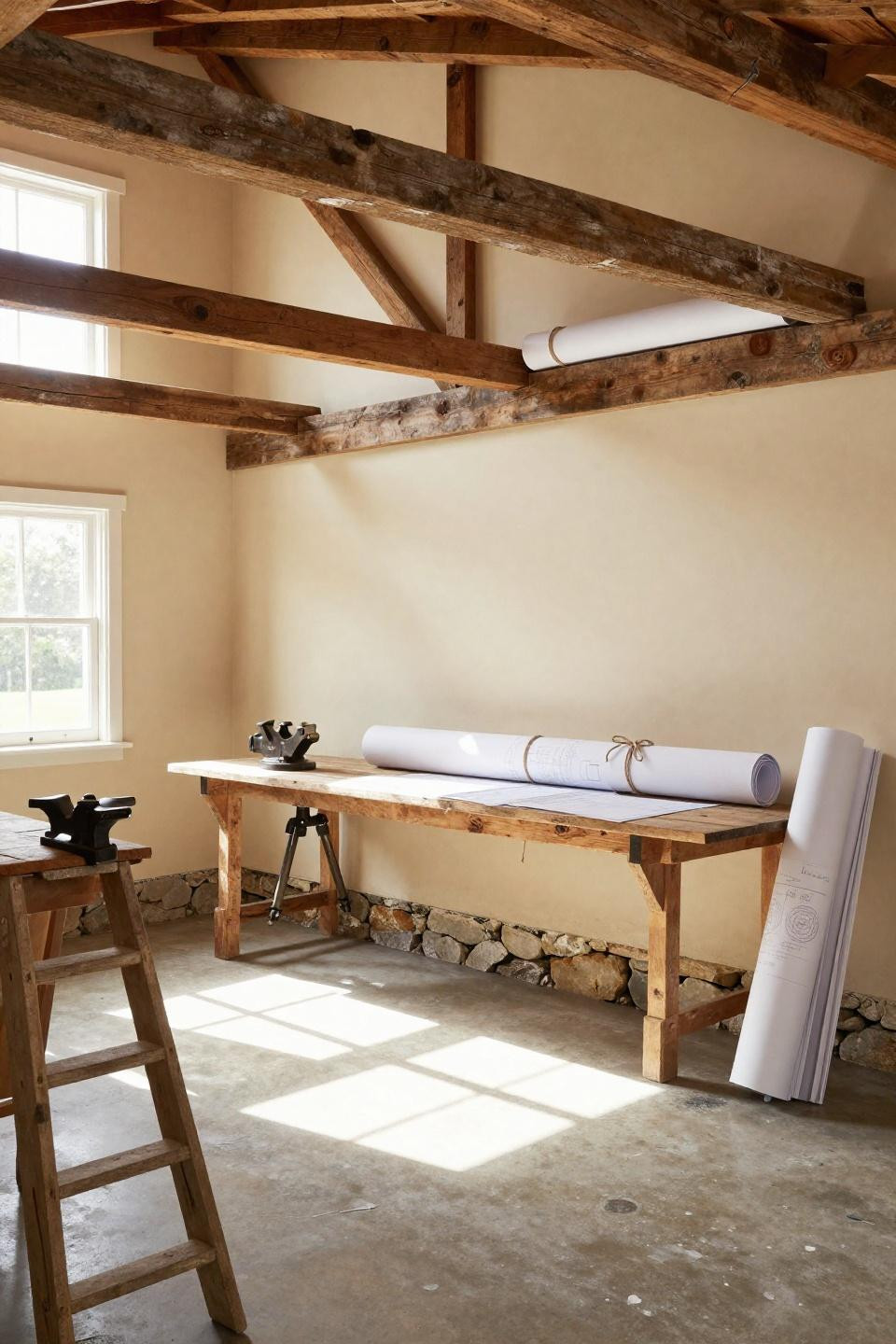
Weathered hemlock exterior transitioning to pale ochre plaster inside feels intentional, not accidental. Polished concrete with paint spatter tells the story of actual use. Clerestory windows cast geometric shadows that shift throughout the day—better than overhead fluorescents. Salvage workbenches with cast-iron leg vises from architectural salvage places (try Olde Good Things). That hairline mortar crack in the stone foundation? Totally normal barn settling. Leave the hay loft ladder visible even if you’re not using the upper level.
When Historic Details Do the Heavy Lifting
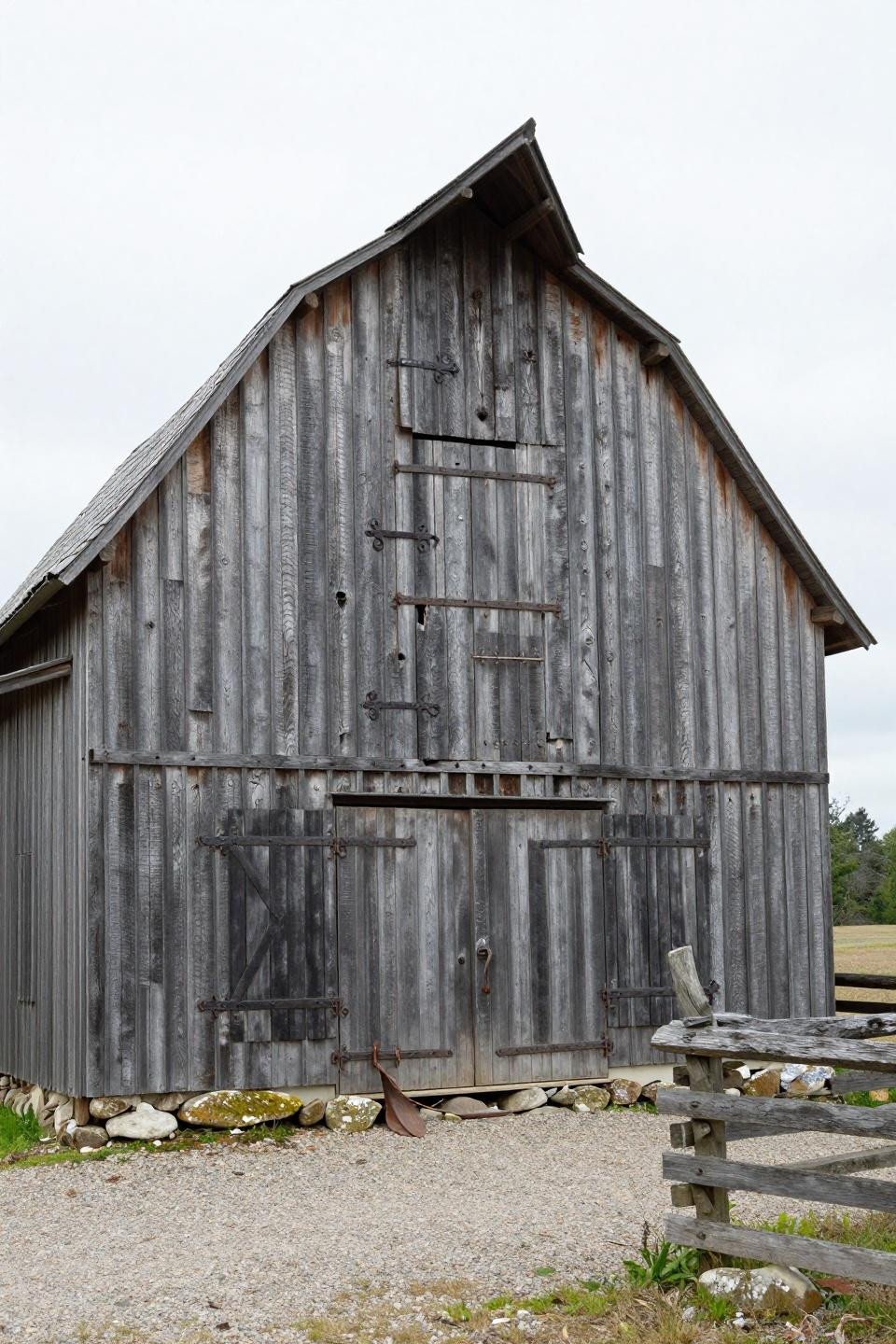
Vertical grey cedar siding with exposed V-notch joinery at the corners—this is what people mean when they say “authentic barn.” Those hand-split shake shingles under the tin roof cost a fortune to replicate now. Dutch doors with oxidized wrought-iron hardware never go out of style. Moss-covered foundation stones happen naturally in shaded locations; don’t power-wash them off. The broken shutter slat? I’d leave it. Adds more character than perfect symmetry ever could.
Artist Studio That Started as a Cedar Barn
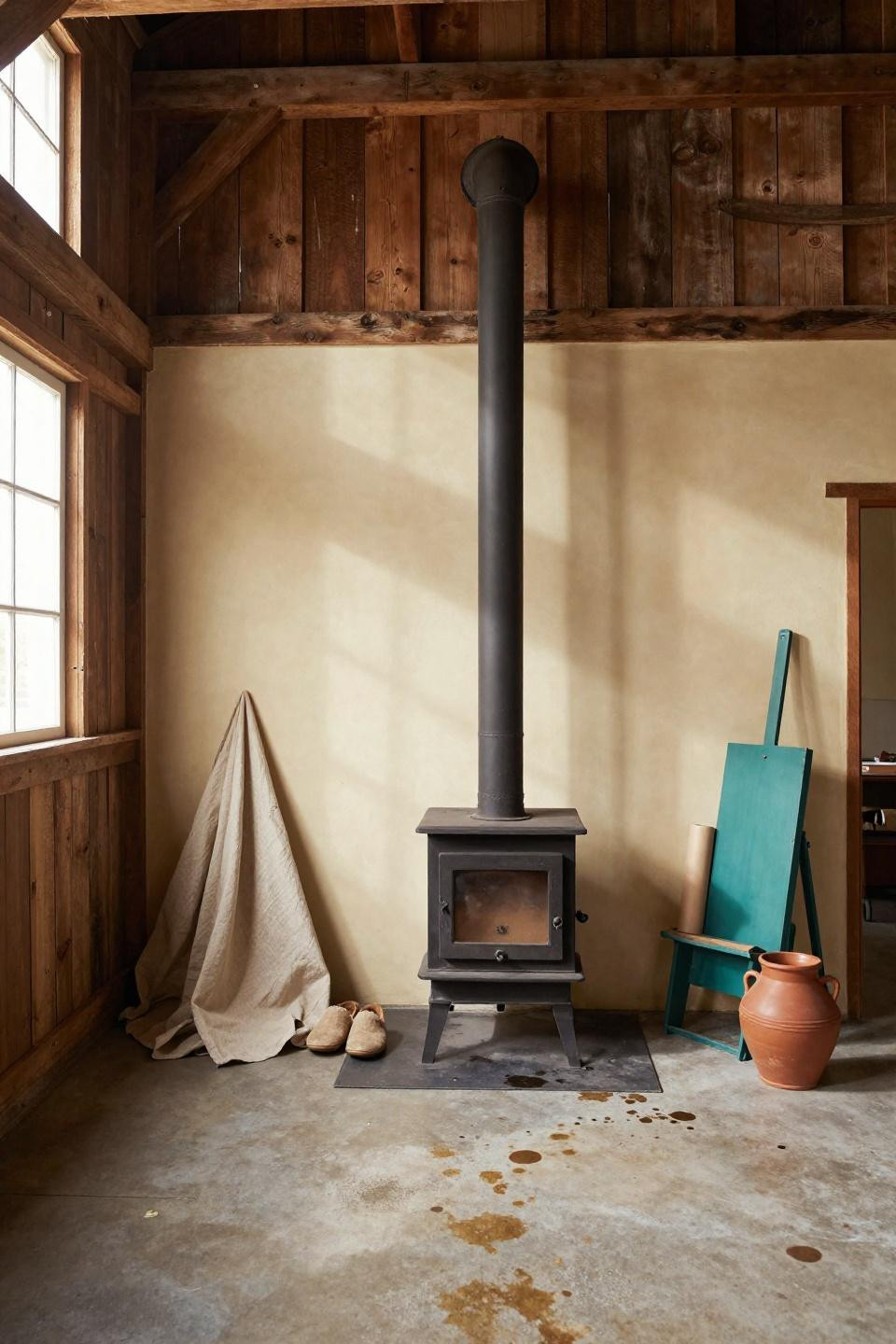
Cedar siding weathering to silver-grey on the exterior, cream lime-washed plaster inside. That transition at the threshold is everything. Raw concrete floors handle paint spills and oil stains without freaking out. Late afternoon light through low awning windows creates these asymmetrical shadows that change the space hourly. Cast-iron wood stoves heat small barns more efficiently than forced air. Vertical plaster cracks from timber settling aren’t structural issues—they’re proof the building’s still adjusting. Perfect for anyone who needs natural light and doesn’t mind temperature fluctuations.
Sage Green Metal That Actually Looks Barn-Appropriate
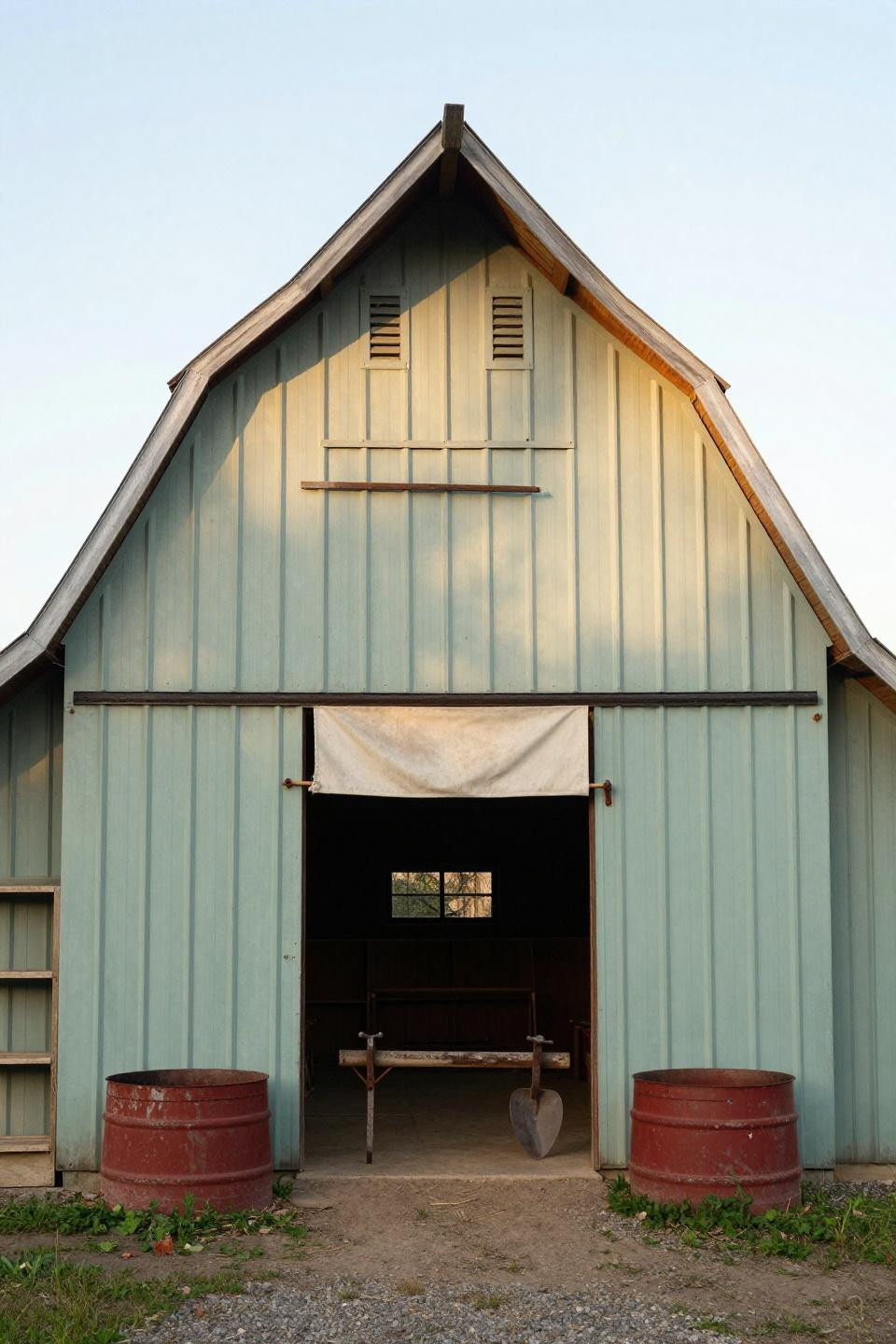
Faded sage green metal siding hits different than bright colors. The asymmetrical roof pitch sheds water to one side—useful if you’re tight on space. Compacted clay floors need re-packing every few years but they’re cheaper than pouring concrete. Mount vintage plow blades horizontally above thresholds instead of on walls. Morning light filtering through gable vents creates this soft ambient glow that makes even basic storage spaces feel intentional. Fold your canvas drop cloths on ledges instead of hanging them.
Glass Doors on a Barn (Hear Me Out)
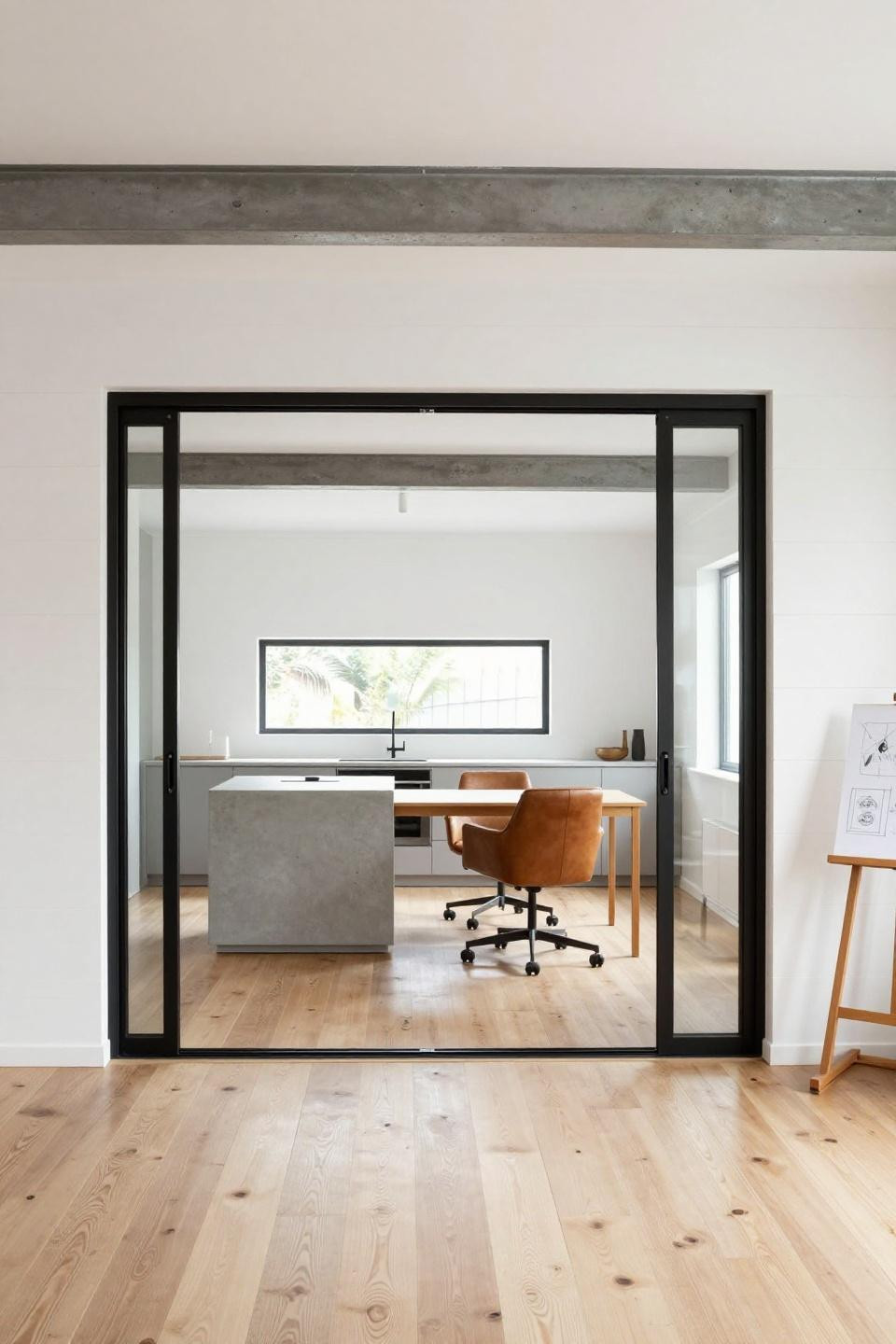
Floor-to-ceiling motorized glass doors make a barn conversion feel like actual living space. White board-and-batten walls with light oak flooring—it’s minimal without being cold. Industrial steel beams overhead keep the structural honesty. Floating concrete countertops in the kitchenette last forever and cost less than stone. That cognac leather office chair? West Elm has similar ones. Clerestory windows bring in light without sacrificing wall space for art or shelving. Great when you need a barn that functions as year-round workspace.
The Metalworking Studio with Actual Natural Light
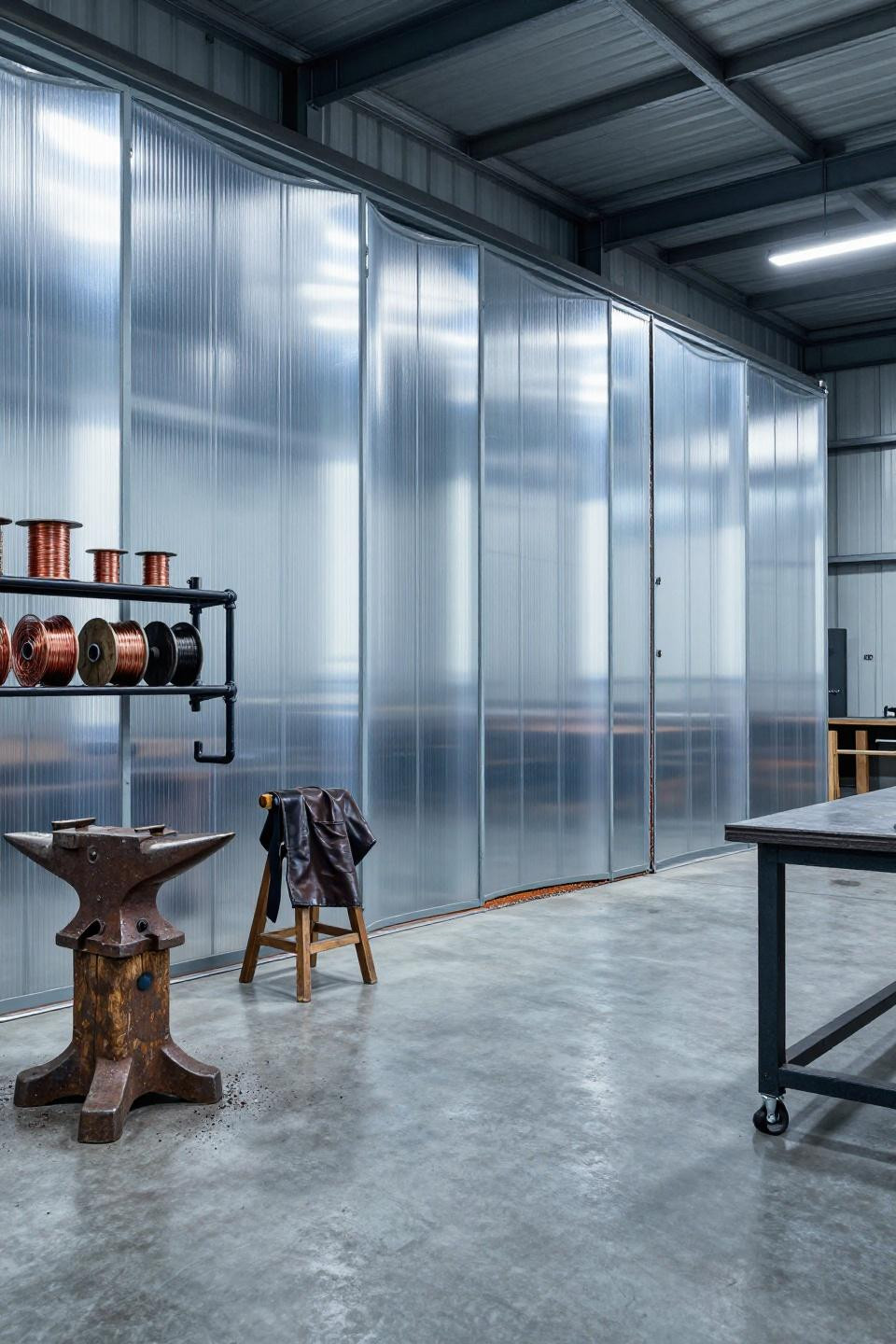
Charcoal steel walls with translucent polycarbonate gable panels—you get privacy and light simultaneously. High clerestory windows cast geometric patterns that shift as the sun moves. Epoxy-sealed concrete handles metal shavings and welding sparks without pitting. Mount your anvil on an aged oak post, not a metal stand (absorbs vibration better). Black pipe shelving from hardware stores costs pennies compared to industrial racks. One panel seam separation isn’t a crisis; it shows the building’s honestly built, not over-engineered.
Open Hillside Shelter for Heavy Equipment
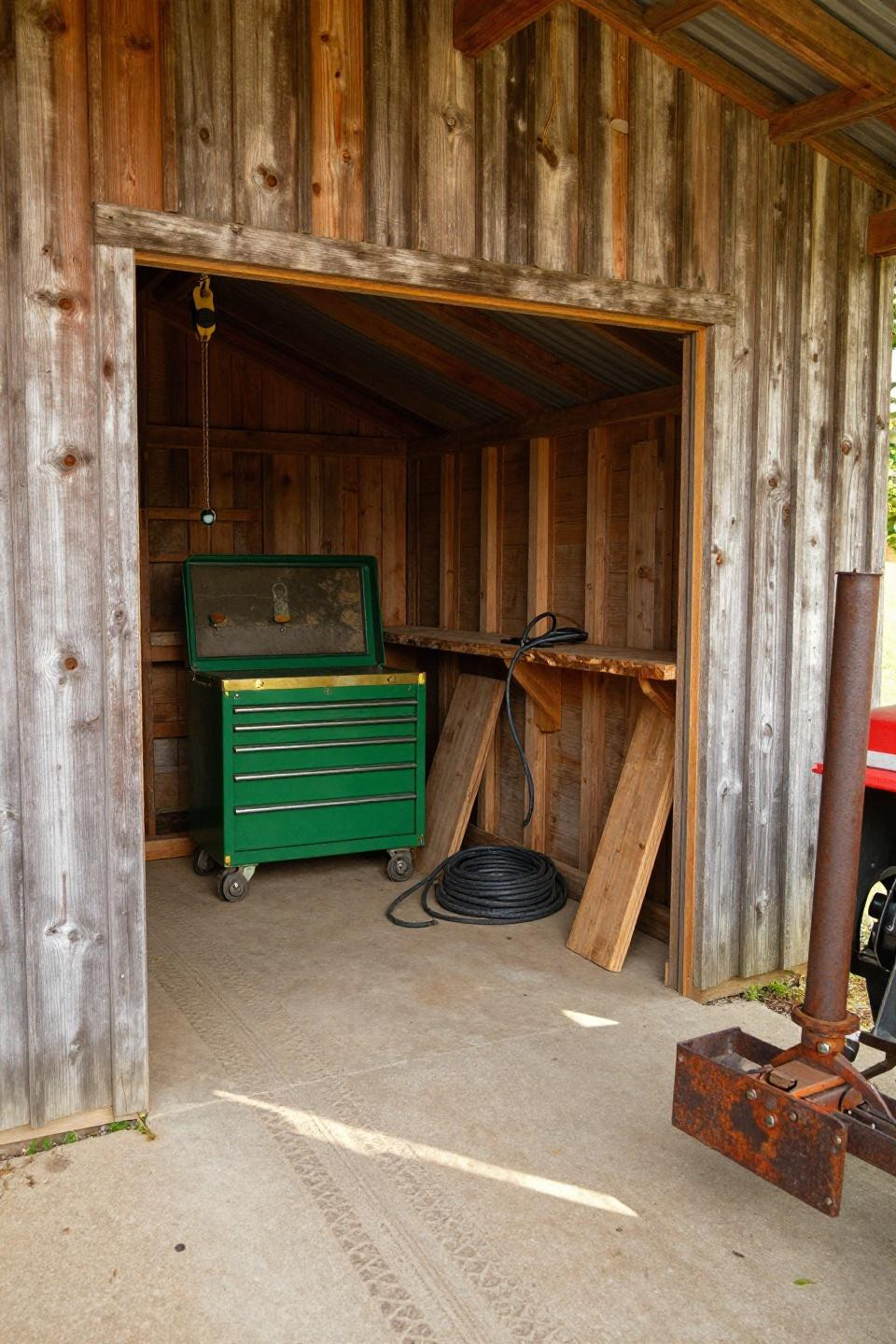
Weathered pine vertical siding with an open pitched tin roof keeps equipment dry without full enclosure. Afternoon side light reveals every tire tread on that concrete pad. Rope tackle pulleys at the apex let you lift heavy parts solo. Green metal tool chests with brass corners age beautifully—check estate sales. That rusted bracket pulling from the board? Fix it before winter. Best for sloped sites where runoff isn’t an issue and you need drive-through access.
Burnt Sienna Metal That Feels Warm, Not Industrial
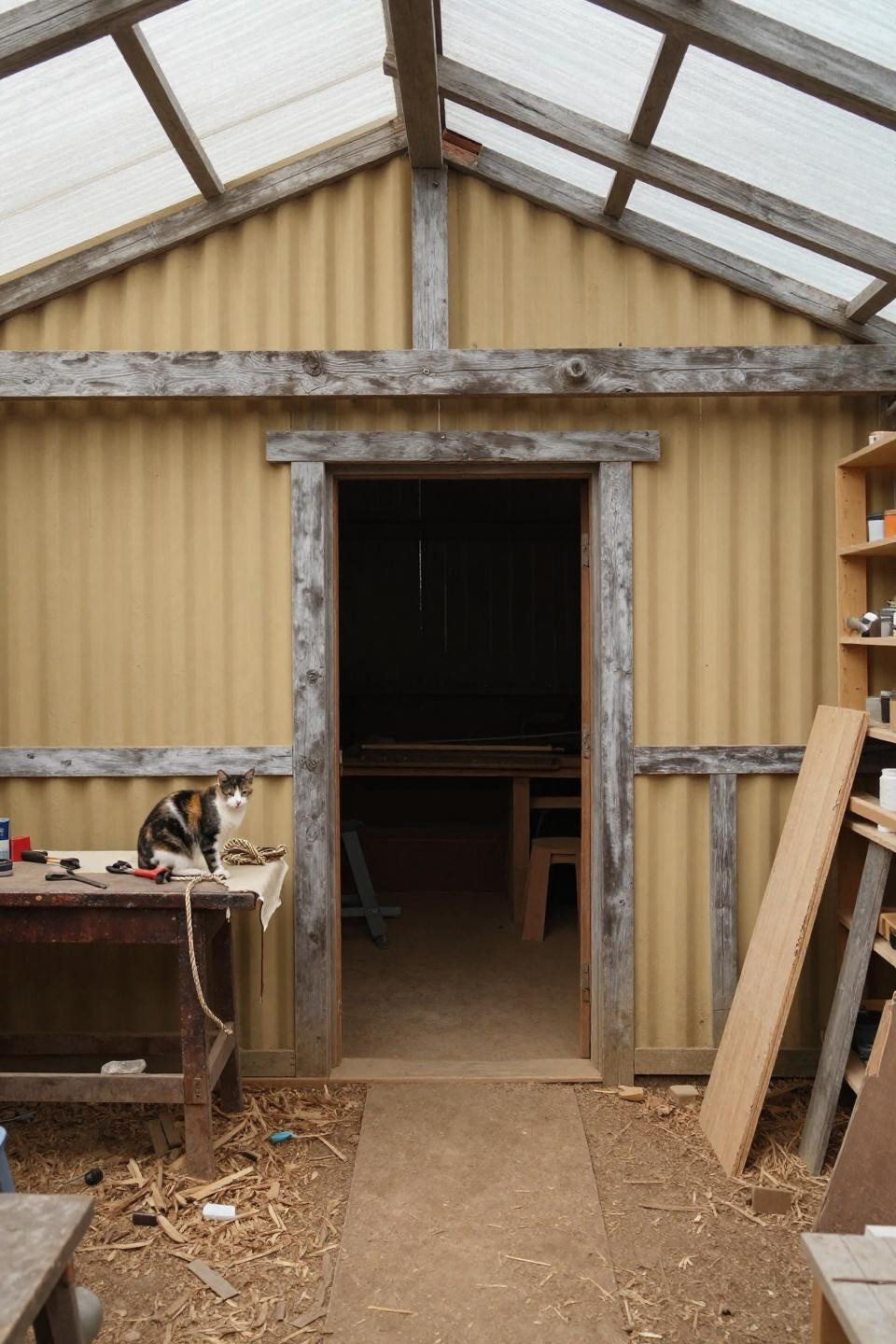
Burnt sienna corrugated metal panels with weathered grey beams—it’s rustic without going full farmhouse. Frosted polycarbonate roofing diffuses morning light into this even ambient glow. Tamped earth floors with wood shavings feel right for a working shop. Calico cats gravitate to canvas drop cloths (they’re warmer than bare floors). I’d fix that warped floorboard before someone trips. Works if you want a backyard workshop that doesn’t need climate control.
Cedar Board-and-Batten with Blackened Steel Hardware
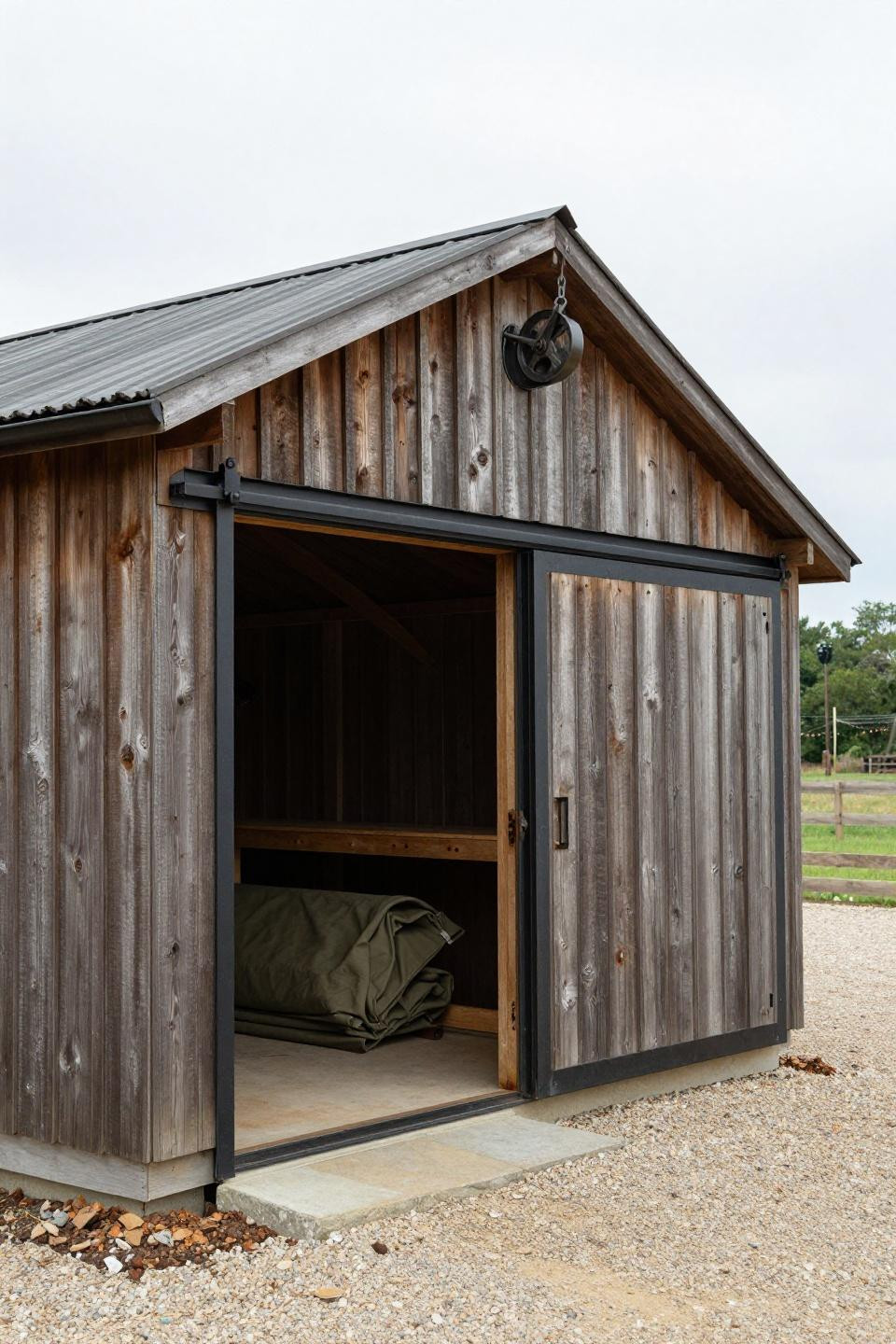
Weathered cedar board-and-batten meeting blackened steel sliding door tracks—this combo never fails. Sand gravel turning areas drain faster than crushed stone. Half-open doorways showing organized workbenches make people want to look inside. Vintage cast-iron pulleys at gable peaks are functional and decorative. That rough grout joint packed with soil debris happens on any barn foundation; clean it out annually. Perfect for implement storage where aesthetics actually matter.
Overhead View of a Working Cattle Shelter
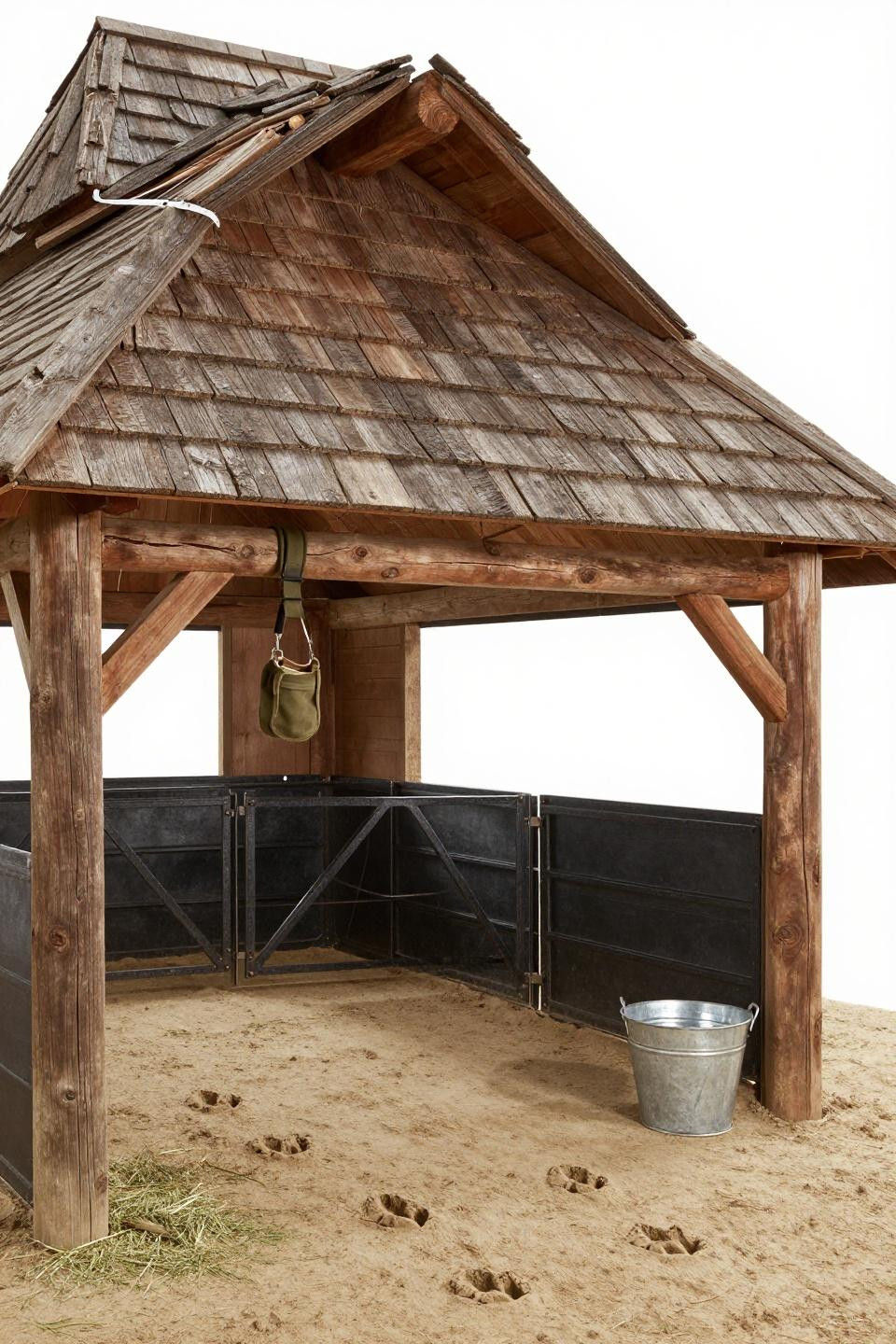
Cedar shingle roofs on livestock shelters are worth it—they breathe better than metal. Sand-toned packed dirt floors with fresh hoof impressions tell you animals actually use this space. Cast-iron stall dividers with black patina create visual rhythm without feeling institutional. Coil olive canvas halters on horizontal beams where they’re visible and accessible. Scattered alfalfa chaff texture is normal; full deep bedding is overkill for run-in shelters. Great when you need weather protection that doesn’t trap ammonia.
Oxidized Copper That Gets Better with Age
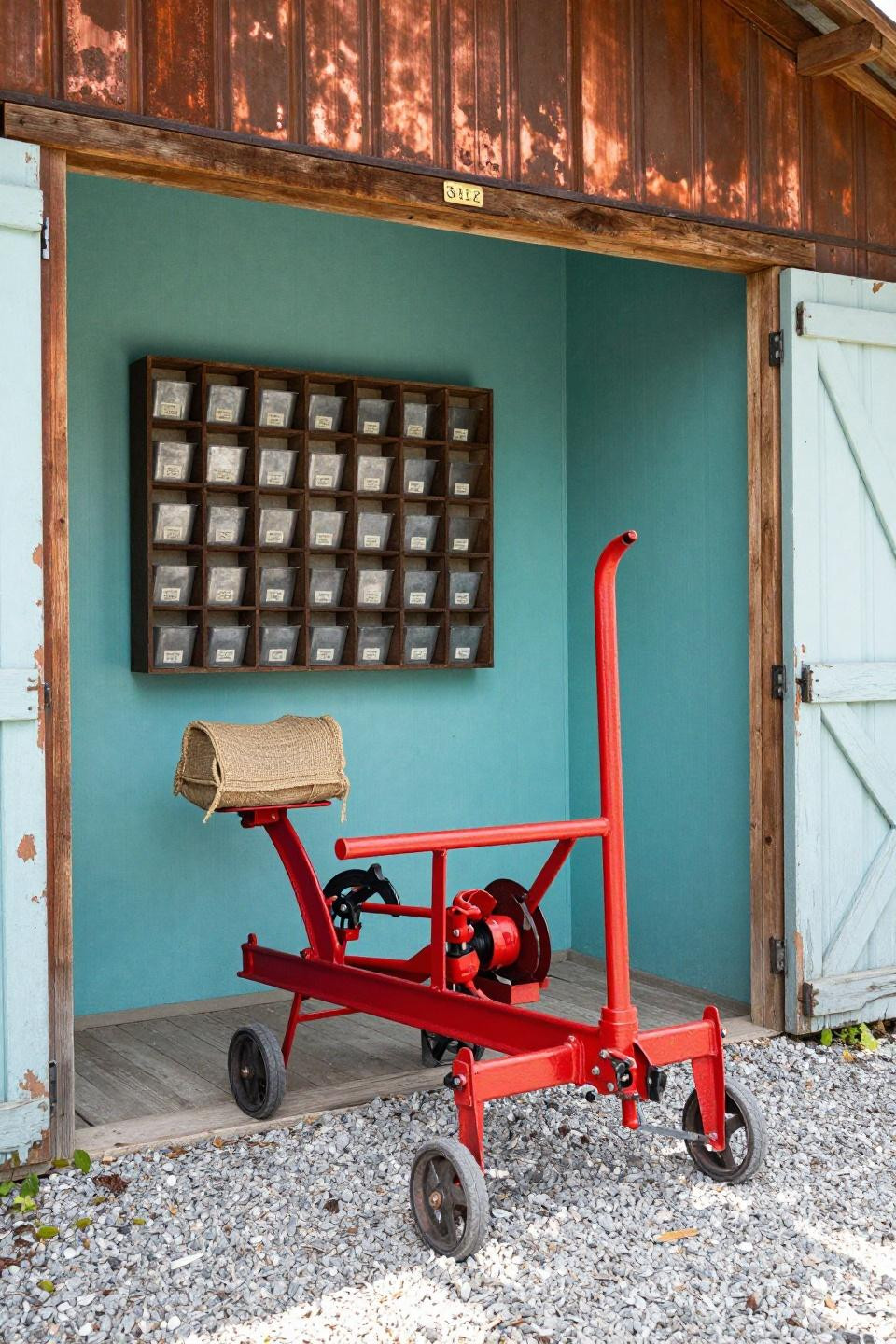
Oxidized copper cladding on a small barn is a flex, but it lasts generations. Saturated teal paint inside contrasts beautifully with that warm copper patina. Vintage red cast-iron seed drills make better centerpieces than boring shelving. Wall-mounted labeled metal bins (the kind from old hardware stores) organize better than plastic totes. Brass numbered tags on thresholds add this old-school farm detail you can’t buy at Lowe’s. I’d keep that peeling paint on the door trim—shows age honestly.
Gambrel Roof Chicken Coop Done Right
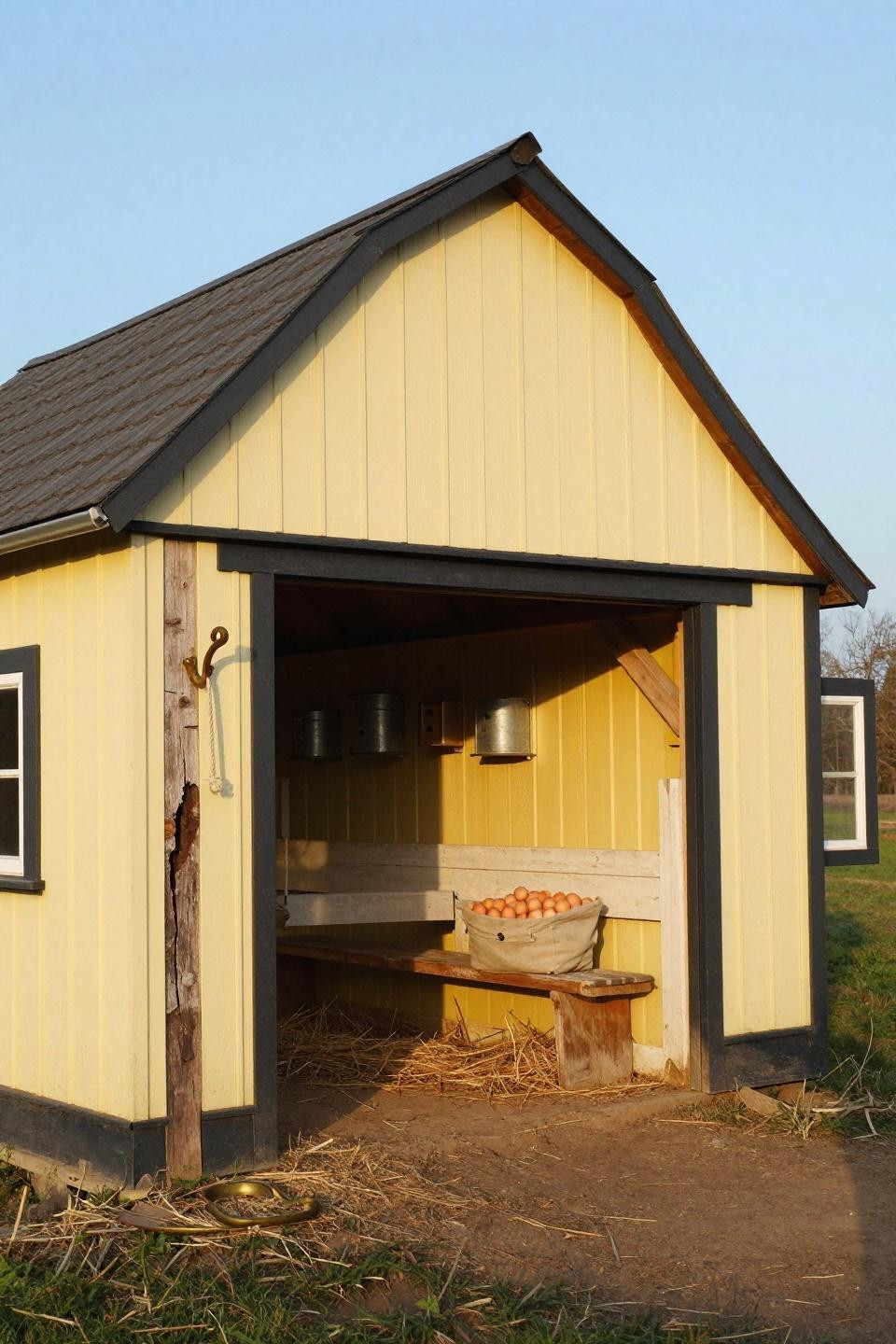
Creamy yellow vertical board siding with dark trim looks charming without going cutesy. Gambrel roofs maximize loft storage in small footprints. Whitewashed timber posts supporting the upper level feel more finished than raw wood. Galvanized metal nesting boxes arranged along the rear wall clean easier than wood versions. Canvas gathering baskets are Pinterest-worthy but wicker ones last longer. Late afternoon golden light through Dutch doors makes even chicken coops look editorial. Perfect for 8-12 laying hens in a backyard setting.
Sage Green Workshop with Hand-Painted Signage
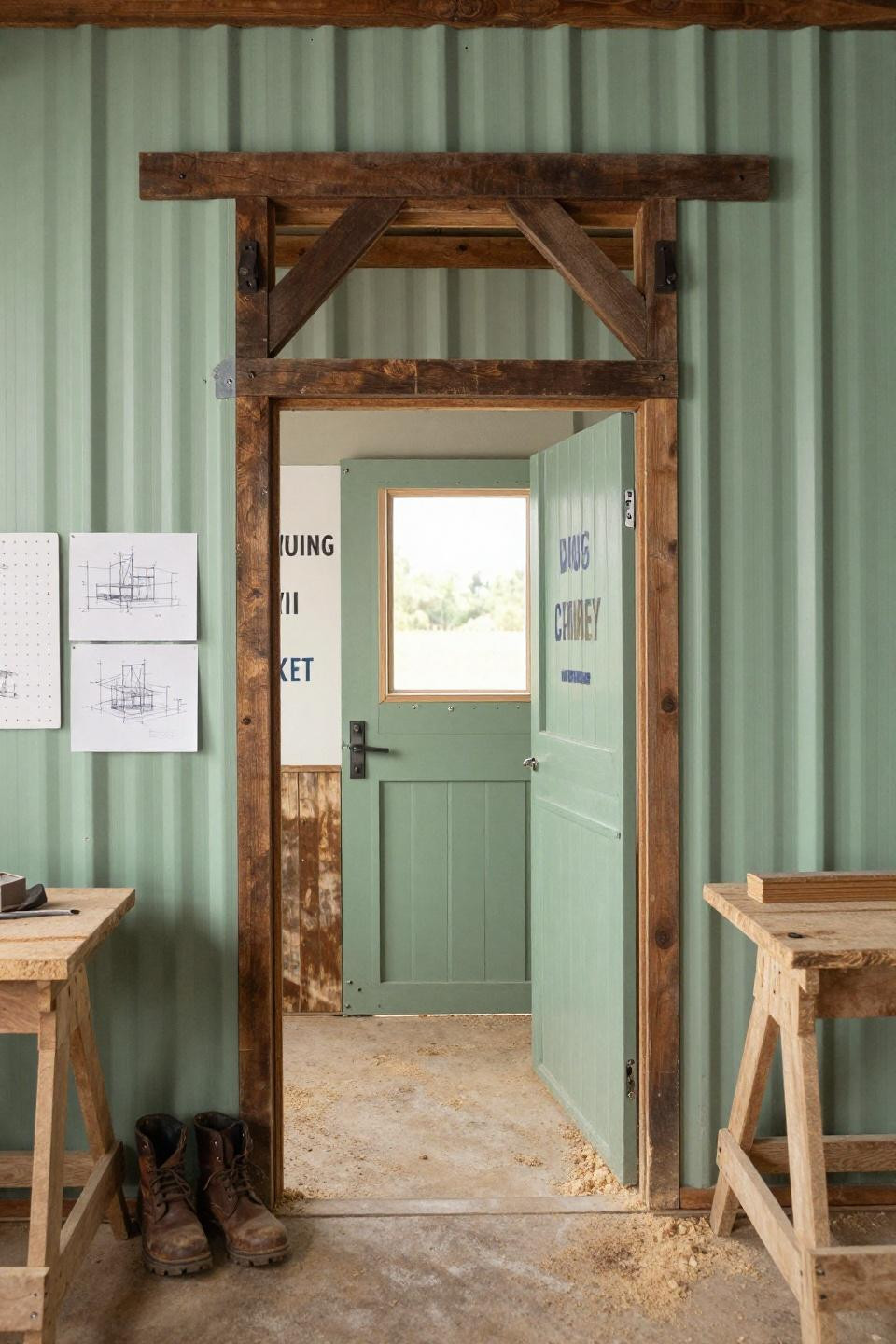
Sage green corrugated metal on a pole barn feels fresh, not trendy. Dark timber gables anchor the color. Reclaimed barn door material on interior walls adds texture without overwhelming small spaces. Hand-painted signage beats vinyl decals every time. Earthen floors with sawdust scatter work for workshops where you’re not rolling heavy carts. Pin architectural sketches directly to timber columns. That lifted panel corner? Screw it back down before water gets in.
Pottery Studio with a Built-In Kiln
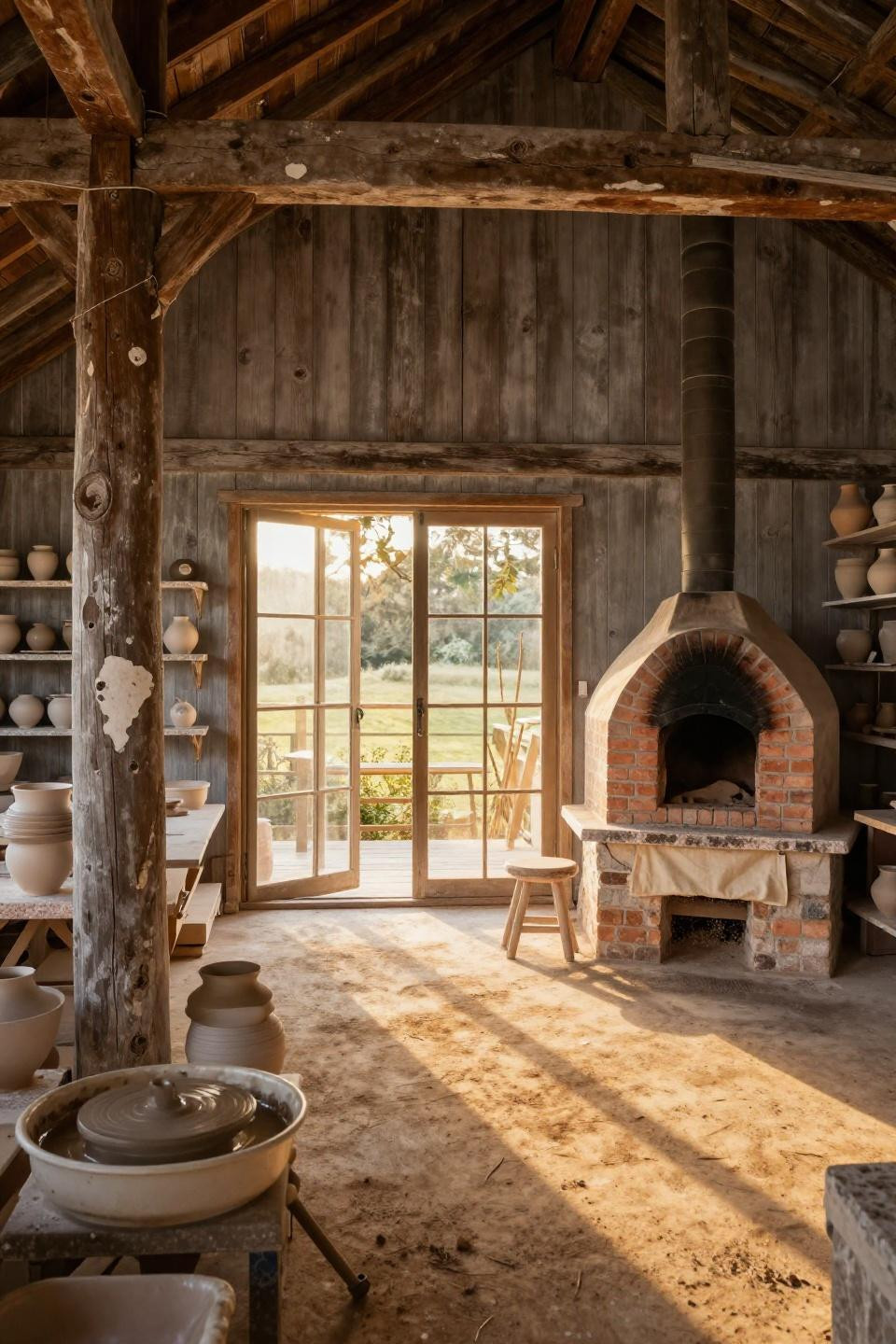
Grey-washed vertical siding on timber-frame barns shows off the structure. Travertine shelving displays ceramics better than painted wood. Integrating a handcrafted brick raku kiln into the original post-and-beam frame is smart—uses existing venting. Packed earth floors handle clay dust without staining. Golden hour light through sliding glass doors changes the entire mood hourly. Irregular plaster patches over old knot holes in timber columns add character. Best for serious potters who need natural light and ventilation.
Rust-Red Board-and-Batten Livestock Barn
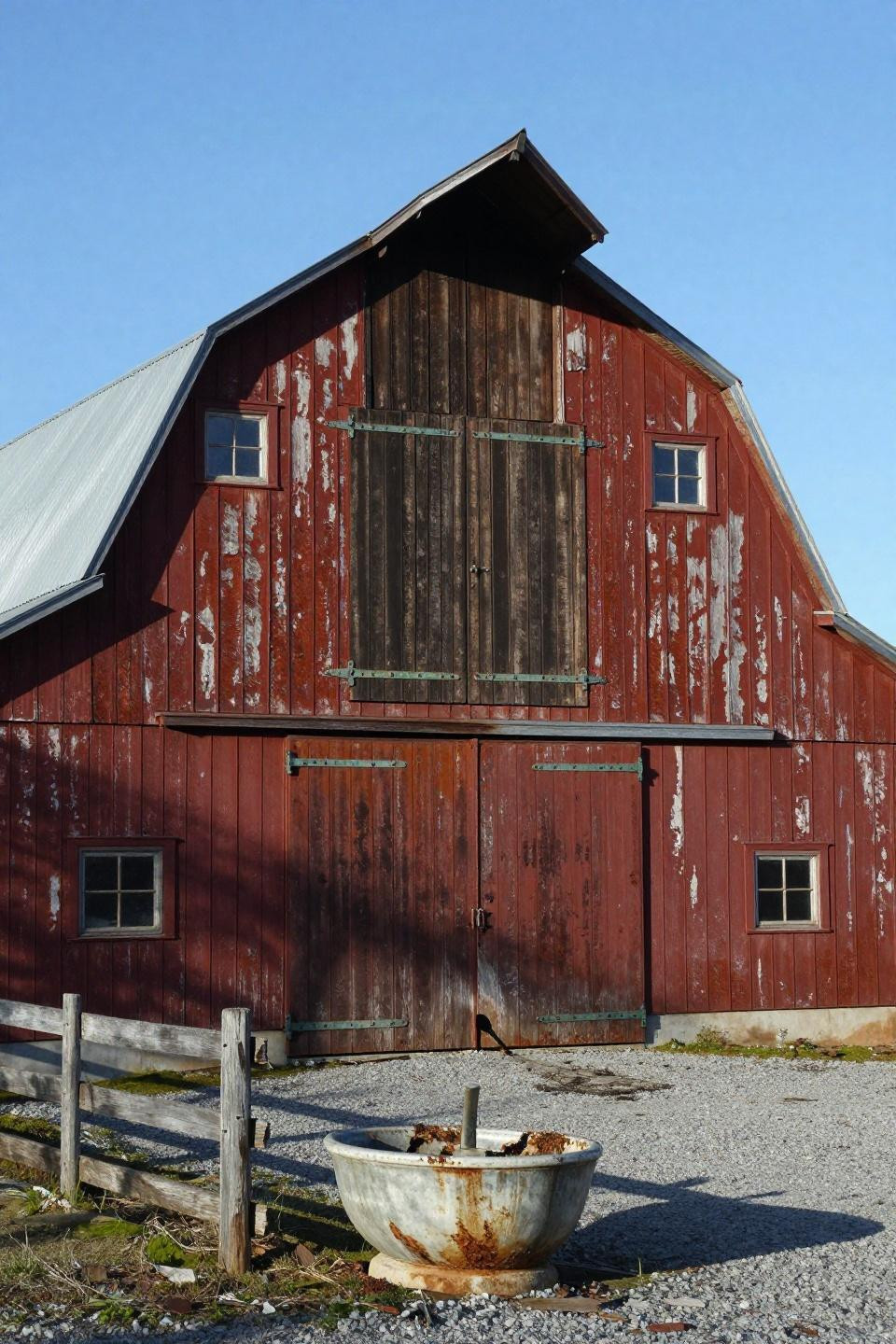
Uneven rust-red board-and-batten siding looks authentic because it is—those boards have warped over decades. Hand-forged iron strap hinges with green patina streaks tell you this barn’s old. Vintage ceramic water troughs with mineral deposits work better than plastic (they don’t crack in freezing temps). Moss on the north wall happens naturally; leave it unless it’s lifting siding. That warped lower board bowed outward needs replacing before rot spreads. Great if you want a working livestock barn that looks period-appropriate.
Sleeping Loft with Exposed Douglas Fir
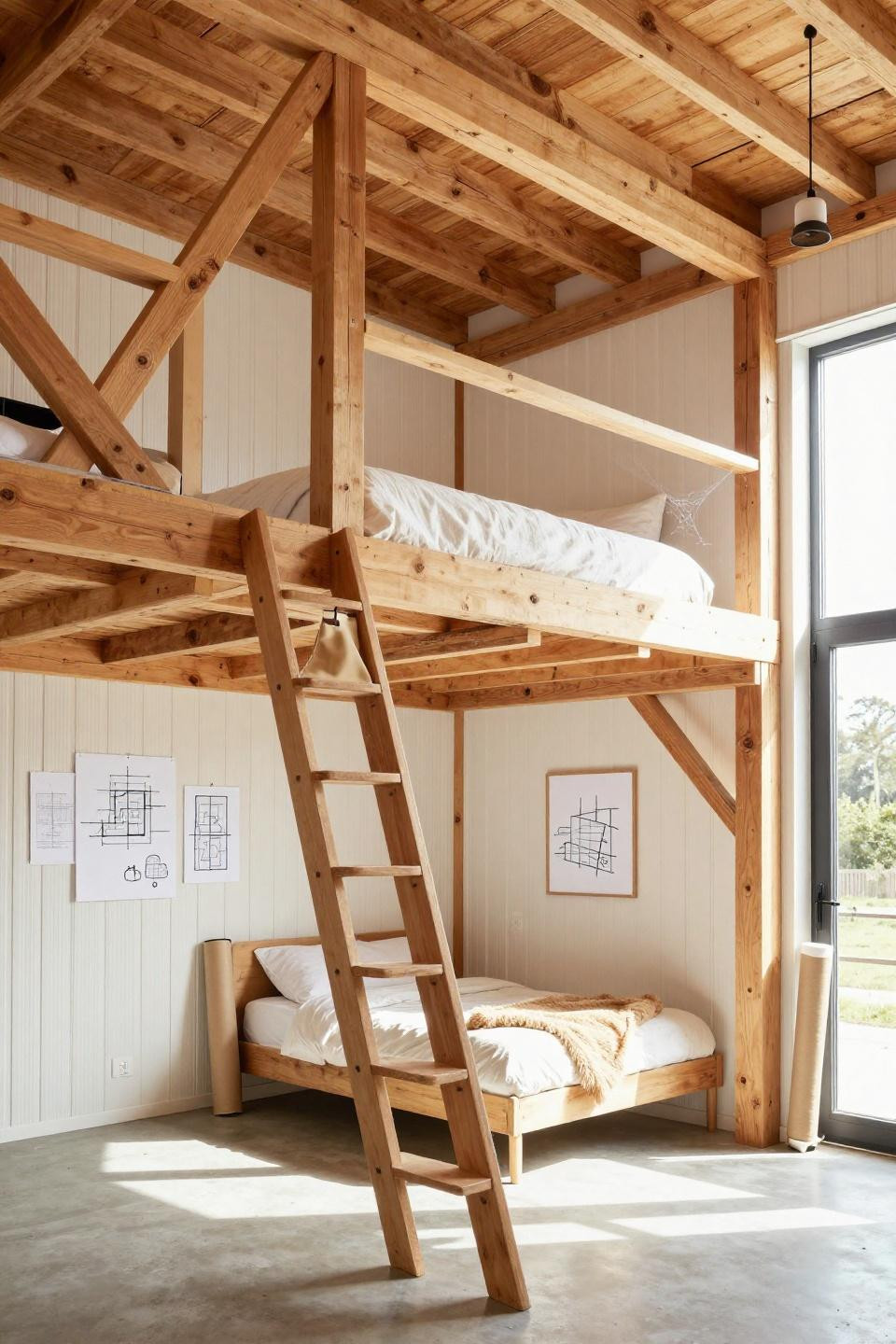
Exposed Douglas fir timber frames with diagonal bracing create instant architectural interest. Cream linen platform beds on upper levels need good ladders—this natural wood one’s solid. Midday light flooding through corrugated metal siding gaps is moody but impractical long-term (seal those eventually). Polished concrete foundations reflect light up into loft spaces. Waxed canvas aprons and camel wool throws add warmth without clutter. Black iron pendants keep the industrial vibe consistent. I’d fix that spider web, but the rest works.
Charcoal Metal Sliding Door on a Whitewashed Interior
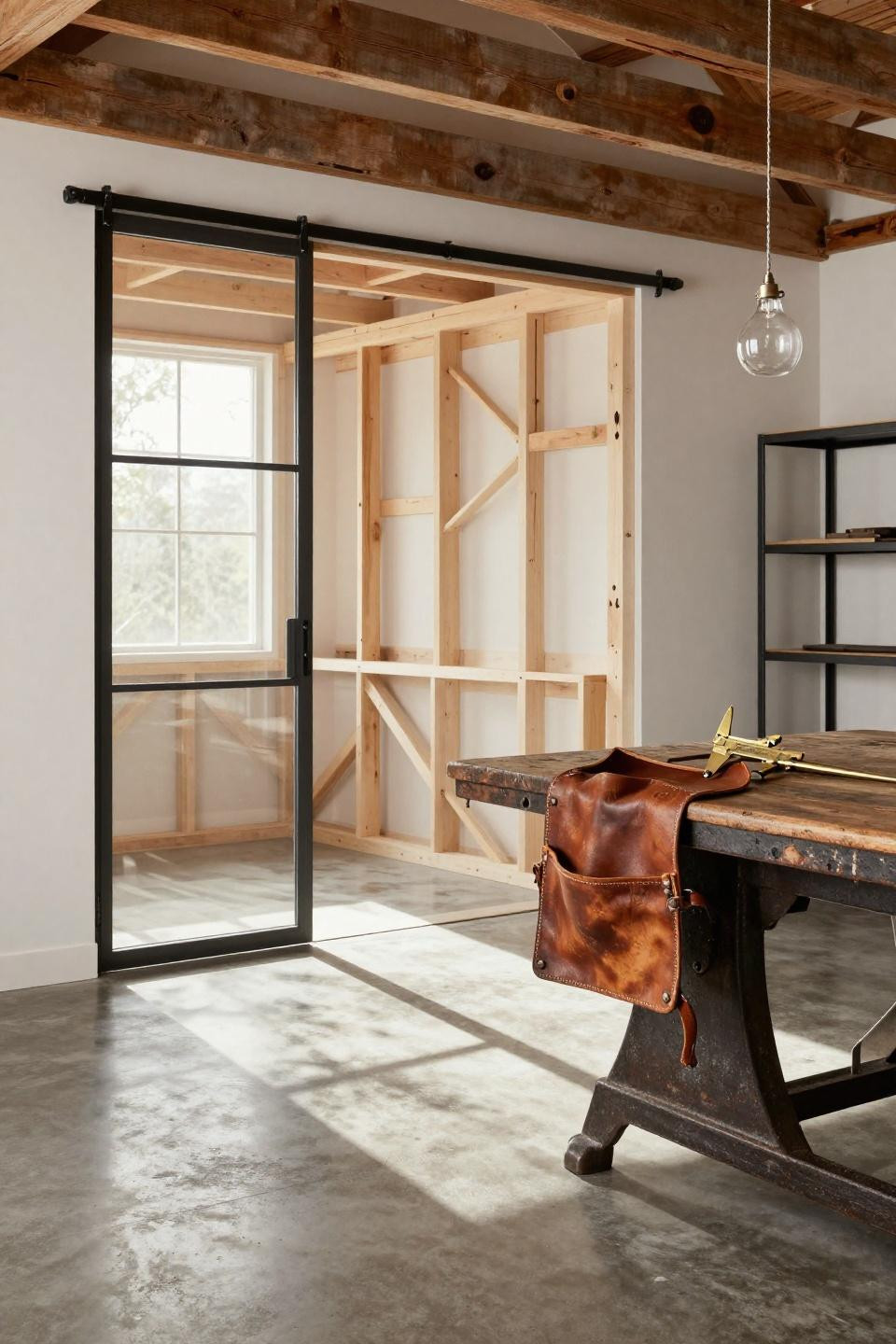
Charcoal metal sliding doors on whitewashed timber frames create this perfect contrast. Polished concrete with precision-scored geometric grids elevates basic floors. Afternoon side light cutting diagonal shadows across workspaces changes hourly—better than static overhead lighting. Vintage cast-iron workbenches with worn leather tool aprons look earned, not styled. Brass calipers are functional desk objects. That deep gouge where a rope pulley was removed? Patch it or celebrate it, your call. Best for studio conversions where you need clean light and durable surfaces.