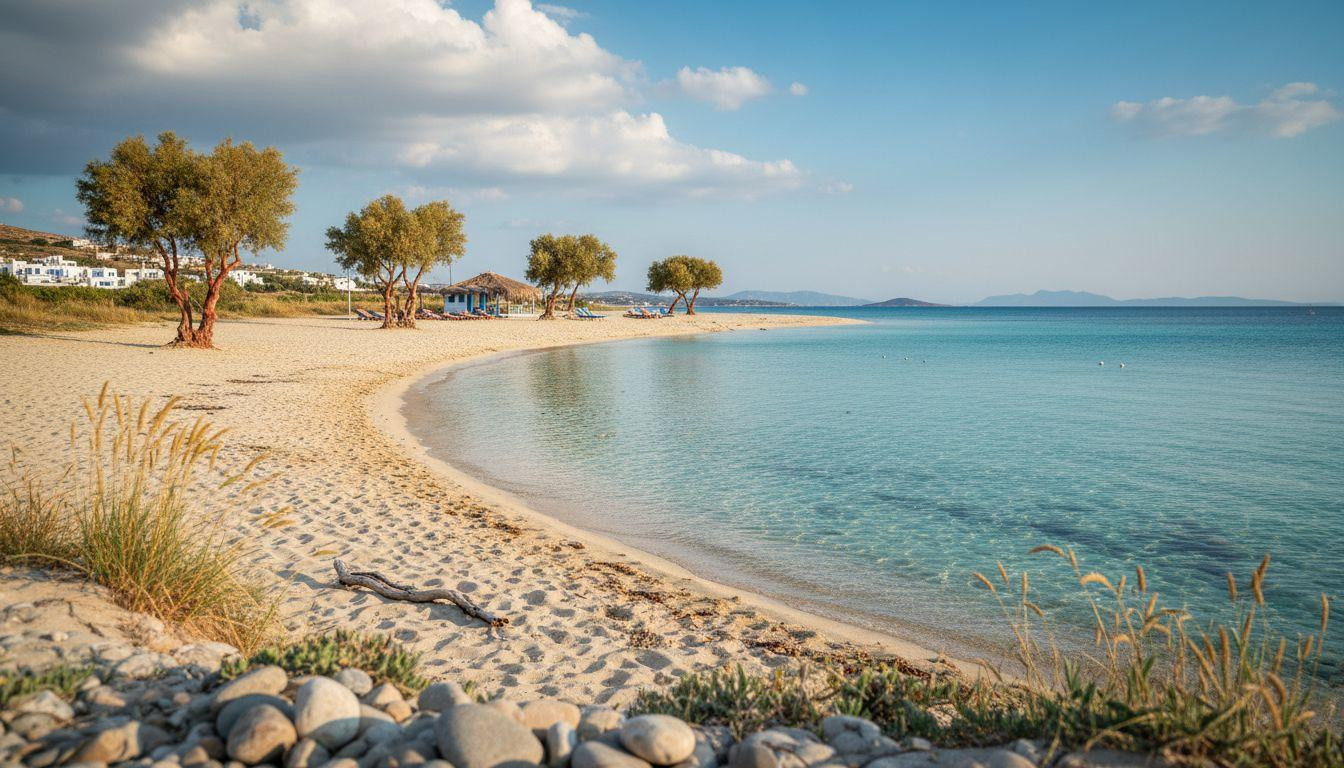
Standing waist-deep in turquoise water 200 feet from Tsigouri Beach, the seabed still visible beneath your feet, you understand why Schinoussa keeps its 227 residents quiet about this place. The island sits in the Small Cyclades, 8.5 square miles south of Naxos, where 18 beaches stretch along coastlines that slope so gently into the Aegean that children wade out farther than their parents can swim back home. March 2026 brings wildflowers to the thyme-scented hills and water temperatures climbing toward 64°F. The ferry from Naxos takes 2-3 hours and costs $22-44. Most travelers miss the boat.
Where shallow water meets Small Cyclades silence
Schinoussa appears on maps as a dot between Naxos and Amorgos. The ferry docks at Mersini Port, a half-mile walk from Chora, the main village where bougainvillea climbs whitewashed walls and basil pots line doorways. Population stays around 227 year-round. No airport exists. Tourist infrastructure remains minimal by design.
The island’s 18 beaches share a geological trait rare in the Cyclades. Sandy and rocky seabeds create gradual depth transitions that extend 65-200 feet from shore before water reaches chest height. Tsigouri Beach demonstrates this most clearly. Fine white sand meets turquoise shallows that deepen to blue only 65 feet out. Snorkeling visibility reaches 50-65 feet on calm mornings.
Compare this to Santorini’s volcanic cliffs where water drops to 30 feet within yards of shore. Or Mykonos beaches where summer crowds number in thousands daily. Schinoussa receives low thousands annually total. March sees fewer than 20 daily visitors. The math favors solitude.
The beaches where you walk into blue
Tsigouri’s fine sand shallows
The island’s most renowned beach sits 10-15 minutes on foot from Chora. Tamarisk trees provide afternoon shade. A small beach bar opens May through September. The sand stays fine enough to walk barefoot without discomfort. Water color shifts from pale turquoise near shore to deeper blue where the seabed finally drops.
Arrive before 8am in summer and you’ll share the beach with maybe three others. By noon in August that number climbs to 30. In March it stays closer to five all day. The shallow entry makes this ideal for families, though few families make the ferry journey to find it.
Almyros and the 40-chapel coast
Walk 20-30 minutes east from Chora and Almyros Beach appears. Golden sand mixed with smooth pebbles, water so clear you count fish from shore. The beach spans 820-1,150 feet. Depth increases gradually with no sudden drops. Local families bring children here because the shallows extend far enough that even toddlers can splash safely while parents sit on sand.
Coastal paths connect over 40 whitewashed chapels across the island, the highest density in the Cyclades. The trail from Almyros toward Pori Beach passes three small churches built into rocky outcrops. Thyme and oregano scent the air. Similar shallow-water beaches exist elsewhere in the Aegean, but few combine this depth profile with such isolation.
Life among 227 islanders
Village rhythms in Chora
The main village occupies a hillside 10 minutes above Mersini Port. Whitewashed houses cluster around a small plateia where locals gather in the evening. Goat bells echo from nearby hills. Church bells mark hours. The Folk Art Museum preserves traditional island crafts, though hours remain irregular and entry fees unofficial.
Morning activity centers on the bakery, which opens around 7am. By 9am the pace slows. Residents move through their day without urgency. Basil plants perfume narrow lanes. Bougainvillea spills over walls in shades of magenta and coral.
Fava and fresh catch
Island cuisine centers on simplicity. Fava, made from split yellow peas, appears on every taverna menu. The dish won regional recognition for quality. Ask at any of the village’s three tavernas “Ti echete simera?” and they’ll tell you what fish came in that morning. Grilled octopus, village salad with local capers, lamb slow-cooked with oregano.
The Fava Feast happens in late June, drawing visitors from neighboring islands. March 25 brings Independence Day celebrations. August 15 marks the Dormition festival with traditional music and dancing. Other Greek islands maintain similar festival calendars, but Schinoussa’s small scale keeps celebrations intimate.
Walking the island nobody rushes
Every beach on Schinoussa sits within 45 minutes’ walk from Chora. The path to Livadi Beach takes 15-35 minutes depending on pace. Gerolimnionas Beach requires 45-60 minutes along a scenic coastal trail. Most visitors rent scooters for $22-28 daily, though the island’s 9 square kilometers make walking practical.
The sunset walk from Chora to Mersini Port covers roughly one kilometer in 10-20 minutes. Views extend to Heraklia and Koufonisia islands. Boat trips to secluded coves cost $38-50 and visit beaches accessible only by water. The island’s scale eliminates the need for cars. Small island beaches across the Mediterranean share this walkable quality, but few maintain Schinoussa’s level of preservation.
Your questions about Schinoussa answered
When should I visit?
March through May brings blooming wildflowers, temperatures between 59-72°F, and minimal crowds. Sea temperature climbs from 61°F in March to 68°F by May. June through September sees peak season with temperatures 77-90°F and warmest water at 75-77°F. Ferry service runs more frequently in summer. October and November offer quieter conditions at 64-77°F, though some accommodations close.
What does it actually cost?
Basic rooms start at $55-88 nightly. Mid-range pensions run $110-165. Boutique hotels like Archipelagos charge $220 and up. Taverna meals average $17-28. Ferry from Naxos costs $22-44 one-way. Scooter rental runs $22-28 daily. Boat tours cost $38-50. Prices drop 20-30% outside peak season compared to Cyclades averages.
How does it compare to bigger islands?
Schinoussa’s 227 residents contrast with Santorini’s summer population of hundreds of thousands. The island has 18 beaches across 8.5 square miles versus Mykonos’s crowded shorelines. Everything stays walkable. No cruise ships dock here. Authentic quiet persists even in August. Costs run 40% below Santorini rates. The trade-off: Limited dining options, basic infrastructure, infrequent ferries.
Evening light turns Tsigouri’s shallows gold as you wade back toward shore. Water still only reaches your waist 150 feet out. Small fish dart around your ankles. The beach bar closes at sunset. Tomorrow the ferry leaves at 4:30pm. Most visitors make it with time to spare.