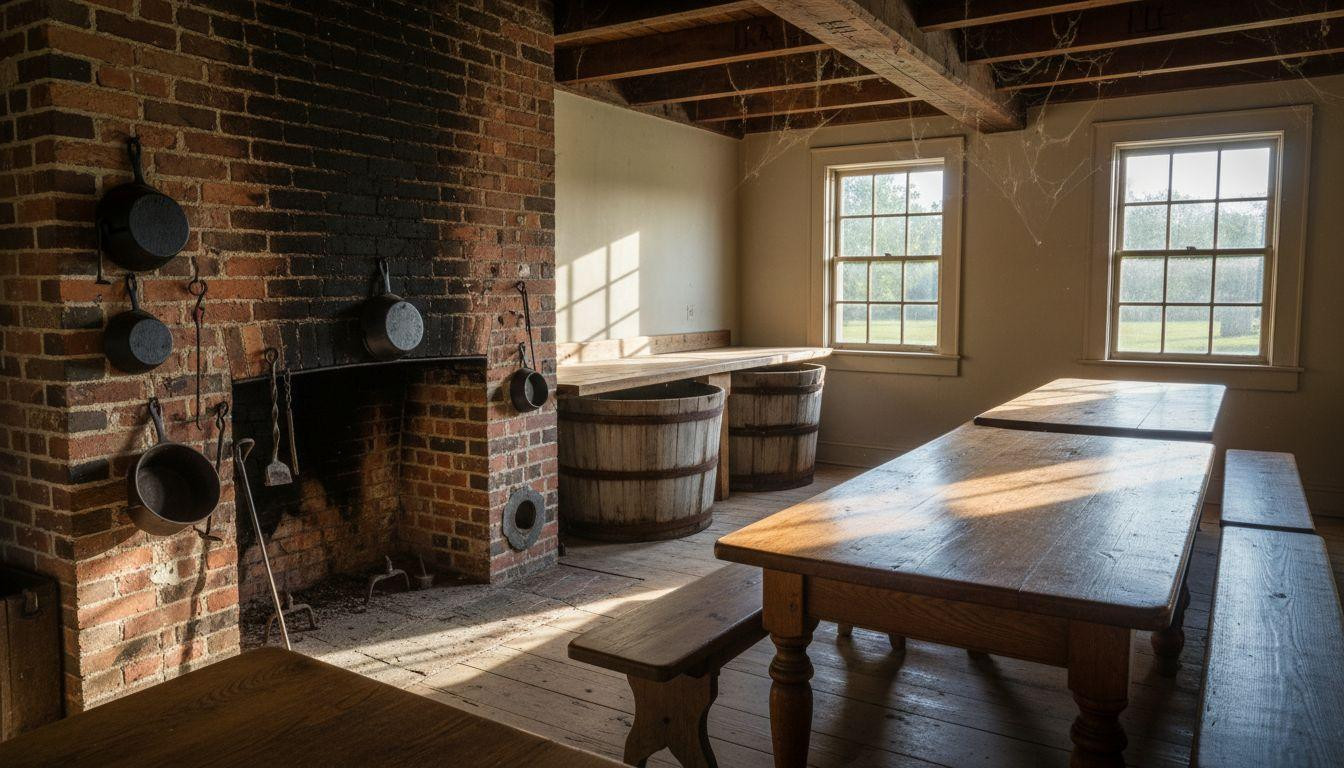
Middle Amana sits in east-central Iowa, 25 miles from Cedar Rapids. Seven villages spread across 26,000 acres where the Inspirationalist community built a collective life from 1855 to 1932. One kitchen building survives intact from that era. It fed 40 people three meals daily plus two snacks. The brick hearth still stands. The wooden tubs remain where they were placed in 1863.
This is the only communal kitchen in America that preserves its original layout, tools, and dining hall from a 19th-century utopian experiment. Walk through and you see how idealism shaped architecture that still stands today.
The kitchen that fed seven villages
The Rüdy Küche stands at 1003 26th Avenue in Middle Amana. Built in 1863, it served 40 to 50 people per meal. The dining hall seated 38 at long wooden tables. A brick hearth dominates one wall. Dry sinks with wooden tubs line another. The bell tower called workers from fields and workshops three times daily.
Over 50 communal kitchens operated across the seven villages during the collective period. Middle Amana alone had nine. Each kitchen served its assigned households. No one cooked at home. No one ate alone. The system ran 24 hours daily until 1932 when the community voted to end communal ownership.
Only this one building survived conversion to private use. The Amana Heritage Society purchased it in 2018. By summer 2022, cleaning and cataloging revealed original cooking implements, serving bowls, and furniture exactly where kitchen workers left them 90 years ago.
When ideals built entire streets
The blueprint of belief
The True Inspiration Community followed Christian Metz from Germany to Iowa in 1855. They believed divine inspiration guided daily decisions. Communal living expressed that faith. Every member received housing, food, and work assignments. No private wealth. No architectural hierarchy.
Brick homes rose in identical rows. Gardens measured to equal size. Workshops, mills, and stores belonged to everyone. The villages formed a 26,000-acre collective where shared property meant shared responsibility. Streets followed practical grids. Buildings served function over decoration.
The buildings that remain
Middle Amana preserves the most communal architecture. The coopershop from 1863 displays barrel-making tools. General stores in High Amana and other villages retain original layouts. Churches, barns, and former kitchen buildings converted to restaurants dot all seven villages. The National Register listings from the 1970s protect entire streetscapes.
The Ox Yoke Inn occupies an 1856 kitchen building in Amana village. Woolen mills, furniture shops, and blacksmith sites tied to the communal era still stand. Some operate as museums. Others house active businesses continuing craft traditions the community established 170 years ago.
Walking through cooperative architecture
What to see
The Rüdy Küche opens for tours spring through summer. Reservations required through the Amana Heritage Society at 319-622-3567. The dining hall shows where 38 people sat for meals. The kitchen displays the brick hearth where cooks prepared food for 40 daily. Original wooden tubs, serving implements, and furniture fill the rooms.
The coopershop at the same address demonstrates barrel-making techniques. Tools hang on walls. Finished barrels stand in corners. The building smells of old wood and iron. Walk the streets between preserved homes. Gardens still follow the communal plot system. Churches anchor each village center.
The village today
Population across all seven villages totals around 1,400. Workshops continue furniture making, weaving, and baking using methods from the communal period. The Ox Yoke Inn serves family-style meals in an 1856 kitchen building. Entrées come with shared bowls of sauerkraut, potatoes, and pickled vegetables. Desserts cost extra.
The Amana Church maintains the Inspirationalist faith tradition. Services happen in German and English. Residents welcome visitors to museums, restaurants, and shops. The preservation effort mirrors other historic American towns where architecture tells community stories.
The feeling of intentional silence
Stand on any street in Middle Amana at dawn. Identical brick homes line both sides. No mansion dominates the block. No cottage hides in shame. The uniformity creates calm. This is what equality looked like when translated into bricks and mortar.
The communal system ended in 1932 during the Great Depression. Members voted for private enterprise while keeping the church. But the architecture remains. Walk these streets and the physical evidence of cooperative living surrounds you. The quiet feels intentional. The scale feels human. The preservation feels urgent.
Your questions about utopian American towns with strange origins answered
Can you visit the communal kitchens?
The Rüdy Küche in Middle Amana opens for tours spring through summer. Call the Amana Heritage Society at 319-622-3567 for current hours and pricing. Reservations required. Some tours include communal meal experiences. The coopershop at the same address opens during the same season. Other villages offer self-guided walking tours of preserved communal buildings year-round.
How many villages still operate?
All seven villages remain active: Amana, East Amana, High Amana, Middle Amana, South Amana, West Amana, and Homestead. Total population around 1,400. Middle Amana preserves the most communal architecture including the only intact kitchen. Homestead served as administrative center during the collective period. Each village maintains churches, shops, and restaurants. The architectural preservation rivals European historic villages in completeness.
How does this compare to other utopian sites?
Amana preserves more physical evidence than any other American utopian experiment. Brook Farm in Massachusetts burned in 1846. No structures remain. New Harmony in Indiana lost most communal buildings after the 1827 failure. Shaker villages preserve meetinghouses but lack intact communal kitchens at Amana’s scale. The Rüdy Küche stands alone as the only complete 19th-century communal kitchen with original tools, furniture, and layout. The time-capsule quality exceeds most historic preservation sites.
The brick hearth in the Rüdy Küche catches afternoon light through west windows. Wooden tubs sit ready for washing. Long tables wait for diners who will never return. But the building stands. The architecture tells the story. The idealism remains visible in every brick.