
Open shower ideas are having a moment. And honestly? Most of them actually deliver. Here’s what makes them work.
The Curved Alcove That Changes Everything
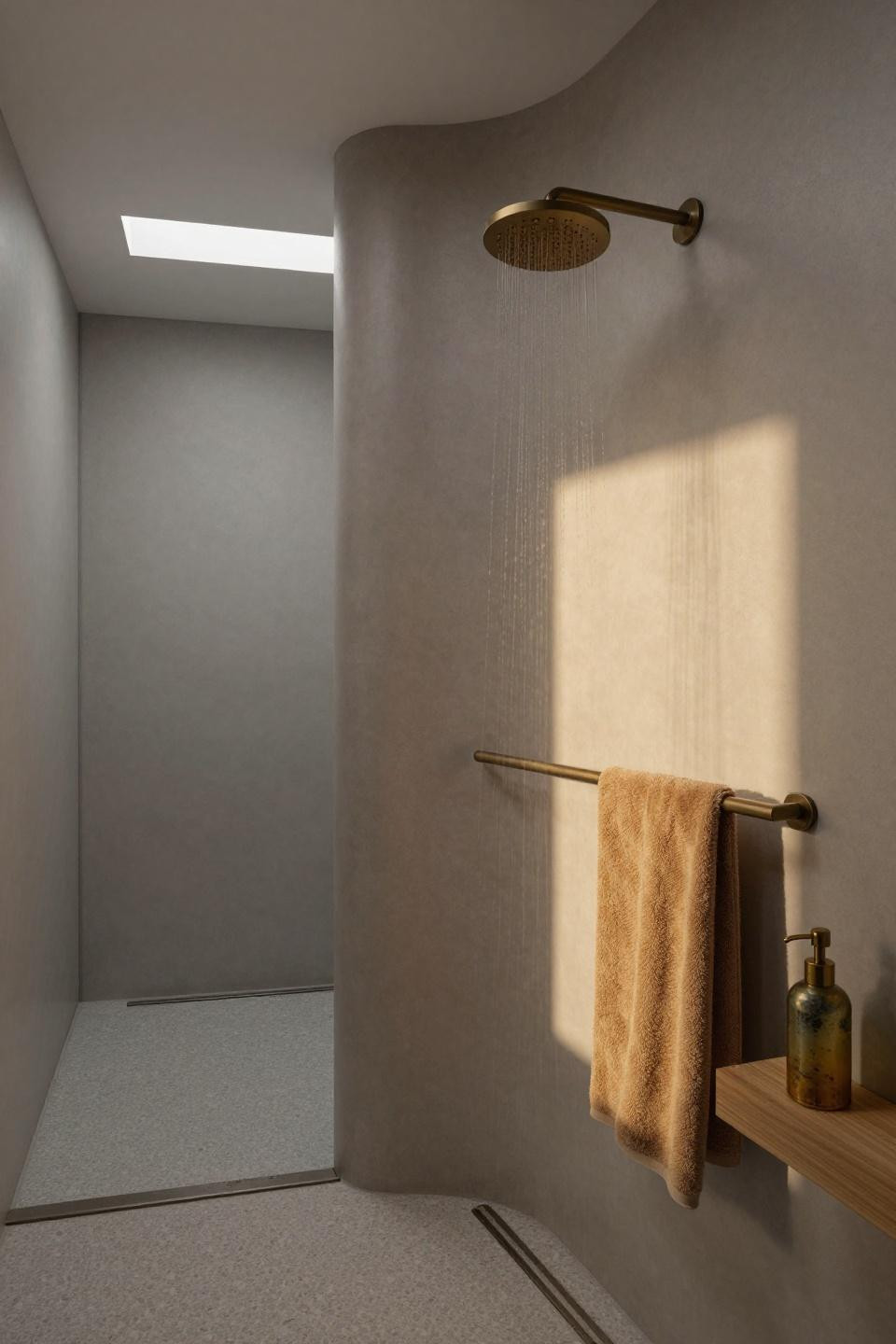
That recessed curve isn’t just pretty—it directs water exactly where you want it. The terrazzo floor slopes so subtly you’d never notice, but your feet do. Brass fixtures against plaster work because the warmth offsets all that cool grey. This is how you do open showers in smaller bathrooms without flooding the entire room. The linear drain disappears completely, which is the whole point.
When Hinoki Wood Meets White Epoxy
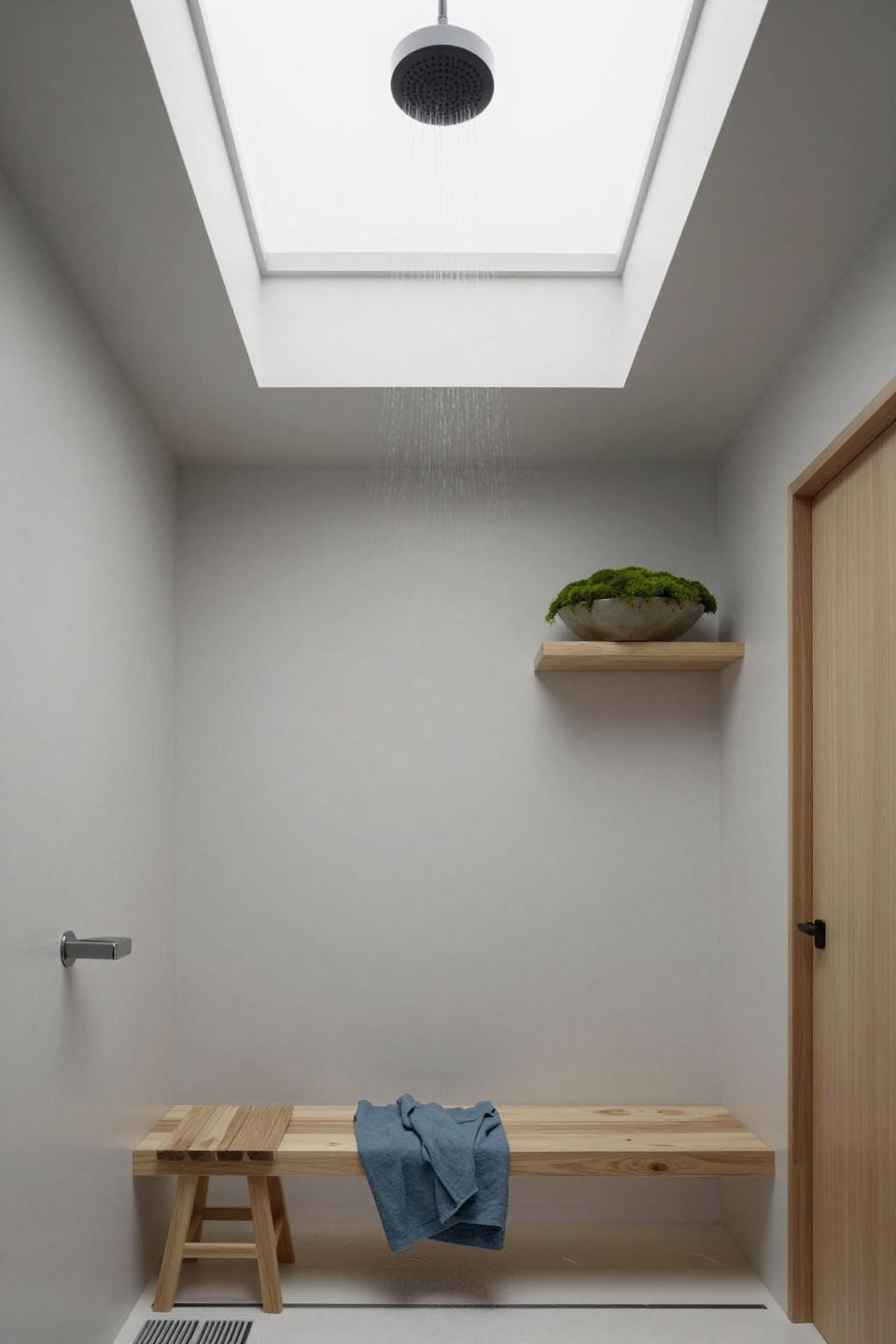
Japanese wet rooms get it right every time. The elevated hinoki platform creates a psychological threshold even without doors or glass. Your brain registers the wood change as “this is the shower zone.” That ceiling-flush rainfall head? Zero visual clutter. Works best if you’re willing to embrace the wet room concept fully—everything gets a little damp, and that’s fine. The moss dish isn’t decoration; it actually thrives in here.
Dual-Zone Limestone That Feels Like a Spa
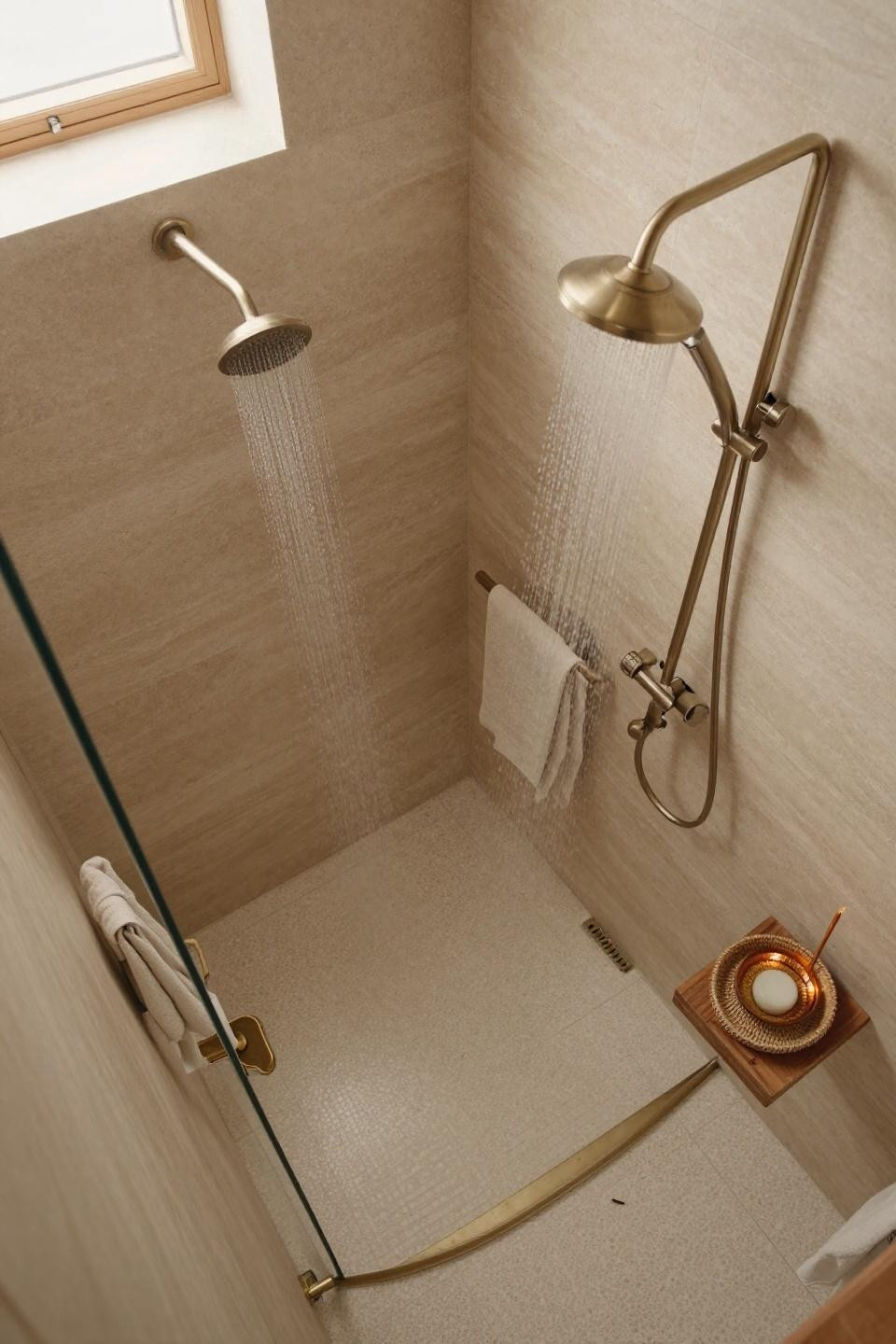
Two rainfall heads positioned asymmetrically mean you’re not fighting over water pressure. The limestone stays warmer underfoot than tile, and that matters when you’re walking through wet. Champagne bronze ages beautifully (unlike polished chrome, which shows every water spot). This layout needs at least 6 feet of width to breathe. Worth noting: that radiant heating grid under the terrazzo isn’t optional in walk-through designs—it’s what keeps the floor from feeling like an ice rink.
Brutalist Concrete Fins That Actually Work
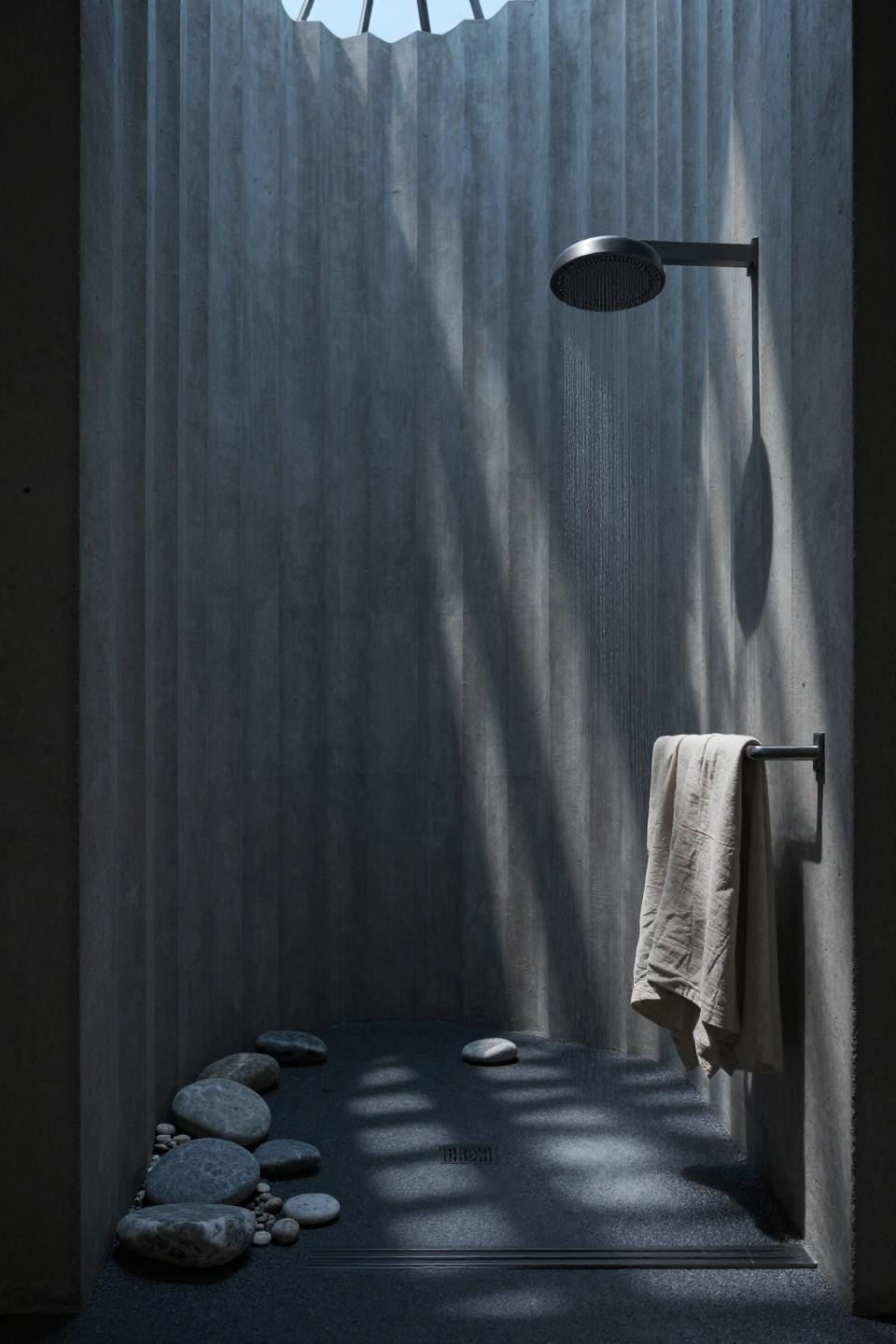
Vertical fins give you privacy without doors or curtains. The shadow play is unintentional architecture. Concrete aggregate gets better with age (and water exposure, honestly). That gunmetal rainfall head mounted high on the fin disappears into the brutalist aesthetic. Great for lofts or industrial spaces where you want the shower to feel intentional, not like an afterthought tacked into a corner. The charcoal aggregate hides soap scum better than white tile ever will.
Blackened Steel Frame Without the Glass
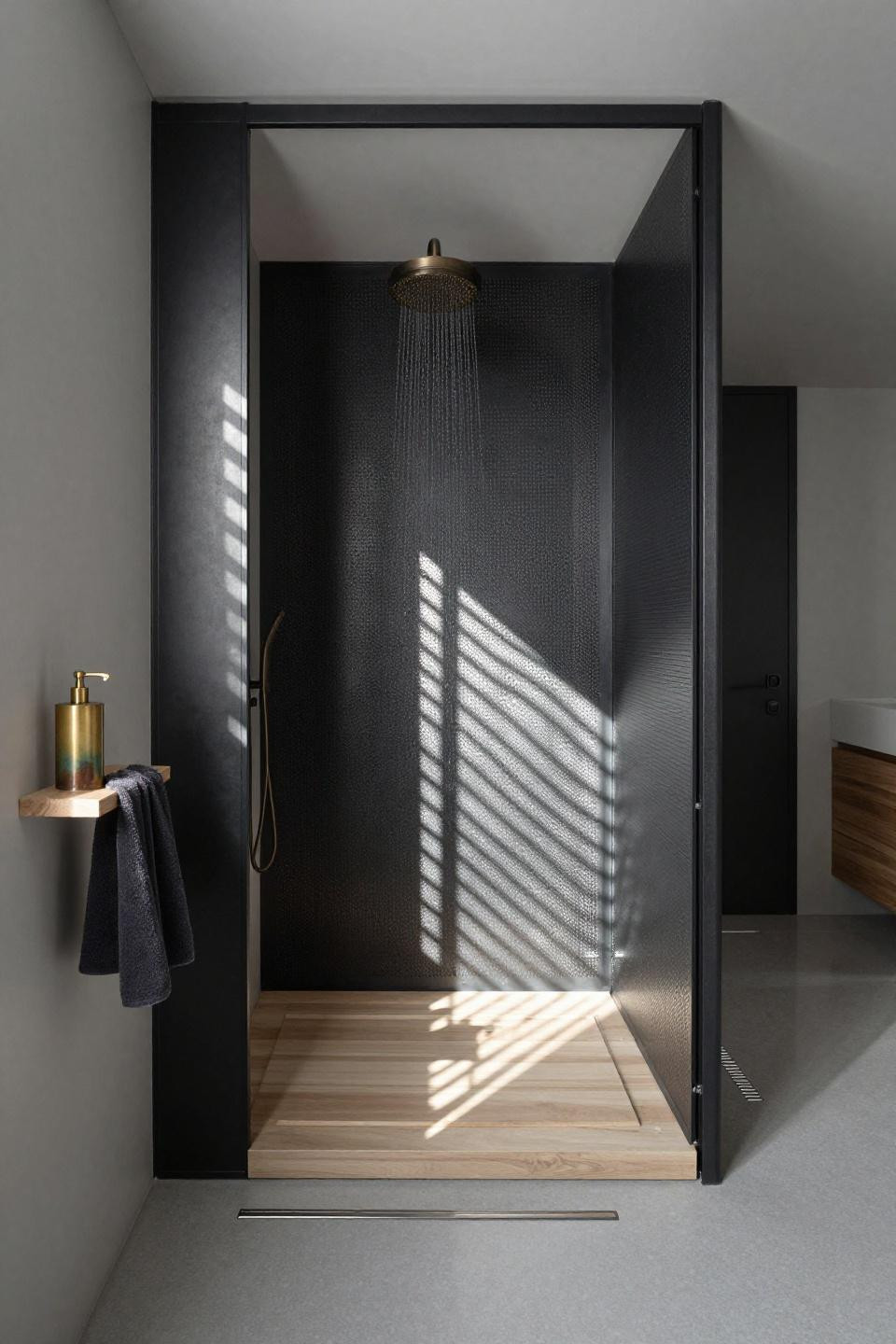
That perforated steel panel defines the zone without blocking light. The split-level ash platform creates a subtle threshold your feet register immediately. I’d pick this for open-concept bathrooms where you need separation but can’t afford to lose visual space. The bronze rainfall head warms up all that cool steel and grey. One tip: make sure your contractor waterproofs behind that steel frame—moisture will find its way through those perforations.
Industrial I-Beam Structure Exposed
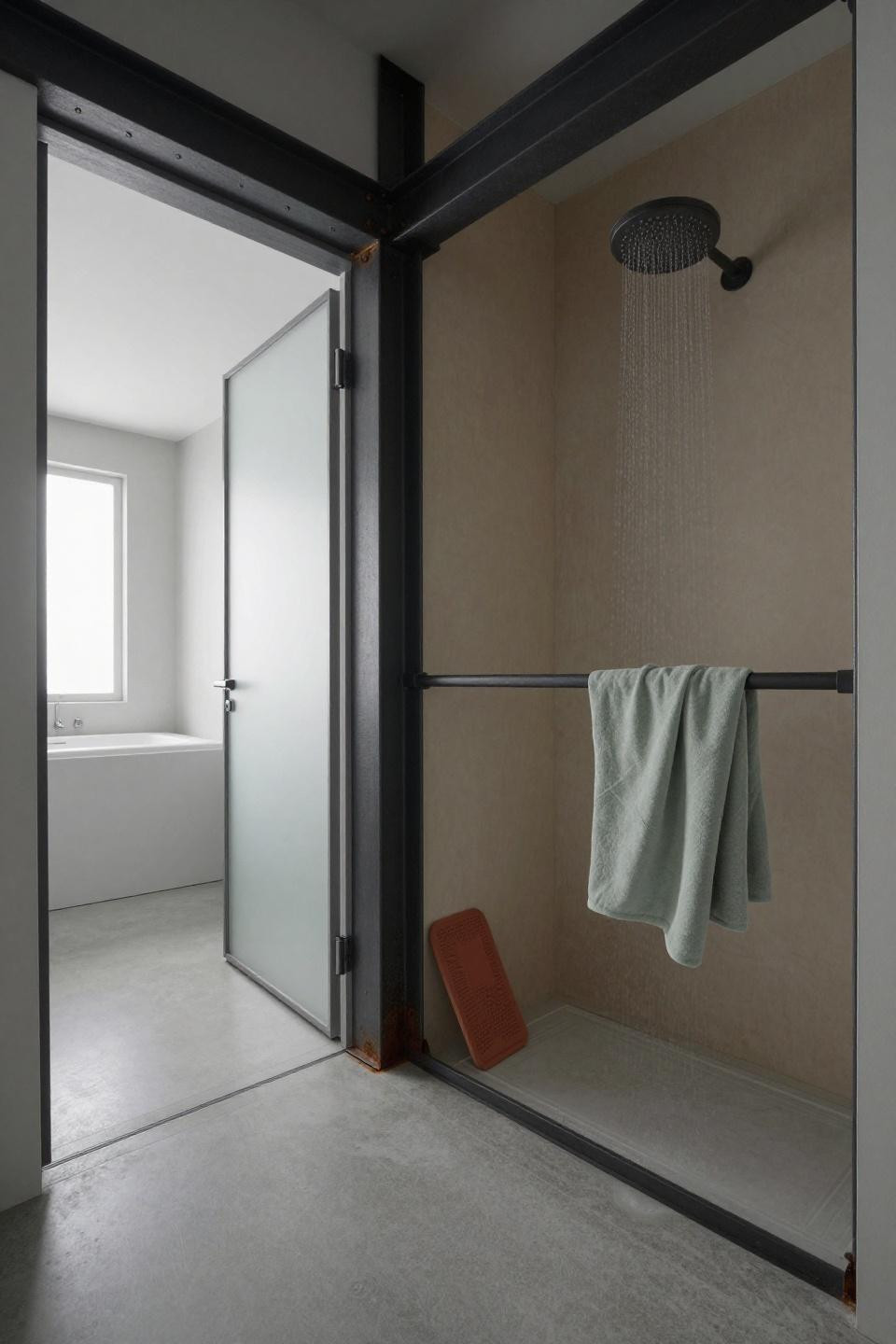
Leaving the structural steel exposed makes the shower feel like it belongs in the space, not bolted on later. That raw gypsum board softens the industrial edge just enough. Polished concrete floors with micro-channel drains are the move here—they disappear completely. The sage towel is doing heavy lifting against all that grey and black (color strategy matters). This works in lofts or renovated warehouses where you’re celebrating the bones of the building.
Mediterranean Terracotta Plaster Alcove
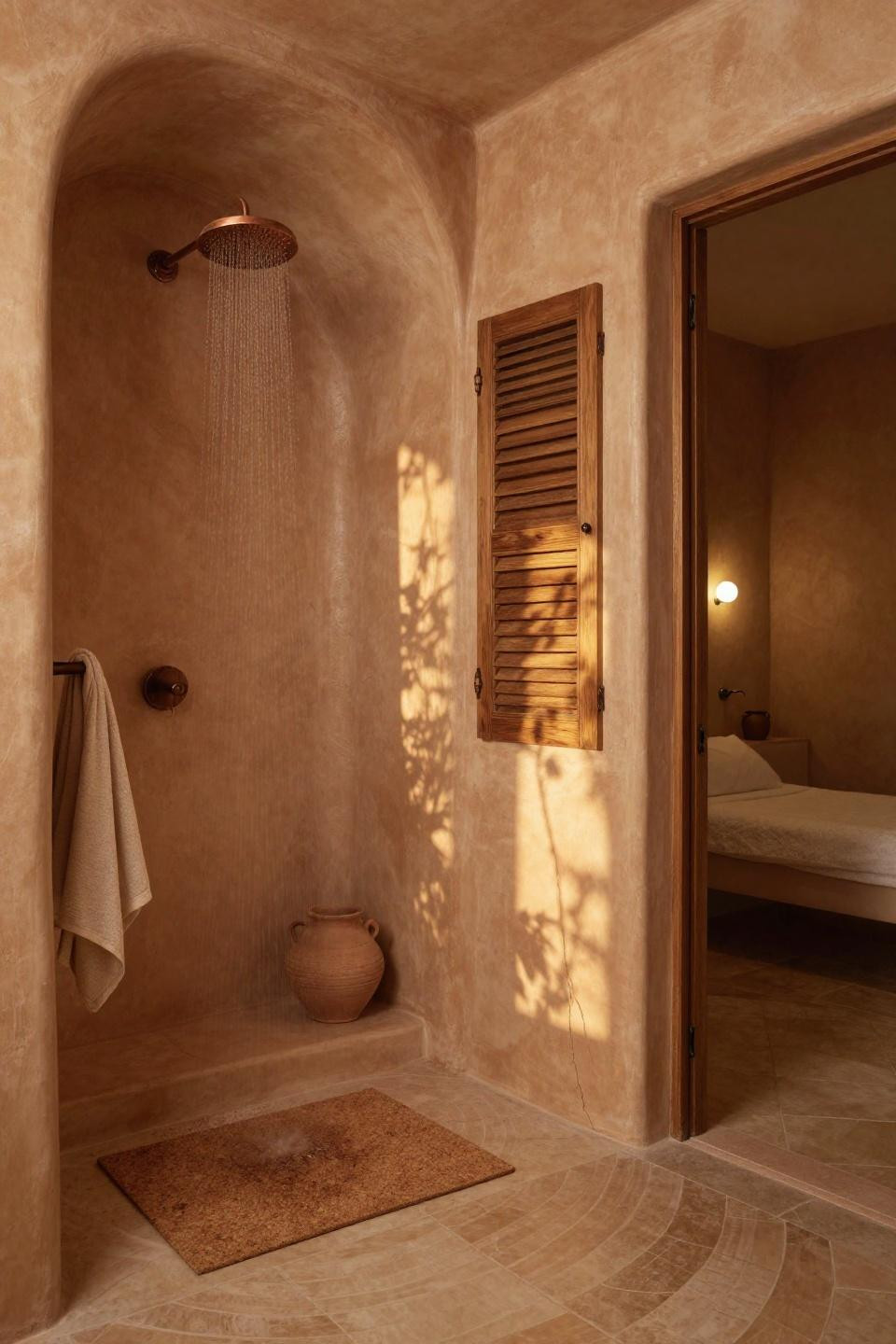
Hand-shaped plaster walls create curves that manufactured tile never will. Aged copper develops that green patina naturally—don’t fight it. Saltillo tile underfoot absorbs water differently than porcelain; it actually gets better with age. The louvered screen filters light without blocking airflow, which prevents that stuffy wet-room feeling. Best for spaces with good ventilation. That cork bath mat isn’t décor—it’s the only thing that makes sense on terracotta when your feet are wet.
Sage Green Limewash with Oak Bench
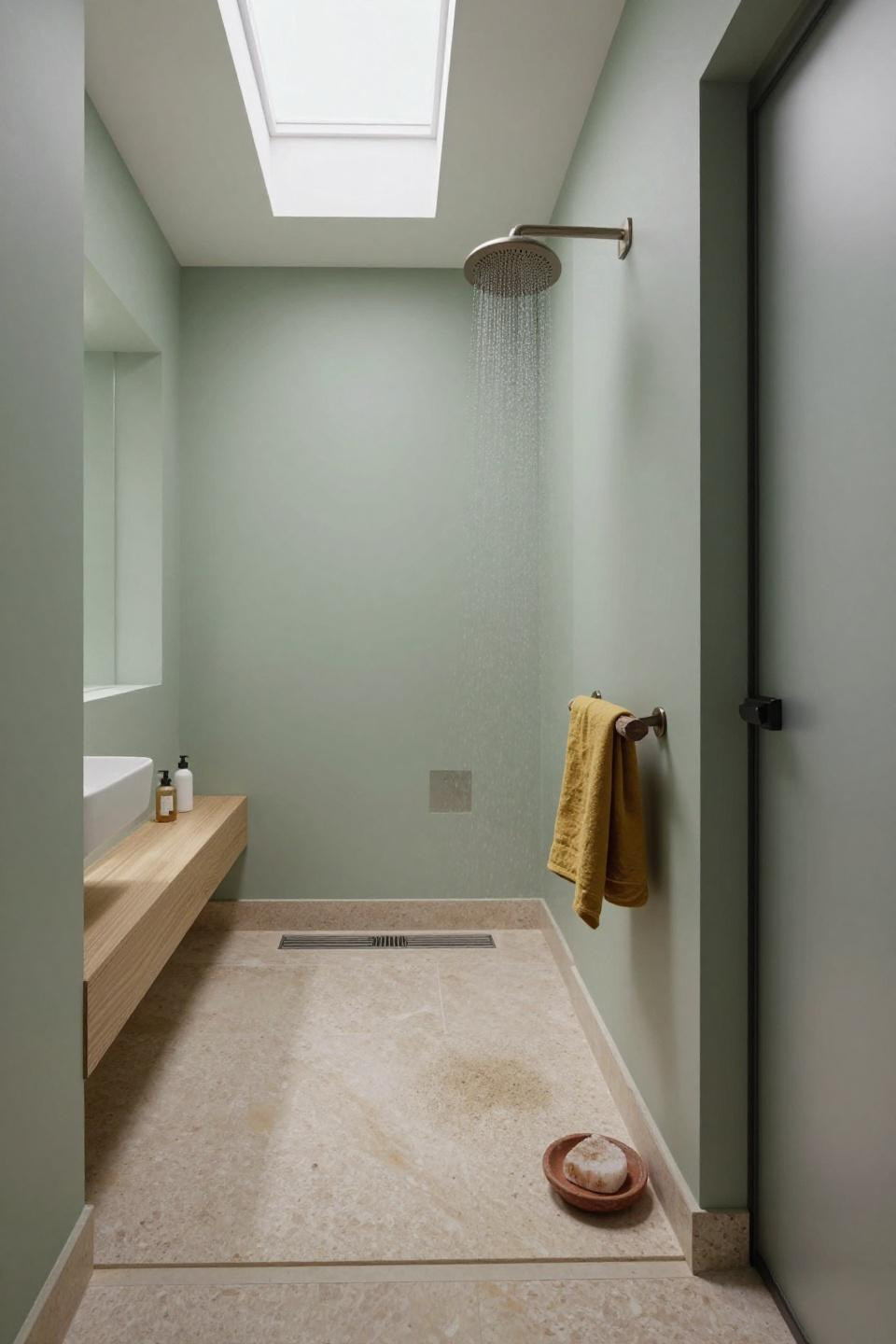
That integrated oak bench isn’t just seating—it’s where you actually shave your legs without the gymnastics. Sage green limewash stays true even when wet (regular paint goes dark and weird). The travertine floor with hidden radial drain means water disappears fast. Works best in medium to large bathrooms where the zero-entry concept doesn’t feel forced. The mustard linen towel against sage is chef’s kiss color theory.
Raw Concrete Aggregate with Mineral Striations
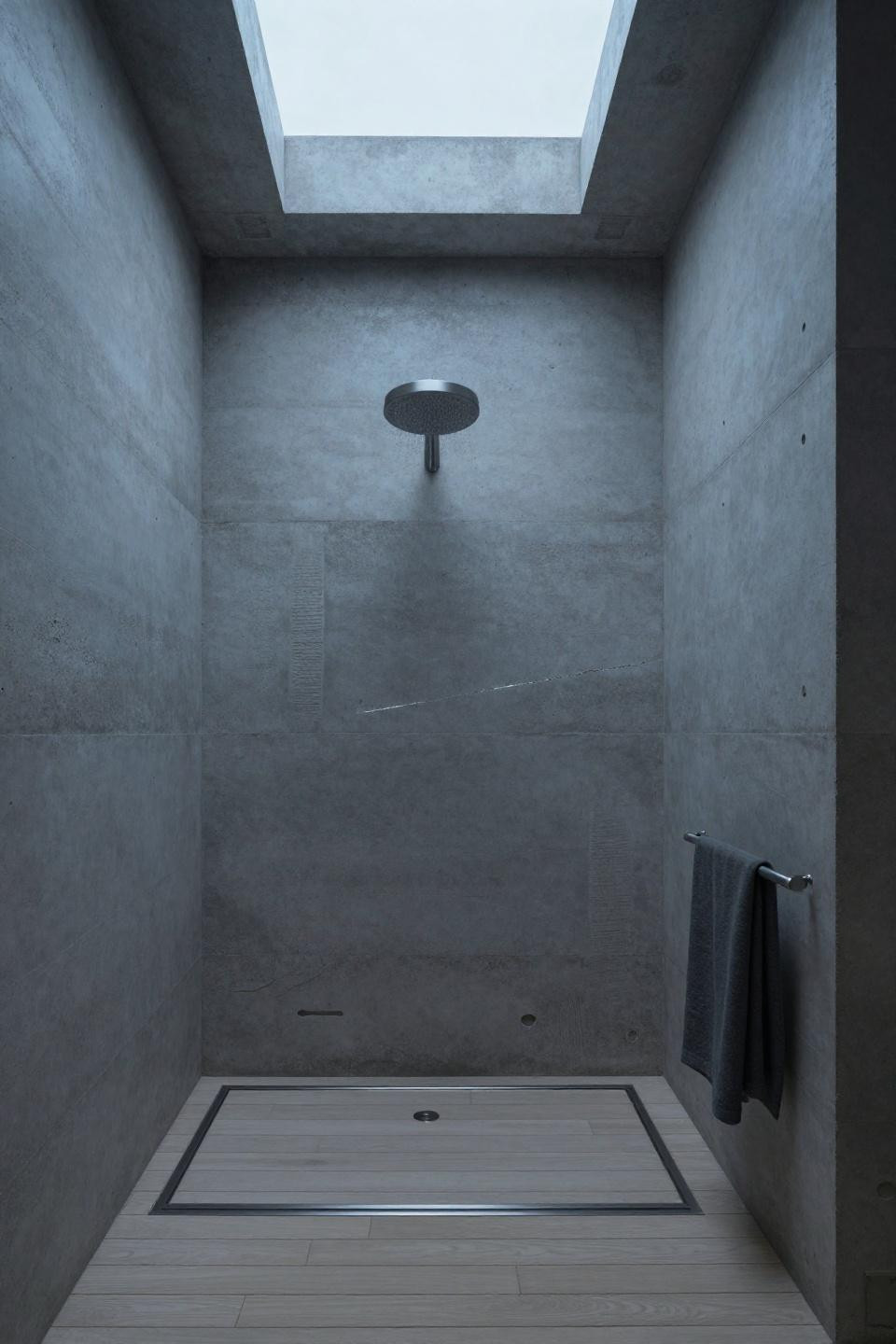
Exposing the aggregate turns concrete into actual texture, not just cold grey walls. Those natural voids and mineral striations happen during the pour—you can’t fake this later. The ash timber slat floor transition signals “wet zone ahead” without a physical barrier. Gunmetal fixtures disappear into concrete’s tonality. I’ve seen this work beautifully in minimalist spaces where every material choice counts. That hairline crack catching light? That’s concrete doing what concrete does. Embrace it.
Walnut Slat Divider Creating Shadow Stripes
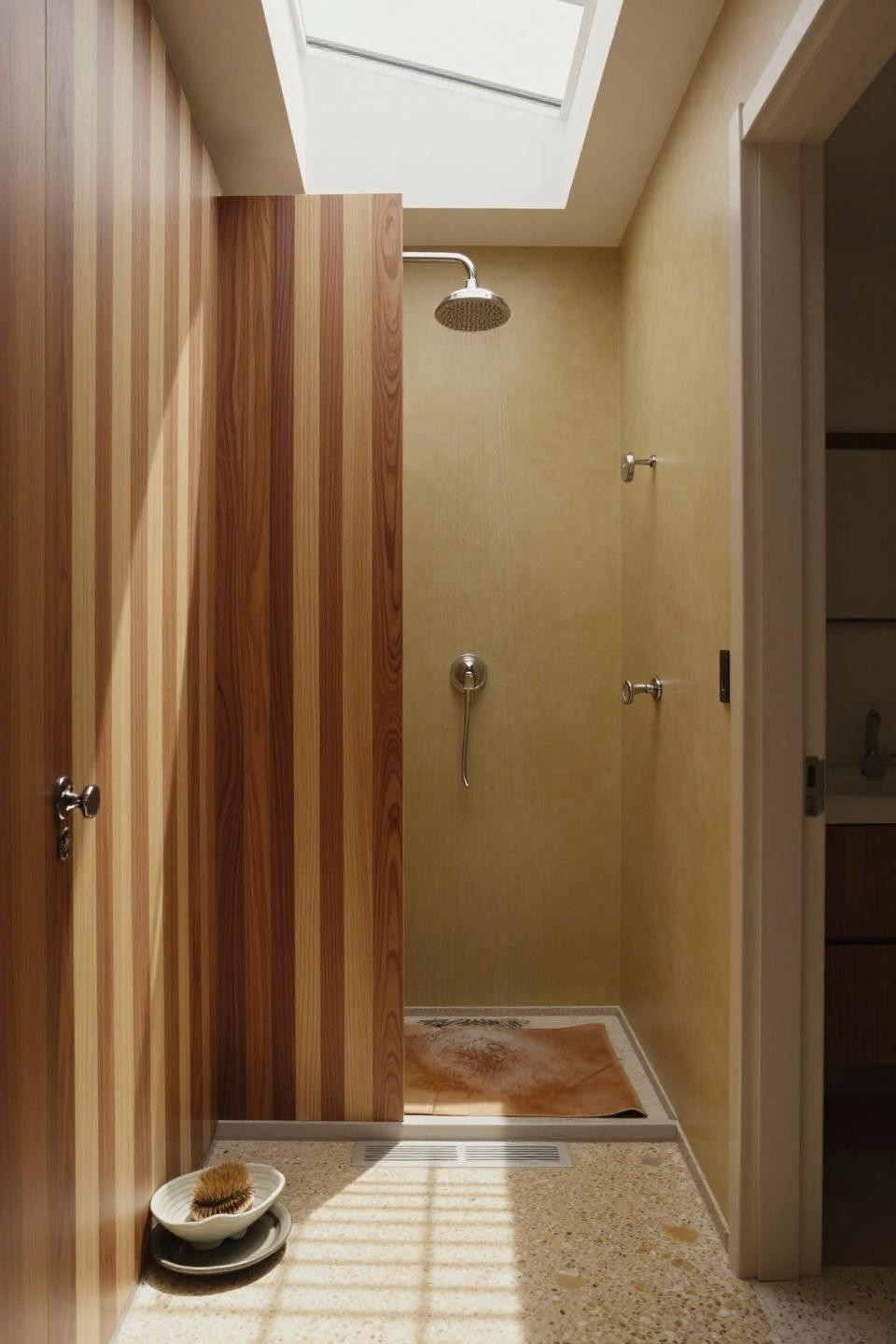
Angled slat walls give you privacy without making the space feel closed off. That walnut and blonde ash combo adds warmth to what would otherwise read as a cold, wet room. The terrazzo floor with radiant heating is non-negotiable for walk-in designs (cold floors kill the whole vibe). Chrome fixtures on dusty marigold plaster—unexpected but it works. This layout shines in mid-century or transitional bathrooms where you want texture without pattern overload.
Frameless Glass Panel with Slate Striations
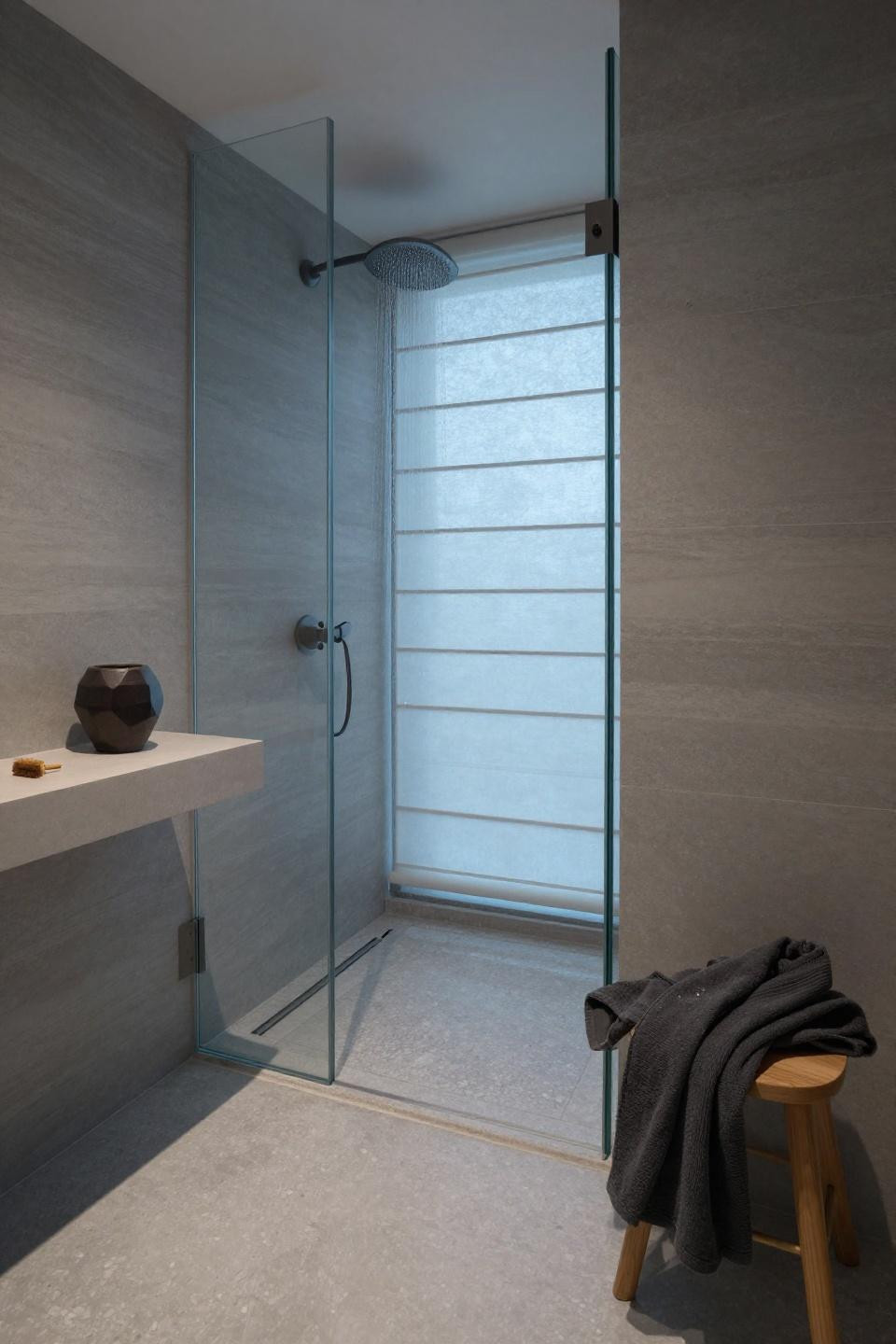
One frameless panel does all the heavy lifting without creating a glass box situation. The natural grey slate adds organic texture that tile can’t replicate. Rice paper screens diffuse light beautifully—you get brightness without harsh shadows. That channel drain stays nearly invisible in polished terrazzo. Great for smaller bathrooms where a full enclosure would feel claustrophobic. The charcoal rainfall head on pale ash creates just enough contrast.
Limestone Cave Carved into Geological Strata
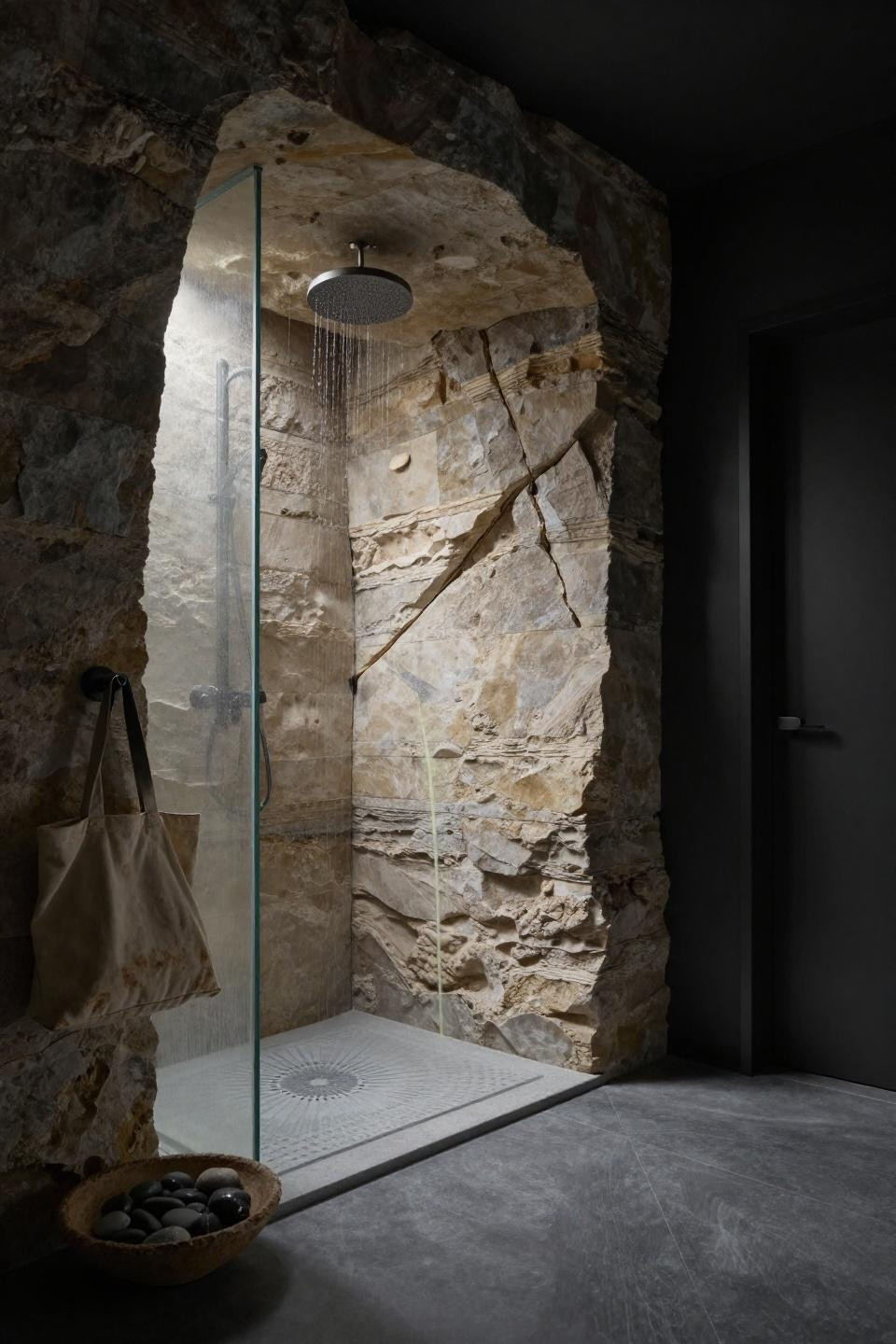
Exposing sediment layers turns your shower into actual geology. That diagonal fault line isn’t decoration—it’s the real formation. The alabaster panel filters morning light into something soft and glowing. Gunmetal fixtures hold their own against dramatic stone without competing. This is for people who want their bathroom to feel like a destination, not just a function. The hidden radial drain keeps the focus on the stone, not the plumbing.
Matte Black Wet Room with Glass Block Light
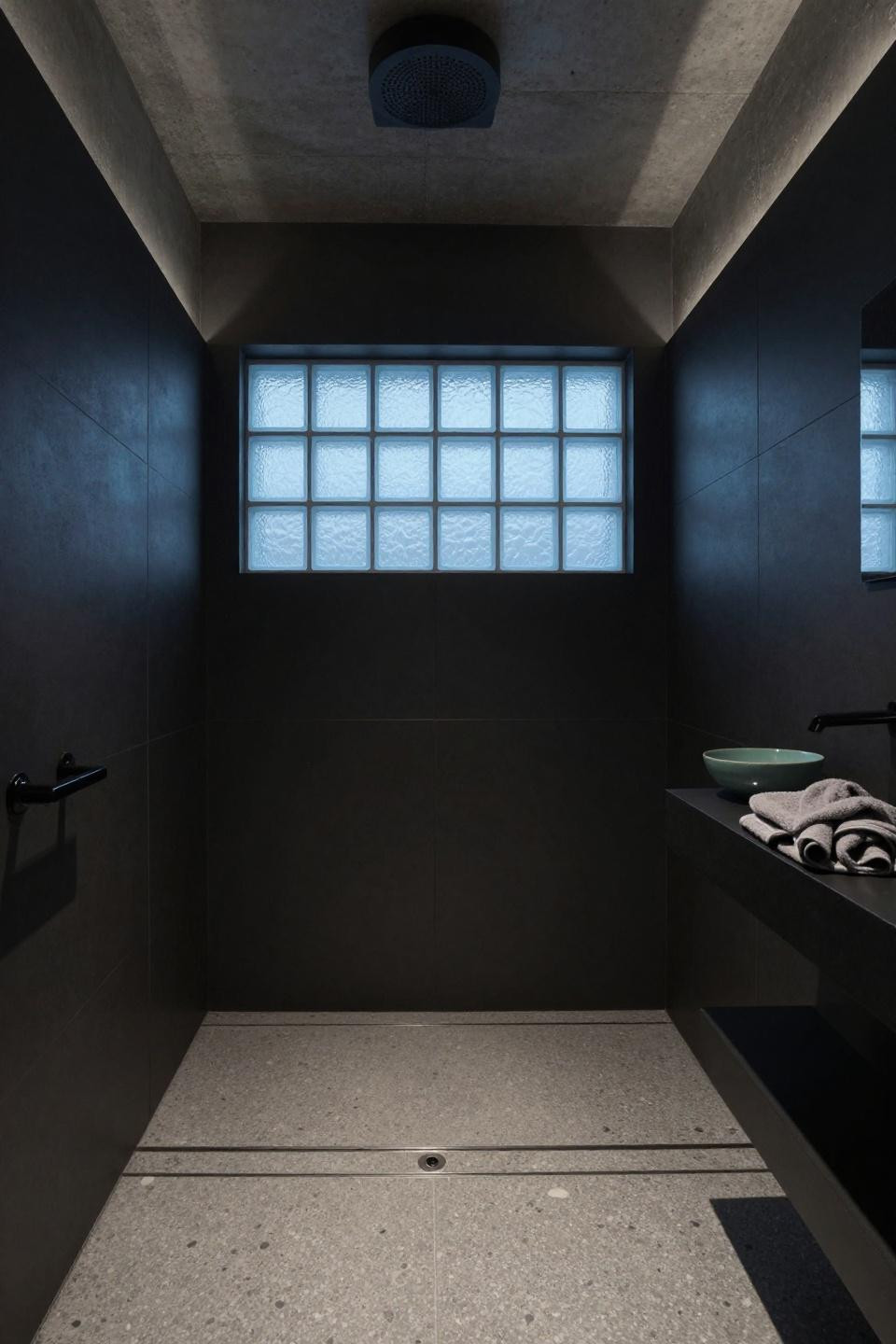
Matte black tile absorbs light instead of reflecting it, which makes small spaces feel cocoon-like instead of cramped. Glass blocks bring in diffuse natural light without losing privacy. That ceiling-flush rainfall head creates rain, not spray. The teal ceramic dish pops against all that charcoal—small color moments matter in monochrome spaces. Polished terrazzo floors stay warmer than you’d expect. Best for urban bathrooms where you’re embracing the moody aesthetic fully.
White Oak Screen at 45-Degree Angle
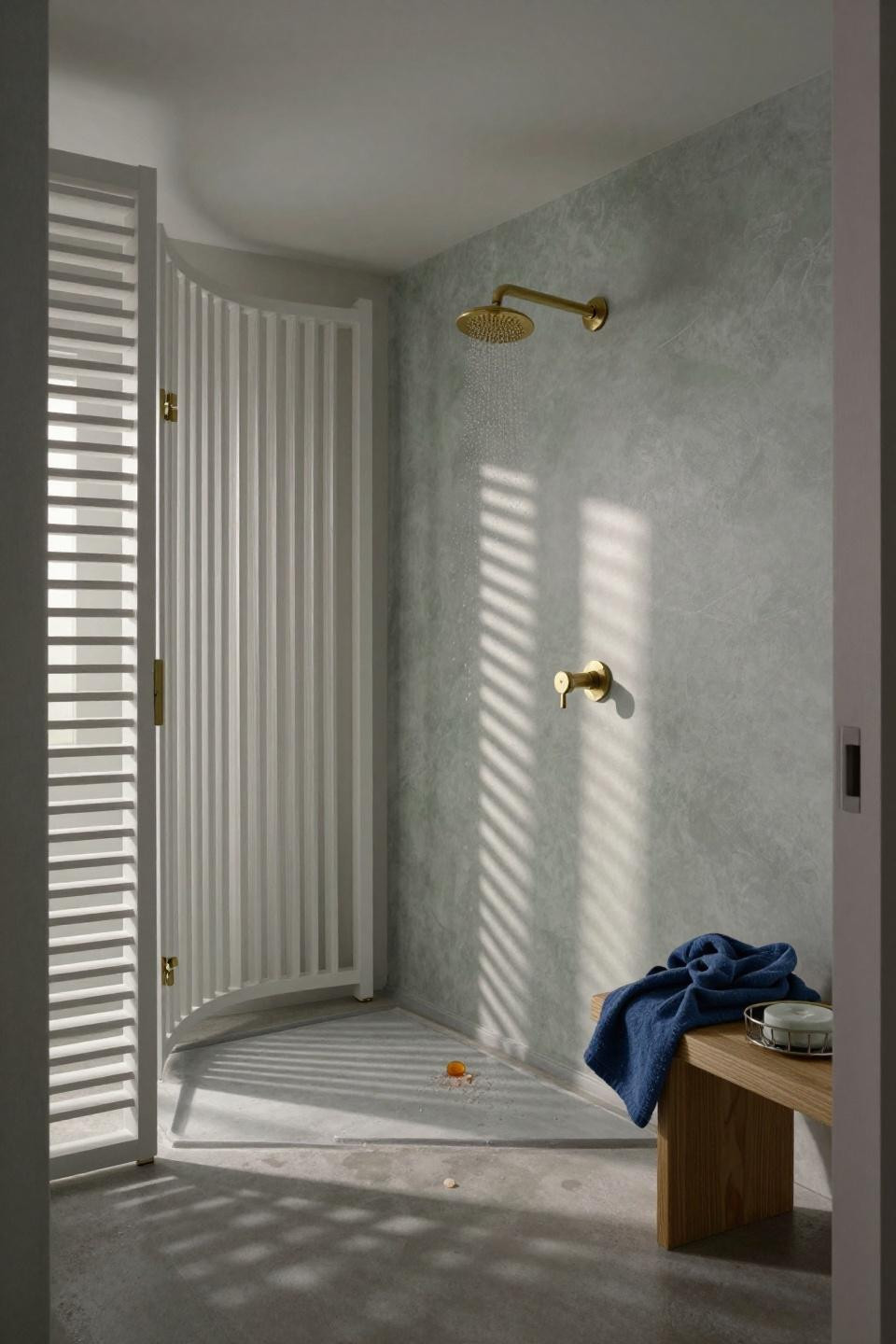
Angling the screen instead of running it straight adds architectural interest without trying too hard. Slatted white oak filters light into linear shadows that move throughout the day. Seafoam venetian plaster softens the whole composition (and hides water spots better than flat paint). Brushed brass on concrete—that material contrast is what makes it interesting. The teak bench doubles as towel storage. This works in coastal or contemporary spaces where natural materials feel right.
Japanese Timber-Frame with Vertical Slat Accent
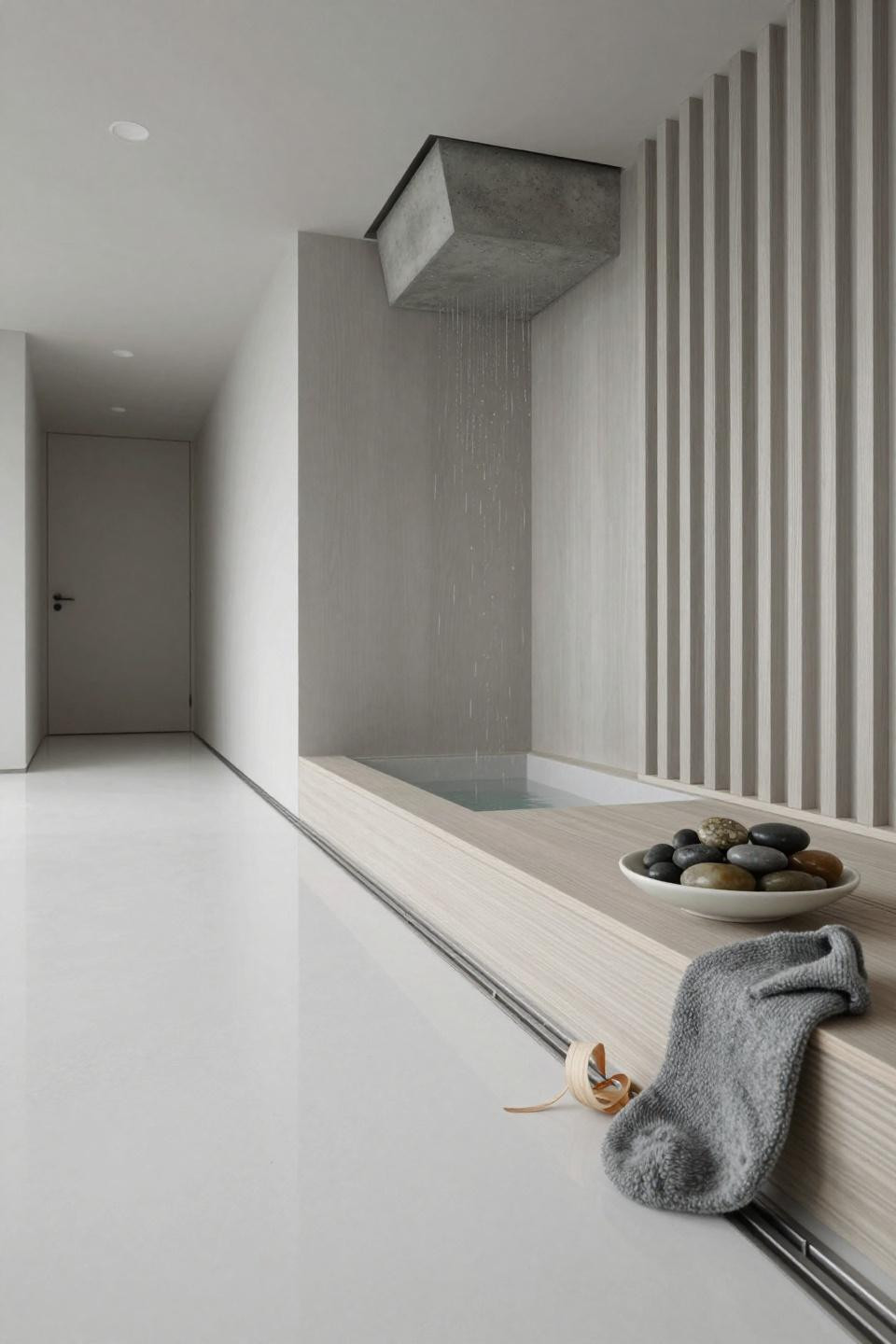
Pale ash timber frames the wet zone without overwhelming the minimalist aesthetic. That single vertical slat wall is all the accent you need. White epoxy resin floors with invisible micro-slope drains are the cleanest solution (and easiest to keep clean). The concrete rainfall head blends into the monochrome palette intentionally. Perfect for small bathrooms or powder rooms where every element has to earn its place. The grey wool sock draped over the step platform? That’s real life, not styling.
Reclaimed Brick Portal with Clay Plaster
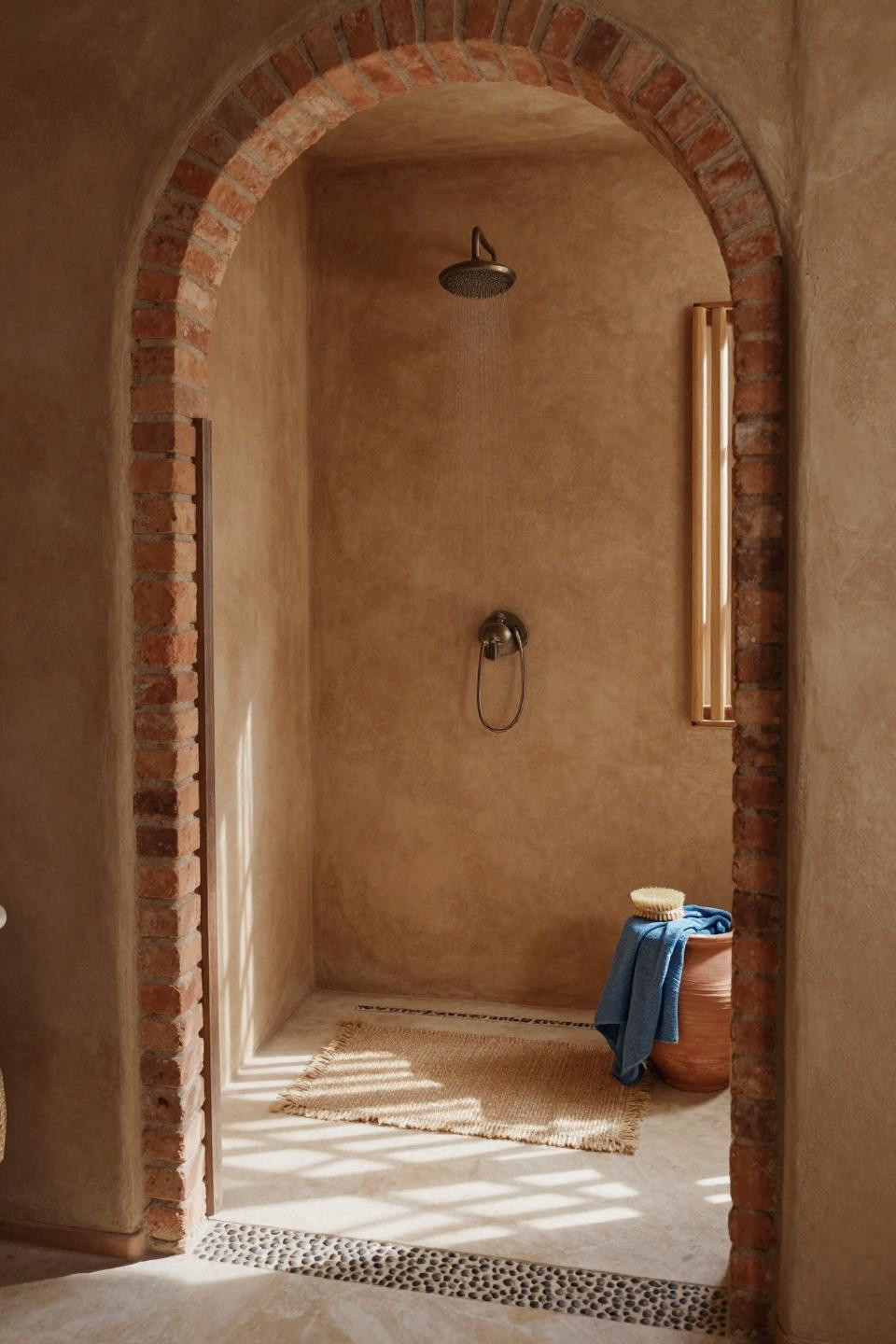
Hand-arched reclaimed brick creates a portal that feels centuries old, even in new construction. Ochre clay plaster on the interior walls brings warmth without competing with the brick. That aged bronze rainfall head with natural patina is the only choice here—shiny chrome would ruin it. The textured pebble drain channel is functional sculpture. This works in bohemian or rustic spaces where imperfection is the aesthetic. The algae stain on the lower brick? Leave it.
Whitewashed Brick with Herringbone Timber
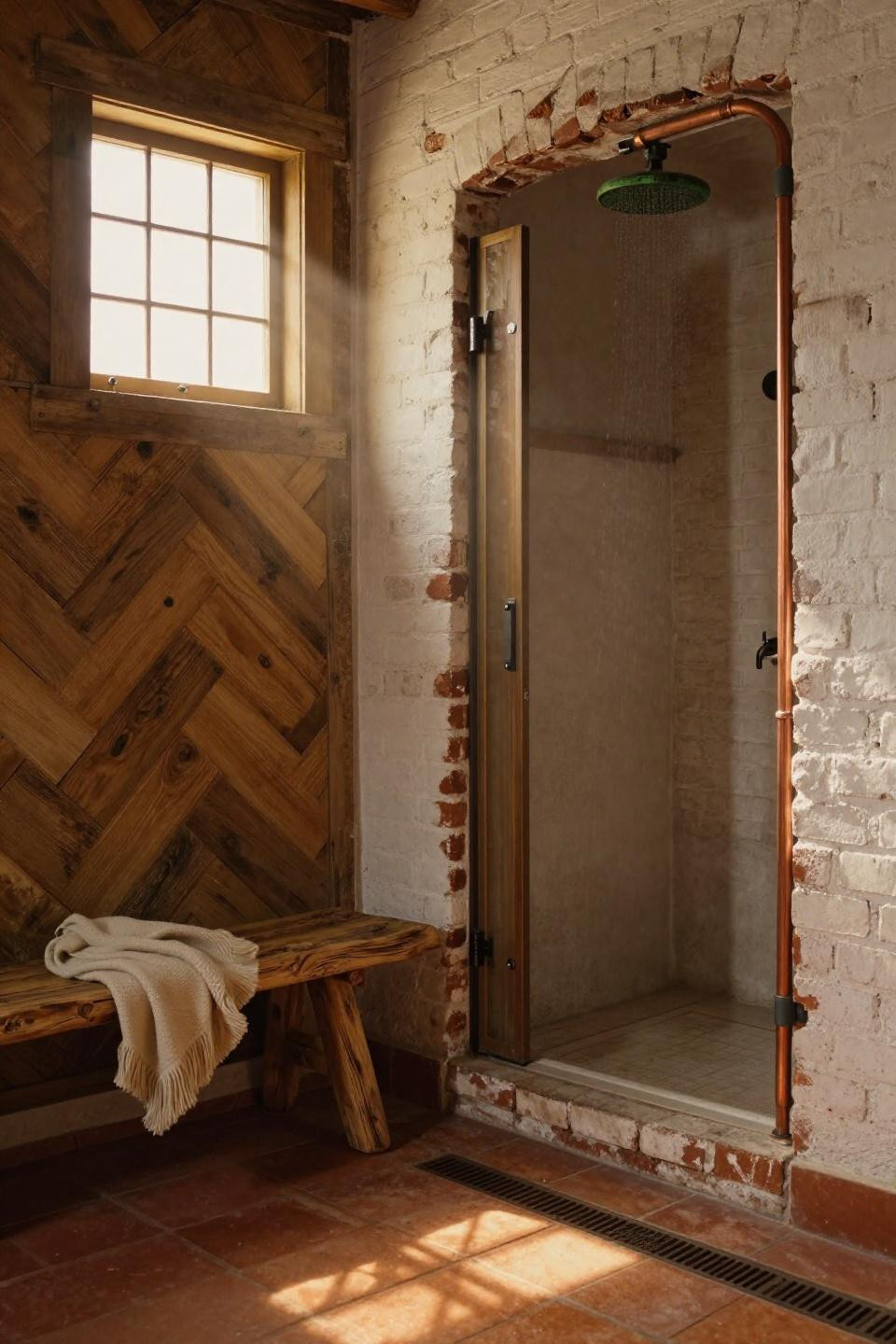
Whitewashed brick softens rustic without going full farmhouse Pinterest. Reclaimed timber in herringbone pattern adds movement to the vertical plane. Exposed copper pipe with green patina at the joints—that’s honest plumbing as design. Terracotta tile floors age beautifully with water exposure (unlike porcelain that just looks dirty). The porthole window casting circular light is accidental magic. Great for country houses or renovated barns where you’re celebrating the original bones.
Blackened Steel Angle-Iron Frame on Concrete
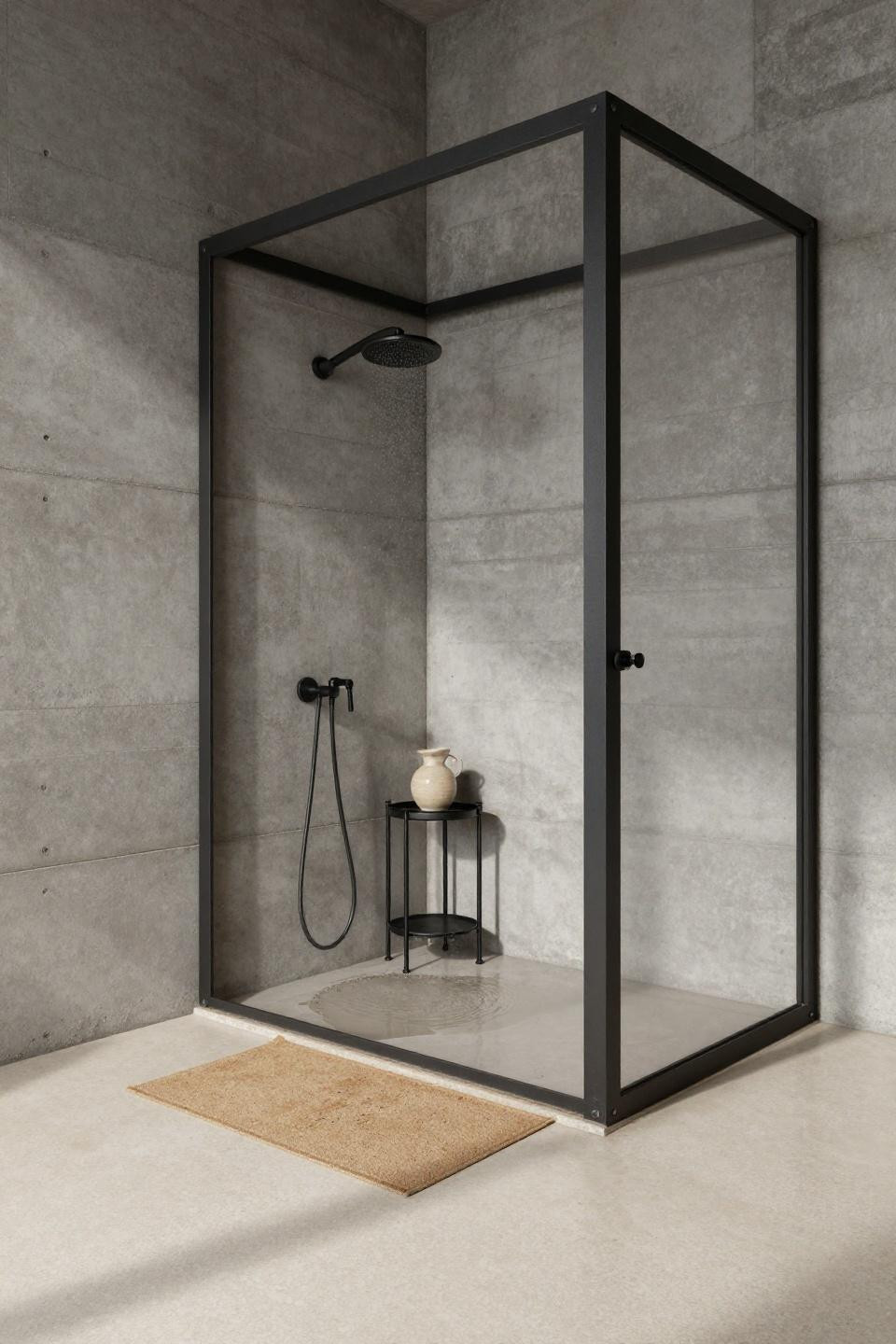
Raw concrete walls with blackened steel framing—that’s industrial without trying to be trendy. The warm white polished resin floor keeps it from feeling like a prison shower. Matte black rainfall head on the left column creates asymmetry that works. That camel canvas bath mat absorbing water at the threshold is both practical and a color strategy. This aesthetic thrives in lofts or modern farmhouses where utilitarian design is celebrated, not hidden.
Pale Birch Plywood Bench in Subway Tile Niche
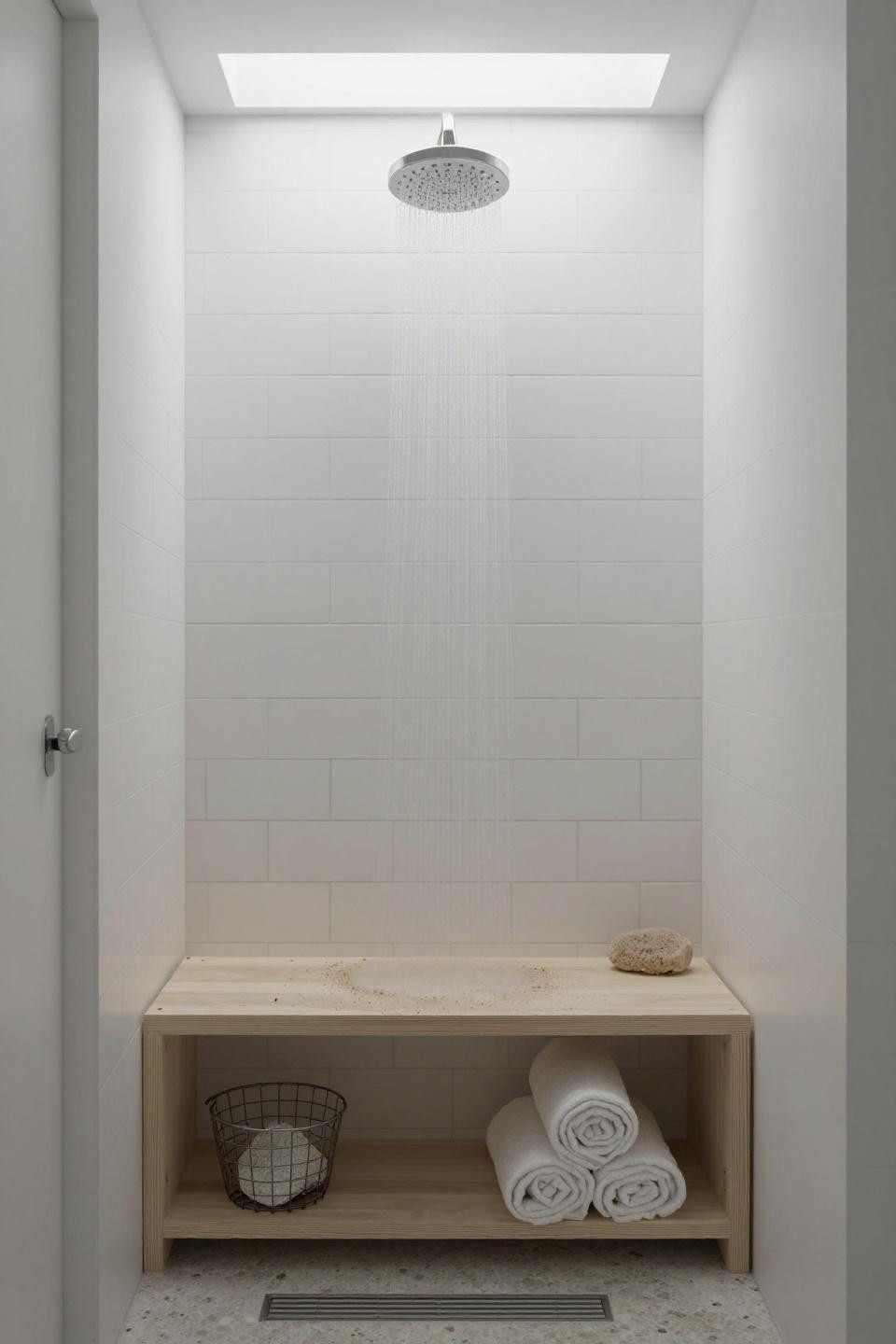
Integrated benches that match the surround always look more expensive than aftermarket add-ons. White subway tile with grey grout is timeless because it’s not trying to be anything else. Chrome fixtures stay classic in Scandinavian spaces where warmth comes from wood, not metal. The river stone floor with linear drain brings organic texture without pattern chaos. Rolling the white linen towel on the wooden shelf is practical styling—it actually makes sense there.
Hand-Carved Honey Limestone with Nested Vessels
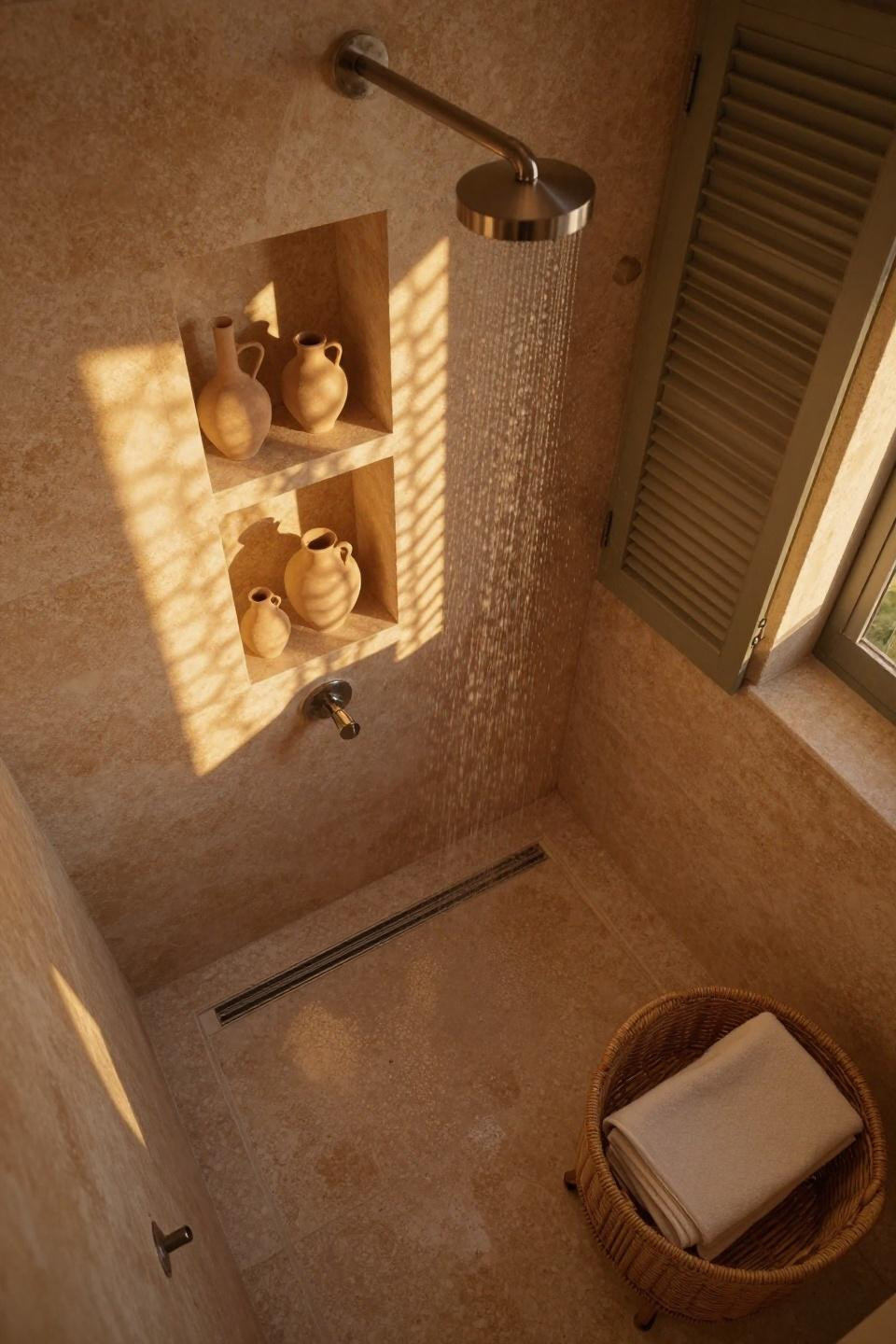
That carved niche holding sand ceramic vessels—that’s custom millwork in stone form. Honey limestone develops character with age and water exposure; don’t seal it to death. The louvered shutter creates honeycomb shadow patterns that change throughout the day. Travertine floors wet are the entire Mediterranean vibe. Brushed nickel fixtures stay subtle against dramatic stone. This is for bathrooms where the shower is the statement, not an afterthought. The hairline crack catching warm light? That’s ancient stone being honest.
Charcoal Geometric Relief Opposite White Subway
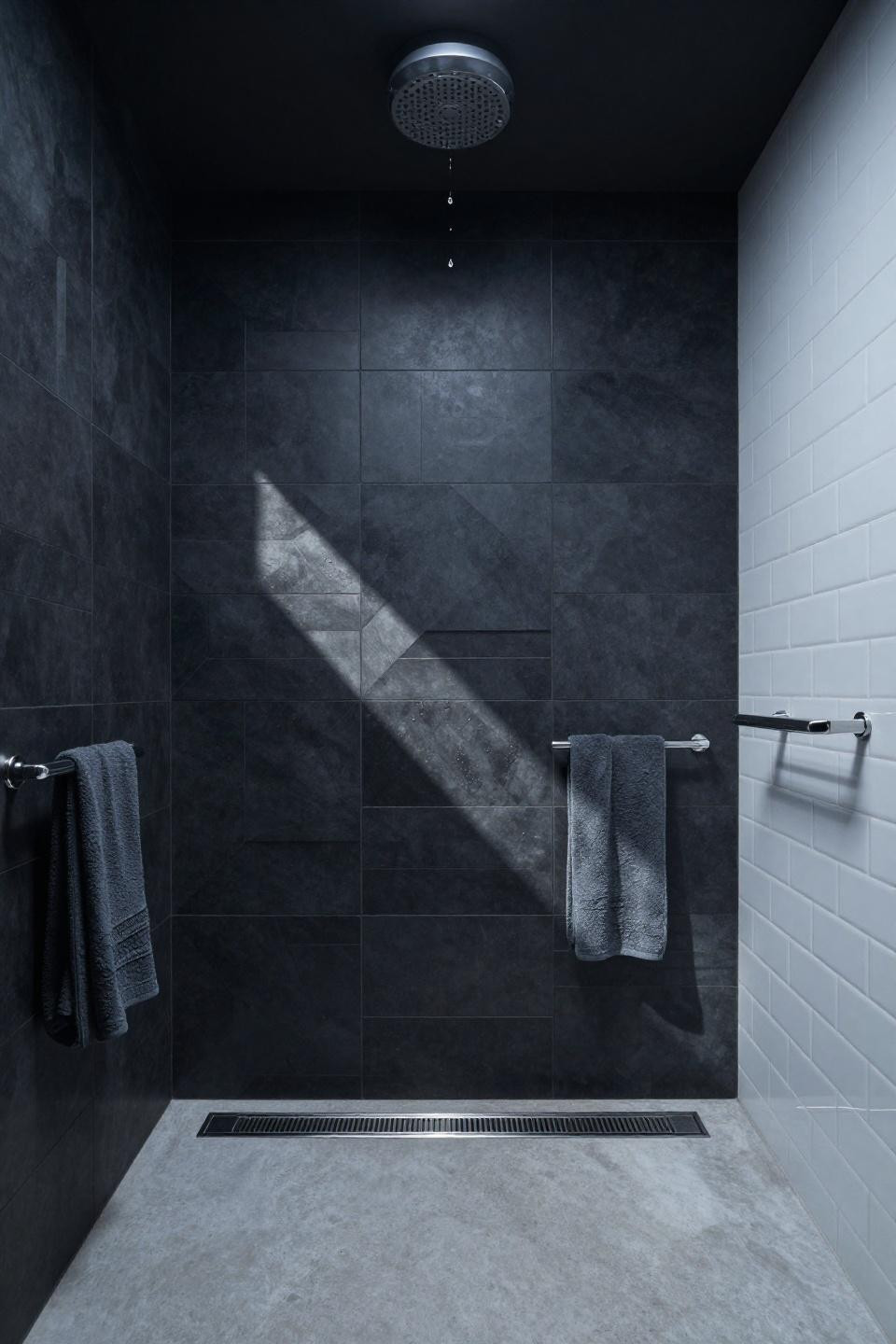
Geometric relief tile on one wall, white subway on the other—that contrast defines the space without needing doors. Polished concrete with integrated stainless linear drain is the cleanest solution for compact urban wet rooms. The matte black ceiling rainfall head disappears into the dark tile. That single water droplet suspended on black catching light is accidental perfection. Works best in small bathrooms where every surface choice has to do double duty.
Travertine Feature Wall with Cedar Slat Accent
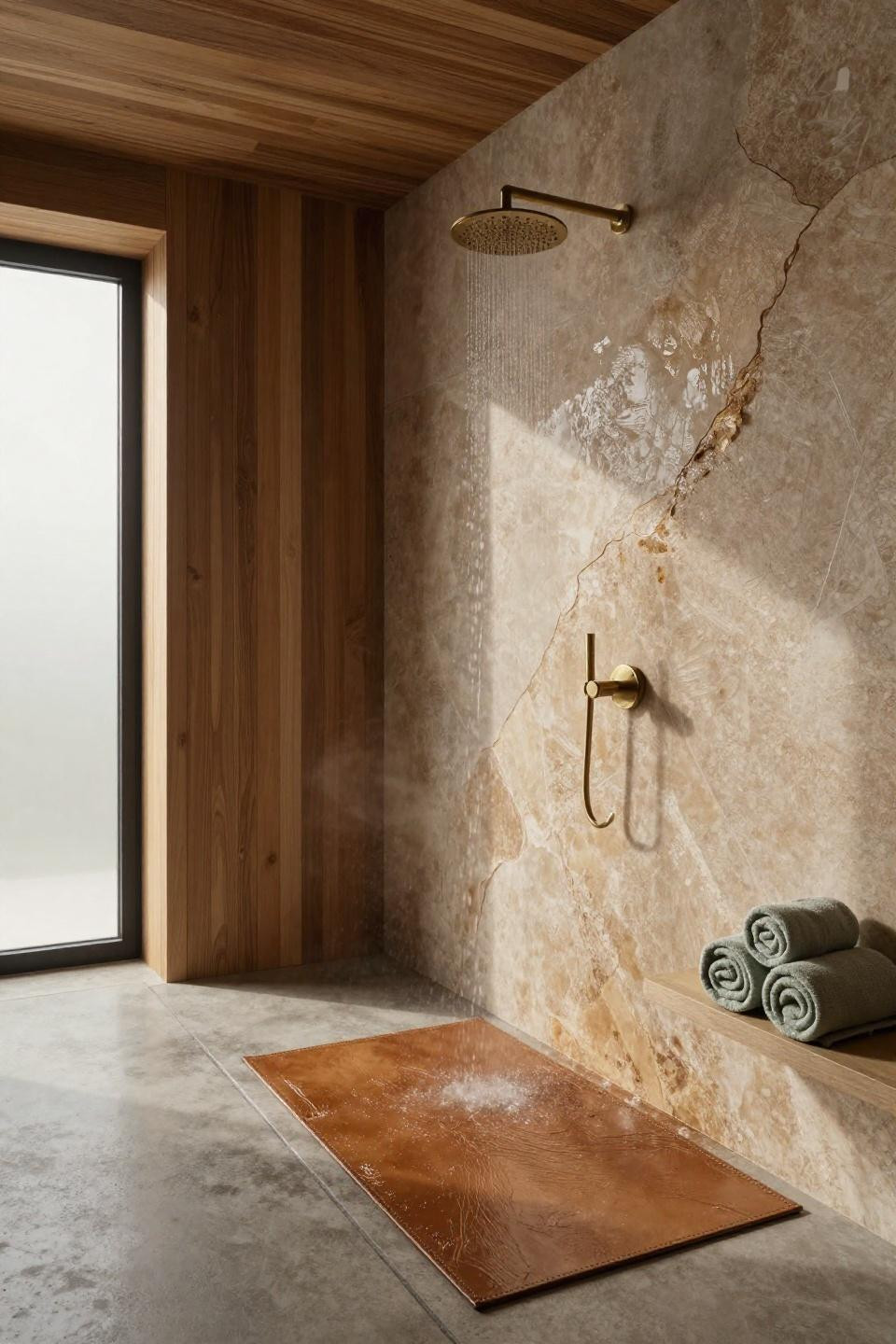
Water cascading down that organic-edged travertine wall is the whole show. Cedar slat accent wall brings warmth without competing with the stone. Polished concrete sloping to linear drain handles the water flow invisibly. Brass rainfall head mounted high keeps the focus on the stone feature. The cognac leather bath mat at the threshold adds warmth your feet will thank you for. This layout needs solid waterproofing behind that stone wall—water finds every gap. Worth it for the spa-like result.