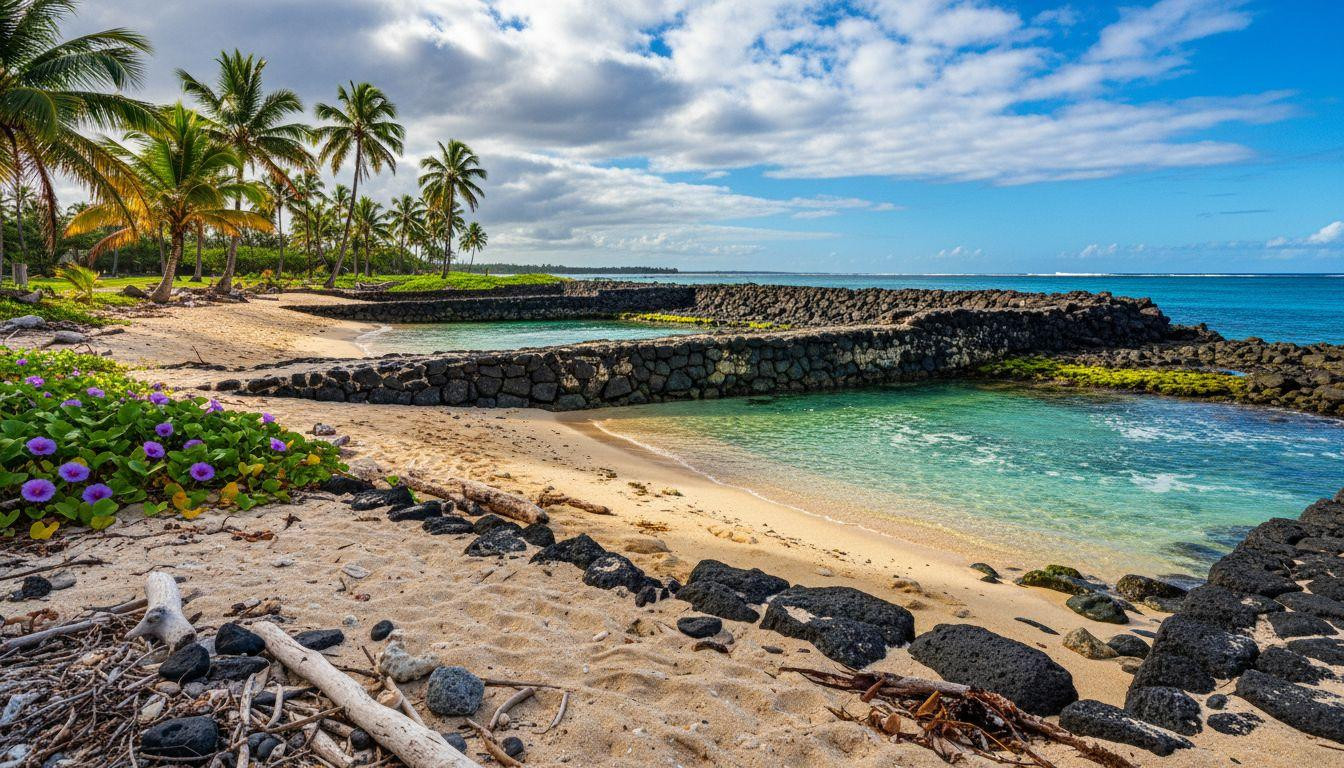
Kapalua Beach parking fills by 8am. Resort guests claim the sand. Rooms cost $400-600 nightly for Maui’s northwest shore access. Nine miles across the channel, Waialua Beach on Molokai offers the same shallow turquoise bay, the same protected snorkeling, the same white sand. Vacation rentals run $150-200. The beach stays empty most mornings.
I walked Kapalua at noon in March 2026. Families covered every shaded spot. Beach clubs charged entry. The water was beautiful but the scene felt managed.
Waialua felt different. Twenty cars in the unpaved lot. Ancient Hawaiian rock walls creating natural pools. Black basalt rubble against white sand. The quiet made sense.
Why Kapalua costs more for less space
Maui hosted 60,000 visitors daily in December 2024. West Maui resorts draw 500-1,000 people to Kapalua Beach on peak days. March shoulder season drops that to 300-600. Still crowded by 10am.
Molokai sees under 100,000 visitors annually island-wide. Waialua Beach gets maybe 50 people on a busy day. Most days fewer than 20. The difference shows in parking, sand space, and snorkel conditions.
Accommodations tell the story. Kapalua beachfront properties average $250-295 nightly in March 2026. Molokai vacation rentals near Waialua run $150-200 for comparable space. No resort fees. No valet parking at $35 daily. Free beach access with no restrictions.
What makes Waialua different
The protected bay and volcanic walls
Ancient Hawaiians built loko i’a fishpond walls here between 1400-1800 AD. Stacked black basalt for aquaculture. The walls run 500-1,000 feet along the shore, standing 3-6 feet high. Weathered but intact.
These create natural pools 10-50 feet across, 2-6 feet deep. The rough basalt contrasts sharply with white sand. At high tide the pools fill with clear water. Fish gather in the protected shallows. Kids snorkel safely inside the ancient enclosures.
Kapalua has fringing coral reef. Beautiful but exposed to currents. Intermediate skill level recommended. Waialua’s rock wall protection makes it beginner-friendly. The water stays calm even when offshore swells build.
Old Hawaii atmosphere without resort infrastructure
Local fishing boats arrive at Waialua between 5-8am. They pull up on the sand. Unload catches. Leave by mid-morning. No beach clubs. No cabana rentals. No managed activities.
St. Damien Church sits 2 miles away. Built in connection with Father Damien’s 19th-century work at Kalaupapa leprosy colony. Kanemitsu Bakery in Kaunakakai (20 miles east) opens at 5:30am. Hot bread costs $5-10. These are the landmarks. Not resorts.
Maui’s economy runs 70% on tourism. Molokai resists that model. The island keeps its unhurried pace. Locals prioritize preservation over development. You feel it at Waialua in the absence of crowds and commerce.
What you actually do here
Snorkeling and beginner waves
The bay stays shallow. Three feet deep 100 feet from shore. Protected especially inside the old rock wall sections. Perfect for kids. Bring your own snorkel gear or rent in Kaunakakai for $20 daily.
Waves max out at 1-2 feet. One of Molokai’s only beginner surf spots. Slow rollers ideal for longboards. High tide brings the best conditions. Morning winds stay light before trades pick up afternoon.
Boogie boarding works in the gentle shore break. Tide pools form in the volcanic rubble at low water. Fish schools visible from shore in the clear shallows. Similar protected coves exist on the Big Island but Waialua offers easier access.
Nearby cultural sites and local food
Halawa Valley lies 35 miles northeast. Ancient fishponds there date to 650 AD. The drive takes 1.5 hours on narrow Highway 450. Some sections require 4WD and permits. Worth it for the historical context.
Kaunakakai town (10 miles from Waialua) has local plate lunch spots. $15-25 for fresh poke, kalua pork, poi. Kanemitsu Bakery’s manju (sweet buns) are a morning tradition. The general store sells supplies and bait from the same counter.
West Molokai volcanic formations require 4WD. Rough dirt roads lead 25 miles to Maunaloa area (4,961 feet elevation). Remote beaches there see even fewer visitors. Waialua offers the best balance of access and emptiness.
The morning difference
I arrived at Waialua at 6:45am in March. Sunrise touched the black basalt first. Then the white sand turned gold. The bay stayed mirror-flat. One fishing boat heading out. Otherwise empty.
By 8am three families had arrived. Kids playing in the rock wall pools. A couple snorkeling the reef edge. Still quiet. Still calm. The kind of morning Kapalua lost decades ago to resort development.
The trade winds picked up by noon. Gentle 10-20 mph. Waialua’s east coast position keeps it more sheltered than Kapalua’s exposed northwest shore. Water temperature hit 74°F. Air temperature 78°F. Perfect March conditions.
Your questions about Waialua Beach answered
How do you get there and what does it cost
Fly Honolulu to Molokai Airport (MKK). Flights run $100-200 round-trip. The 45-minute flight beats Maui’s crowds. Rent a car at the airport. Economy $50-70 daily, SUV $80-100. Drive 35-45 minutes (23 miles) on Highway 460 then 450. Paved but narrow. Free parking at the beach. No fees or permits needed.
Why do locals protect this place
Molokai’s population of 7,345 wants to avoid Maui’s over-tourism. The island sees 95% fewer annual visitors than Maui’s 2.34 million. Locals work to preserve Hawaiian culture and reef health. Waialua’s ancient fishpond walls represent pre-contact aquaculture traditions. Tourism pressure would threaten both the historical structures and the calm atmosphere families depend on.
How does it compare to other Hawaii snorkel beaches
Waialua offers beginner-level conditions similar to other protected Hawaiian bays but with 95% fewer daily visitors than Kapalua. The volcanic rock wall creates unique natural pools not found at Maui resort beaches. Kauai’s beaches can be dangerous. Waialua stays safe and shallow. Cost runs 30-50% below Maui for comparable experiences.
The rock wall pools fill at high tide around 11am. Fish gather in the protected shallows. The black basalt stays rough underfoot. The turquoise water stays clear. And the beach stays quiet. Same Hawaii. Different century.