“`html
Bryce Canyon’s Navajo Loop drops 550 feet into hoodoo forests where knees ache on the climb back and crowds fill the switchbacks by 9am. Three miles west on Highway 12, Mossy Cave Trail climbs 150 gentle feet to the park’s only named waterfall in under an hour. Families with toddlers finish it. The pioneer canal you walk beside still irrigates Tropic’s farms 134 years after Mormon settlers carved it by hand.
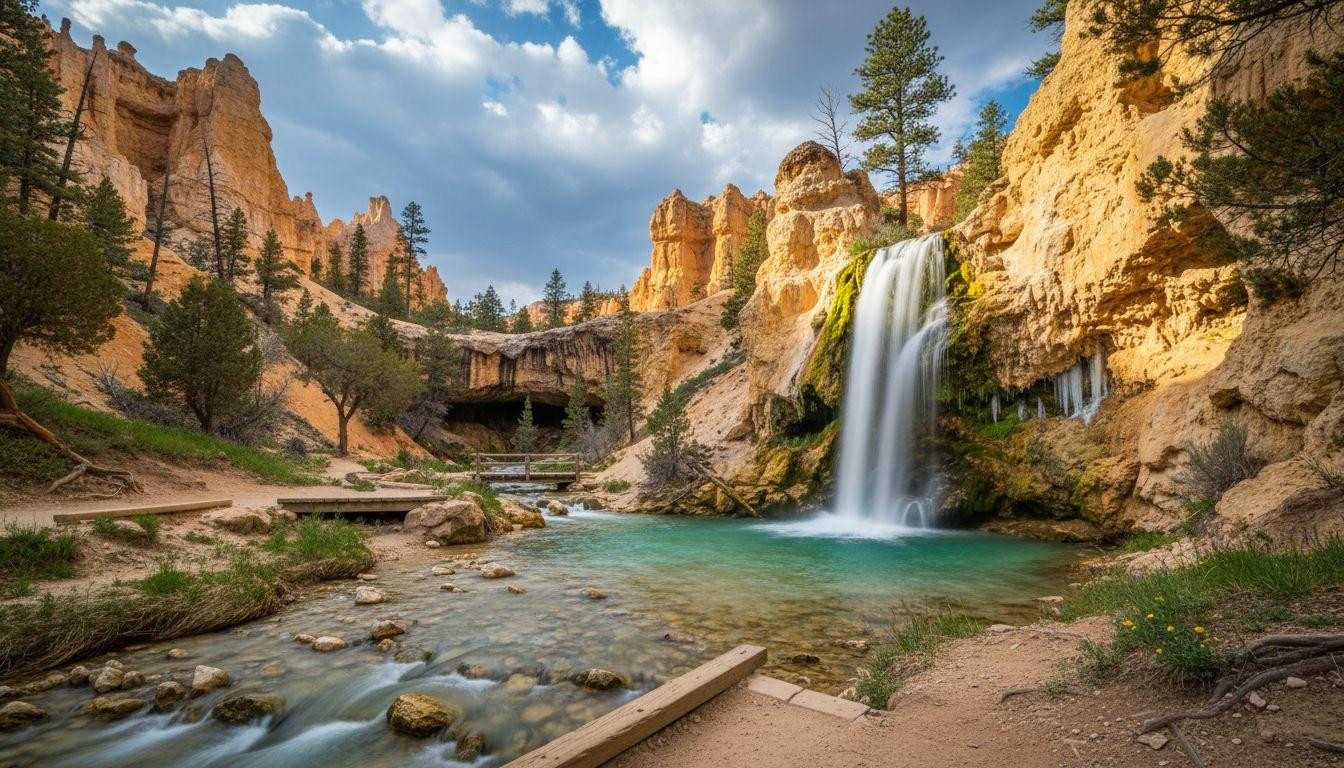
This is the trail locals recommend when visitors ask for Bryce magic without the punishment. The waterfall cascades 20 feet over golden hoodoos into a turquoise pool fed by clear ditch water. A mossy grotto drips with icicles through April. The parking lot holds 15 cars and fills slower than the main park’s overflow chaos.
Why Navajo Loop punishes what Mossy Cave rewards
Navajo Loop’s 1.3 miles descend 550 feet through Wall Street’s narrow slot between 100-foot cliffs. The hoodoos earn their fame. But the return climb exhausts families by the third switchback. National Park Service data shows 1 to 2 hours average completion time. Most visitors underestimate the altitude at 8,000 feet.
The trail has no water features. No streams, no falls, no pools to cool off in July heat. Parking at Sunset Point overflows by mid-morning in summer. Shuttles run when crowds peak. The experience delivers iconic Bryce views but taxes bodies in ways that surprise flatlanders.
Mossy Cave sits outside the main park fee area on Highway 12 between mile markers 17 and 18. The same $20 to $35 vehicle pass covers it. But the location keeps it under the radar. Visitors driving from Tropic to the main park often miss the small pullout. That oversight creates the advantage.
The landscape that rewards gently
Golden hoodoos meet turquoise flow
The trail follows Tropic Ditch upstream through ponderosa pines and juniper. Golden-yellow hoodoos rise on both sides. The water runs clear and cold year-round. Three wooden bridges cross the stream where kids stop to watch minnows dart between rocks.
At 0.4 miles the trail splits. Left leads to the waterfall in 0.1 miles. Right reaches the mossy cave alcove. Most families do both. The waterfall drops 20 feet over a cliff face into a shallow pool. The sound echoes off the amphitheater walls. Spray mists your face on windy days.
The cave sits in a natural grotto with overhanging cliffs. Moss covers the walls in thick green carpets. Seeps drip constantly. In winter and early spring through April, icicles form in columns up to 6 feet long. The temperature inside drops 10 degrees cooler than the trail.
Price and crowd reality in March 2026
The park entry fee runs $20 for individuals on foot or bike, $30 per private vehicle, $35 for motorcycles. America the Beautiful annual passes work here. The fee covers 7 days. Gas in Tropic costs about $3.50 per gallon as of early 2026. The drive from Las Vegas takes 4.5 hours and burns roughly $50 in fuel.
Parking fills slower than main park lots. The 15-space pullout rarely overflows before noon even in summer. March sees low crowds. Most visitors skip Bryce in early spring. The weather runs 30 to 50 degrees Fahrenheit. Layers handle the temperature swings. Microspikes help if ice lingers on shaded sections.
The pioneer canal you walk beside
What 40 settlers built with pickaxes
Tropic Ditch took two years to complete between 1890 and 1892. Forty Mormon pioneers hand-dug the 10-mile canal with pickaxes and shovels. They needed water to irrigate the arid valley below Bryce’s cliffs. The ditch diverts East Fork Sevier River water through a channel that drops gradually toward town.
The engineering still works. Farmers in Tropic use the same water today for alfalfa and hay fields. The canal created the erosion canyon you hike through. Water carved the soft Claron Formation limestone faster than frost-wedging shapes the main park’s hoodoos. That makes this landscape different from classic Bryce geology.
Historical markers along the trail explain the construction. No plaques name individual pioneers. The work represented communal survival. Families depended on the harvest. The ditch meant the difference between staying and leaving. That context adds weight to the gentle stream beside you.
Family-friendly reality vs strenuous descents
The trail gains 150 feet over 0.8 miles roundtrip. The grade stays moderate. A 3-year-old completed it without help according to recent visitor accounts. The path is wide enough for side-by-side walking. Roots and rocks require attention but don’t demand scrambling.
Navajo Loop’s 550-foot descent strains knees on the return. The steep switchbacks challenge balance. Altitude affects breathing. Mossy Cave avoids that punishment. The climb spreads gradually. You finish without exhaustion. That difference matters for families with young kids or older adults who want Bryce beauty without the physical cost.
No strollers fit the trail. The bridges have steps. But kids who walk independently handle it fine. The dual payoff of waterfall and cave keeps children engaged. They choose which destination to visit first like a choose-your-adventure. That agency helps with motivation on the uphill sections.
Practical winter-spring magic
March through May offers the best of both seasons. Icicles linger in the cave through April. Snowmelt swells the waterfall flow. The air stays crisp at 30 to 50 degrees. Crowds remain low until Memorial Day weekend. You can hear the water without competing voices.
Evening light hits the waterfall around 5pm in late winter. The golden hour turns the hoodoos orange-pink. Shadows deepen in the grotto. The temperature drops fast after sunset. Bring layers and a headlamp if you stay late. The parking lot has no lights.
Highway 12 stays plowed all winter. The road rarely closes. Check current conditions at the Bryce Canyon visitor center before driving. The trailhead sits at 7,500 feet elevation. Snow can linger in shaded spots through March. Microspikes add traction on icy patches near the cave.
Your questions about Mossy Cave waterfall answered
When does the waterfall flow strongest?
Snowmelt peaks in April and May. The waterfall runs year-round but flows heaviest in spring. Summer reduces the volume slightly. Winter freezes sections into ice columns. The Tropic Ditch feeds the falls with diverted river water so it never dries completely unlike seasonal desert cascades.
Why do locals protect this trail’s quiet reputation?
Tropic residents prefer the main park absorbs crowds. Mossy Cave serves as the locals’ quick evening walk. The town has 530 residents. They value the trail’s accessibility without tour bus chaos. The location outside the main fee area core keeps it off most visitor itineraries. That geographic separation preserves the experience.
How does this compare to Zion’s Emerald Pools?
Emerald Pools sees extreme crowds in peak season. The lower pool trail runs 1.2 miles with 69 feet of gain. Mossy Cave offers similar ease with far fewer people. The waterfall height matches the lower Emerald Pool cascade. But Bryce’s high desert setting creates different geology and cooler temperatures than Zion’s red rock heat.
The stream runs clear beside you for the entire walk. Morning mist rises from the water in March when air temperatures hit freezing. The sound of flowing water mixes with canyon wren calls. You can sit on the rocks at the waterfall base and feel the spray. That quiet moment costs nothing beyond the park entry fee.
“`