
Victorian bathrooms have that heirloom thing going on. The ones that actually work? They mix period details with livable finishes—not museum pieces you’re afraid to use.
The Sage Green Move That Changed Everything
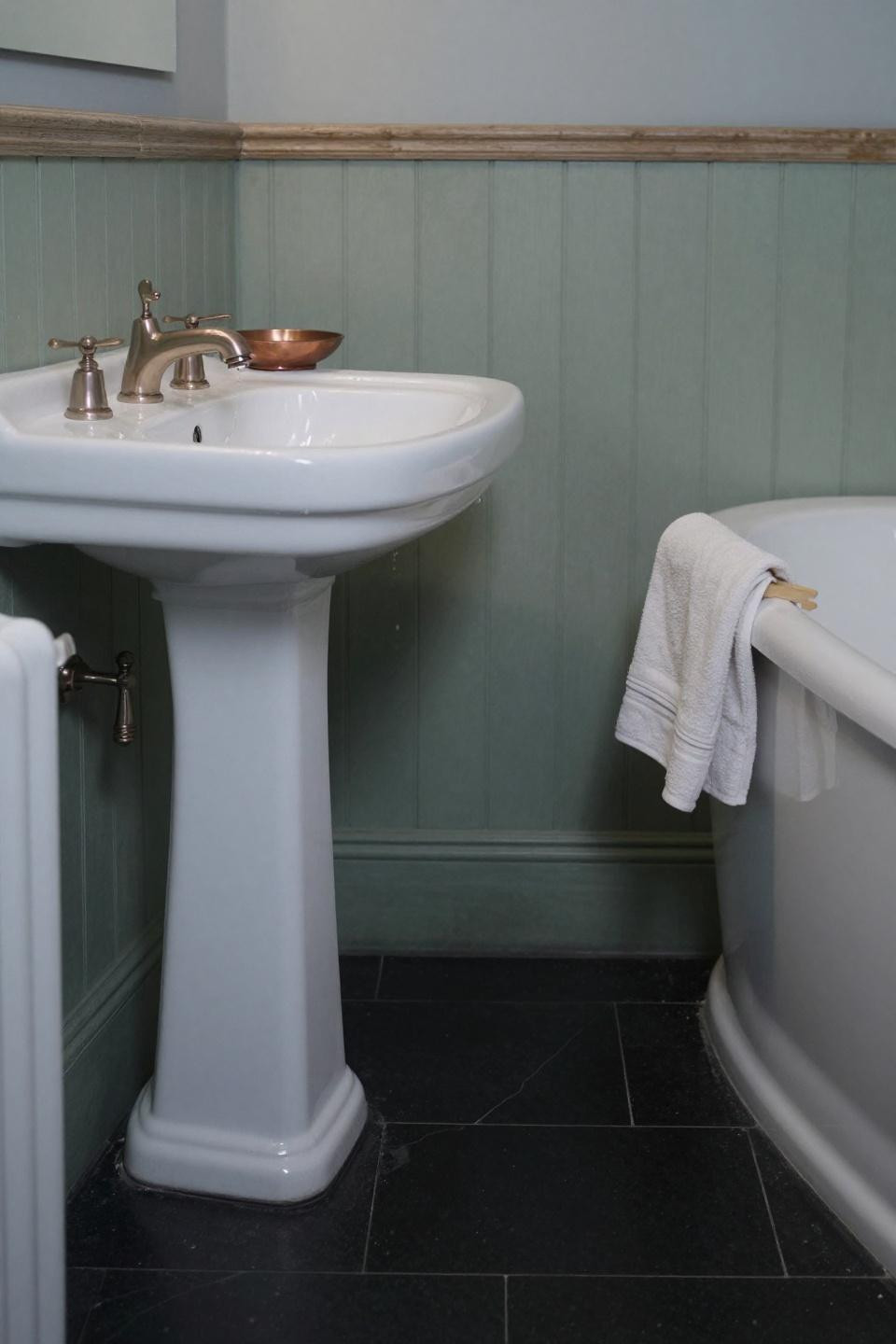
Sage suede-finish walls paired with weathered pine wainscoting—it’s the color combo that makes compact bathrooms feel intentional instead of cramped. That pedestal sink opposite the tub creates a galley layout that actually flows. The black slate floor grounds everything without screaming “renovation.” And honestly, the brushed copper soap dish does more heavy lifting than you’d think. Best for narrow Victorian bathrooms where white walls would feel cold.
Industrial Shelving That Doesn’t Look Tryhard
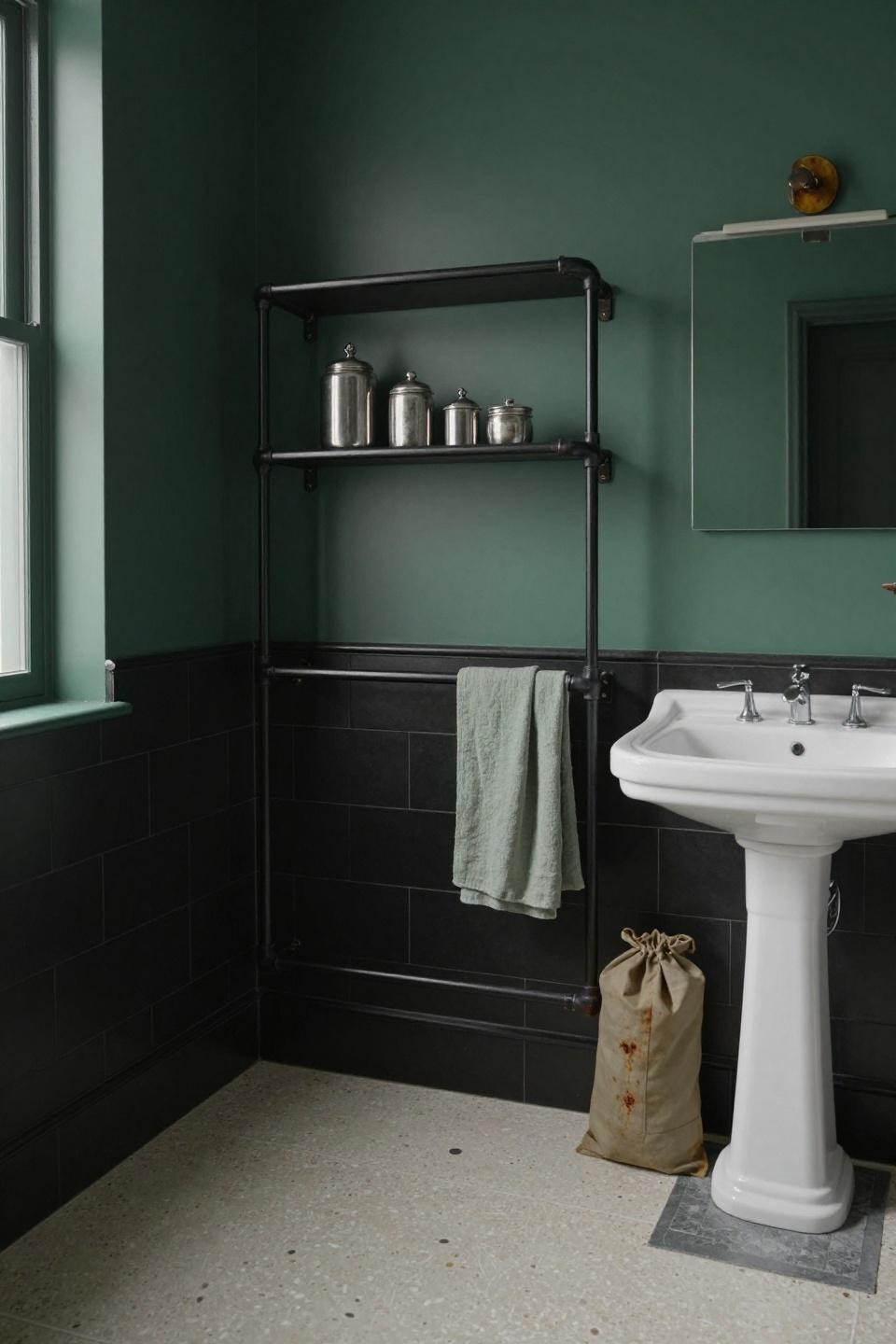
Blackened steel pipe shelving beside a pedestal sink—it’s storage without adding bulk. The forest green walls above black tile dado create that moody English terrace vibe West Elm tries to sell you but can’t quite nail. That terrazzo floor with slate inlays? Expensive-looking move that hides water spots better than plain white tile. The rust stain at the pipe bracket is the kind of patina you can’t fake (and shouldn’t).
Clawfoot Tub Placement Nobody Thinks About
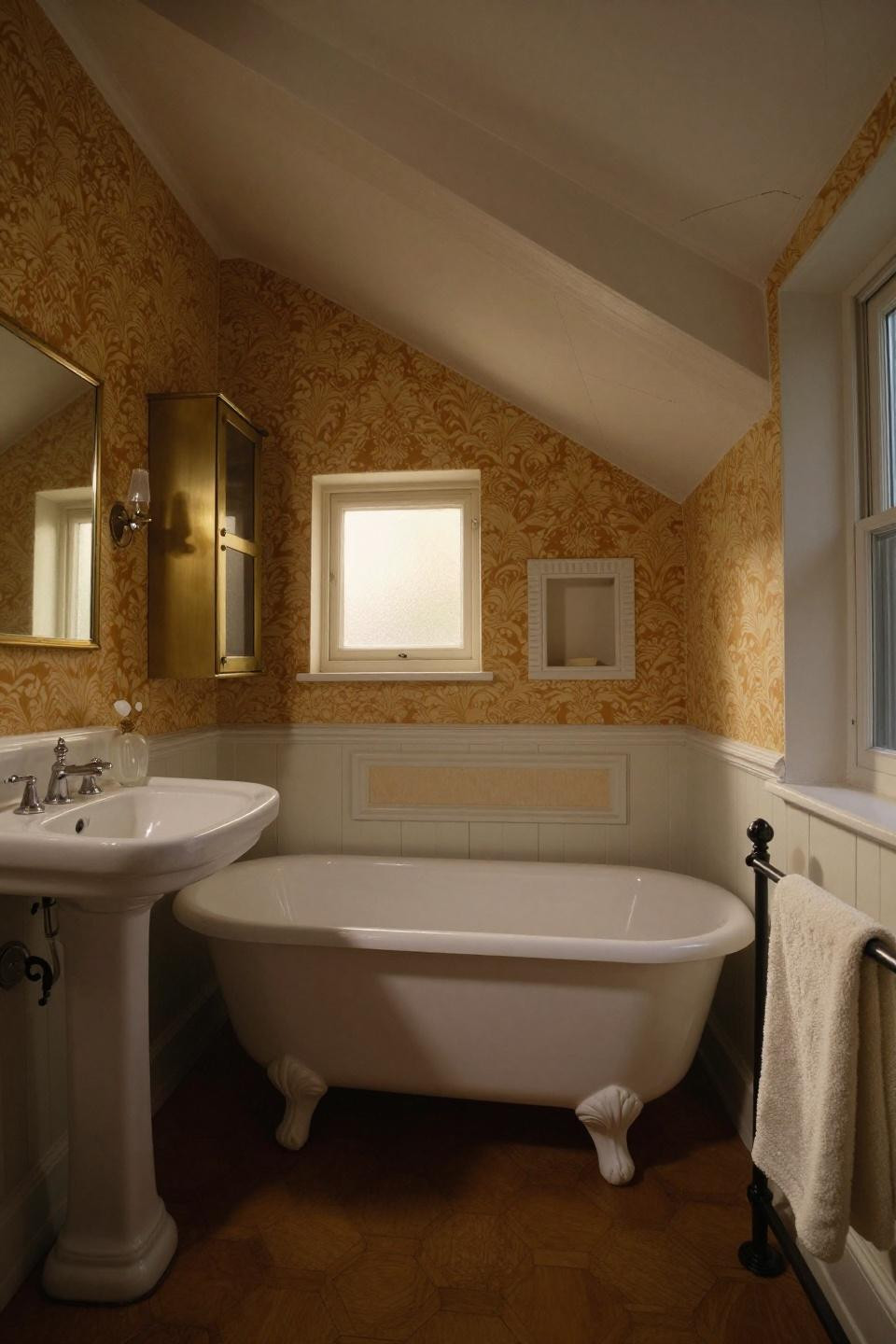
Running the tub lengthwise under a sloped ceiling maximizes floor space in cottage bathrooms. That mustard damask wallpaper against honey linoleum hexagons is bolder than most people go—but it works because the fixtures stay simple. The brass-framed medicine cabinet and recessed soap niche add function without breaking up the wall. I’d skip this layout if your ceiling height is already tight, but for period cottages it’s genius.
Why This Copper Tub Actually Makes Sense
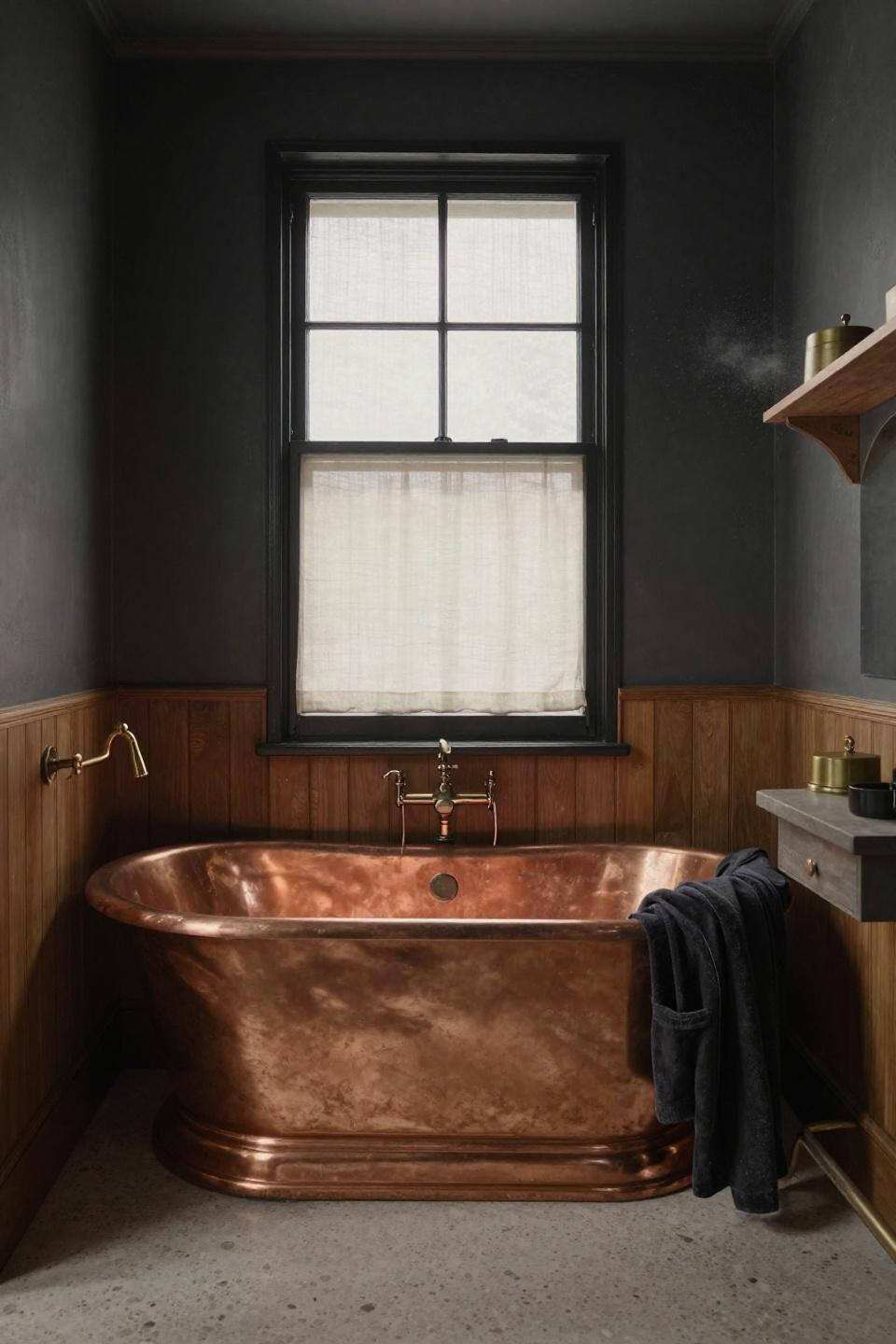
Copper holds heat longer than cast iron—practical, not just pretty. The blackened steel window frame mounted as a mirror is the kind of architectural salvage move that costs nothing at the ReStore but reads expensive. Charcoal limewash walls with visible trowel texture give you depth without pattern. Bleached oak wainscoting keeps it from going full moody. Great when you need warmth but hate the farmhouse look everyone else has.
Rolled-Rim Tubs Under Eaves That Don’t Feel Cramped
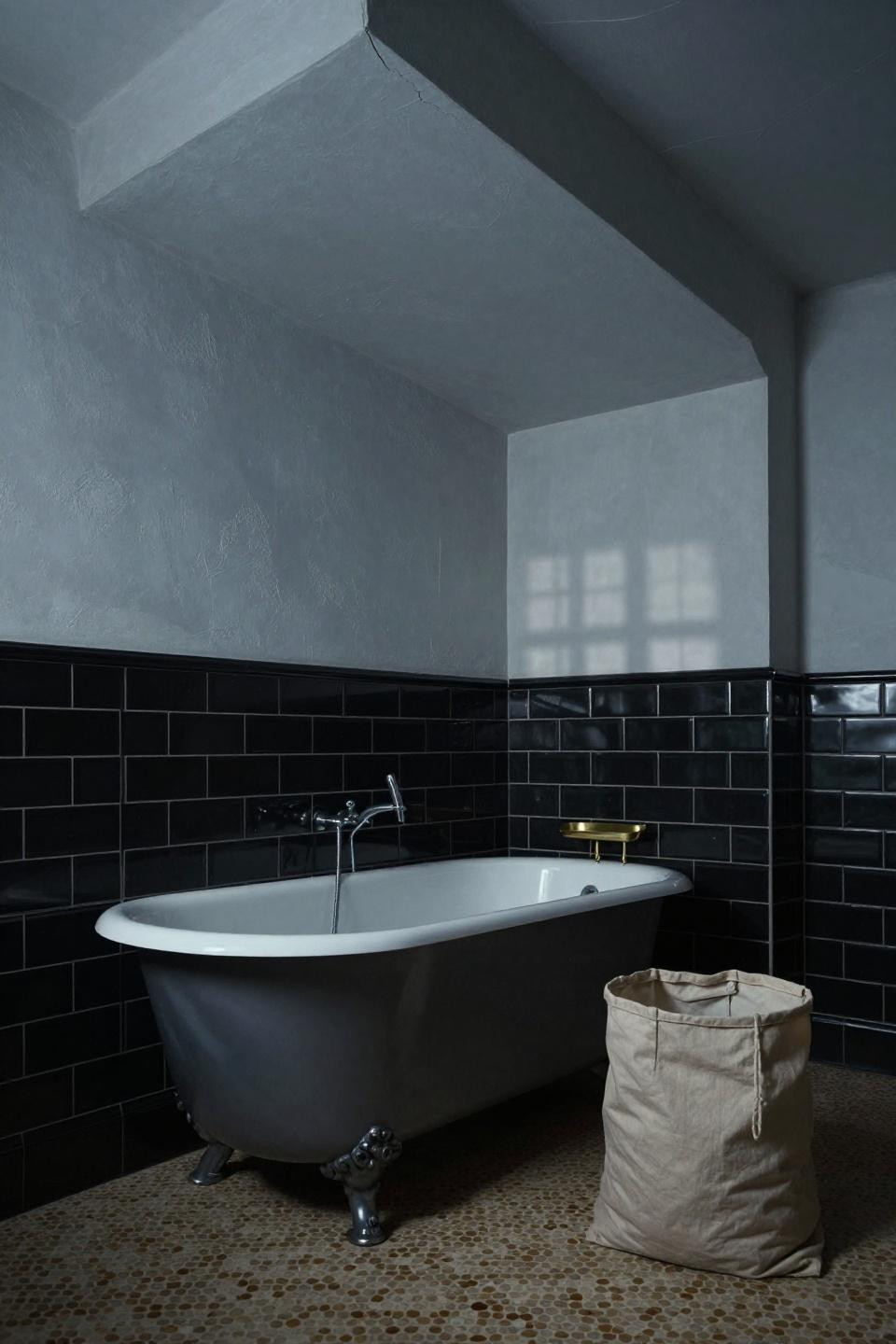
Diagonal placement of a cast-iron tub under deep eaves turns awkward architecture into a feature. The matte black subway tile wainscoting to chair rail creates a visual break that makes low ceilings feel intentional. Pale limewash walls show every hand-trowel mark—texture that photographs like expensive plaster. That encaustic floor in honey tones warms up the cool north light. Works in semidetached houses where the bathroom’s tucked under the roof.
The Alcove Trick That Adds Square Footage
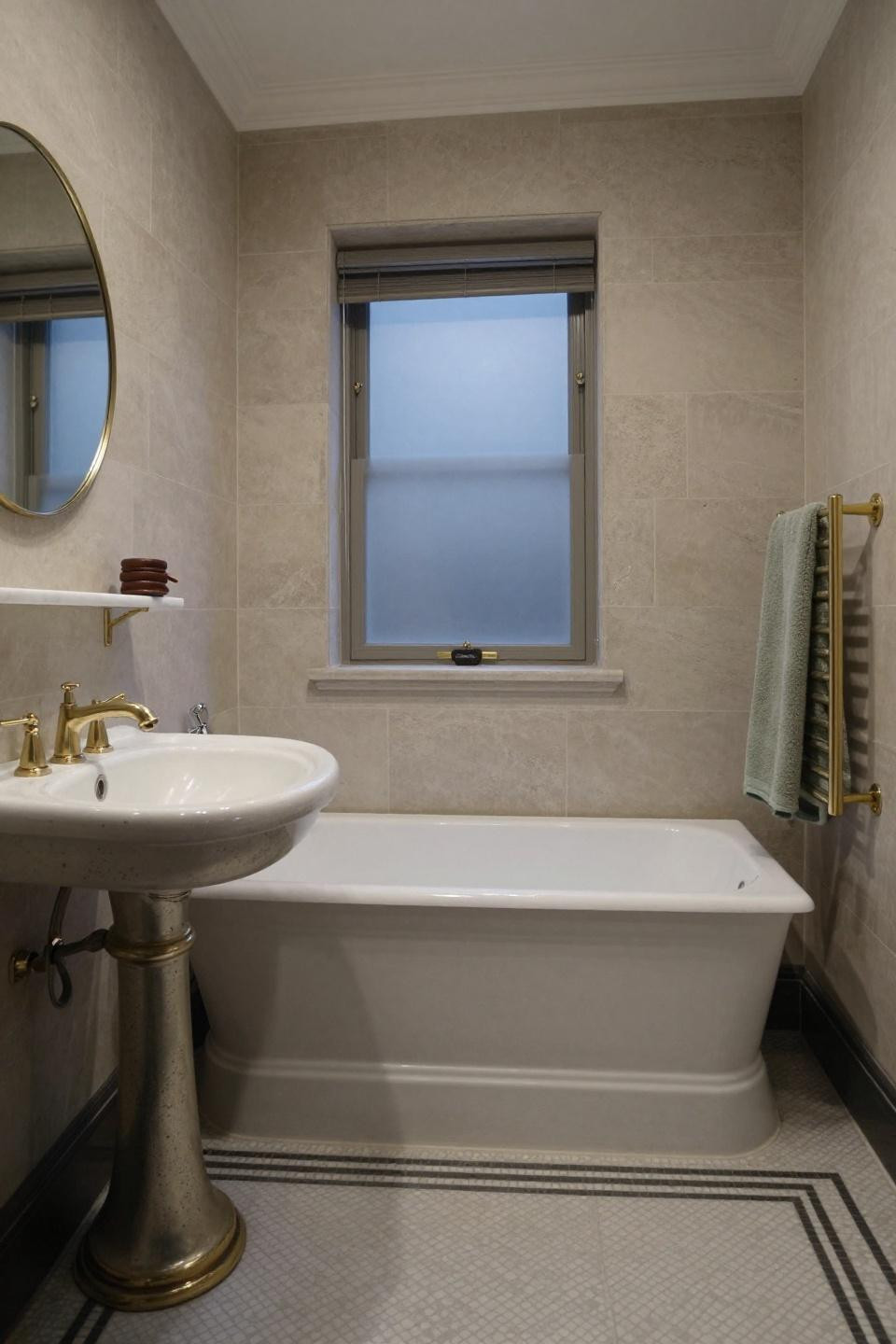
Dropping a soaking tub into an existing alcove preserves floor space for the pedestal washstand. Millstone-grey lime plaster walls age better than paint and hide minor plumbing mishaps. The all-white geometric encaustic floor with charcoal stripe keeps it crisp without feeling sterile. Polished brass rim on the tub—that’s the one splurge worth making. North-facing light keeps it from going too warm. I’d pick this layout for semi-detached houses with original alcoves you don’t want to demo.
Under-Stair Powder Rooms Done Right
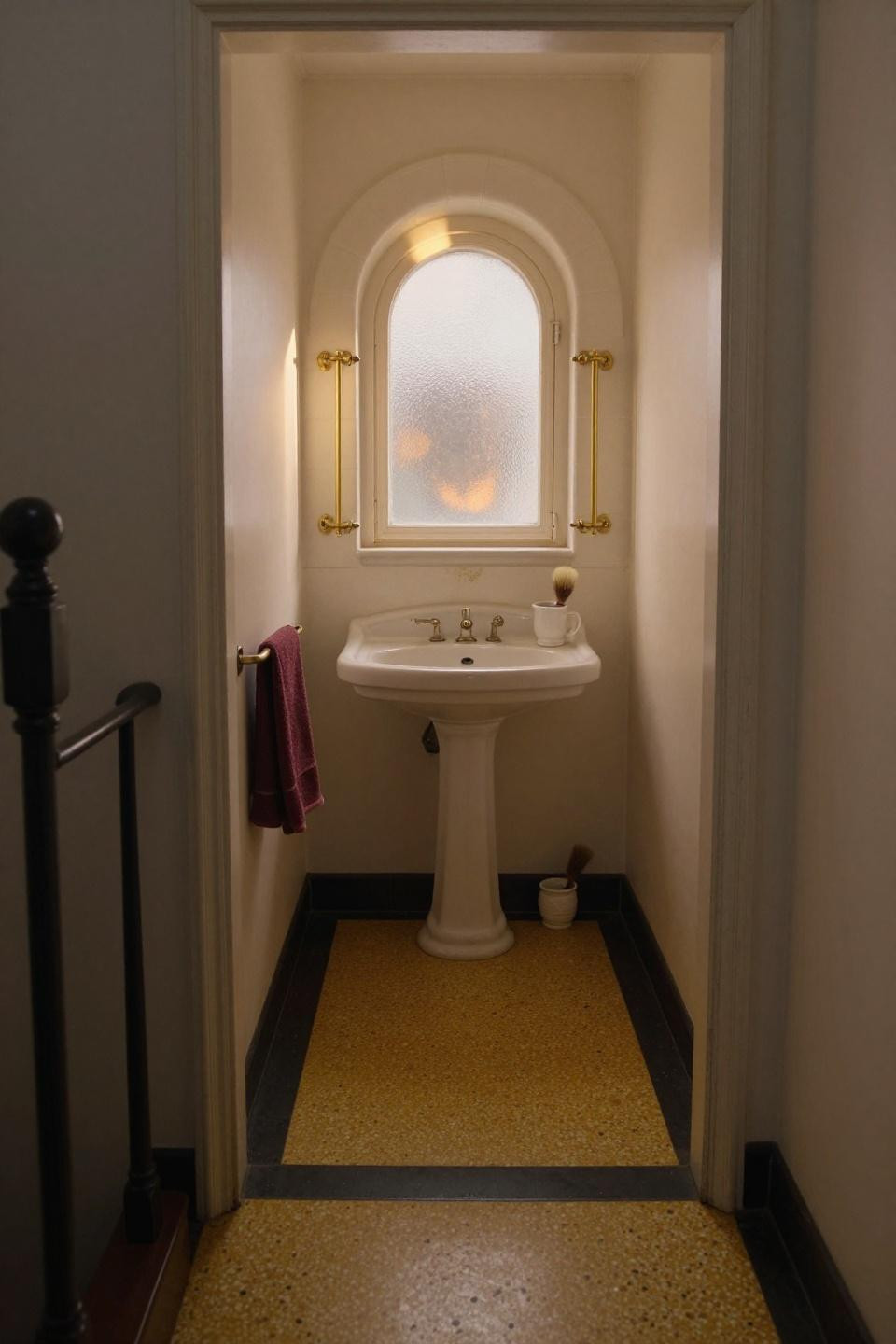
Shallow pedestal sinks in arched niches maximize tight under-stair spaces. Those brass swing-arm fixtures flanking the sink add function without eating into the narrow footprint. Mustard yellow terrazzo floor with black border—bold move that works because the sink stays white. Afternoon light through frosted glass creates amber pools that make 30 square feet feel bigger. Burgundy towel adds just enough color without pattern overload.
Subway Tile That Doesn’t Scream Renovation
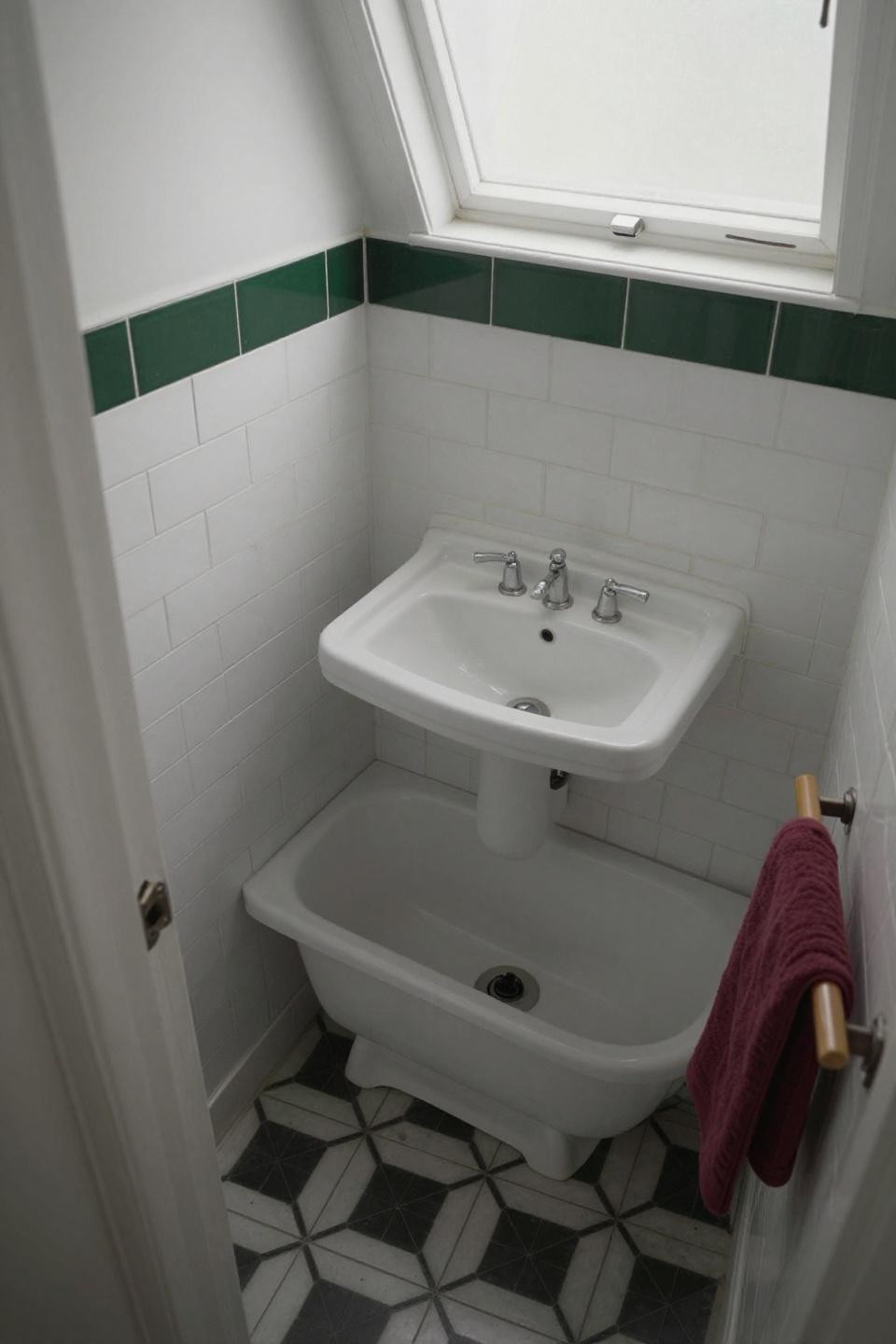
Hunter green horizontal stripe at dado height breaks up standard white subway tile without going full feature wall. Compact wall-mounted pedestal sink in a niche preserves floor space in corner bathrooms. That shallow cast-iron hip bath fits tight alcoves where standard tubs won’t. Black and white geometric floor tiles are period-correct and hide water better than plain white. This works for Victorian corners where every inch counts (and you’re sick of seeing all-white subway).
Dual Vanities Without the Builder-Grade Look
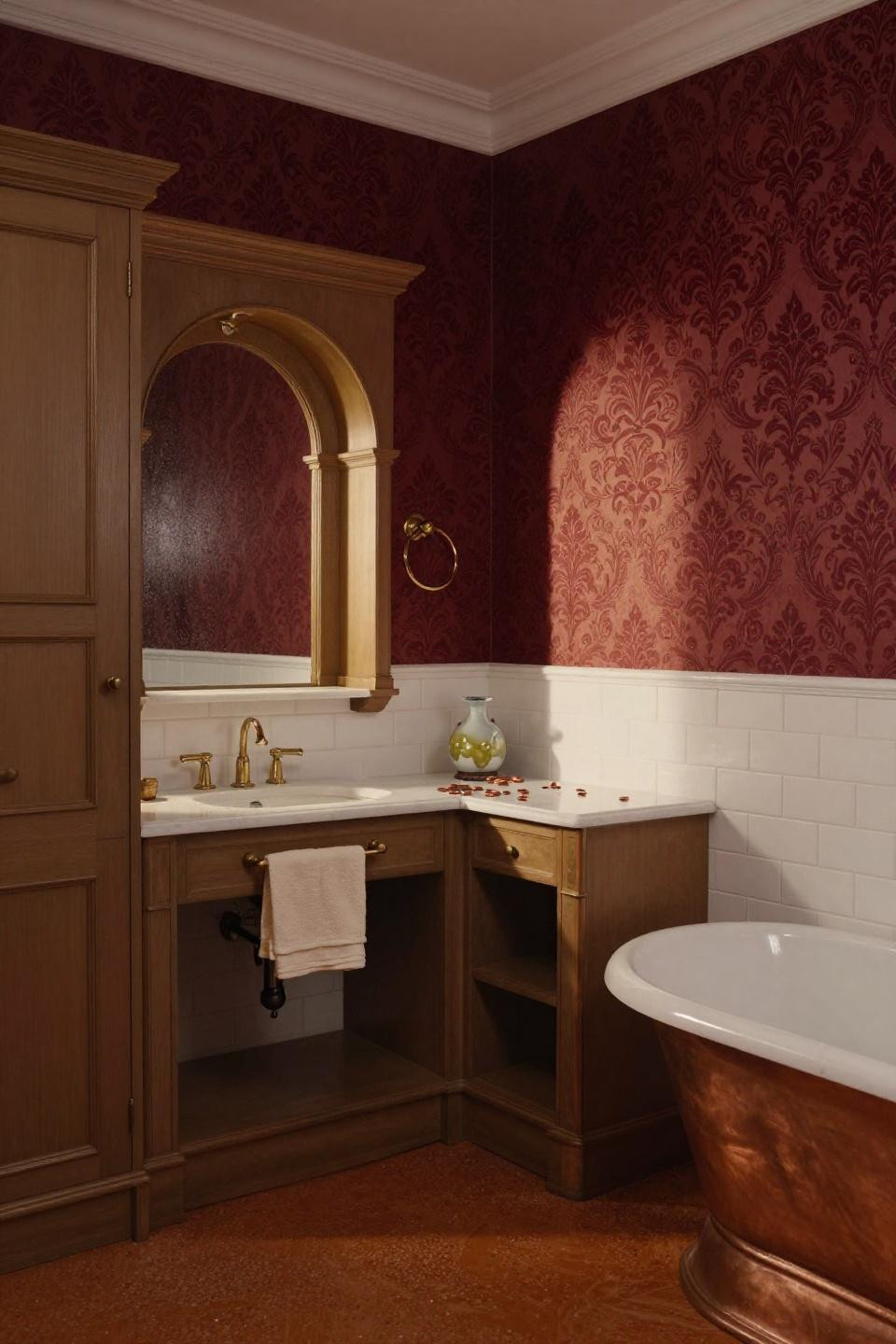
Built-in millwork with arched niches flanking marble counters—custom look without the custom price tag if you have a decent trim carpenter. Copper soaking tub perpendicular in the corner maximizes usable floor space. Burgundy damask above white subway tile wainscoting adds drama without shrinking the room. Terracotta encaustic floor grounds all that pattern. Golden hour light makes this layout sing, but it needs decent square footage to breathe.
Radiator Placement That Actually Heats the Room
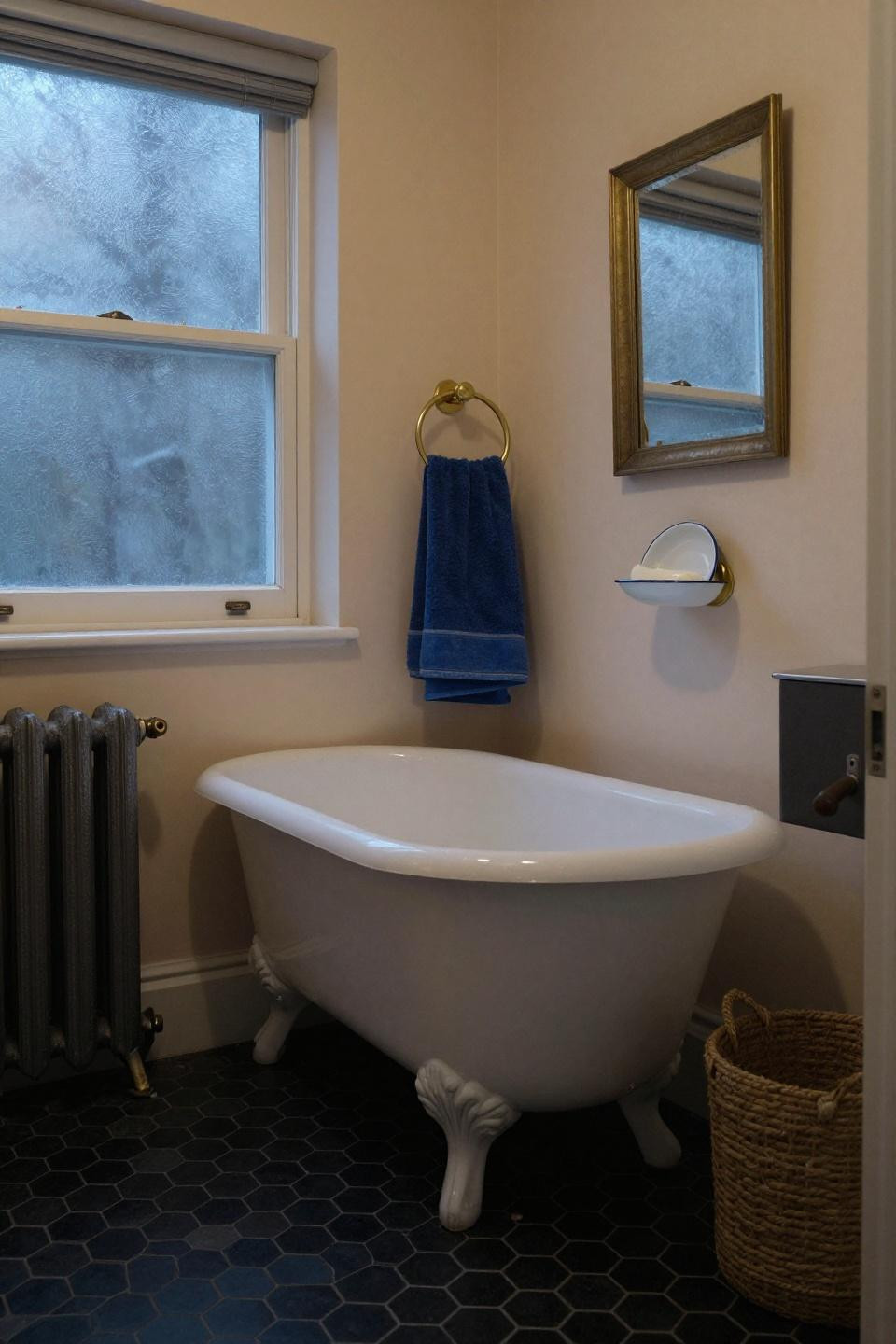
Ornate cast-iron radiator with brass valves beside a clawfoot tub—practical and period-correct. Limewash pale ochre walls warm up cool winter light through frosted casements. Original black hexagonal floor tiles handle water damage better than wood or modern ceramics. That deep indigo Turkish towel on the brass ring adds color without competing with the architecture. Works for compact Victorian bathrooms where you’re keeping original heating (or want that look).
Overhead Angles That Show the Whole Layout
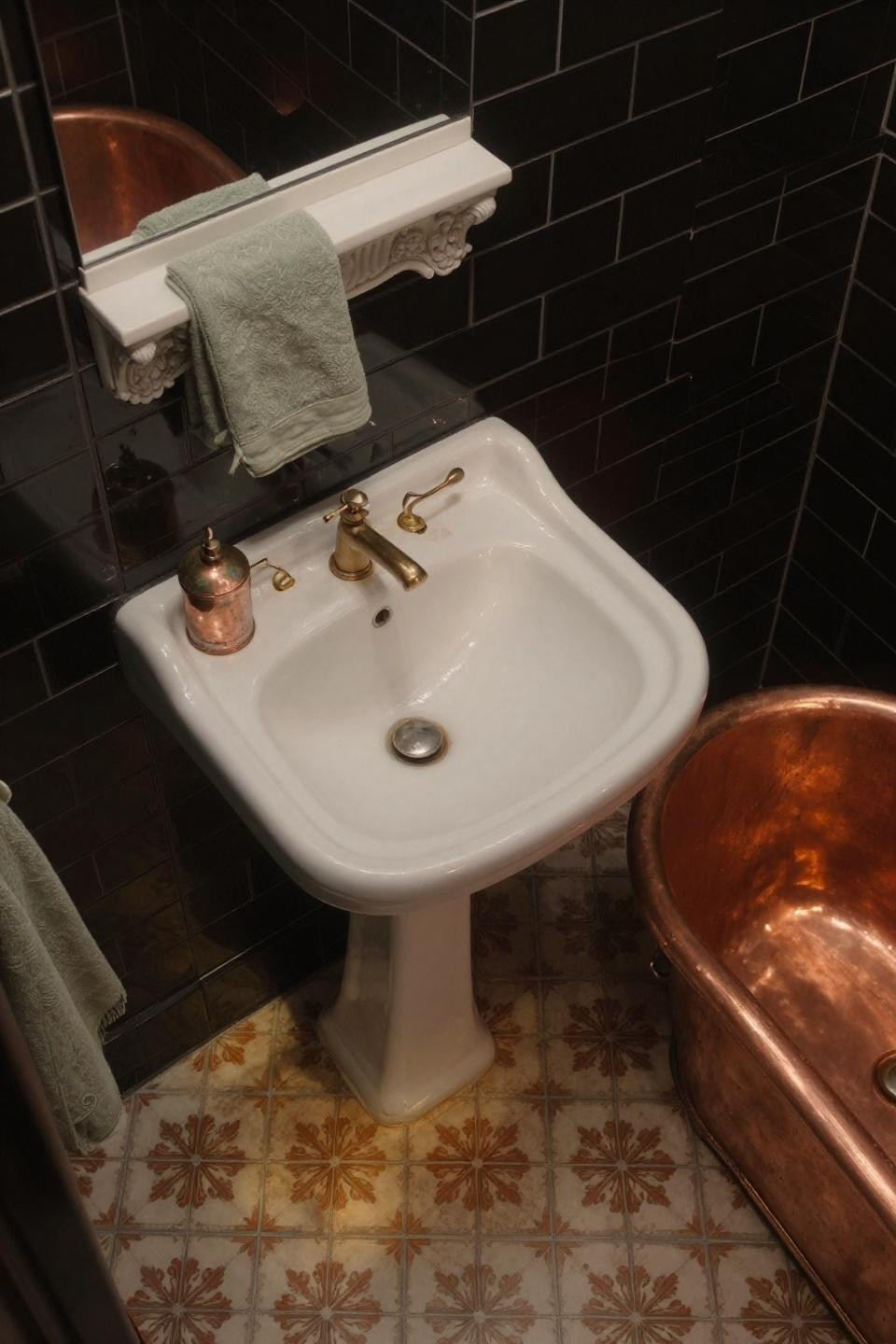
Freestanding copper tub with verdigris patina in a corner alcove—that natural aging beats polished brass every time. Terracotta and cream Art Nouveau encaustic tiles create pattern without chaos. Matte black subway walls ground the warm floor. Off-center pedestal sink placement lets you walk around the tub without squeezing. I’d pick this for Victorian bathrooms where you want warmth but need the layout to stay functional.
Twin Vanities That Don’t Eat the Whole Room
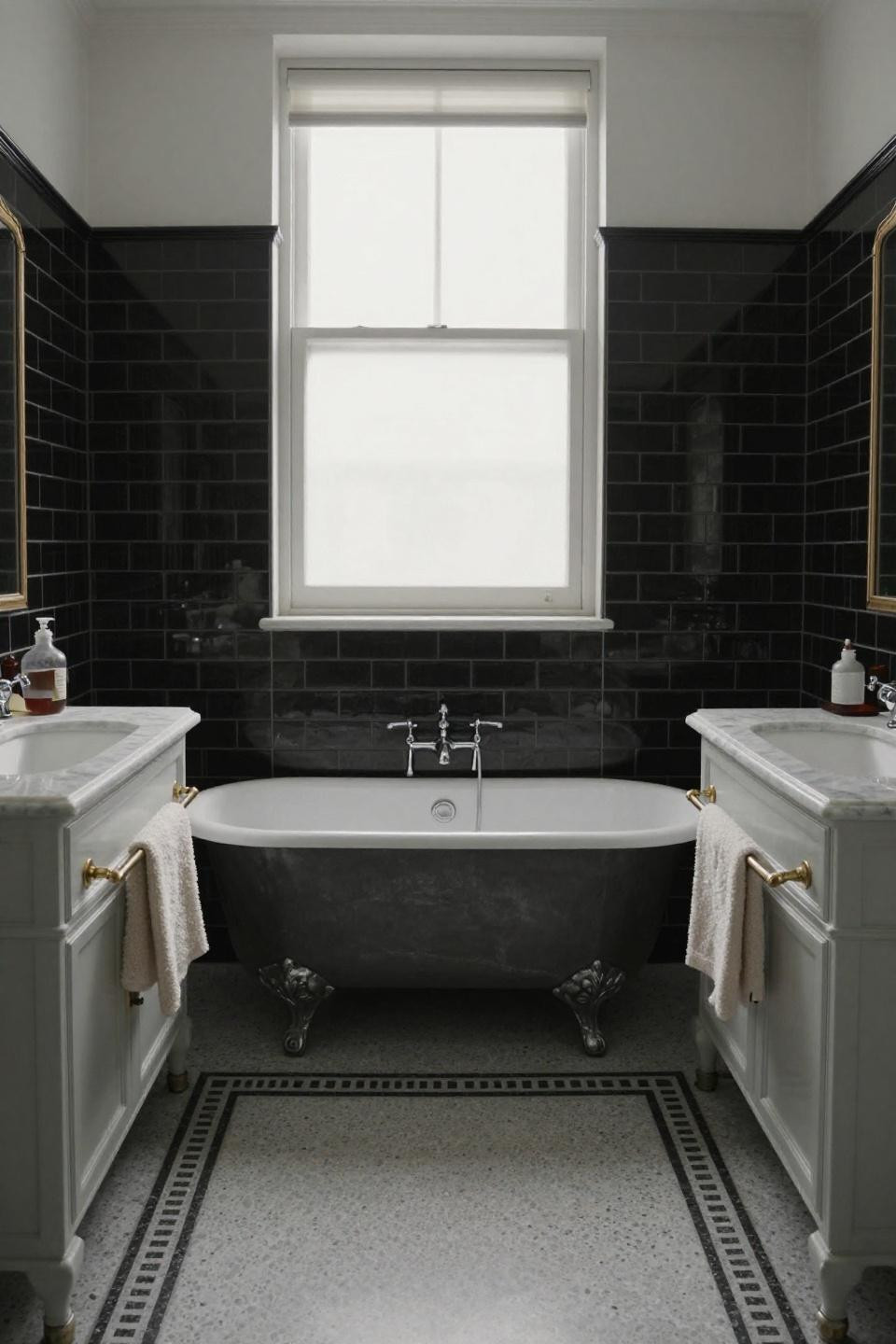
Symmetrical twin stations flanking a central slipper tub—it’s formal without feeling stiff. Black subway tile wainscoting rising to Carrara marble chair rail creates clean separation. Pale grey terrazzo floor with black geometric border keeps it grounded. Unlacquered brass ages in real time (water spots and all). This works for Victorian primaries with actual square footage, not squeezed conversions.
Alcove Tubs Without Custom Tile Work
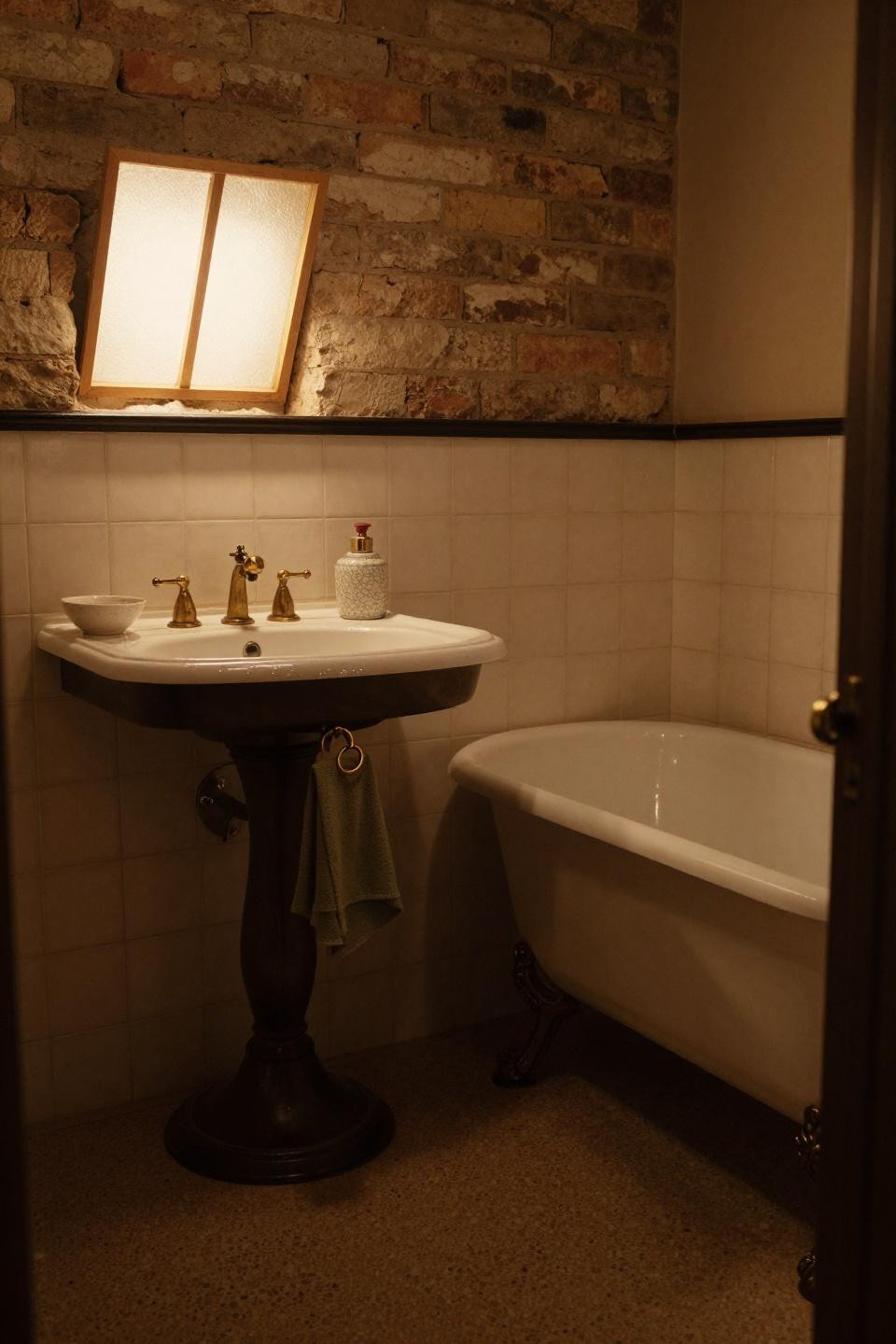
Clawfoot tub dropped into an existing cast-iron arched alcove—no custom tile work needed. Clay tile wainscoting against exposed lime-mortar brick reads original even if it’s not. Sand-colored terrazzo floor handles bathroom traffic better than wood-look tile. Afternoon light through frosted transoms creates those warm geometric shadows you can’t get with recessed cans. Best for Victorian bathrooms where the architecture’s already doing the work.
Terrazzo Tubs Positioned Dead Center
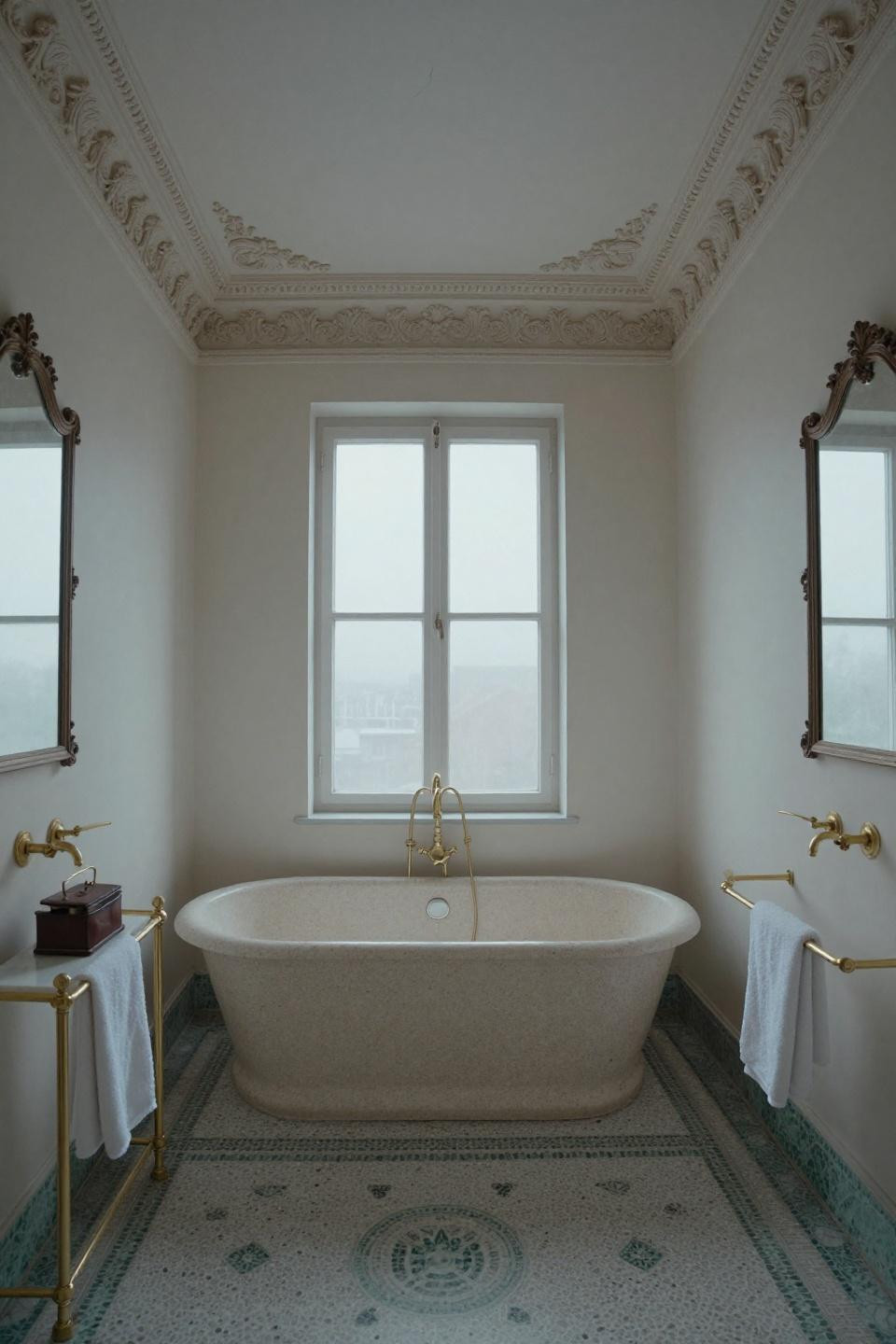
Freestanding cream terrazzo tub positioned center room under original plasterwork medallion—statement move that needs serious square footage to land. Limewash cream walls with that cool blue-grey winter light keep it from going too warm. Aged brass fixtures with green patina are worth hunting down on Etsy. Geometric terrazzo floor inlay ties the tub to the architecture. Works for sprawling Victorian primaries where you’re not worried about maximizing every inch.
Navy Walls That Don’t Shrink Small Bathrooms
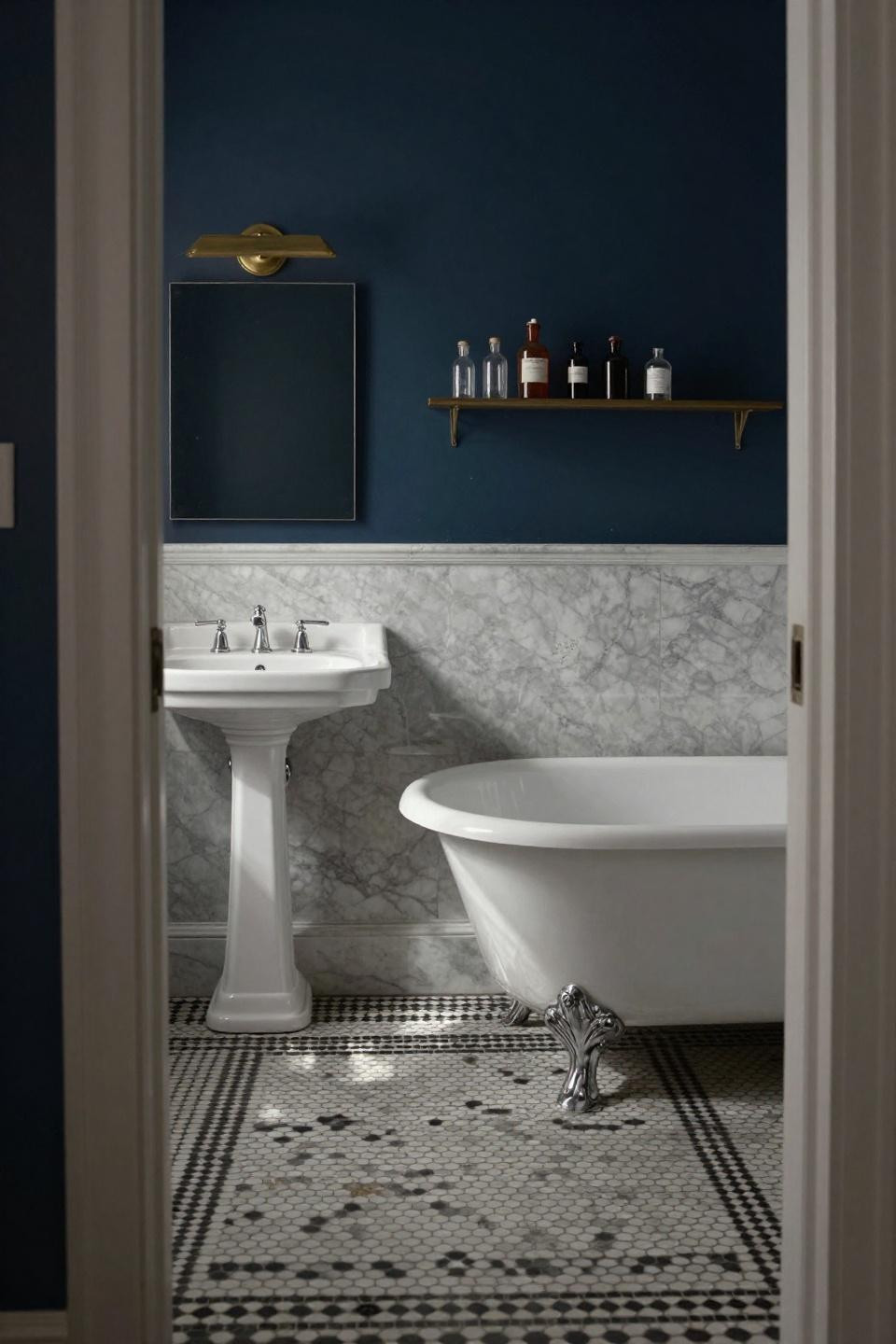
Deep navy painted walls above original Carrara marble wainscoting—dark color that doesn’t close in the room because the marble creates a break. Hexagonal black and white floor tiles are period-correct and photograph better than plain subway. Diagonal clawfoot tub placement maximizes corner bathrooms where a centered layout would block the door. Afternoon sun casting sharp shadows across the floor pattern makes the whole thing feel intentional. I’d skip navy if you’re dealing with basement bathrooms or zero natural light.