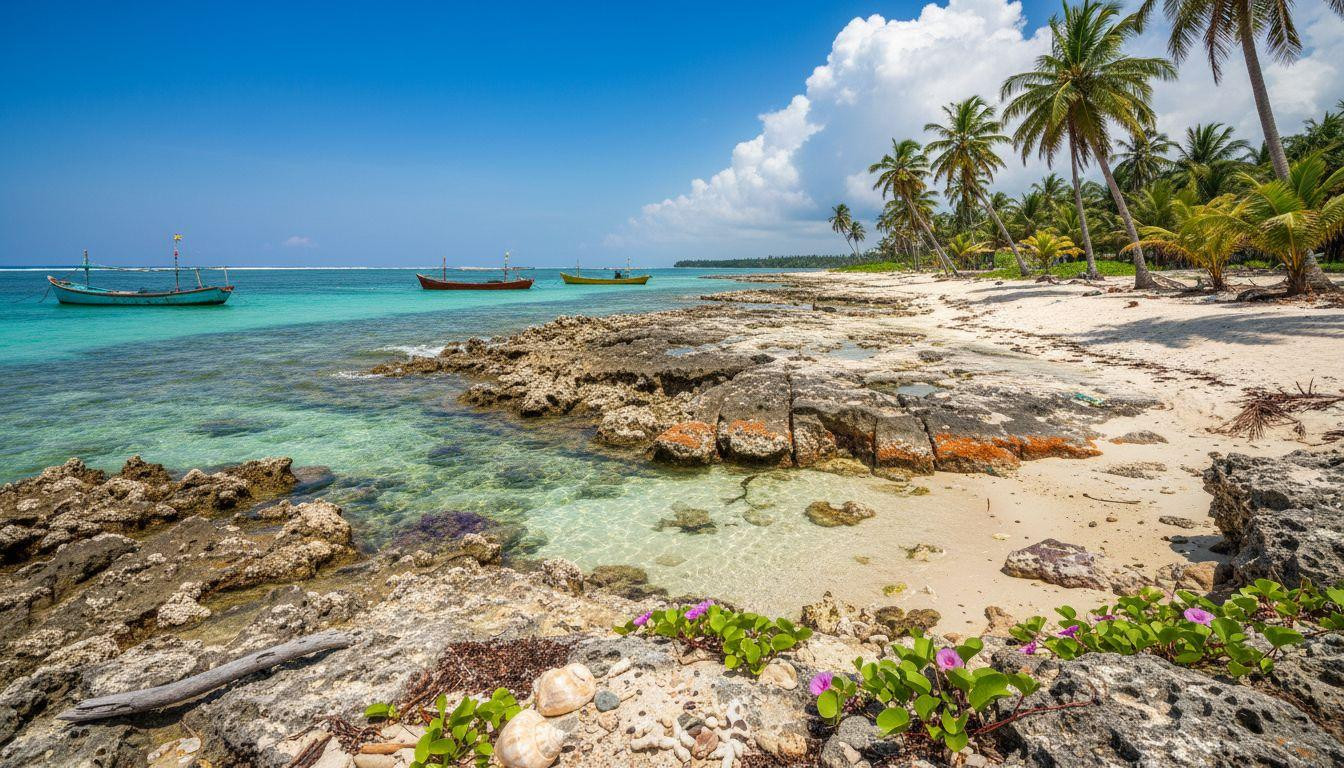
The Balearic Islands proposed capping annual visitors at 17.8 million in February 2026. Saint Martin’s Island in Bangladesh already operates under a nine-month closure with a 2,000-visitor daily limit. The difference between planning ahead and reacting too late shows up in coral reef health, water availability, and whether locals can still afford to live where they were born.
Six islands now ration access to protect what made them worth visiting in the first place. These aren’t theoretical future policies. People are booking permits right now for 2026 seasons.
Islands that closed before the reefs died
Saint Martin’s Island sits in the Bay of Bengal, nine miles south of Cox’s Bazar. The island spans eight square kilometers. Tourism shuts down completely from February 1 through October 31 every year.
When the island reopens November 1, only day visits are permitted. No overnight stays until December 1. The season ends January 31, then the nine-month closure begins again. During the two-month overnight window in late 2024, roughly 120,000 tourists visited at the daily cap of 2,000.
Tickets sell exclusively through Bangladesh Tourism Board’s online portal. You get a QR code travel pass. Vessels depart only from the BIWTA jetty at Nuniachhara in Cox’s Bazar. The ferry takes 90 minutes to two hours by speedboat. Prices doubled after restrictions took effect, but the coral reef survives.
What nine months of quiet looks like
After closure, the island shows long stretches of empty shoreline where crowds used to gather. Sea turtles nest without lights or noise. Crabs move freely across beaches that once hosted nightly barbecues. The fragile ecosystem gets 270 days to recover before the next visitor season.
This differs from Boracay in the Philippines, which closed for six months in 2018 only after reefs had already vanished and water quality collapsed. Saint Martin’s acted before irreversible damage occurred. The trade-off: lower seasonal income for permanent ecological viability.
When water runs out faster than tourists
The Canary Islands recorded 7.8 million visitors in the first six months of 2025 alone. Mass protests erupted under the slogan “The Canaries have a limit.” Residents blocked streets in Tenerife, Gran Canaria, and Lanzarote. The government blamed abandoned apartments and weak regulation. Protesters blamed visitor numbers that infrastructure cannot support.
Desalination plants run constantly during dry spells. Tourism accounts for most water consumption on resort-heavy islands. Climate change made rainfall unpredictable. Energy-intensive water production struggles to keep pace with growth. New rules will cap short-term rentals at 180 nights annually, though enforcement waits until after the 2026 World Cup.
Capri’s pipeline problem
Capri lacks natural freshwater sources. The island depends entirely on mainland pipelines. During peak season, day-trippers arriving by ferry exceed what the system was designed to handle. Even visitors who don’t stay overnight place immediate pressure on supply the moment they step off the boat.
Local officials introduced visitor controls during busy periods. Hotels and restaurants operate under strict water-saving mandates. The island demonstrates how even short visits strain limited resources when tourism intensity outpaces infrastructure capacity. A few miles north, this Italian island maintained lower visitor numbers and avoided the same crisis.
Antarctica’s voluntary limits that aren’t enough
In 2009, 28 Antarctic Treaty nations banned ships carrying more than 500 passengers from landing. Only one vessel can land at a time. Shore groups cannot exceed 100 people. Each group requires at least one guide per 20 visitors.
Despite these rules, Antarctica lacks an official annual cap. Environmental organizations warn the continent slides toward mass tourism that clashes with its fragile polar character. The International Association of Antarctica Tour Operators sets voluntary standards but cannot limit entry. Without hard caps, the situation worsens each season.
What 100-person limits actually mean
When you land, you see one small group at a time. No crowds gathering around penguin colonies. No multiple boats competing for the same iceberg view. The experience feels exclusive because it is, at least compared to destinations without any restrictions.
But voluntary compliance only works until it doesn’t. The treaty nations created rules without enforcement mechanisms. Tour operators who ignore guidelines face no penalties. This makes Antarctica a cautionary example: visitor restrictions without binding caps may protect nothing in the long run. For a different approach, consider this Panama cay where indigenous communities control all access.
The Balearics try to cap before collapse
On February 17, 2026, opposition party PSOE presented a proposal to cap Balearic Islands visitors at 17.8 million annually. That matches 2023 numbers. The cap responds to environmental degradation, overcrowded attractions, and infrastructure strain across Majorca, Ibiza, and Menorca.
Implementation will vary by island based on individual capacity and local council input. Tourism operators face stricter booking controls and visitor quotas in certain areas. Hotel owners, tour guides, and transport providers must adjust to new regulations. The proposal attempts to balance economic benefits against protection of natural resources and resident quality of life.
Ibiza’s water challenges intensify the urgency. Rainfall is limited. Aquifers recharge slowly. Tourism peaks during the hottest, driest months when the island’s population doubles. In severe droughts, water arrives by tanker at significant cost. Authorities now restrict new tourist accommodations and require efficiency upgrades in existing properties. Water meters, usage caps, and conservation campaigns shape tourism planning. Travelers seeking alternatives might explore this Greek island where donkey-quiet harbors remain uncrowded.
Your questions about islands that cap visitor numbers answered
How do I book access to Saint Martin’s Island?
Purchase tickets only through Bangladesh Tourism Board’s official online portal. You receive a QR code travel pass for validation. Vessels depart exclusively from BIWTA jetty at Nuniachhara in Cox’s Bazar. Day visits open November 1. Overnight stays permitted December 1 through January 31. The daily cap is 2,000 visitors. Book early because permits sell out quickly during the two-month overnight season.
Why do islands choose visitor caps over other solutions?
Caps address multiple crises simultaneously: environmental degradation, water scarcity, infrastructure strain, wildlife habitat loss, and resident displacement. Boracay closed for six months in 2018 after reefs vanished and water quality collapsed. When it reopened, strict rules included visitor caps and a 30-meter shoreline buffer. Proactive caps like Saint Martin’s prevent damage before it becomes irreversible. Reactive shutdowns like Boracay’s come after ecosystems already failed.
How do protected islands compare to unrestricted destinations?
Saint Martin’s sees 2,000 daily visitors during a two-month season versus year-round unlimited access at similar-sized islands. The Canary Islands recorded 7.8 million visitors in six months of 2025, triggering mass protests. Antarctica limits shore groups to 100 people at a time while other polar regions allow unrestricted cruise ship landings. Protected islands trade higher visitor numbers for long-term ecological viability. The economic model accepts lower seasonal income to preserve what attracts tourists in the first place. For another protected option, visit this Bahamas island where coral heads remain intact in shallow water.
The ferry from Cox’s Bazar to Saint Martin’s departs at dawn. Most tourists arrive by 8am. The island feels empty compared to what it was. Locals say the quiet returned when the caps took effect. The coral reef grows back slowly, but it grows.