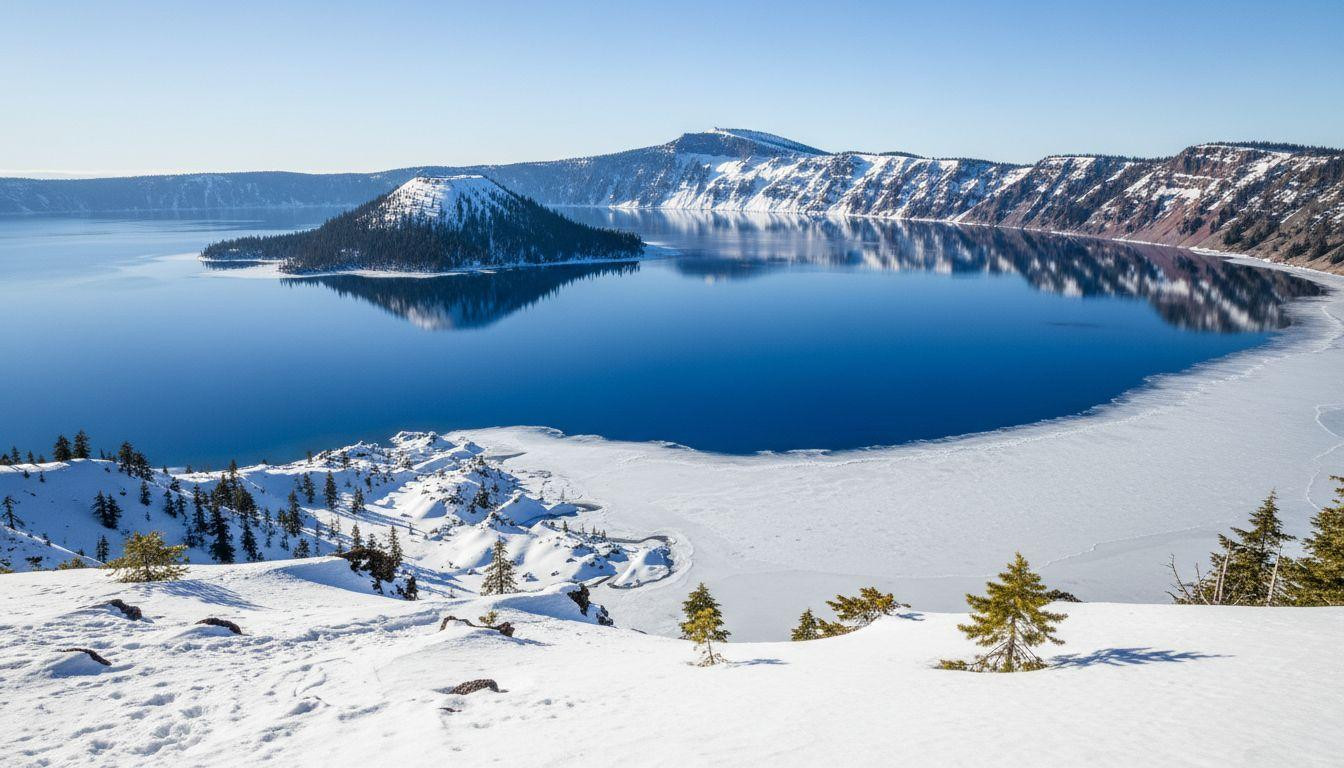
Highway 62 climbs through ponderosa forests until the caldera appears. A rim of volcanic cliffs holds 1,949 feet of water so blue it looks artificial. In winter, when Rim Drive closes under 400 inches of snow, Cleetwood Cove becomes a backcountry ski destination. The overlook sits at 7,100 feet, facing a frozen lake edge most visitors never see.
The boat launch area seals off in November. Ice forms along the shore where summer tours depart. By February, the only access requires skis or snowshoes and a willingness to navigate unplowed roads. The Park Service maintains Highway 62 to Rim Village, but the 33-mile Rim Drive stays buried until July.
The winter rim opens quietly
Rim Drive closes when snow depth makes plowing impossible, usually by mid-November. The road becomes a designated ski route, winding along the caldera’s edge with no traffic. Cleetwood Cove sits 11 miles from Rim Village via this route. Backcountry skiers follow the buried pavement, passing overlooks buried in powder.
The overlook provides the clearest view of the frozen lake edge. Volcanic cliffs drop 2,000 feet to the water, their dark basalt contrasting with white snow. Wizard Island rises from the center, its cone dusted in fresh powder. On clear days, visibility extends across the entire 6-mile caldera. Wind sculpts the snow into ridges along exposed sections of the rim.
Crater Lake formed 7,700 years ago when Mount Mazama collapsed. The caldera filled with snowmelt over centuries, creating the deepest lake in the United States. Winter adds a layer of silence the summer crowds never experience. Fewer than 50,000 people visit between November and May, compared to 450,000 in peak season.
What the closure means for access
The 2026-2028 trail reconstruction
Cleetwood Cove Trail closes in 2026 for safety upgrades. The 1.1-mile path to the lakeshore requires extensive work: trail tread erosion, failing retaining walls, rockfall zones, and marina bulkhead repairs. Construction runs through the 2027 and 2028 summer seasons. The trail reopens in summer 2029.
During closure, the overlook becomes the primary viewpoint. No boat tours operate. No lakeshore access exists. The winter backcountry route gains importance as the only way to reach pristine views of the frozen lake edge. The Park Service emphasizes that overlooks remain accessible year-round, weather permitting.
Winter as the new access point
Summer brings 500,000 visitors, most arriving between June and September. Cleetwood Trail sees heavy traffic during these months. Winter flips the dynamic. The overlook sits empty for hours. Backcountry skiers encounter maybe one or two other groups per day. The experience shifts from managed tourism to self-guided exploration.
Ranger-led snowshoe tours operate on weekends, covering moderate terrain near Rim Village. These walks last two hours and introduce winter conditions. For those seeking solitude, the backcountry ski route to Cleetwood offers untracked powder and views without crowds. The Park Service requires winter preparedness: chains, layers, avalanche awareness for off-paved areas.
The backcountry experience unfolds slowly
Alpine routes to the overlook
Rim Village serves as the starting point. The ski route follows Rim Drive’s buried pavement, marked by occasional road signs poking through snow. Elevation holds steady around 7,100 feet. The terrain rolls gently, with steeper sections near overlooks. Total distance to Cleetwood: 11 miles one way. Most skiers complete the round trip in 6-8 hours.
Snow conditions vary. February and March offer the most stable snowpack. Morning temperatures drop below 20 degrees Fahrenheit. By midday, sun warms exposed sections. Wind picks up in the afternoon, creating whiteout conditions on ridge sections. Skiers carry extra layers, food, and navigation tools. Cell service disappears beyond Rim Village.
What you see from the overlook
The frozen lake edge forms a white ring against deep blue water. Crater Lake rarely freezes completely due to its depth, but surface ice extends several feet from shore in severe winters. The contrast between ice and open water creates a visual boundary. Wizard Island sits 2 miles offshore, its slopes covered in evergreens and snow.
Volcanic cliffs frame the view. Dark basalt columns rise from the water, streaked with snow in vertical gullies. The caldera’s far rim sits 6 miles away, visible on clear days. Morning light turns the snow gold. By afternoon, shadows deepen the blue of the lake. The silence holds except for wind and the occasional crack of settling ice.
The timeless silence settles in
Dawn at the overlook arrives slowly. Diffuse light spreads across the caldera before the sun clears the eastern rim. The frozen lake edge reflects pale blue. No human sound interrupts the stillness. This silence connects to the volcanic history: 7,700 years of snowmelt filling a collapsed mountain.
The overlook provides a perspective summer visitors miss. No boat engines. No trail traffic. Just the caldera, the snow, and the quiet. The experience feels less like tourism and more like witnessing a geologic process. Winter strips away the managed elements and leaves the raw landscape.
Your questions about Cleetwood Cove winter answered
When can I access Cleetwood in winter?
The backcountry ski route operates from late October through mid-June, depending on snowfall. Best conditions occur in February and March when the snowpack stabilizes. Highway 62 stays open to Rim Village year-round, but Rim Drive closes with the first heavy snow. Check current conditions with the Park Service before planning a trip. Winter weather changes rapidly at 7,100 feet.
Do I need permits for backcountry skiing?
No permits required for skiing along Rim Drive. The Park Service designates this route for winter recreation. Standard park entry fees apply: $30 per vehicle. Backcountry travel off paved areas requires avalanche awareness and proper gear. Rangers recommend checking conditions at Rim Village before departing. No gas available in the park from October through May.
How does winter Crater Lake compare to summer?
Winter sees 90 percent fewer visitors. Summer offers boat tours, lakeshore access, and open roads. Winter provides solitude, pristine snow conditions, and views of the frozen lake edge. The experience shifts from accessible tourism to backcountry adventure. Cannon Beach’s offshore rocks offer similar Pacific Northwest beauty 250 miles west. For alpine winter experiences, North Cascades keeps turquoise ice with comparable solitude. Voyageurs’ frozen bays provide Midwest alternatives. Pinedale’s backcountry skiing brings similar Wind River silence.
The overlook sits empty most mornings. Fresh snow covers yesterday’s ski tracks. The frozen lake edge holds its blue clarity beneath the ice. This window closes in 2026 when trail reconstruction begins. Three years of limited access follow. Winter 2025 offers the last full season before changes arrive.