
Shoe storage cabinet entryway setups hit different when they’re actually designed well. Most look like an afterthought. These don’t.
The Scandinavian Warehouse Cabinet That Makes High Ceilings Work
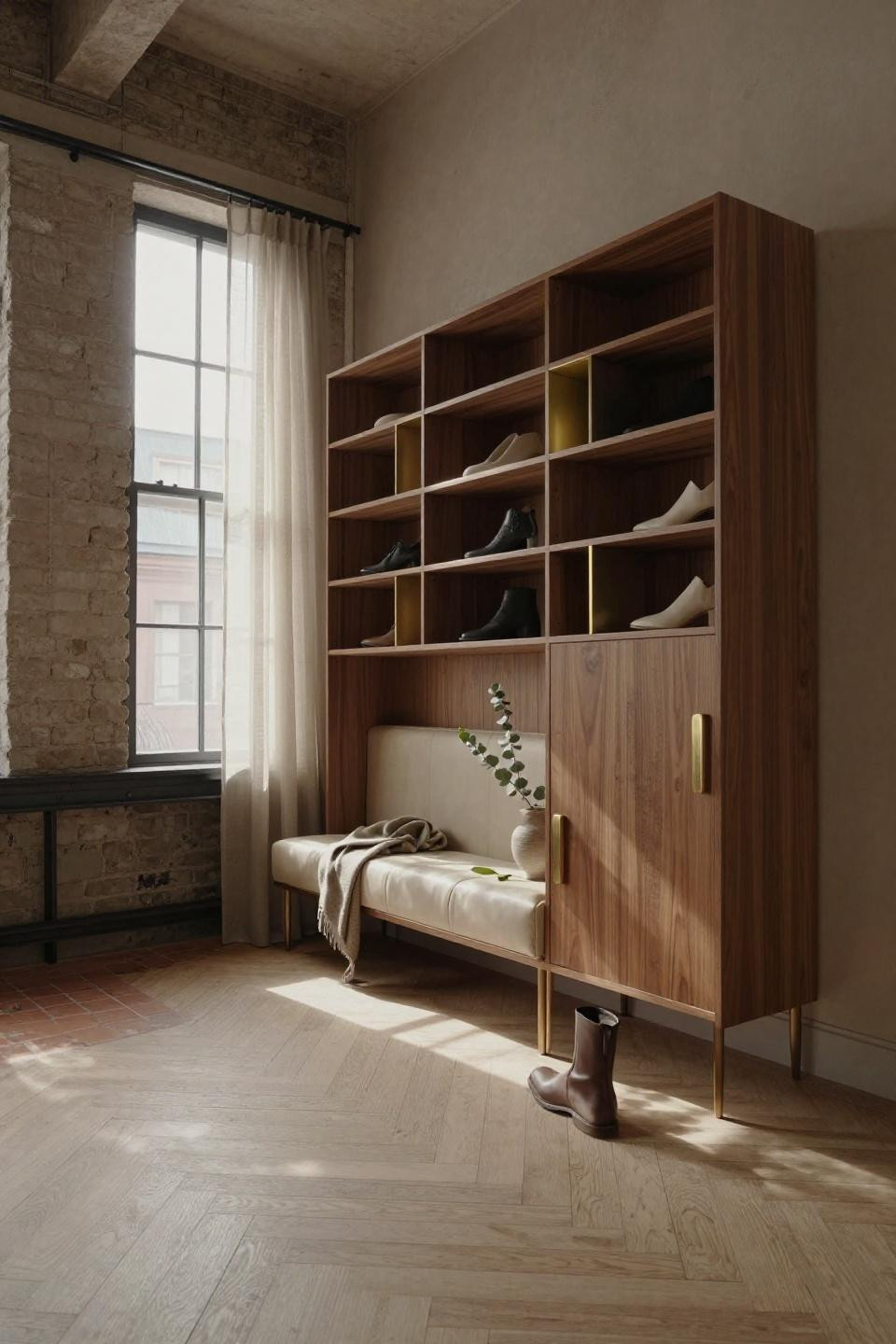
Floor-to-ceiling walnut with geometric brass compartments turns shoes into actual decor. The asymmetrical shelving is key—it breaks up the visual weight so a 14-foot cabinet doesn’t feel imposing. One boot placed outside like you just walked in? That’s the move. Makes the whole thing feel lived-in instead of staged. Great for lofts where wall space is precious but vertical real estate is endless.
Parisian Haussmann Styling That’s Actually Repeatable
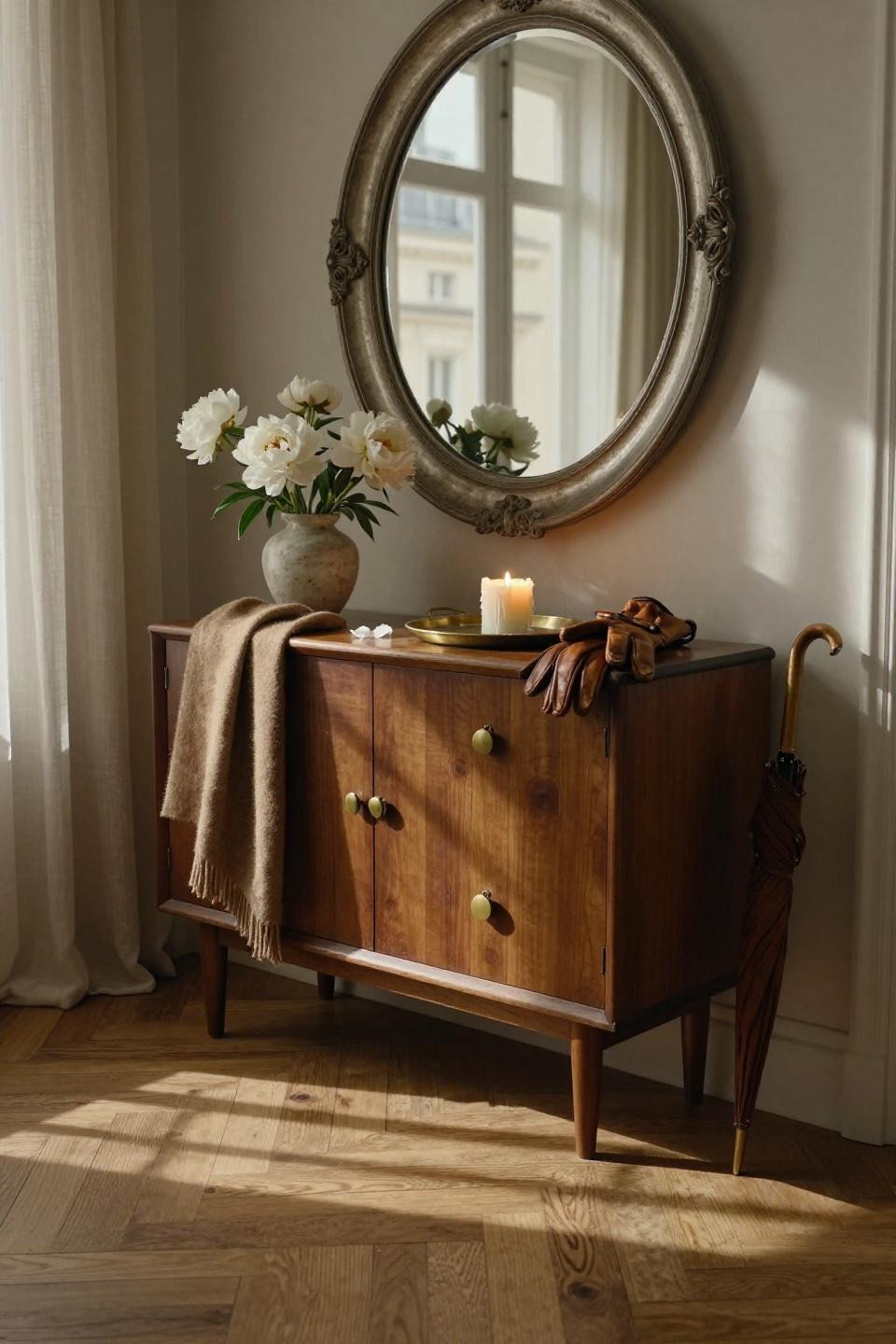
Mid-century walnut under a circular tarnished mirror. The trick is the brass tray on top holding one half-burned candle and leather gloves tossed casually. It’s functional surface space that doesn’t scream “drop zone.” The camel wool throw draped over the edge softens the whole composition. I’d skip the umbrella stand unless you actually use it—empty ones just collect dust.
Why Modular Systems Beat Built-Ins for Renters
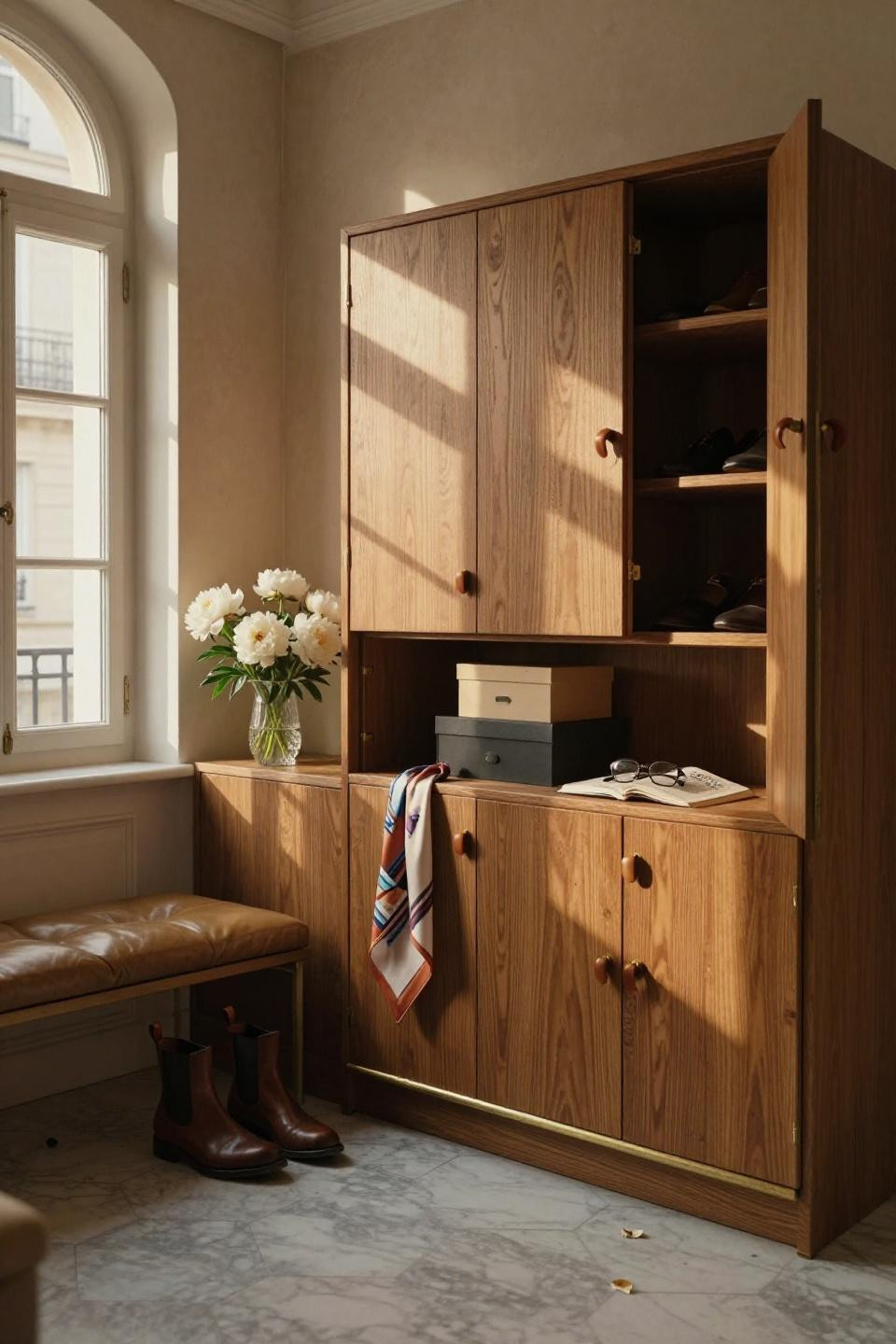
Honey oak modules with fluted grain and cognac leather pulls. You can rearrange these when you move, which built-ins obviously can’t offer. One door left slightly ajar showing stacked shoeboxes inside feels more honest than everything perfectly closed. The half-read New Yorker and reading glasses on the console? That’s how you make it look like someone interesting lives there. Best for apartments where permanence isn’t an option.
Brass Patina Done Right (Not Instagram Filter Fake)
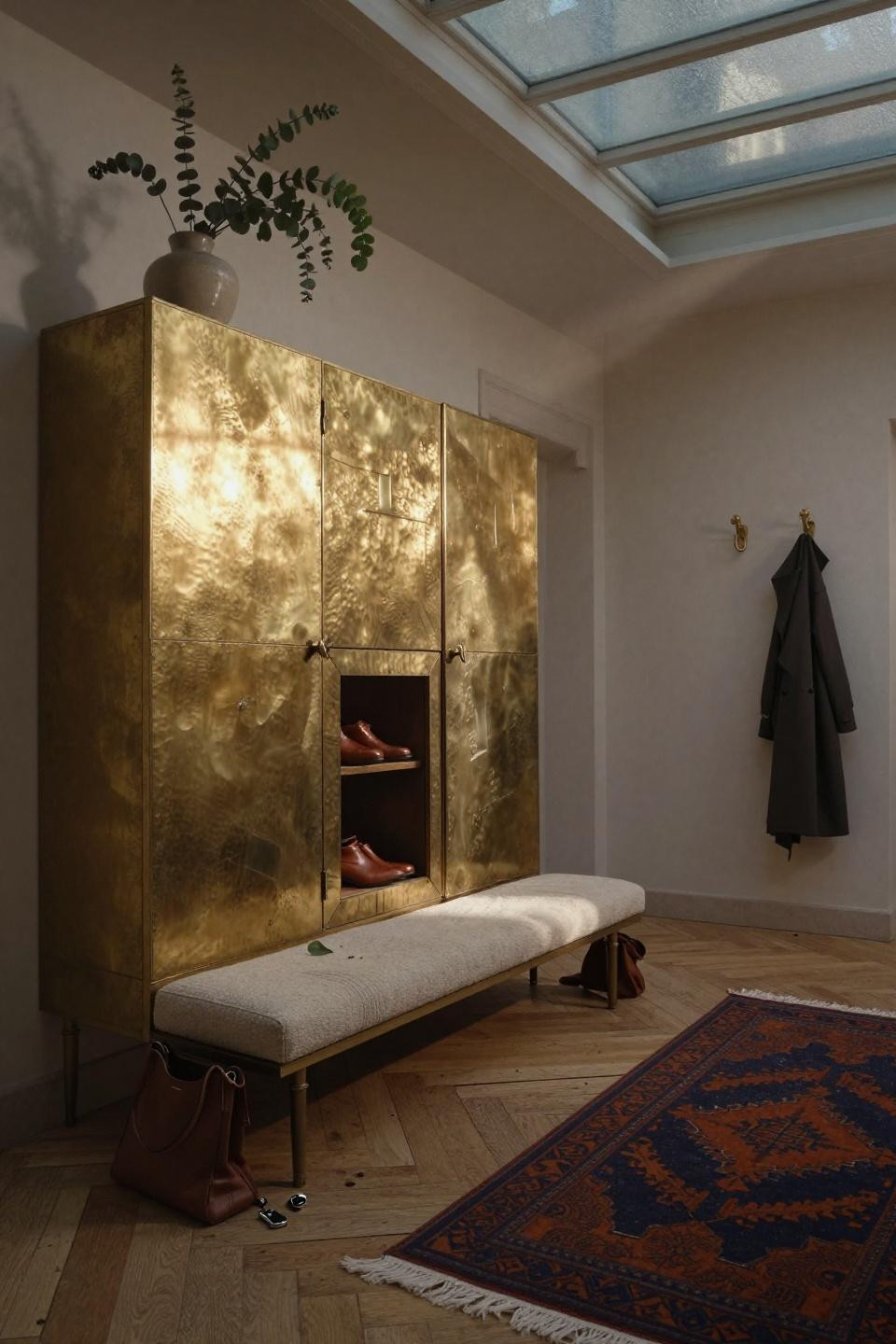
Unlacquered brass with hand-hammered texture develops real patina over time. The geometric cutouts revealing cognac leather inside are subtle—you notice them when light hits at the right angle. Limestone flooring with natural pitting keeps it from feeling too precious. That vintage Moroccan runner anchors everything visually. Just know unlacquered brass requires maintenance if you want it shiny. I prefer the aged look anyway.
The Overhead Angle That Makes Small Entryways Look Bigger
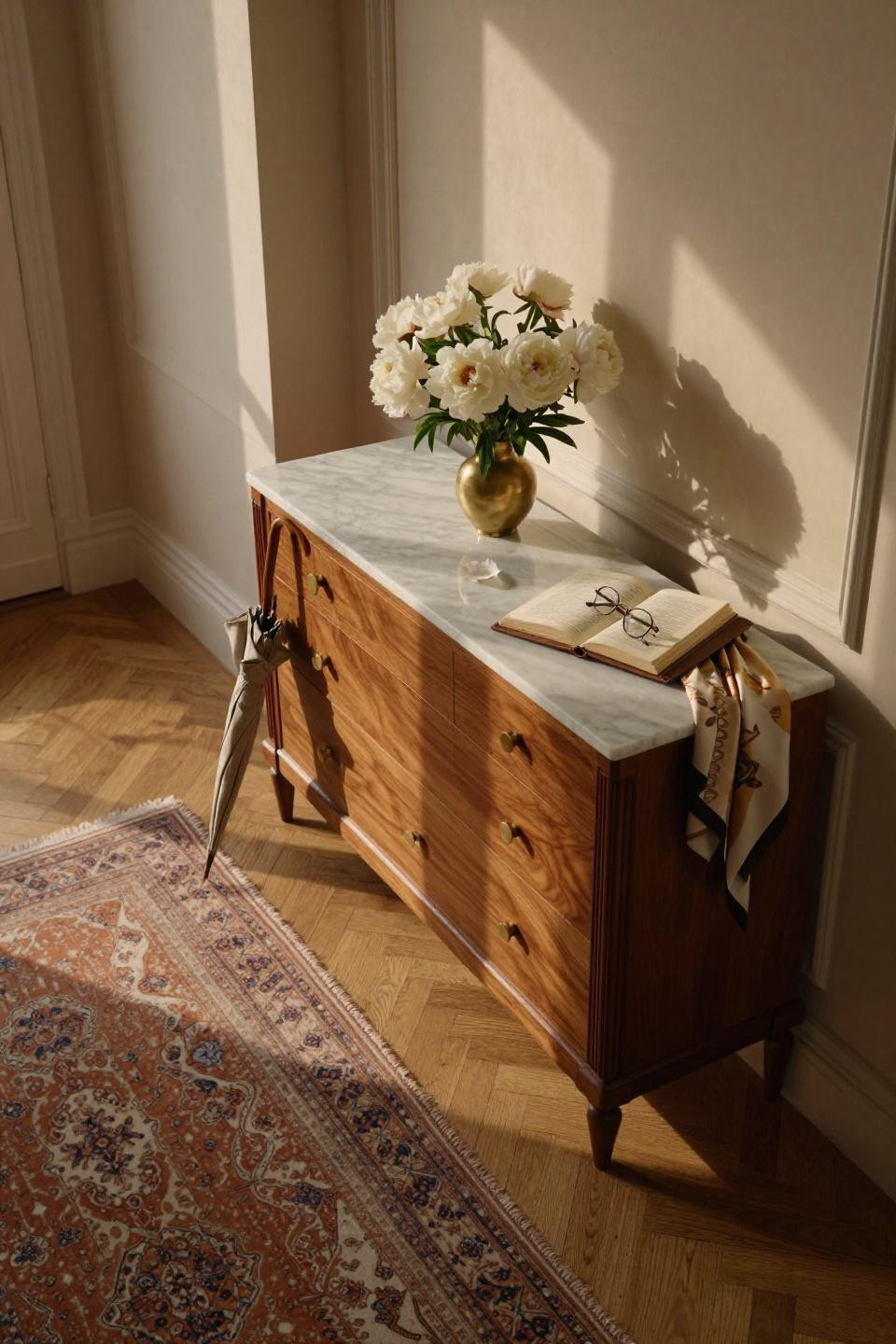
Walnut with soft-close drawers and honed Carrara marble on top. The marble gives you a place for keys that won’t get scratched. That Persian runner in faded terracotta visually expands the floor space—diagonal placement is the trick. One petal fallen on the marble, open journal, folded glasses. These aren’t accidents. They’re what makes a space photograph well and feel comfortable to walk into. This works if you need storage that doubles as a console.
Copenhagen Minimalism Without the Cold Vibe
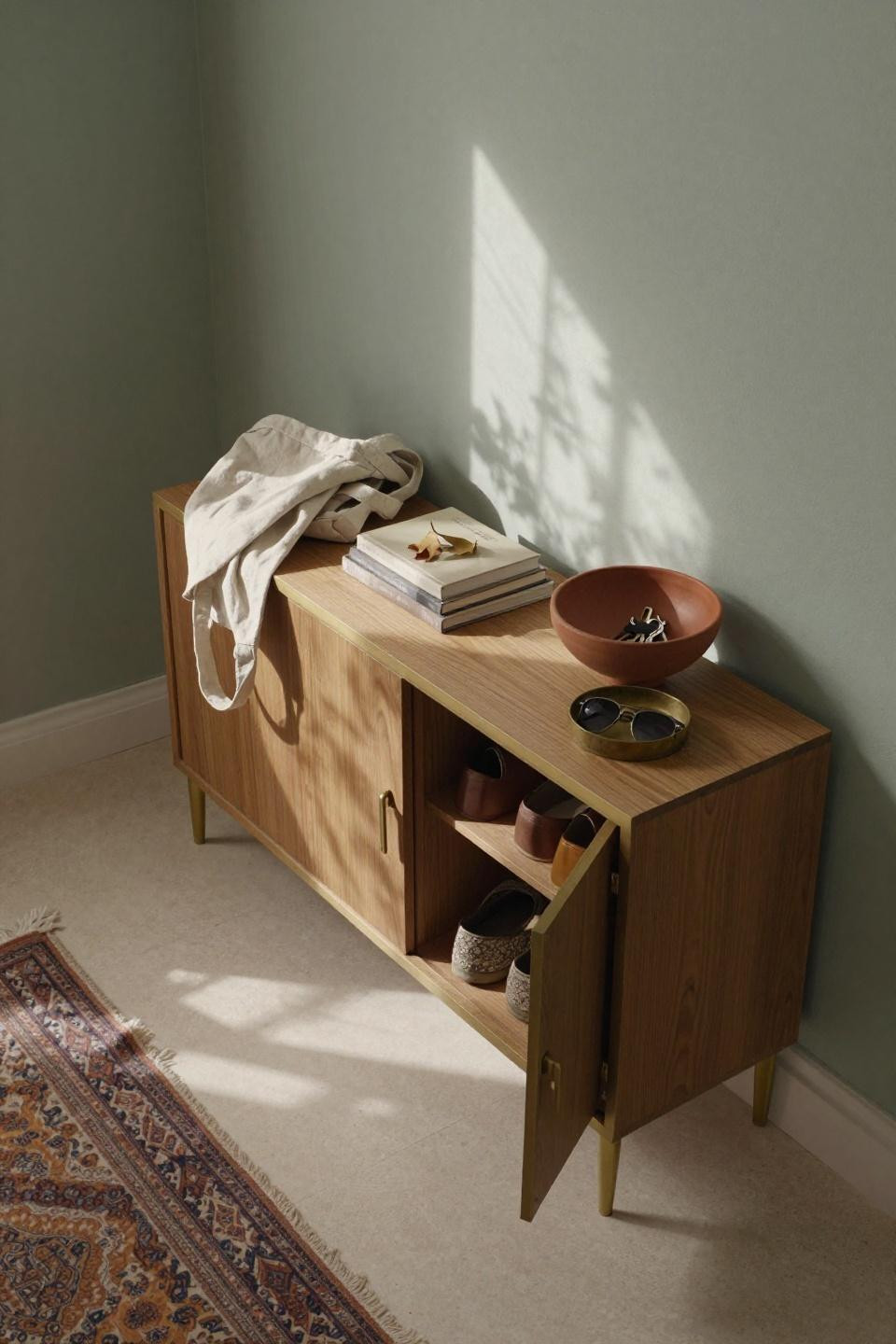
Honey oak with handleless push-to-open doors in a matte brass frame. The sage green accent wall is what warms it up—without that, this reads sterile. One door barely ajar isn’t sloppy, it’s proof people actually use the thing. The nubby linen tote with one strap falling and the Persian runner with curling edges keep it human. I’d pick this for new builds where everything’s too clean and needs softening.
Vignette Styling That Doesn’t Try Too Hard
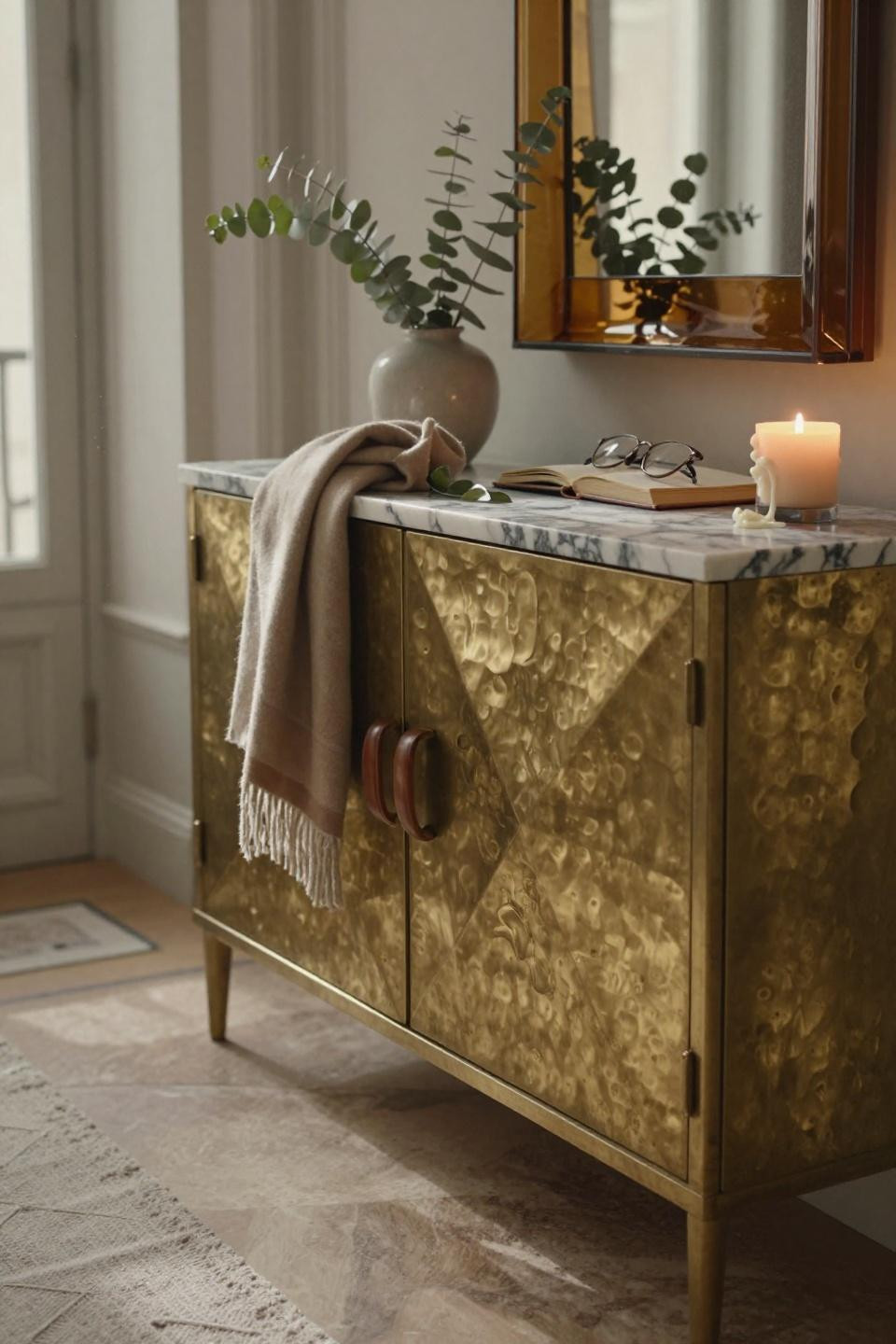
Hand-hammered brass cabinet with one leaf fallen beside eucalyptus stems. The leather-bound book left open with reading glasses and half-burned candle with wax drips? That’s the composition. Calacatta marble top with gray veining gives you cool tones against warm brass. The cashmere scarf draped over the handle is the kind of detail that feels accidental but absolutely isn’t. Works when your entryway is the first thing guests see and you want it editorial.
Geometric Inlay Without Going Full Art Deco
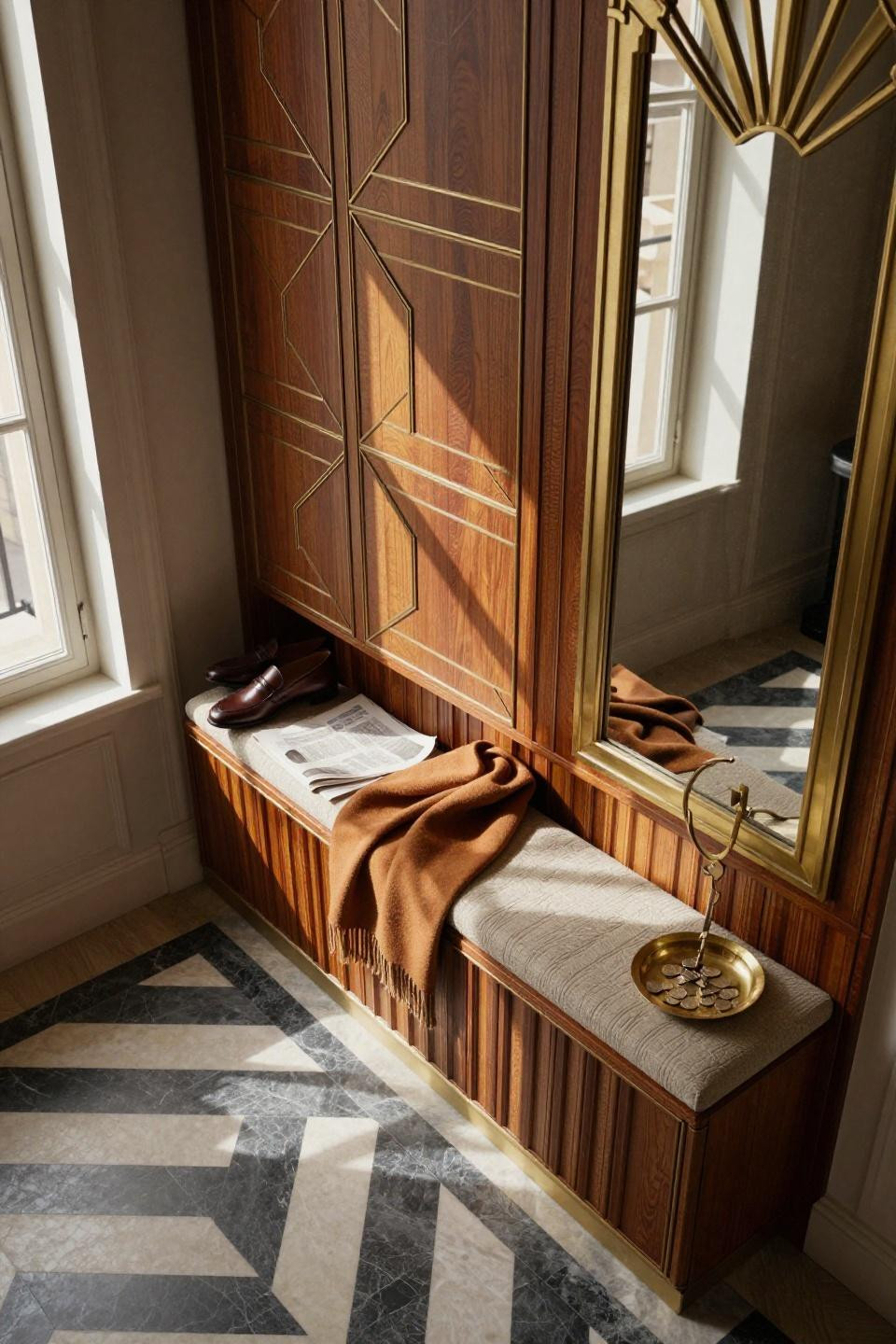
Walnut with brass honeycomb inlay and fluted vertical panels. The chevron marble floor tiles in charcoal and cream are bold but the burnt sienna cashmere throw softens it. Each compartment lined in cognac leather is excessive in the best way. One loafer sitting askew outside its spot and scattered coins in the brass dish catching light make it livable. This works for Haussmann apartments or anyone with architectural bones to work with.
Why Fluted Doors Never Look Dated
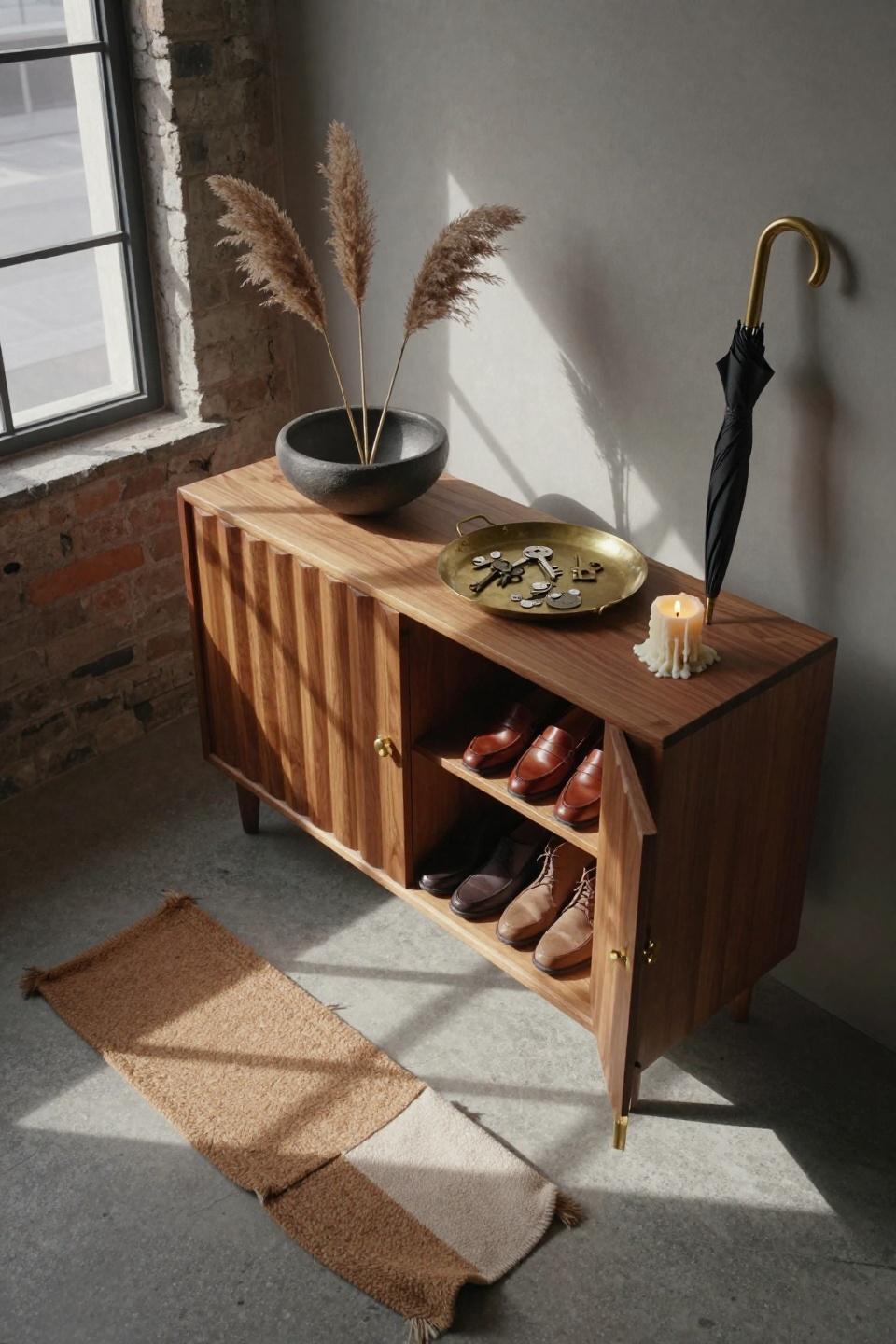
Hand-carved fluted walnut doors in rich honey grain. The texture catches rim lighting in a way flat panels never do. One door slightly ajar showing cognac loafers and suede boots inside is smart staging. The vintage brass tray with patina holding keys and loose change and that half-burned candle with wax frozen mid-cascade? Real life looks like this. The camel wool runner folded over at one corner keeps it from feeling too styled. I’d use this in warehouse conversions where you need warmth against exposed brick.
Alabaster Doors That Glow (Literally)
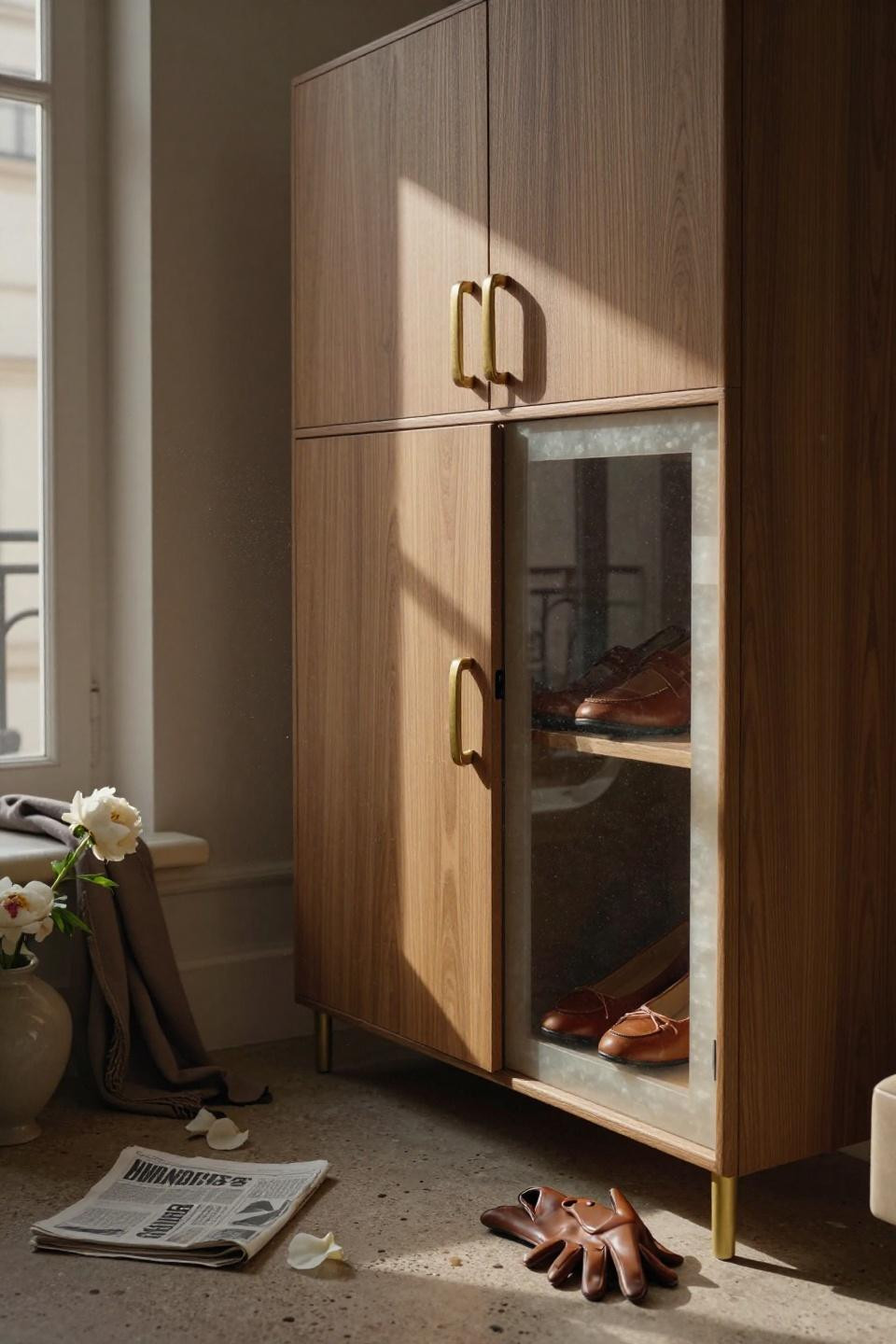
Translucent alabaster cabinet doors with shoe silhouettes visible inside when light hits. Subsurface scattering makes them glow. The unlacquered brass pulls with natural patina and cognac leather bench cushion with body impression add warmth against cool limestone. Two fallen peonies on the floor and one leather glove dropped beside the cabinet sell the whole thing. This is for spaces with strong side lighting—otherwise the alabaster effect doesn’t work.
Open Cubbies vs. Closed Doors (The Honest Answer)
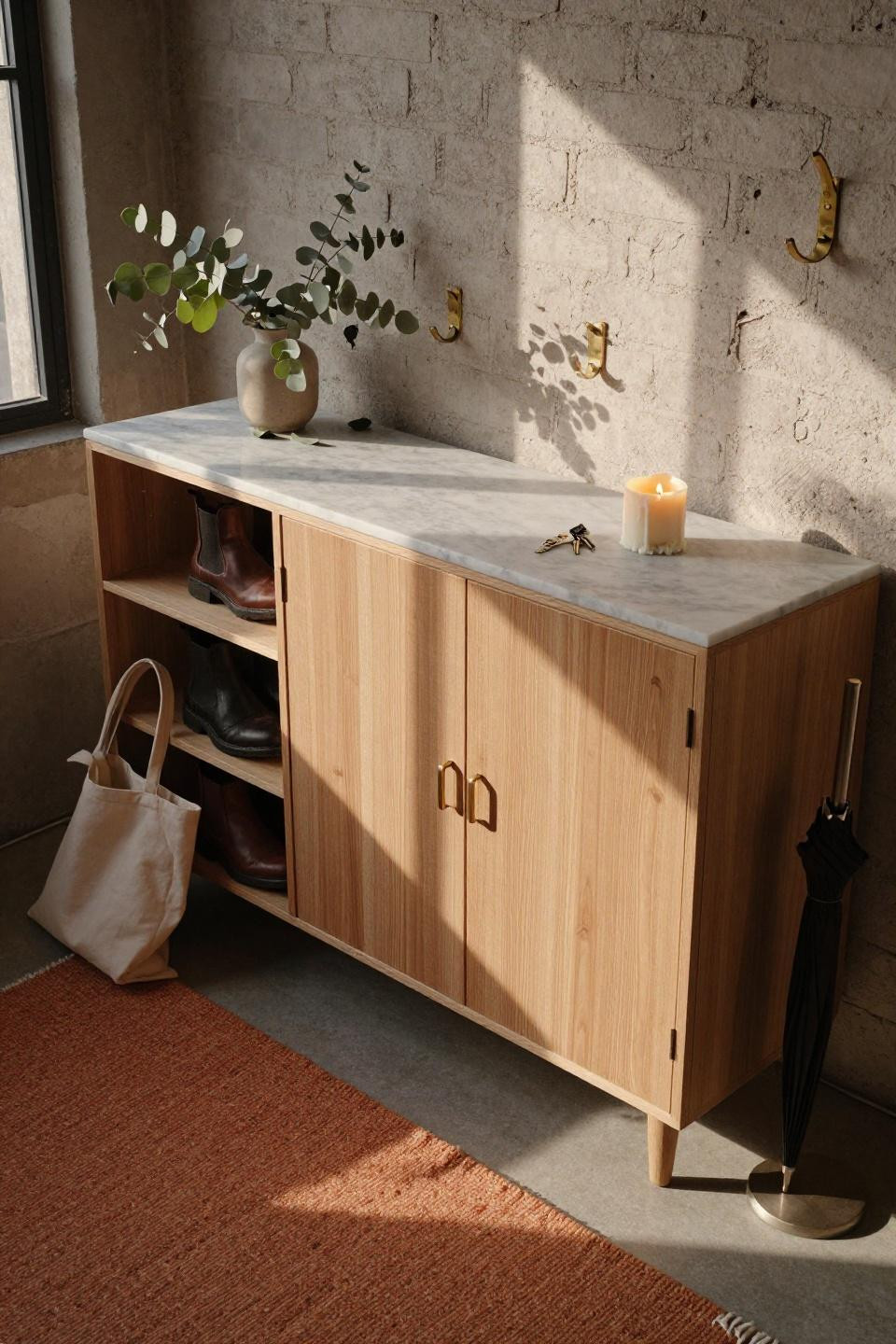
White oak with a mix of open cubbies and closed doors. The open sections force you to keep things curated—leather Chelsea boots placed slightly askew work, beat-up sneakers don’t. Canvas tote draped over the edge with strap falling naturally and keys tossed on marble beside a half-burned candle make it feel used. The terracotta runner stretching diagonally beneath grounds everything. Best for people who are naturally tidy or willing to fake it.
Herringbone Floors Make Any Cabinet Look Expensive
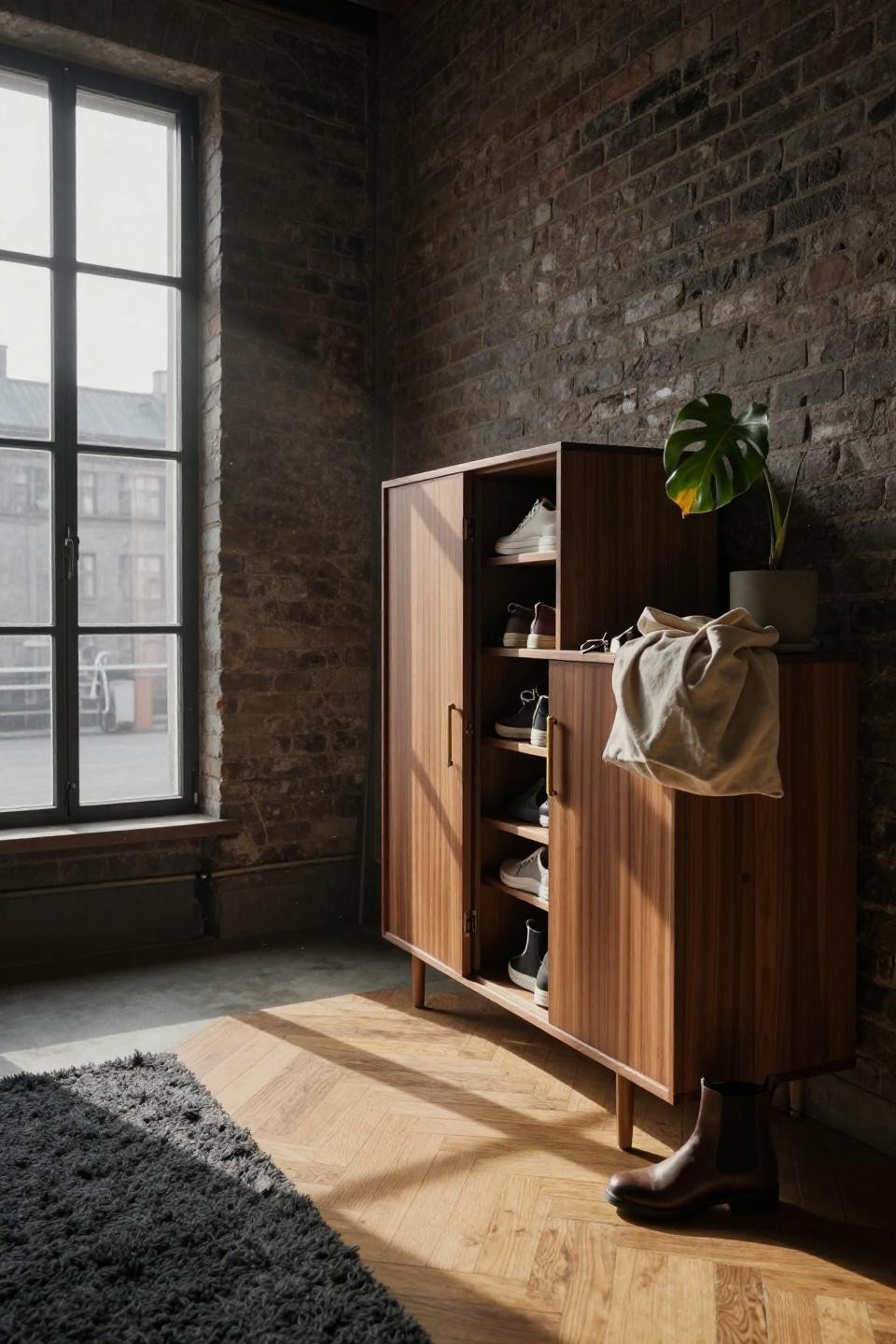
Walnut cabinet with fluted vertical slats on herringbone oak flooring. The floor does half the work here—it makes even IKEA pieces look considered. One Chelsea boot placed beside the cabinet instead of inside, linen tote draped over the edge, keys tossed on top. The small monstera with one yellowing leaf is the kind of imperfection that makes it believable. Great for warehouse conversions with original flooring you want to showcase.
When Macro Details Matter More Than the Wide Shot
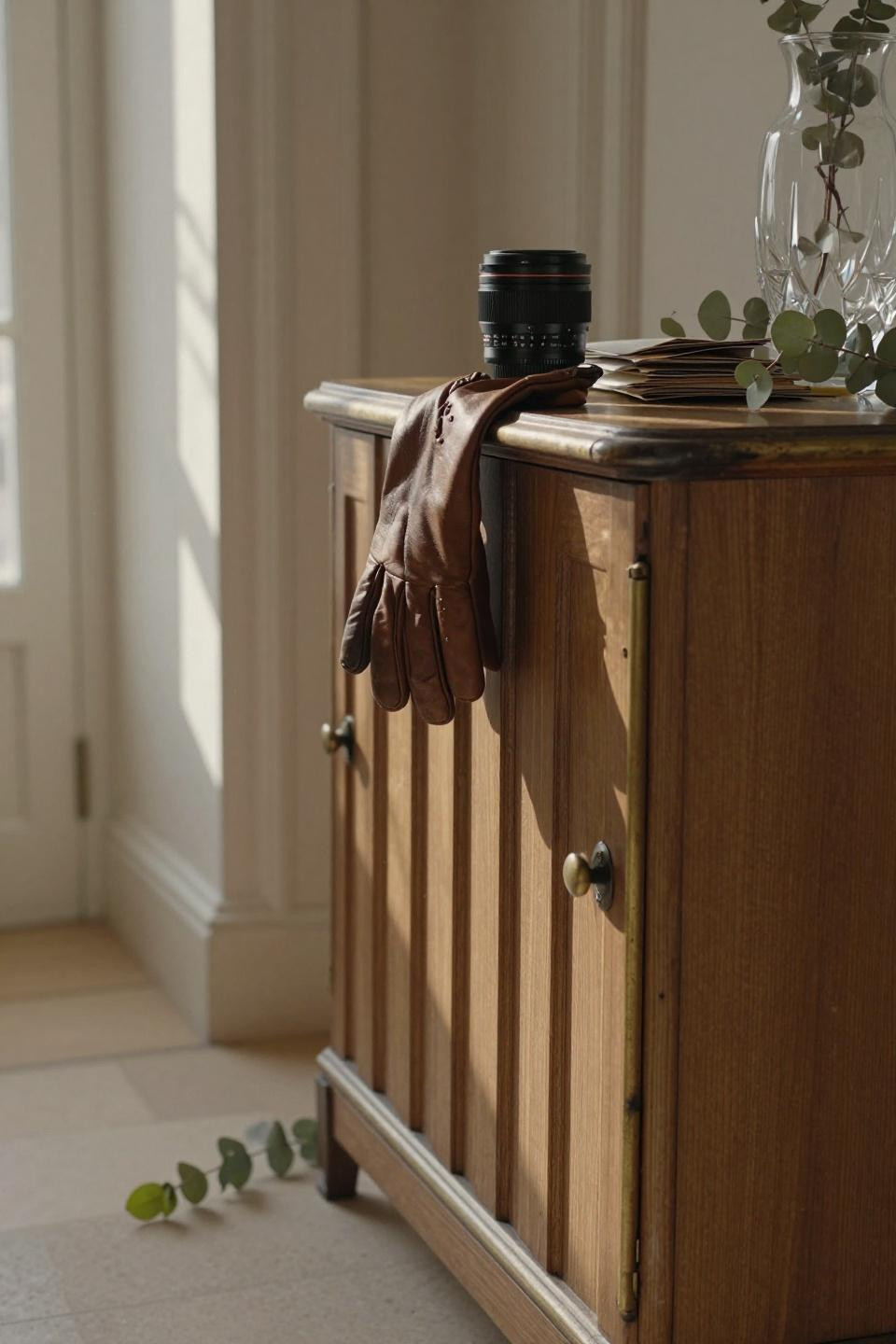
Hand-carved fluted oak panels in honey-toned grain with unlacquered aged brass pulls. Smooth cool metal against warm silky wood. The vertical grooves catch chiaroscuro shadows that flat surfaces miss entirely. One leather glove draped over the edge, mail stack slightly askew, eucalyptus with one fallen leaf, finger smudges on brass. This is what convinces people craftsmanship is worth paying for. I’d use this if your entryway is narrow and you want maximum impact in a small footprint.
The Emerald Velvet Move That Elevates Everything
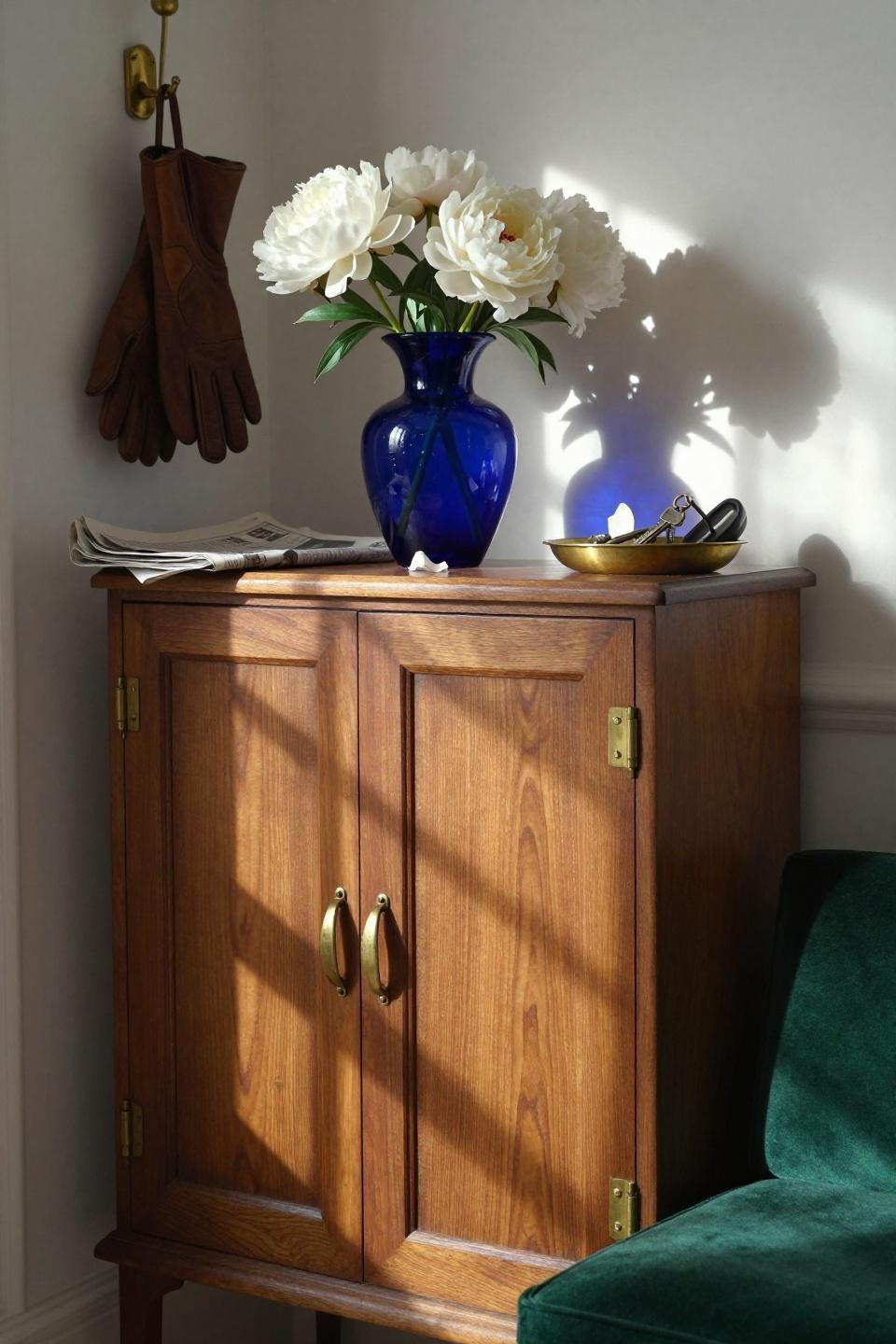
Walnut cabinet with unlacquered brass piano hinges and an emerald velvet cushion on the integrated bench. The jewel tone against warm wood and crisp white walls is the whole composition. One fallen white peony petal on the cabinet surface, vintage leather gloves draped over brass hook, morning newspaper folded imperfectly. The cobalt Murano glass vase is another pop of saturated color. This works when you need one piece to anchor a neutral palette. Just commit to the color—pale versions don’t have the same impact.
Trailing Plants That Actually Belong There
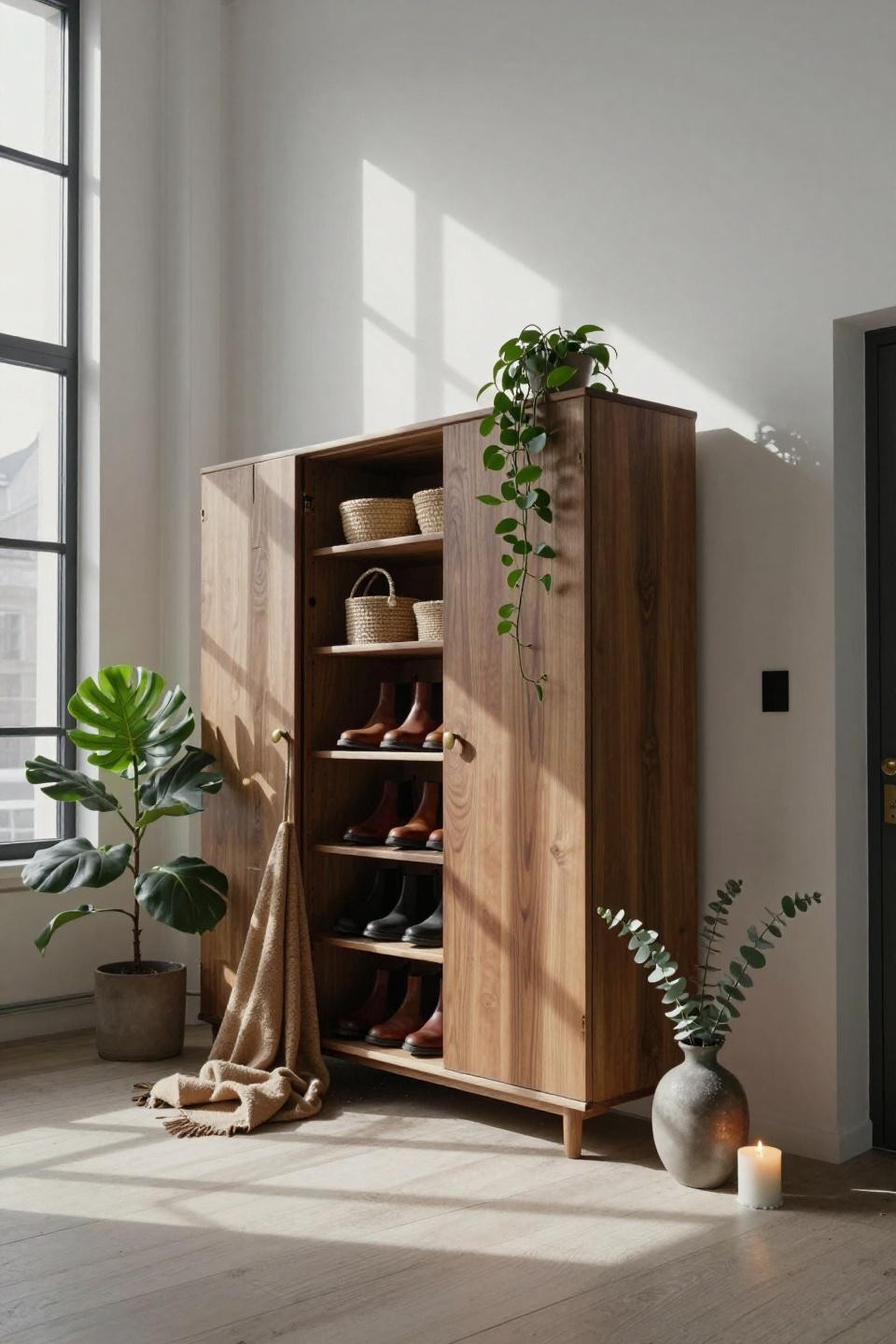
Floor-to-ceiling walnut with open shelving displaying cognac Chelsea boots, rattan baskets, and trailing pothos vines. The greenery makes it feel less like storage and more like a curated moment. Camel wool throw draped casually with one corner touching the floor, eucalyptus beside a half-burned candle with visible wax drips. The unlacquered brass pulls with natural patina tie it to the rattan. Best for spaces with massive windows where plants will actually thrive—otherwise you’re just replacing dead pothos every two months.