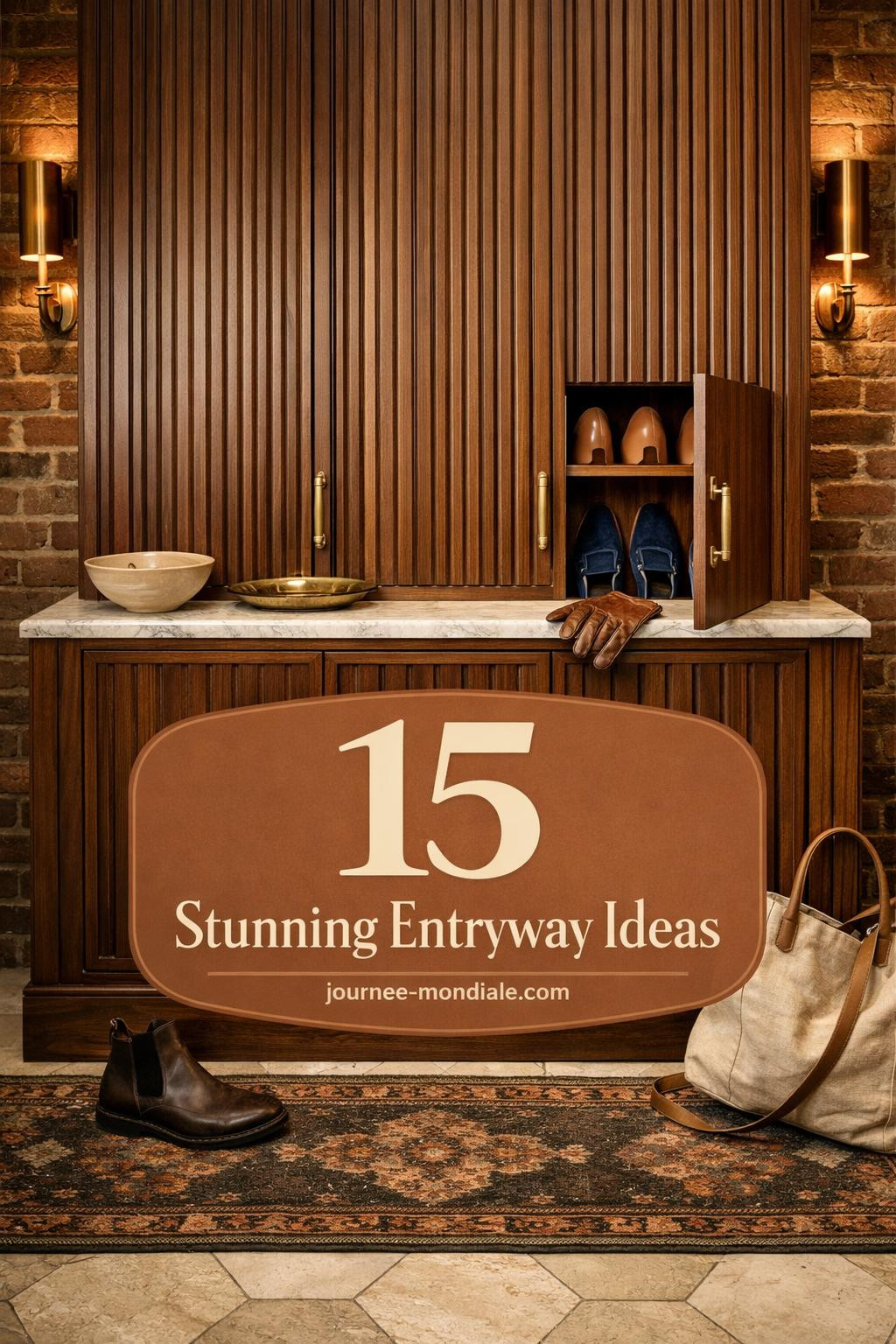
Shoe storage cabinet entryway setups either look intentional or like an afterthought. The difference? Materials and how you style what’s on top.
The Scandinavian Floor-to-Ceiling Move
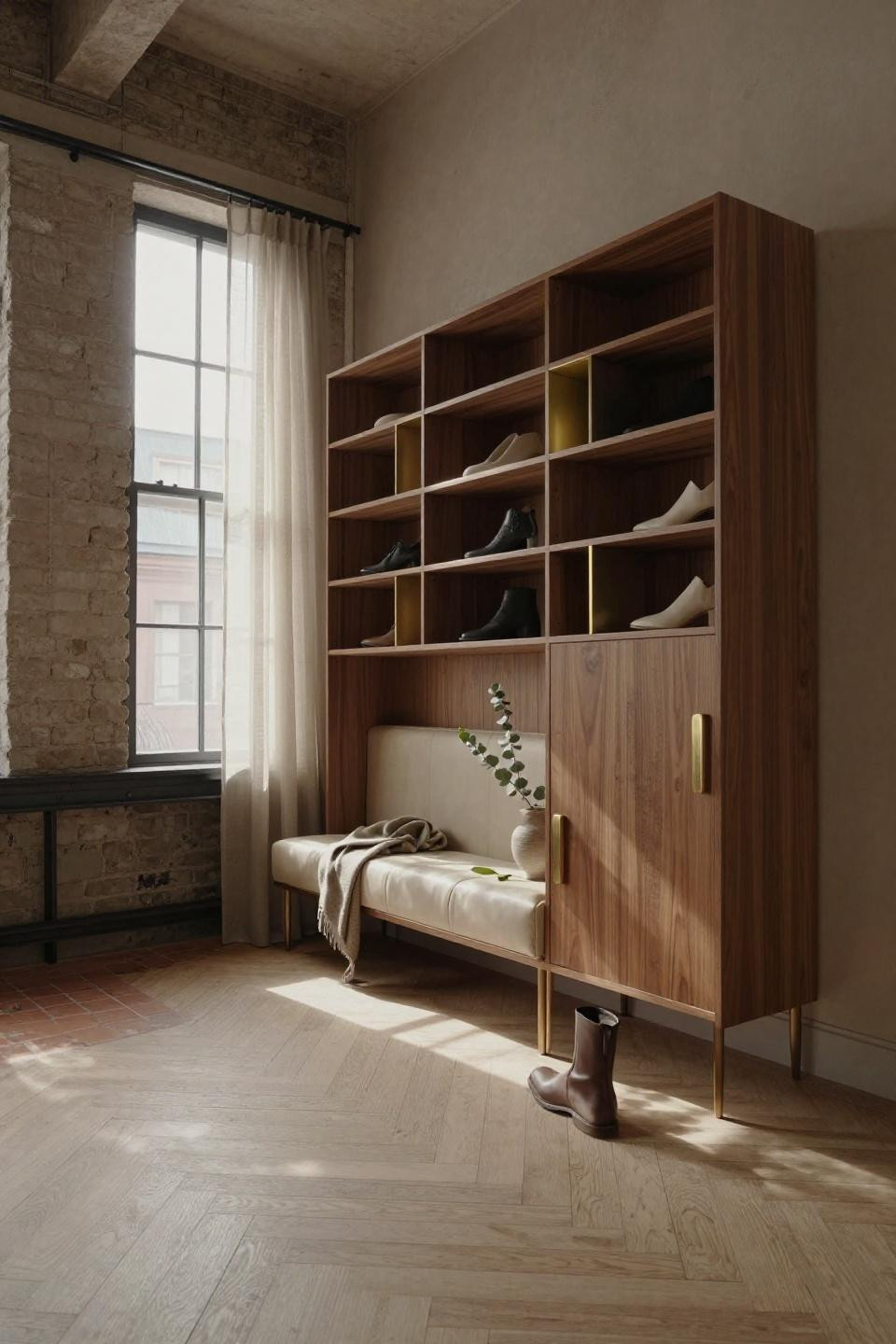
Walnut with asymmetrical brass-edged compartments turns shoes into display pieces. The height draws your eye up, which makes small entryways feel bigger. Leave one boot outside the cabinet like you just walked in. That casual styling trick makes the whole thing feel lived-in instead of staged. Works if you’ve got the ceiling height to pull it off.
Parisian Vintage Meets Modern Storage
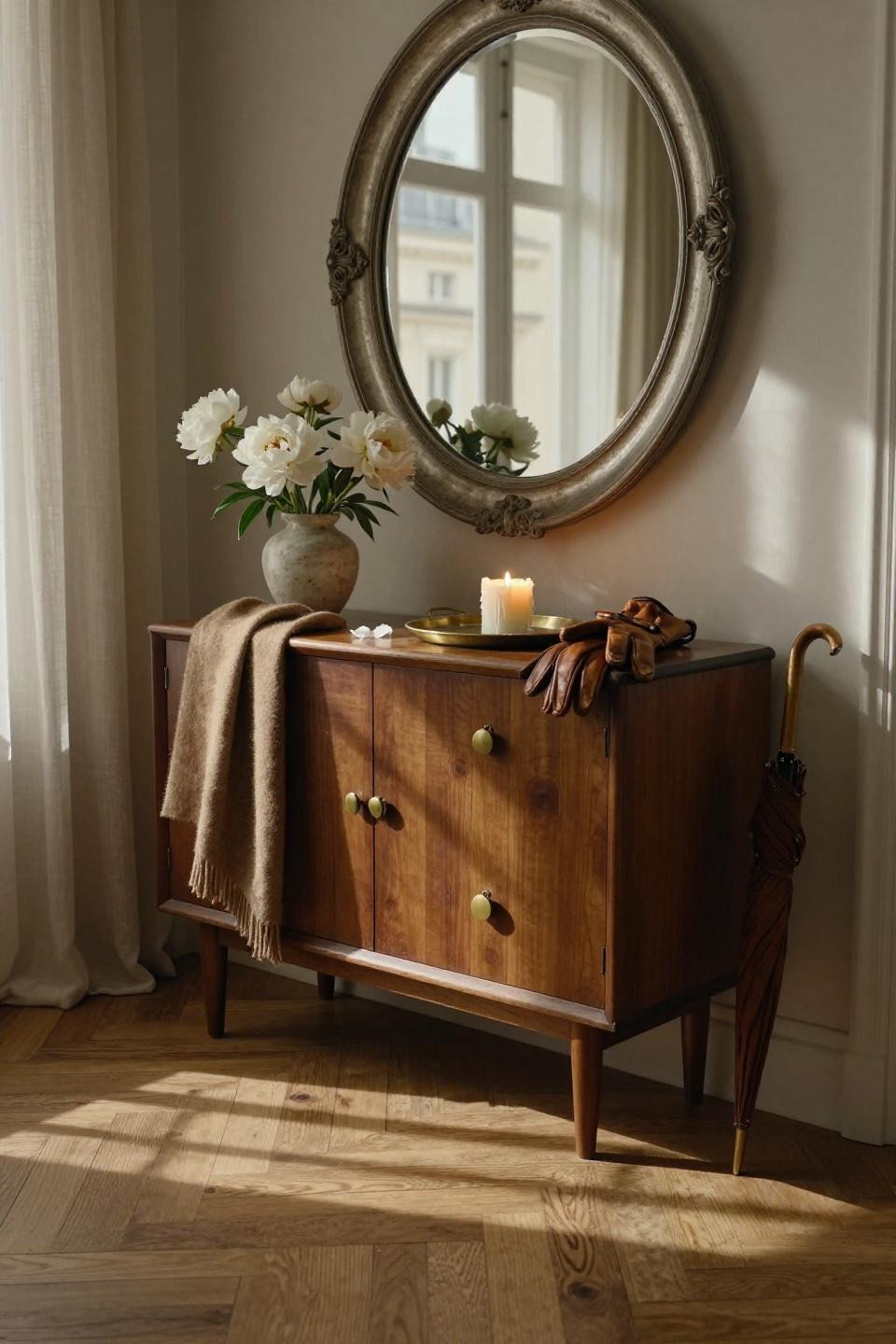
Mid-century walnut cabinet, circular antique mirror above, brass tray on top. The formula works because each piece has a different texture. Add one half-burned candle and weathered leather gloves. The gloves part is key—toss them casually, don’t fold. I’d skip this if your space is modern-minimal though. It needs a bit of architectural character to not look forced.
When Fluted Doors Make Sense
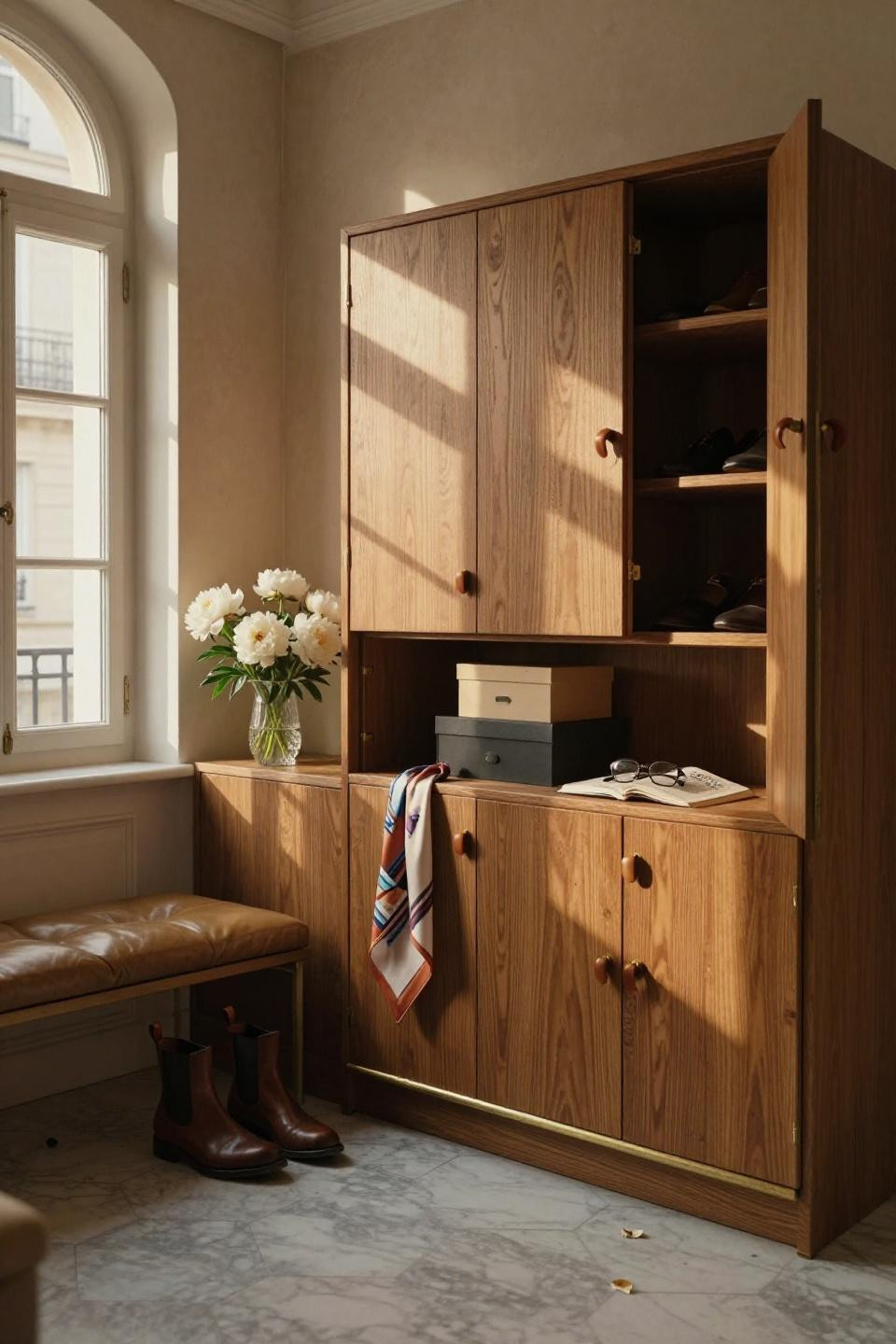
Fluted vertical grain in honey oak hides fingerprints better than flat doors. And the brass hardware with natural patina gives you permission to not polish things constantly. One door slightly ajar showing organized shoeboxes inside actually makes it look more functional. Marble hexagon floors anchor the whole thing. This setup needs width—narrow entryways make floor-to-ceiling cabinets feel claustrophobic.
The Brass Statement Nobody Expects
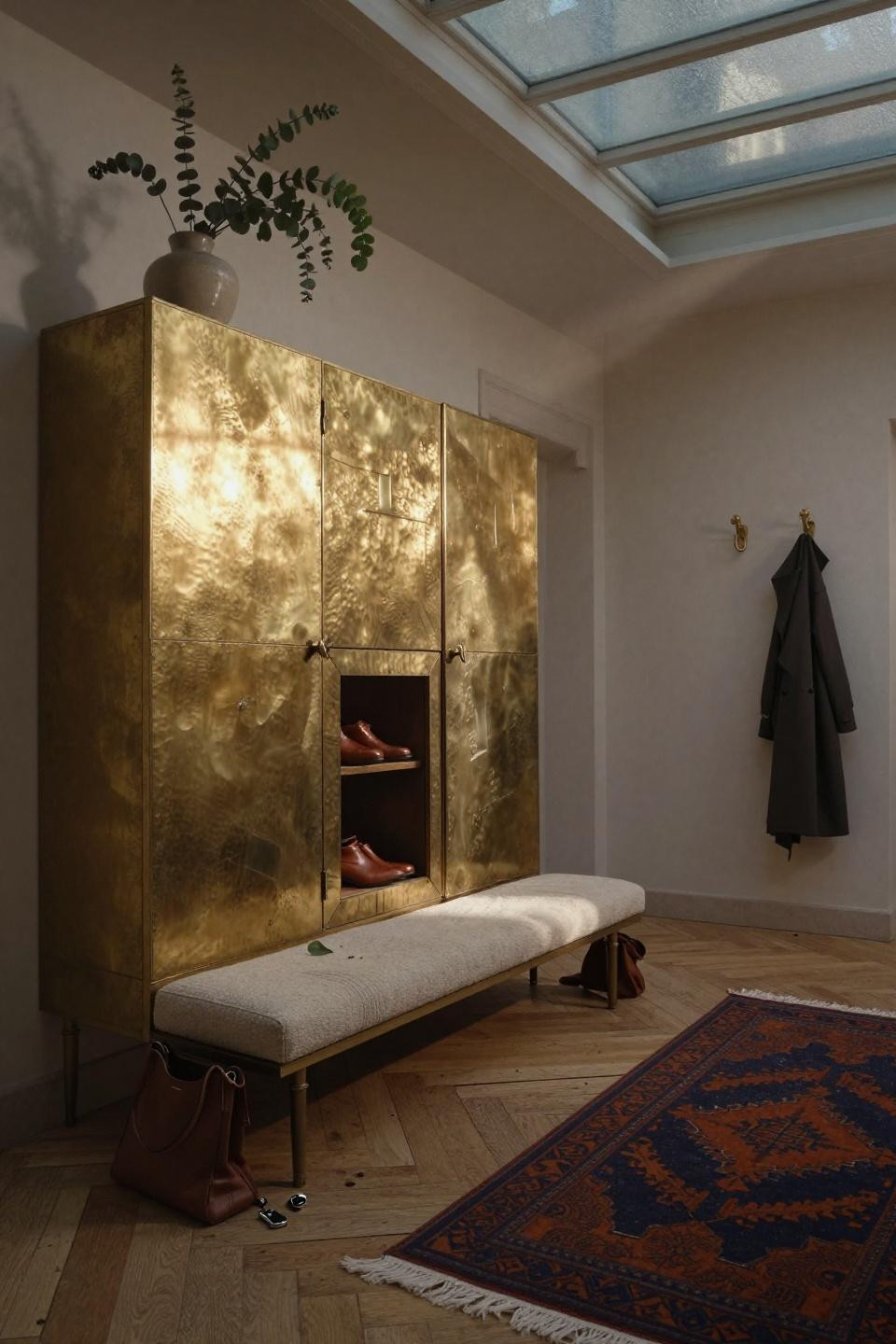
Full brushed brass cabinet with hand-hammered texture. Bold, but if you’re doing it, commit completely. The geometric door patterns let you peek at cognac leather shoe inserts inside without opening anything. I’ve seen this work in high-ceiling spaces where it becomes the focal point. Pair with rough limestone floors to balance the shine. Otherwise it’s too much metal.
Overhead Perspective That Changes Everything
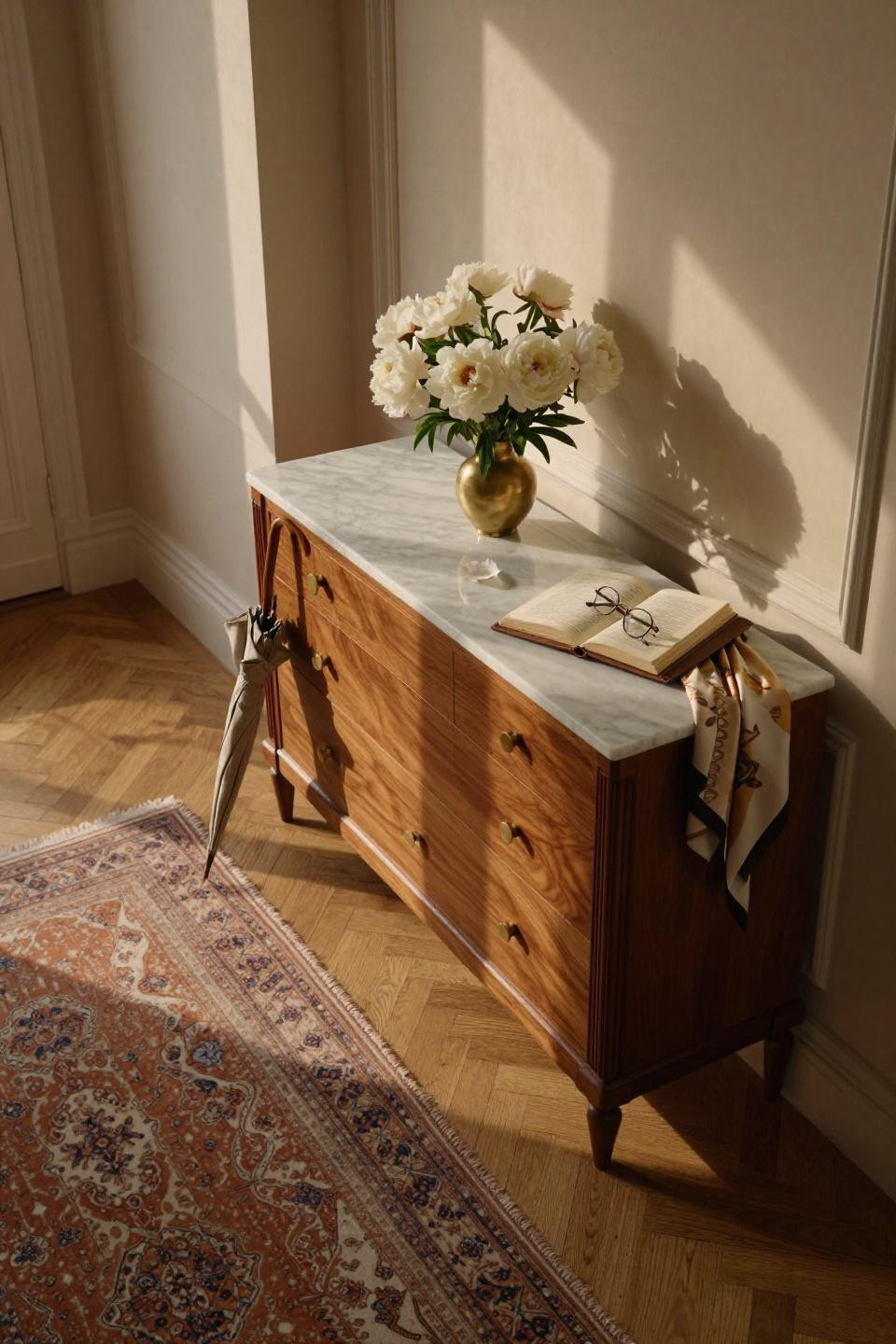
Walnut with hand-carved fluted details, honed Carrara marble for keys. The overhead view shows how the Persian runner doesn’t need to be centered. Let it sit slightly off-axis with one silk scarf draped over the cabinet edge. That asymmetry makes styled spaces feel real. Great for anyone who wants polished but not precious.
Handleless Minimalism Done Right
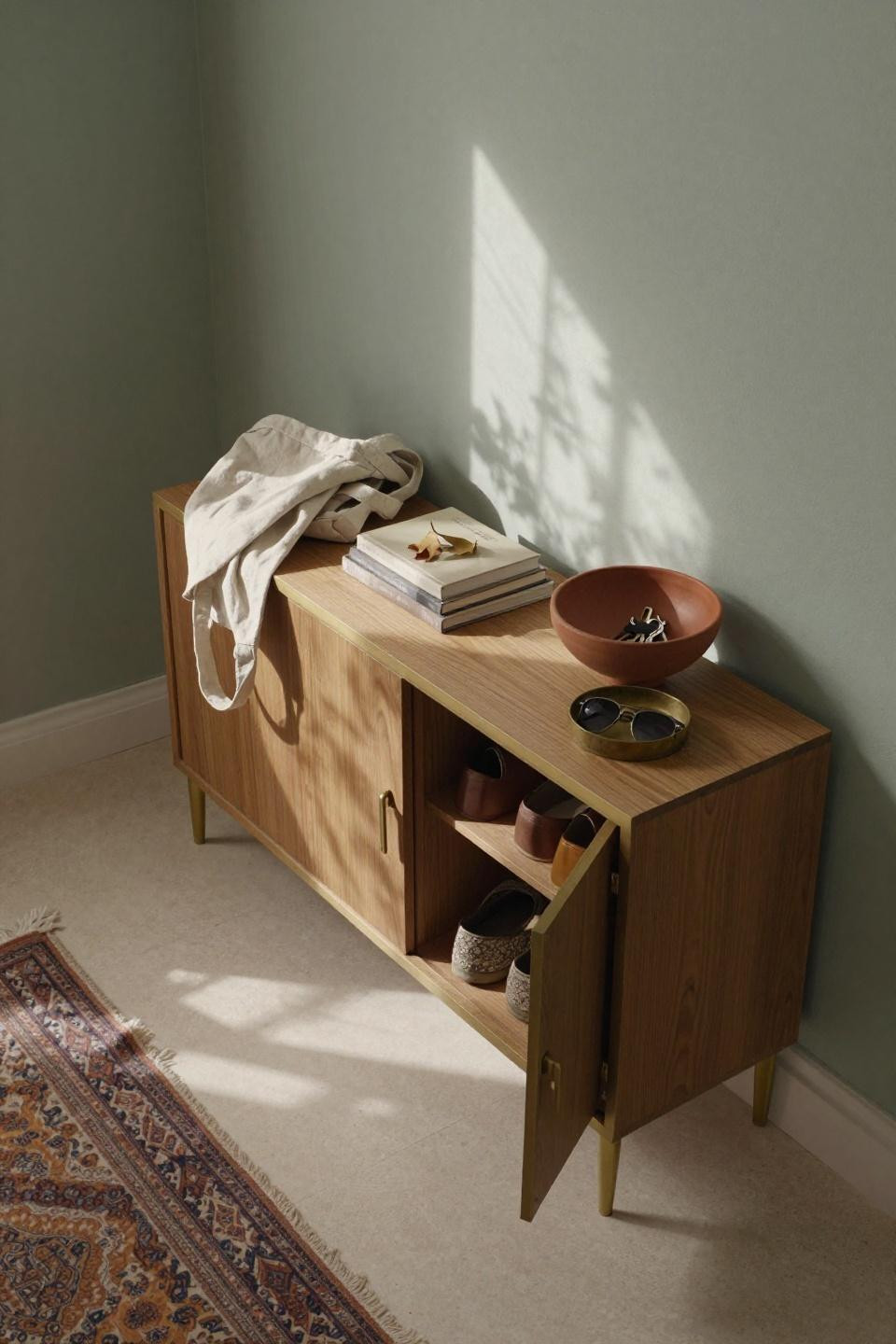
Push-to-open honey oak in a brass frame. No hardware means nothing to snag bags on your way out. Sage green accent wall behind keeps it from reading too sterile. Leave one door barely ajar and drape a linen tote with one strap falling. The burnt terracotta bowl for keys adds the warmth that all-wood setups sometimes miss.
The Brass + Marble Combination
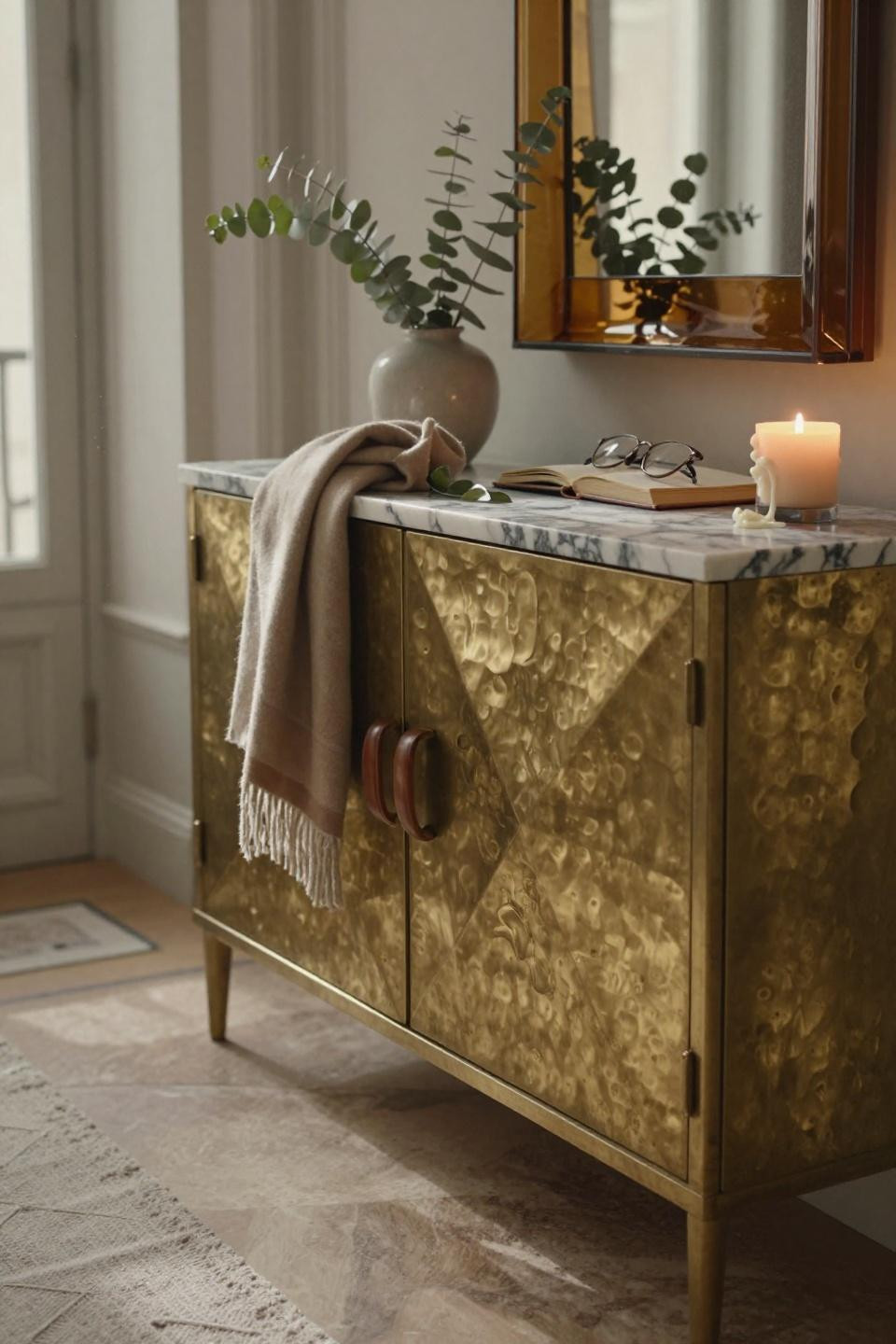
Unlacquered brass with hand-hammered texture, Calacatta marble top. The veining in the marble plays off the patina in the brass. Style with a half-burned candle and one fallen eucalyptus leaf. Don’t clean up the wax drips. I know that sounds weird, but that organic imperfection is what makes expensive materials look approachable instead of untouchable.
Geometric Inlay for Pattern People
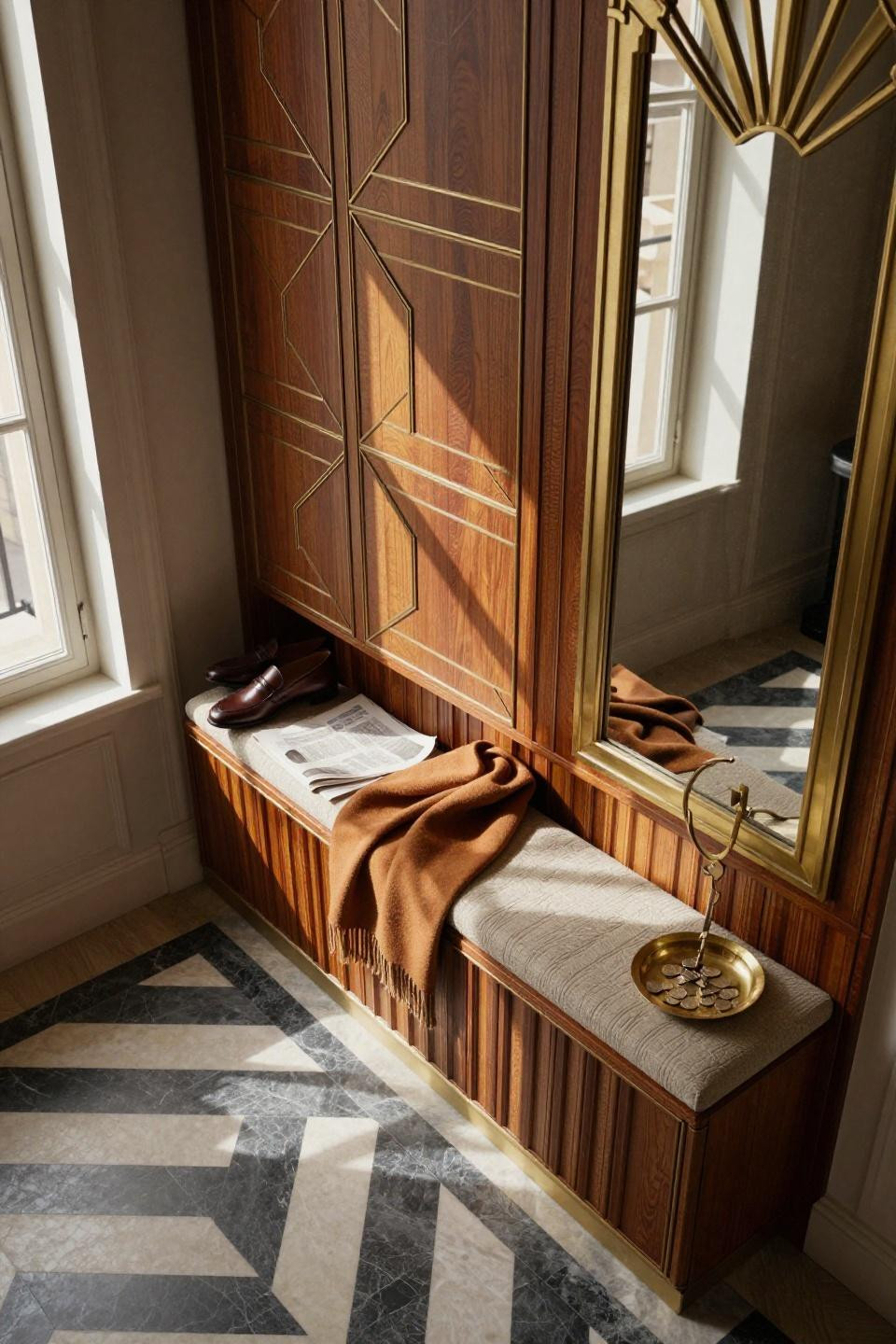
Hand-lacquered walnut with brass inlay forming honeycomb patterns. Each compartment lined with Italian leather in cognac. The geometric floor tiles in chevron repeat the pattern language without copying it exactly. Best for people who love symmetry but want it to feel custom. One loafer sitting outside its compartment keeps it from looking like a showroom.
When Exposed Brick Anchors Everything
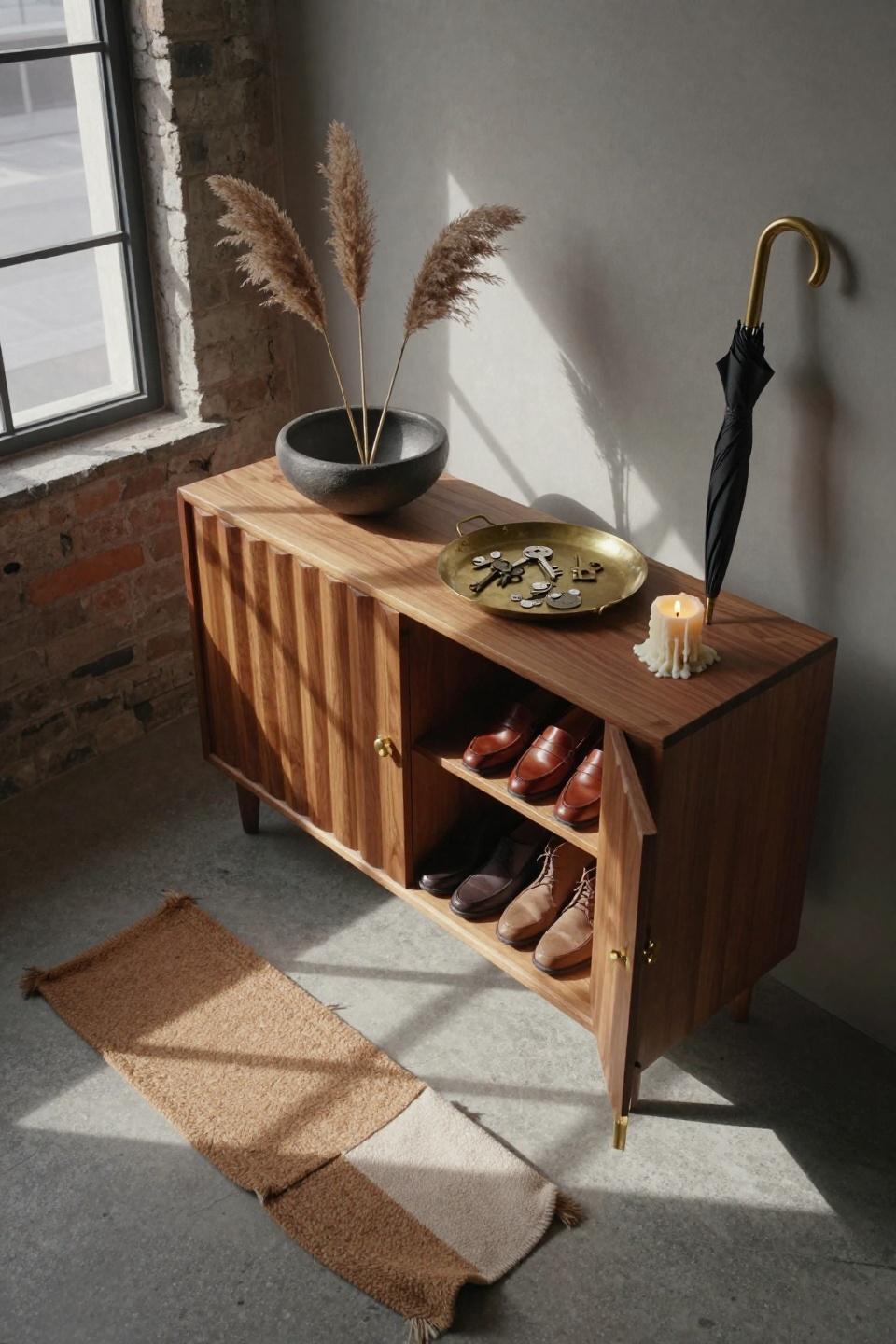
Custom walnut cabinet with fluted doors, restored exposed brick behind. The brick’s texture makes smooth wood feel even smoother. Honed limestone floors keep it cool-toned at the bottom. Pampas stems in a ceramic bowl, vintage brass tray with keys. That brass umbrella stand catching light in the corner? Small detail that ties the whole metal story together.
Alabaster Doors That Reveal Shadows
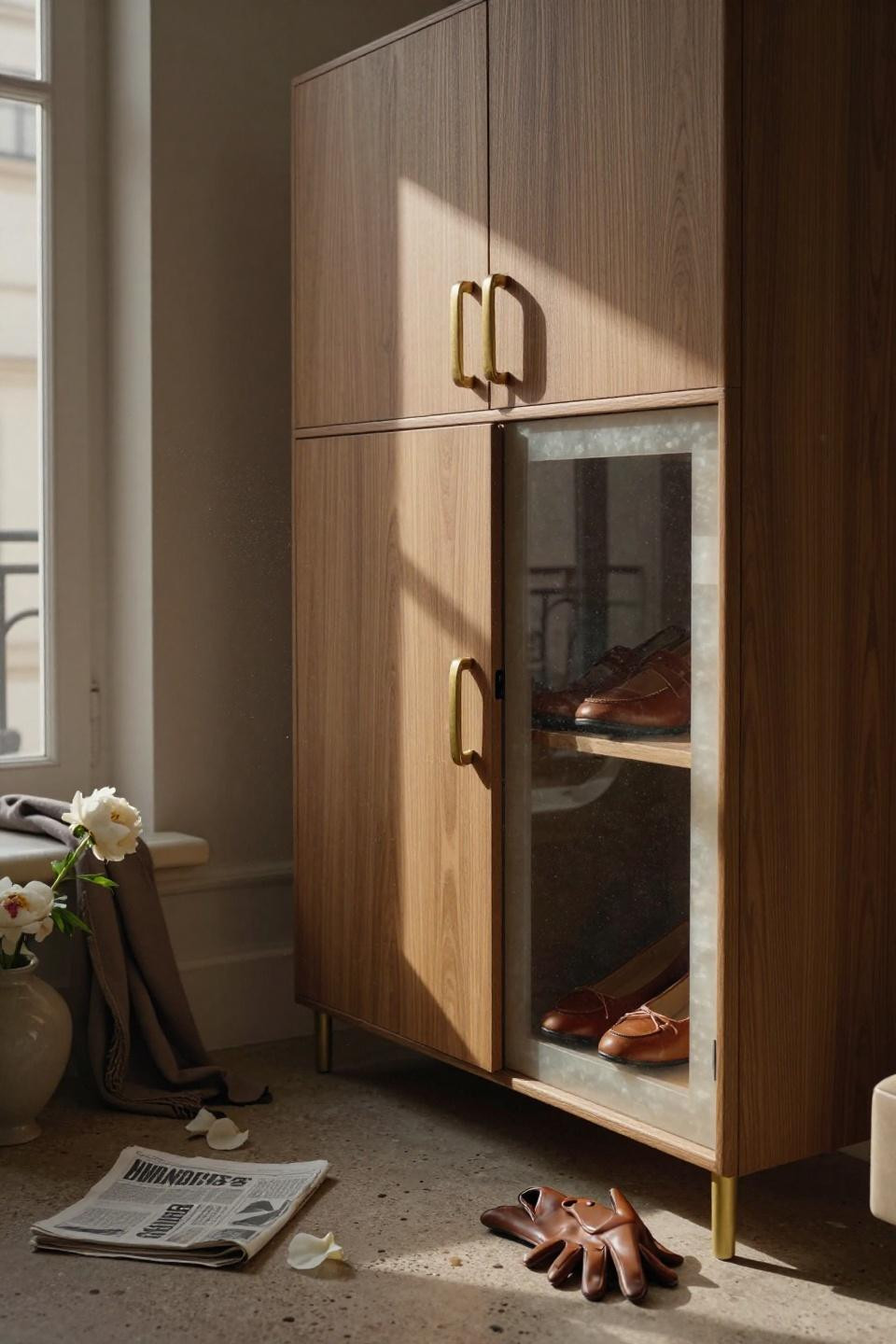
Translucent alabaster cabinet doors with shoe silhouettes visible inside. The doors slightly ajar showing cognac loafers and velvet flats arranged asymmetrically. It’s the kind of detail you’d see at a West Elm concept store. Two fallen peony petals on the limestone floor sell the whole thing. I’d only do this in spaces with great natural light though—it needs that backlighting to work.
White Oak That Warms Up Industrial Spaces
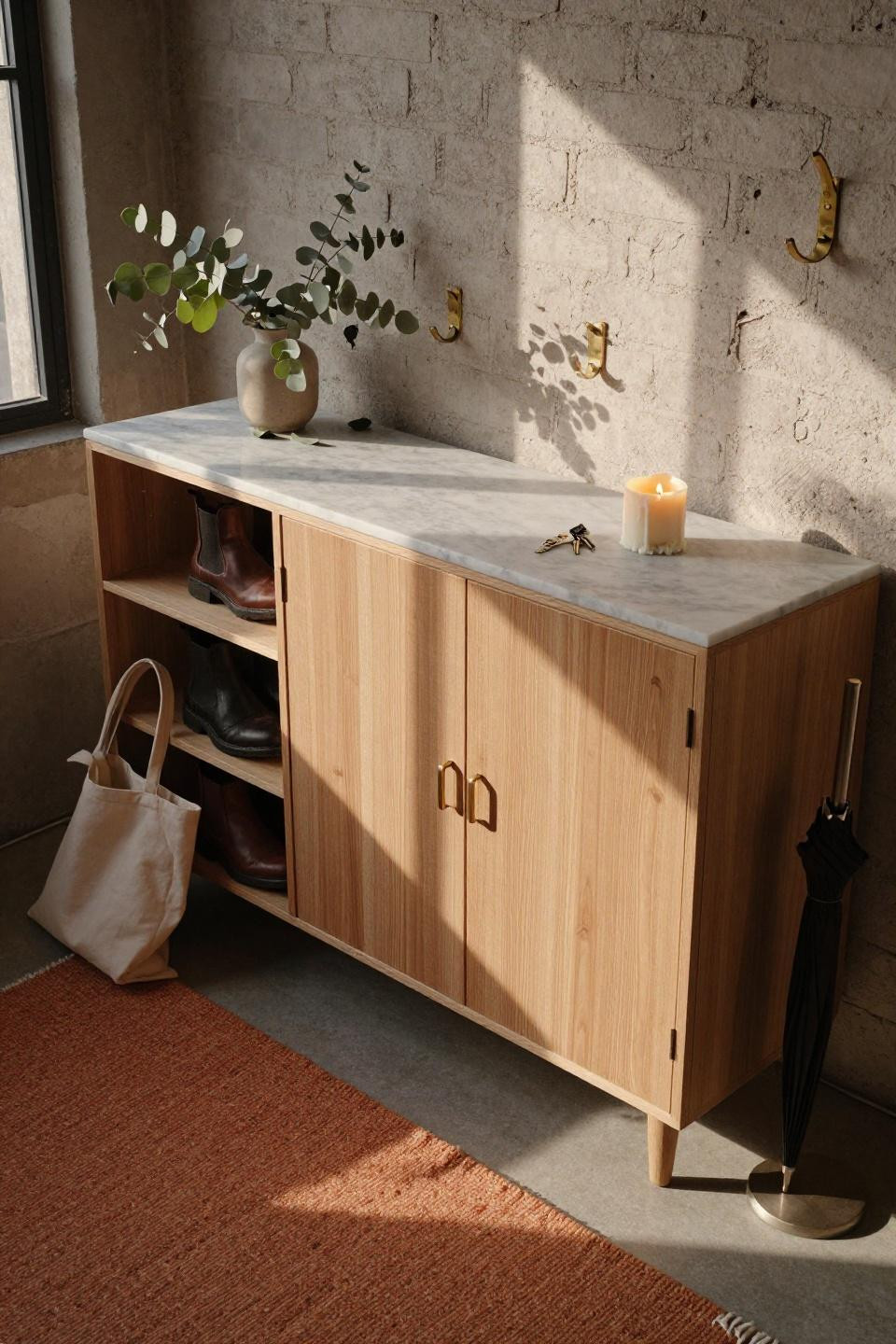
Honey-toned white oak against whitewashed brick. The mix of open cubbies and closed doors gives you flexibility—display the pretty shoes, hide the beat-up ones. Terracotta runner beneath, Chelsea boots placed slightly askew, canvas tote draped naturally. That combination of textures (nubby wool, smooth oak, rough brick) is what makes warehouse conversions feel expensive instead of cold.
Fluted Slats for Vertical Drama
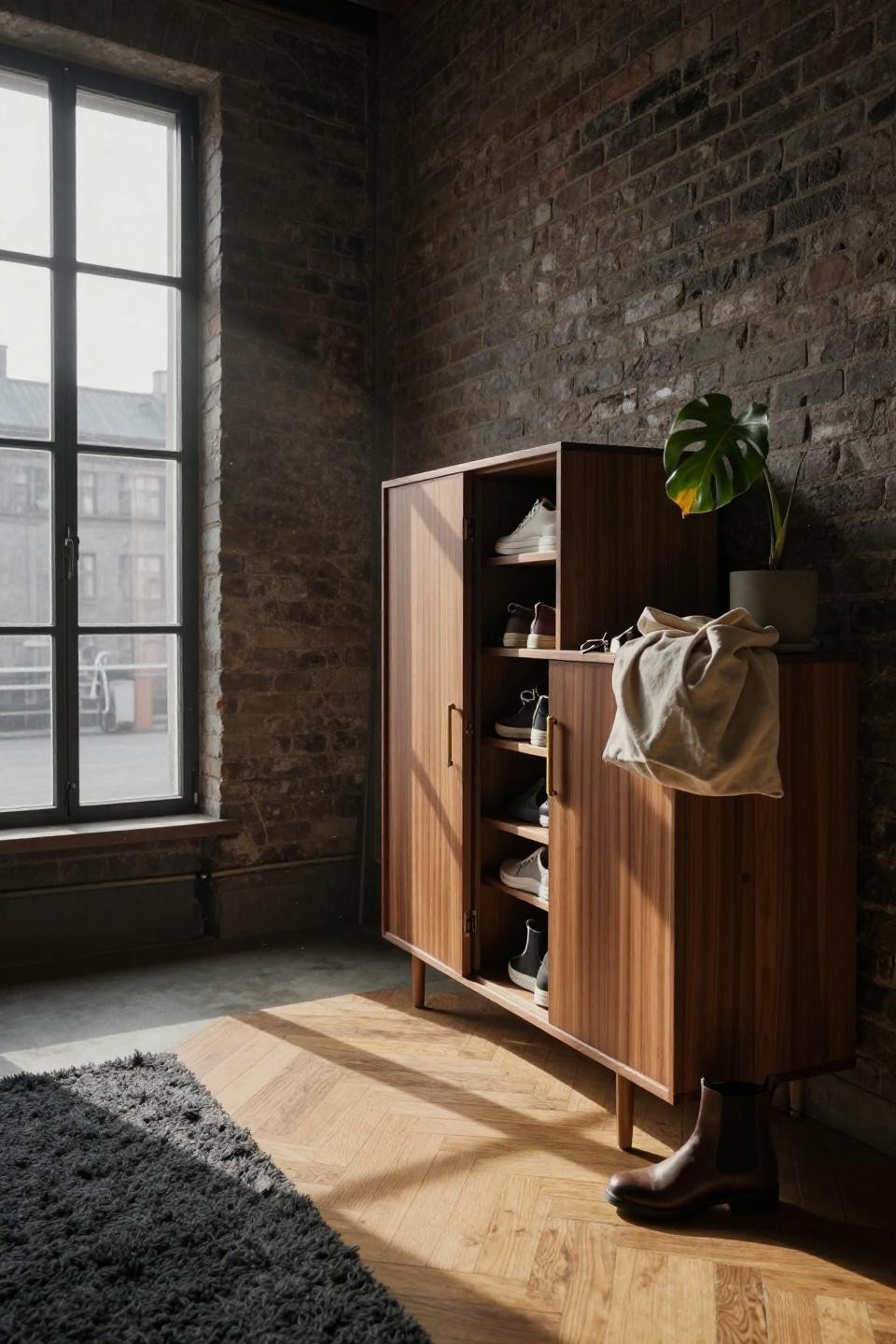
Floor-to-ceiling walnut with vertical fluted slats. The grain catches afternoon light in a way flat panels never do. Leave cabinet doors slightly ajar showing your sneaker collection. One Chelsea boot beside the cabinet (not inside it) makes it look like you actually live there. The charcoal wool runner grounds all that warm wood without fighting it.
Macro Details That Justify the Investment
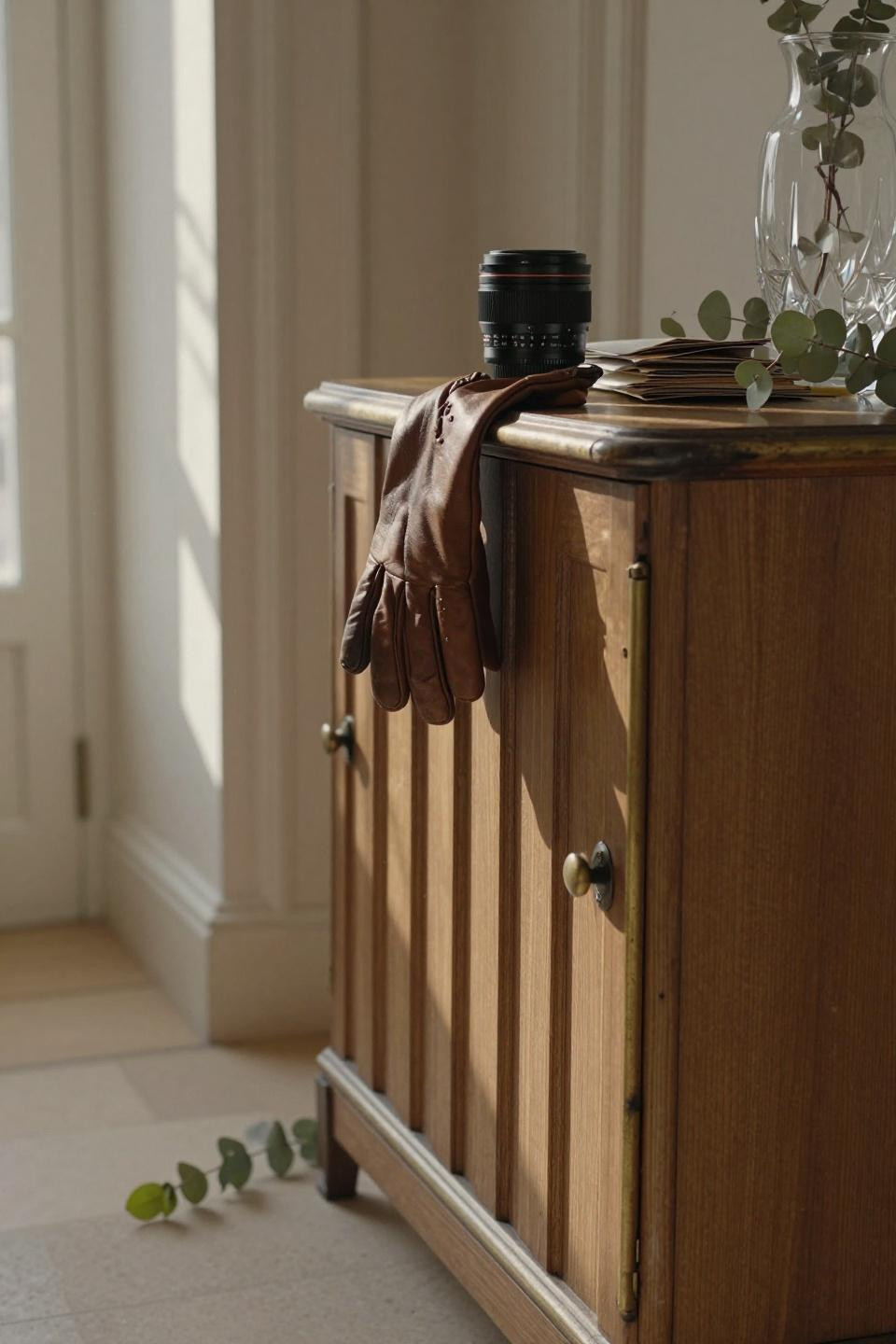
Hand-carved fluted oak panels in honey tones with unlacquered brass hardware showing natural patina. The tight crop shows why you pay more for hand-carved versus machine-milled. One leather glove draped over the edge, fallen eucalyptus leaf, subtle finger smudges on the brass. Those imperfections prove it gets used. Great if you’re trying to convince someone that a pricey cabinet is worth it.
Upper Cabinet Styling That Actually Matters
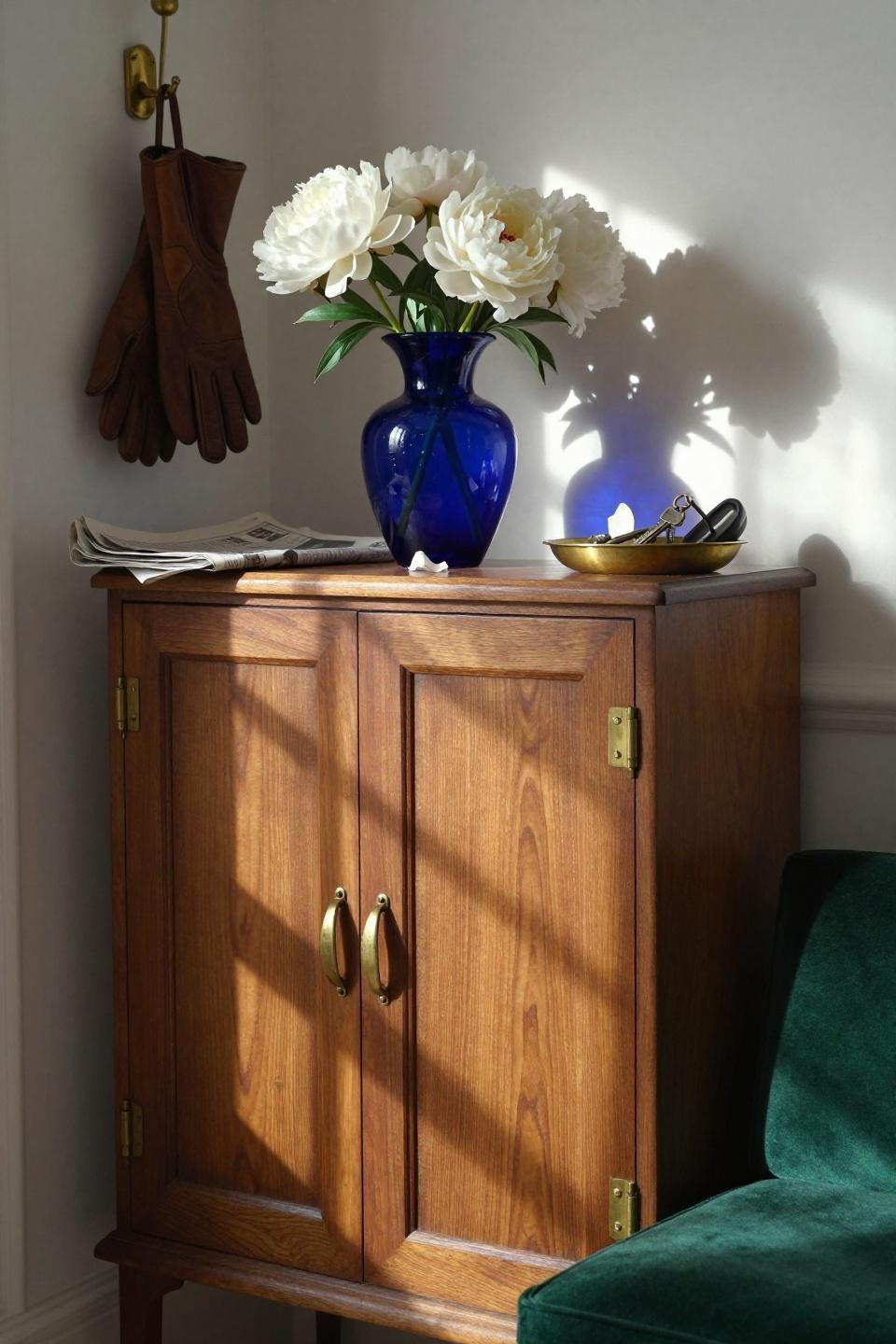
Walnut cabinet with Italian Murano glass vase in deep cobalt blue. White peonies, one fallen petal, vintage leather gloves, folded newspaper. The emerald velvet cushion on the integrated bench picks up the jewel-tone story. I’d skip the cushion if your space skews minimal. But if you like a bit of color, this formula (warm wood + one saturated accent) works every time.
Wide-Angle Warehouse Conversions
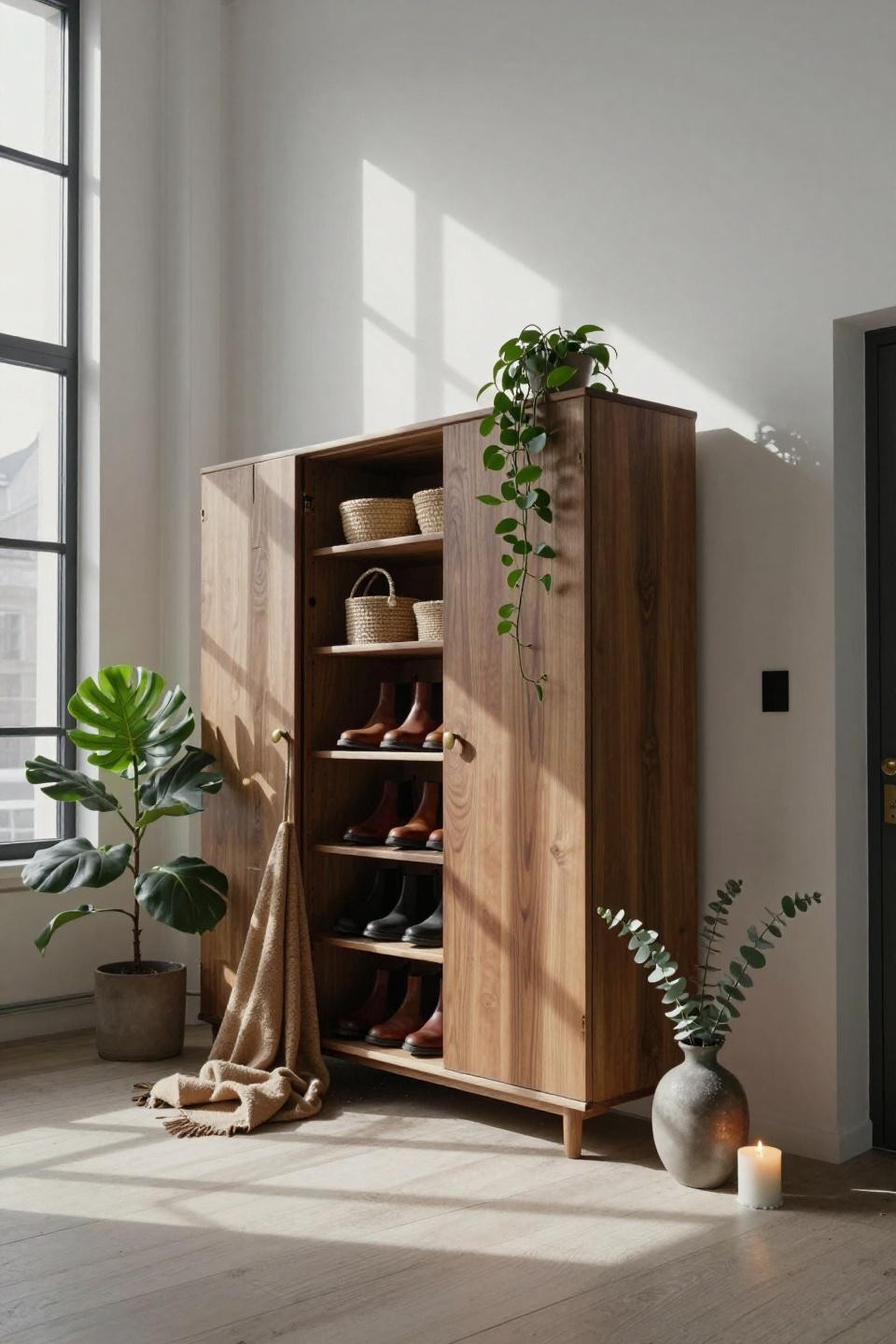
Floor-to-ceiling walnut with open shelving displaying Chelsea boots, rattan baskets, trailing pothos. The plants soften all that wood and steel. Camel wool throw draped over the edge, eucalyptus in a ceramic vase, half-burned candle with wax drips. This setup needs space to breathe—14-foot ceilings and wide floors. Cramming it into a standard 8-foot entryway would feel claustrophobic. Know your proportions before you commit.