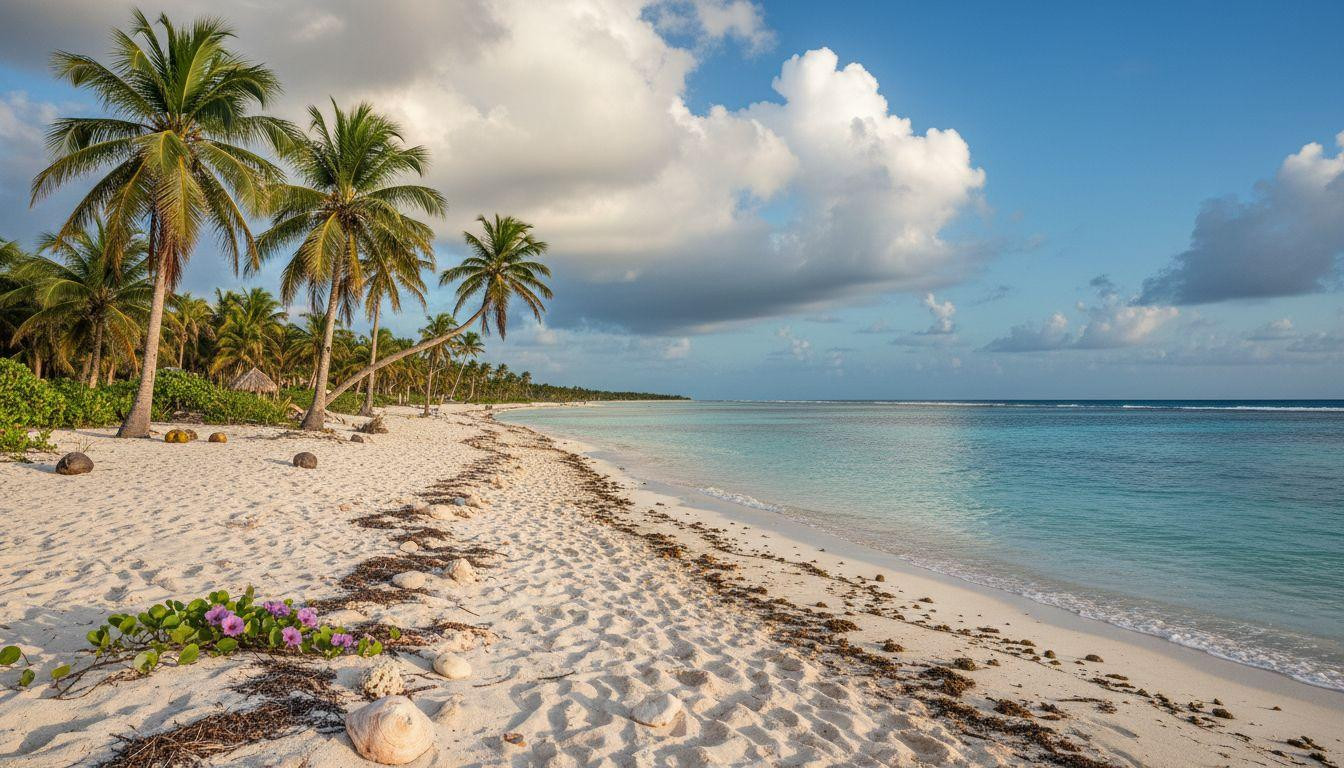
Playa Paraiso fills its parking lot by 9am most mornings in February. Lines form at the entrance gate where visitors pay $25 per person to reach the sand. Five minutes south on the same coastal road, Playa Las Palmas sits empty. Same turquoise water. Same pale sand. No gate, no fee, no crowds.
The beach runs along Kilometer 2.5 of the Tulum-Boca Paila road, tucked between coconut palms and the Caribbean. Hotel Pocna marks the southern edge. Most drivers pass without noticing the small access paths between properties.
Where the beach club music fades
The transition happens in about 200 yards of walking. Paraiso’s lounge chairs and restaurant speakers give way to natural wave sounds. The sand stays soft and white. The water keeps its impossible clarity, shifting from pale turquoise in the shallows to deep sapphire where the reef begins offshore.
Morning light hits the beach around 6:45am in February. The water temperature holds steady at 79°F through winter months. A handful of local fishermen launch small boats from the sand before most tourists wake. By 8am the beach might hold a dozen people scattered across a quarter-mile stretch.
The stretch Tulum’s boom missed
No facilities means no crowds
Playa Las Palmas has no beach clubs, no rental chairs, no bathroom facilities. Visitors bring their own shade and water. This keeps the daily count to maybe 10-20% of what Paraiso sees. Recent visitor surveys from early 2025 show Paraiso drawing record crowds while Las Palmas maintains its quiet reputation among locals who live in Tulum’s 50,000-person town center.
The beach sits within Tulum National Park boundaries, established in 1981. Public access remains protected despite development pressure throughout the coastal zone. A few small boutique properties like Diamante K operate here with minimal beach presence.
Fishermen still work these waters
The morning boat launches connect to centuries of Mayan coastal trade. Tulum’s archaeological site sits less than a mile north, a post-classic port city that operated from 1200-1500 AD. Local fishermen today run reef tours for $10-20, taking visitors to see parrotfish and rays in the protected waters offshore.
The Sian Ka’an Biosphere Reserve begins 5 miles south. UNESCO designated it a World Heritage site in 1987. The reserve’s influence keeps this section of coast relatively undeveloped compared to Tulum’s hotel zone farther north.
What you actually do here
Swimming in reef-protected calm
The offshore reef breaks most wave energy. Water stays shallow for 50 feet out, then drops gradually toward the reef line. Visibility runs clear enough to spot fish from shore. Swimming feels like floating in a warm bath with a sandy bottom.
December through March offers the calmest conditions. Sargassum seaweed stays minimal during these months, unlike the April-November season when it can pile up on beaches throughout the Caribbean. Wind picks up most afternoons but mornings stay glassy.
Where to stay without hotel prices
Camping and glamping options near the beach run $25-40 per night. Basic beach huts in the area cost $36-60. These prices sit well below Tulum’s hotel zone average of $100-plus per night. Airbnb data from 2025 shows high availability throughout the region with 271-366 days open for most listings.
Villa Pescadores and other small restaurants sit within a 5-10 minute walk. Fresh fish tacos cost $5-8. Ceviche runs $8-12. Most visitors bring their own food and drinks since vendors stay scarce on this stretch.
The morning quiet that makes it worth the drive
Sunrise colors the water in shades of gold and pink for about ten minutes after dawn. The coconut palms cast long shadows across the sand. By 7am the light turns white and hot but the beach stays peaceful.
Late afternoon brings a different quality. The sun drops behind the palms around 5:30pm in February. The water catches the last light and turns a deeper blue. Most visitors have left by then. The fishermen return with their catches and pull boats onto the sand.
Your questions about Las Palmas answered
How do I get there from Cancun?
The drive covers 75 miles and takes 1.5-2 hours via Highway 307 south. Rental cars cost $30-50 per day. Colectivo vans run from Tulum town center for $1-3 and drop passengers near the coastal road. From there it’s a short walk to beach access points near Hotel Pocna. The airport code is CUN.
When should I visit?
December through March delivers the best conditions. Water stays calm, sargassum stays minimal, and hurricane risk drops to near zero. February sits in the sweet spot with consistent 75-85°F air temperatures and 79°F water. Crowds peak during Christmas and Spring Break weeks but stay lighter than summer months.
How does it compare to Paraiso?
The beaches share similar sand and water quality. Paraiso charges $25 per person at the entrance and fills with visitors by mid-morning. Las Palmas has no entry fee and maintains a local vibe with far fewer people. The trade-off is zero facilities, so bring everything you need. For more coastal options nearby, Big Corn Island offers similar turquoise bays at lower prices than Tulum’s hotel zone.
The sand stays warm underfoot until mid-afternoon when shade becomes necessary. Coconut palms provide some cover but not enough for a full day. The water holds its turquoise color even as shadows lengthen. Walking back toward Paraiso at sunset, the contrast becomes clear. One beach built for tourism, the other still holding onto something quieter.