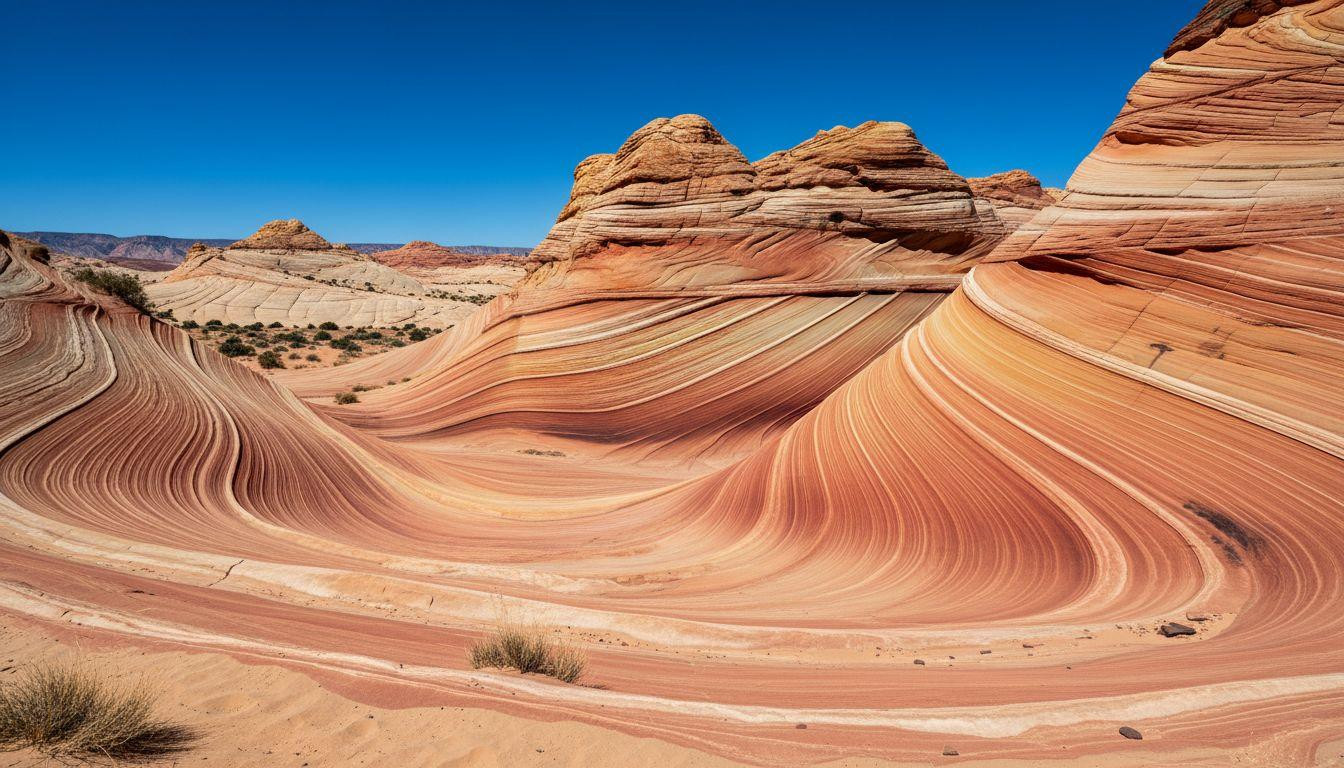
The Wave sits in northern Arizona, 5 miles from the Utah border. Red-orange sandstone curves like frozen water. Striations ripple through rock walls. Only 64 people walk here daily. The Bureau of Land Management runs a lottery. Your odds improve in winter.
This 190-million-year formation draws photographers worldwide. Light hits differently here. Colors shift from coral to rust to amber. The rock feels smooth under your fingers.
Where sandstone froze mid-flow
Coyote Buttes North holds The Wave. Wire Pass trailhead marks the start. The hike covers 6 miles round-trip. GPS coordinates guide you: 37.019°N, 112.037°W. No marked trail exists beyond the first mile.
Navajo sandstone formed from ancient desert dunes. Wind compressed sand over millions of years. Iron oxide created the red layers. Manganese added purple-black bands. Limonite brought yellow streaks. Each stripe measures inches thick.
Water carved the curves. Wind polished the surfaces. The process took 10,000 years after glaciers retreated. Cross-bedded dunes lithified into stone. Differential erosion preserved the wave patterns. The formation stands 10-15 feet high.
The color layers explained
Iron concentrations determine hue intensity. High iron zones glow orange-red. Lower iron areas fade to pink. The bands follow ancient dune slopes. Each layer represents a different depositional period. Geologists read 190 million years in these walls.
How wind carved the curves
Abrasion shaped the undulations. Sand particles acted like sandpaper. Softer layers eroded faster. Harder layers resisted. The result mimics frozen ocean waves. Touch reveals glass-smooth surfaces in the troughs.
The lottery that guards the canyon
The BLM caps daily visitors at 64. Permits split between advance lottery and walk-in. Online applications open 4 months ahead. The system uses Recreation.gov. Application fee costs $6 non-refundable. Winners pay $7 per person recreation fee.
Winter odds reach 10-12%. Summer drops to 2-3%. February 2026 applications face roughly 8:1 odds. Advance lottery distributes 48 permits. Walk-in lottery in Kanab allocates 16 daily. Peak season sees 1,000 applicants per day. Winter averages 500-600.
Winning the Wave permit
Apply online up to 4 months early. Select your preferred date. Pay the $6 application fee. Check results via email. Winners must print permits. No refunds or date changes allowed. Groups can include up to 6 people per permit.
Walk-in lottery happens in Kanab at 9am daily. Arrive by 8:30am to register. The office sits at 745 East Highway 89. Geofenced online applications open 2 days prior. Success rates vary by season and day of week.
What happens on permit day
Start early from Kanab or Page. Drive 45 minutes to Wire Pass. Park at the trailhead by 7am. Follow cairns for the first mile. Switch to GPS navigation after. The route crosses sand washes and slickrock. Minor scrambling required in sections.
Carry 3-4 liters of water per person. No water sources exist on trail. Cell service disappears quickly. Bring downloaded maps. The hike takes 4-6 hours total. Most visitors spend 2-3 hours at The Wave itself.
Walking through impossible geology
The main formation appears after 3 miles. Red-orange curves fill your view. Light creates shadows in the undulations. Morning sun hits from the southeast. Afternoon light comes from the west. Peak color saturation happens between 10am and 2pm.
February temperatures range from 50-60°F in sun. Shaded areas drop to 30-40°F. Wind whistles through the curves. Your boots scuff on sandstone. The silence feels absolute. Only 64 people share this space daily.
Seven locations beyond the main wave
Top of the Wave sits 0.5 miles from the main formation. A steep scramble leads to panoramic views. Second Wave lies 0.25 miles northeast. Similar undulations with easier access. Wave Cave offers shaded shelter nearby.
Melody Arch stands 0.1 miles away. The opening creates resonant acoustics. The Grotto provides an eroded chamber. Al’s Alcove and Fat Man’s Misery add slot canyon experiences. Each location requires GPS navigation.
Winter access advantages
February brings cooler hiking conditions. Flash flood risk drops to near zero. Crowds hit annual lows. Lottery odds improve significantly. Diffused winter light enhances color subtlety. Snow rarely affects Wire Pass access. Ice forms only after hard freezes.
Wildflowers bloom in March and April. February shows dormant desert. The landscape focuses purely on rock formations. Clear skies dominate winter months. Storms pass quickly when they arrive.
When rock becomes water
Stand inside the curves at midday. Light bounces off multiple surfaces. Colors shift from coral to rust. The rock feels cool and smooth. Run your hand along the striations. Each layer tells a different story.
Silence surrounds you completely. Wind occasionally breaks through. Your footsteps echo softly. The scale dwarfs human presence. These formations existed 190 million years before you arrived. They’ll remain long after you leave.
Compare this to Muley Twist’s seven arches in Capitol Reef. Both offer solitude. Both require permits. The Wave’s lottery makes it rarer. Only 64 daily visitors versus hundreds at other formations.
Your questions about the Wave answered
Can you visit without a permit?
No legal access exists without a BLM permit. Rangers patrol regularly. Fines start at $250 for violations. The permit system protects fragile formations. Alternative destinations include Havasu Falls or Buckskin Gulch. Both require permits but offer easier lottery odds.
What if you don’t win the lottery?
Coyote Buttes South provides similar wave formations. That lottery runs separately with better odds. White Pocket offers colorful rock without permits on some days. Toadstool Hoodoos near Page require no permits. Bentonite Hills sit 30 minutes from Wire Pass with free access and clay-based wave patterns.
How does it compare to Antelope Canyon?
Antelope hosts 4,000 visitors daily. The Wave caps at 64. Antelope requires $50-100 guided tours. The Wave costs $7 after lottery. Antelope offers slot canyon beams. The Wave provides open undulations. Both feature Navajo sandstone. The Wave feels more remote. Visit Bisbee’s copper plaza for Arizona history between attempts.
The curves glow brightest around noon. Shadows deepen the striations. Orange bleeds into red. Yellow highlights emerge. The rock appears to flow. Then you remember it’s been frozen for 190 million years.