 " itemprop="image" decoding="async" fetchpriority="high" data-lazy-srcset="https://www.journee-mondiale.com/en/wp-content/uploads/2026/02/2026-02-19-17-48-04_.jpg 1344w, https://www.journee-mondiale.com/en/wp-content/uploads/2026/02/2026-02-19-17-48-04_-300x171.jpg 300w, https://www.journee-mondiale.com/en/wp-content/uploads/2026/02/2026-02-19-17-48-04_-1024x585.jpg 1024w, https://www.journee-mondiale.com/en/wp-content/uploads/2026/02/2026-02-19-17-48-04_-768x439.jpg 768w" data-lazy-sizes="(max-width: 1344px) 100vw, 1344px" data-lazy-src="https://www.journee-mondiale.com/en/wp-content/uploads/2026/02/2026-02-19-17-48-04_.jpg">
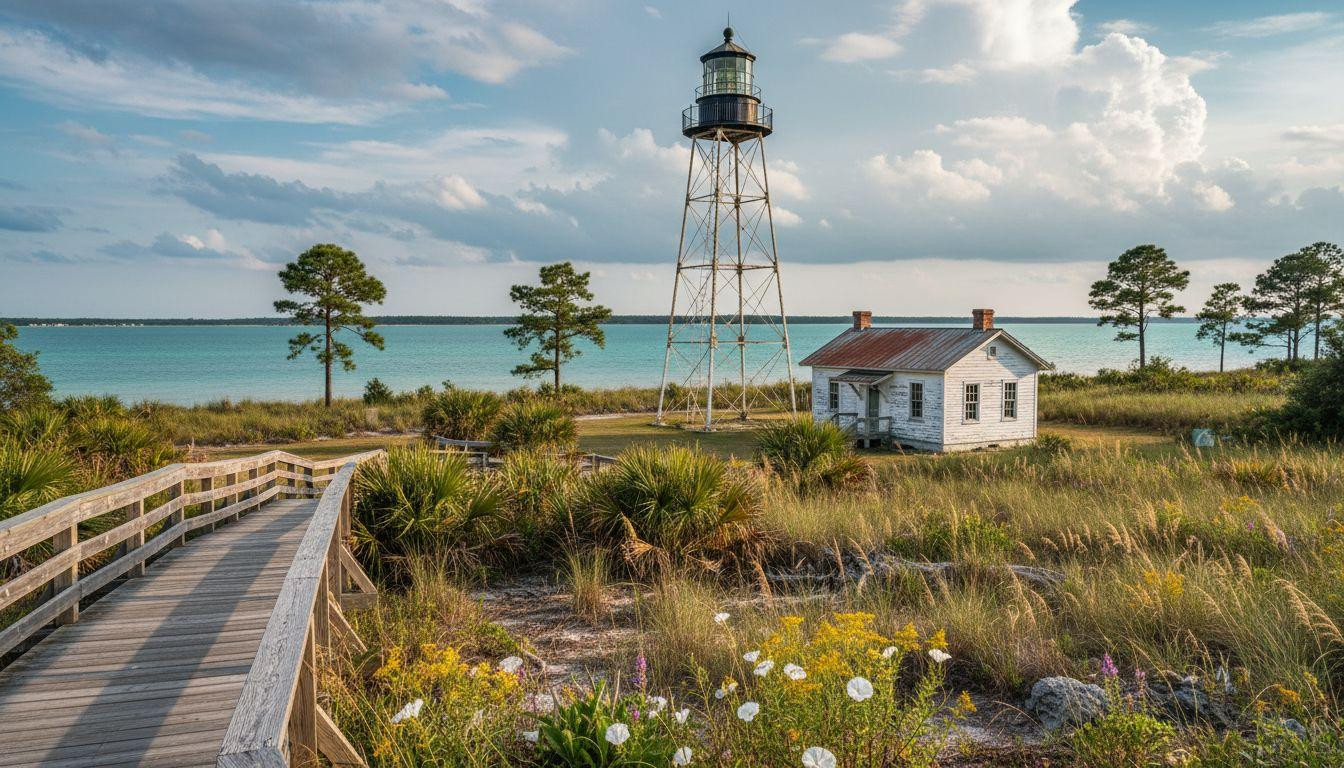
Highway 98 cuts through the Forgotten Coast, past pine scrub and salt marsh, until Port St. Joe appears. Population 3,500. A white skeletal lighthouse rises against the bay. No resort towers. No boardwalk crowds. Just a Gulf town that moved its lighthouse 12 miles in 2014 to save it from the sea.
The lighthouse survived four attempts, a Civil War attack, and Hurricane Michael. Now it stands in a park where locals walk dogs at dawn. Panama City Beach pulls 7 million visitors a year. Port St. Joe gets 500,000. The difference shows in empty parking lots and quiet marina mornings.
Cape San Blas Lighthouse: the tower that traveled
The first lighthouse went up in 1849. A brick tower. It collapsed in an 1851 gale. They rebuilt in 1856. Another storm took it. The third attempt in 1858 lasted until erosion put it in 8 feet of water by 1882. Union troops attacked it in 1862. The Gulf kept winning.
The current 98-foot skeletal iron tower dates to 1885. It stood on Cape San Blas until July 15, 2014, when a 900-foot convoy moved it 12.3 miles to George Core Park in Port St. Joe. The longest intact lighthouse move in U.S. history. Cost over $700,000 in grants and donations. Hurricane Isaac in 2012 made the decision urgent.
Now you can climb 131 steps for $5. The view spans St. Joseph Bay in turquoise gradients. Open daily, though hours vary. Waits stay under 5 minutes on weekdays. Compare that to St. Augustine’s lighthouse, which sees 350,000 visitors annually. Here, you might have the platform to yourself.
St. Joseph Peninsula: 20 miles of powder sand
The peninsula hooks into the Gulf like an elbow. White quartz sand, ultra-fine powder. Dunes thick with sea oats. Water clarity reaches 30 feet on calm days. The peninsula stretches 18 to 20 miles, most of it undeveloped.
St. Joseph Peninsula State Park covers 2,500 acres. Six miles of trails loop through scrub oaks and pines. Minimal elevation. The park logged 1,200 sea turtle nests in 2025 between May and October. Beach occupancy averages 50 to 100 people per mile in summer. In winter, 10 to 20.
Camping costs $24 per night for developed sites, $14 for primitive. Park entry is $6 per vehicle. Panama City Beach charges $25. Free parking exists at T.H. Stone Park, with over 100 spots. No reservations needed off-season. The quiet beaches of the Southeast rarely feel this empty.
Bay scalloping: Gulf treasure hunt
The 2026 scalloping season runs August 15 to September 24. St. Joseph Bay stays shallow, 3 to 6 feet deep in the flats near Eagle Harbor and Pig Island. The water stays clear enough to spot scallops from the surface. A mask, snorkel, mesh bag, and float are all you need.
The daily limit is 2 gallons of shucked scallops per person. A $10 saltwater fishing license covers it, plus a free scallop permit. Gear rentals at Point South Marina run $25 per day. Boat rentals for four people cost $300 to $500 per day. Cleaning stations sit at designated marina spots.
Bay scallops taste sweeter than Atlantic varieties. They hit peak size in September. The Florida Scallop and Music Festival runs September 18 to 20, 2026, with free entry. Raw scallops served on ice. No tourist markup. Just Gulf authenticity. For similar fishing village experiences, few places match this calm.
Point South Marina: misty harbor mornings
Fog rolls in most mornings between November and February. It lifts by 8am. Fishing boats leave at 5am, their engines a low hum across still water. The air smells of brine and oysters. Herring gulls call from pilings.
Kayak rentals cost $50 per day. No reservations required. Launch from the marina for free. The bay stays calm most mornings. Water temperature hits 68 degrees in July. In February, it drops to 60. Viewfinder restaurant sits at the marina. Fresh oysters run $20 per plate. Sheepshead tacos cost $18.
The marina holds about 50 boats. Most are working vessels. Shrimp nets hang to dry. Coolers stack on docks. This is where locals talk weather and catches. Tourists stay scarce. The turquoise bays of the Caribbean feel similar, but Port St. Joe costs half.
Historic downtown: quiet town square
In 1838, 43 delegates drafted Florida’s first constitution in Port St. Joe. The Constitutional Convention Museum sits in a restored Greek Revival building. Entry costs $2. Open Thursday through Sunday, 10am to 4pm. Original desks and delegate portraits fill the rooms. Average visit takes 30 minutes.
The town square sits one block off Highway 98. Live oaks shade 70 percent of the benches. Weathered cypress. Locals sit and talk. No rush. Fireflies appear at twilight from May through July. The square empties by 8pm.
Low-rise brick buildings line the streets. No resort signage. One general store. A few cafes. The pace stays unhurried. Compared to busier coastal towns, Port St. Joe feels like a different era.
Your questions about Port St. Joe answered
When should I visit Port St. Joe?
Late fall through early spring works best. October to April brings temperatures between 65 and 80 degrees Fahrenheit. Scalloping season peaks in August and September. Summer gets humid, with highs near 90 degrees. Hurricane season runs June through November. Crowds stay lightest November through March.
How does Port St. Joe compare to Panama City Beach?
Panama City Beach sees 7 million visitors annually. Port St. Joe gets 500,000. Hotels in PCB average $200 to $600 per night. Port St. Joe runs $100 to $400. Beach occupancy in PCB reaches 1,000 people per mile in summer. Cape San Blas averages 50 to 100. The drive between them takes 50 minutes.
What makes the lighthouse special?
Four lighthouses stood on Cape San Blas between 1849 and 1885. Storms and erosion destroyed three. The current skeletal iron tower survived a Civil War attack, Hurricane Michael, and relocation in 2014. It moved 12.3 miles, the longest intact lighthouse move in U.S. history. Now it sits in Port St. Joe, open for $5 climbs with almost no wait.
The lighthouse keeper’s quarters sit empty. The bay stretches turquoise and still. Seabirds circle the skeletal tower. Port St. Joe stays quiet while Panama City Beach fills. For now.