
Moody bedding sets hit different right now. The best ones look expensive without trying too hard.
The Forest Green Velvet That Doesn’t Read ‘Hotel’
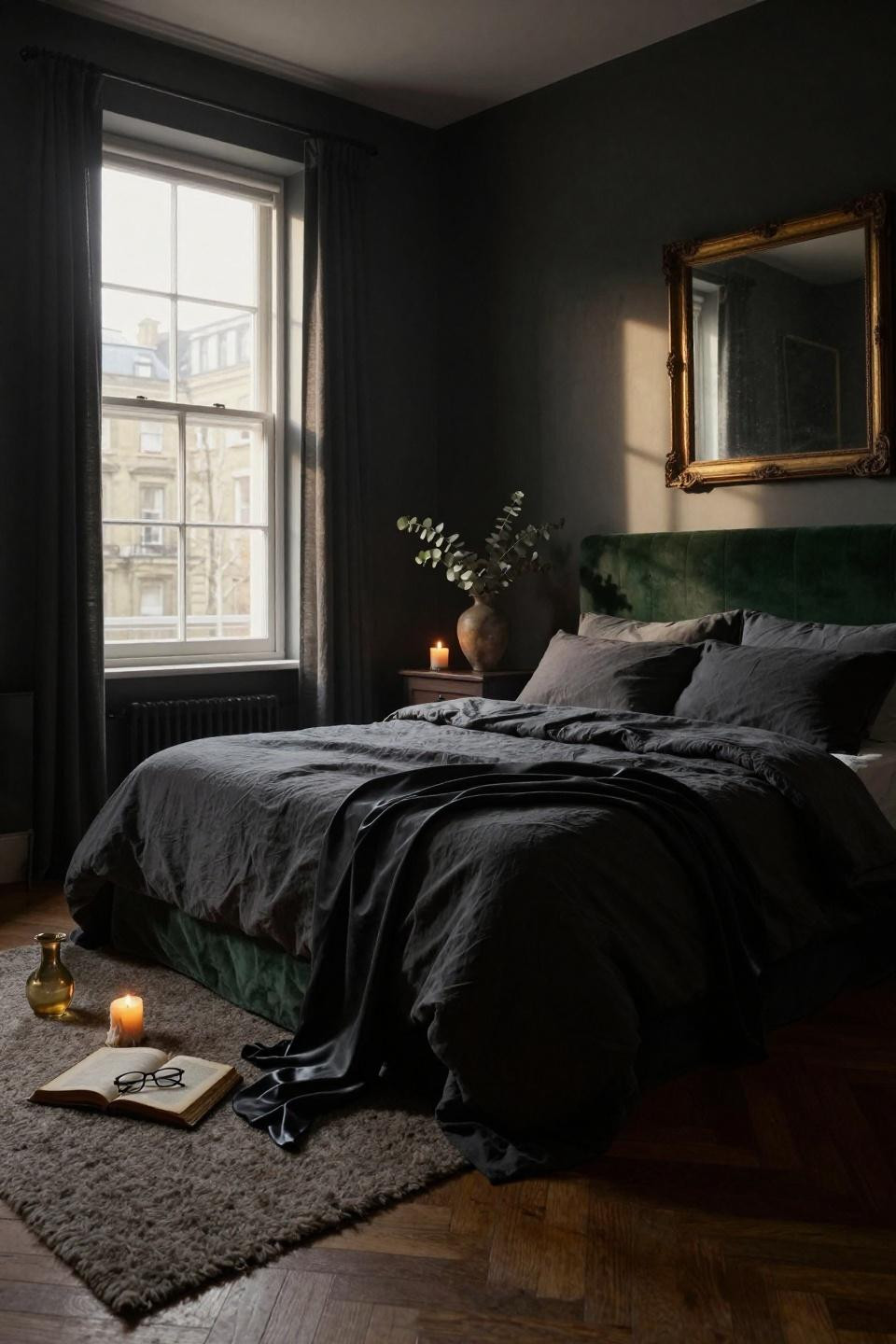
That deep forest green velvet duvet paired with slate linen? It’s the move. The texture contrast keeps it from feeling heavy—velvet adds the drama, rumpled linen keeps it livable. Honey oak floors warm the whole thing up. And honestly, the asymmetric silk throw (one corner pooling on the floor) is doing more work than you’d think. Makes the bed feel undone in that expensive way.
Four-Poster Beds Are Back (But Not How You Remember)
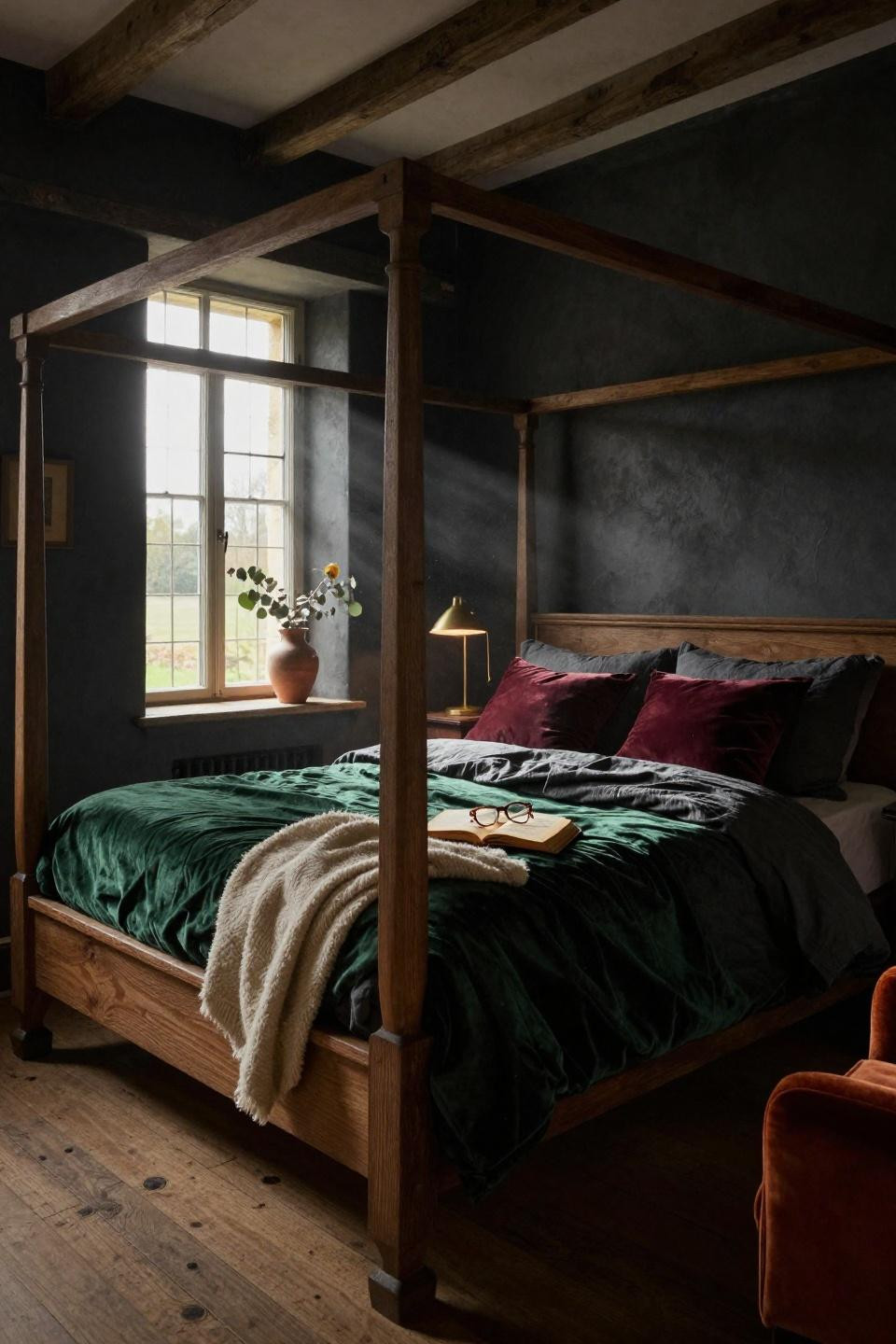
Reclaimed oak with actual grain showing. That’s the difference between this and your grandmother’s version. Layer charcoal linen with forest green velvet, throw in burgundy silk pillows for just enough color. The nubby cream throw draped off one side breaks up all that darkness. Works best when you let the wood frame be the hero—skip the fussy canopy situation entirely.
Why This Green Actually Photographs Well
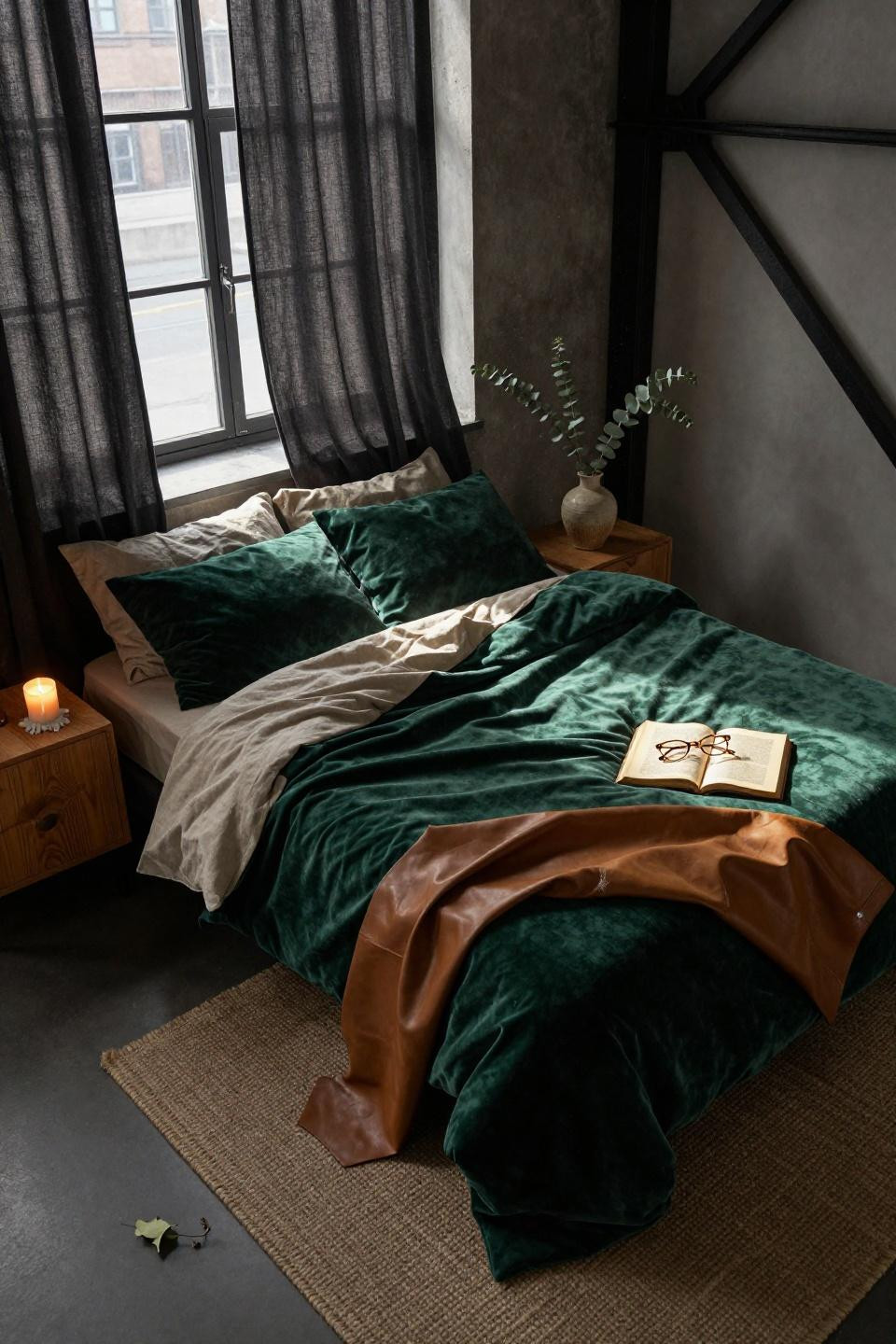
Emerald green velvet with those deep jewel undertones photographs like butter. The secret? Pair it with rough oatmeal linen, not more slick fabrics. Add cognac leather (just a throw, don’t go crazy) and warm oak nightstands. That’s 60% green, 30% neutrals, 10% brass. The jute rug grounds everything so it doesn’t float.
The Lighting Trick That Changes Everything
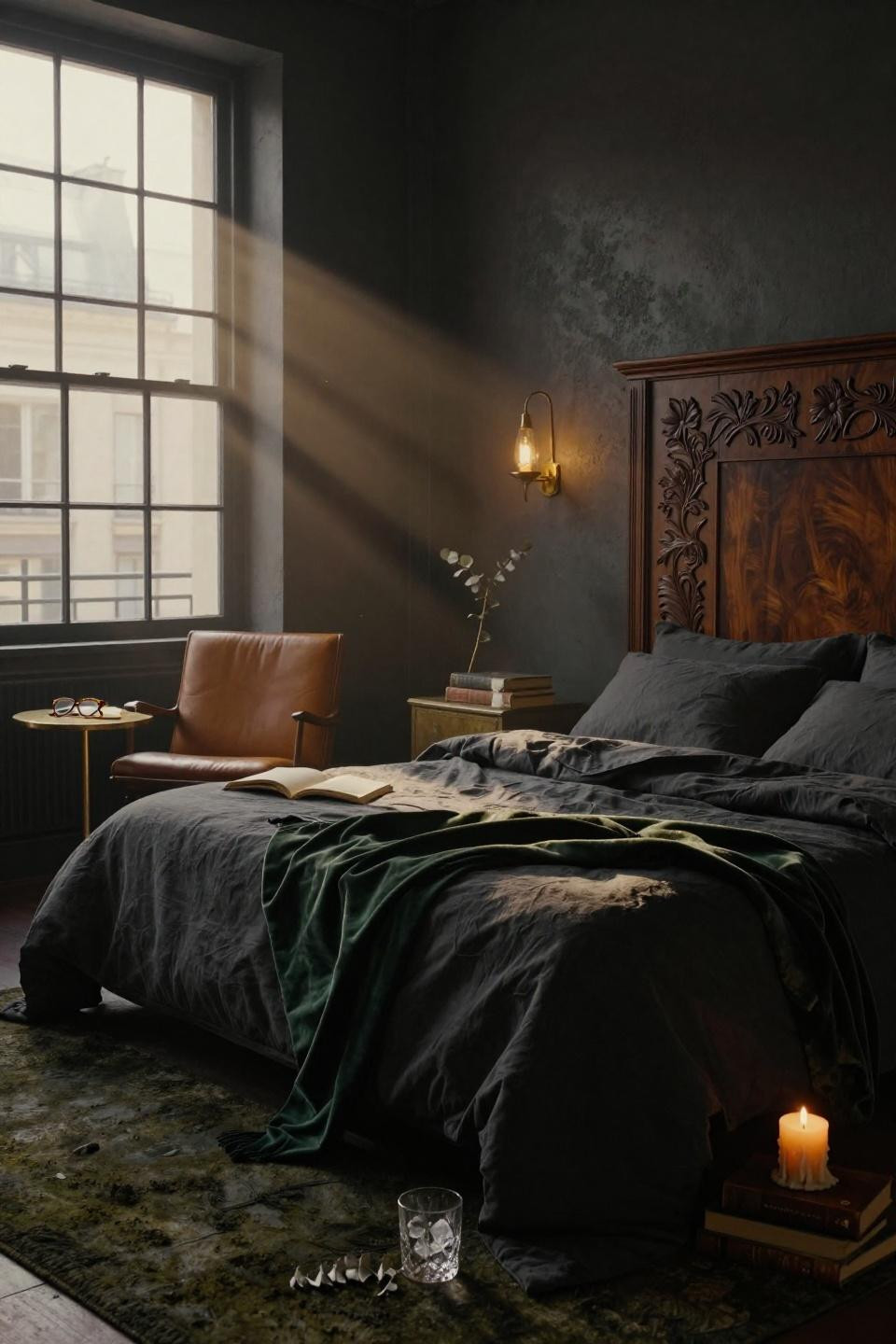
Side-lighting through tall windows turns basic charcoal linen into something you’d see in Cereal magazine. The wrinkles matter here—don’t smooth everything flat. That forest green velvet throw tossed over one corner catches the light differently than the linen. Unlacquered brass sconces add warmth without fighting the moody palette. (And yeah, the half-melted candle is intentional.)
Eclectic Doesn’t Mean Chaotic
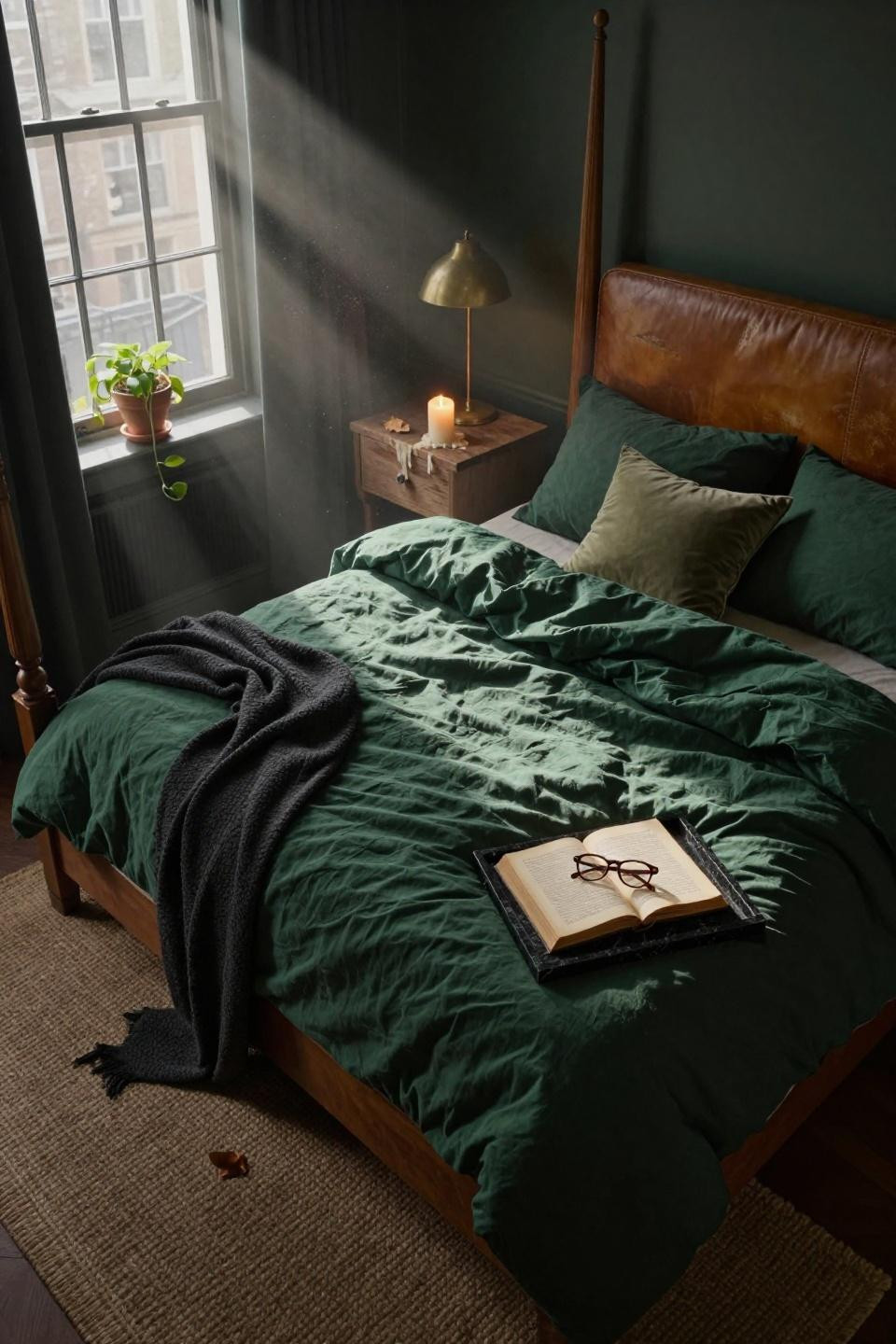
Start with forest green linen as your base. Add cognac leather (headboard or pillow), one sage velvet accent, charcoal wool throw. That’s it. The four-poster walnut frame with raw edges keeps it grounded. The trick is keeping your color split tight—55% green, 30% cognac, 15% charcoal. More than that and it tips into busy.
Cottage Bedrooms That Don’t Feel Twee
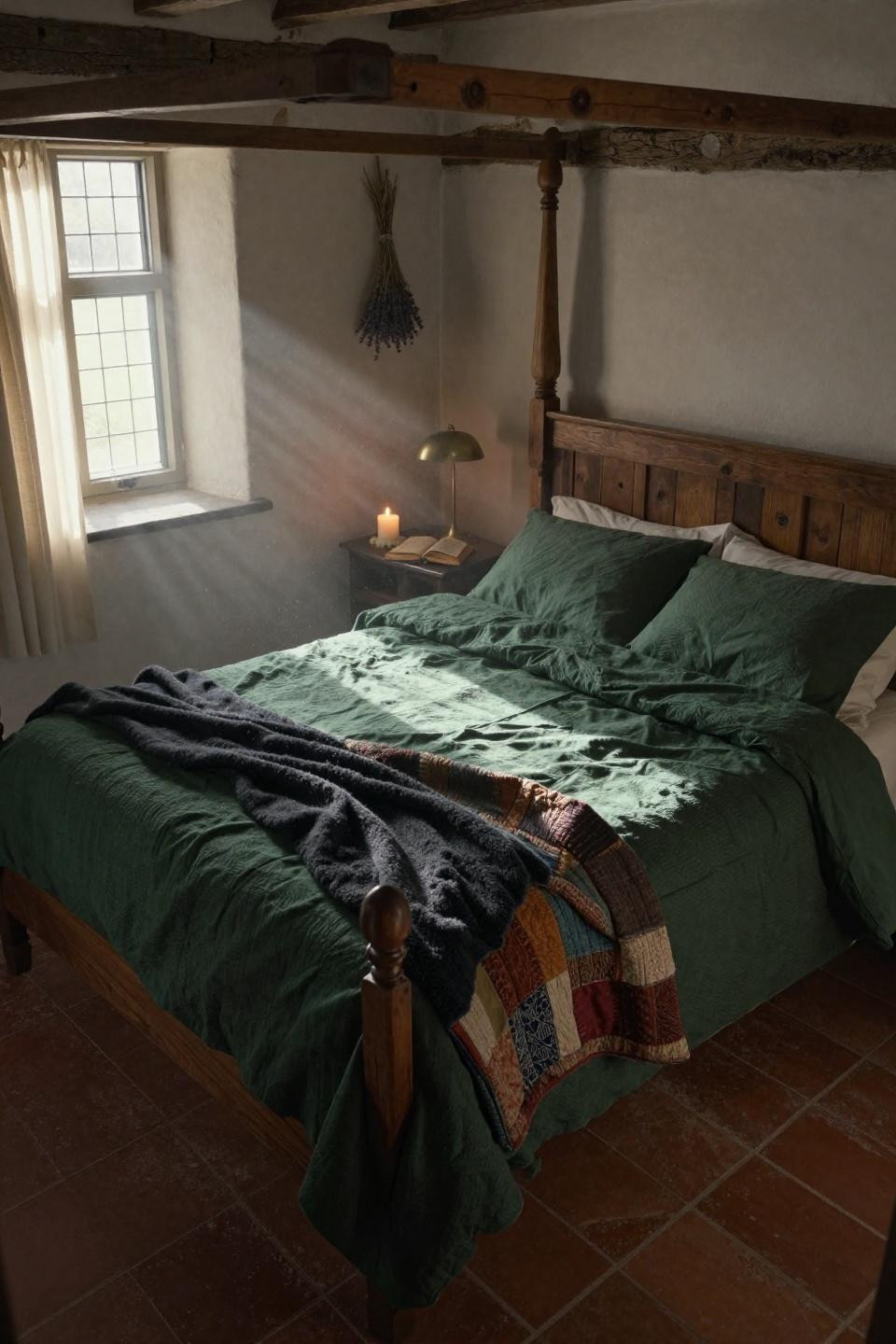
Exposed oak beams work when you go dark on the bedding. Forest green linen, charcoal wool throw, maybe a vintage patchwork quilt in faded indigo folded at the foot. The hand-carved walnut four-poster anchors it all. Keep the walls whitewashed so the whole room doesn’t turn into a cave. Terracotta floor tiles add just enough warmth.
Victorian Iron That Feels Contemporary
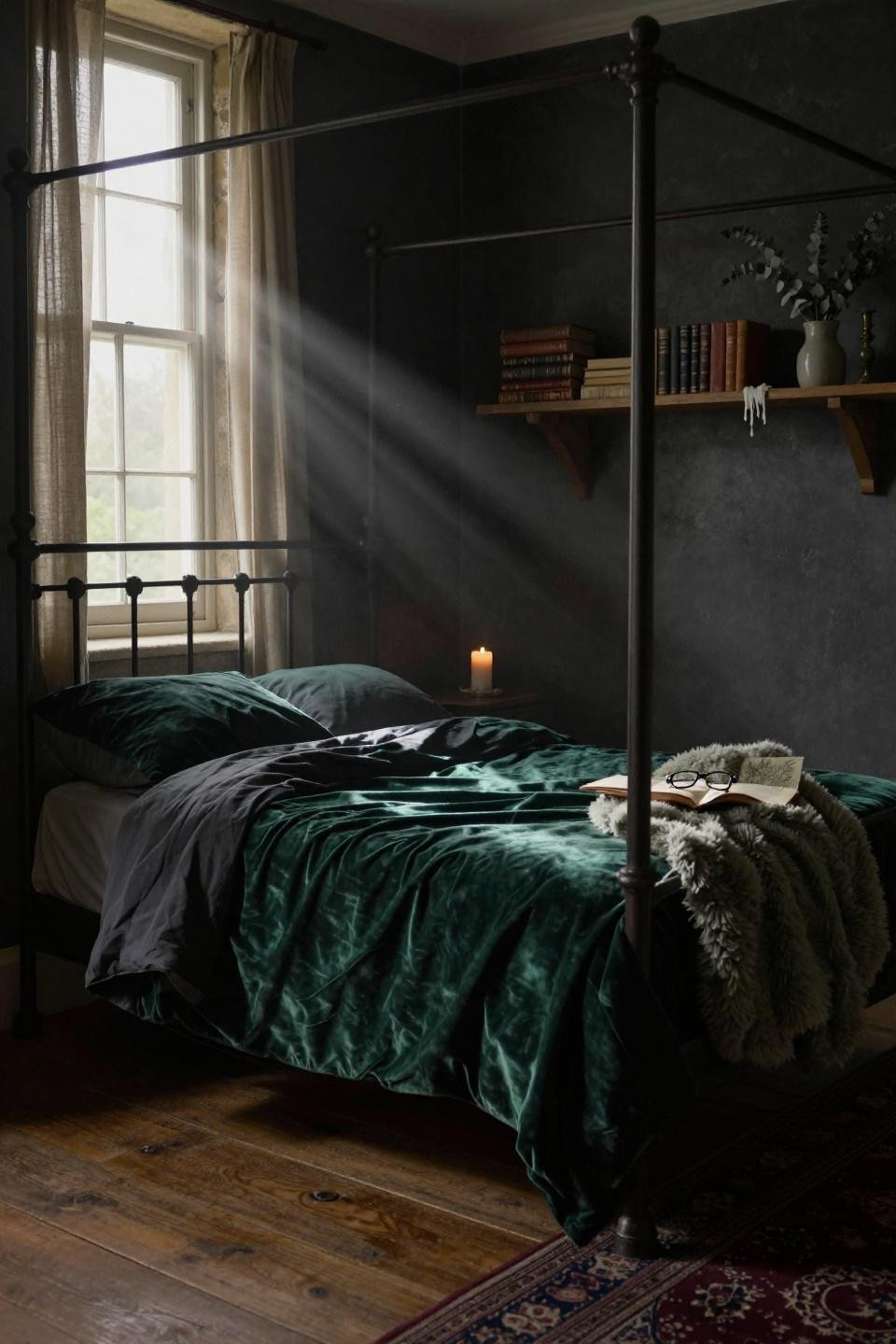
Iron four-poster frames read modern when you keep the palette tight. Deep forest green velvet, charcoal linen, sage wool throw. No ruffles, no lace. The stone walls help—they give you texture without adding more stuff. That vintage Persian rug in burgundy and navy is the only pattern you need. Everything else stays solid.
The Primary Bedroom Formula That Works Every Time
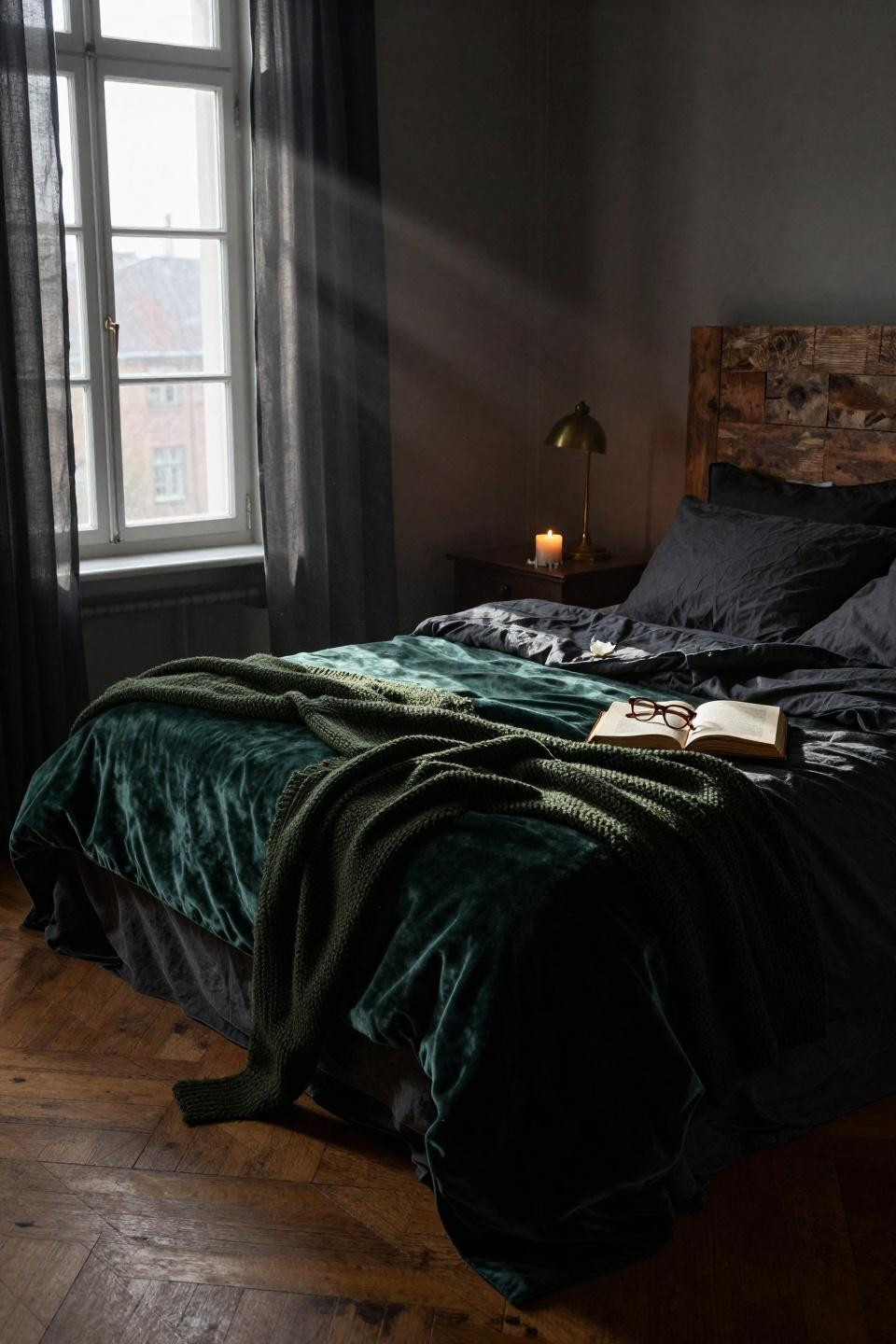
Forest green velvet duvet. Charcoal Belgian linen sheets (the slub texture matters). Chunky moss-colored knit throw tossed at the foot. Reclaimed wood headboard with actual character. That’s the base. Add brass lamp, beeswax candle, one open book. Wide-plank oak floors in honey tones keep it from feeling cold. Copy this exactly if you want—it works.
When Vintage Doesn’t Mean Outdated
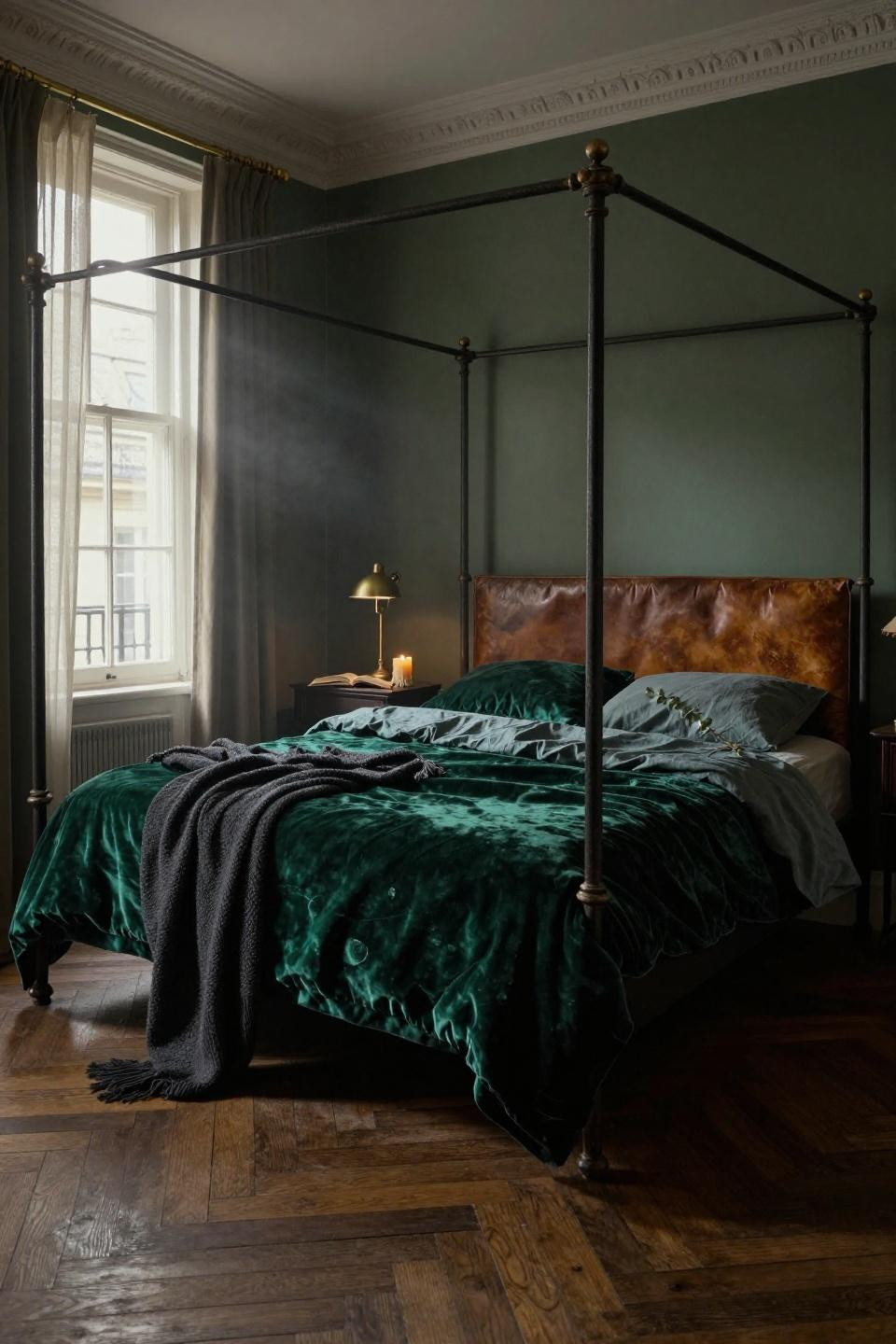
Emerald velvet paired with vintage indigo linen—that’s the color combo. The cognac leather headboard cushion with patina makes the whole thing feel collected, not decorated. Iron four-poster in oxidized black adds structure. Sage green walls (matte finish) work better than charcoal here. One eucalyptus stem, half-burned candle, antique brass lamp. Done.
Earthy Moody That Doesn’t Go Full Boho
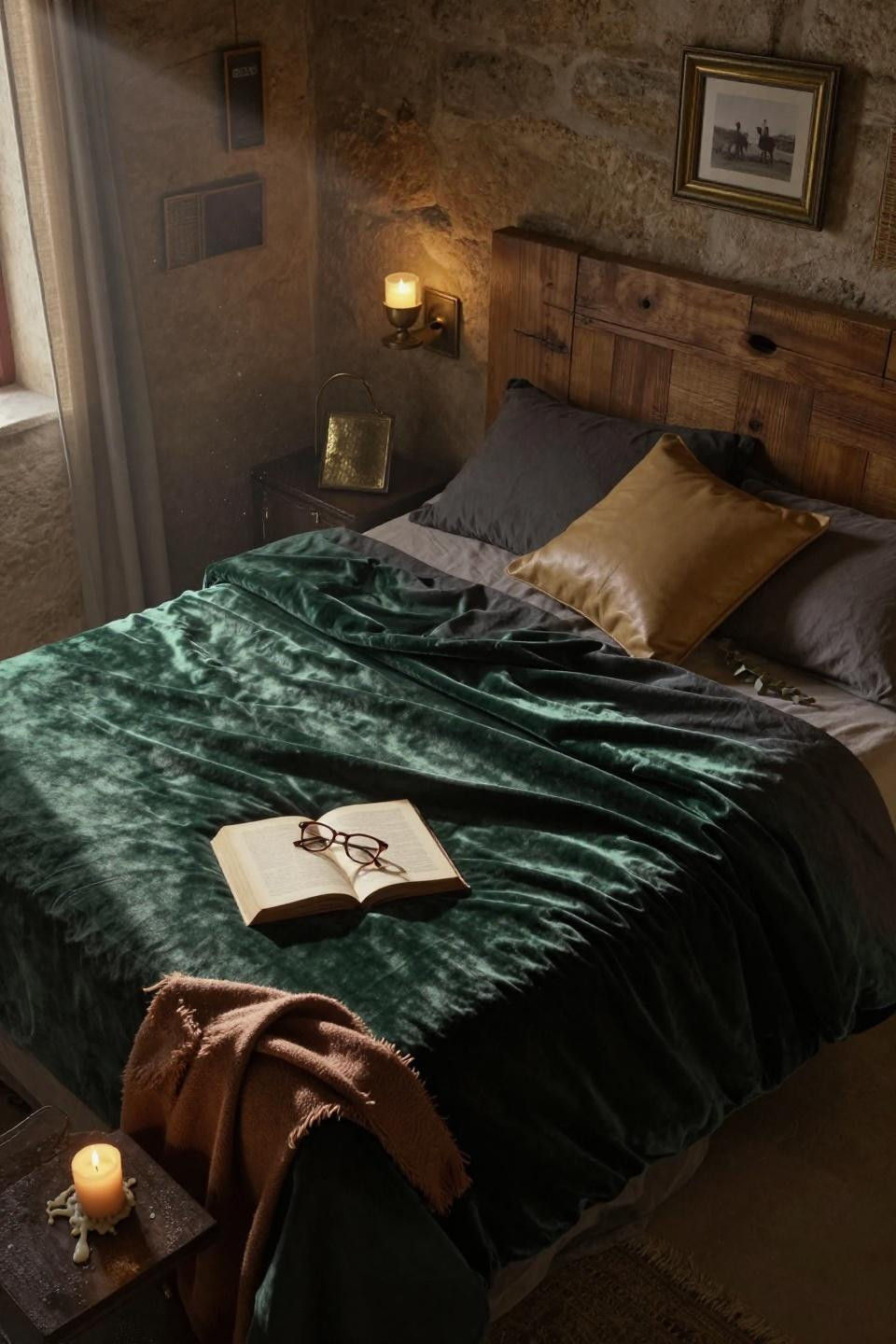
Forest green velvet with charcoal linen. Add terracotta (just the wool throw, not the whole room). Reclaimed oak headboard with honey grain, camel leather bolster, unlacquered brass frames. That’s 15% earthy accent colors against dominant green. The burnt sienna throw draped over the footboard is the only pop you need. Keep everything else in the green-charcoal-brass family and it stays sophisticated.