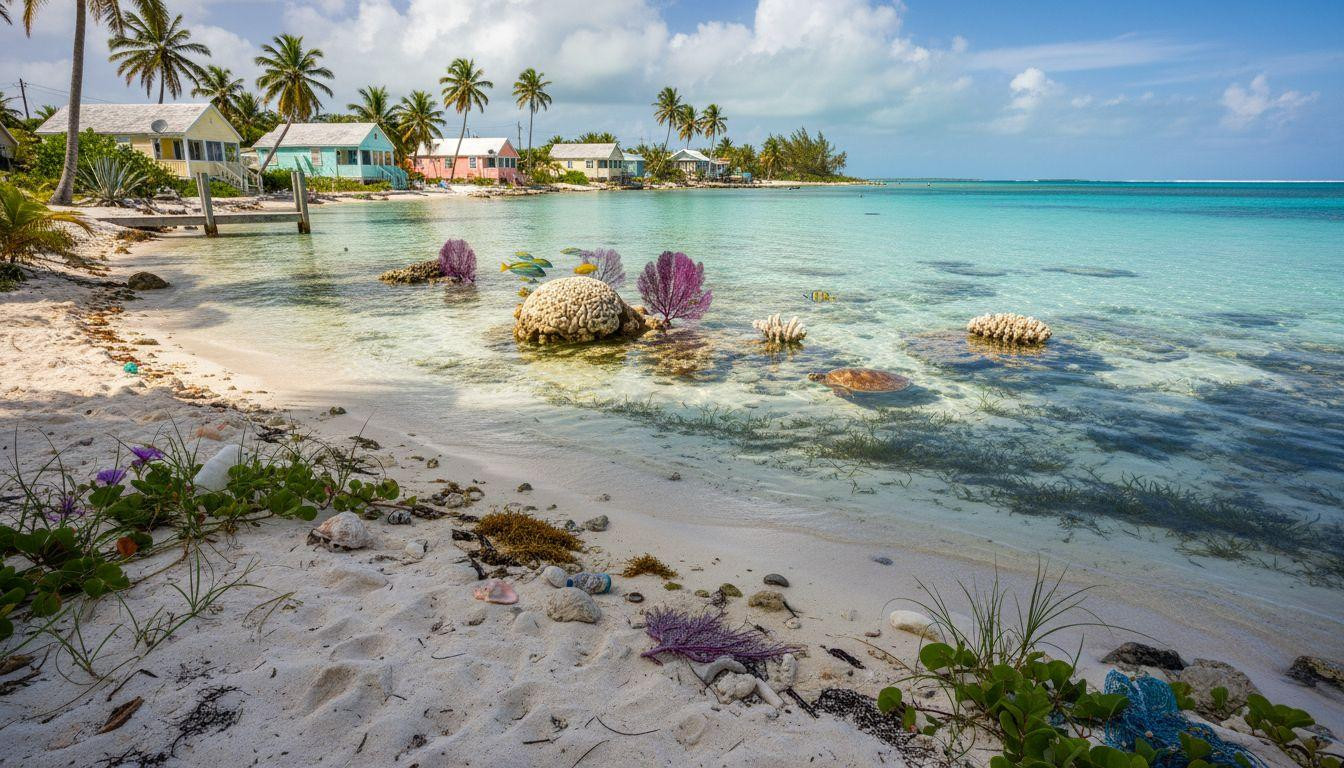
The ferry from Marsh Harbour leaves at 8am. Twenty minutes later, Great Guana Cay appears as a thin green line backed by white sand. The water between you and shore glows turquoise over a sandy bottom you can see 100 feet down. This is the Bahamas 150 residents kept quiet while Nassau built 400 hotels.
The Atlantic side runs 5.5 miles without a single resort. Coral heads sit 50 feet offshore in water shallow enough to wade. You walk from the ferry dock to empty beach in three minutes.
Water you walk through to living coral
The sandy bottom stays white and shallow for 50 yards. Then coral heads rise like underwater gardens in water that never gets deeper than your chest. Purple sea fans wave in the current. Brain corals spread wider than dining tables. You wade out and touch them.
The barrier reef 100 yards offshore keeps the water calm. Visibility reaches 100 feet on clear mornings. December through March, the sea stays glass-flat before 10am. Water temperature holds at 77°F when home hits 35°F.
No dive certification needed. No boat required. You walk in and the reef finds you. Hawksbill turtles graze the coral. Schools of yellowtail snapper flash silver in the sun. A local fisherman working these waters for 30 years says the reef looks the same as it did in 1995.
The beach that stays empty at sunrise
Five miles without footprints
The Atlantic beach runs unbroken from settlement to southern tip. Coconut palms lean over white sand. Driftwood marks the high tide line. At dawn, you might see two other people in a mile of walking.
Love Beach sits mid-island with a single cabana and lounge chairs. Sunset Beach at Grabbers draws the afternoon crowd (maybe 30 people on a busy Saturday). The northern stretches stay empty all day. Hurricane Dorian destroyed most structures in 2019. They rebuilt the essentials and left the beach alone.
A Loyalist village that never hurried
New England-style wooden houses line the settlement roads. The Anglican church holds Sunday services for 40 residents. A one-room schoolhouse teaches island children. Families named Albury, Lowe, and Roberts trace back to Virginia and Carolina Loyalists who arrived in 1783.
The Buoy Tree stands at Nippers Beach Bar. Visitors hang colorful ocean buoys and life rafts on an ancient Kamalame tree. Hundreds dangle from the branches, each one marking someone who found this place. The tradition started decades ago when a local boat-builder hung the first salvaged buoy.
What to do in shallow paradise
Snorkeling the national park 20 minutes offshore
Dive Guana rents boats for $165 per day. A 20-minute ride reaches Fowl Cay National Park. The underwater preserve protects hard and soft corals, moray eels, and green sea turtles. Visibility tops 100 feet. You can also snorkel right from shore near the settlement. Small reefs lie within 50 feet of the beach, hosting conch and starfish in the sand shallows.
Golf carts and grouper sandwiches
Golf carts rent for $60 per day from the dock. The public road runs two miles through the settlement. You can walk it in 30 minutes or drive it in five. Grabbers Restaurant serves grouper sandwiches for $18 and conch fritters for $12. Rum drinks cost $10. The sunset view over the Sea of Abaco comes free.
A small grocery near the ferry dock sells basics at prices 15% higher than Marsh Harbour. Bring cash. The island has limited ATM access and many places prefer bills over cards.
The quiet you came for
Nassau hosts 11,000 tourists on an average February day. Paradise Island hotels charge $600 per night. Exuma tour boats crowd Pig Beach with 200 visitors by noon. Great Guana Cay sees maybe 50 arrivals on a busy weekend.
The boat-only access filters casual tourists. The lack of chain hotels keeps crowds thin. February brings calm seas and 78°F highs. Low humidity makes beach walks comfortable all day. The settlement stays quiet after sunset. Street lights glow soft yellow. You hear waves from every house.
Locals protect this place without making a fuss about it. They rebuilt after Dorian but didn’t add resorts. They welcome visitors but don’t chase them. The island works the way it always has, just with better ferry service and a few more rental cottages. For more quiet Bahamas options, Eleuthera’s pink sand beaches offer similar seclusion with different colors.
Your questions about Great Guana Cay answered
How do I get there and what does it cost?
Fly into Marsh Harbour Airport from Miami (one hour, $350 round-trip average). Albury’s Ferry runs daily to Great Guana Cay for $30 round-trip per person. The 20-minute ride crosses calm water protected by the barrier reef. Beach cottages rent for $200 per night in February. Meals cost $15-25. A three-day trip runs $700 per person including flights.
Is it safe and how crowded does it get?
Very safe. The 150 residents know most visitors by sight within a day. Crime stays near zero. December through March sees the most tourists but still feels quiet. You’ll share the beach with maybe 10 people on a typical afternoon. The barrier reef keeps the ocean calm. Families wade safely in chest-deep water 100 yards from shore.
How does it compare to other Bahamas islands?
Great Guana Cay costs 40% less than Nassau and sees 95% fewer tourists. The turquoise water matches the Exumas but without the tour boat crowds. It feels more authentic than resort-heavy Freeport and quieter than Harbour Island. The wade-to-coral access beats most Caribbean snorkel spots that require boats or deep dives. If you want the Bahamas before mass tourism found it, this is the island.
The ferry back to Marsh Harbour leaves at 4pm. Most visitors make it with time to spare. The ones who miss it usually blame the grouper sandwich at Grabbers or the coral heads that kept them wading until the light turned gold. The water stays shallow and turquoise all the way to the horizon. You can see the bottom the whole time.