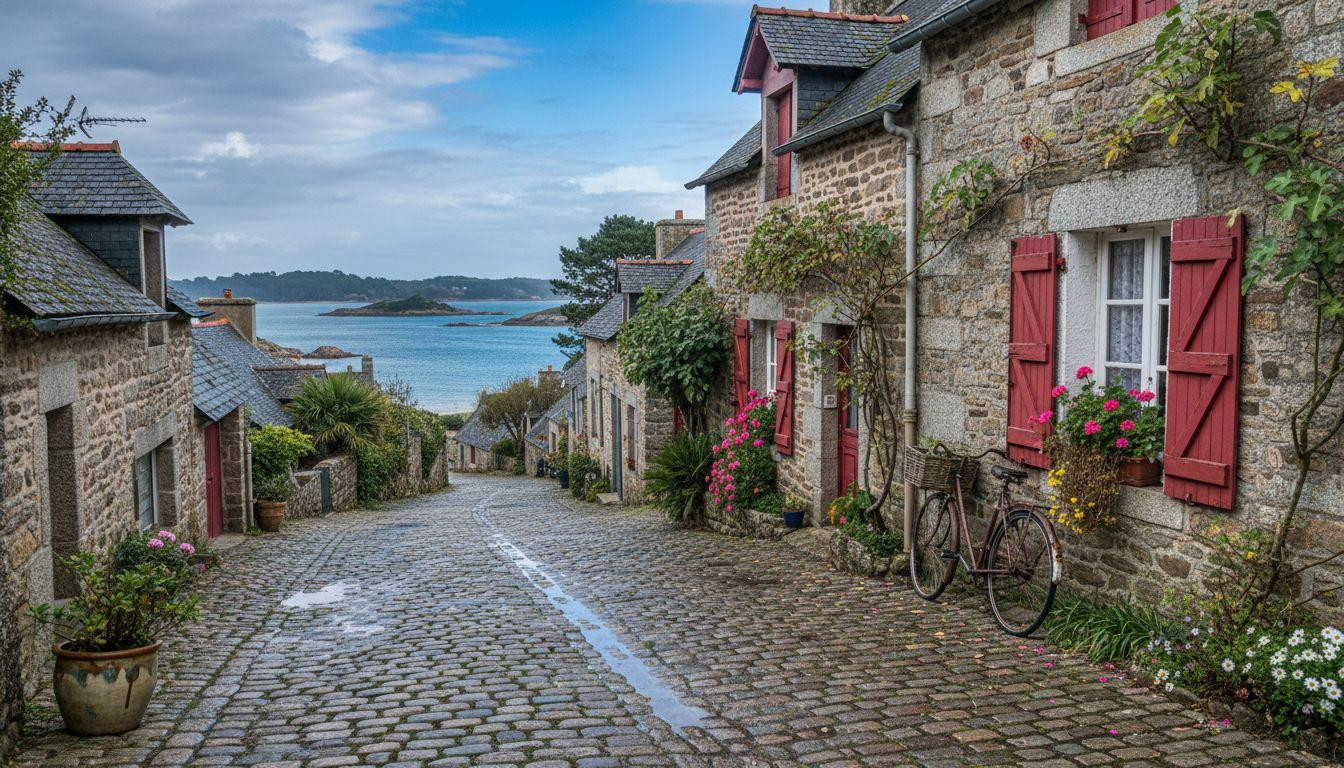
The ferry from Port-Blanc takes 5 minutes. You step onto Île aux Moines and hear what’s missing: no engines. Just bicycle bells, low voices, waves against stone docks. This Breton island outlawed cars in the 1960s and 617 residents kept it that way.
The Gulf of Morbihan stretches 7 miles across. Île aux Moines sits at its center, shaped like a cross. Population 600 in winter, 3,000 daily visitors in summer. The difference: everyone arrives by ferry and leaves the same way.
The island that said no to cars
Residents voted to restrict vehicle access decades ago. Today only service vehicles and resident permits allow motorized traffic. Speed limit: 12 mph on narrow communal roads. Most visitors never see a car.
The soundscape shifts within minutes of arrival. Bicycle bells replace horns. Footsteps on stone replace tire noise. Seabirds compete with conversation, not combustion. The quiet isn’t accidental.
Bicycle rental stands line the port. Rates run $15-20 per day. The 13-mile coastal circuit takes 2-3 hours at leisure pace. Every turn reveals another mimosa-lined cottage, another empty beach, another reason the car ban works.
Where Brittany grows Mediterranean plants
The microclimate anomaly
The Gulf of Morbihan creates shelter from Atlantic storms. Winter temperatures stay mild, rarely dropping below 41°F. Mimosas bloom in February when mainland Brittany freezes. Palm trees grow in village gardens.
Protected natural sites Le Trec’h and Toulindac anchor the island’s conservation status. The entire island holds “site inscrit” designation, limiting development. Woods cover much of the interior: Bois d’Amour, Bois des Regrets. The names suggest romance, but the trees provide practical wind protection.
Cross-shaped geography
The island measures 4 miles long, 1,600 feet at its narrowest point. The cross shape creates distinct zones. Eastern shores face the mainland. Western coasts open to the Gulf. Each side offers different light, different wind, different quiet.
A 13-mile footpath circles the perimeter. Beaches appear between rocky points. Small woodlands interrupt coastal views. The circuit takes a full day if you stop at every viewpoint. Most visitors do.
Living on Pearl of the Gulf time
Year-round reality
Winter population holds at 600. Summer brings 3,000 visitors daily, but they leave by evening. The last ferry departs at 7:30 PM year-round, extended to 10 PM July through August. No overnight crowds.
Ferries run every 30 minutes in low season, more frequently in summer. Round-trip tickets cost $8 for adults, $5 for children. The 5-minute crossing feels longer when you watch the mainland recede. Similar to this Alpine village that lights gas lamps at dusk, the island preserves character through deliberate limits.
The marketplace hub
Place du Marché anchors island life. The town hall, post office, and ATM cluster here. Restaurants range from $15 crêperies to $40 seafood specialists. Fresh fish arrives daily from local boats.
Traditional fishing village economy persists. Artisans sell pottery, textiles, preserves. The market operates year-round, but summer brings more vendors. Prices stay reasonable: $12 for clam chowder, $8 for a gallon of local cider.
The quiet math
Accommodations range from $90 guesthouses to $180 hotels in peak season. February rates drop 40%. No car rental costs. No parking fees. No fuel expenses. The ferry and bicycle cover all transportation.
Vannes sits 4 miles away by road, then 5 minutes by ferry. Train service connects Vannes to Paris in 3 hours, Rennes in 1 hour. The island’s accessibility surprises visitors expecting remote isolation. It’s not hidden, just protected. Much like Sintra’s fog-wrapped palaces, proximity to major cities doesn’t diminish authenticity.
Your questions about Île aux Moines answered
Can I bring a car?
No. Tourist vehicles are prohibited. Residents and service providers hold permits for essential transport only. The ferry doesn’t accommodate cars for visitors. Bicycle rentals at the port cost $15-20 daily. The entire island is walkable in 4-5 hours.
When is it too crowded?
July and August bring 3,000 daily visitors. Beaches fill by noon. Restaurants require reservations. May, June, September, and October offer moderate weather with half the crowds. February through April sees minimal tourism but full resident life. The island never closes.
How does it compare to other French islands?
Belle-Île-en-Mer lies 9 miles offshore, requires a 45-minute ferry, allows cars. Île de Ré connects to mainland by bridge, sees heavy car traffic. Île aux Moines balances accessibility with preservation. Five-minute ferry access, car-free policy, 617 year-round residents create livable authenticity. Similar to islands that cap building heights, intentional limits preserve character. For budget-conscious travelers, affordable alternatives to overtouristed destinations offer similar value.
Morning fog lifts around 8 AM in February. The harbor turns gold for maybe ten minutes. Fishermen return with catches. Bicycle bells start ringing. The mainland is visible across the water, but the quiet stays.