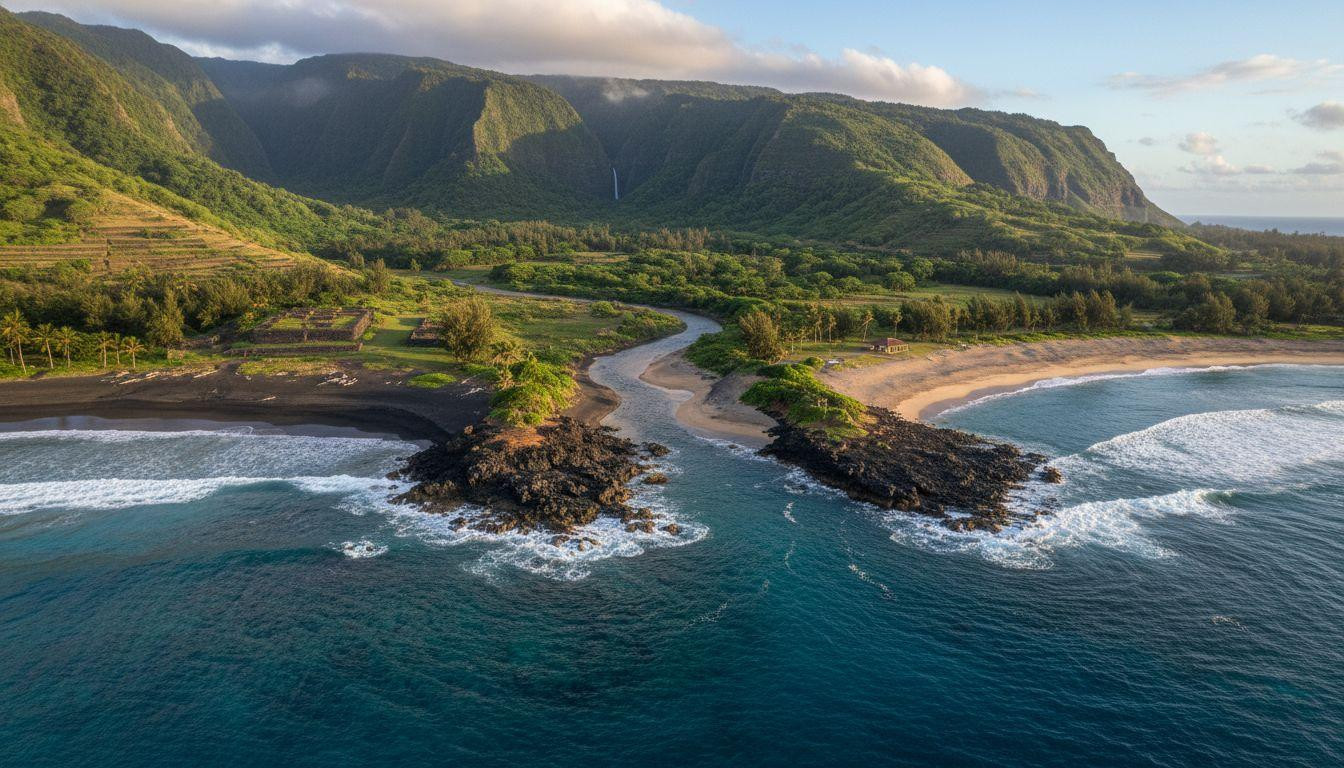
Highway 450 ends where Halawa Valley meets the Pacific. Two beaches curve around the stream mouth in blue-gray water that shifts with rainfall and tide. Chiefs surfed here before Captain Cook arrived. The valley behind holds 24 temple sites from a settlement that started in 650 AD.
Most Hawaii visitors never make the 90-minute drive from Molokai Airport. The road hugs cliffs for 30 miles with no guardrails. At the end sits Halawa Beach Park with one pavilion and restrooms that work most days.
Kawili Beach: where winter swells hit the east side
Kawili forms the eastern half of Halawa Bay. Black sand meets reef breaks that draw expert surfers from October through March. Northwest swells wrap into the valley mouth and create barreling rights over shallow rock.
Local kids bodyboard between the jagged outcrops when conditions allow. A fisherman who’s worked this coast for 30 years says the surf here holds size that would close out most Molokai breaks. Winter waves reach 10 feet on big swells.
Stone walls from ancient heiau sit visible on the valley slopes above the beach. The settlement peaked at 1,200 taro patches before the 1946 tsunami reshaped the coastline. Guided tours through the valley reveal worship platforms and irrigation channels cut into bedrock.
Kama’alaea Beach: the calmer twin for summer swimming
Kama’alaea Beach forms the western side of the bay. A rocky outcrop separates it from Kawili and provides slight shelter from trade winds. Summer months from May through September bring flat water suitable for swimming.
Seasonal water conditions
Water temperature holds steady around 80°F year-round. Visibility near the stream mouth stays murky from sediment. Snorkeling opportunities remain limited compared to Kauai’s protected reefs where lava tubes create clear channels.
Winter surf warnings apply to both beaches from October through March. The county posts red flags when swells exceed 8 feet. No lifeguards patrol this remote coastline.
Family access considerations
Families visit during calm summer mornings before afternoon trade winds pick up. The shallow areas near shore work for wading when stream flow stays low. Reef shoes protect against sharp volcanic rock that lines both beaches.
Halawa Stream mouth: where fresh water meets salt in shifting color
Halawa Stream cuts through the valley and empties between the two beaches. Rainfall in the upper valley sends brown sediment plumes into the bay within hours. The mixing zone creates the blue-gray water color that distinguishes this bay from Hawaii’s typical turquoise coastlines.
Morning light before 8am shows the clearest water conditions. Stream flow varies dramatically between dry summer weeks and winter rainy periods. The valley receives an average of 200 inches of rain annually in its upper reaches.
Temperature differential between stream and ocean water remains subtle. Both sources stay warm enough for comfortable swimming year-round. The stream mouth shifts position slightly with each major storm that moves sand and rock.
The 90-minute drive: coastal curves from Molokai Airport
Highway 450 runs 30 miles from Kaunakakai to Halawa Beach Park. The drive takes 90 minutes at safe speeds around cliff-hugging curves. No gas stations operate past Kaunakakai. Round-trip fuel costs run about $25 based on current Molokai prices.
Route highlights and stops
The 20-mile marker passes Kumimi Beach where locals fish from shore. Kalua’aha Church sits at mile 15 with white walls visible from the road. Multiple pullouts offer views of the coastline dropping to reef-lined bays below.
Cell coverage disappears around mile 20. The road narrows to one lane in several sections where drivers yield to oncoming traffic. Trade winds push hard against vehicles on exposed stretches.
Arrival at valley mouth
The parking area holds about 15 vehicles. A covered pavilion provides shade for picnic tables. Restrooms include an outdoor shower. The water tap flows but signs warn against drinking untreated stream water.
Hipuapua Falls trail: valley hike requiring guided access
A marked trail leads from the beach parking area into Halawa Valley toward Moa’ula Falls and Hipuapua Falls. The 2-mile path gains moderate elevation through former taro terraces. Private landowners require guided tours for trail access as of 2025.
The Solatorio family offers valley tours by reservation at (808) 542-1855. Tours cost approximately $125 per person and include cultural protocol instruction. Guides blow a pū conch shell and perform honi greeting before entering sacred sites.
The hike takes 2 to 4 hours round-trip depending on water conditions and group pace. Visitors see stone walls from ancient temples and irrigation channels still visible in the vegetation. The trail stays open year-round but becomes muddy during rainy periods.
Your questions about Halawa Bay answered
When should I visit for calm water?
Visit between May and September for the calmest ocean conditions. Summer months bring flat water suitable for swimming at both beaches. Avoid October through March when winter swells create dangerous surf and strong currents. Morning hours before 10am offer the lightest winds and clearest water at the stream mouth.
What cultural protocols apply here?
Halawa Valley remains culturally significant to Native Hawaiian families who maintain ancestral connections to the land. Visitors should stay on marked paths and avoid touching stone structures from ancient heiau sites. Valley hikes require guided tours with cultural practitioners who explain proper protocols. The beach area allows independent access but respect for sacred sites throughout the valley stays mandatory.
How does this compare to other Molokai beaches?
Halawa Bay receives far fewer visitors than Papohaku Beach on Molokai’s west end. The remote location and rough winter surf keep crowds minimal even during peak summer months. Pololu Valley on Hawaii Island offers similar black sand and valley-mouth geography with easier road access. Halawa provides more cultural sites and ancient surf heritage than most accessible Hawaiian beaches.
The valley walls catch afternoon light around 4pm when shadows stretch across the bay. Stream sounds mix with wave breaks and wind through ironwood trees. Most visitors leave by 3pm to drive back before dark.