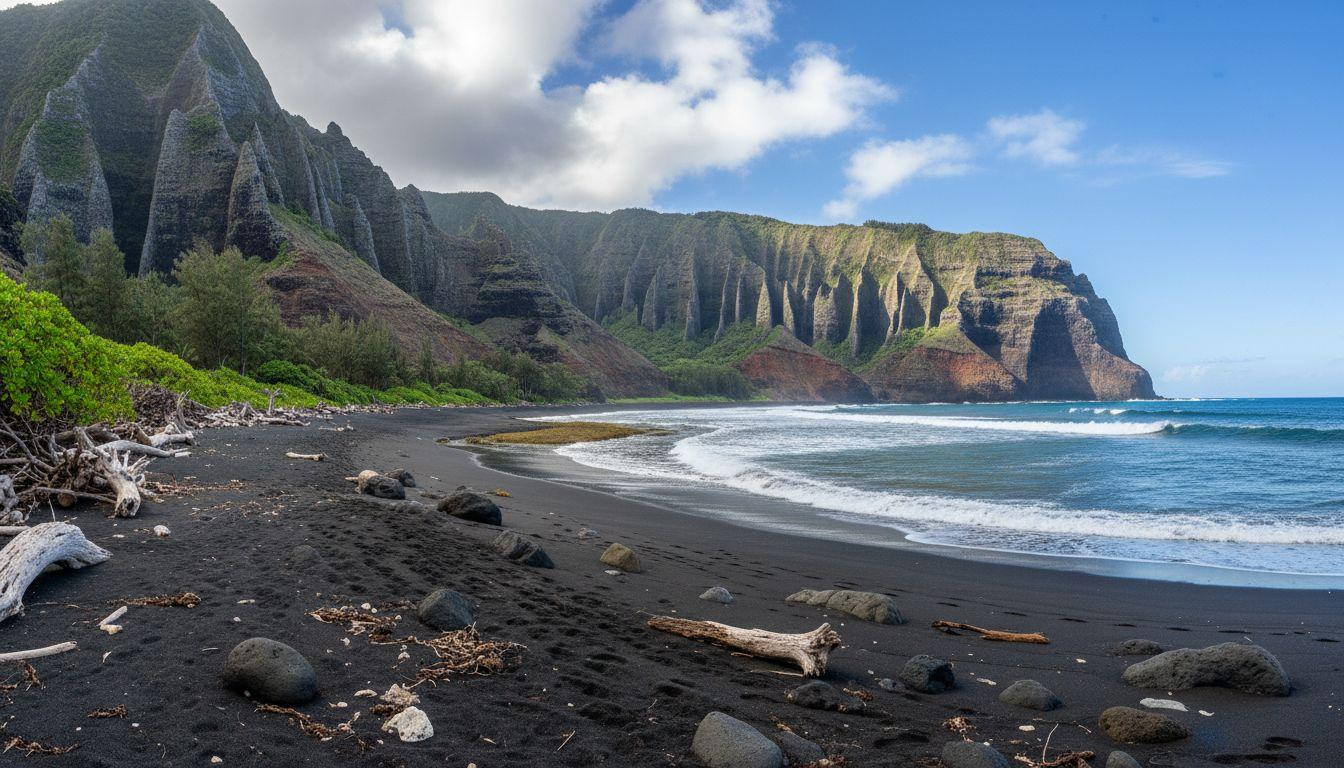
Highway 270 ends at a dirt parking lot. Twelve spaces fill by 7:30am. The rest of the cars line the shoulder. Beyond the guardrail, blue-grey cliffs drop 500 feet to a black sand beach. This is Pololu Valley, Big Island’s northernmost point, where a 0.6-mile trail separates tourists from solitude.
The overlook draws crowds. The beach below stays empty. February 2026 brings humpback whales to the horizon and comfortable 75°F hiking temps. Most visitors take photos and leave. The trail down requires different commitment.
The lookout where cliffs frame ocean like theater walls
Stand at the Pololu Valley Lookout and the view opens wide. Volcanic cliffs in shades of grey and blue curve around the valley. Green vegetation clings to rock faces. The ocean crashes white against dark sand half a mile below.
Between December and March, humpback whales breach offshore. Spouts appear 5 to 10 times per hour on clear mornings. Binoculars help but aren’t necessary. The whales surface close enough to see without magnification.
Morning light hits the cliffs between 7am and 8am. The rock faces glow golden for maybe twenty minutes. Then the sun climbs higher and the color fades. Afternoon brings shadows that make the valley look deeper than it is.
Switchback descent through Kohala forest
The Awini Trail drops 490 feet in four switchbacks. Brown dirt packed hard by thousands of feet. Sharp lava rocks jutting through the surface. Ironwood trees create patches of shade between exposed sections.
Closed-toe hiking shoes matter here. The trail stays steep even with switchbacks. When rain comes, the dirt turns slick. Locals recommend trekking poles for the climb back up.
The descent takes 20 to 25 minutes at a steady pace. Faster hikers make it in 15. The ascent requires 40 to 50 minutes for most people. Your heart rate will climb into zone 3. Bring two liters of water per person.
What makes this trail different
No cell service exists below the overlook. No facilities wait at the bottom. The trail filters crowds through physical effort. On winter weekdays, 50 to 100 people visit the lookout. Maybe 20 to 40 descend to the beach.
Rope swings hang from ironwood branches mid-valley. Locals installed them years ago. Origins unclear. They mark the halfway point where the forest opens slightly and you catch your first glimpse of black sand through the trees.
Sacred boundaries you must respect
Ropes mark restricted areas in the valley. Ancient Hawaiian burial sites lie beyond those boundaries. Stay on the beach. Don’t cross into the valley interior. Locals monitor violations. Cultural protocols matter here more than convenience.
The state plans to expand parking from 12 to 20 spaces in 2026. A reservation system may follow. For now, early arrival secures your spot. After 9am, expect to park along the highway shoulder.
Black sand beach at trail’s end
The trail dumps you onto volcanic sand. Black magnetite grains mixed with white, grey, and red lava rocks. Round boulders scattered across the beach. Driftwood piled against the tree line.
The beach stretches about a quarter mile. Not wide but long enough to walk. The sand feels finer than Punaluʻu’s coarser grains to the south. Barefoot walking works in morning shade. Afternoon sun heats the surface past comfortable.
Pololu Stream pools behind the beach where freshwater meets salt. The pool runs shallow with a silty bottom. Not deep enough for swimming but good for rinsing sand off your feet. Trees provide shade along the stream bank.
Why you can’t swim here
The ocean at Pololu Valley stays dangerous year-round. Waves average 2 to 6 feet. Big days bring 10-foot surf. The undertow pulls seaward through the valley shape. No lifeguards patrol this beach. No rescue equipment waits nearby.
High tide reaches mid-beach. White foam crashes every 8 to 12 seconds. The sound drowns conversation from 50 feet away. Watch from the driftwood line. Don’t test the water. Local rescue statistics go unreported because rescues here stay rare. People respect the warnings.
The cliffs that trap silence
Blue-grey basalt walls rise 300 to 500 feet on three sides. Iron and magnesium oxides create the color. Erosion carved these cliffs over millennia from the extinct Kohala volcano. Layered rock faces show different geological periods.
Vegetation grows in crevices where soil collects. Green against grey against blue ocean. The cliffs block wind from inland. Sound echoes off rock faces. Your voice carries farther than expected. The valley creates natural amplification that makes the space feel larger than its actual dimensions.
Earned solitude through physical filter
The hike back up separates casual visitors from committed ones. Four hundred ninety feet of elevation gain. Switchbacks reduce the grade but don’t eliminate the work. Your legs will burn. Your lungs will work hard.
Most people rest at switchback number two. A flat section maybe 15 feet long. Enough space to step aside and let faster hikers pass. The view backward shows the beach shrinking below. The cliffs grow more impressive with altitude.
Morning ascents run 5 to 10 degrees cooler than afternoon climbs. Start your return by 2pm to avoid peak heat. The trail offers little shade on the way up. Sunscreen matters. A hat helps. Water becomes critical in the final 200 feet.
Your questions about Pololu Valley answered
When does the parking lot fill completely?
The 12-space lot fills between 7:30am and 8am on winter weekdays. Weekends see 7am arrivals. Roadside parking along Highway 270 remains legal despite “No Parking” signs in some sections. Volunteers monitor but rarely ticket. The state’s 2026 expansion to 20 spaces may introduce reservation fees for non-residents.
How does Pololu compare to Waipiʻo Valley nearby?
Waipiʻo requires 4WD vehicles or guided tours. Access stays restricted. Pololu allows any car to reach the trailhead and any hiker to descend on foot. Both valleys feature black sand and high cliffs. Pololu sees 3 times fewer visitors than Waipiʻo. The tradeoff: Pololu’s beach stays rougher and less protected from surf.
What should I bring for this hike?
Two liters of water per person minimum. Closed-toe hiking shoes with good tread. Sunscreen and hat for exposed sections. Snacks for energy on the climb back. A trash bag to pack out everything you bring. No facilities exist at the trailhead or beach. Cell service disappears below the overlook. Tell someone your plans before descending.
The beach at Pololu Valley looks like the end of the world. Black sand. Grey cliffs. White foam. No buildings. No crowds. Just volcanic geology and the satisfaction of trails that ask for effort. Your legs remember the ascent. Your mind remembers the silence between waves. This is Big Island without resorts. Without easy access. Without compromise.