“`html
The train climbs through pine forests dusted white. You step onto the platform at Wengen and the air hits cold and clean. No car engines. Just the crunch of boots on snow and distant cowbells echoing off peaks. Five Alpine villages across Austria and Switzerland transform into living fairy tales each winter when lantern light meets fresh powder on cobblestone streets built centuries ago.
Where carved wood meets mountain silence
These villages sit between 2,600 and 4,300 feet in the Alps. Hallstatt clings to a lake in Austria’s Salzkammergut region. Wengen and Lauterbrunnen nestle in Switzerland’s Bernese Oberland valleys. Grindelwald spreads beneath the Eiger’s north face. Saalbach fills a Salzburg valley where medieval mining towns evolved into ski hamlets. All share one trait: timber chalets with steep roofs and carved balconies lining narrow lanes that haven’t widened since 1850.
UNESCO listed Hallstatt in 1997 for 7,000 years of salt mining heritage. The other four avoided that designation but kept the same preservation instinct. Local laws restrict building heights and materials. Red tiles and dark wood dominate. No neon signs. No concrete towers. Just the architecture that evolved to shed 200 inches of annual snow.
The hour when villages become postcards
When gas lamps replace daylight
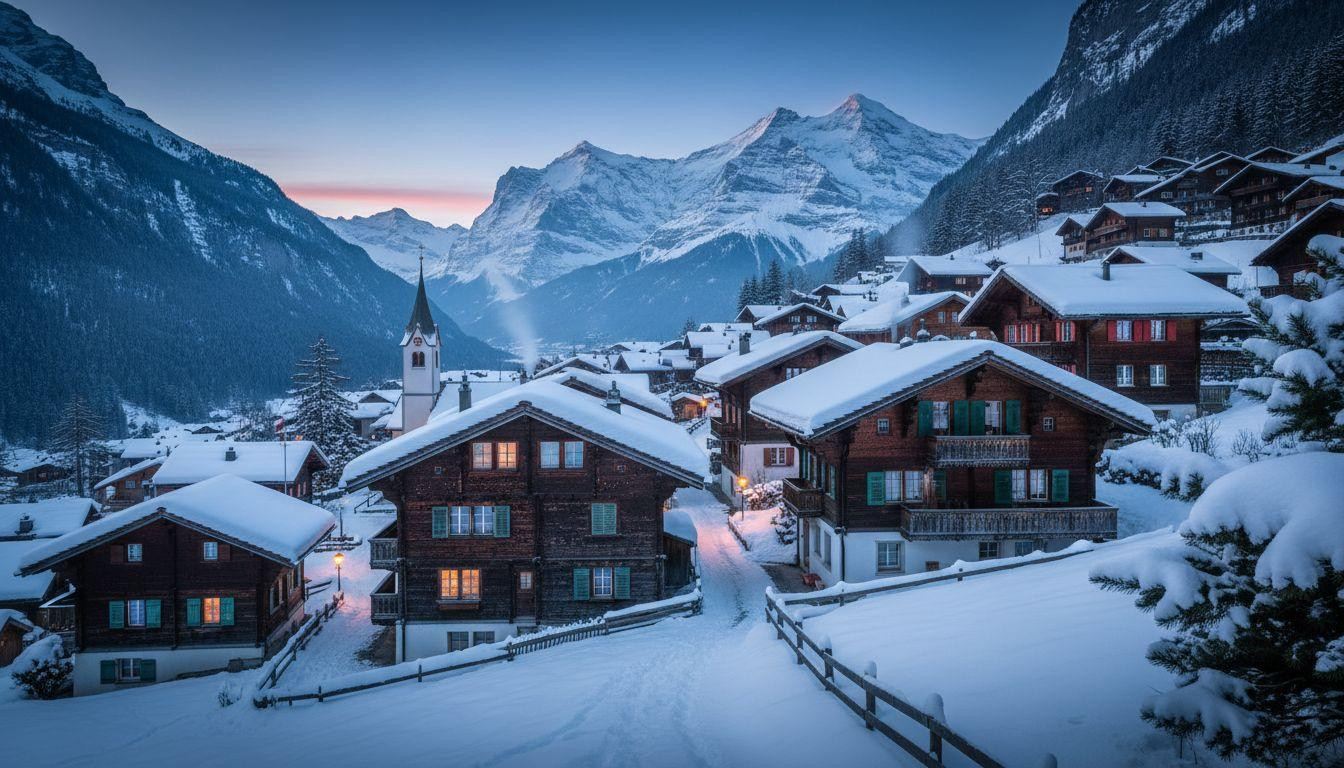
Between 4pm and 6pm in February the shift happens. Street lamps ignite along Saalbach’s Dorfstrasse and Wengen’s car-free paths. Most are electric now but the warm glow mimics old gas fixtures. Snow reflects that amber light back onto chalet facades. Hallstatt’s lakeside promenade doubles every lantern in still water. The effect peaks during blue hour when natural twilight meets artificial warmth for maybe 20 minutes.
Grindelwald hosts its World Snow Festival each January where sculptors carve myths into ice blocks. Evening lighting extends the display past sunset. Similar magic happens naturally in coastal villages where fog transforms granite towers into soft silhouettes at dawn.
Architecture that frames the stillness
Timber frames date to the 1600s in some chalets. Balconies display carved patterns unique to each valley. Steep roofs shed snow into streets where morning crews shovel paths by 7am. Windows glow yellow from wood stoves inside. The scale stays human. No building tops four stories. Lauterbrunnen’s valley walls rise 1,000 feet on both sides but the village itself sprawls low and quiet.
This preservation mirrors what happened in New England villages that froze their 18th-century streetscapes through local ordinances and resident commitment.
Living inside the fairy tale
Evening rituals worth the cold
Fondue costs $25-30 in centuries-old gasthofs where wooden tables wear decades of use. Cheese melts over open flame while bread cubes wait on wooden boards. Glühwein appears at Christmas markets from late November through January. Wengen’s market runs weekends in December. Hallstatt extends its winter lights through March 2026 along the lakefront.
Snowshoe rentals run $15-20 for half-day use. Marked trails loop through forests above each village. Most hikers return by 4pm to catch the lantern-lit streets at their peak. Ski passes cost $60-70 daily. Saalbach links 170 miles of groomed runs across three valleys. Wengen accesses the Jungfrau region via cogwheel railway that climbs to 11,300 feet.
The people who keep it real
Wood carvers still work in Wengen studios. Their window displays show half-finished bears and eagles emerging from pine blocks. Nearby valleys produce violins using techniques unchanged since the 1800s. Bakeries open at 5am. Bread scent mixes with woodsmoke from breakfast fires. Locals greet with “Grüezi” and mean it. Tourism supports these villages but hasn’t consumed them yet. Population hovers around 800 in Hallstatt and 3,000 in Saalbach.
Similar authenticity persists in Midwest ski towns where lake-effect snow creates winter economies without erasing local character.
The moment that stays with you
Walking Saalbach’s main street at 8pm. Fresh snow crunches underfoot. Woodsmoke drifts from chimneys. Cowbells echo from farms in the dark valley beyond. Lanterns cast pools of light every 30 feet. No traffic noise. No crowds. Just the quiet that comes when a place decides not to grow any bigger. You stop at a bench. The cold bites your face. Steam rises from your breath. This is the image you’ll keep.
Your questions about Alpine fairy-tale villages answered
When should I visit for the best experience?
January through February delivers peak snow and lowest crowds. The post-holiday lull from January 10 through February 20 means 30-40% fewer visitors than December. Snow depths reach 80-100 inches. Temperatures range from 20°F to 35°F during daylight. March brings warmer days but wetter snow. Avoid Christmas week when prices jump 50% and rooms book six months ahead.
How much does a winter stay cost?
Mid-range chalets run $90-150 per night for two people in February. Budget guesthouses start at $80. Luxury spa hotels reach $300-400. Meals cost $15-25 for hearty portions of goulash or rösti. A three-day trip including lodging and food averages $500-700 per person. That’s 20-30% above Austria and Switzerland norms but reflects altitude and access limits that keep these villages from overdeveloping.
Which village feels most magical at night?
Hallstatt wins for lake reflections that double every lantern and chalet in mirror-smooth water. Wengen offers car-free silence you can’t find in road-accessible villages. Saalbach hosts torchlight ski parades on select January evenings. Grindelwald frames the Eiger’s massive north wall behind village lights. Lauterbrunnen’s 72 waterfalls freeze into ice curtains by February. Choose based on what magic means to you. All five deliver the fairy-tale streets promised.
The last train down from Wengen leaves at 9:30pm. Most visitors make it with time to spare. I almost missed it once because a baker started talking about his grandfather’s recipes from 1953. The stories locals tell when you stop rushing. That’s the other magic these villages offer.
“`