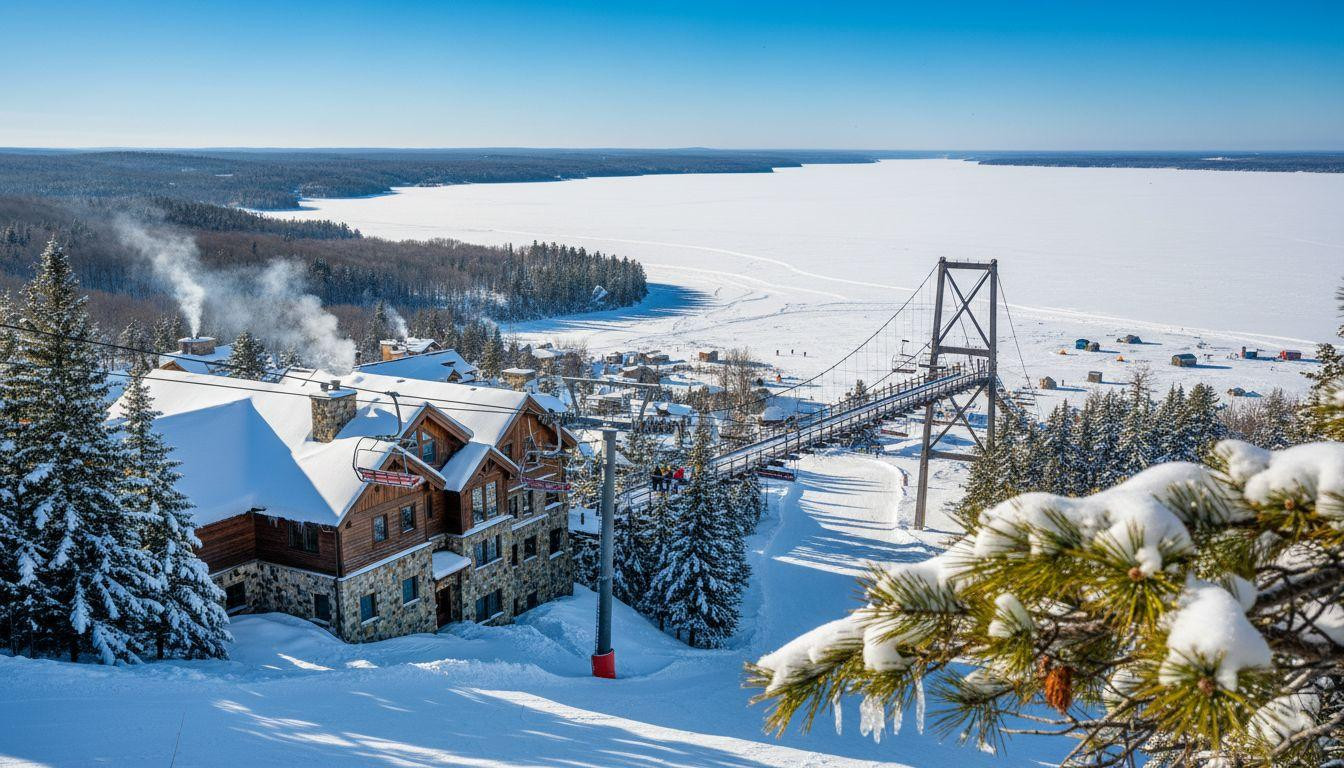
Highway 131 cuts through Northern Michigan pine forests where February snow sits heavy on branches. The road drops into Boyne Valley and Lake Charlevoix appears, frozen silver under morning light. Population 3,800. No billboards announce what locals have known since 1947: this quiet corner delivers family-owned ski heritage without Colorado crowds or prices.
Boyne Mountain rises 8 miles southwest of town, 415 acres of groomed trails where chairlifts climb through evergreens. The resort opened in 1947 when Everett Kircher saw potential in these modest hills. His family still runs it in 2026. No corporate buyouts. No mega-resort machinery. Just consistent lake-effect snow and slopes that empty by Wednesday afternoon.
Where Midwest skiing began
Kircher pioneered something different here. While Western resorts chased vertical feet and celebrity crowds, Boyne focused on families who could ski back to their doors. Mountain Run condos sit 100 yards from base lifts. No shuttles. No parking lots to cross in ski boots.
The architecture stays Alpine without pretension. Wooden beams and stone bases, chalets that blend into forest rather than dominate it. Summit elevation hits 1,500 feet with 552 feet of vertical. Modest numbers compared to Colorado’s 3,000-foot drops, but the trade-off shows in lift ticket prices: $80-120 versus $200-plus out West.
Lake Charlevoix stretches 17 miles below the mountain. Winter transforms it into a frozen mirror where ice fishermen drill holes at dawn. The lake’s warmth creates something valuable: reliable lake-effect snow that Western resorts can’t manufacture.
The snow advantage nobody expected
Lake-effect forecasts
La Niña patterns drive 2025-26 predictions. Warm Great Lakes water evaporates into cold air masses, creating snow events that dump 6-12 inches overnight. Boyne averages 200-250 inches annually. February typically delivers the heaviest accumulation when lake temperatures stay above freezing while air temps drop into the 20s.
Victor Glacier returns this season with 9 new snow guns. The artificial snowfield covers terrain when natural snow pauses. Snowmaking starts when temperatures hit 28°F, usually by late November. By February the base runs 40-60 inches deep across 65 trails.
Empty slopes, full character
Mid-week skiing here means 10-minute lift waits maximum. Weekends bring families from Detroit and Chicago, but crowds stay manageable. The resort caps daily tickets to preserve experience over revenue. Saturday Midnight skiing runs February 11-21 with a Red Bull DJ Truck at the base. Music echoes through pine trees while snowflakes fall through colored lights.
Compare this to Vail where lift lines stretch 30 minutes on peak days. Or Aspen where parking fills by 9am. Boyne’s unhurried pace reflects Midwestern values: show up, ski hard, go home happy. No Instagram posturing required.
Beyond the chairlifts
SkyBridge at twilight
The world’s longest timber-towered suspension bridge spans 1,200 feet across Boyne Valley at 118 feet high. Winter access comes free with season passes. Walk it at dusk when valley lights flicker on and Lake Charlevoix fog drifts through trees below. The bridge sways gently in wind, creating what locals call ghostly illusions when fog obscures the far end.
Night lights transform the structure into something otherworldly. Golden beams trace the span while snow falls silent around you. Most visitors skip it after skiing. Their loss creates your quiet moment suspended above the forest.
Lake Charlevoix in winter
The lake freezes solid by late January. Ice thickness reaches 12-18 inches, safe for walking and fishing. Annual derbies draw 1,000 participants who drill holes and wait for perch. Bonfires dot the ice on weekends. Locals bring thermoses and folding chairs, settling in for hours of patient cold.
Sunrise over frozen water happens around 8am in February. Pink light spreads across white ice while mist rises from shoreline cracks. The scene lasts maybe 20 minutes before full daylight washes it away. Worth setting an alarm for.
The Boyne City rhythm
Post-skiing life centers on simple pleasures. Snowflake Lounge serves cherry BBQ and Great Lakes whitefish caught locally. Bonfires burn outside Mountain Run lodges Friday and Saturday nights. Families gather with marshmallows while kids chase each other through snow drifts.
The town itself keeps 1879 lumber heritage visible in brick storefronts and historical markers. No boutique shopping strips. Just a general store, a bakery that’s been family-run since 1953, and a few cafes where locals outnumber tourists. Cherry products dominate shelves: BBQ sauce, pie filling, dried cherries from nearby Traverse orchards.
Evening walks through downtown reveal a place that hasn’t chased tourism dollars at the expense of authenticity. Streetlights cast warm pools on snow-covered sidewalks. Smoke rises from chimneys. The pace slows to something nearly forgotten in modern ski towns.
Your questions about Boyne City answered
How does Boyne Mountain compare to Vail for beginners?
Boyne’s 415 acres feel less intimidating than Vail’s 5,317. Beginner terrain stays separated from expert runs. Ski-in/ski-out convenience means you can quit anytime without shuttle stress. Lift tickets cost 40-50% less. Small Fry Camps accept ages 2-4 for early introduction. The learning curve feels gentler when you’re not surrounded by Olympic-level skiers.
When does the 2025-26 season open?
Projected late November 2025 based on snowmaking temperatures. Victor Glacier snowfield operates first with artificial snow. Natural snowfall typically arrives by early December. Night skiing runs February 4-7 and 11-21, then 25-28. Northern Nights Pass covers unlimited days including Saturdays. Check boynemountain.com for real-time opening updates as weather patterns shift.
Is Boyne City worth visiting outside ski season?
Summer transforms the valley. Two golf courses designed by Robert Trent Jones Sr. open May-October. Avalanche Mountain Waterpark operates year-round with indoor sections. Deer Lake offers ziplines and beach access. Lake Charlevoix water temps hit 65-75°F by July for swimming and kayaking. The Smokies offer similar four-season value with hiking replacing skiing. Fall colors peak late September when Vermont villages also shine. June-August stays low humidity with 70-80°F days.
Chairlift 7 climbs through morning fog at 8:30am. Snow falls steady but light, the kind that builds base without forcing closures. Below, Lake Charlevoix disappears into white. Above, summit Iglu bar waits with its bonfire and quiet. The lift hums. Skis dangle. Northern Michigan keeps its promises simple and delivers them consistently. No crowds. No pretension. Just snow and silence and the family who’s been doing this since 1947.