 " itemprop="image" decoding="async" fetchpriority="high" data-lazy-srcset="https://www.journee-mondiale.com/en/wp-content/uploads/2026/02/2026-02-09-16-03-58_.jpg 1344w, https://www.journee-mondiale.com/en/wp-content/uploads/2026/02/2026-02-09-16-03-58_-300x171.jpg 300w, https://www.journee-mondiale.com/en/wp-content/uploads/2026/02/2026-02-09-16-03-58_-1024x585.jpg 1024w, https://www.journee-mondiale.com/en/wp-content/uploads/2026/02/2026-02-09-16-03-58_-768x439.jpg 768w" data-lazy-sizes="(max-width: 1344px) 100vw, 1344px" data-lazy-src="https://www.journee-mondiale.com/en/wp-content/uploads/2026/02/2026-02-09-16-03-58_.jpg">
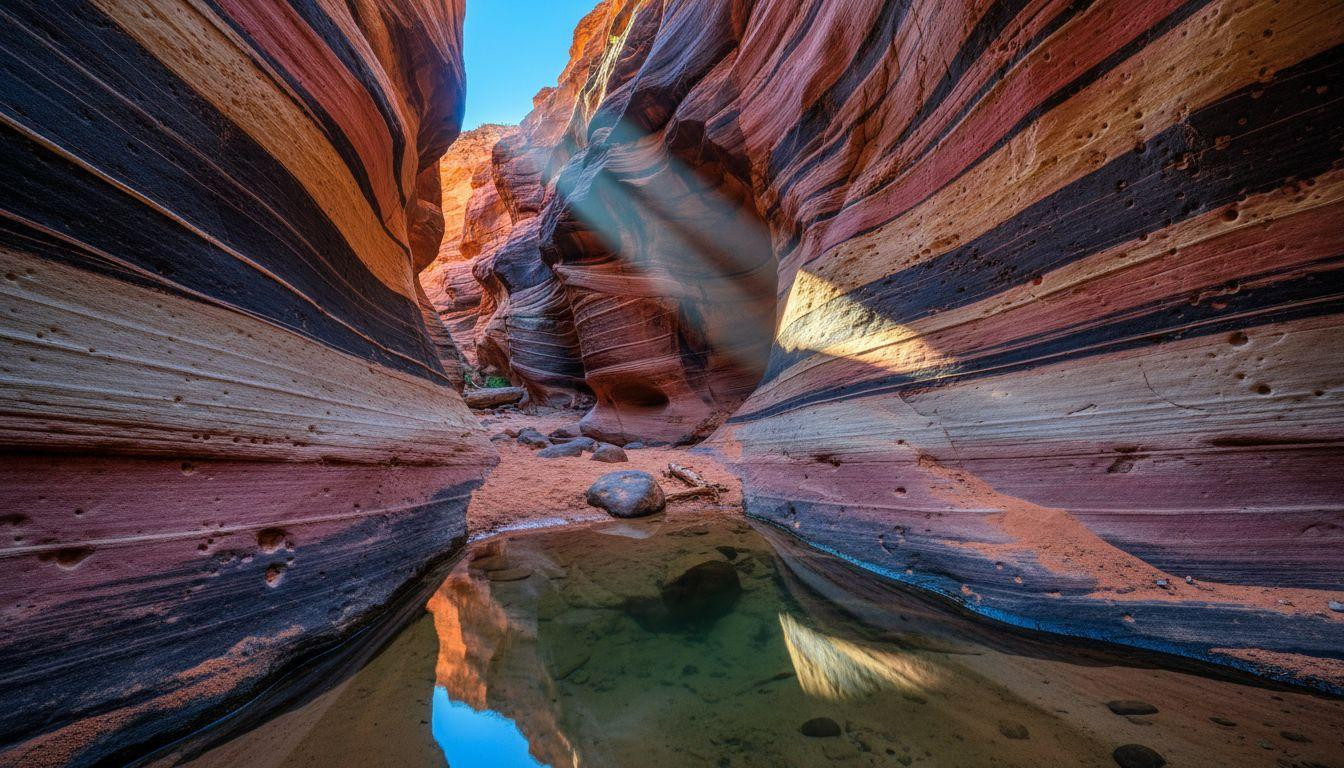
Upper Antelope Canyon charges $107 per person for less than an hour inside. Groups of 20 shuffle through on guided tours booked months ahead. Tripods banned. Photography windows measured in minutes. Then there’s Zebra Slot Canyon, 200 miles east in Grand Staircase-Escalante National Monument. Same Navajo sandstone. Same bold stripes. Zero cost. Zero crowds. You hike 5.2 miles round-trip through a dry wash and spend as long as you want in the 100-foot striped section. Winter 2026 brings fewer than 10 visitors per day.
Why Antelope became a managed experience
The 1997 flash flood killed 11 tourists in Lower Antelope Canyon. The Navajo Nation responded with mandatory guided tours and strict time limits. By 2025, Upper Antelope sees hundreds of visitors daily during peak season. Tours run every 30 minutes. You get 10-15 minutes inside before the next group arrives. Instagram drove demand past capacity. Book 26 days minimum in advance, often months for prime slots. The $107 base fare plus $15 Navajo permit totals $122 before parking. Photography permits cost extra if you bring serious gear.
The beam season runs March through October when midday sun creates light shafts. Those slots sell out first. Winter offers softer light but still requires reservations and guides. You walk a flat path with 20 strangers. No lingering. No solo exploration. The canyon became a product.
Meet Zebra Slot Canyon
Eight miles south of Highway 12 on Hole-in-the-Rock Road. The trailhead sits at 37.6667°N, 111.4250°W after 45 minutes of washboard dirt requiring high-clearance vehicles. Four-wheel drive recommended but not always mandatory in dry conditions. The road follows the 1879 Mormon pioneer route when 236 families hauled wagons through impossible terrain to reach southeastern Utah.
The striped section that rivals Antelope
Smooth Navajo sandstone walls narrow to body-width passages. Bold black, pink, and white zebra stripes cover a 100-foot section where mineral deposits stained the rock over 190 million years. Same geology as Antelope. Same iron oxide and manganese creating the patterns. Mid-morning light between 9am and 11am illuminates the stripes without harsh shadows. Photographers shoot uninterrupted. No guides timing your shots. No tripod bans. The slot feels intimate rather than commercial.
The approach hike follows cairns through red rock canyons and sagebrush flats. Wavy formations echo Arizona’s Wave. After 2.6 miles the wash narrows and sandstone textures grip your hands. Water pools appear even in winter, usually ankle to knee depth. Check BLM reports before going. The striped section appears suddenly. Walls close overhead creating tunnel-like passages where shadows emphasize the pink-black-white bands.
What this costs compared to Antelope
Zebra Slot charges zero entry fees. No permits required. No reservations. Bureau of Land Management allows self-guided access year-round. Four-wheel drive rentals in Escalante run $100-150 per day split among your group. Gas for the 52-mile round-trip costs $15-20. Total per person for a group of four: $25-40 for vehicle access. Antelope charges $107-189 per person for structured tours with time limits.
Dispersed camping in Grand Staircase-Escalante costs nothing. Developed sites near Escalante run $20 per night. Page, Arizona near Antelope Canyon charges $150-250 for basic hotels during peak season. The savings cover your 4WD rental twice over.
The winter experience
February 2026 brings daytime temps between 40-60°F and nights dropping to 20-35°F. Dry conditions dominate. Snow rarely touches Hole-in-the-Rock Road this time of year. Flash flood risk stays minimal until March when spring storms arrive. Summer hits 90-105°F with zero shade on the approach hike. The slot offers brief cooling but the 5.2-mile round-trip becomes grueling in heat.
What you actually do here
The cairned trail descends into a wash flanked by juniper and sagebrush. Boot scuffs on sand. Distant wind. No other sounds. After 1.5 miles the canyon walls rise and close in. Smooth sandstone textures cool to the touch. The 100-foot striped section appears where walls narrow to waist-width. Shadows create depth. Light filters through gaps overhead. Persistent water pools force ankle-deep wading even in winter. Bring waterproof boots or accept wet feet.
Tunnel Slot sits half a mile beyond Zebra. Similar narrows resembling a tunnel. Deep pools sometimes block passage. Both slots combined create a 6-7 mile loop if water levels cooperate. Most visitors stick to Zebra and turn back after exploring the striped section. No ropes required. No technical climbing. Families with teens manage the hike if prepared for distance.
Nearby alternatives in Escalante
Spooky Gulch requires tight body squeezes through slots narrower than Zebra. Peek-a-Boo involves climbs over boulders and hoodoos. Willis Creek offers flat easy walking suitable for young kids. All three charge zero fees and see low crowds. Zebra ranks highest for photography due to the bold stripe contrast and accessible narrow passages without extreme difficulty.
Practical details
Rent 4WD vehicles in Escalante from local outfitters or drive your own high-clearance truck. Hole-in-the-Rock Road gets graded periodically but remains rough washboard. Drive slowly. Forty-five minutes minimum from town to trailhead. No services at the trailhead. Pack 3 liters of water per person. Snacks. Headlamp for dark slot sections. Leave No Trace principles mandatory.
Escalante lodging runs $80-120 per night in winter at Slot Canyons Inn or Circle D cabins. Dispersed camping free on BLM land. Stop at the Escalante Interagency Visitor Center at 755 West Main Street for current wash conditions and weather updates. NOAA radar essential March through October when afternoon thunderstorms trigger flash floods. Winter stays safest for dry conditions.
Nearest hospital sits in Panguitch 45 miles north or Kanab similar distance. Cell service drops beyond 10-15 miles on Hole-in-the-Rock Road. Tell someone your plans before heading out. Solo hikers common but the remote location demands preparation.
Your questions about Zebra Slot Canyon answered
When should I visit for the best experience?
Late fall through early spring offers cool temps and minimal crowds. February 2026 sees fewer than 10 visitors daily. Sunrise around 7:20am provides soft morning light in the slot by 9am. Summer brings dangerous heat and afternoon thunderstorms with flash flood risk. March through May transitions from dry to wet season. September and October deliver pleasant weather but slightly higher visitor numbers as word spreads.
How does Zebra compare to other Utah slot canyons?
Zebra delivers Antelope-quality stripes without commercial infrastructure. The 100-foot prime section rivals Upper Antelope’s visual drama in a more intimate setting. Spooky Gulch nearby offers tighter squeezes. Peek-a-Boo adds climbing challenges. Willis Creek provides easier family access. Zebra balances accessibility with dramatic geology. The self-guided freedom and zero cost make it superior for photographers wanting creative control and solitude.
What makes the stripes form in these canyons?
Iron oxide creates red and pink tones. Manganese produces black streaks. Water seeping through Navajo sandstone over millions of years deposited these minerals in bands. The same 190-million-year-old formation appears at Antelope Canyon. Erosion by wind and water carved the narrow slots. The stripes remain stable but flash floods continue shaping the passages. Each visit shows slightly different water staining patterns depending on recent weather.
The morning fog lifts around 9am in February. For maybe 20 minutes the whole wash turns golden before shadows return. The striped section stays cool and dim. Your footsteps echo off smooth walls. No tour groups. No time limits. Just you and 190 million years of geology that costs nothing to witness.