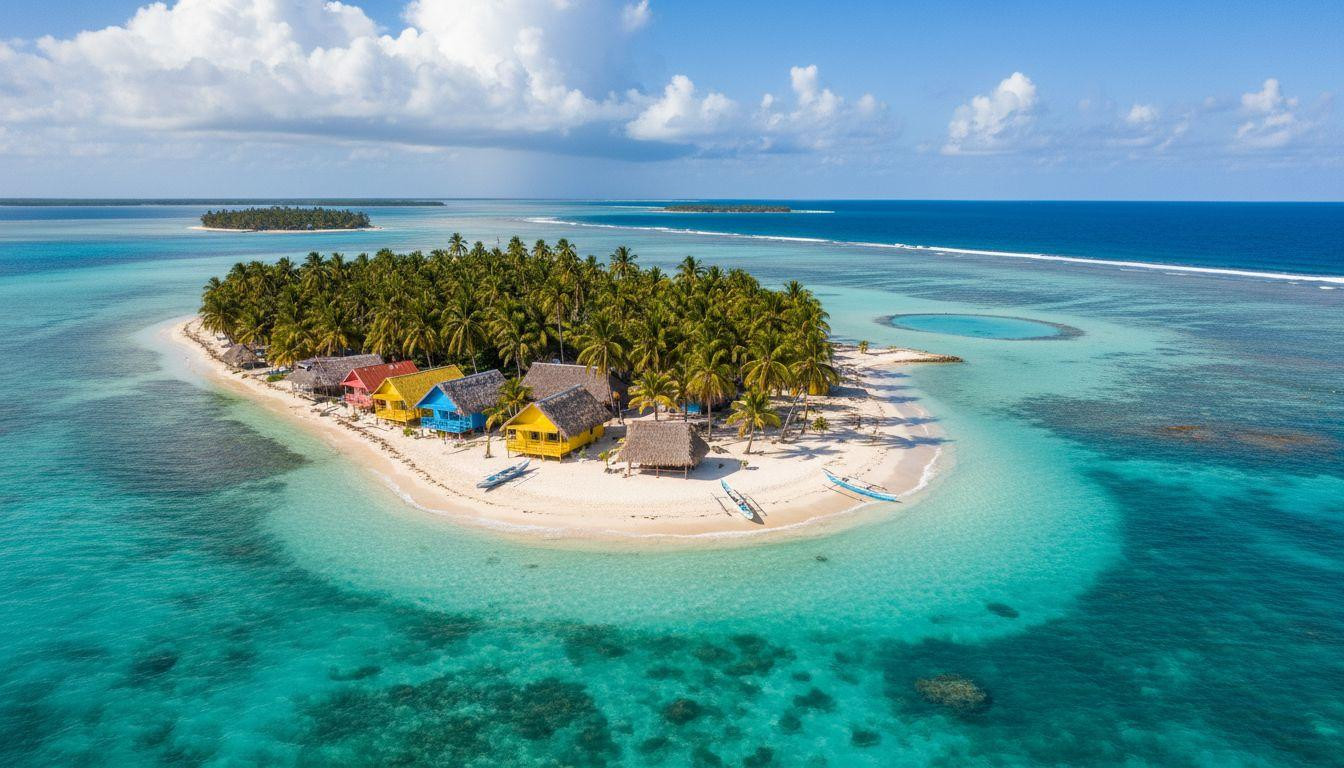
Day-trip boats load 40 tourists at Cartí port by 10am. Three islands, natural pool, lunch, back by 4pm. San Blas became a circuit. Isla Aguja sits in the same archipelago with the same turquoise water but accepts 12 overnight guests maximum. Kuna families cook meals, explain mola-making, walk you to empty beaches at dawn. This is what San Blas was before the boats multiplied.
The difference shows up in numbers. Day operators process hundreds of visitors daily through Cartí. Isla Aguja limits capacity to protect the rhythm. Same water clarity, different intention.
Why San Blas day trips lost the quiet
Boats depart Cartí carrying 30 to 40 passengers each. Multiple operators run identical circuits to popular islands. The natural pool gets 15 boats simultaneously between 11am and 2pm. Two hundred tourists wade into waist-deep water marketed as untouched paradise.
Day-trip itineraries allow 30 to 60 minutes per island stop. Guides rush groups through snorkeling, lunch service, photo opportunities. Cultural interaction happens in passing. The $75 to $130 rate includes transport, three islands, one meal, and continuous movement.
Isla Aguja operates differently. The 15-minute boat ride from Cartí delivers you to a Kuna community of roughly 150 residents. Overnight stays cost $180 to $300 for two nights all-inclusive. That rate covers six meals of fresh seafood and coconut rice, basic wooden cabins with shared or private bath, snorkel gear, and unhurried access to the reef and natural pool before day-trippers arrive.
The natural pool at different hours
Overnight guests reach the natural pool by 8am. The sunken island creates a waist-deep basin of crystalline water surrounded by deeper ocean. Visibility extends 20 feet down to sandy bottom. You wade alone while Caribbean reefs elsewhere handle resort crowds.
By noon, day-trip boats cluster at the same spot. The water stays clear but the experience shifts. Rope swings get queues. Snorkeling becomes navigation around other swimmers. The pool empties again by 4pm when boats return to Cartí.
What three-island circuits miss
Day itineraries hit Isla Diablo, two smaller islands, and the natural pool. Each stop delivers 20 to 40 minutes of beach time and swimming. Guides share brief Kuna history during boat transfers. Lunch happens on one island with groups of 30 eating simultaneously.
Overnight stays on Isla Aguja remove the timer. Mornings start with coffee and dawn swimming when the water turns glassy. Afternoons involve kayaking to uninhabited nearby islands or watching Kuna women sew mola textiles in the shade. These reverse-appliqué fabric panels take weeks to complete using traditional geometric patterns. No performance, just actual craft work you observe and discuss.
The Isla Aguja rhythm
Wooden structures painted in vibrant yellows and blues line the small island. Palm thatch roofs or corrugated metal cover cabins built for basic shelter. Solar panels provide limited electricity. Shared bathrooms serve multiple cabins. Private options cost $100 extra per night.
Families operate the guesthouses under Guna Yala’s autonomous governance system. The Congreso General Guna regulates all tourism. Communities decide visitor limits and cultural boundaries. No tourism police, no commercial pressure. You’re a guest in a functioning indigenous society rather than a customer in a resort operation.
Morning and evening access
Dawn swimming happens in silence. The reef sits 100 yards offshore with visibility extending 30 feet in morning light. Parrotfish and sergeant majors move through coral formations undisturbed by snorkelers. Water temperature holds steady at 78 to 82 degrees Fahrenheit year-round.
Evening light transforms the turquoise water to amber around 6pm. Day-trippers departed hours earlier. The soundscape shifts to waves, palm fronds rustling, distant conversation in Kuna language. Protected coves like this create the calm that mass tourism disrupts.
Cultural exchange without performance
Kuna families prepare meals using fresh-caught fish, lobster when available for $20 extra, coconut rice, and plantains. Breakfast includes tropical fruit and coffee. Lunch and dinner feature grilled seafood or ceviche. Meals happen communally with other overnight guests and occasionally host families.
Conversations develop naturally. Residents explain the comarca system that grants Kuna semi-autonomous governance since 1925. They discuss fishing practices, coconut harvesting, and the balance between tourism income and traditional subsistence. Similar cultural preservation efforts appear in places like remote Mexican communities managing visitor impact.
Getting there requires commitment
Shared 4×4 vehicles depart Panama City hotels at 5am to 5:30am. The 2.5-hour drive to Cartí port crosses jungle terrain unsuitable for standard cars. Transport costs $50 to $100 per person. A midpoint gas station stop provides bathroom breaks and snacks.
Arrival at Cartí happens around 9am. Water taxis to Isla Aguja take 15 to 25 minutes depending on sea conditions. February sits in peak dry season with minimal rainfall and calm water. Day temperatures reach 80 to 90 degrees Fahrenheit. The $2 port tax applies to all visitors.
Day-trippers bundle transport in their $75 to $130 rates. Overnight packages from operators like Sea San Blas and Enjoy San Blas include round-trip 4×4 and boat transfers. Three-night extensions add $120 to $200 to base rates. Similar access challenges affect destinations like remote Hawaiian beaches requiring early starts and specialized transport.
Your questions about Isla Aguja answered
When should I visit for the best conditions?
December through March delivers the most reliable weather. February 2026 sits in the middle of dry season with less than 10 percent rain probability. Morning water clarity peaks for snorkeling. Afternoon winds pick up slightly but remain manageable. Book accommodations two to four weeks ahead during this period. April through November brings frequent afternoon showers and rougher seas that can cancel activities.
How does overnight stay differ from day trips?
Day trips rush through three islands in six hours with 30 to 40 other tourists per boat. You get 30 to 60 minutes per stop, one meal, and constant movement. Overnight stays on Isla Aguja limit guests to 12 maximum. You access the reef and natural pool before crowds arrive, eat six meals with Kuna families, observe actual mola textile work, and experience dawn and evening hours that day-trippers miss entirely.
What makes Isla Aguja different from other San Blas islands?
Most San Blas islands either process hundreds of day-trippers or remain closed to tourism. Isla Aguja operates in between as a Kuna community accepting small overnight groups. The same turquoise water and reef access exists but without commercial resort development or mass-tourism infrastructure. Families control the pace. Cultural exchange happens through actual daily life rather than staged demonstrations.
The rope swing hangs from a tree at the island’s edge. Water below shows sandy bottom at 10 feet depth. Day boats arrive around 11am. By then you’ve already swum here twice.