“`html
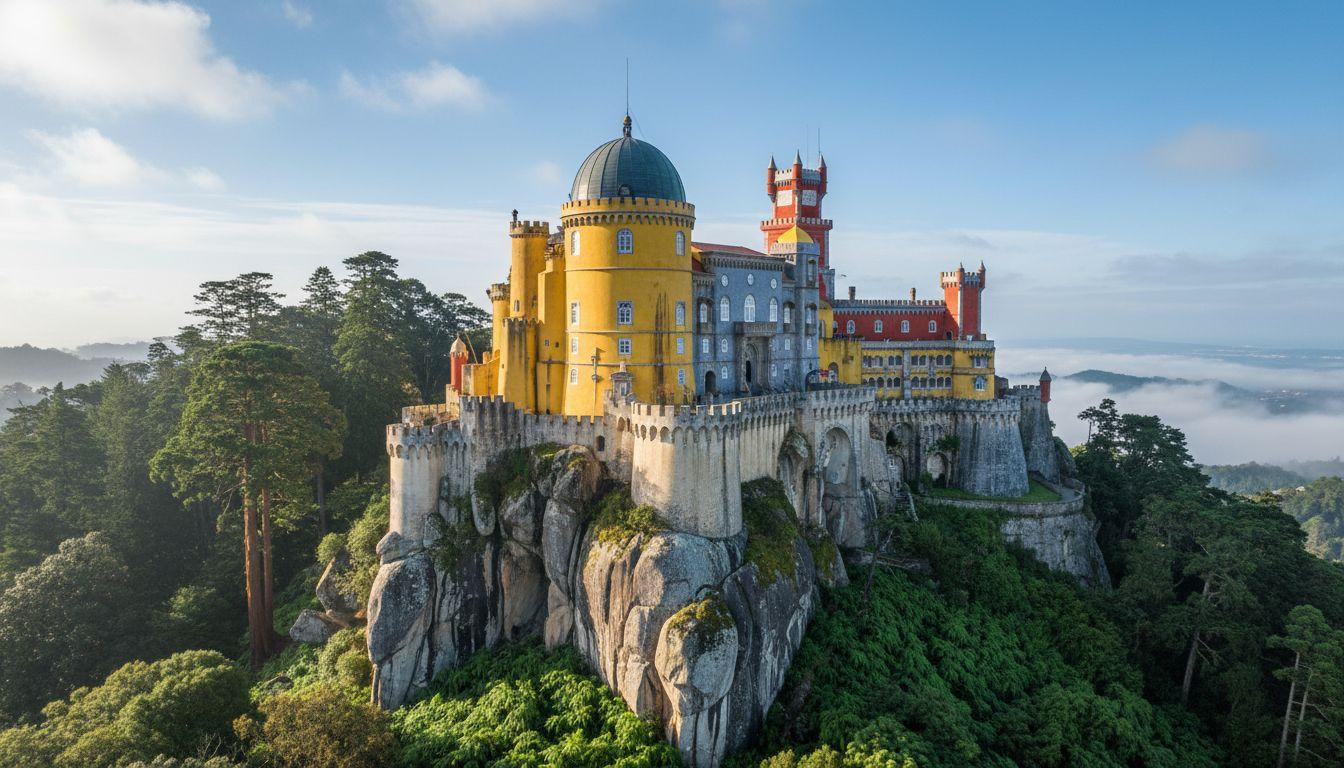
Lisbon’s Belém district draws 1.5 million visitors annually to stand in line at Jerónimos Monastery. Wait times hit 45 minutes on weekends. The famous Pastéis de Belém bakery serves 20,000 custard tarts daily to tourists who queue for 30 minutes minimum. Hotels average $165 per night in February. Meanwhile, 19 miles northwest, Sintra sits at 1,732 feet elevation in fog-wrapped forests where Pena Palace’s yellow and red turrets emerge from morning mist. The town limits daily visitors to 6,000 at its main palace, half the previous capacity. February rooms start at $90.
Why Belém feels like a queue
Belém spreads flat along the Tagus River at sea level. The Manueline monastery and tower date to the 1500s, celebrating Portugal’s Age of Discovery. Architectural details are intricate. The crowds are relentless.
Jerónimos Monastery processes 800,000 visitors yearly through its cloisters. Even in February, weekends bring 15-30 minute waits. The adjacent Belém Tower adds another 500,000 annual visitors. Tour buses idle outside both monuments from 10am until closing.
The Pastéis de Belém bakery operates since 1837 in the same building. Production reaches 20,000 tarts daily. The queue wraps around the block most afternoons. Inside, 400 seats fill continuously. The recipe remains secret. The experience feels industrial.
Hotels in Belém charge premium rates for proximity. The Pestana Palace runs $220-250 per night in low season. Mid-range options like Altis Belém average $165. The neighborhood offers no elevation, no forests, no escape from riverfront traffic and ferry horns.
Meet Sintra’s vertical escape
Sintra became Europe’s first UNESCO Cultural Landscape in 1995. The designation covers 2,337 acres of mountains, palaces, and forests. Cruz Alta peak reaches 1,732 feet. The Serra de Sintra creates a microclimate where fog forms 10-15 mornings monthly from November through March.
Mountains replace riverfront
Pena Palace sits at 1,575 feet elevation on a granite outcrop. The Romantic palace dates to the 1840s, built by King Ferdinand II. Yellow and red facades mix Gothic, Moorish, and Renaissance elements. The 494-acre park surrounding it contains umbrella pines, cork oaks, and fern valleys.
Morning fog lifts around 9am most winter days. The palace emerges gradually from white mist. By 10am, the Atlantic becomes visible 9 miles west. The vertical landscape offers what Belém cannot: layers of elevation where you climb into different microclimates.
The Moorish Castle ruins crown a ridge at 1,410 feet. The 8th-century fortification predates Christian reconquest by 400 years. Stone walls follow the mountain’s contours for 1,476 feet. Views extend to Cabo da Roca, Europe’s westernmost point, 9 miles away. Similar to this Albanian castle that overlooks 80 churches, the elevation creates natural separation from crowds below.
Your money goes further
February hotel rates in Sintra average $122 per night. The Sintra Boutique Hotel charges $130-145 for central location. Budget options like Flag Hotel Lisboa Sintra run $85-95. Luxury properties like Rosegarden Essence Sintra reach $190-215, still below Belém’s premium tier.
Pena Palace admission costs $22 with timed entry. The ticket includes park access and guarantees no wait. Quinta da Regaleira charges $13 for its gardens and Initiation Well. The Moorish Castle adds $9. Total cost for three major sites: $44. Jerónimos and Belém Tower together cost $16, but the experience lacks Sintra’s mountain setting and forest trails.
Local queijadas (cheese tarts) sell for $2-3 each at Piriquita bakery. No queue exists. The recipe dates to the 13th century. Travesseiros (almond pastries) cost the same. Both taste distinct from Belém’s ubiquitous custard tarts.
What you actually experience
November through March reality
Parques de Sintra Monte da Lua manages all major monuments. The organization halved Pena Palace capacity from 12,000 to 6,000 daily visitors in 2024. Quinta da Regaleira dropped from 9,000 to 4,500. Timed tickets enforce the caps through 30-minute entry slots.
Winter brings 70-80% fewer visitors than summer peaks. February weekdays feel empty. The 434 bus loops between town center, Quinta da Regaleira, Pena Palace, and Moorish Castle every 15 minutes. A $14 day pass covers unlimited rides. The route takes 45 minutes complete. Most tourists board at 10am. The 8am departure carries only locals and early photographers.
Temperature in Sintra runs 5-7°F cooler than Lisbon in February. Highs reach 55-59°F compared to Lisbon’s 61-64°F. Morning fog brings 75-85% humidity. The forest smells of pine resin and damp earth. Bird calls echo through valleys. The atmosphere feels Scottish, not Mediterranean. Much like this Croatian peninsula where locals gather at sunset, the microclimate creates distinct sensory experiences.
Romantic architecture Belém cannot match
Pena Palace represents 19th-century Romanticism at its most exuberant. King Ferdinand II hired German architect Baron Wilhelm Ludwig von Eschwege to transform a ruined monastery into a summer retreat. Construction lasted from 1842 to 1854. The result combines medieval fantasy with tropical gardens.
Quinta da Regaleira offers different drama. The 1910 estate features a 89-foot-deep Initiation Well with spiral stairs descending into darkness. Masonic symbolism fills the underground tunnels connecting grottoes and towers. The experience feels mystical rather than royal.
Belém’s Manueline style celebrates maritime exploration through nautical motifs carved in limestone. Jerónimos Monastery’s cloisters showcase intricate stonework from the 1500s. The architecture impresses but lacks Sintra’s vertical dimension and forest integration. Both deserve visits. Sintra adds layers Belém cannot: elevation, wilderness, Romantic excess.
Getting there without the crush
CP trains depart Lisbon’s Rossio station for Sintra every 15-20 minutes on weekdays. The 40-minute ride costs $2.50 one-way. First train leaves at 6am. Last return departs Sintra at 11pm. Weekend frequency drops to 3-5 trains hourly.
From Sintra station, the town center sits 1,640 feet away on foot. The 434 bus departs from the station’s front plaza. Driving from Lisbon takes 35-45 minutes via A37 and A5 highways. February parking in Sintra remains available in town lots for $1-2 per hour. Summer parking becomes impossible.
The entire Sintra experience requires one full day minimum. Most visitors arrive at 10am and leave by 5pm. Staying overnight eliminates the rush. Morning fog photography at Pena Palace starts at 7:30am before crowds. Evening walks through Vila Velha’s old town reveal local life after day-trippers depart. For more capacity-controlled destinations, see 9 towns that cap visitors to protect locals.
Your questions about Sintra answered
When should I book Pena Palace tickets?
Book 30-60 days in advance for February visits through the Parques de Sintra website. Timed entry slots fill faster on weekends. The 9am and 3pm slots stay available longest. Free cancellation works until 24 hours before your visit. Walk-up tickets rarely exist due to the 6,000 daily cap.
Why does Sintra have UNESCO status but Belém does not?
Sintra earned Cultural Landscape designation in 1995 as Europe’s first site in that category. The classification recognizes the integration of Romantic palaces with natural mountain forests. Belém’s Jerónimos Monastery and Tower received separate UNESCO recognition in 1983 as individual monuments, not landscapes. Both hold World Heritage status but different categories.
How does Sintra compare to other European mountain towns?
Sintra’s elevation reaches only 1,732 feet at Cruz Alta, lower than Alpine villages. The Atlantic microclimate creates fog and humidity unlike dry Mediterranean hills. Architecture mixes Moorish, Gothic, and Romantic styles unavailable in single-culture mountain towns. The proximity to Lisbon (19 miles) makes Sintra more accessible than remote Alpine destinations. Similar atmospheric experiences exist at Greek islands that stay quiet year-round, though without mountains.
The train back to Lisbon leaves at 4:30pm. Most visitors make it with time to spare. The 434 bus drops passengers at the station 20 minutes before departure. By 5pm, Sintra’s streets empty. Shop owners sweep sidewalks. The fog begins forming again over Cruz Alta. Tomorrow morning, it will descend once more over Pena Palace’s turrets, and the cycle continues.
“`