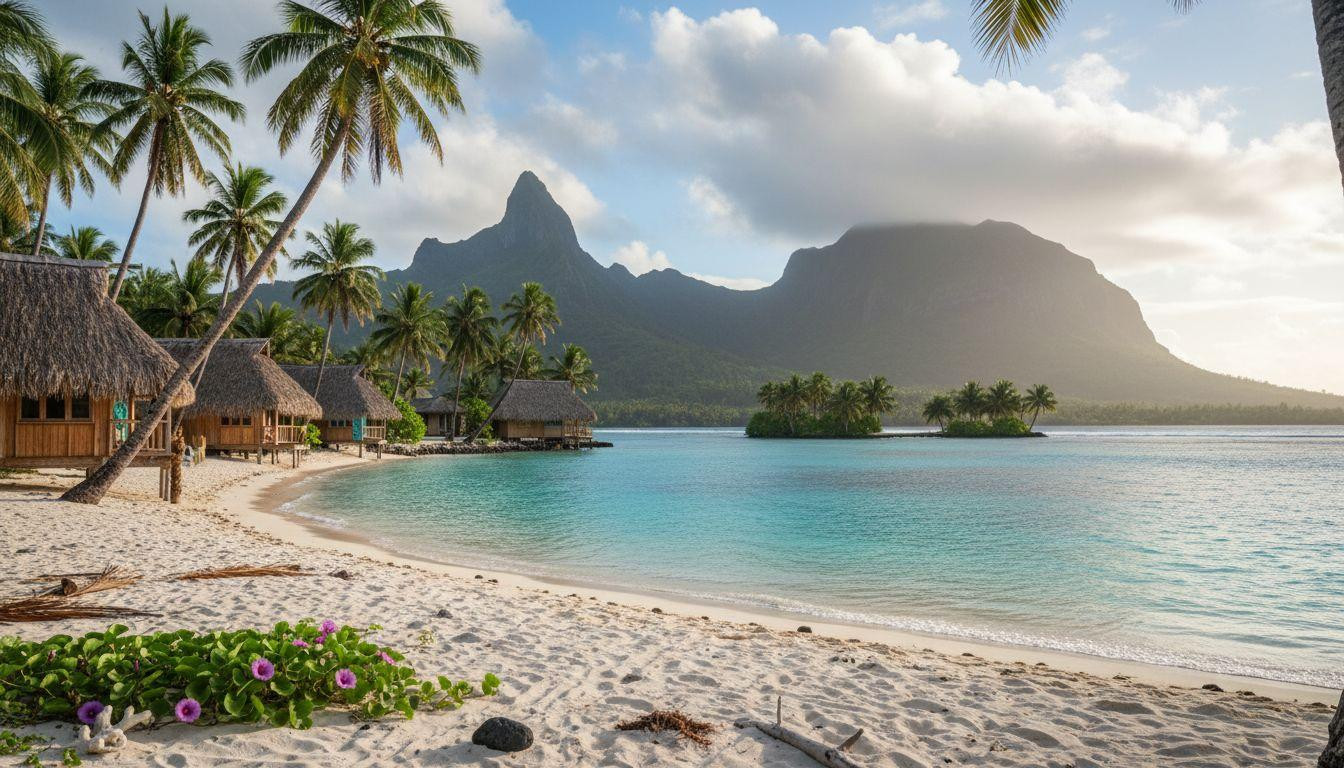
The ferry from Auckland touches down at Rarotonga International Airport. First sight: turquoise lagoon meeting black volcanic peaks. Second sight: what’s missing. No high-rises break the horizon. Buildings stop at coconut tree height. The law that saved this island was written in 1965, before the first resort opened. Maximum 40 feet. It still holds.
Population 15,000 feels like 1,500. The outer areas stay quieter than the main hub of Avarua. Small towns like Arorangi and Titikaveka keep their Polynesian rhythm. Roosters wander roads freely. No traffic lights exist anywhere on the 20-mile coastal loop.
The law that stopped time
The Cook Islands planning code states it plainly: no building taller than a coconut tree. That means 12 meters, roughly 40 feet. The rule covers the entire island circumference. Enforcement happens through Infrastructure Cook Islands, which reviews every building permit for height compliance. Violations require alterations.
The result: Polynesian bungalows with thatched roofs, wood-frame guesthouses, colorful churches. Compare this to Waikiki’s transformation in the 1960s and 70s. Rarotonga chose a different path. Developers can’t break the height limit. The skyline stays horizontal, interrupted only by coconut palms and Te Rua Manga’s jagged 2,100-foot peak.
Proposed amendments in 2023-2024 addressed shadowing and climate concerns but maintained the 12-meter cap. The law protects what makes this place different. One local perspective: “The rest of the world could learn from the Cook Islands.”
Where volcanic drama meets Pacific calm
The turquoise reality
The lagoon runs 20 miles around the island. A fringing reef sits 200 to 500 yards offshore. Protected swimming year-round. Water temperature holds steady at 75-82°F. Muri Beach shows this best: calm aquamarine water, white sand, few crowds even in peak season.
Black Rock Beach at sunset draws locals who gather on warm rocks. Tourists stay rare. Snorkeling visibility reaches 60 feet on clear days. Parrotfish and surgeonfish move through coral gardens. The reef keeps waves gentle inside the lagoon while ocean swells pound the outer barrier.
The interior surprise
Te Rua Manga, called The Needle locally, rises 1,355 feet as a volcanic pinnacle. The formation dates back 2 million years. Rainforest hikes reveal hidden waterfalls. Wigmore’s cascade sits accessible from Titikaveka, about a mile inland. The cross-island trek passes endemic birds like the Rarotonga flycatcher.
Contrast defines the island: beach calm versus mountain wild, both reachable in minutes. The volcanic interior stays lush while the coastal ring bakes in tropical sun. This duality makes the 32-kilometer circumference feel larger than it measures.
The Polynesian rhythm still works
Sunday silence
Everything closes on Sundays. Church services fill with a cappella singing that echoes through villages. Visitors are welcome to attend. Services last 1-2 hours. Roosters wander empty roads. The clockwise and counterclockwise buses ($3 NZD) still run but carry fewer passengers.
The pace feels like 1970s Hawaii before mass tourism arrived. No McDonald’s exists here. No chain hotels dominate the coastline. Similar to quieter Caribbean islands, the rhythm stays unhurried. Local life continues around tourism rather than being replaced by it.
Market culture lives
Punanga Nui Saturday market runs from 8am to 2pm. Locals sell tivaevae quilts, shell jewelry, fresh ika mata. The marinated fish dish costs around $20 per plate at food stalls. Muri Night Market operates Tuesday, Thursday, and Saturday from 5pm to 8pm. Seafood comes straight from morning catches.
Prices run 20-30% below New Zealand averages. Guesthouses in outer villages like Aroko cost $80-150 NZD per night. Family-run operations dominate. Like other accessible island destinations, the connection feels real rather than transactional. Owners share local knowledge freely.
February advantage
February marks wet season’s end. Warm lagoons persist. Short tropical showers pass quickly. Fewer tourists visit between November’s peak and May’s shoulder season. Cyclone risk drops after January-March window. Historical records show no major hits since 2005.
Te Maeva Nui festival preparation begins for the August celebration. Cultural workshops start accepting visitors. Direct flights from Los Angeles take 8-10 hours via Air New Zealand. Hawaiian Airlines expanded routes in early 2026 with February-April specials. No passport stress: the Cook Islands’ self-governance under New Zealand association allows US citizens 31 days visa-free.
Outer villages stay quieter than Avarua’s main strip. Similar to volcanic islands elsewhere, the dramatic interior contrasts with coastal calm. New guesthouses opened in Aroko in 2025, adding family-friendly options. Rental cars cost $35 per day. The full island loop takes 45 minutes.
Your questions about Rarotonga’s outer areas answered
How strict is the building height law?
Absolute. Measured from natural ground level. Coconut palms average 40 feet, that’s the hard cap. Violators face demolition orders. No exceptions exist for resorts or government buildings. The law maintains sightlines to volcanic peaks from every beach angle. Infrastructure Cook Islands enforces through mandatory permit reviews.
What makes this different from Fiji or Tahiti?
Fiji allows high-rise resorts in developed areas like Denarau. Tahiti and Bora Bora permit overwater bungalows that dominate lagoon views. Rarotonga’s law predates mass tourism. The island chose preservation before development pressure arrived. Authentic village life survives in outer areas. It’s not museum-piece reconstruction.
Can you access outer areas easily?
Island circumference measures 20 miles. Full drive takes 45 minutes. Rental cars available. Bikes work on the flat coastal road. Buses circle both directions hourly for $3 NZD. No remote spots exist. Everything stays reachable. Unlike isolated island communities, nothing here feels overdeveloped or inaccessible.
Morning light hits Muri Lagoon around 6:30am. Pink sky reflects in still water. The volcanic peaks catch first sun while the beach stays empty. This moment repeats daily. No buildings block the view.