Alealea Road ends where the no-parking signs begin. You drop passengers off or you park a mile back at Haena Beach and walk the shoreline. This friction is intentional. Naue Beach sits four miles past Hanalei on Kauai’s North Shore with miles of empty coastline, zero facilities, and access designed to keep crowds away. February 2026 brings cool 75°F water and profound quiet.
The beach protects itself through inconvenience. Most visitors turn around when they realize parking doesn’t exist here.
Where access becomes the filter
Naue sits in the Haena area between Tunnels Beach and Ke’e Beach. Both neighbors draw crowds. Tunnels offers snorkeling and fills by mid-morning. Ke’e requires advance reservations through gohaena.com at $5 per person plus $35 parking. Naue operates differently.
The main approach via Alealea Road (second right after Hanalei Colony Resort) allows drop-offs only. Citations replace towing as enforcement. The alternative: park at Haena Beach and walk over a mile along the sand. High surf in winter makes this walk possible only at low tide. Summer calms the water but doesn’t change the parking rules.
An eastern access point exists where Alamoo Road takes a 90-degree turn, roughly half a mile from the main Naue cove. Same principle applies. Difficulty filters visitors more effectively than admission fees.
What miles of empty shoreline look like
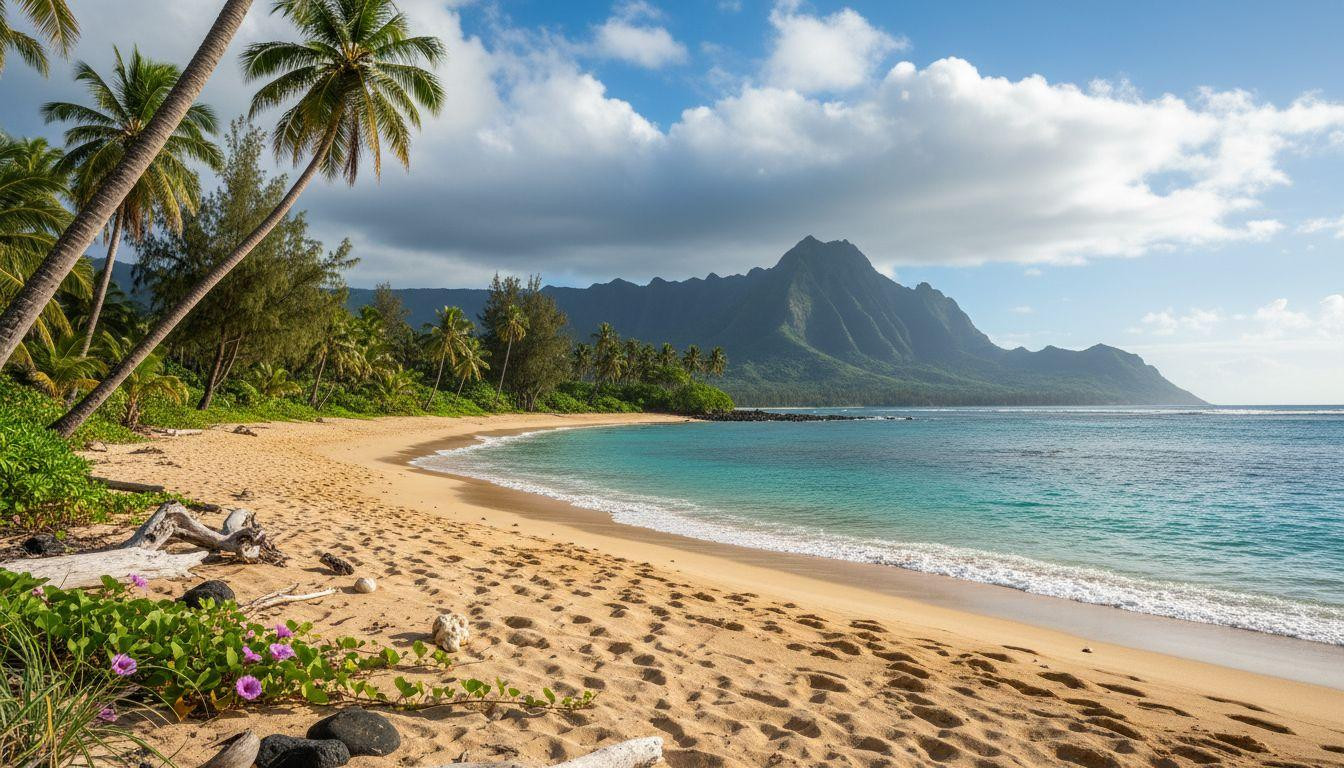
The water runs turquoise against golden sand. Mount Makana rises in the distance, the same peak Hollywood renamed Bali Hai for South Pacific in 1958. Mature tropical vegetation grows to the sand line. No umbrellas, no loungers, no lifeguard towers, no warning signs.
The walking experience defines Naue. Miles of coastline stretch in both directions with minimal human presence. Morning brings the best light on Mount Makana. Afternoons offer slightly calmer conditions when winter swells ease. The narrow crescent form creates intimacy rather than the exposed feeling of wider beaches.
Winter water versus summer water
February sits in Kauai’s winter season. Water temperatures hover around 75-78°F, cool enough to refresh but not cold. Winter swells arrive frequently, making swimming dangerous. Official guidance states clearly: not a beach for swimming, use caution when surf is active.
Summer transforms conditions. June through August bring calm water described by locals as swimming-pool flat. The access friction remains identical. Temperature rises to low 80s. Crowds stay minimal because the walk stays long.
The facilities you won’t find
Naue has zero infrastructure. No restrooms, showers, picnic tables, or lifeguards. Visitors bring everything: water, food, sun protection, first aid. Cell coverage exists but emergency response requires time given the remote location.
YMCA Camp Naue operates nearby on beachfront property. The camp has functioned since 1926 when McBryde Sugar Company donated the land for community recreation. Current availability and rates remain unstated for February 2026, though historical pricing ran around $30 per person daily.
Nearest services
Ke’e Beach sits 4-5 miles further along Highway 56. It offers restrooms and showers but requires Haena State Park reservations booked 30 days in advance through gohaena.com. The system caps daily visitors. Parking costs $35 for non-residents, $25 for residents, with a five-night maximum.
Hanalei town sits four miles back toward Lihue. Full services exist there: groceries, restaurants, gas stations, medical facilities. The drive from Lihue Airport to Naue covers roughly 45 miles and takes 45-60 minutes depending on traffic through Hanalei.
For context, Sealodge Beach on the same North Shore shares similar winter conditions and access challenges, offering another option for those seeking isolation.
Why difficulty equals preservation
The paradox works simply. Inconvenience filters visitors to those genuinely seeking solitude rather than resort-style convenience. Hawaiian shoreline access law protects all beaches as public property, preventing full privatization. But vegetation encroachment and infrastructure absence create natural barriers.
Naue avoided the fate of Tunnels Beach, located approximately one mile away. Tunnels attracts snorkelers to its crescent reef structure with tropical fish congregating in clear water. Parking remains minimal but accessible. Proposals exist to integrate Tunnels into the Haena reservation system. Naue’s deliberate inaccessibility makes such systems unnecessary.
The emotional reward comes from effort. Walking a mile with beach gear filters casual tourists. Those who arrive value the emptiness they’ve earned. This creates a self-selecting visitor base that respects the environment.
Nearby Canouan in the Caribbean employs similar access constraints to maintain empty beaches, proving the model works across geographies.
Your questions about Naue Beach answered
Can I really not park there?
Correct. Alealea Road prohibits parking with enforcement via citations. Drop passengers off and circle back, or park at Haena Beach and walk over a mile along the shoreline. The walk requires low tide and calm surf. No alternative parking exists closer. This restriction operates year-round regardless of season or visitor volume.
What time should I visit?
Morning offers the best light on Mount Makana, typically before 9am. Afternoons bring slightly calmer water conditions when winter swells ease, though swimming remains discouraged. Avoid midday heat with zero shade available. Check surf reports before visiting. High surf makes the shoreline walk from Haena Beach impossible and dangerous.
How does this compare to Tunnels Beach?
Tunnels sits approximately one mile away with better snorkeling due to its crescent reef structure. It attracts more visitors despite minimal parking. Naue offers walking and solitude rather than water activities. Both share the same coastline and Mount Makana views. Tunnels suits snorkelers willing to navigate crowds. Naue suits walkers seeking emptiness.
For those exploring Hawaii’s overlooked beaches, Beach 69 on the Big Island provides similar raw beauty without resort infrastructure.
The ferry back to reality doesn’t exist here. You walk the same mile you came in on. Most people make it with time before sunset. The ones who linger understand why access friction works as conservation. February 2026 light hits the water around 5:30pm, turning everything gold for maybe ten minutes.