“`html
The air feels different here. Not cleaner in some vague wellness-brochure way, but measurably different. Jiaoling County sits in Guangdong’s northeastern mountains, where oxygen ion levels hit 3,000 per cubic centimeter. That’s three times what you breathe in Guangzhou. The government designation reads “World Longevity Hometown.” The centenarian count backs it up.
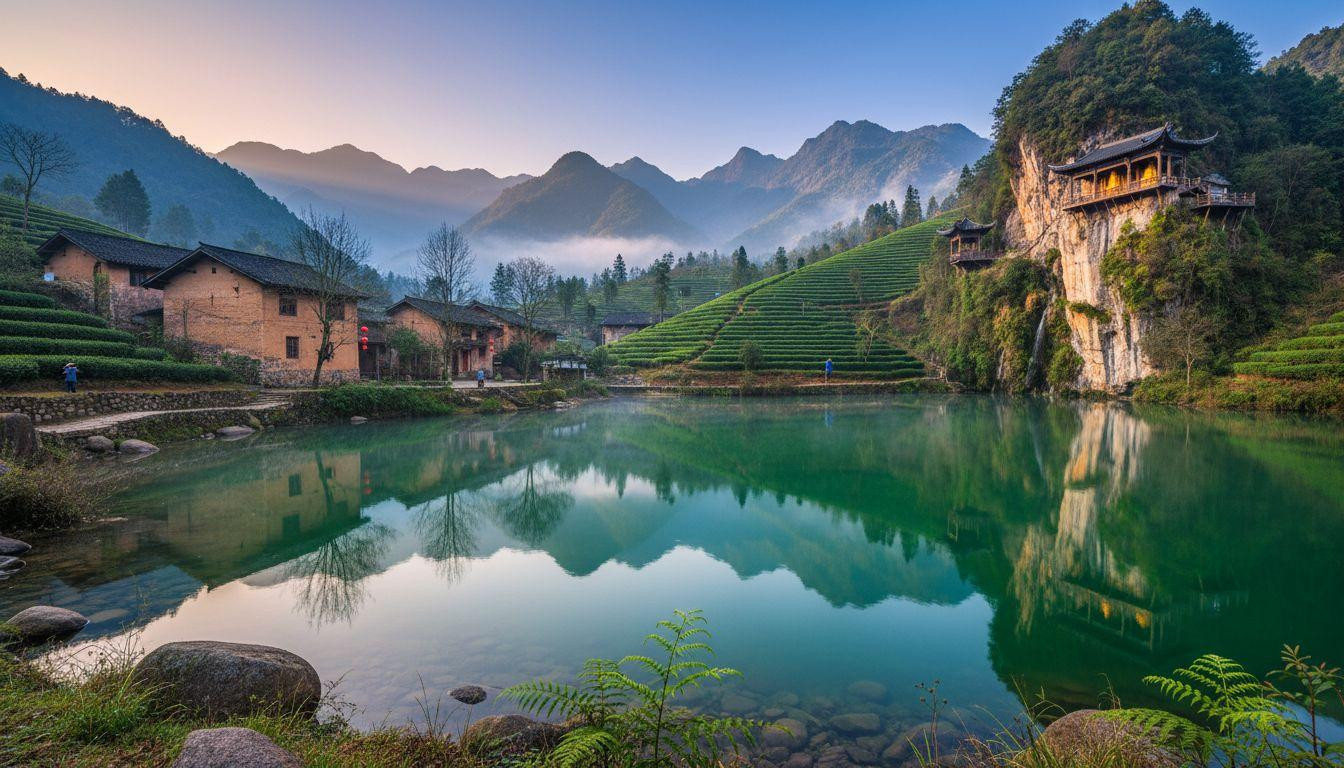
This isn’t Bama, where millions chase longevity tourism and hotels triple their rates. Jiaoling keeps its Hakka roots quiet. Tea terraces climb misty slopes. Changtan Lake reflects green peaks without a tour bus in sight. Population 180,000. Annual visitors measured in thousands, not millions.
Where mountains make breathing matter
Jiaoling’s altitude ranges from 1,640 to 2,625 feet. Subtropical climate, ancient forest cover, minimal development. The Changtan reserve spans 15 square miles of undisturbed photosynthesis. Over 1,000 vascular plant species process CO2 into oxygen all day. Alsophila spinulosa ferns grow here, living fossils protected by national law.
Negative oxygen ions form when plants release electrons during photosynthesis. Urban Guangdong averages 1,000 ions per cubic centimeter. Jiaoling triples that. Local tourism boards confirm the 3,000 measurement. No spa treatment required. Just geography and time.
The science ties to cellular health. Negative ions increase oxygen absorption in lungs. Blood carries more to tissues. Locals don’t call it biohacking. They call it breathing mountain air while picking tea.
The centenarian evidence
Numbers that hold up
Jiaoling ranks among China’s top regions for centenarian proportion. Official designation came after demographic verification. No exact ratio published, but the “World Longevity Hometown” title requires government proof. Compare to Bama’s estimated 100 centenarians per 100,000 residents. China’s national average sits around 25 per 100,000.
Recent gut microbiota studies from 2022-2023 link Jiaoling centenarians to antioxidant-rich intestinal bacteria. The research suggests diet and environment both matter. Tea garden greens. Mountain spring water. Air that works harder than supplements.
What locals practice
Hakka culture here moves slowly. Elders gather at dawn in thousand-mu tea gardens. They pick leaves, recite poetry, share breakfast. No rush. The village baker’s family has run the same shop since 1953. Recipes use wild greens from the hills.
Stuffed tofu appears at every meal. Salt-baked chicken uses free-range birds. The food ties to soil quality. Hakka reverence for unhurried living isn’t philosophy. It’s daily rhythm shaped by mountain geography.
Walking the oxygen trail
Changtan reserve experience
The reserve entrance sits 12 miles from Jiaoling County center. Entry fee runs 100-200 yuan ($14-28). Trails wind through ancient plant species. Golden Turtle Nunnery clings to a cliff face, appearing to hang impossibly. Local historians note the temple’s optical illusion has drawn pilgrims for centuries.
Tea gardens stretch across hillsides. Visitors pay 50-100 yuan ($7-14) to pick leaves with locals. The morning mist lifts around 8am. For maybe 20 minutes the whole valley turns gold. Then the work begins.
Breathing the high-ion air creates a physical sensation. Not euphoria. More like clarity without caffeine jitters. Blood oxygen levels rise measurably within hours according to recent visitor surveys conducted in 2025.
Lake reflection moment
Changtan Lake sits mirror-still at sunrise. Green mountains reflect perfectly. Silence except for bird calls from 264 wild animal species documented in the reserve. This calm differs from generic peaceful. The air quality creates a neurological response you can feel.
Most visitors walk the lakeside path at dawn. Water temperature stays around 72°F in February 2026. No boats allowed before 9am. The stillness holds.
Practical longevity tourism
Access starts in Guangzhou. High-speed train to Meizhou West Station costs 100-150 yuan ($14-21) second class. Travel time 90-120 minutes. From Meizhou, taxi to Jiaoling runs 100-150 yuan ($14-21) for the 31-mile drive. Local buses cost less but take longer.
February 2026 brings ideal conditions. Temperatures range 50-64°F. Low crowds. Peak oxygen production from winter plant cycles. Hakka guesthouses charge 150-300 yuan ($21-42) per night. That’s 60% below Guangdong’s average. Meals run 20-50 yuan ($3-7). Tea-picking experiences cost 50-100 yuan ($7-14).
Skip manufactured longevity tours. The real experience is unguided mountain walks. A resident who moved here from Shenzhen in 2019 says three days minimum to feel the difference. Mental clarity arrives faster than physical changes.
Your questions about Jiaoling answered
Is the longevity claim real?
Government designation requires demographic proof. Top national centenarian ratio verified through official records. Compare to Blue Zones research in Okinawa and Sardinia. Jiaoling’s numbers hold up. Not marketing. Measurable population data.
How long to feel the difference?
Local tourism boards suggest three days minimum. Oxygen ion effect shows in blood oxygen levels within hours. Visitor surveys from 2025 report mental clarity after 24 hours. Physical benefits take longer. Most visitors extend their stays.
Better than Bama?
Bama draws millions annually. Hotels charge premium rates. Jiaoling sees thousands. Authentic Hakka culture intact. Costs run 20-30% lower. Same longevity science. Zero crowds. For travelers seeking mountain villages where culture stays preserved, Jiaoling delivers without the tourism infrastructure.
The morning fog lifts over Changtan Lake. Tea pickers move through rows. Their breath visible in cold air. This is what 3,000 oxygen ions per cubic centimeter looks like. Not a wellness retreat. Just a place where breathing works better. The centenarians prove it daily.
“`