Dubuque’s riverfront casinos pull 57,000 residents and regional crowds to a developed waterfront where hotel rates hit $120 per night in February and parking challenges persist year-round. Thirty minutes north, McGregor sits with 725 residents, the same 500-foot limestone bluffs, and rooms starting at $80 with free parking everywhere. The Mississippi flows past both towns. One charges for the view.
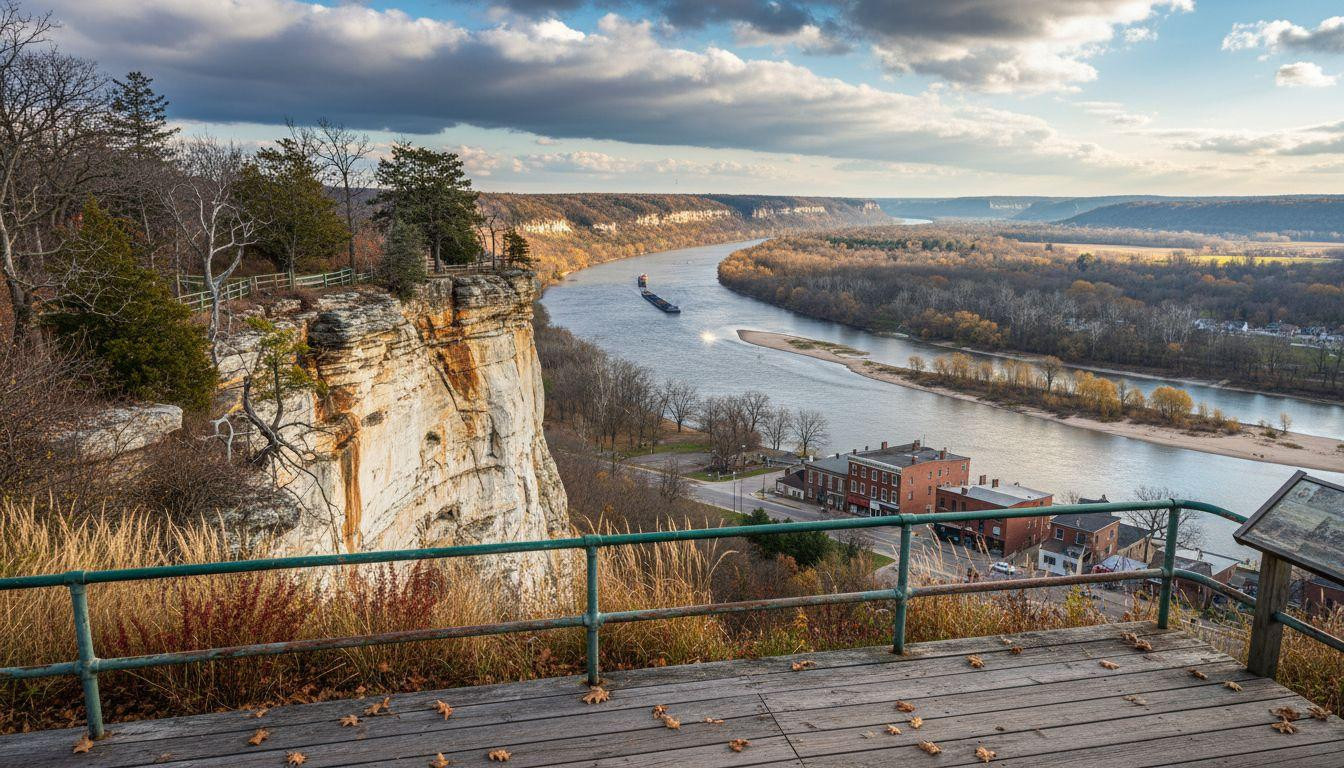
Pike’s Peak State Park rises above McGregor’s historic steamboat landing, offering overlooks of the Mississippi-Wisconsin confluence from 1,130 feet. Dubuque built museums and casino districts. McGregor kept 1800s brick storefronts and quiet streets where morning fog rolls off the river at dawn.
Why Dubuque crowds the riverfront experience
Dubuque’s National Mississippi River Museum anchors an urban waterfront designed for tourism volume. Casino foot traffic peaks daily. Hotels range from $54 to $299 per night, averaging $120 in winter when crowds thin slightly from summer festival peaks. Riverfront parking fills fast. Restaurant prices align with the city’s 15.1% below-national cost of living, but convenience comes with density.
The developed riverfront serves its purpose. Families visit the museum. Gamblers try the casinos. Everyone competes for the same river views from the same crowded overlooks. Summer brings festivals that pack the streets. Winter offers relief but not solitude.
McGregor sits 30 miles north via the Great River Road, a 35-minute drive through bluff country. The scenic byway winds past limestone formations and valley overlooks. Traffic stays light. The destination stays quieter.
McGregor’s bluff advantage over urban development
The landscape difference that matters
Pike’s Peak State Park protects 964 acres of uncleared bluff land, largely unchanged since pre-settler times. The 500-foot limestone cliffs drop to the Mississippi where it meets the Wisconsin River. Point Ann Overlook and Crows Nest provide unobstructed views of barge traffic moving through the confluence. No admission fees. No timed entry. Parking lots rarely fill even on summer weekends.
The park maintains 11 miles of trails, including a half-mile boardwalk to Bridal Veil Falls through oak-maple forest. Sixty-three Native American effigy mounds from 800-1200 A.D. dot the landscape, including Bear Mound visible from overlooks. February brings river ice formations and morning fog that lifts around 8am, turning the water gold for maybe ten minutes.
The price reality nobody mentions
McGregor lodging runs $80-120 per night at local inns and the new 24-hour hotel near town. Pike’s Peak camping costs $20-35 per site with basic amenities. Main Street parking stays free and plentiful. A fried catfish dinner at riverside spots costs $15-20. The town’s 1800s architecture houses small businesses that close early in winter but keep authentic character year-round.
Dubuque’s casino district and museum complex require paid parking during peak hours. Hotel rates climb to $151 in high season. The trade-off buys urban amenities and entertainment density. McGregor offers the opposite calculation: fewer services, lower costs, actual quiet.
What you actually do in McGregor
The bluff experience without crowds
Pike’s Peak trails stay maintained for winter hiking. The main overlook loop takes 30 minutes at a casual pace. Dawn visits in February mean empty parking lots and soft light hitting the frozen river. Barge traffic continues year-round, visible from multiple viewpoints. The boardwalk to Bridal Veil Falls gets icy but remains passable with care.
McGregor’s Main Street preserves its steamboat-era layout. Andrew Clemens sand art bottles fill cases at the McGregor Historical Museum, documenting the 1800s artist who worked without adhesives. The historic landing sits quiet except for occasional boat launches. Walking the streets at 7am, you pass maybe three people.
For more bluff-country exploration, Galena’s 1850s mining architecture sits 45 minutes away. Decorah’s 52 National Register buildings offer another preserved Iowa town within an hour.
River culture without the casino noise
Local catfish spots serve Mississippi catches fried or blackened. The Iowa Wine Trail runs within 30 minutes, offering tastings at small vineyards. Barge watching from Pike’s Peak becomes oddly meditative. The massive vessels move slowly enough to track for ten minutes as they navigate the confluence.
Winter means eagle watching. Bald eagles concentrate along the unfrozen river sections in February, visible from bluff overlooks without binoculars. The birds fish in open water where ice breaks around islands. Locals mention the best viewing times without prompting.
Similar quiet river experiences appear at Missouri’s spring-fed waterways, though McGregor’s bluff drama adds vertical scale. Traditional food culture persists in similar small river towns across the Midwest.
The choice between development and preservation
Dubuque invested in tourism infrastructure that serves volume. McGregor kept its 1800s scale and accepted smaller crowds. Both approaches work for their intended audiences. The difference shows in February when Dubuque’s casino lights still draw regional visitors and McGregor’s Main Street goes dark by 8pm.
Standing at Point Ann Overlook at dawn, the river fog obscures both Wisconsin and Iowa shores. The silence breaks only when a barge horn sounds from somewhere in the white. By the time the fog lifts, the sun has turned the limestone bluffs pale gold. No one else arrives for another hour.
Your questions about McGregor answered
When does McGregor work better than Dubuque?
Visit McGregor when you want bluff views without urban density or premium hotel rates. Summer and fall offer mild weather for hiking, but February delivers solitude and dramatic river ice. Dubuque serves better for museum visits, casino entertainment, and urban dining variety. McGregor works for quiet river observation and authentic small-town preservation.
How does the river experience differ between the two towns?
Dubuque’s developed riverfront provides structured access through parks, museums, and casino districts. McGregor’s river remains working waterway visible from natural bluff overlooks and the historic steamboat landing. Pike’s Peak offers unobstructed confluence views from 500 feet up. Dubuque provides closer water access with more amenities. McGregor delivers vertical perspective with minimal infrastructure.
What makes Pike’s Peak different from other Mississippi overlooks?
The 500-foot elevation gain happens quickly, creating dramatic vertical relief rare along the upper Mississippi. The Wisconsin River confluence adds visual complexity as two major waterways merge. Sixty-three prehistoric effigy mounds remain visible along trails. Most river overlooks in the region offer gentler slopes or require longer hikes for comparable views.
The river bends south below McGregor’s bluffs, catching afternoon light that turns the water copper. Barges move through the confluence in slow procession, their wakes spreading across both rivers. By 4pm in February, the temperature drops and fog starts forming again over open water.