“`html
The ferry from Milazzo cuts through morning fog. Thirty minutes later, sulfur hits your nose before you see land. Black sand beaches curve against turquoise water. Steam rises from cracks in rust-colored rock. This is Vulcano, where Earth’s interior still makes itself known through five experiences that feel more Mars than Mediterranean.
Population 715. The Aeolian island sits 16 miles north of Sicily in the Tyrrhenian Sea. February brings 54-61°F temperatures and empty trails. Summer crowds of 50,000 monthly visitors drop to under 5,000 in winter. Locals reclaim their fishing village. The volcanic activity that shaped this 8-square-mile island continues in ways you can touch, smell, and walk through.
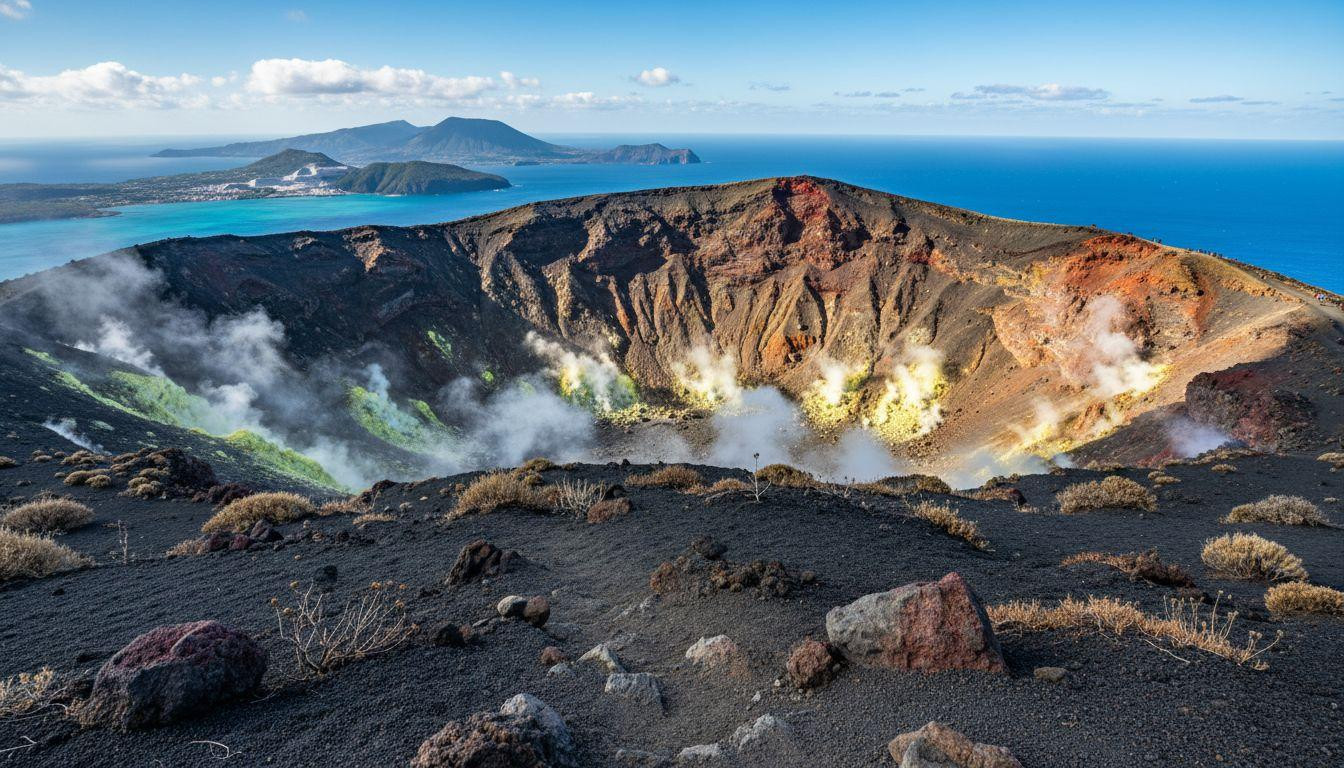
Hike the Fossa Crater in 2 hours of Martian terrain
The trail starts 800 meters from Vulcano Porto. You gain 1,280 feet in elevation over the next hour. Black ash crunches underfoot. Scrub vegetation thins as you climb. The smell intensifies.
At the rim, yellow sulfur deposits coat rocks around steaming vents. Fumaroles hiss at knee height. The crater drops 390 meters below. On clear February mornings, you see all seven Aeolian Islands from this 1,283-foot summit. Lipari sits closest. Stromboli’s cone rises 30 miles northeast.
The hike costs nothing. Stromboli requires guides at $95 per person. Here you walk alone. Morning visits between 8-10am offer the clearest air. Wind direction matters. Stand upwind of the vents or sulfur gas burns your throat. Bring water. The volcanic rock reflects heat even in winter. Round trip takes 3-4 hours at average pace.
Soak in thermal mud that stains everything orange
Pozza dei Fanghi sits 300 meters from Porto di Levante. The walk takes 5 minutes. Sulfur-rich mud bubbles in shallow pools at 99°F year-round. Locals have bathed here since Roman times. The mineral content treats skin conditions and joint pain according to residents who visit daily.
The mud feels thick as clay. You coat your body and wait 10 minutes while it dries. Your skin pulls tight. Then you rinse in adjacent thermal sea pools where warm springs mix with salt water. The rotten-egg smell clings to hair and fabric for hours. Bring an old swimsuit. Sulfur stains permanently. Entry costs $11-17.
Basic showers operate on-site. A small restaurant serves lunch nearby. The experience attracts fewer visitors than Sicily’s commercial spas. February sees maybe 20 people per day versus 200 in August. You often have the pools to yourself before 9am.
Walk black sand beaches shaped by ancient eruptions
Ponente Beach stretches one kilometer along the western shore. Basalt grains form fine black sand that stays cool in winter but reaches 140°F in summer sun. The beach sits 10 minutes from Porto di Levante on foot. Turquoise water contrasts against the dark shore.
February water temperature holds at 59°F. Air temperature ranges 54-61°F. Waves stay moderate on calm days. You can see small fish schools from shore. The beach narrows at high tide to 65-100 feet wide. Beach bars close November through March. Bring your own refreshments.
Swimming requires tolerance for cold water. Most visitors walk the shoreline or photograph the color contrast. Sunset turns the black sand rust-red in low light. The beach remains free and accessible year-round. Summer brings crowds that fill every square meter. Winter offers solitude that summer visitors never see.
Find monster shapes carved by wind in hardened lava
Valle dei Mostri lies 30 minutes from Porto di Levante by foot. The 1888-1890 eruption created lava flows that cooled into formations. Decades of wind erosion carved shapes that locals claim resemble dinosaurs and gargoyles. Some formations stand 15 feet tall.
The trail follows unmarked dirt paths over uneven volcanic rock. Wear sturdy shoes. Sharp edges cut through thin soles. Morning and late afternoon light creates dramatic shadows that emphasize the shapes. You can combine this walk with Ponente Beach since both sit on the same coastline.
No facilities exist along the route. Bring water. The walk costs nothing and sees almost no visitors November through April. Geologists note the formations demonstrate unique volcanic tuff erosion patterns. Similar to Corsica’s granite villages, natural forces shape rock into forms that challenge perception.
Boat to sea caves where waves sound like horses
Grotta del Cavallo earned its name from echoes that resemble horse neighs. Wave action amplifies sound through the cave for 2-3 seconds. Boat tours from Vulcano Porto cost $44-88 for 2-3 hours. Tours include Piscine di Venere, natural pools framed by black basalt where you can snorkel.
Water visibility reaches 33-66 feet in calm conditions. Cave water stays 1-2 degrees warmer than open sea at 59°F in February. You see groupers and parrotfish among 10 documented species. Snorkel gear rents for $11 if you lack your own. Tours run year-round when seas permit. Winter sees fewer departures but lower prices than summer’s $110-165 rates.
The caves remain accessible only by boat. This isolation keeps them pristine compared to shore sites. Tours often combine stops at nearby Lipari and distant Stromboli. February weather brings 70% probability of calm seas suitable for cave access.
Your questions about Vulcano answered
How do you reach Vulcano from mainland Italy?
Ferry service runs from Milazzo, Sicily. Round-trip tickets cost $28. Journey time ranges 25-50 minutes depending on vessel type. Four to six departures operate daily in February. Hydrofoils from Lipari take 10-15 minutes at $11-17 one-way. Total travel from Catania airport takes 3-4 hours including the 93-mile drive to Milazzo. Similar to Hawaii’s volcanic islands, access requires planning around ferry schedules.
When should you avoid visiting Vulcano?
July and August bring peak heat of 77-90°F and sulfur smell that intensifies in warm air. Day-trippers from Sicily fill beaches and trails. Hotel prices rise 30-50% above winter rates. February through April offers 54-68°F temperatures, 80% fewer visitors, and clearer air for crater hikes. November through March sees some restaurants close but major sites remain accessible. The thermal springs and beaches operate year-round.
How does Vulcano compare to other volcanic destinations?
Stromboli requires $95 guided hikes versus Vulcano’s free crater access. Santorini draws millions of annual visitors and charges $220+ for hotels. Vulcano sees roughly 200,000 visitors yearly with winter rates from $66-110 for guesthouses. The island offers thermal springs like Missouri’s constant-temperature pools but with volcanic drama Missouri lacks. Authenticity remains higher than commercialized alternatives.
The ferry back to Milazzo departs at 4:30pm most winter days. Black sand still clings to your shoes. Sulfur smell lingers in your jacket. The volcanic island gives you five ways to touch geology that refuses to stay dormant. February keeps it quiet enough to hear fumaroles hiss.
“`