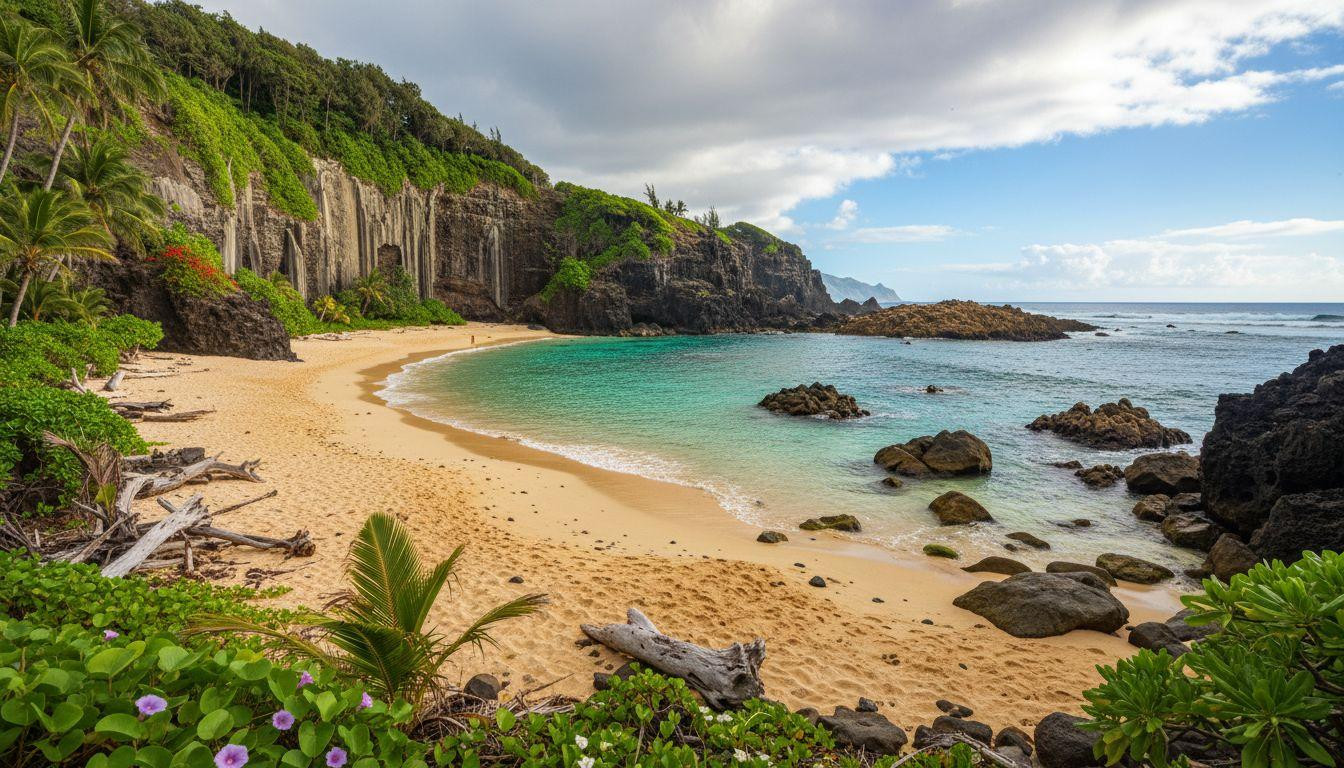
The Princeville bluff drops 130 feet to a cove most visitors never see. Below, turquoise water sits calm while winter surf hammers Hanalei Bay one mile west. This reef-protected pocket exists because geography made access hard enough that discovery feels earned.
Sealodge Beach hides at the end of Kamehameha Road in Princeville on Kauai’s north shore. The offshore reef extends a couple hundred yards, absorbing wave energy before it reaches shore. Inside the cove, waves measure 1-2 feet while exposed beaches take 5-8 foot swells. The volcanic rock cliffs form a natural amphitheater that blocks wind at beach level.
This creates the paradox that makes Sealodge work. Kauai’s north shore pounds with winter surf that closes most snorkel spots from November through March. But the reef here breaks waves on shallow coral structure before they reach the cove. The result: calm turquoise water in a protected pocket while the rest of the coast takes a beating.
The geography that creates calm
The reef acts as a natural breakwater positioned to funnel and dissipate energy. Waves hit the shallow coral heads a couple hundred yards offshore and lose force. By the time water reaches the beach, swells have dropped to manageable size. The cliffs complete the protection by blocking wind that would otherwise chop up the surface.
Turquoise color comes from coral sand reflecting light in shallow protected water. The sand sits golden on the beach, then fades to pale blue in the shallows where sunlight penetrates clear water over white coral fragments. Depth increases gradually from 1-2 feet at low tide near shore to deeper channels farther out.
This specific formation exists here because the offshore reef aligns perfectly with the cliff-enclosed cove. Other Kauai reefs offer protection, but few combine reef barrier plus wind-blocking cliffs in one tight amphitheater. The volcanic rock walls concentrate the calm.
What the trail reveals
The descent through forest
The hike takes 10-15 minutes down a half-mile path from Sealodge condominiums. The trail drops through forest with exposed roots and sharp rocks. After rain, mud makes footing tricky. The final section requires scrambling over boulders before reaching golden sand.
Closed-toe hiking shoes matter here. The path stays unmaintained and mosquitoes swarm near the beach. Most visitors turn back at the boulder section. Those who continue find the cove often empty.
The reef line
Massive coral heads sit visible from shore in shallow water. At low tide, the inner reef leaves only 1-2 feet of water over sharp coral. The reef creates natural snorkel lanes between coral formations. Channels between rocks offer the best entry points at high tide.
The reef extends several hundred yards offshore in a protective arc. This positioning controls wave size and creates the calm pocket that makes snorkeling possible when the rest of the north shore pounds.
Snorkeling below sea cliffs
Marine life in protected water
Green sea turtles appear regularly in the cove. Reef fish including rainbow-colored species swim between coral heads. The best viewing window comes an hour before or after high tide when water depth allows access over the inner reef without scraping coral.
Summer months offer the calmest conditions for snorkeling. Winter brings higher north shore surf that can make even this protected cove marginal. Free turtle encounters happen here when conditions align, but checking surf forecasts before visiting matters.
Summer versus winter conditions
February 2026 falls in winter when north shore surf runs highest. Snorkeling becomes possible only on calm days with high tide. Low tide leaves too little water over the sharp inner reef for safe swimming. Summer months from May through October provide the most reliable conditions.
Water visibility improves in summer when wave action decreases. Winter surf stirs up sediment even in protected coves. The reef health remains good with sharp coral formations intact, though no recent scientific assessments exist for this specific site.
The quiet that steep trails protect
Poipu Beach on the south shore draws crowds with easy access and full amenities. Tunnels Beach attracts world-class divers despite requiring more effort. Sealodge stays emptier because the trail filters out casual beachgoers. The boulder scramble and lack of facilities keep visitor numbers low.
The cove often sits empty even during midday in summer. Early morning brings the quietest conditions before any hikers arrive. This solitude exists not because of cost barriers but because the 10-15 minute descent through forest with a final rock scramble requires commitment. The trail itself creates the exclusivity.
Parking restrictions in Princeville Resort limit access to condo guests and designated visitor areas. This adds another layer of crowd control. The beach technically sits on private property accessed via a trail running off Sealodge condo land, though the path remains open to those who find it.
Your questions about Sealodge Beach answered
What makes the water so calm here?
The offshore reef breaks waves on shallow coral structure a couple hundred yards from shore, dissipating energy before swells reach the cove. Enclosing cliffs block wind at beach level. This combination creates a protected pocket with 1-2 foot waves while nearby exposed beaches take 5-8 foot surf.
Is the trail really that difficult?
The half-mile path takes 10-15 minutes and includes steep sections with exposed roots, sharp rocks, and mud after rain. The final approach requires scrambling over boulders. Closed-toe hiking shoes are essential. The trail stays unmaintained and can be slippery. Low fitness levels or mobility issues make this hike challenging.
How does this compare to other Kauai snorkel spots?
Sealodge stays emptier than Tunnels Beach, which draws crowds despite being a world-renowned dive site. It offers calmer conditions than Ke’e Beach, where 5-8 foot surf and dangerous currents often close swimming. Unlike Poipu Beach with lifeguards and facilities, Sealodge has no amenities. Remote Hawaiian beaches like this trade convenience for solitude.
Morning light hits the reef around 8am and the whole cove turns gold for maybe ten minutes. Then the color fades back to turquoise and the day settles into the rhythm of small waves breaking on coral heads offshore. The sound carries different from the pounding one mile west.