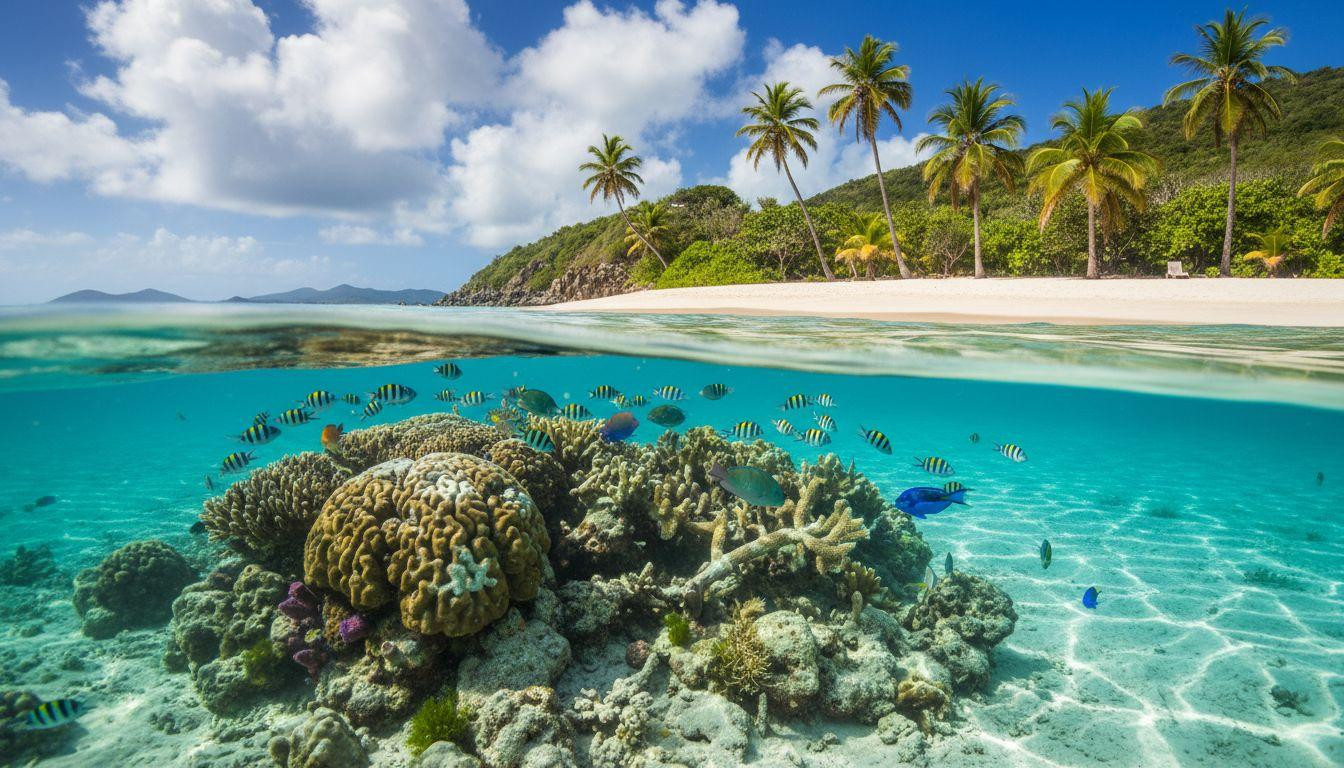
The water at Trunk Bay runs so clear you can count fish from the beach. Stand at the sand line and watch sergeant majors dart between coral heads 50 feet out. This is what beginner snorkeling should feel like: calm, shallow, immediate. No boats. No deep water panic. Just walk in.
These 9 islands solve the first-timer problem. Shore access eliminates seasickness. Shallow reefs keep you confident. Turquoise water stays warm year-round. February 2026 brings dry season calm to most destinations, with crowds down 20-40% from summer peaks.
Trunk Bay, St. John: the underwater trail that teaches as you swim
Virgin Islands National Park marks the reef with 18 bronze plaques. Each one identifies coral types and fish species. The trail runs 225 yards through water that averages 8 feet deep. Lifeguards watch from shore 9am to 4pm daily.
Parrotfish nibble coral. Sergeant majors swirl in schools. Brain corals rise like boulders from white sand. Water temperature holds at 78°F through winter. Visibility reaches 40 feet on calm mornings.
Entry costs $5. Gear rental runs $15. Arrive before 9am to avoid the 200-400 daily visitors. The powdery sand slopes gradually. Your first view comes at 5 feet depth, where colorful fish dart past your mask.
Klein Bonaire: uninhabited calm where eagle rays glide weekly
A 10-minute boat ride from Kralendijk drops you on white sand. No buildings. No crowds. Just 100 snorkelers spread across the day. The reef starts 150 feet offshore in water so still it mirrors clouds.
Elkhorn coral gardens stretch 200 feet out. Green turtles surface every few minutes. Eagle rays pass through February to April, their wings spanning 6 feet. Visibility exceeds 80 feet year-round.
Round-trip water taxi costs $25. Bring water and snacks. The island has zero facilities. Currents stay minimal even at tide changes. The white sand bottom glows turquoise in 10 feet of water.
Kua Bay, Big Island: black lava steps into turtle territory
Lava rock forms natural steps at this crescent beach. Two or three wide platforms lead to water that starts at 5 feet. Green sea turtles feed on algae 100 feet offshore. Morning sightings reach 80% probability.
The reef extends to 25 feet at its deepest point. Yellow tangs flash against black rock. Reef triggerfish hover near coral heads. February waves stay under 3 feet on calm days.
Parking is free at Kekaha Kai State Park. Arrive before 9am. The coarse black sand heats up by noon. Water temperature drops to 75°F in winter but warms quickly in shallows. Two Step at Honaunau Bay offers similar turtle encounters 20 miles south.
Two Step: the lava entry named for its ease
Literal steps carved by lava lead into Honaunau Bay. Each platform sits 18 inches above the next. The base touches water at 6 feet depth. Turtles graze algae 50 feet from entry.
Hawaiian green turtles appear in 80% of snorkel sessions. Spinner dolphins pass through mornings. Octopus hide in coral crevices. Whitetip reef sharks cruise the 15-foot depths but ignore snorkelers.
The national historical park charges $20 per vehicle. Parking fills by 8am February through April. Visibility ranges 35-50 feet depending on surf. The protected bay stays calm except during south swells.
Pigeon Cay, Roatan: protected bay where barracuda schools swirl
West End water taxis reach this sheltered cove in 10 minutes. The $15 round-trip includes flexible return times. Soft white sand meets water that stays flat even when winds hit 15 knots offshore.
Juvenile barracuda form silver cylinders in 8 feet of water. Christmas tree worms dot brain corals. Nurse sharks rest on sand patches but swim away when approached. The reef barrier keeps currents near zero.
Gear rental costs $10 at West End shops. Water temperature holds at 83°F year-round. Fewer than 50 snorkelers visit daily. The emerald shallows turn deeper blue past the 15-foot line.
Grand Turk: national park reef steps from powder sand
Protected beaches along the marine park offer gradual slopes. Coral formations appear 150 feet offshore. Sandy bottom descends from 5 feet at 50 feet out to 15 feet at 200 feet.
Elkhorn and staghorn corals create gardens visible from shore. Angelfish cruise in pairs. Nassau groupers hover near reef edges. Visibility reaches 70 feet on calm February mornings.
Shore access is free. Gear rental runs $15 daily. The marine park fee of $10 supports reef protection. Crowds stay under 200 daily, concentrated at main beaches. Walk to quieter ends for solitude.
Turneffe Atoll: resort platforms that eliminate boat anxiety
Fixed pontoons at Turneffe resorts sit in 8 feet of calm lagoon water. Coral gardens start 75 feet away. Staff provide gear fitting and basic instruction before independent exploration.
Nurse sharks glide past during morning feeds. Southern stingrays bury in sand. Brain corals cluster in formations 10 feet across. The marine reserve status since 2013 keeps fish populations high.
Flights from Miami cost $400 round-trip. All-inclusive resorts run $350-500 nightly. The protected atoll eliminates current concerns. Puerto Morelos offers similar Caribbean snorkeling 90 miles north.
Wakatobi: pier-to-reef in 100-foot visibility
Resort piers extend over house reefs in Southeast Sulawesi. Step off wooden platforms into 12 feet of gin-clear water. Coral walls rise immediately. No boat needed.
Over 750 coral species create the densest reef system in Indonesia. Pygmy seahorses cling to sea fans. Green turtles surface every few minutes. Reef sharks patrol deeper zones but stay calm near snorkelers.
Multi-leg flights from LAX cost $2,000 round-trip. The UNESCO site designation in 2024 protects biodiversity. Water stays 82°F year-round. Visibility exceeds 100 feet most days. The premium price buys instant marine diversity in beginner-friendly shallows.
Your questions about beginner snorkeling islands answered
When should I visit for calmest conditions?
February through April brings dry season to Caribbean and Turks destinations. Hawaii calms May through September. Indonesia stays clear April through November. Avoid Caribbean June through November for hurricane season.
How much should I budget for a week-long trip?
Budget destinations like Trunk Bay or Kua Bay run $1,200-1,500 total including flights and mid-range lodging. Premium spots like Wakatobi reach $4,000-5,000. Mid-tier Caribbean islands average $2,000-2,500 per person.
Which island offers the easiest entry for nervous beginners?
Trunk Bay’s sandy slope and marked trail provide the gentlest introduction. Grand Turk follows close with gradual depths. Shore-accessible coral walls at these destinations eliminate deep water fears while delivering marine life encounters.
The morning light at Two Step turns the bay turquoise. Turtles surface. Fish swirl. You stand in 6 feet of water watching it all happen. This is why people learn to snorkel. Not for the Instagram shot. For the quiet moment when fear becomes wonder.