“`html
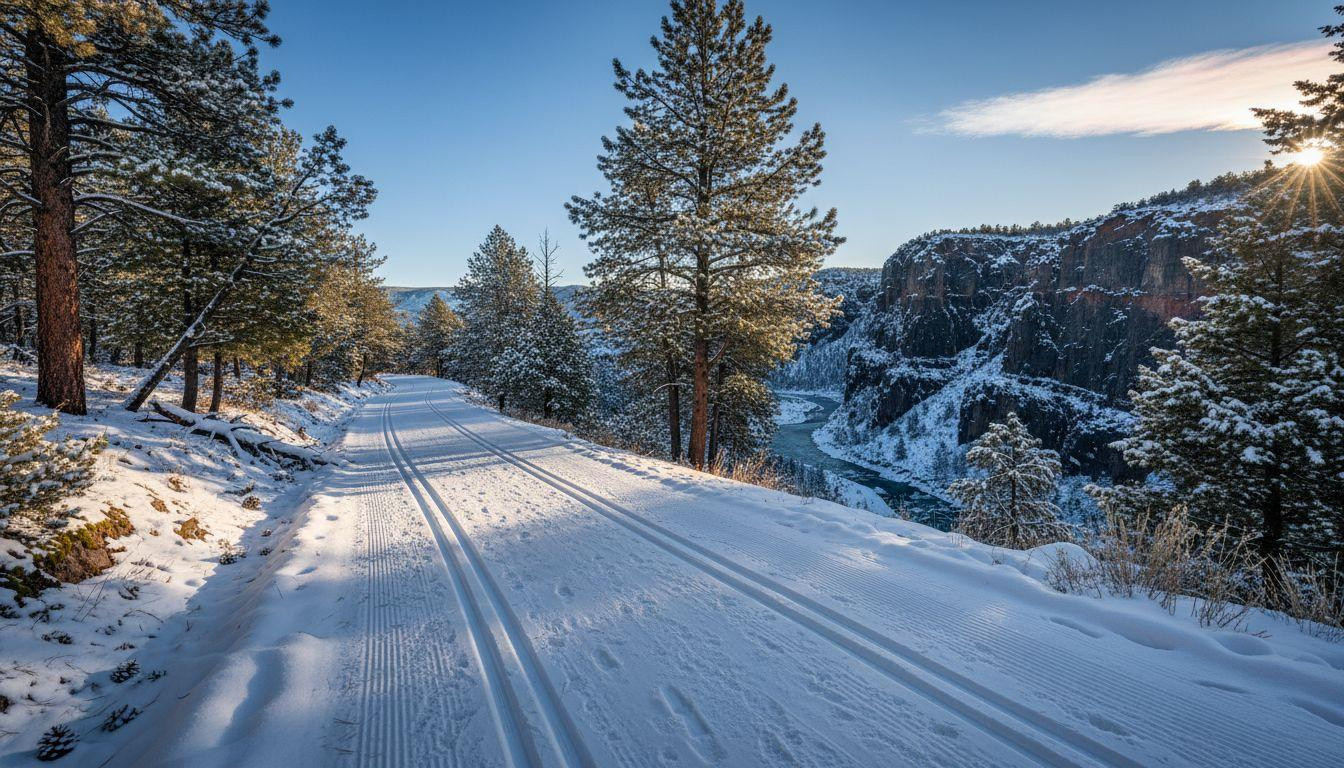
The gate across South Rim Road closes in mid-November. Beyond it, six miles of pavement disappear under snow. Rangers groom the surface for skis. By February, your tracks are often the only marks leading to High Point overlook, where Black Canyon drops 2,000 feet into silence.
This is winter access to one of Colorado’s deepest canyons. No permit lottery. No reservation system. Just you, skis, and a road that becomes a corridor through snow-dusted pines to a rim where black schist walls fall away beneath your feet.
Where the road becomes a trail
Black Canyon of the Gunnison sits 15 miles northeast of Montrose in western Colorado. The South Rim Visitor Center stays open year-round at 8,400 feet elevation. In summer, vehicles drive the full loop past 12 overlooks. Winter changes the equation.
After the first heavy snow (typically late November), the Park Service closes the road beyond the Visitor Center. Rangers groom it for classic and skate skiing when staffing allows. The surface stays wide and gentle, perfect for beginners who can handle distance. Six miles one-way. Twelve round-trip.
High Point sits at the end. The overlook faces north into the canyon’s deepest section, where the Gunnison River cuts through Precambrian rock 1,750 feet below. In winter, this Colorado canyon sees under 10 percent of its 300,000 annual visitors.
The canyon you earn
Black walls under white rim
The rock here is ancient schist and gneiss, nearly two billion years old. It appears ink-black against snow. The canyon walls plunge vertically in places, creating a depth-to-width ratio that ranks among the steepest in North America. At High Point, the rim-to-river drop measures 2,000 feet.
Snow accumulates on the rim through winter. The contrast is stark: white surface, black abyss, occasional glimpses of turquoise water far below. Piñon and juniper trees grow stunted at this elevation, their branches heavy with frost.
What winter changes
Summer brings crowds to the paved overlooks. Tour buses idle at viewpoints. Parking lots fill by 10am. Winter empties the place. The groomed road sees maybe a dozen skiers on busy weekends. Weekdays, you might have it to yourself.
Temperature reality matters here. Daytime highs in February range from 20 to 40 degrees Fahrenheit. Nights drop below zero, sometimes to minus 30. Wind at the rim can cut through layers. The Park Service recommends extreme warm clothing and checking conditions before you go.
Skiing to the edge of everything
The groomed route
Start at the South Rim Visitor Center parking lot. The road heads east, climbing gently through open forest. The surface is wide enough for two tracks side by side. Grooming creates a firm base that holds classic and skate techniques.
Rent skis in Montrose for $20 to $40 per day. The Visitor Center offers free snowshoes on a first-come basis if you prefer walking. Most skiers take two to four hours round-trip, depending on pace and stops. Intermediate ability suffices. The challenge is distance, not terrain.
No cell service exists along most of the route. Carry water (sources freeze), snacks, and emergency layers. Rangers patrol irregularly. You are responsible for your own safety in conditions that can shift fast.
Overlook silence
High Point delivers what the ski-in promises. The overlook sits at road’s end, a small pullout with interpretive signs buried in snow. Walk to the edge. The canyon opens beneath you with no guardrails, no crowds, no sound except wind and the faint rush of river far below.
Bighorn sheep sometimes appear on the cliffs across the gap. They move along ledges invisible from this distance, gray shapes against black rock. The air smells of pine resin and cold stone. Light changes constantly as clouds move over the rim.
Stand here long enough and the silence becomes something you feel. Not emptiness, but presence. The kind of quiet that makes you understand why locals protect this place from becoming another Instagram overlook with parking lot lines and selfie queues.
When emptiness feels like luxury
Other national parks require permits for winter backcountry access. Some charge fees. Many impose quotas to manage crowds even in off-season. Black Canyon’s South Rim Road asks nothing except that you ski or snowshoe to reach it.
The $30 vehicle entry fee (valid seven days) is your only cost beyond ski rentals. No reservations. No lottery. No timed entry. Show up, park, go. The system works because winter creates its own filter. Six miles and sub-freezing temperatures keep numbers low without artificial limits.
Dawn ski-ins offer the best light. Sunrise around 7:15am in early February paints the canyon walls pink for maybe ten minutes. Twilight ski-outs work too, with sunset near 5:30pm. Headlamps recommended for the return if you linger. Check with rangers about occasional moonlight ski events when snow and clouds cooperate.
Your questions about High Point winter answered
Do I need backcountry skiing experience?
No. The groomed road is easier than true backcountry terrain. You need basic cross-country skiing ability and fitness for 12 miles. Winter safety knowledge matters more than advanced technique. Dress in layers, carry emergency supplies, and tell someone your plans. Rangers recommend calling the Visitor Center at 970-641-2337 for current grooming status before you drive out.
What if the road is not groomed?
Snowshoes work on ungroomed snow. The wide road remains passable even without grooming, though the going is slower. Park staff offer free guided snowshoe walks from January through mid-March when snow is abundant. Check the NPS calendar for scheduled walks among oaks, meadows, and rim viewpoints. No registration process mentioned in current information.
How does this compare to North Rim winter access?
North Rim closes completely from late November to mid-April. The road is not plowed or groomed. Reaching North Rim overlooks requires a long hike through deep snow. South Rim stays accessible year-round to the Visitor Center, with groomed ski access beyond. South Rim also offers more dramatic vertical drops at overlooks like High Point. For winter visitors, similar activities in other Rocky Mountain locations cost $50 or more per person. Here, the experience is free once you are in the park.
The ski back to the Visitor Center goes faster. Gravity helps on the gentle downhill sections. Your tracks from the morning are still visible in the snow. The canyon disappears behind you as the road curves through trees. By the time you reach the parking lot, the quiet has settled into your bones in a way that lasts longer than the cold.
“`