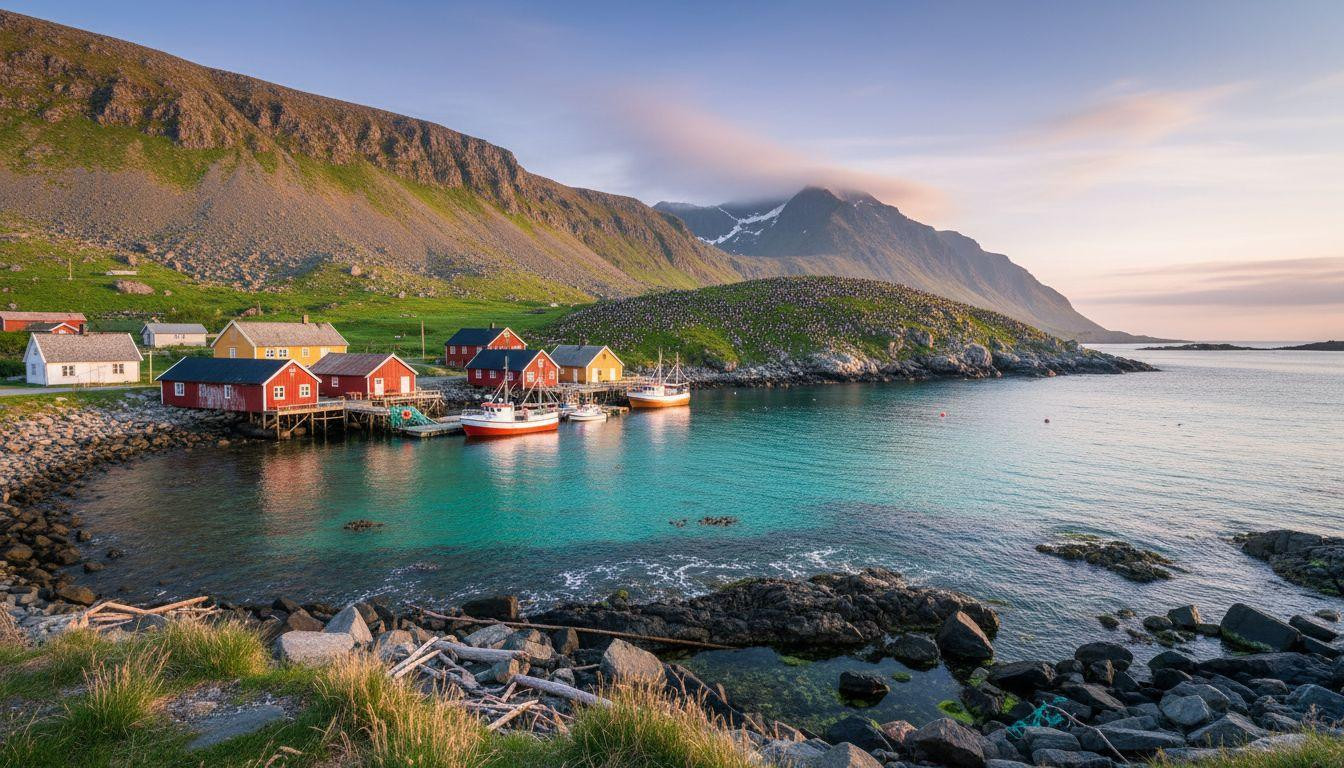
The ferry from Sandnessjøen cuts through Norwegian Sea swells for two hours before Lovund appears. Green slopes rise behind a cluster of red and yellow houses. April 14 arrives the same way every year here. So do 200,000 puffins.
This island sits 40 miles south of Lofoten on the Helgeland coast. Population hovers around 400. The village spreads along one harbor where fishing boats tie up next to the express boat dock. One road loops the settlement. Everything else is trail or cliff.
When 200,000 neighbors arrive on schedule
Lundkommardagen marks the puffin arrival each April 14. The birds return to Lundurda cliffs with precision that locals celebrate as the first day of summer. The colony exceeds 300,000 birds during nesting season through August. Most visitors time trips for late April through June when midnight sun extends hiking hours past 11pm.
The walk to puffin cliffs takes one hour from the harbor. Evening viewing works best when birds return to nest. They cover green cliff faces in black and white patterns. Their orange beaks catch late sun. The Norwegian Sea stays turquoise below even in overcast weather.
Lofoten’s puffin colonies require boat tours or difficult hikes to remote headlands. Lovund keeps its cliffs within walking distance. No guides needed. The trail follows signs reading “To Puffins” in Norwegian and English.
The village that salmon built
Fishing roots meet modern aquaculture
Colorful rorbu houses line the waterfront in traditional coastal style. Red dominates. Yellow and white accent corners. These wooden fisherman’s cottages date to the 1880s when cod fishing sustained the island. Today salmon farming provides most jobs while preserving the unhurried rhythm.
Lovund Hotell anchors the village center. Rooms start at $115 per night with sea views. The owner shares hiking maps and evening puffin timing with guests. The hotel restaurant serves fresh fish caught that morning. Expect to pay $20-35 for meals featuring local salmon and cod.
February’s northern lights alternative
Winter ferry service runs year-round from Sandnessjøen. The express boat costs $35-55 one way depending on season. Weather delays happen but cancellations stay rare. February brings northern lights without Lofoten’s winter crowds or higher prices.
The Coastal Culture Center details island history from fishing village to progressive community. Winter exhibits focus on maritime heritage and salmon farming evolution. The center opens afternoons most days. Check locally for exact hours since schedules shift with tourist seasons.
Walking an island in two hours
Harbor to summit in 470 vertical meters
Lovundfjellet mountain rises 470 meters behind the village. The summit trail gains all that elevation in roughly 2 miles. Views from the top span neighboring islands and open Norwegian Sea. On clear days you can trace the coastline south toward Sandnessjøen.
A small city beach sits sheltered from winter storms. Summer water temperatures reach 59°F by July. The beach stays quiet even in peak season. Sheep graze meadows between beach and village. Locals keep them to control grass growth naturally.
Where sheep outnumber tourists
The island hosts one golf hole. Marketing calls it the world’s largest one-hole course. The fairway sits at the southern edge near raw coastal terrain. Free access. Bring your own clubs.
Daily life follows ferry schedules. The express boat arrives once daily. Most visitors stay overnight or longer. Day trippers from Sandnessjøen come via speedboat tours offered by local operators. These cost $70-135 per person including lunch at the hotel and guided puffin viewing.
Arrival as ritual
Lundkommardagen evolved from fishing tradition into community celebration. Locals gather at the harbor when puffins return. No formal festival program. Just acknowledgment that summer begins when the birds arrive. Visitors who time trips for mid-April witness this quiet marking of seasons.
Midnight sun season runs June through July at this latitude. Puffin photography works best during these extended daylight hours. Birds stay active late. Cliff access remains open around the clock. The soft light near midnight creates conditions that photographers chase.
Spring 2026 timing looks typical based on historical patterns. April 14 remains the traditional arrival date. Book accommodations early since the island has limited beds. Small European villages like this fill quickly during peak natural events.
Your questions about Lovund answered
How do I reach Lovund in February 2026?
Take the Helgelandspendelen express boat from Sandnessjøen. The journey takes approximately two hours. Service runs year-round with one daily departure. Fares range $35-55 one way. Winter weather may cause minor delays but rarely cancels trips. Remote winter destinations require flexibility with schedules.
What’s the real cost difference from Lofoten?
Lovund Hotell charges around $115 per night compared to Lofoten hotels averaging $180-200. Meals cost $20-35 versus $30-50 in Lofoten. Puffin viewing stays free here while Lofoten boat tours run $80-120. Overall daily costs run 25-30% lower. The tradeoff is fewer dining options and no car rental infrastructure.
Can I see puffins in winter?
No. Puffins nest only from late April through August. They spend winter at sea. February visits offer northern lights viewing instead. The island stays quiet with minimal tourists. Small islands reveal different character in off-season. Winter storms create dramatic coastal conditions. Trails stay accessible except during severe weather.
The last ferry back to Sandnessjøen leaves at 3pm most days. Passengers gather at the dock 15 minutes early. The boat pulls away from colorful houses and green slopes. Puffin cliffs fade into distance. Most visitors already plan return trips before reaching mainland.