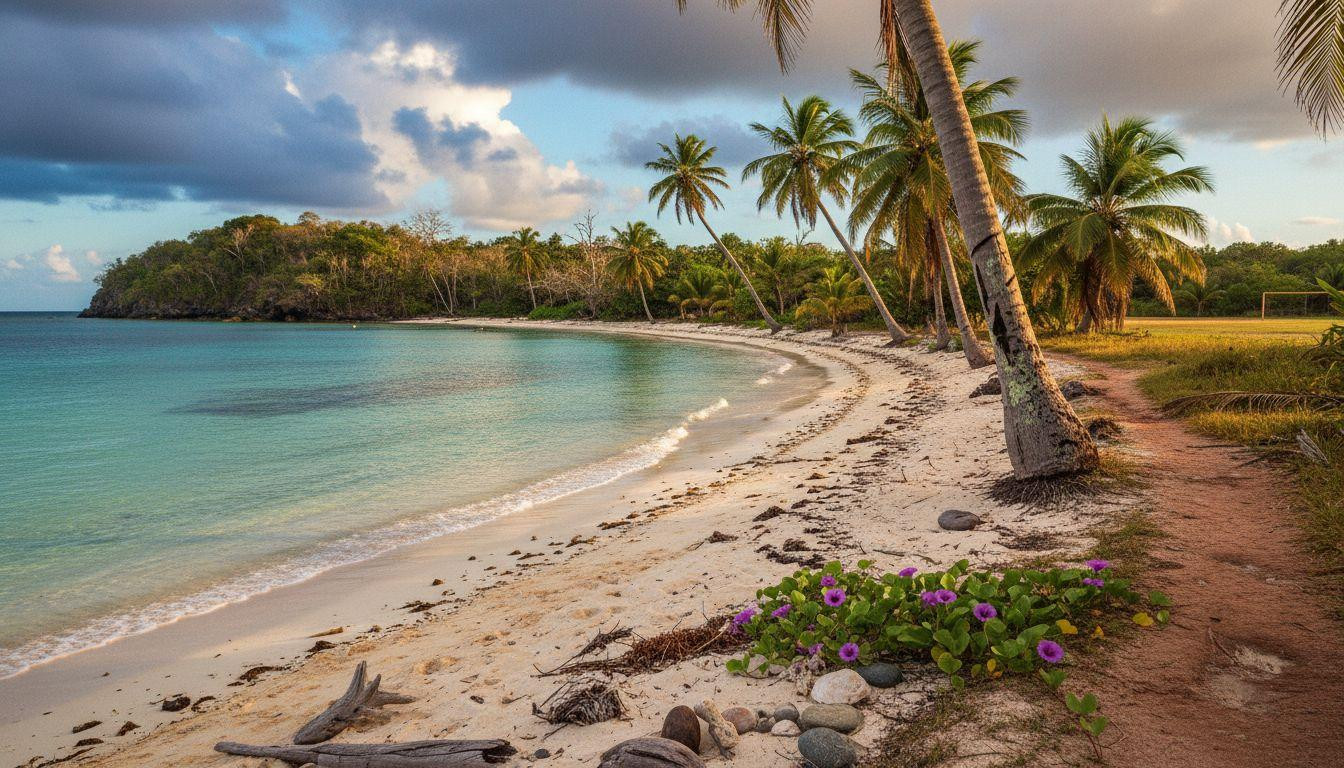
Big Corn Island receives three daily flights from Managua. Paved roads circle the 6-square-mile island. Golf carts and taxis wait at the airstrip. Picnic Beach and Long Beach fill with day-trippers by 10am. Twenty miles offshore by panga boat, Little Corn Island operates differently. No motors allowed. One village of 1,000 residents. Beaches earned by walking jungle trails. Otto Beach sits on the north shore, a 20-minute walk past the baseball field where turquoise water meets white sand and most visitors never arrive.
Why Big Corn Island beaches stay crowded December through March
La Costeña operates three flights daily from Managua to Big Corn Island. The 90-minute journey costs $80-180 round-trip in 2026. Resorts cluster near the airstrip. Golf carts shuttle visitors to Southwest Bay and Picnic Beach within minutes.
Paved roads enable tour vans and day-trip efficiency. Visitors arrive at 11:30am, beach until 3pm, catch the 4:30pm panga back. The pattern repeats daily. Gift shops line the main beaches. Snorkel tours depart hourly at $20 per person to offshore reefs.
Big Corn’s accessibility creates its crowds. The same flights that make arrival easy fill beaches with people seeking two-hour Caribbean experiences between connections.
Otto Beach on Little Corn Island requires commitment
The panga from Big Corn to Little Corn departs twice daily at 10am and 4:30pm. The 45-minute crossing costs $10. Waves spray over the bow. The boat drops passengers at a small dock where the village begins.
No golf carts wait. No taxis exist. The island banned motorized vehicles decades ago. Walking is the only option. The trail to Otto Beach starts north of the village, crossing the baseball field where locals play most afternoons.
The 20-minute jungle walk that filters crowds
The path measures 1.2 miles through dirt trails and sand. Coconut palms arch overhead. The route stays flat with no elevation gain. Flip-flops work fine in dry season. Mud appears after rain.
No signs mark the way. Follow the obvious path north. The jungle opens to reveal white sand and turquoise water. Most mornings find 0-5 people on the entire beach. The walk creates natural selection. Those unwilling to spend 20 minutes in jungle heat stay in the village.
December through March brings 80-degree perfection
Dry season runs December through April. Temperatures hold steady at 80-85 degrees Fahrenheit. Humidity drops. Rain becomes rare. Water temperature stays near 80 degrees year-round.
Sargassum levels stay low compared to summer months. Waves remain gentle in the protected north shore bay. Sunset arrives around 6pm. The beach faces northwest, catching golden hour light that turns the water electric blue.
What Otto Beach delivers that Big Corn charges for
Coral reefs sit 300-600 feet offshore at Otto Beach. The swim takes 5-10 minutes across shallow turquoise water. No boat required. No $20 tour fee. Visibility stays excellent December through March.
Sea turtles appear frequently. Diverse coral formations host tropical fish. The reef system remains healthy. Big Corn requires boat tours to reach similar reefs. Otto Beach gives direct access to anyone willing to swim.
Accommodation costs half what Big Corn charges
Three Brothers guesthouse sits 15 minutes walk from Otto Beach. Rooms cost $33 per night in 2026. Basic but clean. No air conditioning needed with constant breeze. Compare to Big Corn’s budget hotels at $50-80 or resorts at $150 plus.
Little Corn Beach and Bungalows offers mid-range rooms closer to Otto Beach. Yemaya Island Hideaway provides luxury at higher prices. The village has no ATMs. Bring cash from Big Corn or Managua.
Fresh fish costs $5-10 at village restaurants
Creole cuisine dominates Little Corn menus. Rundown stew combines lobster with coconut milk for $12-15. Fresh fish arrives each morning when fishing boats return. Coconut bread appears at the village bakery. Local beer costs $2-3.
Otto Beach has one small beach bar serving drinks and simple meals. Most visitors walk back to village restaurants for dinner. The baseball field becomes a social hub most evenings. Games draw cheers from locals who’ve played there for decades.
The quiet Big Corn Island cannot offer
Morning at Otto Beach means empty sand and gentle waves. Hermit crabs scuttle near the tree line. Pelicans dive offshore. The only sounds come from water and wind through palms.
Big Corn’s beaches never achieve this silence. Golf carts pass every few minutes. Tour groups arrive in waves. Music plays from beach bars. The infrastructure that makes Big Corn accessible prevents the solitude Otto Beach maintains through remoteness.
Little Corn’s no-motor policy creates a different century of pace. Walking everywhere forces slower rhythms. The 20-minute trail to Otto Beach becomes meditation. Visitors who rush miss the point entirely.
Your questions about Otto Beach on Little Corn Island answered
How do I reach Little Corn Island from Managua in February 2026?
Fly La Costeña from Managua to Big Corn Island three times daily at 6:30am, 11:30am, and 2pm. The flight takes 90 minutes and costs $80-180 round-trip. From Big Corn, take the panga boat to Little Corn at 10am or 4:30pm for $10. Total journey time runs 3-4 hours. Budget travelers can bus from Managua to Bluefields for $20-30, then ferry to Big Corn on Wednesday or Sunday for $7, but the trip takes 16-22 hours.
Why does Otto Beach stay empty when Big Corn beaches fill up?
The 20-minute jungle walk from Little Corn village filters casual visitors. Big Corn’s paved roads and golf carts deliver tourists directly to beaches within minutes of landing. Little Corn banned all motorized vehicles. Walking becomes mandatory. Most day-trippers from Big Corn stay in the village near the panga dock. Only committed beach-seekers make the trek north to Otto Beach.
What makes Little Corn better than staying on Big Corn Island?
Little Corn costs 30-40% less for similar quality. Rooms run $33-80 versus Big Corn’s $50-150. Shore snorkeling at Otto Beach is free versus Big Corn’s $20 boat tours. The no-motor policy creates genuine quiet. Population stays under 1,200 versus Big Corn’s 6,500 plus daily tourist influx. Similar Caribbean reef access requires traveling to more remote islands like those in Belize.
The panga back to Big Corn leaves at 4:30pm. Most visitors make it with time to spare. The ones who almost miss it spent too long watching light change on Otto Beach’s turquoise water. That’s the risk of walking 20 minutes to find empty Caribbean sand in 2026.