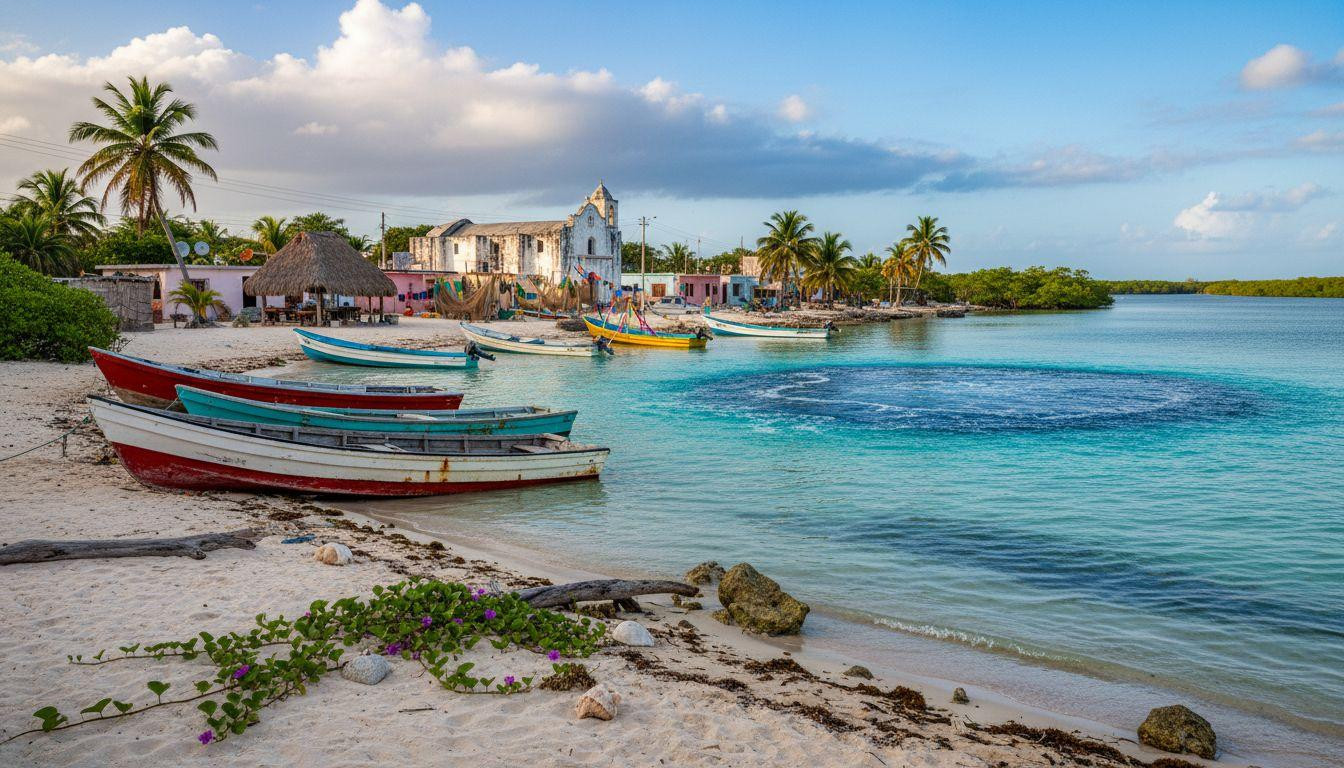
Dzilam de Bravo sits 62 miles from Mérida on the Yucatán coast where freshwater bubbles into turquoise Gulf shallows. The ocean cenote Ojo de Agua Xbuya-Ha pushes enough volume per minute that swimming through the current proves nearly impossible. Local cooperatives cap daily visitors to protect 170,500 acres of mangrove channels and virgin beaches. February brings 75-84°F days, calm seas, and the kind of quiet fishing village rhythm Cancún lost decades ago.
Drive north from Mérida through coconut fields and pink lagoons. The highway ends at a dirt parking lot where fishermen prep boats at dawn. One palapa cooperative office. White sand extending 800 feet before waist-deep water. The ocean cenote sits offshore in shallows you can walk to.
Where freshwater meets the Gulf
Ojo de Agua Xbuya-Ha bubbles from an underground river into saltwater. The temperature shift hits first. Warm Gulf water, then cold freshwater stream. Visibility drops where the two mix. You can stand in the bubbling zone and feel the force pushing up from below.
The cenote produces the highest volume among local springs. No exact measurements published, but the flow makes direct swimming impossible. Families wade the shallows around it. Kids run free in water that stays knee-deep for hundreds of feet.
National Geographic divers mapped the source in 2013 using underwater drones. The freshwater travels through limestone caves before breaking into the Gulf. Similar to walk-in reef experiences, this requires no boat to reach.
The cooperative-led nature reserve
How local tours work
Cooperativa Dzilam de Bravo runs boat trips into Bocas de Dzilam reserve. Tours include mangrove channels, Punta Arena beach, Elepeten Cenote, flamingo viewing, and the ocean cenote swim. Packages combine multiple stops. Guides rotate to share income evenly.
No online booking chaos. Show up at the cooperative office by 8am. Tours depart around 9am. Spanish-dominant, unhurried pace. The cooperative limits daily visitors to preserve what 2,500 residents have protected for generations. Similar community models exist at cooperative-run islands nearby.
What the reserve protects
Bocas de Dzilam covers 170,500 acres of mangrove-fringed shoreline, shallow lagoons, and beaches stretching several miles. Sea turtles nest December through March. Crocodiles inhabit night channels. Flamingos gather at dawn, though populations declined after past visitor disrespect.
Punta Arena beach requires a boat. El Cielito virgin beach sees fewer than 50 visitors weekly. Walk 1,600 feet on white sand seeing no footprints but yours. The reserve borders Parque Nacional de San Felipe. Zero resorts, zero jet skis, zero neon.
Living on fishing village time
What a day looks like
Dawn brings fishermen to the wharf. Nets dry on wooden racks. Morning mist lifts off turquoise water by 7am. The cooperative office opens at 8am. Tours leave before heat peaks.
Midday means ceviche at the palapa restaurant. Fresh Gulf octopus, panuchos, agua fresca. Meals run $5-10. One restaurant. Free parking. The beach stays calm enough for toddlers to wade alone.
Afternoon water warms to 77°F. Shallow depth extends so far that adults can walk 500 feet offshore and still stand. Evening brings sunset over empty sand. Only sounds: wind, waves, occasional boat motor. Similar quiet exists at other Gulf fishing villages.
The anti-Cancún simplicity
Beach cabins rent for $25-50 nightly. No chain stores. No boutique hotels yet. The contrast: 155 miles from Cancún’s hotel zone, 62 miles from Mérida’s colonial center, but feels 50 years removed.
Dzilam de Bravo doesn’t try to compete. Cooperative tours cost 40% less than Yucatán averages. Daily budgets run $50-80 total. Locals fish, guide tours, serve ceviche. Tourism supplements fishing income without replacing it. The model resembles small-population island cooperatives elsewhere.
Why February-March is perfect
Dry season peaks December through March. February brings 64-72°F nights, 75-84°F days, low humidity. Gulf waters calm for cenote swims and boat tours. Sea turtles nest on beaches. Carnival happens in February with 50,000 visitors spread across the Yucatán coast. Dzilam’s event stays small-scale and local.
Avoid June through October. Rainy season brings storms, 82-90°F humidity, rougher seas. Spring starts heating to 86-95°F by April. Winter delivers the 75-84°F sweet spot with near-zero rainfall. Flamingos appear best at dawn during dry months.
Your questions about Dzilam de Bravo answered
How do I get there?
Fly into Mérida International Airport. Rent a car for the 62-mile drive (1 hour 25 minutes, $9-15 fuel). Autobuses Noreste Yucatán runs buses every 2 hours (2 hours 35 minutes, $3.50-8.50). From Progreso port: 1 hour 30 minutes via Highway 27. Taxi from Mérida costs $40-50 but limits mobility for tours. Car rental provides flexibility for early cooperative departures.
What’s the cost breakdown?
Beach cabins: $25-50 nightly. Meals: $5-10 average. Cooperative tours: packages vary, expect $15-30 per person for cenote swim, mangrove boat, beach access. Total daily budget: $50-80, running 40% below Yucatán averages. No entrance fees, no parking fees. Bring cash for the cooperative office.
How does it compare to Río Lagartos or Progreso?
Río Lagartos (2.5 hours from Mérida) focuses on flamingos and salt flats, costs $60-100 daily, draws more eco-tourists. Progreso (45 minutes from Mérida) is a commercialized port town with busier beaches, $80-150 daily. Dzilam: fewer tourists, cheaper, shallower water safer for families, ocean cenote unique to this spot. Population 2,500 versus Progreso’s 37,000.
The ocean cenote bubbles freshwater into turquoise shallows no Instagram account has made famous yet. Cooperative-led tours cap visitors to protect what locals have kept quiet for decades. February delivers dry-season calm, empty beaches, and coastal immersion where you hear water instead of crowds. Book the Mérida flight, rent the car, show up at the cooperative office by 8am. The alternative to Cancún sits 62 miles north, where freshwater still meets the Gulf without permission.