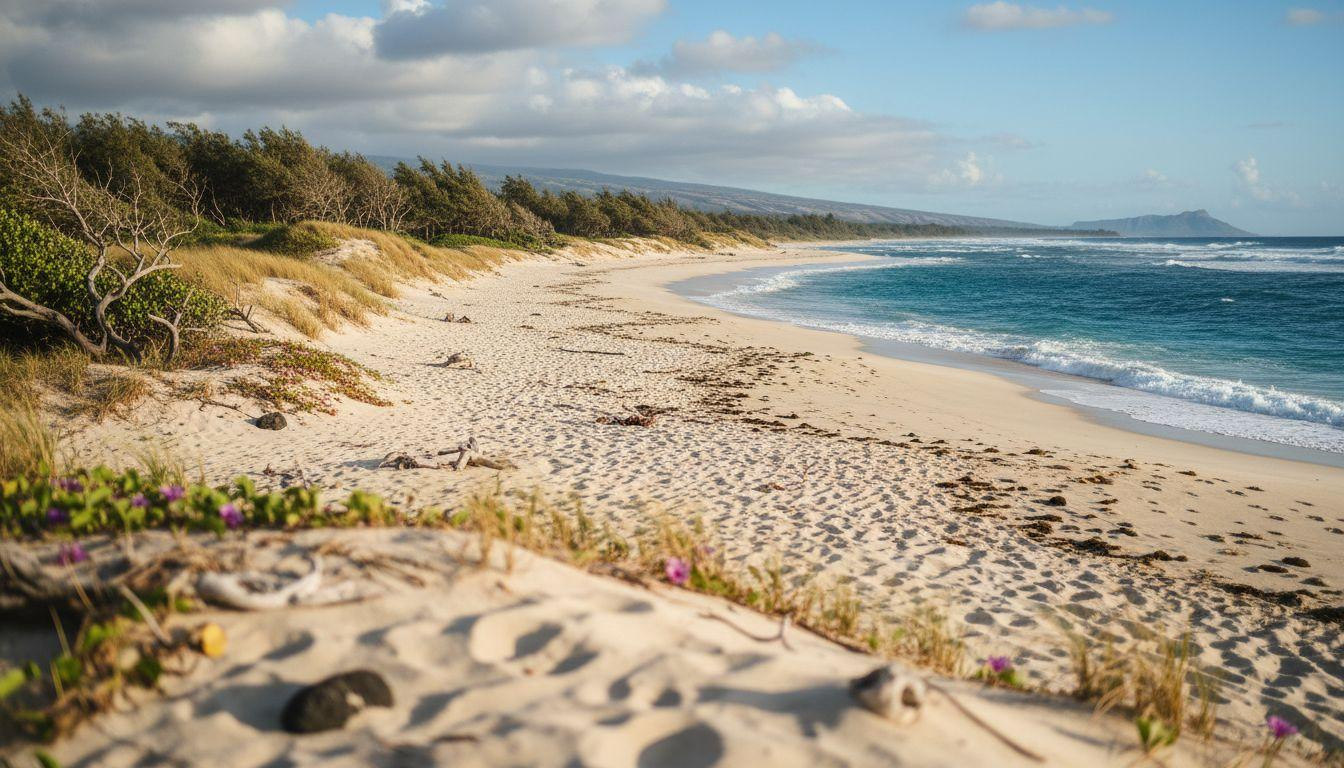
The parking lot at Papohaku Beach holds maybe 30 cars. On a February morning it sits empty except for one pickup truck. Walk past the kiawe trees and 3 miles of white-gold sand stretch west with no footprints but yours. The beach runs 100 yards wide from dune to waterline. Waikiki borrowed sand from here decades ago to build its famous shore. Now 11,000 people visit Waikiki daily while Papohaku stays unmarked.
Where 3 miles of sand stays empty
Papohaku Beach measures 3 miles long and 100 yards wide on Molokai’s west shore. Low dunes back the sand. Kiawe trees grow behind the dunes with thorns that require careful walking. The beach faces west toward Oahu across the Kaiwi Channel. On clear days you see Diamond Head 26 miles away. No buildings line the shore. No vendors sell anything. The sand stays soft and clean because almost nobody walks it.
Park rangers count visitor numbers statewide but Molokai data barely registers. Hawaii welcomed 9.69 million tourists in 2024. Most went to Oahu or Maui. Molokai’s other beaches see similar patterns. The island keeps its population around 7,500 and avoids tourism development deliberately.
The beach that built Waikiki
Sand mining operations decades ago
Construction crews mined Papohaku’s sand years back to restore Waikiki Beach against erosion. The exact volume moved remains unrecorded in available records. The irony persists: Hawaii’s most famous beach borrowed from its most unknown. Waikiki now charges for parking and packs tourists shoulder to shoulder. Papohaku offers free parking to empty lots.
WWII training remnants in the dunes
Military units trained at Papohaku Beach during World War II. Remnants may still lie buried along the shore though no markers identify locations. The historical weight adds depth to the emptiness. Walking here feels like moving through layered time. Modern Hawaii exists 26 miles east across the channel. Pre-tourism Hawaii remains here in sand and silence.
Walking when winter surf roars
February’s rough beauty
Strong rip currents and dangerous shorebreak make swimming hazardous October through March. Winter swells hit the unprotected shore with full Pacific force. This filters crowds seeking safe swimming vacations. You walk 3 miles hearing only wave power and wind. The raw quality feels untamed. No lifeguards patrol. No warning flags fly. The ocean does what it wants.
Morning visits work best before afternoon wind picks up. Soft sand stays cool in early light. Golden sun angles low across the water. By noon the wind intensifies and walking becomes work. Local residents know this rhythm. They arrive at dawn and leave by 10am. Tourists who find this place rarely stay past lunch.
What the sand feels like underfoot
The white-gold sand compacts slightly when wet near the waterline. Higher up it stays loose and deep. Walking 3 miles takes your legs seriously. No boardwalk exists. No packed trail forms because foot traffic stays too light. Your prints mark the beach until the next high tide erases them. Temperature contrast between sun-warmed sand and cool Pacific spray creates constant sensory shift.
What you actually find at Papohaku
Papohaku Beach Park covers 10.4 acres with basic facilities. One parking lot holds approximately 30 vehicles in unmarked spaces. One comfort station provides restrooms and outdoor showers. Ten picnic tables and six barbecue grills sit in shaded areas. Two campsites accept overnight visitors with permits from Maui County Parks and Recreation. Camping costs remain modest though exact February 2026 rates were not available in current data.
No food vendors operate here. No restaurants sit within walking distance. Kaunakakai town lies roughly 20 miles east with the nearest supplies. Bring water and lunch. Cell reception varies. The park hosts the annual Hula Piko event though specific 2026 dates were not confirmed. Otherwise the beach stays quiet year-round. Other remote tropical beaches require similar self-sufficiency.
The emptiness feels intentional
Molokai chose preservation over tourism revenue. The island built no major resorts. It markets itself as “the Friendly Island” while actively limiting development. Population stays around 7,500 by design. Papohaku’s emptiness reflects island-wide philosophy: keep Hawaii Hawaiian. The lack of crowds isn’t accidental or temporary. It represents deliberate cultural choice.
Standing at the south end looking north the 3-mile stretch curves slightly. Dunes rise maybe 15 feet behind you. Kiawe trees create dark green contrast against white sand. The Pacific runs turquoise near shore then deepens to navy blue farther out. No other person appears in the frame. This view existed before tourism and continues after most visitors choose easier destinations. Similar untouched coastlines survive where communities protect them actively.
Your questions about Papohaku Beach answered
Is swimming safe in February?
No. October through March brings powerful shorebreaks and dangerous rip currents. The beach lacks protective reef so full ocean force hits the shore. No lifeguards patrol. Come for walks, sunset photography, or camping. Swimming belongs to calmer summer months April through September though caution remains necessary year-round. Winter surf creates dramatic atmosphere perfect for contemplative beach time rather than water activities.
How do I actually get there?
Fly Honolulu to Molokai’s small airport, a 30-minute flight. Rent a car at the airport. Drive west on Highway 460 then Kaluakoi Road toward Maunaloa. The beach sits roughly half an hour from the airport. Ferry services between Maui and Molokai operate irregularly. The journey’s difficulty explains why the beach stays empty. Remote coastal destinations reward travelers willing to plan carefully.
Why doesn’t this beach attract more visitors?
Molokai deliberately avoids tourism development. The island’s 7,500 residents value cultural preservation over visitor revenue. No major resorts exist. Limited flights and rental cars keep access controlled. Papohaku’s emptiness reflects intentional choice rather than oversight. The beach appeared on Dr. Beach’s annual best beaches list multiple times yet remains largely unknown. Protection through obscurity works when communities commit to it.
The afternoon wind picks up around 2pm. Sand starts moving in visible streams across the beach. Your footprints from morning already blur at the edges. High tide will erase them completely by evening. Tomorrow the beach resets to unmarked again.