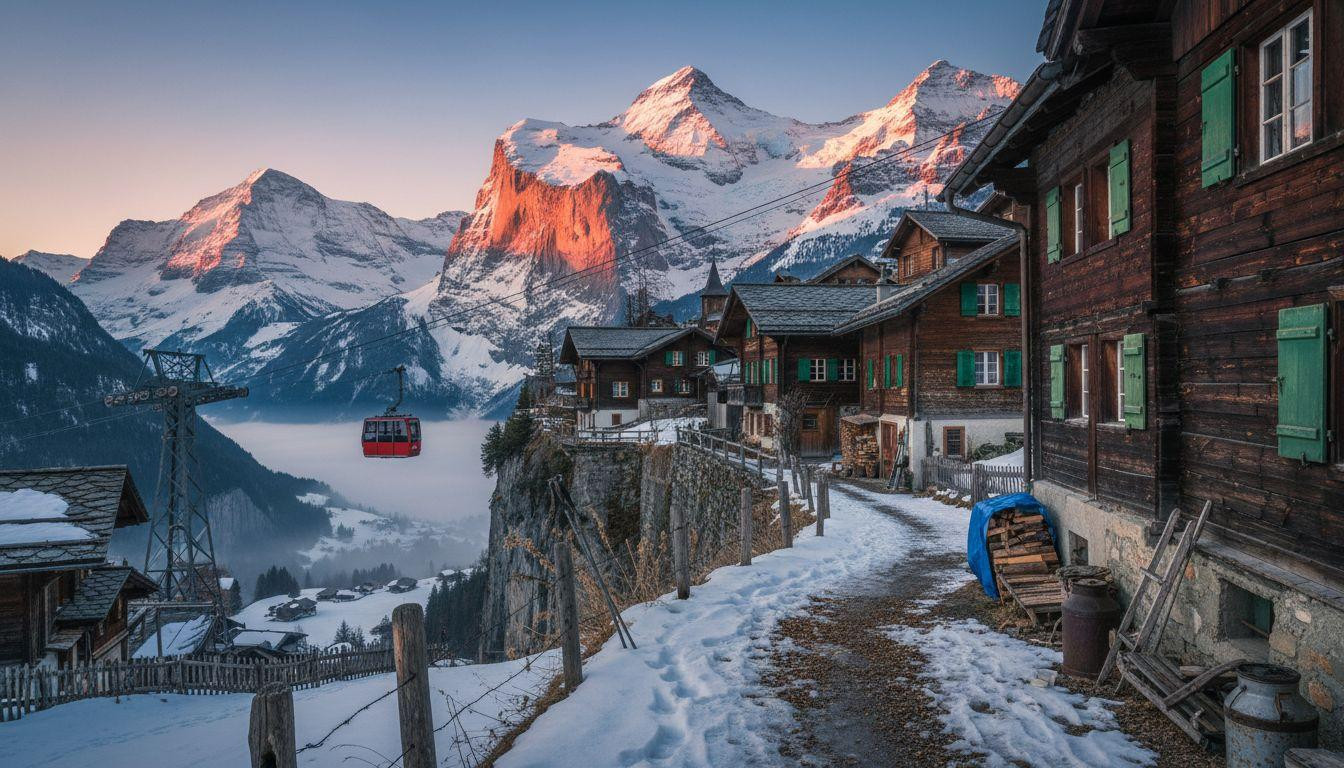
Zermatt’s Matterhorn cable car waits stretch 90 minutes in February. Hotel rooms start at $400. Electric taxis queue despite the car-free promise. Then you take the mountain railway to Mürren, population 450, where silence actually means silence. The Eiger glows pink at sunrise. No one blocks your view.
This cliff-edge village sits at 5,374 feet above the Lauterbrunnen Valley. Three peaks frame every terrace: Eiger, Mönch, Jungfrau. The drop below measures 3,000 feet. Wooden chalets cling to rock. Cable cars glide without engine noise. Luggage arrives by trolley, not taxi.
Why Zermatt costs more than it delivers
Zermatt draws 2 million visitors annually to see one peak. The village holds 5,500 residents. Electric vehicles congest streets marketed as car-free. Lift tickets cost $100. Mid-range hotels charge $400-800 per night. The Matterhorn Glacier Paradise cable car requires 90-minute waits during peak season.
Restaurant meals run $50-80 per person. Fondue costs $45. The town sprawls with luxury shops and chain hotels. Authenticity gets lost in resort infrastructure. You came for alpine peace. You found a bustling ski mall.
Meet Mürren’s cliff-edge calm
The train from Zurich takes 2.5-3 hours, costs $73-87. You change at Lauterbrunnen. The BLM mountain railway climbs in 11 minutes. No cars have entered since 1910. Trolleys move luggage. Footpaths connect everything.
The view Zermatt can’t match
The Eiger North Face rises 13,025 feet directly across the valley. Mönch sits at 13,474 feet. Jungfrau reaches 13,642 feet. All three glow at sunrise. No resort buildings block sightlines. The village terrace at Allmendhubel offers unobstructed panoramas. Morning light turns snow gold for ten minutes. Then the day begins.
Lauterbrunnen Valley drops 3,000 feet below. Waterfalls freeze in winter. The Schilthorn peak rises behind the village at 9,744 feet. James Bond filmed here in 1969. The revolving restaurant still operates. Views extend 200 miles on clear days.
What $200-350 gets you
Hotel Edelweiss charges $200-280 per night for three-star rooms. Hotel Jungfrau runs $250-350. Family guesthouses start at $150. These rates run 40-60% below Zermatt equivalents. Ski passes cost $80-90 daily versus Zermatt’s $100. The Schilthorn area covers 33 miles of slopes. Twenty miles rate blue for beginners. Fifteen miles challenge intermediates on red runs. Six miles test experts on black terrain.
Meals cost $23-46 at village restaurants. Fondue runs $25-30. Coffee and pastries cost $5-10. The Winteregg terrace serves black forest gateau for $8. Kids play on swings while parents watch the valley. No reservations required mid-week.
The Mürren experience Zermatt forgot
True car-free living means no electric taxis. No delivery trucks. No maintenance vehicles during daylight. Sound comes from cable car mechanics and distant cowbells. Snow crunches underfoot. Chalet wood creaks in cold. That’s all.
Inferno race and Swiss snow happening
The Inferno ski race started in 1947. It runs 2.8 miles from Schilthorn summit to village. Eighteen hundred amateurs enter each January. Only 2% finish under 15 minutes. The course drops 6,890 vertical feet. Spectators line the route for free. The Swiss Snow Happening runs April 8-11, 2026 at Birg station. Competitions include ski cross and boardercross at 8,530 feet. Village parties follow each day.
The ski school opened in 1930, Switzerland’s first. Instructors still teach on the same slopes. Full-moon hikes happen monthly in winter. Headlamps off, moonlight on snow provides enough light. Groups of 20-30 walk groomed trails. The tradition dates to the 1950s.
Getting there and practical details
Zurich Airport sits 100 miles away. SBB trains run hourly to Lauterbrunnen. Journey time: 2.5-3 hours. Second-class tickets cost $73. First-class runs $87. Swiss Travel Pass covers the route. The BLM railway departs Lauterbrunnen every 30 minutes. Cable cars operate 6am-midnight daily.
Parking at Lauterbrunnen costs $12 per day. The lot holds 500 cars. Winter fills it by 9am weekends. Arrive before 8am or take the train. No roads lead to Mürren. Luggage rides the cable car in separate compartments. Hotels send trolleys to collect bags at the station.
Best months: December through April for snow. January sees the Inferno race. February offers peak powder with fewer crowds than Christmas week. March brings longer days and spring skiing. Summer hiking runs June-September. October closes most facilities. For winter sports context, similar alpine alternatives exist across ranges, though few match Mürren’s car-free commitment.
Your questions about Mürren answered
How does Mürren compare to nearby Wengen?
Wengen sits across the valley with 100 miles of shared Jungfrau slopes. It draws more visitors and costs 20% more for hotels. Mürren’s 33 miles stay quieter. Both ban cars. Wengen connects to Grindelwald’s larger ski area. Mürren keeps its separate Schilthorn terrain. Choose Wengen for ski variety. Choose Mürren for peace.
What makes the sunrise special here?
The village faces east toward the Eiger. First light hits the North Face at 7:15am in February. Pink turns to gold in five minutes. The Mönch catches light next. Jungfrau glows last. Total show: 15 minutes. Allmendhubel viewpoint opens at 7am. Walk there in 20 minutes or take the funicular. No crowds before 8am. Bring a thermos.
Why choose Mürren over Zermatt for families?
Mürren’s 33-mile ski area suits beginners and intermediates. Sixty percent of runs rate blue or easy red. Zermatt’s 224 miles intimidate new skiers with challenging terrain. Mürren’s village spans half a mile end to end. Kids walk everywhere safely. Zermatt sprawls across two miles with busier streets. Accommodation costs half as much. Ski school rates run $80-100 daily versus Zermatt’s $120-150. Fewer crowds mean shorter lift lines. The toboggan run at Birg station offers 3-mile descents for non-skiers. For more family-friendly European mountain villages, cliffside heritage towns provide similar charm without ski resort prices.
The cable car descends at 4:30pm. Most visitors make it with time to spare. I missed it once because someone at the bakery started talking about the 1947 Inferno race. The next car came 30 minutes later. The Eiger turned purple in twilight. Worth the wait.